Read on Twitter
What does progression in geography look like?
Let’s look at the use of ‘mapwork’.
Read time: 1 min 20 seconds
↓
Let’s look at the use of ‘mapwork’.
Read time: 1 min 20 seconds
↓
Interpreting maps is fundamental to geographical literacy.
Mapwork is woven throughout the PKC in many different contexts, but it is explicitly taught in the Spatial Sense units at the start of each year.
The skills learnt in these units are applied later on in other units.
Mapwork is woven throughout the PKC in many different contexts, but it is explicitly taught in the Spatial Sense units at the start of each year.
The skills learnt in these units are applied later on in other units.
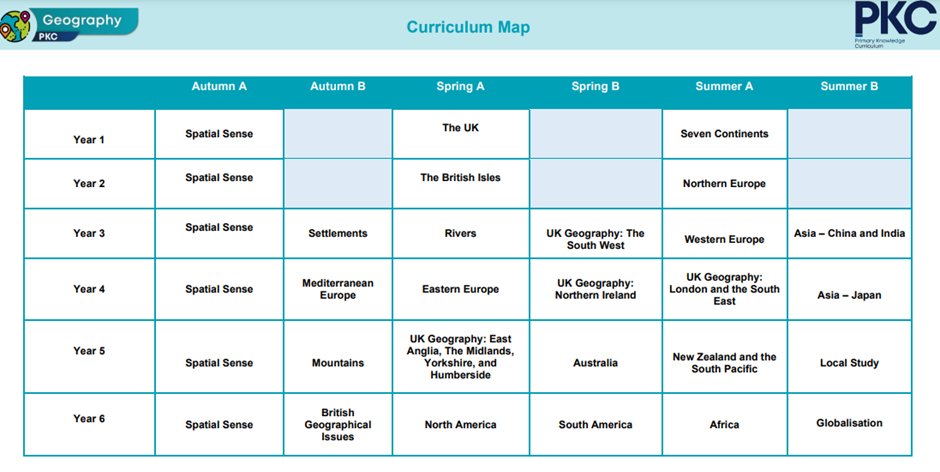
Let’s take a look at how these Spatial Sense units build geographical understanding through mapwork over time.
↓
↓
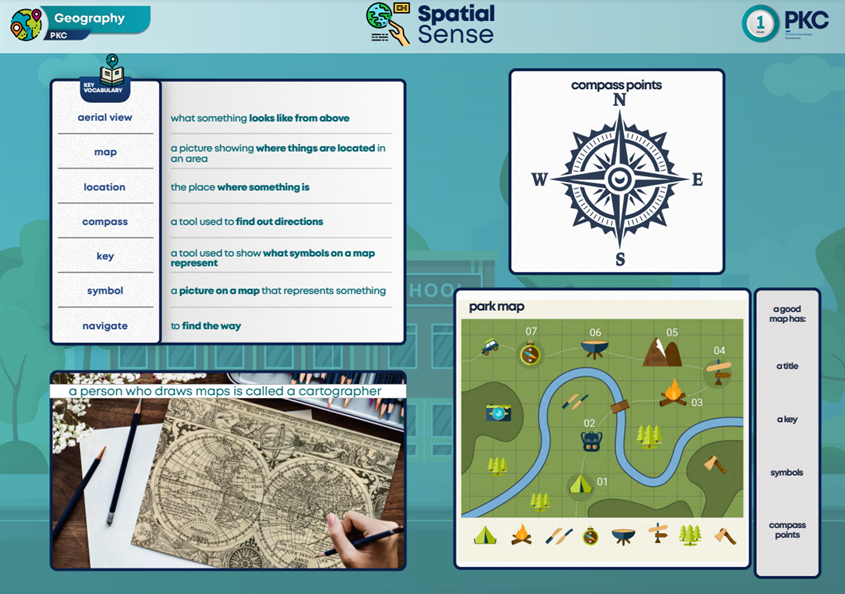
Year 1:
- Understanding aerial views
- Understanding that maps tell us information about locations
- Using maps to describe locations on a map
- Using compass points to show direction
- Creating maps; using titles, labels, compass points and symbols on maps
- Understanding aerial views
- Understanding that maps tell us information about locations
- Using maps to describe locations on a map
- Using compass points to show direction
- Creating maps; using titles, labels, compass points and symbols on maps
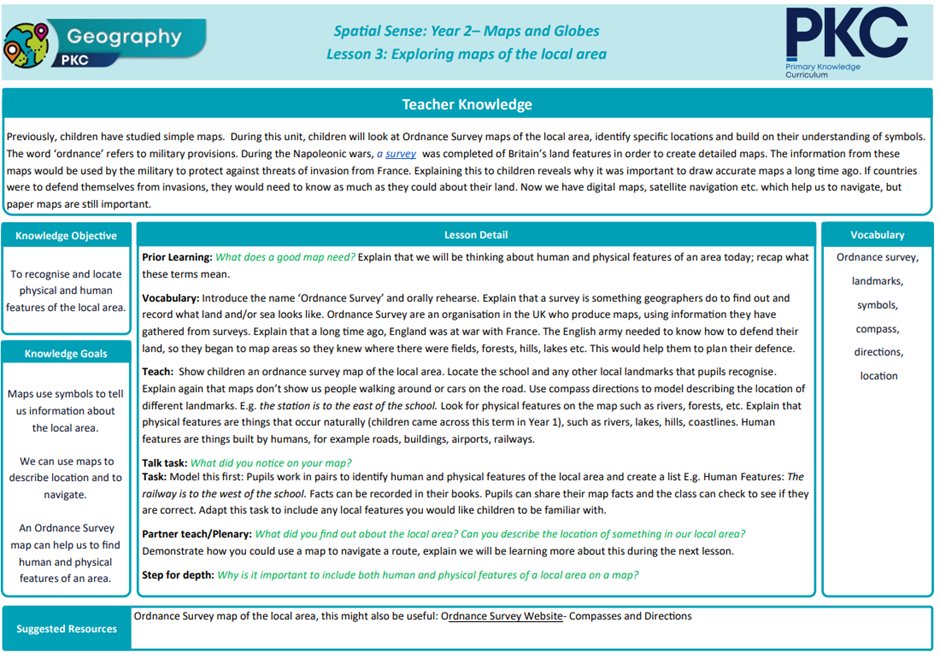
Year 2:
- Using maps of the school site
- Drawing a map of the school site
- Using maps of the local area
- Use maps to plan a route
- Identifying locations on a globe and world map
- Using maps of the school site
- Drawing a map of the school site
- Using maps of the local area
- Use maps to plan a route
- Identifying locations on a globe and world map
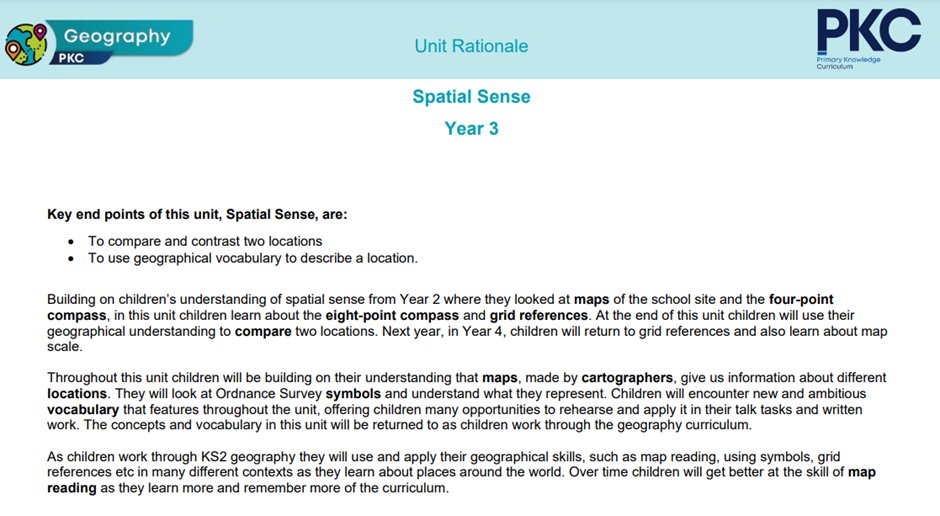
Year 3:
- Understanding symbols and compasses (eight points) on maps, including Ordnance Survey maps
- Using grid references on maps to identify locations
- Comparing the features of two localities using maps
- Understanding symbols and compasses (eight points) on maps, including Ordnance Survey maps
- Using grid references on maps to identify locations
- Comparing the features of two localities using maps
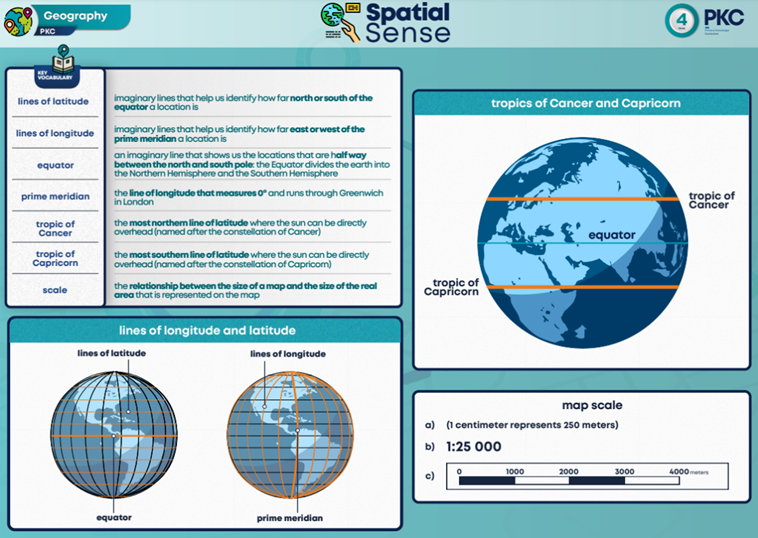
Year 4:
- Locating the equator and the tropics
- Understanding the concept of ‘scale’ on maps
- Exploring grid references in more depth in different contexts
- Using maps, including ordnance survey maps to see how an area has changed over time
- Locating the equator and the tropics
- Understanding the concept of ‘scale’ on maps
- Exploring grid references in more depth in different contexts
- Using maps, including ordnance survey maps to see how an area has changed over time
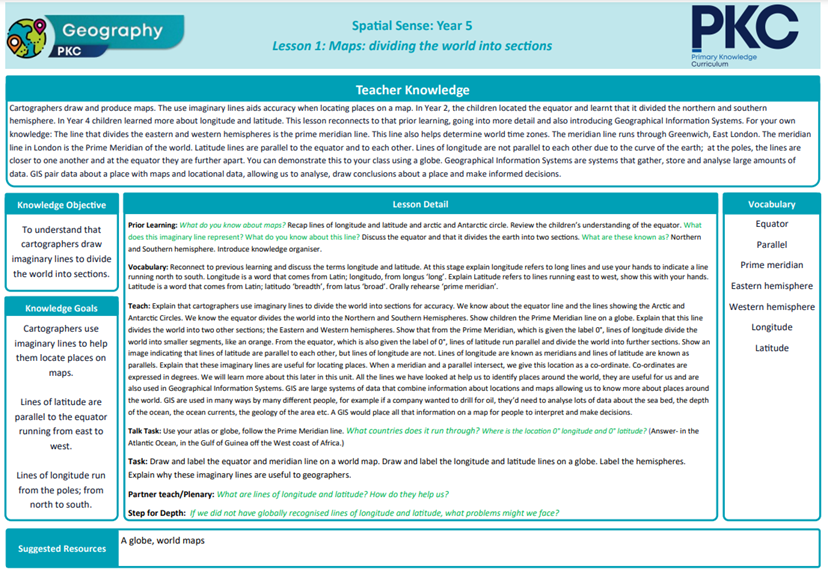
Year 5:
- Understanding how maps divide the world into sections
- Identifying Eastern and Western hemispheres
- Using co-ordinates to locate places
- Interpreting maps drawn to different scales
- Understanding relief maps
- Understanding how maps divide the world into sections
- Identifying Eastern and Western hemispheres
- Using co-ordinates to locate places
- Interpreting maps drawn to different scales
- Understanding relief maps
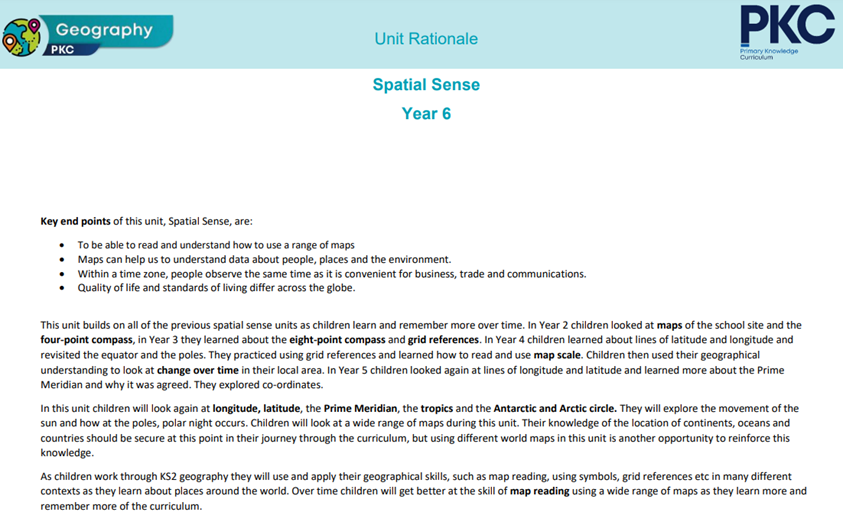
Year 6:
- Understanding latitude and longitude
- Identifying and locating the Arctic and Antarctic Circles
- Understanding and identifying time zones
- Map projection – understanding map distortion
- Maps of the world and how they communicate data
- Understanding latitude and longitude
- Identifying and locating the Arctic and Antarctic Circles
- Understanding and identifying time zones
- Map projection – understanding map distortion
- Maps of the world and how they communicate data
We believe careful curriculum design supports children to learn, remember and be able to do more.
We have thought carefully about how children become skilled at using maps, ensuring that they are explicitly taught the necessary skills before applying them in a range of contexts.
We have thought carefully about how children become skilled at using maps, ensuring that they are explicitly taught the necessary skills before applying them in a range of contexts.
We want children to get better at using maps so they can go out into a world that they can interpret, interact with and understand.
If you want to find out more about the PKC geography curriculum, click here - primaryknowledgecurriculum.org/teacher-resour…
• • •
Missing some Tweet in this thread? You can try to
force a refresh