Read on Twitter
Increase Your Offensive Rebounding
At the High School level factors like talent, shooting percentages, and court size all push me towards valuing off reb over "getting back".
Let's break down my reasoning & 5 techniques to get more Offensive Rebounds: ⏬
At the High School level factors like talent, shooting percentages, and court size all push me towards valuing off reb over "getting back".
Let's break down my reasoning & 5 techniques to get more Offensive Rebounds: ⏬
I. Offensive Rebounding Study
The first post I added to my website was a study I did a few years back looking at the value of offensive rebounding.
▪️ linked resources
▪️ film breakdowns
▪️ philosophy outline
coachlynchbasketball.com/post/a-case-fo…
The first post I added to my website was a study I did a few years back looking at the value of offensive rebounding.
▪️ linked resources
▪️ film breakdowns
▪️ philosophy outline
coachlynchbasketball.com/post/a-case-fo…
II. Transition Defense Plan
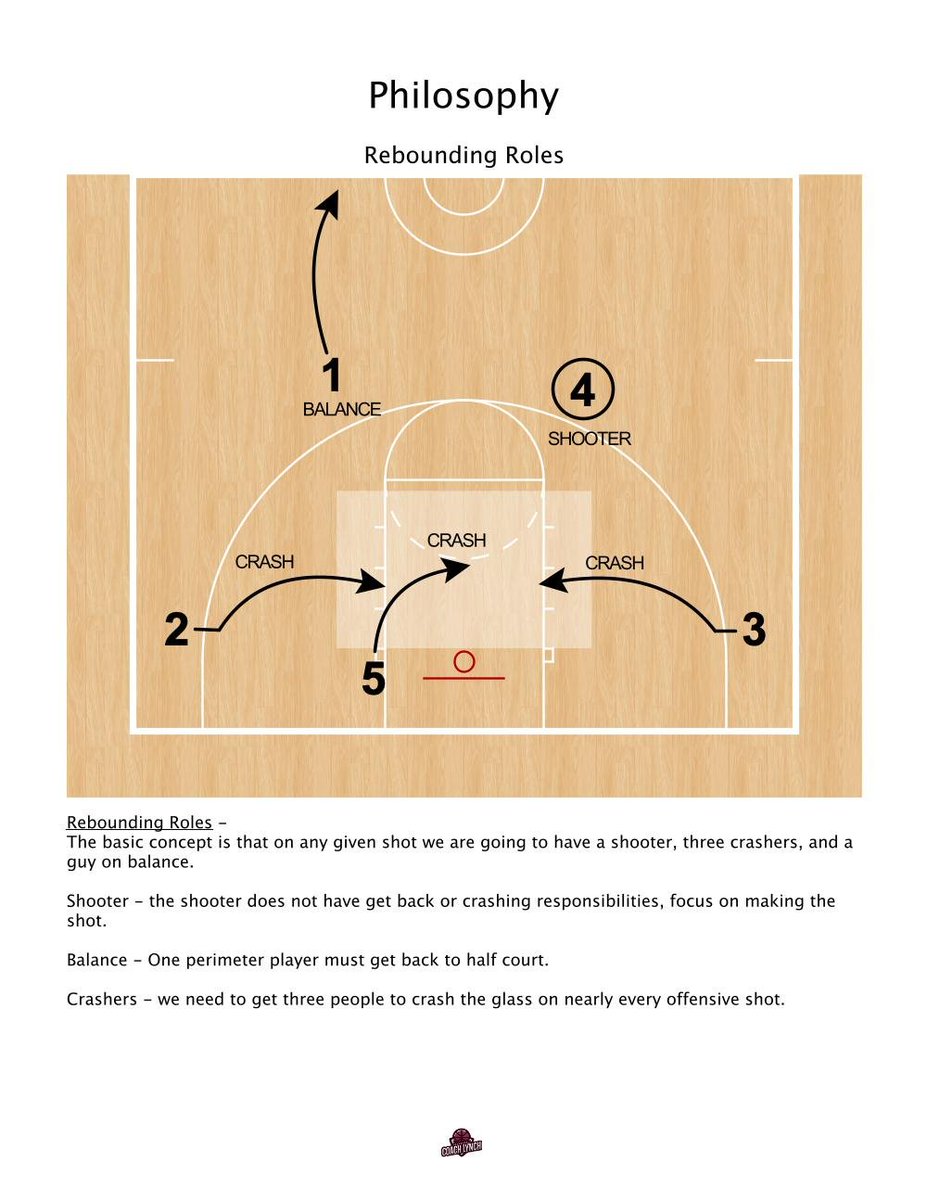
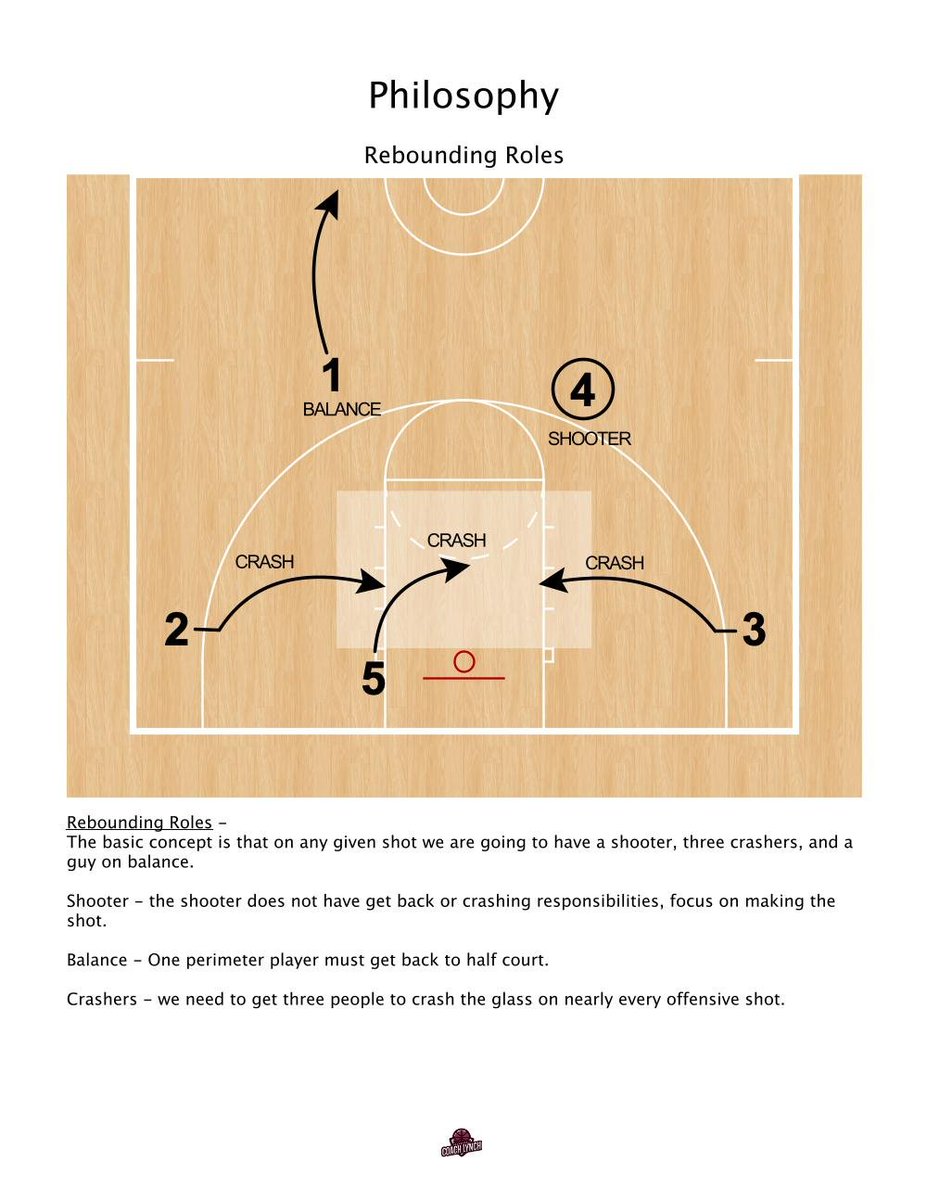
The essential idea behind our philosophy is that we need one player focused on defensive balance - and three crashing the glass.
▪️ shooter - focuses on making the shot
▪️ balance -player closest to half gets back
▪️ crashers - other 3 hit the glass
The essential idea behind our philosophy is that we need one player focused on defensive balance - and three crashing the glass.
▪️ shooter - focuses on making the shot
▪️ balance -player closest to half gets back
▪️ crashers - other 3 hit the glass
A. Numbers
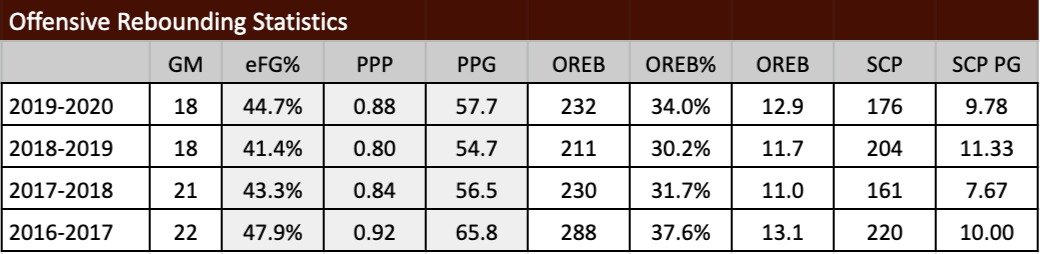
Looking at the 2019-20 season, I thought we had accomplished many of our offensive rebounding goals:
1. OREB% - spiked almost 4%
2. OREB PG - spiked 1.2 PG
3. PPP - risen significantly from the previous season
Some of that was OREB based, and some FG% based.
Looking at the 2019-20 season, I thought we had accomplished many of our offensive rebounding goals:
1. OREB% - spiked almost 4%
2. OREB PG - spiked 1.2 PG
3. PPP - risen significantly from the previous season
Some of that was OREB based, and some FG% based.
III. Off Reb Technique
We want to provide our crashers with a chance of getting the rebound while also lessening the likelihood of getting beat in transition.
We taught two techniques:
1. "Getting to the High Side"
2. "Fighting to 50/50"
We want to provide our crashers with a chance of getting the rebound while also lessening the likelihood of getting beat in transition.
We taught two techniques:
1. "Getting to the High Side"
2. "Fighting to 50/50"
A. Getting to the High Side
All crashers should be attacking the side of their defender that is closest to halfcourt.
This technique allows us to compete for the offensive rebound but also be in a much better position to get back on defense if we do not get the rebound.
All crashers should be attacking the side of their defender that is closest to halfcourt.
This technique allows us to compete for the offensive rebound but also be in a much better position to get back on defense if we do not get the rebound.
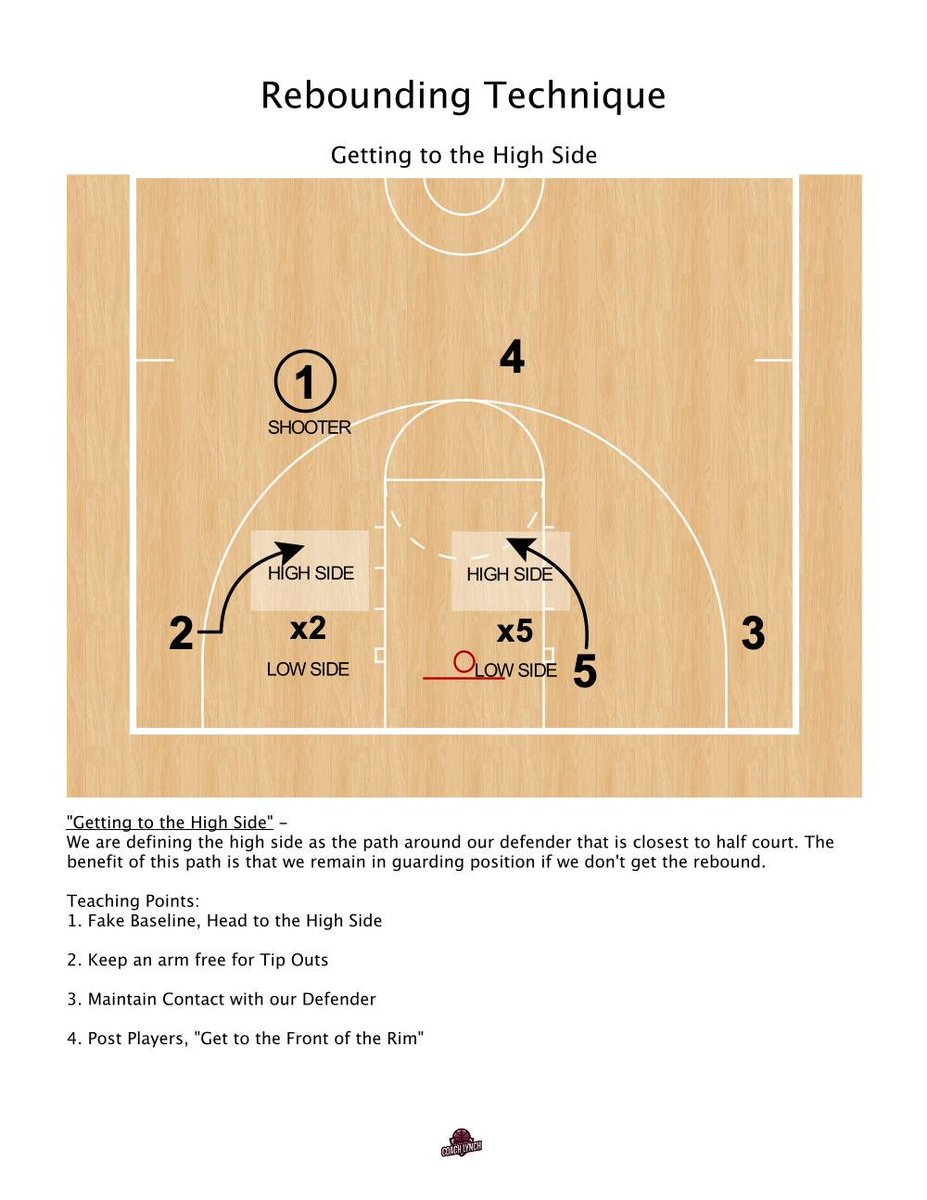
"Getting to the High Side" Teaching Points:
▪️ "Set up your Crash" ⏬
▪️ Fake Baseline then Go to the High Side
▪️ Keep an Arm Free for Tips
▪️ Maintain Contact with your Defender
▪️ If on Baseline, "Get to the Front of the Rim"
▪️ "Set up your Crash" ⏬
▪️ Fake Baseline then Go to the High Side
▪️ Keep an Arm Free for Tips
▪️ Maintain Contact with your Defender
▪️ If on Baseline, "Get to the Front of the Rim"
B. Fighting to 50/50
We don't want to stay behind our defender. We are actively fighting to get even with him.
By fighting to 50/50 position we give ourselves a good chance to rebound, while not giving our opponent a free run at the basket if we don't get the board.
We don't want to stay behind our defender. We are actively fighting to get even with him.
By fighting to 50/50 position we give ourselves a good chance to rebound, while not giving our opponent a free run at the basket if we don't get the board.
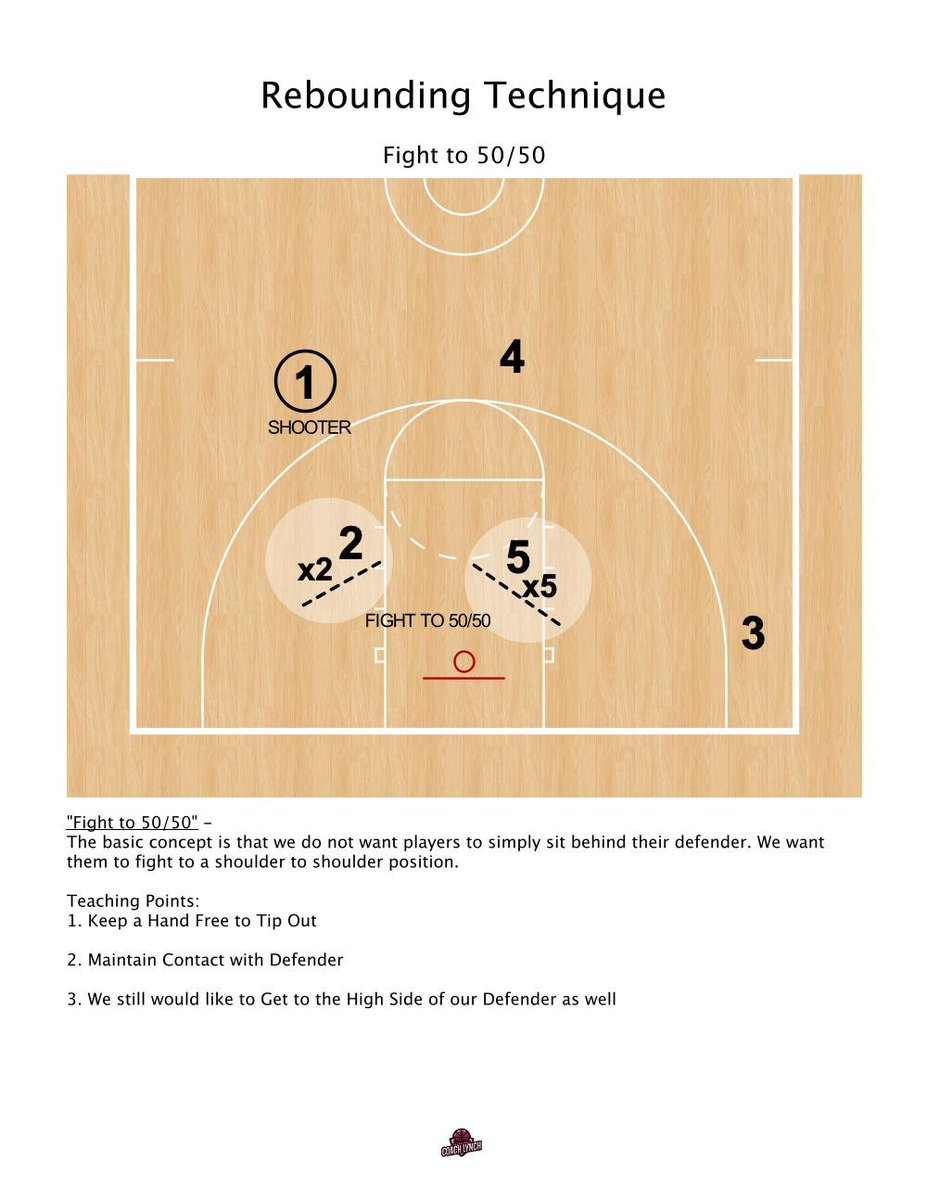
"Getting to 50/50" Teaching Points:
▪️ Get to the High Side
▪️ Do Not Sit Behind Defenders
▪️ Looking for Shoulder to Shoulder Position
▪️ Keep a Hand Free for Tips
▪️Maintain Contact with the Defender
▪️ Get to the High Side
▪️ Do Not Sit Behind Defenders
▪️ Looking for Shoulder to Shoulder Position
▪️ Keep a Hand Free for Tips
▪️Maintain Contact with the Defender
IV. Teaching Balance
OREB is the focal point of our transition defense philosophy, but we also need to teach balance.
What is balance?
We determine this with the player closest to the top of the key at the time of a shot.
OREB is the focal point of our transition defense philosophy, but we also need to teach balance.
What is balance?
We determine this with the player closest to the top of the key at the time of a shot.
A. Positioning
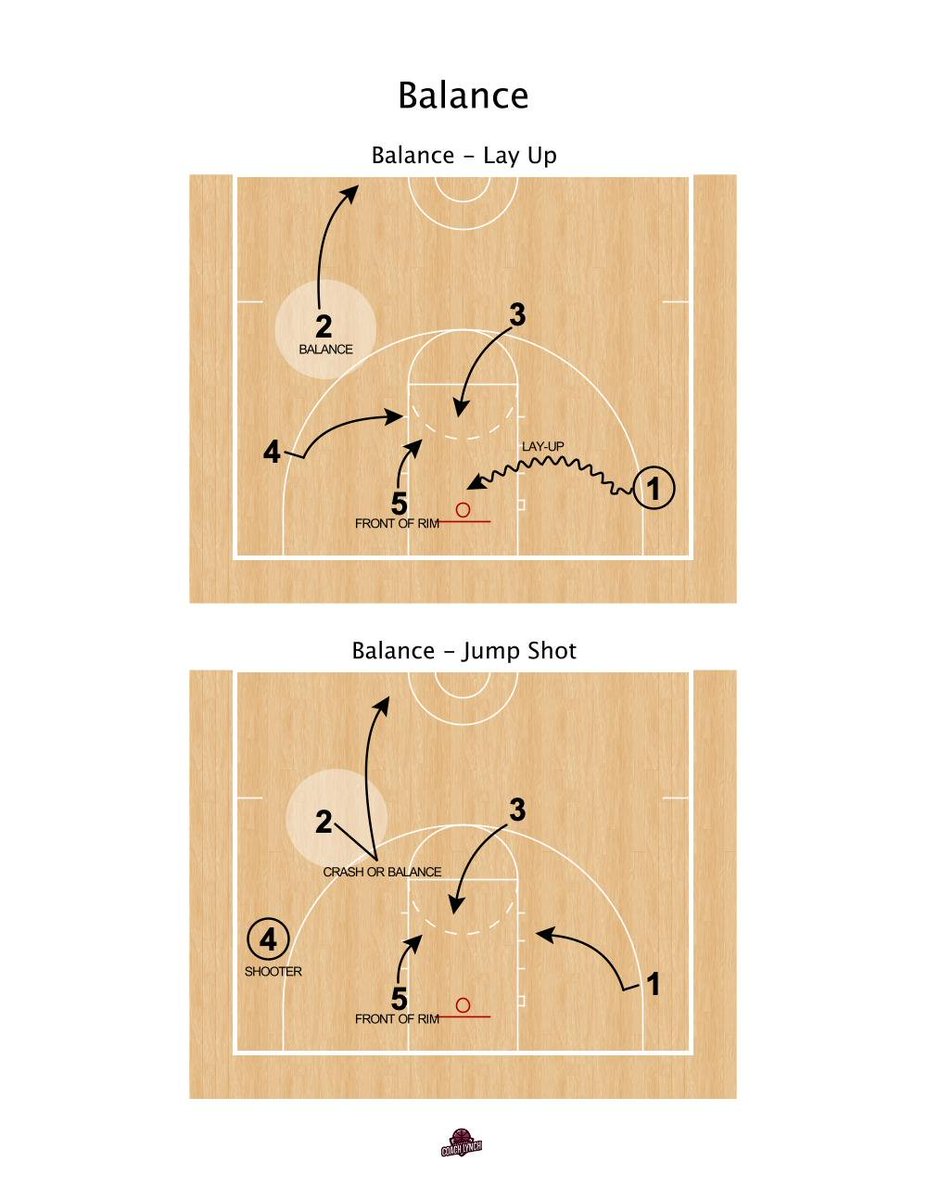
We want the player closest to the point to get in balance.
There is some food for thought though. Here are the OREbnumber for shot types:
▪️ RIM (28.6 OREB%)
▪️ 3FGA (34.0 OREB%)
We want the player closest to the point to get in balance.
There is some food for thought though. Here are the OREbnumber for shot types:
▪️ RIM (28.6 OREB%)
▪️ 3FGA (34.0 OREB%)
B. Example
In traditional half-court possessions, we are simply asking our closest player to half-court to get back while:
▪️ the shooter focuses on his shot
▪️ the other 3 hit the glass
In traditional half-court possessions, we are simply asking our closest player to half-court to get back while:
▪️ the shooter focuses on his shot
▪️ the other 3 hit the glass

V. Concluding Thoughts
Having a well-defined transition defense philosophy will make it easier for you to hold your players accountable, and easier for your players to make clean decisions.
Read More:
coachlynchbasketball.com/post/transitio…
Having a well-defined transition defense philosophy will make it easier for you to hold your players accountable, and easier for your players to make clean decisions.
Read More:
coachlynchbasketball.com/post/transitio…
• • •
Missing some Tweet in this thread? You can try to
force a refresh