Read on Twitter
One particular morning in 1892, somewhere in Secunderabad, women from the cream of Hyderabadi society gathered outside a small, dark room protected by high walls. Inside this room sat a machine that had become the talk of the town. 1/21
#WorldPhotographyDay
#WorldPhotographyDay
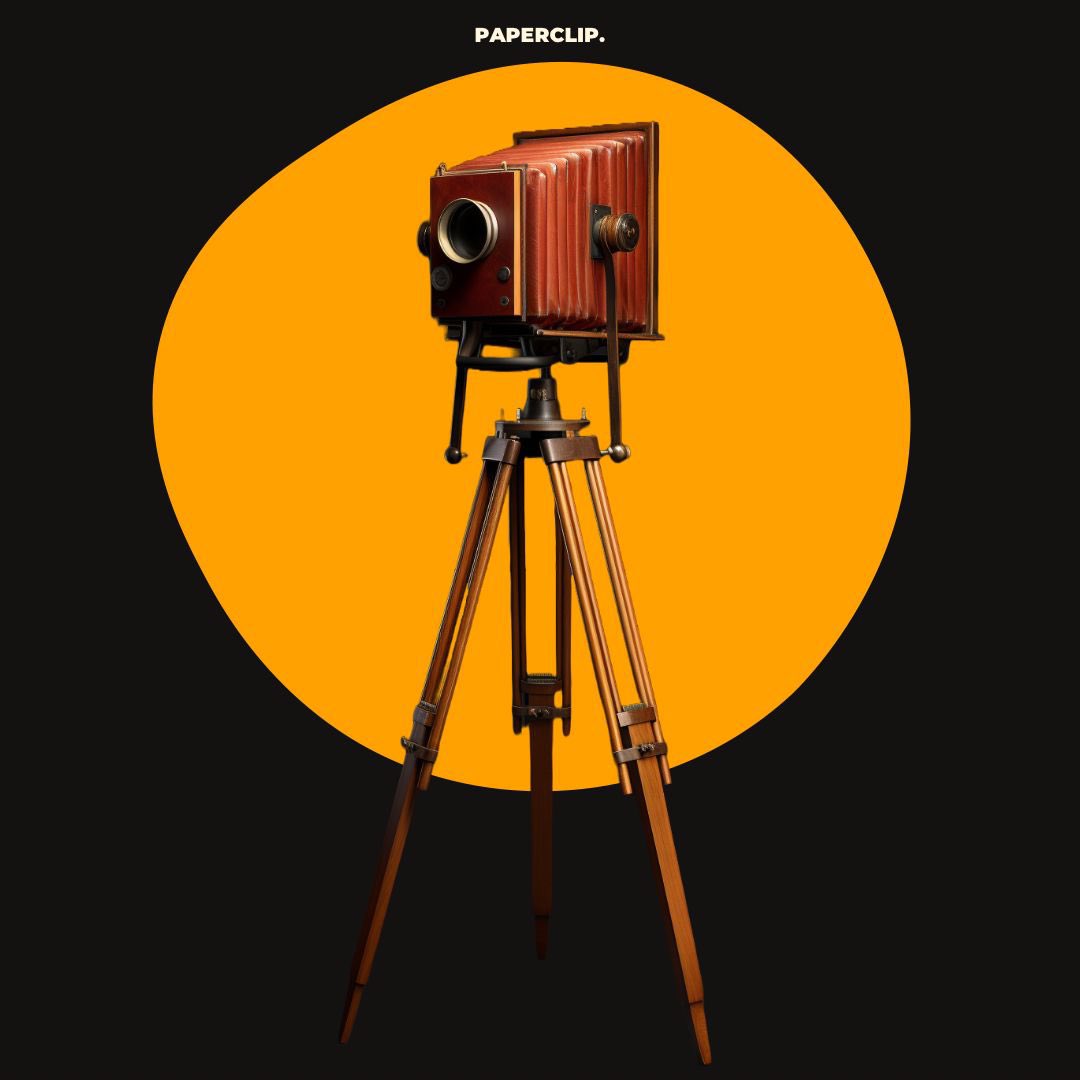
The women would go inside the room one by one, where they would be welcomed by a wooden box sitting on three legs. On one side of this box was a small, round glass. They would be asked to sit still for a minute and pose freely as the machine clicked their photograph! 2/21
Although they might have been chauffeured to this place by the men and servants of their family, these two rooms were only reserved for women. Together, these two makeshift rooms constituted the 'zenana' photo studio, where only women could photograph women. 3/21
How was this possible at a time when the purdah system was so strictly followed and upper class women highly scrutinised? To understand that, we will have to look at the 'zenana’ and the emergence of zenana studios in the second half of the 1800s. 4/21
The word 'zenana' means ‘of women’ in Persian. In India, it was used to refer to the quarter of the palace or a household where women and their attendants lived. 5/21
Aristocratic women in nineteenth century India were supposed to live their lives in partial seclusion, behind the 'purdah' (literally, curtain), under the watchful gaze of men: be it their relatives or their guards. 6/21
The colonial government introduced the camera to India in 1840 to document the lives of natives: their costume, their rituals, and so on and so forth. Soon, professional photography entered the scene, and within a matter of decades, the camera was not unheard of in India. 7/21
Yet, it was difficult to photograph upper class women without ruffling a few feathers. The main reason being that it was considered ‘undignified’ for upper-class women to indulge in such practices. This allowed a potential market for professional women photographers. 8/21
Siddhartha Ghosh, the authority on photography in Bengal, writes, “it is quite possible that women photographers came into being to solve the problems of taking pictures of those women who had lived behind the purdah, hidden from the disrespectful glances of the commoners." 9/21
Inside that dark room in Secunderabad was a woman named Mrs. Kenny-Lavick, whose husband was a correspondent for the Deccan Times. The studio was staffed exclusively by women: both foreign and native. 10/21
The major difference between the studio and earlier attempts to photograph women was that it was the first major space where women could come and be photographed, instead of having their privacy and dignity violated. 11/21
A famous practitioner of the latter was Sawai Ram Singh II, the Maharaja of Jaipur, who, in the 1860s and 70s, photographed the women living in his zenana. Using his unrestricted access to the zenana, he tried to lift the purdah to show that there was no dirt behind it. 12/21
The credit for opening the first zenana studio in India, however, goes to Mrs. E Mayer. Considered the first professional female photographer in the country,she set up shop at a corner of the Old Court House Street in Kolkata in 1863 & ran her studio with only female staff. 13/21
This led to other efforts in the city: a certain Mrs. D Garrick opened a ladies only studio in Waterloo Street in 1877. They weren't the only names in town: many photographers had followed suit. 14/21
The zenana studio in Secunderabad was established by the celebrated photographer Lala Deen Dayal. Born in Sardhana near Meerut in 1844,he was working at the Department of Works Secretariat,Indore when his skills were noticed by Sir Henry Daly,agent to the Governor General. 15/21
He soon garnered fame for clicking important British officials, including the Viceroy Lord Dufferin and Lady Dufferin. This granted him the post of the first official photographer of the Nizam Mir Mahbub Ali Khan of Hyderabad in 1884. 16/21
In 1892, looking to expand his business, he enlisted the services of Mrs. Kenny-Lavick to open the Zenana Studio. Although not much is known about her, Mrs. Kenny-Lavick must have been a photographer of some repute to be associated with the court photographer. 17/21
By the time the twentieth century rolled around in Calcutta, Bengali women like Sarojini Ghosh and Annapurna Datta had set up their own practices from their studios and homes. They didn't just click other women, they also offered classes in photography. 18/21
As we can see, what started as a business strategy soon started acquiring different meanings for everyone involved, both in front of and behind the camera. 19/21
As Sabeena Gadihoke, who has worked extensively on the history of photography in India, writes, "Photography allowed women to do things that they normally did not do. It allowed them to wander, to look and to stare." 20/21
These zenana studios offered women a chance to step out of their houses and comfort zones and participate in activities that had earlier been inaccessible to them. They promised another future: one without restraints. 21/21
The story is written by the very talented @MuniraFatima_ . Do follow her for more such fascinating stories.
Sources:
Zenana Studio: Early Women Photographers of Bengal, from Taking Pictures: The Practice of Photography by Bengalis, by Siddhartha Ghosh, translated by Debjani Sengupta. Published originally in Bengali, in 1998, by Ananda Publisher Pvt. Ltd.
Zenana Studio: Early Women Photographers of Bengal, from Taking Pictures: The Practice of Photography by Bengalis, by Siddhartha Ghosh, translated by Debjani Sengupta. Published originally in Bengali, in 1998, by Ananda Publisher Pvt. Ltd.
Women Artists in the Nineteenth Century
edited by Janice Helland and Deborah Cherry
Religion and Technology in India: Spaces, Practices and Authorities
edited by Knut A. Jacobsen, Kristina Myrvold
edited by Janice Helland and Deborah Cherry
Religion and Technology in India: Spaces, Practices and Authorities
edited by Knut A. Jacobsen, Kristina Myrvold
Exposing the Zenana: Maharaja Sawai Ram Singh II's Photographs of Women in Purdah , History of Photography, 34:1, 2-16
-Laura Weinstein (2010)
The Home and Beyond: Domestic and Amateur Photography by Women in India (1930-1960)
-Sabeena Gadihoke (2003)deendayal.com/lifesketch.htm
• • •
Missing some Tweet in this thread? You can try to
force a refresh