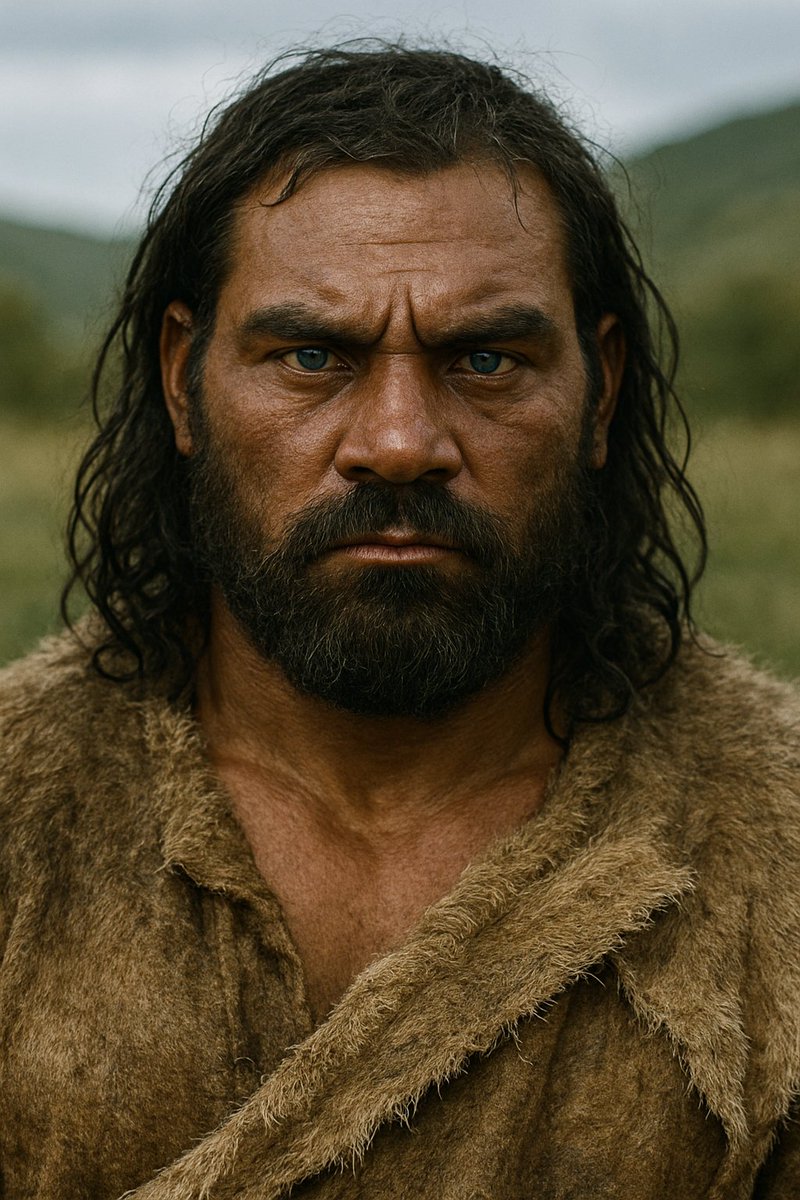
my new followers, a thread on my steppe series...
Steppe 1.0, Going Nomad The early Indo-Europeans' great leap forward
Today 3.5 billion humans speak Indo-European languages, which dominate Eurasia from Spain to the Indian subcontinent. This is the legacy of the pastoralists who roamed the Pontic steppe north of the Black sea 5,000 years ago. They were the original Indo-Europeans. They pioneered the nomadic lifestyle, leaving behind hard toil at the plow and thankless foraging in cold Siberian forests. They chose instead to wander the open grasslands in search of fresh pastures for their herds. They were the first to unleash young warriors raised as roving nomads upon the world, predatory packs marching the breadth of a continent in a few centuries. We don’t know what they called themselves. We don’t know the names of those who led them. But their cultural innovations and the choices they made transformed our world and made us who we are today. These nameless people left no monuments or seminal texts. Instead, we live with their language, their gods and their genes.
These early Indo-Europeans did not rush into virgin lands. They first bowled over others who were similarly textless. So we have no written testimony of this scarcely human phenomenon steamrolling the settlements of stolid farmers whose ancestors had tilled the land for millennia. The nomads’ inexorable progress onward, onward, outward in concentric arcs, mowing down or swallowing up all who stood in their way, was marked by neither enduring architectural monuments nor ambitious infrastructure projects like Rome left those they subjugated. They came, they took, they surely slaughtered, and they clearly fathered. But with neither written words, nor enduring walls, how do we know them?
Like a black hole, they warped even the distant future of every adjacent nation they touched. And so, like astrophysicists studying a black hole, we grope our way to a picture of the prehistoric Indo-European nomads, not directly, but through the vast arc of Eurasian geography that curls around the windswept steppe to its west, south and east. These barbarian, nomadic Indo-Europeans gave rise to civilized, urban Indo-European societies as far apart as Italy, Iran, and India. The history, culture, mythology and linguistic patrimony of most of Eurasia, particularly its most dominant empires, bear unmistakable if begrudging testimony to violent brushes with the nomad peoples of the steppe. We must only be patient and creative enough to tease out these common threads, field by complementary field. Threads which in the end bind us all. Millennia later, we still bear the scars the invaders left on our ancestors, share their age-old obsessions and journey on their conveyances.
The nomads picked fights they thought they could win. The only way to survive a conquering force as relentless as the steppe raiders was to emulate it, as fully and as quickly as possible. Steppe genes were forced on our foremothers. And in a rushed bid for survival, the societies which resisted and eventually flourished in the face of nomadic predations absorbed as many superior steppe innovations as they could, both the tools and the cultural baggage. If you can’t beat them, you could do worse than to selectively join them. The medieval knight and the Manchu cavalry are but warped refractions of the roving Hun.
Today, we can trace back those shared threads in myths, mores and mother tongues that span most of the breadth of Eurasia. Archaeology brings us a wealth of circumstantial source materials to interrogate. And the past two decades have been delivering an ever greater granularity of detail in the DNA record of modern humanity’s near-universal steppe ancestry.razibkhan.com/p/steppe-10-go…
Steppe 1.0, Going Nomad The early Indo-Europeans' great leap forward
Today 3.5 billion humans speak Indo-European languages, which dominate Eurasia from Spain to the Indian subcontinent. This is the legacy of the pastoralists who roamed the Pontic steppe north of the Black sea 5,000 years ago. They were the original Indo-Europeans. They pioneered the nomadic lifestyle, leaving behind hard toil at the plow and thankless foraging in cold Siberian forests. They chose instead to wander the open grasslands in search of fresh pastures for their herds. They were the first to unleash young warriors raised as roving nomads upon the world, predatory packs marching the breadth of a continent in a few centuries. We don’t know what they called themselves. We don’t know the names of those who led them. But their cultural innovations and the choices they made transformed our world and made us who we are today. These nameless people left no monuments or seminal texts. Instead, we live with their language, their gods and their genes.
These early Indo-Europeans did not rush into virgin lands. They first bowled over others who were similarly textless. So we have no written testimony of this scarcely human phenomenon steamrolling the settlements of stolid farmers whose ancestors had tilled the land for millennia. The nomads’ inexorable progress onward, onward, outward in concentric arcs, mowing down or swallowing up all who stood in their way, was marked by neither enduring architectural monuments nor ambitious infrastructure projects like Rome left those they subjugated. They came, they took, they surely slaughtered, and they clearly fathered. But with neither written words, nor enduring walls, how do we know them?
Like a black hole, they warped even the distant future of every adjacent nation they touched. And so, like astrophysicists studying a black hole, we grope our way to a picture of the prehistoric Indo-European nomads, not directly, but through the vast arc of Eurasian geography that curls around the windswept steppe to its west, south and east. These barbarian, nomadic Indo-Europeans gave rise to civilized, urban Indo-European societies as far apart as Italy, Iran, and India. The history, culture, mythology and linguistic patrimony of most of Eurasia, particularly its most dominant empires, bear unmistakable if begrudging testimony to violent brushes with the nomad peoples of the steppe. We must only be patient and creative enough to tease out these common threads, field by complementary field. Threads which in the end bind us all. Millennia later, we still bear the scars the invaders left on our ancestors, share their age-old obsessions and journey on their conveyances.
The nomads picked fights they thought they could win. The only way to survive a conquering force as relentless as the steppe raiders was to emulate it, as fully and as quickly as possible. Steppe genes were forced on our foremothers. And in a rushed bid for survival, the societies which resisted and eventually flourished in the face of nomadic predations absorbed as many superior steppe innovations as they could, both the tools and the cultural baggage. If you can’t beat them, you could do worse than to selectively join them. The medieval knight and the Manchu cavalry are but warped refractions of the roving Hun.
Today, we can trace back those shared threads in myths, mores and mother tongues that span most of the breadth of Eurasia. Archaeology brings us a wealth of circumstantial source materials to interrogate. And the past two decades have been delivering an ever greater granularity of detail in the DNA record of modern humanity’s near-universal steppe ancestry.razibkhan.com/p/steppe-10-go…
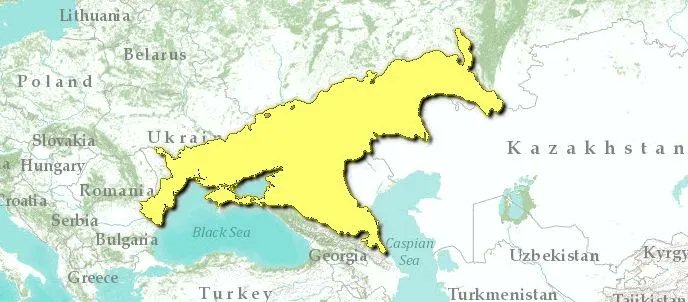
Steppe 1.1a: A nowhere man's world Heraclitus held that “all is change”, contra his great rival Parmenides, who argued for a fixed eternity. Human history comes down on Heraclitus’ side, but given the pace of human affairs before the modern era, a lifetime might not be long enough to feel it for yourself. For the ancients, the torpor of the present always dominated, because their world changed imperceptibly. Pharaonic Egypt spanned more centuries than lie between Julius Caesar and us. But even a universe defined by eternal truths, like the power of god-kings on earth, can be upended overnight, leaving mortals to confront a startling new landscape of possibilities.
From the steppe, the frontier of opportunities unfurled endlessly to west and east. Nomads traversed the breadth of Eurasia in a matter of years, forever chasing the next conquest. A steppe warrior born in a tent on the open plains might die in a sumptuous palace overlooking a teeming city. We’ve seen epochal change in the blink of an eye in our own lifetimes. Remember the payphone? Quick, where’s your nearest one? Even the name of the 2002 film Phonebooth would bewilder most children today. Maroon 5’s 2012 Payphone video was already on the cusp of being nonsensical when it was made. Less than a decade later, my child of the twenty-teens stares just as uncomprehendingly at the video’s flimsy little flip phone as at the hulking phone you feed quarters. Mobile technology in just a few years rendered obsolete what had been a ubiquitous urban fixture for generations, churning through each sequential successor in short fractions of decades.
5,000 years ago, the Pontic steppe witnessed such a wholesale overnight transformation. The region’s Yamnaya culture metamorphosed to such an extent that its descendants could dominate Eurasia from one end to the other within just four generations. The Yamnaya rolled up their tents (quite literally), abandoned their settlements and guided their ox-drawn wagons over the horizon to parts unknown. The adoption of a revolutionary technology, specifically the wheel, and more generally a Yamnaya openness to novelty, produced a massive historical inflection point. They adapted, they assimilated and they expanded over the face of the earth until 45% of the world today speak first languages descended from theirs.razibkhan.com/p/steppe-11a-a…
From the steppe, the frontier of opportunities unfurled endlessly to west and east. Nomads traversed the breadth of Eurasia in a matter of years, forever chasing the next conquest. A steppe warrior born in a tent on the open plains might die in a sumptuous palace overlooking a teeming city. We’ve seen epochal change in the blink of an eye in our own lifetimes. Remember the payphone? Quick, where’s your nearest one? Even the name of the 2002 film Phonebooth would bewilder most children today. Maroon 5’s 2012 Payphone video was already on the cusp of being nonsensical when it was made. Less than a decade later, my child of the twenty-teens stares just as uncomprehendingly at the video’s flimsy little flip phone as at the hulking phone you feed quarters. Mobile technology in just a few years rendered obsolete what had been a ubiquitous urban fixture for generations, churning through each sequential successor in short fractions of decades.
5,000 years ago, the Pontic steppe witnessed such a wholesale overnight transformation. The region’s Yamnaya culture metamorphosed to such an extent that its descendants could dominate Eurasia from one end to the other within just four generations. The Yamnaya rolled up their tents (quite literally), abandoned their settlements and guided their ox-drawn wagons over the horizon to parts unknown. The adoption of a revolutionary technology, specifically the wheel, and more generally a Yamnaya openness to novelty, produced a massive historical inflection point. They adapted, they assimilated and they expanded over the face of the earth until 45% of the world today speak first languages descended from theirs.razibkhan.com/p/steppe-11a-a…

Hungarians as the ghost of the Magyar confederacy Though right at the heart of Europe, Hungary is an ethnolinguistic oddity, with a distinct history and unique language. The Pannonian grasslands that cover most of its territory are the westernmost tendril of the Eurasian steppe. Though called the Nagy Alföld in Hungarian, or “Great Hungarian Plain,” in relation to the vast Pontic steppe to its east, it is quite small, only 10% the size. It has loomed large in European history because the Nagy Alföld is the furthest west that nomadic pastoralists could maintain vast herds of horses, from the Pontic Steppe’s Yamnaya herders 5,000 years ago, down to the Magyars in the early medieval period. It served as the base for Sarmatians who raided the Roman Empire in the 3rd century AD, the Avar Empire that menaced Byzantium in the 6th and 7th centuries, and it was here that in 453 AD Attila the Hun died in a drunken stupor, surrounded by riches plundered from half the continent.
It was with the arrival of the Magyars from the east in 895 AD that the Nagy Alföld came into its own as the heart of what was to become Hungary. The Sarmatians, Huns, and the Avars are all storied names in ancient annals, though terrors whose bite has faded from contemporary consciousness. The Magyars were all that, but they also left a legacy in the Hungarian national identity. Despite entering Europe as steppe barbarians, by the 12th century, the Magyars were at the heart of Christian civilization, erecting great cathedrals, sending knights on Crusade and intermarrying with the nobility of Germany and France. Just 200 years later, they were again on the frontier, the great bulwark of Christendom against the repeated hammer blows of the Ottoman Turks, until they were defeated and Budapest became the northwesternmost outpost of Islam. But they always remained European outsiders, as speakers of a language whose closest relatives are found in Siberia, a cultural mystery whose origins and affinity were only recently clarified by science.
Magyar raids📷
The last barbarians
In the modern mind, the Hungarians are connected to the Huns due to phonetic similarity and the fact that the Huns also settled down in the Pannonian plain. But 450 years separate the defeat of Attila the Hun at the Battle of Catalaunian Plains and the arrival of the Magyar tribes to the Carpathian Basin. “Hungary” probably derives from the name of the Turkic tribes that formed the basis for the ancient Bulgar Empire, the Onogur. In the mind of Western Christians, there was confusion between the Turkic nomads of the steppe and the Magyars who were closely allied to them when they weren’t fighting one another (Hungarians refer to their nation as Magyarország, meaning “Magyar country”).razibkhan.com/p/hungarians-a…
It was with the arrival of the Magyars from the east in 895 AD that the Nagy Alföld came into its own as the heart of what was to become Hungary. The Sarmatians, Huns, and the Avars are all storied names in ancient annals, though terrors whose bite has faded from contemporary consciousness. The Magyars were all that, but they also left a legacy in the Hungarian national identity. Despite entering Europe as steppe barbarians, by the 12th century, the Magyars were at the heart of Christian civilization, erecting great cathedrals, sending knights on Crusade and intermarrying with the nobility of Germany and France. Just 200 years later, they were again on the frontier, the great bulwark of Christendom against the repeated hammer blows of the Ottoman Turks, until they were defeated and Budapest became the northwesternmost outpost of Islam. But they always remained European outsiders, as speakers of a language whose closest relatives are found in Siberia, a cultural mystery whose origins and affinity were only recently clarified by science.
Magyar raids📷
The last barbarians
In the modern mind, the Hungarians are connected to the Huns due to phonetic similarity and the fact that the Huns also settled down in the Pannonian plain. But 450 years separate the defeat of Attila the Hun at the Battle of Catalaunian Plains and the arrival of the Magyar tribes to the Carpathian Basin. “Hungary” probably derives from the name of the Turkic tribes that formed the basis for the ancient Bulgar Empire, the Onogur. In the mind of Western Christians, there was confusion between the Turkic nomads of the steppe and the Magyars who were closely allied to them when they weren’t fighting one another (Hungarians refer to their nation as Magyarország, meaning “Magyar country”).razibkhan.com/p/hungarians-a…
Steppe 2.0: would you swipe right on a steppe brother?
Recently, I tweeted Philip Edwin's above-imagined reconstruction of a Bronze-Age Yamnaya male. For my own entertainment, I wanted to see what ethnicity people with a modern eye would peg him as. Among many others, I got back Persian, Tatar, Mongol, Scythian, Punjabi, Vulcan, Central Asian, Brazilian, Turkic, Jatt, Conquistador+Nahuatl, Sephardi, Russian, Finnish, North Indian, Southern Italian, Moldovan, Romanian, Iberian, etc.
But sprinkled in among the guesses were comments like this: “let me know because I'll be using this for my online dating profile,” “Handsome bugger,” and “But the real question is: Do you have his number?”
So let's do this. They came, they saw, they re-peopled large parts of a couple of continents. Overwhelmingly the impact was from males. So what would a woman who “swiped right” 5,000 years ago on a Yamnaya arriviste be in for? In previous editions of this series on the steppe's human legacy, I've looked at their nomadism, pastoralism, cultural versatility, assimilationist capacity and openness to change. I’ve also noted their systematic brutality and winner-take-all ethos, as some of the killer apps of this conqueror race. But today let's look at what my parents' people, with their devotion to arranged marriages, call the "biodata'' of these male upstarts whose lineages so many of us modern humans carry forward today. What did it mean to be Yamnaya on the scale of a dating prospect?
If you matched with a Yamnaya male, you would have been in for a collection of traits that probably included many of the following:
tall, strapping, robust build, physically vigorous
likes to dominate and lead, a bit arrogant, perhaps prone to cruelty
bit of a genetic mishmash
loves to feast: extreme carnivore, enjoys a lot of dairy, loves kumiss
kind of a big drinker, with a huge taste for mead
Hyper-patriarchal in his outlook, bit of a man's man, super bonded with brothers, male cousins and rest of his wolf-pack of kindreds
open to polygamy, has a winner-take-all attitude to mates
restless, likes to travel (light), never tires of the open road
open to experience
speaks a proto-Indo European language
works in animal husbandry, in free time likes to ride and raid
In this piece, I’ll dig into these core traits and facets of the Yamnaya conquerors and look at how they came about.razibkhan.com/p/steppe-20-sw…
Recently, I tweeted Philip Edwin's above-imagined reconstruction of a Bronze-Age Yamnaya male. For my own entertainment, I wanted to see what ethnicity people with a modern eye would peg him as. Among many others, I got back Persian, Tatar, Mongol, Scythian, Punjabi, Vulcan, Central Asian, Brazilian, Turkic, Jatt, Conquistador+Nahuatl, Sephardi, Russian, Finnish, North Indian, Southern Italian, Moldovan, Romanian, Iberian, etc.
But sprinkled in among the guesses were comments like this: “let me know because I'll be using this for my online dating profile,” “Handsome bugger,” and “But the real question is: Do you have his number?”
So let's do this. They came, they saw, they re-peopled large parts of a couple of continents. Overwhelmingly the impact was from males. So what would a woman who “swiped right” 5,000 years ago on a Yamnaya arriviste be in for? In previous editions of this series on the steppe's human legacy, I've looked at their nomadism, pastoralism, cultural versatility, assimilationist capacity and openness to change. I’ve also noted their systematic brutality and winner-take-all ethos, as some of the killer apps of this conqueror race. But today let's look at what my parents' people, with their devotion to arranged marriages, call the "biodata'' of these male upstarts whose lineages so many of us modern humans carry forward today. What did it mean to be Yamnaya on the scale of a dating prospect?
If you matched with a Yamnaya male, you would have been in for a collection of traits that probably included many of the following:
tall, strapping, robust build, physically vigorous
likes to dominate and lead, a bit arrogant, perhaps prone to cruelty
bit of a genetic mishmash
loves to feast: extreme carnivore, enjoys a lot of dairy, loves kumiss
kind of a big drinker, with a huge taste for mead
Hyper-patriarchal in his outlook, bit of a man's man, super bonded with brothers, male cousins and rest of his wolf-pack of kindreds
open to polygamy, has a winner-take-all attitude to mates
restless, likes to travel (light), never tires of the open road
open to experience
speaks a proto-Indo European language
works in animal husbandry, in free time likes to ride and raid
In this piece, I’ll dig into these core traits and facets of the Yamnaya conquerors and look at how they came about.razibkhan.com/p/steppe-20-sw…
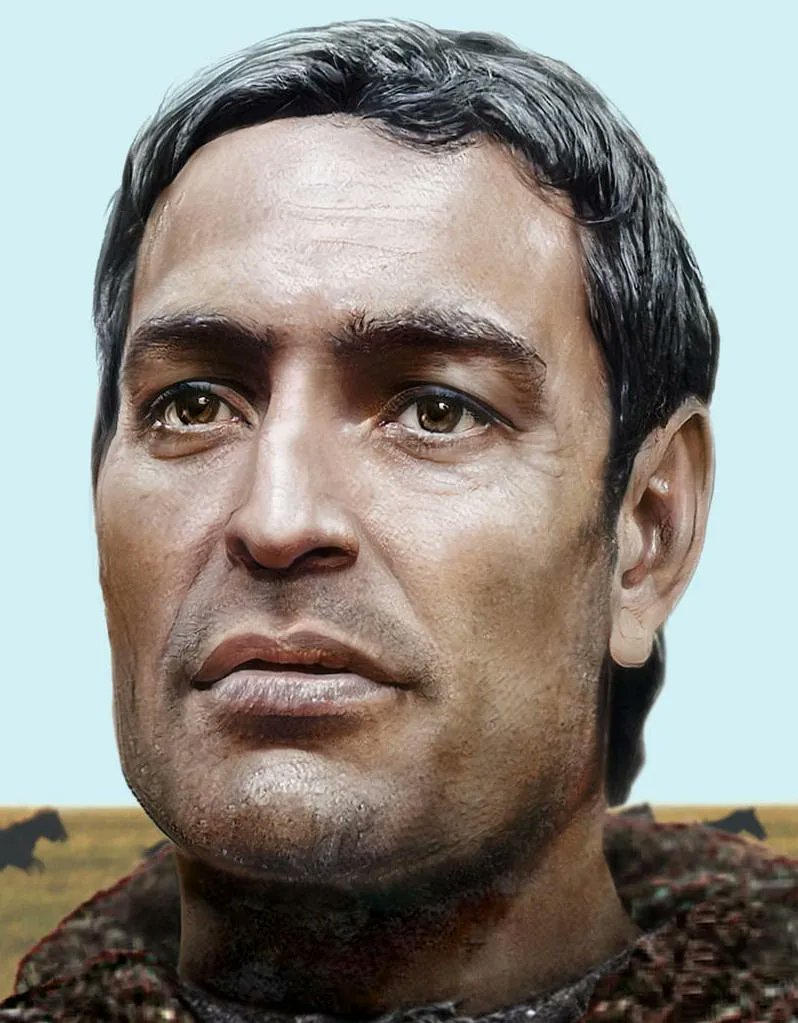
Dark Horse out of the Steppe Do you find it odd if I tell you a 2020 Tesla Model 3 was measured registering a horsepower of 523? An electric vehicle’s... horsepower? Like the “folders” on the “desktop” of a computer, “horsepower” is an anachronism, jargon we use unquestioningly, but which joined our language when the horse was still a universally grasped measure of work (as in basic physics, where work, W, is force, F, multiplied by distance, s, so that W = Fs). But whereas physical folders had one century of ubiquity, the age of the horse spanned millennia. The relationship between humans and our primary beast of burden probably began more than 5,000 years ago, when the earliest Indo-Europeans and their neighbors on the Eurasian steppe mounted animals they had long hunted for meat, choosing instead to co-opt their speed and endurance. But perfecting the horse as a work and war instrument as well, seems to have occurred more recently, only with the development of associated technologies like the light chariot and the saddle. These made full use of equine muscle-power, turning what had been merely been a tamed beast whose fleetness we harnessed, into a technology whose influence came to pervade all aspects of human society.
This final taming of the horse began 4,000 years ago on the steppes north of the Caspian Sea, among the Indo-Iranian pastoralists. The ancient Assyrians came face to muzzle with the fearsome descendants of these steeds 1,000 years later. They called the mounted riders that destroyed their world the Aškūza, or Ashkenaz in Hebrew (a term coincidentally later recycled for those Jews who settled in Europe north of the Mediterranean). These were nomads who had migrated from north of the Caucasus down into the uplands of eastern Anatolia, plundering and pillaging as they went, finally tearing apart the Assyrian Empire in the seventh century BC. Their name for themselves was Skuδa, “archer” in their language, from the Indo-European root “shoot.” The Persians would know them centuries later as the Saka, while far to the east, the Chinese called them the Yuezhi, or “meat-eaters”. In the West, they became Scythians.
The 5th-century BC Greek historian Herodotus is our best source on these shadowy nomads who ruled the Pontic steppe north of the Black Sea. From conversations with those who saw them first-hand, Herodotus gleaned that the Scythians occupied a vast territory, from Hungary in the west to unspecified lands far to the east. He did not know of China’s existence, but even there Scythian tribes menaced its northwest, while the Persians were constantly fighting back the Sakas of Central Asia, the Skuδa’s southern branch. Far to the west, during the Golden Age of Athens, a group of them even served as a slave police force within the city. A Scythian police officer even makes an appearance in one of Aristophanes’ plays, speaking broken Greek.
But the Scythians contributed far more to posterity than just color in Greek ethnographies and humor in their comedies. They brought the ancient world the shock and awe of mounted cavalry, the first thundering of hooves and lowering of lances that would come to define warfare in later eras. The Scythians also pioneered archery from the saddle, characteristically turning upon their retreat to pepper their foes with one last volley of well-aimed arrows from recurve composite bows. While their Yamnaya ancestors 5,000 years ago may have mounted swift horses to fly across the landscape, to the Scythians goes credit for transforming horse and man into a singular fighting machine, leveraging the massive power of a galloping animal, while slashing at enemies with their long swords. The genealogies of the Japanese samurai and the French knight ultimately both wind back to these first mounted warriors of the steppe.
The phenomenon of the Scythians’ rise was the culmination of the evolution of Indo-Iranian pastoralism, whose explosive growth began 4,000 years ago, after their domestication of the horse. Today 1.5 billion humans speak Indo-Iranian languages, from northeastern Syria to the borders of Burma, with the vast majority living in modern-day India and Iran. But 2,500 years ago, Indo-Iranian languages dominated terrains across the whole vast span of the Eurasian steppe, from its western extension in Hungary to the eastern edge in Mongolia. Then, Persia and India were simply southerly offshoots of Indo-Iranian culture, civilizations born of a synthesis with local sedentary cultures so thorough that they forgot their steppe origins.razibkhan.com/p/dark-horse-o…
This final taming of the horse began 4,000 years ago on the steppes north of the Caspian Sea, among the Indo-Iranian pastoralists. The ancient Assyrians came face to muzzle with the fearsome descendants of these steeds 1,000 years later. They called the mounted riders that destroyed their world the Aškūza, or Ashkenaz in Hebrew (a term coincidentally later recycled for those Jews who settled in Europe north of the Mediterranean). These were nomads who had migrated from north of the Caucasus down into the uplands of eastern Anatolia, plundering and pillaging as they went, finally tearing apart the Assyrian Empire in the seventh century BC. Their name for themselves was Skuδa, “archer” in their language, from the Indo-European root “shoot.” The Persians would know them centuries later as the Saka, while far to the east, the Chinese called them the Yuezhi, or “meat-eaters”. In the West, they became Scythians.
The 5th-century BC Greek historian Herodotus is our best source on these shadowy nomads who ruled the Pontic steppe north of the Black Sea. From conversations with those who saw them first-hand, Herodotus gleaned that the Scythians occupied a vast territory, from Hungary in the west to unspecified lands far to the east. He did not know of China’s existence, but even there Scythian tribes menaced its northwest, while the Persians were constantly fighting back the Sakas of Central Asia, the Skuδa’s southern branch. Far to the west, during the Golden Age of Athens, a group of them even served as a slave police force within the city. A Scythian police officer even makes an appearance in one of Aristophanes’ plays, speaking broken Greek.
But the Scythians contributed far more to posterity than just color in Greek ethnographies and humor in their comedies. They brought the ancient world the shock and awe of mounted cavalry, the first thundering of hooves and lowering of lances that would come to define warfare in later eras. The Scythians also pioneered archery from the saddle, characteristically turning upon their retreat to pepper their foes with one last volley of well-aimed arrows from recurve composite bows. While their Yamnaya ancestors 5,000 years ago may have mounted swift horses to fly across the landscape, to the Scythians goes credit for transforming horse and man into a singular fighting machine, leveraging the massive power of a galloping animal, while slashing at enemies with their long swords. The genealogies of the Japanese samurai and the French knight ultimately both wind back to these first mounted warriors of the steppe.
The phenomenon of the Scythians’ rise was the culmination of the evolution of Indo-Iranian pastoralism, whose explosive growth began 4,000 years ago, after their domestication of the horse. Today 1.5 billion humans speak Indo-Iranian languages, from northeastern Syria to the borders of Burma, with the vast majority living in modern-day India and Iran. But 2,500 years ago, Indo-Iranian languages dominated terrains across the whole vast span of the Eurasian steppe, from its western extension in Hungary to the eastern edge in Mongolia. Then, Persia and India were simply southerly offshoots of Indo-Iranian culture, civilizations born of a synthesis with local sedentary cultures so thorough that they forgot their steppe origins.razibkhan.com/p/dark-horse-o…
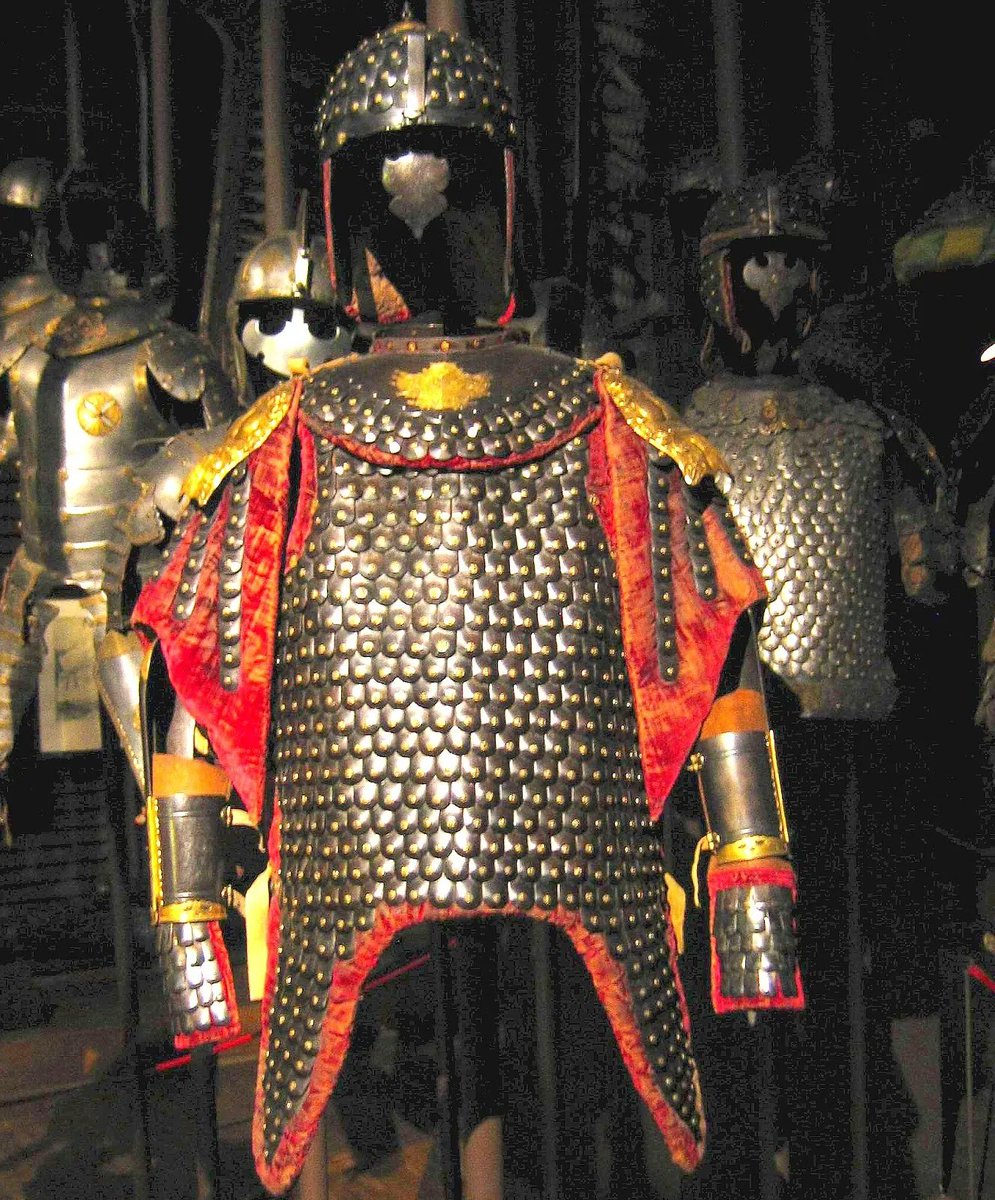
The wolf at history's door On June 25–26th of 1876, at Little Bighorn in Montana, a coalition of Sioux, Cheyenne and Arapaho led by Sitting Bull and Crazy Horse defeated General George Custer. The outcome shocked the world; the Plains tribes stared down the might of the modern world and then ably dispatched it. But theirs was a Pyrrhic victory. The US government just raised more troops, and all that elan and courage was eventually no match for raw numbers. Across the cold windswept plains of the Dakotas, the Sioux and their allies had denied the American armies outright victory from the 1850’s into the 1870’s. Meanwhile, to the south, in Texas, the Comanche “Empire of the Summer Moon” had been the bane of the Spaniards, and later the Mexicans, for over a century. They first battled the Spanish Empire to a draw in the 1700’s, and continued to periodically pillage Mexico after independence in the 1820’s. Only after the region’s annexation by the US in the 1840’s did the Comanche meet their match, as they were finally defeated in 1870 by American forces. If Americans today remember the Battle of Little Bighorn and the subjugation of the Comanche, it tends to be as the denouement of decades of warfare across the vast North American prairie. But if you zoom out a little, it also marks the end of a 5,000-year saga: the rise and fall of America’s steppe nomads, for that is what all those fearsome tribes of the Plains Indians had become.
Today Americans view these wars with ambivalence, as the expansionist US, seeking its “Manifest Destiny,” conquered the doomed underdog natives of the continent with wanton brutality. But the Plains Indians were themselves a people of conquest, hardened and cruel, and would have bridled at the mantle of the underdog. They espoused an ethos exemplified by their warrior braves who wasted no pity on their enemies and expected none in return. In S.C. Gwynne’s book, Empire of the Summer Moon, he notes that during Comanche raids all “the men were killed, and any men who were captured alive were tortured; the captive women were gang raped. Babies were invariably killed.” Comanche brutality was not total; young boys and girls were captured and enslaved during these raids, but could eventually be adopted into the tribe if they survived a trial by fire: showing courage and toughness even in the face of ill-treatment as slaves. Quanah Parker, the last chief of the Comanche, was the son of a white woman who had been kidnapped when she was nine.
Quanah Parker, the last chief of the Comanche📷
These tribes were warlike because the mobilization of cadres of violent young men was instrumental to the organization of their societies. They were all patrilineal and patriarchal, for though women were not chattel, tribal identity passed from the father to the son. A Sioux or Comanche was by definition the offspring of a Sioux or Comanche father. The birth of a Comanche boy warranted special congratulations for the father, reflecting the importance of sons genealogically for the line to continue. It was the sons who would grow up to feed the tribe through mass-scale horseback buffalo hunts. It was the sons who undertook daring raids and came home draped in plunder. The religion of these warriors was victory, and they stoically accepted that defeat meant death.
These mounted warrior societies of the Plains Indians were a recent product of the Columbian Exchange, forged by the same forces of globalization that birthed the hostile colonial nations hungrily encroaching ever further into their domains from both south and east. The early 1700’s had seen the adoption of horses from the Spaniards, along with the flourishing of rich colonial societies all along the continent’s rim, always ripe for raiding. Together, these catalyzed the rebirth of native nations that lived by the deeds of their predatory cavalry. The warriors of America’s prairies became such adept horsemen in a matter of generations that Comanche boys were reputed to learn riding almost before they learned to walk, echoing Roman observations about the Huns 1,500 years earlier. The introduction of Eurasian horses to their cultures transmuted the farmers and foragers of the Great Plains within a generation into fearsome centaur-like hordes that terrorized half a continent for 150 years, recapitulating the transformation wrought by their distant relatives on the Eurasian Steppe 5,000 years ago.razibkhan.com/p/the-wolf-at-…
Today Americans view these wars with ambivalence, as the expansionist US, seeking its “Manifest Destiny,” conquered the doomed underdog natives of the continent with wanton brutality. But the Plains Indians were themselves a people of conquest, hardened and cruel, and would have bridled at the mantle of the underdog. They espoused an ethos exemplified by their warrior braves who wasted no pity on their enemies and expected none in return. In S.C. Gwynne’s book, Empire of the Summer Moon, he notes that during Comanche raids all “the men were killed, and any men who were captured alive were tortured; the captive women were gang raped. Babies were invariably killed.” Comanche brutality was not total; young boys and girls were captured and enslaved during these raids, but could eventually be adopted into the tribe if they survived a trial by fire: showing courage and toughness even in the face of ill-treatment as slaves. Quanah Parker, the last chief of the Comanche, was the son of a white woman who had been kidnapped when she was nine.
Quanah Parker, the last chief of the Comanche📷
These tribes were warlike because the mobilization of cadres of violent young men was instrumental to the organization of their societies. They were all patrilineal and patriarchal, for though women were not chattel, tribal identity passed from the father to the son. A Sioux or Comanche was by definition the offspring of a Sioux or Comanche father. The birth of a Comanche boy warranted special congratulations for the father, reflecting the importance of sons genealogically for the line to continue. It was the sons who would grow up to feed the tribe through mass-scale horseback buffalo hunts. It was the sons who undertook daring raids and came home draped in plunder. The religion of these warriors was victory, and they stoically accepted that defeat meant death.
These mounted warrior societies of the Plains Indians were a recent product of the Columbian Exchange, forged by the same forces of globalization that birthed the hostile colonial nations hungrily encroaching ever further into their domains from both south and east. The early 1700’s had seen the adoption of horses from the Spaniards, along with the flourishing of rich colonial societies all along the continent’s rim, always ripe for raiding. Together, these catalyzed the rebirth of native nations that lived by the deeds of their predatory cavalry. The warriors of America’s prairies became such adept horsemen in a matter of generations that Comanche boys were reputed to learn riding almost before they learned to walk, echoing Roman observations about the Huns 1,500 years earlier. The introduction of Eurasian horses to their cultures transmuted the farmers and foragers of the Great Plains within a generation into fearsome centaur-like hordes that terrorized half a continent for 150 years, recapitulating the transformation wrought by their distant relatives on the Eurasian Steppe 5,000 years ago.razibkhan.com/p/the-wolf-at-…
Casting out the wolf in our midst Our species is unique in that we are both extremely social, and incredibly diverse in our cultures. The eusocial insects are a match for us in gregariousness, with their colonies of millions, but their social structures are far less multifarious and hew closely to particular prescribed forms species by species. Army ants advance as columns in their millions, fungus-farming ants cultivate their “crops” peacefully, while bees swarm in colonies that split like clockwork upon reaching a predetermined population size. Human societies do not exhibit such fixed regularities and may morph within a single generation, or vary radically on opposite slopes of a mountain. Human culture is marvelously plastic, and it can be adaptive due to intense selection pressure, or simply buffeted by the winds of randomness and whimsy.
But despite the likely role of chance in our social evolution, the shape of human cultural phenomena always rests upon a bedrock of our inherited biology overlaid with environmental influences dictated by place and time. Our societies develop their characteristic outlines at the intersection of fixed eternal instincts and protean social innovations. Despite our cultural diversity, it is little surprise that under similar conditions, we often converge on similar outcomes. As James C. Scott articulates in Against The Grain: A Deep History of the Earliest States, cereal-based agriculture reliably results in states that control and sequester surplus production, and then use it to support a military or cultural elite. Whether in ancient Mesopotamia, China or Mesoamerica, early cereal-based societies evolved progressively toward tighter social integration and class stratification, as well as achieving an increase in political scale.
Fully-fledged pastoral nomadism emerged far later than sedentary agriculture, and its social and political configuration is markedly different than cereal-based agricultural societies’. As I noted, pastoral nomads are patrilineal and patriarchal, in contrast to sedentary agriculturists who exhibit more variety in the expectations of their gender relations. And notably, nomadic pastoralists put a particular demographic in the driver’s seat: groups of young men shaped, bonded and tempered by their experiences both protecting their tribe’s wealth from enemies and plundering that of others. Collective acts of shocking and transgressive violence were traditionally the fires that kindled into existence these young men’s cohesion and ferocity, and thus the culture that they subsequently shaped. If a thousand platoons bound society together, these cadres of adolescents and young men drove their tribes forward at the literal tip of their spears.
The ancient patterns still persist down to the present. Today among East Africa’s Maasai, the institution of age-set cohorts of young men initiated into a warrior brotherhood still exists, albeit in attenuated form due to modernity’s constraints (lion-slaughter doesn’t fly anymore, for one). Groups of boys endure painful initiation rites like circumcision all at the same age, and then live communally as bachelors on the outskirts of Maasai settlements, learning how to make do for themselves without the support of their extended families and the broader community. In the past, they would have proved their manhood by hunting lions, raiding and making war on the tribe’s enemies. Only after nearly a decade of living in this fashion were they allowed to proudly reenter Maasai society as full-fledged warriors who had proven themselves worthy of respect and esteem.
Maasai practices may strike some in the industrialized world as strange, but they are eerily redolent of traditions that have been recorded by chroniclers and unearthed by archaeologists from many of our forebear societies across Eurasia. Anyone who has seen the 2007 film 300 knows that Spartan male citizens were initiated into age-sets to harden and train them. Their toughening rites of passage involved activities like being forced to steal food, as well as an autumn ritual where they were given license to kill agricultural slaves, and punished if they couldn’t bring themselves to do so. The Spartans here were clearly replicating the form of the Indo-European koryos.razibkhan.com/p/casting-out-…
But despite the likely role of chance in our social evolution, the shape of human cultural phenomena always rests upon a bedrock of our inherited biology overlaid with environmental influences dictated by place and time. Our societies develop their characteristic outlines at the intersection of fixed eternal instincts and protean social innovations. Despite our cultural diversity, it is little surprise that under similar conditions, we often converge on similar outcomes. As James C. Scott articulates in Against The Grain: A Deep History of the Earliest States, cereal-based agriculture reliably results in states that control and sequester surplus production, and then use it to support a military or cultural elite. Whether in ancient Mesopotamia, China or Mesoamerica, early cereal-based societies evolved progressively toward tighter social integration and class stratification, as well as achieving an increase in political scale.
Fully-fledged pastoral nomadism emerged far later than sedentary agriculture, and its social and political configuration is markedly different than cereal-based agricultural societies’. As I noted, pastoral nomads are patrilineal and patriarchal, in contrast to sedentary agriculturists who exhibit more variety in the expectations of their gender relations. And notably, nomadic pastoralists put a particular demographic in the driver’s seat: groups of young men shaped, bonded and tempered by their experiences both protecting their tribe’s wealth from enemies and plundering that of others. Collective acts of shocking and transgressive violence were traditionally the fires that kindled into existence these young men’s cohesion and ferocity, and thus the culture that they subsequently shaped. If a thousand platoons bound society together, these cadres of adolescents and young men drove their tribes forward at the literal tip of their spears.
The ancient patterns still persist down to the present. Today among East Africa’s Maasai, the institution of age-set cohorts of young men initiated into a warrior brotherhood still exists, albeit in attenuated form due to modernity’s constraints (lion-slaughter doesn’t fly anymore, for one). Groups of boys endure painful initiation rites like circumcision all at the same age, and then live communally as bachelors on the outskirts of Maasai settlements, learning how to make do for themselves without the support of their extended families and the broader community. In the past, they would have proved their manhood by hunting lions, raiding and making war on the tribe’s enemies. Only after nearly a decade of living in this fashion were they allowed to proudly reenter Maasai society as full-fledged warriors who had proven themselves worthy of respect and esteem.
Maasai practices may strike some in the industrialized world as strange, but they are eerily redolent of traditions that have been recorded by chroniclers and unearthed by archaeologists from many of our forebear societies across Eurasia. Anyone who has seen the 2007 film 300 knows that Spartan male citizens were initiated into age-sets to harden and train them. Their toughening rites of passage involved activities like being forced to steal food, as well as an autumn ritual where they were given license to kill agricultural slaves, and punished if they couldn’t bring themselves to do so. The Spartans here were clearly replicating the form of the Indo-European koryos.razibkhan.com/p/casting-out-…
A Hun by any other name
On the genetic trail of Europe’s enduring bête noire The Epic of Gilgamesh ends with the intimation that immortality can only be achieved through everlasting fame, or as the case may be, infamy. Percy Shelley’s 19th-century poem Ozymandias reflects this truth, as the ancient king of kings bellows “Look on my works, ye Mighty, and despair!”, spared the foresight that his legacy would one day be enumerated in forgotten, decaying monuments. In ancient Greece, Ozymandias was the name for Ramesses the Great, the most powerful Pharaoh of Egypt’s New Kingdom. Today, despite his achievements, he is a vague and obscure name, dimly recalled.
Names and memories decay in history’s winds, as surely as works of stone blasted by desert sandstorms, but a select few can be powerful enough to evoke strong emotions after thousands of years if nurtured and revived. When in the mid-19th-century Europeans became involved in geopolitical machinations in Central Asia and China, they resurrected a deep cultural memory and with it the fear of a violent menace from the east in the form of the Huns, nomadic warriors who had been defeated 1,400 years earlier, decades before Rome fell.
The specter of these pitiless barbarians swooping in on horseback had haunted the ancients, their horror recorded in histories that filtered down to modern Europeans. In these classical texts, the Huns were the epitome of brutal and alien savages whose raison d’etre was total victory on the battlefield, punctuated by gluttonous orgies of flesh, food and drink. They were the embodiment of the European cultural imagination’s bête noire, the austere and erudite Roman aristocrat contrasting sharply with the brutish barbarian guzzling mare’s milk and gnawing on a hunk of raw meat while in the saddle.
And yet despite this reputation and their enduring impact on the collective memory of Europeans, the Huns were an active menacing presence in Europe for less than a century, their reign of terror exploding with a scalding burst and then dissipating over the centuries like a dense morning fog burning off. Their wide-ranging raids that ravaged the continent were checked by a signal defeat in 451 AD at the Battle of the Catalaunian Plains near modern Troyes, France, and hopes for a lasting empire expired with Attila’s death in 453 AD. Without a charismatic leader, and with their aura of invincibility deflated by a Roman victory, the Hun Empire was soon torn apart by rebellions. Nomad empires run hot and burn out fast; upon defeat, fierce clans easily united in victory swiftly turn fractious, repudiating leaders who can’t deliver a triumph.
The Huns left their stamp on Western cultural memory because they were the first mounted archers to bring the full force of steppe nomadic military skill to the very heart of the ancient world, with Atilla invading Italy itself. They perfected a martial way of life pioneered by the Scythians and Sarmatians, Iranian-speaking peoples who fought and defeated (before being defeated by) the Greeks and Romans. But it was the Huns who took the ethos of the predatory nomad to its reductio ad absurdum. The Huns were wealthy in horse and sheep, but they understood true riches came from plundering the settled peoples, who dwarfed them in numbers, but were like lambs to slaughter in the face of well-armed, mobile hordes.
Though the Huns reached the borders of the Roman Empire only in 395 AD, their impact was already felt a generation earlier. It was they who caused the Völkerwanderung, the migration of peoples, that roiled the fifth-century Roman world and contributed to the old order’s collapse by century’s end. The Huns did not finish Rome, but they set in motion the forces that would eventually topple its dominion. It was the Huns who drove the Goths, Vandals and Alans west, all nations that would swoop down on Roman provinces like ravenous predatory birds. They were to dismember the Empire and feed upon its decaying carcass after its fall. They did not see the completion of the havoc they wrought, but the Huns were the boulder dropped in a placid lake whose inexorable sequence of destructive waves coursing out from Eurasia’s core would eventually slay their Roman rival.
We know the Huns introduced a new style of warfare and summoned a fearfully otherworldly aspect to European witnesses because their victims recalled vividly their frenzied terror. The 6th-century historian Jordanes, a Roman of Gothic descent, writes of the Huns’ entrance upon the Pontic steppe two centuries earlier:
…by the terror of their features they inspired great fear…They made their foes flee in horror because their swarthy aspect was fearful, and they had, if I may call it so, a sort of shapeless lump, not a head, with pin-holes rather than eyes. Their hardihood is evident in their wild appearance…they grow old beardless and their young men are without comeliness, because a face furrowed by the sword spoils by its scars the natural beauty of a beard. They are short in stature, quick in bodily movement, alert horsemen, broad-shouldered, ready in the use of bow and arrow, and have firm-set necks which are ever erect in pride. Though they live in the form of men, they have the cruelty of wild beasts.
Even the Goths, a highly militarized people, found the Huns to be inexplicably cruel, without pity or conventional human fellow-feeling. The late Roman elites were already Christian, so Attila to them was the “scourge of God,” and the Huns were seen as forces of nature, instruments of an angry God, fated to mete out punishment to the wicked who had sinned against the Almighty. The Huns became bogeymen to scare children, and their very name could strike fear in the hearts of their enemies.
But readily lost in their mythic import and their singular cultural influence is that the arrival of the Huns to the civilized world foreshadowed what was to come; they were the first chapter in a longer, darker saga. The structural forces of Eurasian warfare were evolving and mutating as Rome entered its late period, fatefully complacent thanks to its track record of repelling earlier barbarians, from the Germanic Cimbri and Alemanni to the Iranian Sarmatians. But the millennium after Atilla’s death in 453 AD would be defined by the ascendancy of mounted warriors from one end of the Eurasian supercontinent to the other. It saw the appearance of heavily armored knights in Europe and the rise of the samurai in the Japanese islands. But more importantly, these were the centuries when vast nomad hordes, Turks and Mongols, prowled the empty Eurasian heartland between the outposts of the civilized world. Waves of these nomads repeatedly conquered and transformed the venerable empire and city-states that ringed the heartland’s periphery. Even after the Huns faded from history, the specter of the nomad did not disappear. The Magyars stormed across Europe, the Turks came to rule Iran and India, and finally, the Mongols burst onto the scene like a thermonuclear bomb, rolling west to the Mediterranean and sweeping east to the Pacific in a series of unparalleled conquests that came to encompass the whole continent. The Huns as a people faded, but the Huns as an idea haunted Eurasia for a millennium.razibkhan.com/p/a-hun-by-any…
On the genetic trail of Europe’s enduring bête noire The Epic of Gilgamesh ends with the intimation that immortality can only be achieved through everlasting fame, or as the case may be, infamy. Percy Shelley’s 19th-century poem Ozymandias reflects this truth, as the ancient king of kings bellows “Look on my works, ye Mighty, and despair!”, spared the foresight that his legacy would one day be enumerated in forgotten, decaying monuments. In ancient Greece, Ozymandias was the name for Ramesses the Great, the most powerful Pharaoh of Egypt’s New Kingdom. Today, despite his achievements, he is a vague and obscure name, dimly recalled.
Names and memories decay in history’s winds, as surely as works of stone blasted by desert sandstorms, but a select few can be powerful enough to evoke strong emotions after thousands of years if nurtured and revived. When in the mid-19th-century Europeans became involved in geopolitical machinations in Central Asia and China, they resurrected a deep cultural memory and with it the fear of a violent menace from the east in the form of the Huns, nomadic warriors who had been defeated 1,400 years earlier, decades before Rome fell.
The specter of these pitiless barbarians swooping in on horseback had haunted the ancients, their horror recorded in histories that filtered down to modern Europeans. In these classical texts, the Huns were the epitome of brutal and alien savages whose raison d’etre was total victory on the battlefield, punctuated by gluttonous orgies of flesh, food and drink. They were the embodiment of the European cultural imagination’s bête noire, the austere and erudite Roman aristocrat contrasting sharply with the brutish barbarian guzzling mare’s milk and gnawing on a hunk of raw meat while in the saddle.
And yet despite this reputation and their enduring impact on the collective memory of Europeans, the Huns were an active menacing presence in Europe for less than a century, their reign of terror exploding with a scalding burst and then dissipating over the centuries like a dense morning fog burning off. Their wide-ranging raids that ravaged the continent were checked by a signal defeat in 451 AD at the Battle of the Catalaunian Plains near modern Troyes, France, and hopes for a lasting empire expired with Attila’s death in 453 AD. Without a charismatic leader, and with their aura of invincibility deflated by a Roman victory, the Hun Empire was soon torn apart by rebellions. Nomad empires run hot and burn out fast; upon defeat, fierce clans easily united in victory swiftly turn fractious, repudiating leaders who can’t deliver a triumph.
The Huns left their stamp on Western cultural memory because they were the first mounted archers to bring the full force of steppe nomadic military skill to the very heart of the ancient world, with Atilla invading Italy itself. They perfected a martial way of life pioneered by the Scythians and Sarmatians, Iranian-speaking peoples who fought and defeated (before being defeated by) the Greeks and Romans. But it was the Huns who took the ethos of the predatory nomad to its reductio ad absurdum. The Huns were wealthy in horse and sheep, but they understood true riches came from plundering the settled peoples, who dwarfed them in numbers, but were like lambs to slaughter in the face of well-armed, mobile hordes.
Though the Huns reached the borders of the Roman Empire only in 395 AD, their impact was already felt a generation earlier. It was they who caused the Völkerwanderung, the migration of peoples, that roiled the fifth-century Roman world and contributed to the old order’s collapse by century’s end. The Huns did not finish Rome, but they set in motion the forces that would eventually topple its dominion. It was the Huns who drove the Goths, Vandals and Alans west, all nations that would swoop down on Roman provinces like ravenous predatory birds. They were to dismember the Empire and feed upon its decaying carcass after its fall. They did not see the completion of the havoc they wrought, but the Huns were the boulder dropped in a placid lake whose inexorable sequence of destructive waves coursing out from Eurasia’s core would eventually slay their Roman rival.
We know the Huns introduced a new style of warfare and summoned a fearfully otherworldly aspect to European witnesses because their victims recalled vividly their frenzied terror. The 6th-century historian Jordanes, a Roman of Gothic descent, writes of the Huns’ entrance upon the Pontic steppe two centuries earlier:
…by the terror of their features they inspired great fear…They made their foes flee in horror because their swarthy aspect was fearful, and they had, if I may call it so, a sort of shapeless lump, not a head, with pin-holes rather than eyes. Their hardihood is evident in their wild appearance…they grow old beardless and their young men are without comeliness, because a face furrowed by the sword spoils by its scars the natural beauty of a beard. They are short in stature, quick in bodily movement, alert horsemen, broad-shouldered, ready in the use of bow and arrow, and have firm-set necks which are ever erect in pride. Though they live in the form of men, they have the cruelty of wild beasts.
Even the Goths, a highly militarized people, found the Huns to be inexplicably cruel, without pity or conventional human fellow-feeling. The late Roman elites were already Christian, so Attila to them was the “scourge of God,” and the Huns were seen as forces of nature, instruments of an angry God, fated to mete out punishment to the wicked who had sinned against the Almighty. The Huns became bogeymen to scare children, and their very name could strike fear in the hearts of their enemies.
But readily lost in their mythic import and their singular cultural influence is that the arrival of the Huns to the civilized world foreshadowed what was to come; they were the first chapter in a longer, darker saga. The structural forces of Eurasian warfare were evolving and mutating as Rome entered its late period, fatefully complacent thanks to its track record of repelling earlier barbarians, from the Germanic Cimbri and Alemanni to the Iranian Sarmatians. But the millennium after Atilla’s death in 453 AD would be defined by the ascendancy of mounted warriors from one end of the Eurasian supercontinent to the other. It saw the appearance of heavily armored knights in Europe and the rise of the samurai in the Japanese islands. But more importantly, these were the centuries when vast nomad hordes, Turks and Mongols, prowled the empty Eurasian heartland between the outposts of the civilized world. Waves of these nomads repeatedly conquered and transformed the venerable empire and city-states that ringed the heartland’s periphery. Even after the Huns faded from history, the specter of the nomad did not disappear. The Magyars stormed across Europe, the Turks came to rule Iran and India, and finally, the Mongols burst onto the scene like a thermonuclear bomb, rolling west to the Mediterranean and sweeping east to the Pacific in a series of unparalleled conquests that came to encompass the whole continent. The Huns as a people faded, but the Huns as an idea haunted Eurasia for a millennium.razibkhan.com/p/a-hun-by-any…
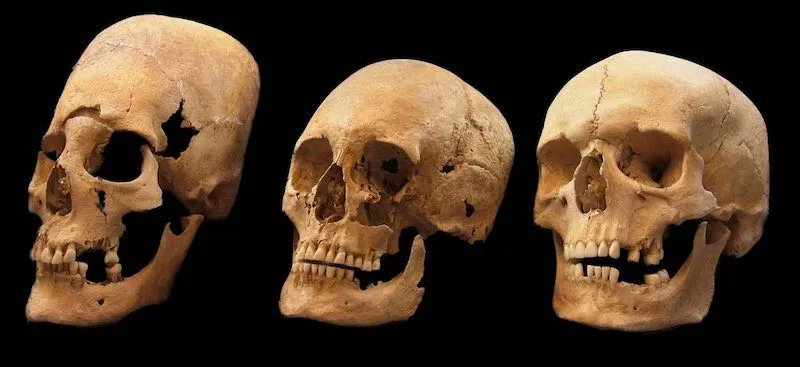
You’re so Turk and you don’t even know it There are many ways to conquer the known world. History is littered with extraordinary individuals’ and exceptional empires’ dazzlingly far-ranging strings of conquests. Most of those freshly drawn borders are destined to contract again as quickly as a shallow lake in a drought. But one people’s exploits have run counter to this trend. For over a millennium and a half, they expanded inexorably. The secret to their success, if there was one, was to be, not like the much more legendary Imperial Romans, but like the proverbial well-advised visitor to Rome itself. Whomever they conquered, the Turks seemed guided by the dictate: when in Rome, do as the Romans do. Rather than tearing down all that came before them or forcing their ways on their subjects, for centuries militarily triumphant Turks assumed the cultural, linguistic and religious practices of those they subjugated, to the point that we hardly recognize their protean ubiquity across centuries of the civilized world’s history.
Over 1,500 years have passed since the Roman Empire’s fall. One historical epoch has given way to the next and the next, from Europe’s Middle Ages to the golden century of the Spanish Imperium. Spain’s hegemony barely outlasted a single human lifetime, while the long centuries of what we call the Middle Ages were geographically restricted to the European peninsula’s western half. But sometimes, in hindsight, an untold story proves more enduringly impactful than those named ages every cultured person can recall. The little-referenced impact of the Turkic peoples stands as an exception to both time and geography’s typical constraints, ranging as it did across many centuries and Afro-Eurasia’s vast width and breadth. Turkic influence extended over 1,500 years, beginning with the fall of Rome and ending with the crumbling of the old European civilization heralded by World War I, from the Straits of Gibraltar in the west to China’s far western plains in the east. Given the vast distances and utterly disparate ways of life, it is easy to overlook the connection between on the one hand, sybaritic revelry in an Ottoman sultan’s opulent palace, and on the other, a Siberian forager eking out a meager living where the taiga meets the tundra.
Even today, you can be forgiven for missing what the Kazakh herder has to do with the Turkish Cypriot fisherman. And yet, they share a lineage stretching back thousands of years to the last great cultural-demographic explosion out of the Eurasian steppe, that of the Turks. Like the Indo-Europeans millennia before them, the Turks were restless nations of wagons and warriors who saw in the civilized world an abundant and astonishingly unguarded smorgasbord, ripe for the pillaging. But while the rapacious Indo-Europeans’ arrival hastened the end of Neolithic and Bronze Age civilizations in turn, leaving only their imposing megaliths and shattered pottery as testaments to wholly erased peoples, the Turks transformed themselves and merged with those they conquered, from the deserts of Egypt to the frigid forests of Muscovy. They sank roots deep into the soil of their conquered lands and consistently accelerated a fertile cultural synthesis, rather than overseeing the erasure of what came before.
When the Huns arrived like a wild card of terror dealt into the Imperial Roman geopolitics around 400 AD, first aiding the imperial forces against the Goths, before turning against them and ravaging the Balkans, Europe finally truly experienced the potent ferocity of a Turkic people. Thus was an enduring precedent set. Within a century of the European Hunnic Empire’s collapse, in the mid-400’s, the Göktürk Khaganate ruled a vast territory from the Volga River all the way to Manchuria. After the Göktürk collapse in the early 7th century, Turks in western Eurasia became slaves to the Muslim caliphs, and in the 10th century, these Turkic slave soldiers rose to become masters of the Islamic world. Meanwhile, in China, Uyghur and Shatuo Turks played kingmakers during the Tang dynasty in the 700’s. After the Tang’s fall, the Shatuo founded their own dynasties while their cousins to the west were setting themselves up as rulers of the Islamic world, in fact, if not name. But all this would prove mere prologue to a dominion of the sword lasting over a millennium. In War! What Is It Good For?: Conflict and the Progress of Civilization from Primates to Robots, Ian Morris argues that the millennium between 500 and 1500 AD saw the definitive rise of mounted warriors as the decisive force in human conflicts, and their subsequent domination of the Eurasian supercontinent, from horse-archer samurai in Japan to lance-bearing medieval knights in Western Europe. Every great Eurasian agricultural civilization, European, Islamic, Indian or Chinese, would face a reckoning with the hordes of Turkic nomads. While the Chinese and Russians adopted the Turks’ own way of war to turn the tide against them, Muslims and Indians were conquered by the steppe warriors, who became their ruling class.
The legacy of these Eurasian nomads extended down to the modern era, right into the 19th and 20th centuries. When the British deposed the last Mughal Emperor in 1857, a descendant of Timur, the Turkic Ottomans and Qajar continued to rule in Istanbul and Iran. These three dynasties, the Mughals, Ottomans and Qajar, had been the preeminent social, political and military forces in the Islamic world since 1500, but the Turkic imprint was also felt far beyond their ambit. Peter the Great, the Tsar famous for dragging Russia into European modernity, had a Turkic Christian mother, a scion of one of the many Tatar clans who were absorbed into the Russian aristocracy. To the south, the Mamluk military caste that ruled Egypt were mostly Turks descended from slaves from Black Sea domains. In the 16th century, Turkic influence in the Mediterranean was felt as far west as Algeria, where the Ottoman Turk Barbarossa took to privateering, pioneering a practice that, in the West, would spawn legends of the fearsome Barbary pirates. While the Ottomans were stretching their influence out toward the edges of the Atlantic, in the east, the Manchus were integrating the Turkic oases of the Tarim Basin into the Chinese Empire, a legacy that continues down to the present with Uyghurstan’s absorption into the People’s Republic of China.razibkhan.com/p/youre-so-tur…
Over 1,500 years have passed since the Roman Empire’s fall. One historical epoch has given way to the next and the next, from Europe’s Middle Ages to the golden century of the Spanish Imperium. Spain’s hegemony barely outlasted a single human lifetime, while the long centuries of what we call the Middle Ages were geographically restricted to the European peninsula’s western half. But sometimes, in hindsight, an untold story proves more enduringly impactful than those named ages every cultured person can recall. The little-referenced impact of the Turkic peoples stands as an exception to both time and geography’s typical constraints, ranging as it did across many centuries and Afro-Eurasia’s vast width and breadth. Turkic influence extended over 1,500 years, beginning with the fall of Rome and ending with the crumbling of the old European civilization heralded by World War I, from the Straits of Gibraltar in the west to China’s far western plains in the east. Given the vast distances and utterly disparate ways of life, it is easy to overlook the connection between on the one hand, sybaritic revelry in an Ottoman sultan’s opulent palace, and on the other, a Siberian forager eking out a meager living where the taiga meets the tundra.
Even today, you can be forgiven for missing what the Kazakh herder has to do with the Turkish Cypriot fisherman. And yet, they share a lineage stretching back thousands of years to the last great cultural-demographic explosion out of the Eurasian steppe, that of the Turks. Like the Indo-Europeans millennia before them, the Turks were restless nations of wagons and warriors who saw in the civilized world an abundant and astonishingly unguarded smorgasbord, ripe for the pillaging. But while the rapacious Indo-Europeans’ arrival hastened the end of Neolithic and Bronze Age civilizations in turn, leaving only their imposing megaliths and shattered pottery as testaments to wholly erased peoples, the Turks transformed themselves and merged with those they conquered, from the deserts of Egypt to the frigid forests of Muscovy. They sank roots deep into the soil of their conquered lands and consistently accelerated a fertile cultural synthesis, rather than overseeing the erasure of what came before.
When the Huns arrived like a wild card of terror dealt into the Imperial Roman geopolitics around 400 AD, first aiding the imperial forces against the Goths, before turning against them and ravaging the Balkans, Europe finally truly experienced the potent ferocity of a Turkic people. Thus was an enduring precedent set. Within a century of the European Hunnic Empire’s collapse, in the mid-400’s, the Göktürk Khaganate ruled a vast territory from the Volga River all the way to Manchuria. After the Göktürk collapse in the early 7th century, Turks in western Eurasia became slaves to the Muslim caliphs, and in the 10th century, these Turkic slave soldiers rose to become masters of the Islamic world. Meanwhile, in China, Uyghur and Shatuo Turks played kingmakers during the Tang dynasty in the 700’s. After the Tang’s fall, the Shatuo founded their own dynasties while their cousins to the west were setting themselves up as rulers of the Islamic world, in fact, if not name. But all this would prove mere prologue to a dominion of the sword lasting over a millennium. In War! What Is It Good For?: Conflict and the Progress of Civilization from Primates to Robots, Ian Morris argues that the millennium between 500 and 1500 AD saw the definitive rise of mounted warriors as the decisive force in human conflicts, and their subsequent domination of the Eurasian supercontinent, from horse-archer samurai in Japan to lance-bearing medieval knights in Western Europe. Every great Eurasian agricultural civilization, European, Islamic, Indian or Chinese, would face a reckoning with the hordes of Turkic nomads. While the Chinese and Russians adopted the Turks’ own way of war to turn the tide against them, Muslims and Indians were conquered by the steppe warriors, who became their ruling class.
The legacy of these Eurasian nomads extended down to the modern era, right into the 19th and 20th centuries. When the British deposed the last Mughal Emperor in 1857, a descendant of Timur, the Turkic Ottomans and Qajar continued to rule in Istanbul and Iran. These three dynasties, the Mughals, Ottomans and Qajar, had been the preeminent social, political and military forces in the Islamic world since 1500, but the Turkic imprint was also felt far beyond their ambit. Peter the Great, the Tsar famous for dragging Russia into European modernity, had a Turkic Christian mother, a scion of one of the many Tatar clans who were absorbed into the Russian aristocracy. To the south, the Mamluk military caste that ruled Egypt were mostly Turks descended from slaves from Black Sea domains. In the 16th century, Turkic influence in the Mediterranean was felt as far west as Algeria, where the Ottoman Turk Barbarossa took to privateering, pioneering a practice that, in the West, would spawn legends of the fearsome Barbary pirates. While the Ottomans were stretching their influence out toward the edges of the Atlantic, in the east, the Manchus were integrating the Turkic oases of the Tarim Basin into the Chinese Empire, a legacy that continues down to the present with Uyghurstan’s absorption into the People’s Republic of China.razibkhan.com/p/youre-so-tur…
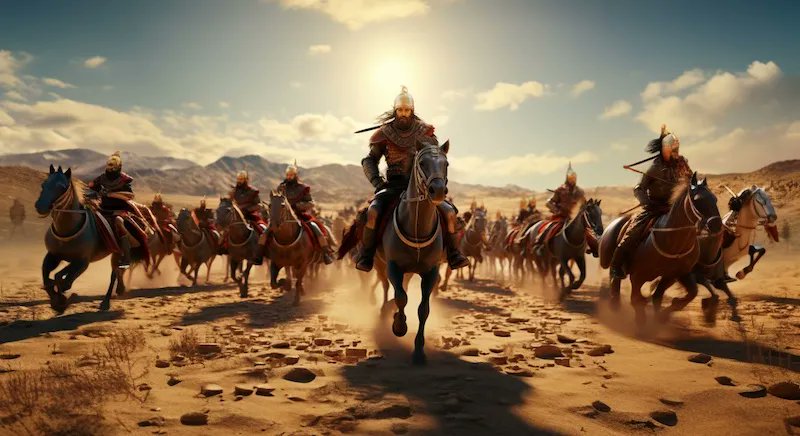
Steppe 1.1b: culture vultures descend By 3300 BC, the wagon-bound lifestyle of the Yamnaya extended from the edge of Europe to the mountains of Mongolia. In Mongolia, the Yamnaya lifestyle was perfectly suited to the pastures of the Altai. Their herds, their wagons and their weapons suited their new territory. It was far different in the west, in a Europe of thick forests, rolling fields of wheat and declining but venerable civilizations. There were centuries of interaction between the Yamnaya and the farmers of the west before the steppe nomads rapidly expanded after 3000 BC. How was it that these wagon-bound nomads conquered a continent in a matter of a few generations?
The Neolithic farmers had brought with them a cultural toolkit assembled in Anatolia and the Levant: wheat, pulses, cattle, sheep, goats and even dogs. Moving northward, the climate changed, becoming less suitable for their crops, so they concentrated themselves in fertile pockets and river valleys. Eventually, they pushed into southern Scandinavia and the British Isles, cold, damp lands where they clung to the margins of existence. Nevertheless, even on these less hospitable frontiers, they persisted for thousands of years.
But intensive farming continuously in the same region eventually leads to environmental degradation. Humans slowly eat away at their resources, until there is nothing left. When the forests are gone, there is no longer wood for firing the hearth, and erosion mercilessly carries away rich soil. Nutrients are depleted and irrigated fields turn to salt. When the end comes, the last unfortunate generation is often unprepared. After 3000 BC, the Cucuteni-Trypillia of Romania abandoned their towns. Tens of thousands of humans just “vanished” from the large settlements, though there is evidence of refugees in caves, hilltop villages and on islands. A clue to what befell them is found far to the west, in the Britain and Ireland of the same era. There, farming gave way to cattle and sheep herding, due to both climate change and resource exhaustion. If the Cucuteni-Trypillian towns existed in symbiosis with a thickly settled countryside, then a population collapse in their hinterlands may have proven devastating. An agricultural civilization lives and dies by the fortune of its farmers.
We’ve seen this movie before. Archaeologists and historians had a difficult time imagining that Guatemala’s highland villagers were descendants of the builders of the great Maya cities which had flourished 1,000 years earlier. But the translation of the Maya Codex confirmed that the modern Maya were heirs to a great civilization which collapsed and declined due to overpopulation and ecological instability. The Classical Greeks were not clear that the great fortresses of the Bronze Age had been created by their own ancestors, so total was the collapse and clean the cultural rupture. The Mycenaean kingdoms collapsed after 1200 BC, and their inhabitants died or fled to the countryside. Homer’s world is that of the Dark Age that came after, when illiterate warlords ruled small domains that had regressed to a rustic simplicity. Only in such a society would Odysseus, the king of Ithaca, be depicted ploughing his own fields, and marrying his sister off to a wealthy swineherd.
We cannot go back and read the histories or review the mythology of the last Neolithic farming societies of Northern Europe. They had no writing and their oral history is lost to us. They cannot speak to us except in their materials, which is why we call the societies the Yamnaya replaced by preposterous names like the “Funnelbeaker culture.” But we can draw lessons from later occasions of societal collapse to posit why and how they fell. The world of the last Neolithic farmers was that of a decayed society that was overwhelmed, absorbed, and transformed. Ingenious enough to construct imposing stoneworks without mortar, they were caught flat-footed when faced with the triple threat of famine, plague and war.
Newgrange, Ireland, ~3000 BC📷
But the Yamnaya could not just roll in and transplant their lifestyle in totality. The Hungarian plain is the most westerly extension of the Eurasian steppe. Pure nomadism is dependent upon raising vast herds which could not be sustained beyond the most ideal central zone of the Danube. The European societies contemporaneous with the later Yamnaya, but to their west and north, raised cattle and sheep, but they also farmed. They were agro-pastoralists, not nomads. We now know that the Yamnaya changed again when that was the path to conquest. Genetics has clinched the fact that many societies which mixed pastoralism with farming were overwhelmingly descended from Yamnaya newcomers. But not exclusively.
The original tag: hearthside graffiti
The so-called Corded Ware are the earliest of the Yamnaya farming cultures. The Yamnaya who settled in Northern Europe produced unique vessels with exteriors textured by cross-hatchings. Some suggest a crude woven-reed surface, others are graced with a delicate tracery of slender twisted cords, but all clearly mark the Corded Ware presence. Where did this new style come from? The Corded Ware buried their dead under mounds, with daggers, axes and maces, just as their steppe Yamnaya relatives did. All these items had precedent on the Pontic steppe. But the pottery did not. Until recently, a heterodox view in archaeology held that the Corded Ware were simply Yamnaya who had migrated into Europe. But then where did the pots come from?razibkhan.com/p/steppe-11b-c…
The Neolithic farmers had brought with them a cultural toolkit assembled in Anatolia and the Levant: wheat, pulses, cattle, sheep, goats and even dogs. Moving northward, the climate changed, becoming less suitable for their crops, so they concentrated themselves in fertile pockets and river valleys. Eventually, they pushed into southern Scandinavia and the British Isles, cold, damp lands where they clung to the margins of existence. Nevertheless, even on these less hospitable frontiers, they persisted for thousands of years.
But intensive farming continuously in the same region eventually leads to environmental degradation. Humans slowly eat away at their resources, until there is nothing left. When the forests are gone, there is no longer wood for firing the hearth, and erosion mercilessly carries away rich soil. Nutrients are depleted and irrigated fields turn to salt. When the end comes, the last unfortunate generation is often unprepared. After 3000 BC, the Cucuteni-Trypillia of Romania abandoned their towns. Tens of thousands of humans just “vanished” from the large settlements, though there is evidence of refugees in caves, hilltop villages and on islands. A clue to what befell them is found far to the west, in the Britain and Ireland of the same era. There, farming gave way to cattle and sheep herding, due to both climate change and resource exhaustion. If the Cucuteni-Trypillian towns existed in symbiosis with a thickly settled countryside, then a population collapse in their hinterlands may have proven devastating. An agricultural civilization lives and dies by the fortune of its farmers.
We’ve seen this movie before. Archaeologists and historians had a difficult time imagining that Guatemala’s highland villagers were descendants of the builders of the great Maya cities which had flourished 1,000 years earlier. But the translation of the Maya Codex confirmed that the modern Maya were heirs to a great civilization which collapsed and declined due to overpopulation and ecological instability. The Classical Greeks were not clear that the great fortresses of the Bronze Age had been created by their own ancestors, so total was the collapse and clean the cultural rupture. The Mycenaean kingdoms collapsed after 1200 BC, and their inhabitants died or fled to the countryside. Homer’s world is that of the Dark Age that came after, when illiterate warlords ruled small domains that had regressed to a rustic simplicity. Only in such a society would Odysseus, the king of Ithaca, be depicted ploughing his own fields, and marrying his sister off to a wealthy swineherd.
We cannot go back and read the histories or review the mythology of the last Neolithic farming societies of Northern Europe. They had no writing and their oral history is lost to us. They cannot speak to us except in their materials, which is why we call the societies the Yamnaya replaced by preposterous names like the “Funnelbeaker culture.” But we can draw lessons from later occasions of societal collapse to posit why and how they fell. The world of the last Neolithic farmers was that of a decayed society that was overwhelmed, absorbed, and transformed. Ingenious enough to construct imposing stoneworks without mortar, they were caught flat-footed when faced with the triple threat of famine, plague and war.
Newgrange, Ireland, ~3000 BC📷
But the Yamnaya could not just roll in and transplant their lifestyle in totality. The Hungarian plain is the most westerly extension of the Eurasian steppe. Pure nomadism is dependent upon raising vast herds which could not be sustained beyond the most ideal central zone of the Danube. The European societies contemporaneous with the later Yamnaya, but to their west and north, raised cattle and sheep, but they also farmed. They were agro-pastoralists, not nomads. We now know that the Yamnaya changed again when that was the path to conquest. Genetics has clinched the fact that many societies which mixed pastoralism with farming were overwhelmingly descended from Yamnaya newcomers. But not exclusively.
The original tag: hearthside graffiti
The so-called Corded Ware are the earliest of the Yamnaya farming cultures. The Yamnaya who settled in Northern Europe produced unique vessels with exteriors textured by cross-hatchings. Some suggest a crude woven-reed surface, others are graced with a delicate tracery of slender twisted cords, but all clearly mark the Corded Ware presence. Where did this new style come from? The Corded Ware buried their dead under mounds, with daggers, axes and maces, just as their steppe Yamnaya relatives did. All these items had precedent on the Pontic steppe. But the pottery did not. Until recently, a heterodox view in archaeology held that the Corded Ware were simply Yamnaya who had migrated into Europe. But then where did the pots come from?razibkhan.com/p/steppe-11b-c…
• • •
Missing some Tweet in this thread? You can try to
force a refresh