Manchester City vs Newcastle
· Inverted Centre Back (Akanji)
· Newcastle’s Compact Defence
· Man City’s Answers
· Phil Foden
· Space On The Right Flank
[THREAD]
· Inverted Centre Back (Akanji)
· Newcastle’s Compact Defence
· Man City’s Answers
· Phil Foden
· Space On The Right Flank
[THREAD]
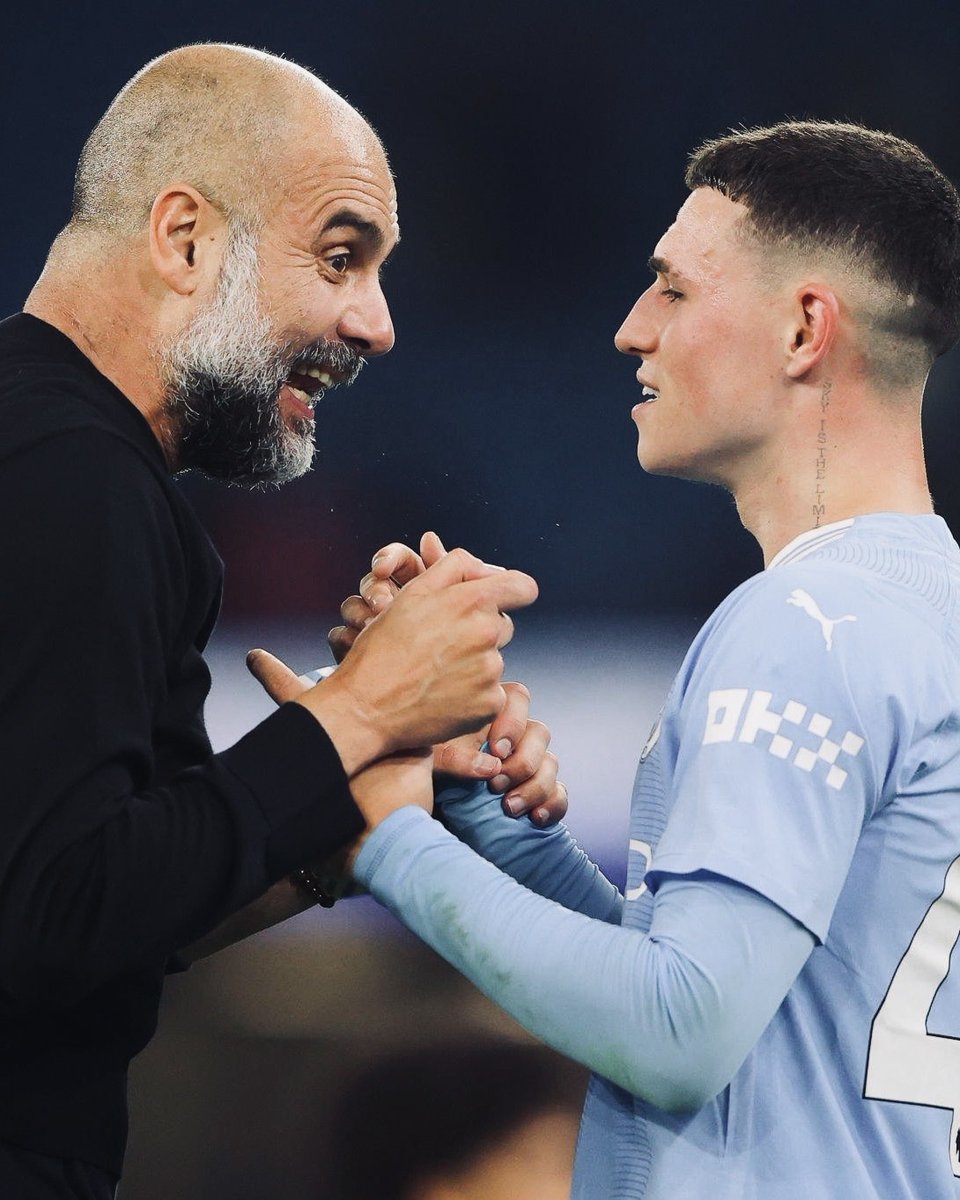
What's interesting about this match is how Akanji playing the John Stones Role, he moves forward to form a midfield three with Rodri – Kovacic.
Central overloads with Foden – Alvarez appearing in between the lines.
(@MetricaSports)
Central overloads with Foden – Alvarez appearing in between the lines.
(@MetricaSports)
Man City often found the access to Foden/Alvarez because Newcastle’s CBs hesitated to step up (due to Haaland).
If Newcastle press with man-to-man and the access to Foden/Alvarez was closed, they will play direct.
They attracted the press 1st then tried to exploit the space behind them.
They attracted the press 1st then tried to exploit the space behind them.
City almost scored a goal by playing direct to Haaland.
A good matchup between him and Schar – Botman.
A good matchup between him and Schar – Botman.
Newcastle tried to press more aggressively (9v9 including Ederson).
They often press Ederson and leave Walker free on the right side.
They often press Ederson and leave Walker free on the right side.
Eddie Howe tasked Joelinton to cover big areas (just like last season) and stop Walker to progress from there.
Also helped by Gordon.
Also helped by Gordon.
Newcastle's pressing trap forced Rodri to make an error in the second half.
Man City also tried to play direct to Foden/Alvarez and take advantage of the transitional moments/situations.
Here Newcastle pressed more and more aggressive which made them outnumbered in the last line (3v2).
Here Newcastle pressed more and more aggressive which made them outnumbered in the last line (3v2).
Ederson LOL.
Man City’s Build up
· Find Walker
· Find Foden/Alvarez in between the lines
· Find Haaland
· Find Walker
· Find Foden/Alvarez in between the lines
· Find Haaland
For someone who still learning his new position, Akanji played quite well.
Playing in central areas (midfield) is already hard, but he also plays on the left side which isn’t his natural side.
Playing in central areas (midfield) is already hard, but he also plays on the left side which isn’t his natural side.
Akanji on playing the 'John Stones role': "I like it! It came a little bit surprising with John Stones' injury. I think I had 2-3 training sessions there, and then I saw it in the Super Cup, and today again. I'm starting to feel pretty confident now."
"It's obviously adjusting to it as well, to this position, it's something new. But I think it's like my fifth position that I've played now in this team. I like to learn new things, I like to get better."

Just like the previous example, Newcastle often tried to minimize Man City’s central progression (1st priority) and left Walker free on the right flank.
Grealish (LW) – Walkers (RB) hold the width, with Foden – Alvarez filled the halfspace.
Grealish (LW) – Walkers (RB) hold the width, with Foden – Alvarez filled the halfspace.
That’s why Man City often switched play to the right and tried to attack the space.
Newcastle’s response was with Dan Burn as the extra CB, with Joelinton/Gordon dropped to the backline to help.
Newcastle’s response was with Dan Burn as the extra CB, with Joelinton/Gordon dropped to the backline to help.
Almiron also often trackback to create (2v1) with Tripper against Grealish.
Made it harder for City to progress through wide areas.
Made it harder for City to progress through wide areas.
City often created overloads on the left side, with only one player (Walker) on the right side.
Rodri was often the one who provided the pass to Walker.
Newcastle press/block was so compact, they tried to outnumber City on the flank (they did this to Villa too)
The key for City to break through was Foden’s)movements to find the space in the pockets.
The key for City to break through was Foden’s)movements to find the space in the pockets.
Not only because of his movements, Foden was often ‘free’ because it was helped by Walker (who holds the width) so that Dan Brun couldn’t step up.
(@Effmatch)
(@Effmatch)
Alvarez's goal.
Foden's movements made him able to receive in the pockets which then attracted Botman and left Alvarez ‘free’ to score the goal.
Foden's movements made him able to receive in the pockets which then attracted Botman and left Alvarez ‘free’ to score the goal.
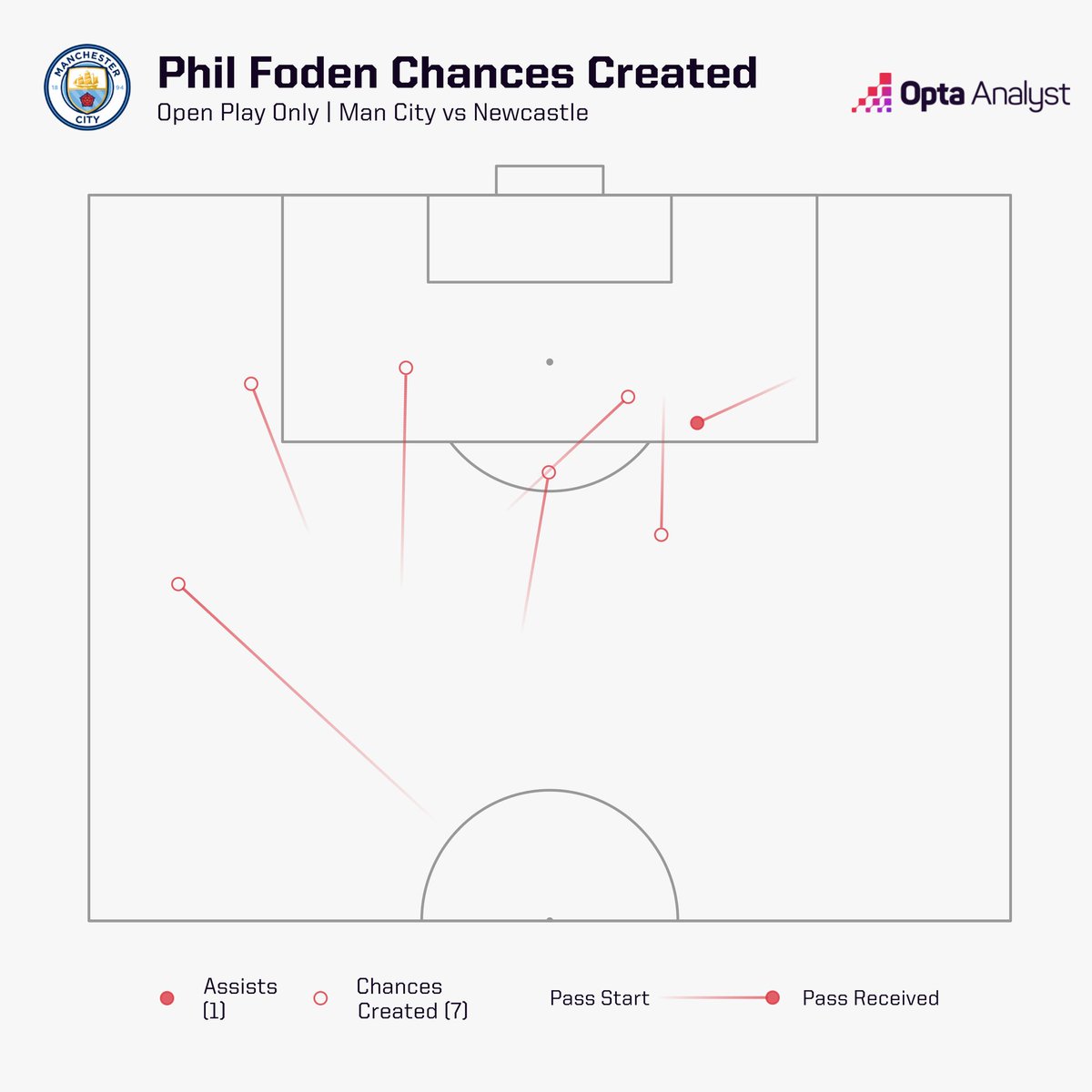
Phil Foden created seven chances (the most he’s ever had in PL) from open play.
From @OptaAnalyst
From @OptaAnalyst
Overall, Newcastle really made it hard for City to break through.
Just like how Man City tried to beat Newcastle’s press, they also tried to exploit the space behind when Newcastle had already transitioned into a settled block.
Just like how Man City tried to beat Newcastle’s press, they also tried to exploit the space behind when Newcastle had already transitioned into a settled block.
Man City didn’t press as aggressive as Newcastle, they wait for the pressing trigger (loose balls/play through wide areas) before they press more aggressively. They also tried to form a pressing trap in central areas.
But with City press with less number and intensity, it can make Newcastle able to progress.
Isak was often the target to help Newcastle’s progression through central areas.
Isak was often the target to help Newcastle’s progression through central areas.
Through wide areas, they mostly tried to combine on the right side between Trippier – Tonali – Almiron.
Helped by Bruno too.
Helped by Bruno too.
Newcastle attacked more through the right side relied on the combination and offered 3rd man run to break through City’s block.
Newcastle was able to bypass City’s press through the right side but Bruno couldn’t finish his chance.
They just missed the final action sometimes.
They just missed the final action sometimes.
Not only in possession, Grealish also helped the backline which made him often act as the extra LB.
He made it hard for Almiron – Tripper to progress through City’s left side.
He made it hard for Almiron – Tripper to progress through City’s left side.
You’re probably playing FPL this season. But are you playing it the right way?
@LazyFPL's pre-deadline emails will help you to win your mini-leagues without breaking a sweat. 99.2% of their readers agree. They’re totally free.
Subscribe here⬇️
lazyfpl.com/subscribe?utm_…
@LazyFPL's pre-deadline emails will help you to win your mini-leagues without breaking a sweat. 99.2% of their readers agree. They’re totally free.
Subscribe here⬇️
lazyfpl.com/subscribe?utm_…

• • •
Missing some Tweet in this thread? You can try to
force a refresh