2/ In terms of structure, the light infantry's Rifle Squad hasn't really changed since 1985, but there have been some recent changes in equipment since the last time I did this graphic ~4 years ago.
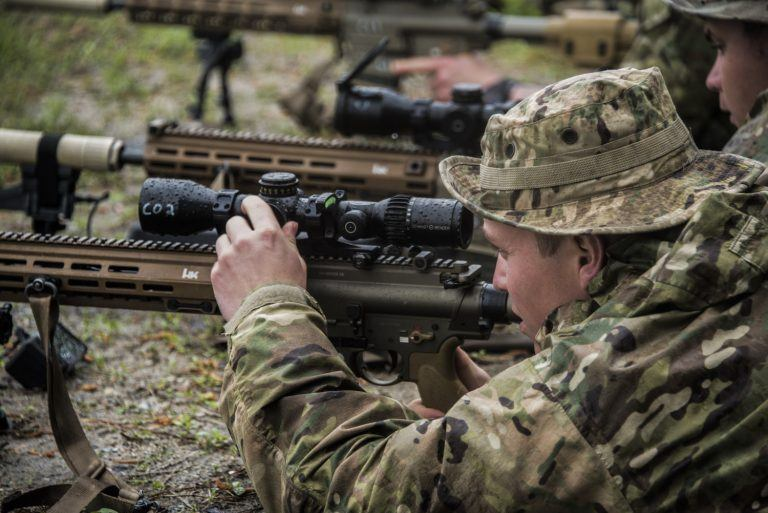
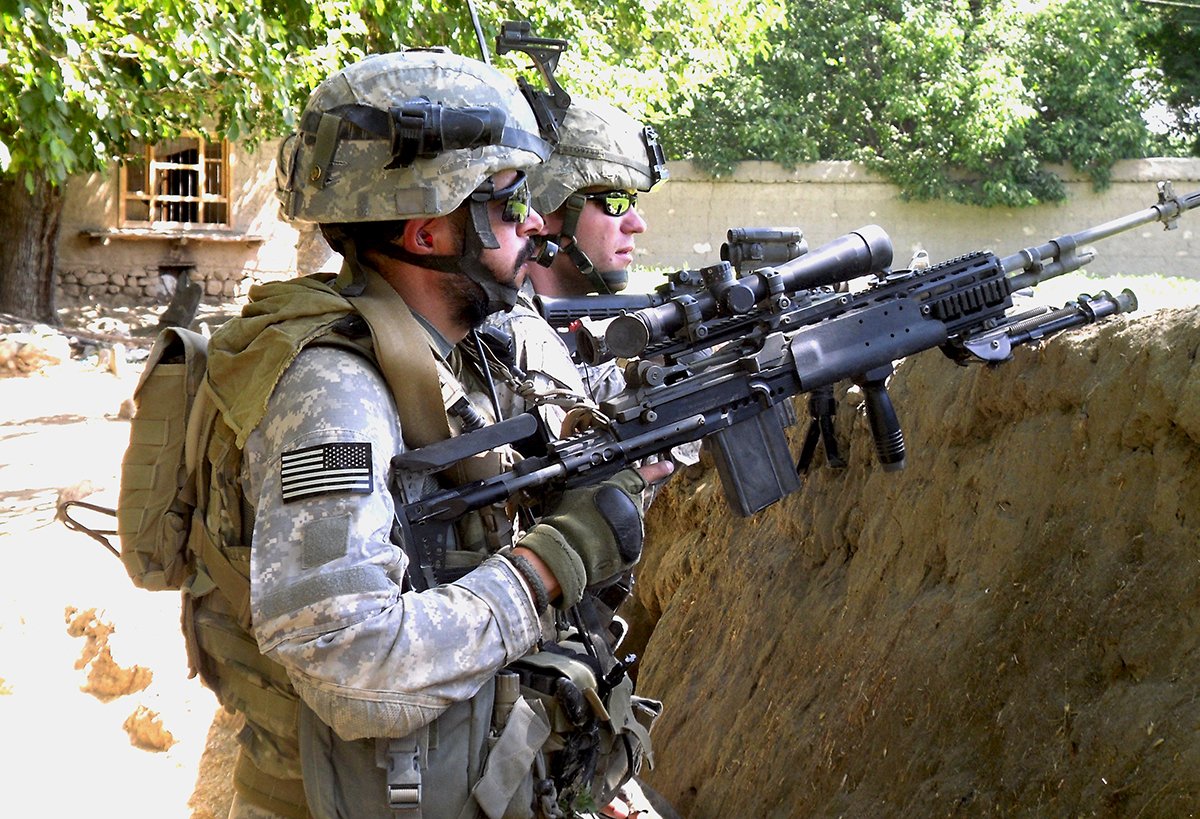
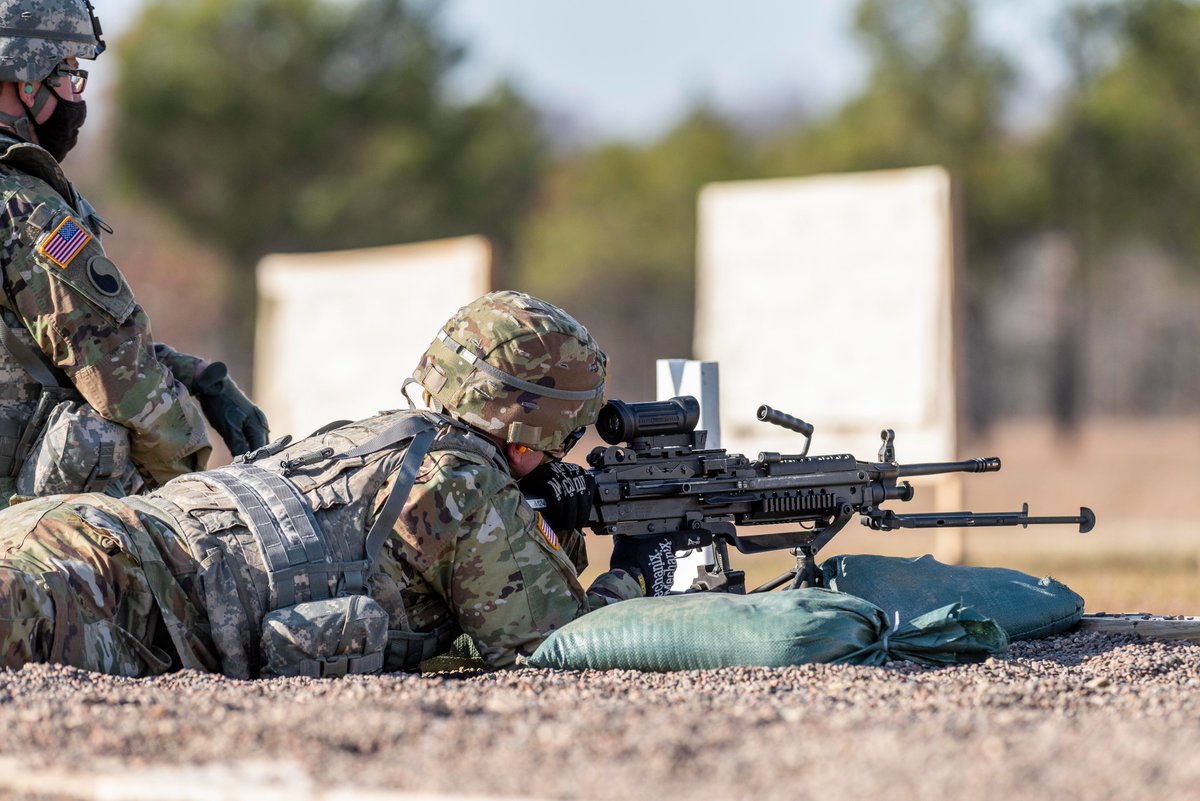
3/ The big one is the M110A1 SDMR started to be fielded as a squad-level designated marksman rifle around 2020. The SDMR config differs from the CSASS in that it has a different stock and a TANGO6 1–6x24 LPVO
4/ The CSASS config was intended to be employed by battalion-level Sniper Teams rather than Rifle Squads. Army Snipers can employ the M110 SASS or M2010/M107/new Mk22 ASR. I'm not sure if the CSASS will be fielded en masse in that role, but it did provide a viable base for SDMR
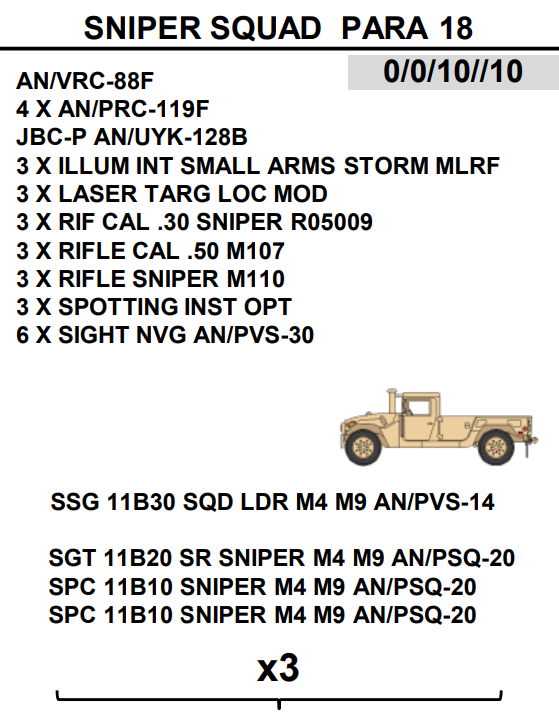
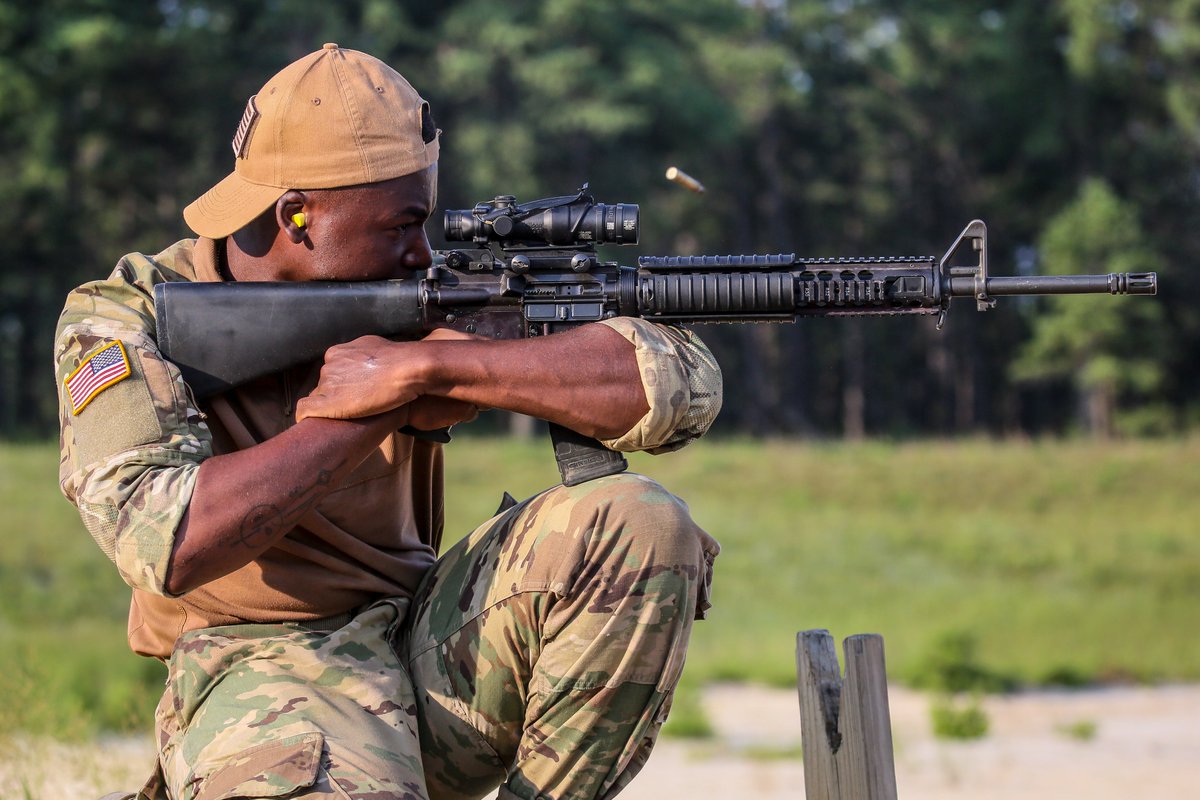
5/ The legacy solutions for the Squad DMR were an M16A4 with a version of the Trijicon M150 RCO (which would be more significant if the squad was largely equipped with unmagnified M68 CCOs) or the Mk 14 EBR.
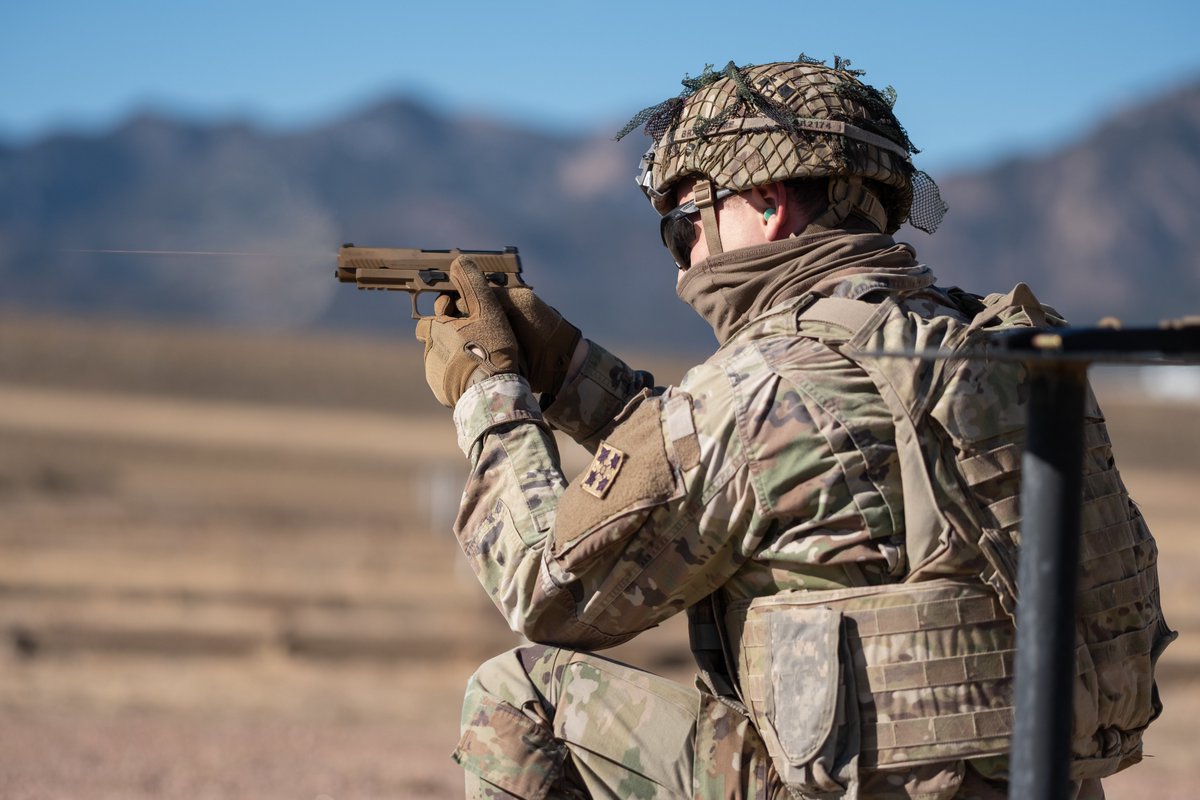
6/ Another change (several years old now) is the Army wants to issue to M17 pistols to Squad/Team Leaders, in addition to officers, SNCOs and M240 gunners as previously. I've heard this is reflected in certain unit MTOEs, but I've also heard some try to get out of carrying it
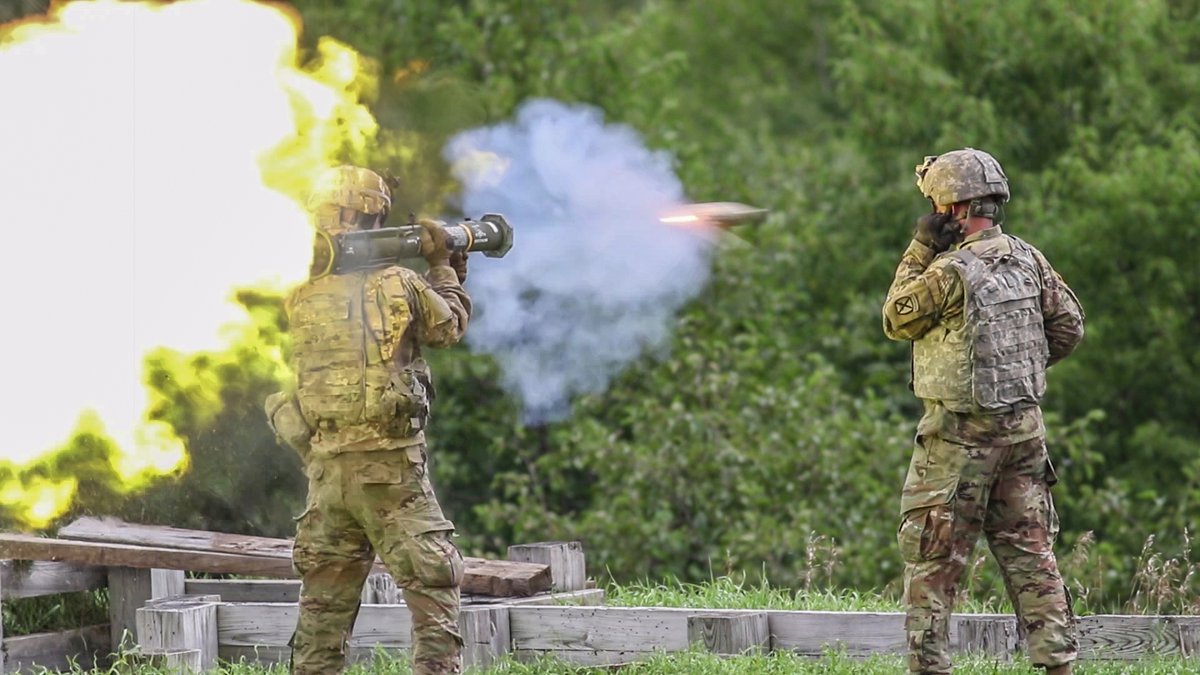
7/ In addition to personal weapons, each squad is authorized 2 shoulder-launched munitions (like AT4CS). These are normally carried by the Riflemen. In Stryker and Bradley units, Javelins are also squad-level weapons.
8/ M500 shotguns are also available for breaching. In the TOE, 18 are allotted to the Rifle Company, but I've heard these are meant for Team Leaders. I've been told directly by Rangers (75th) that in their exp TLs were primary breachers, so this may carry over to the regular Army
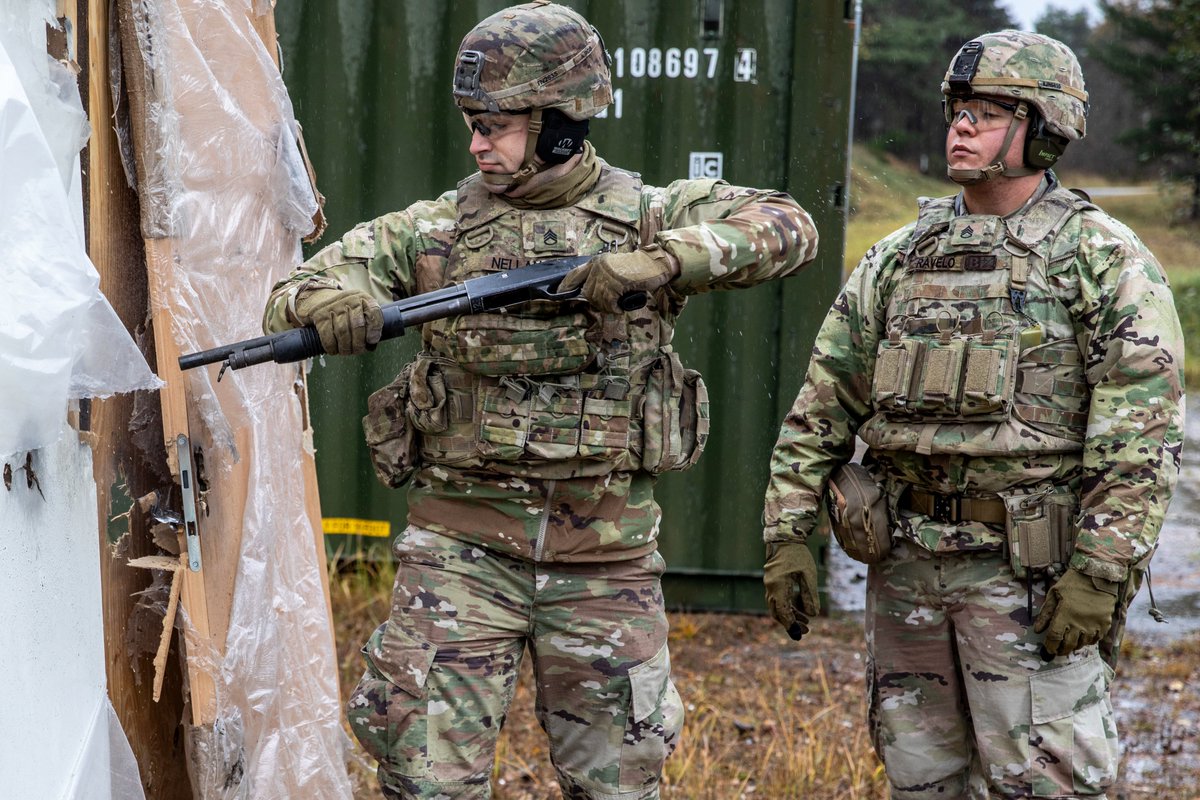
9/ This is not the same as the M26 MASS shotgun accessory, which in a BCT are generally authorized for Engineer Companies and not Rifle Companies.
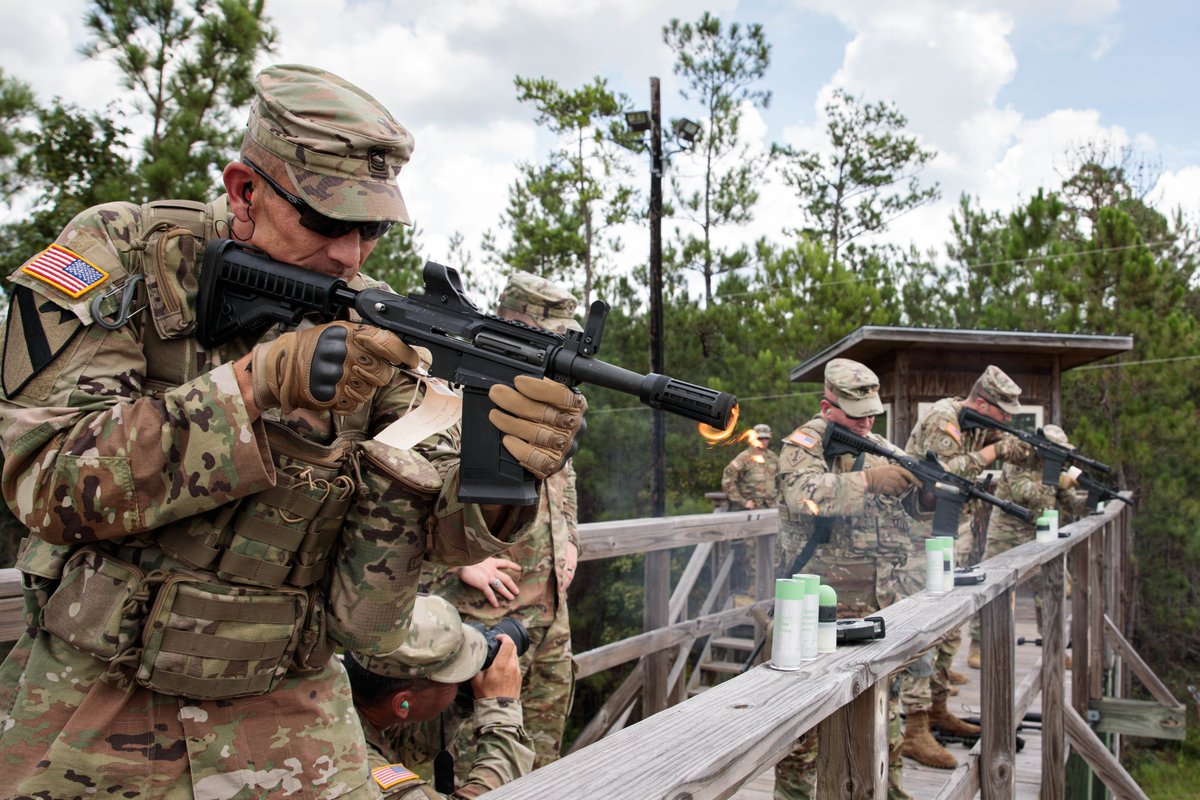
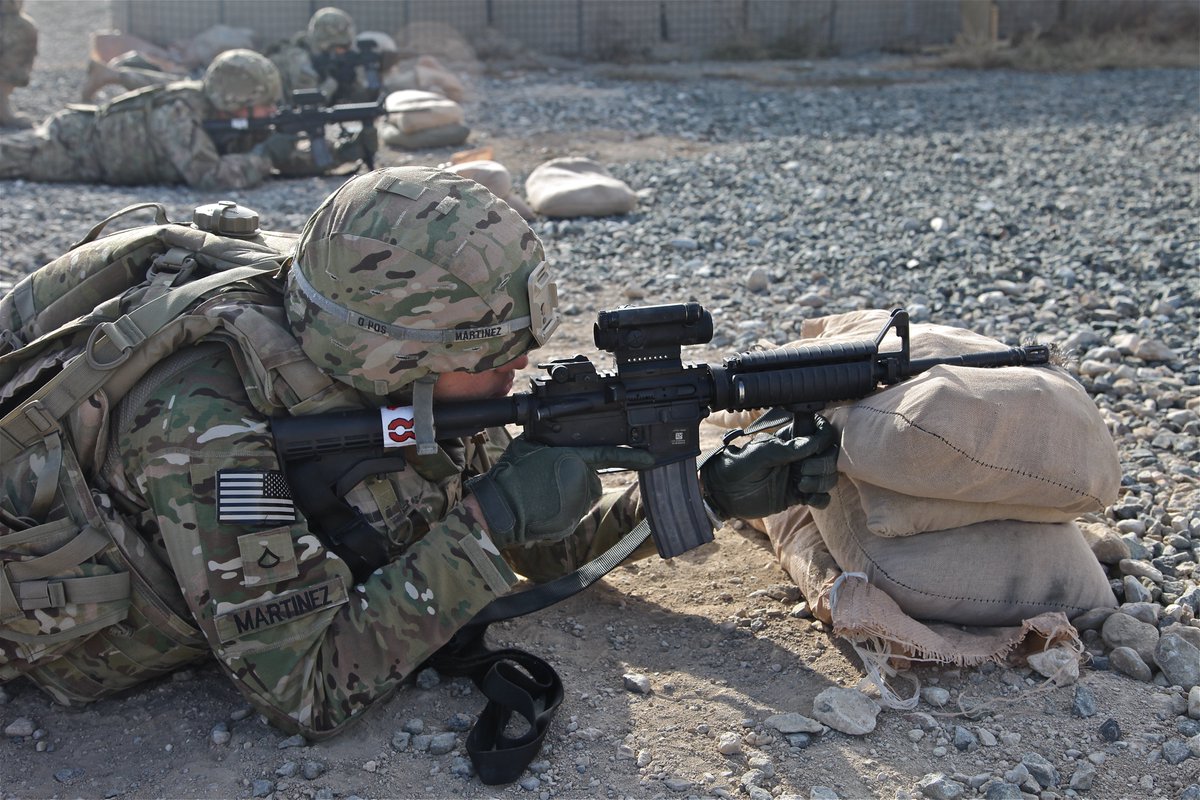
10/ One element that comes down to unit variation is optics. In some units, the Trijicion RCO/ACOG (left) is prioritized for SL/TLs, while Grenadiers/Riflemen get the unmagnified M68 CCO (right). In others, the ACOG is more common.
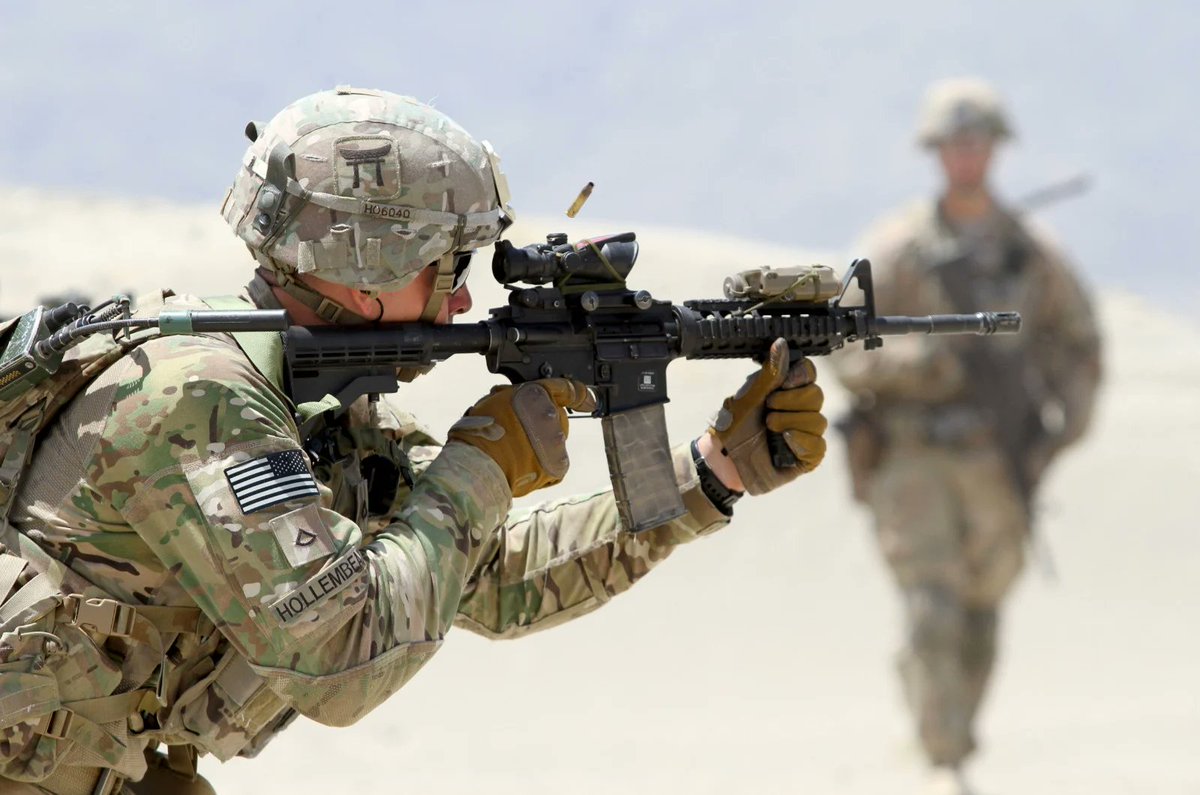
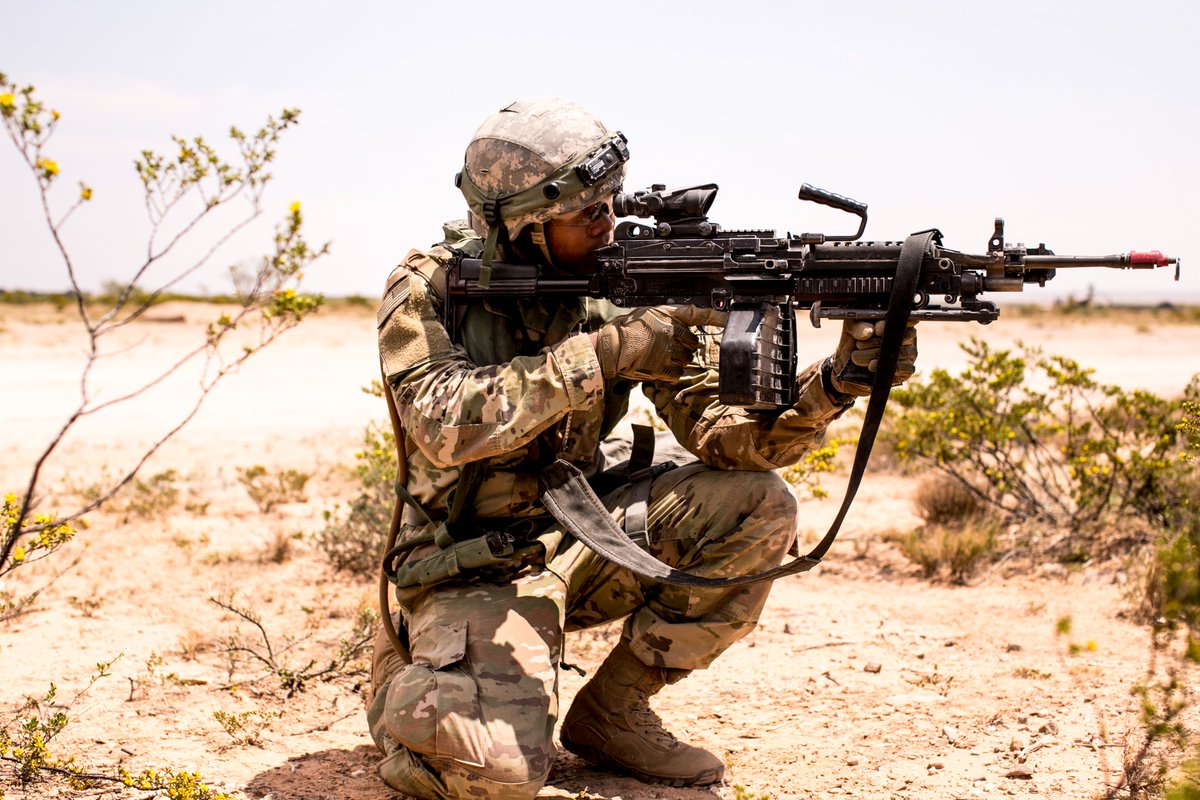
11/ For the M249, I believe the M145 Machine Gun Optic (3rd picture) is the old "doctrinal" optic for the M249 since it's what's listed in the weapon's manual. It's the main optic for the M240. But there are lots of pictures of RCOs and CCOs in use with the M249 too
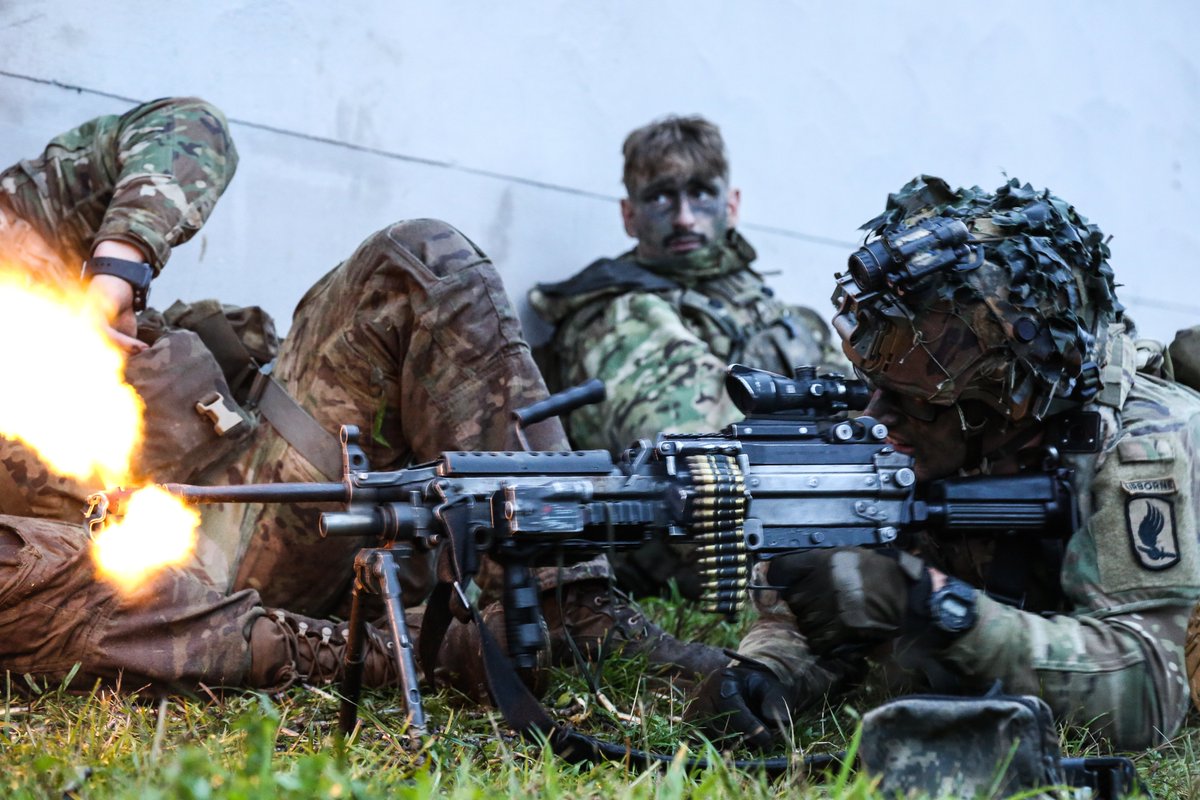
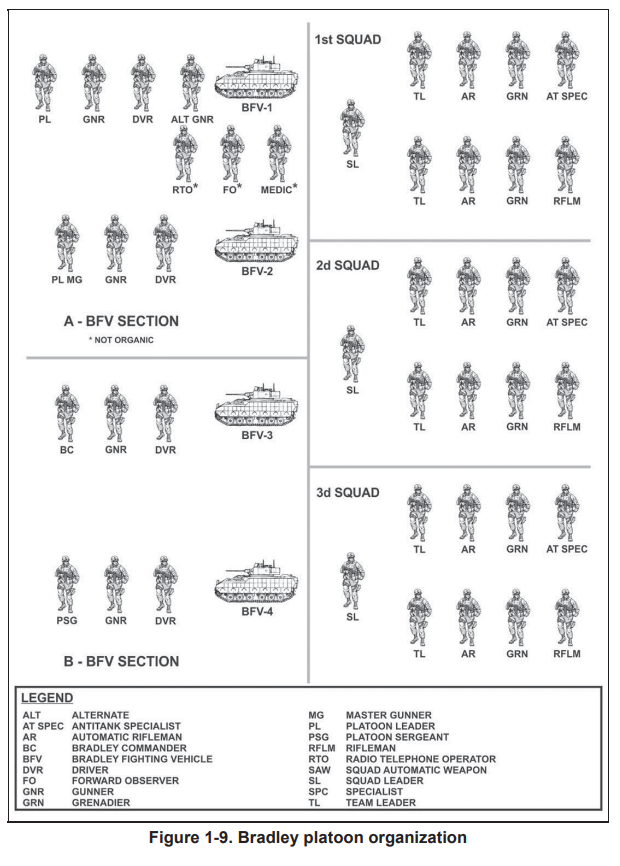
12/ One last note, Mechanized Infantry Rifle Platoons don't have a dedicated Weapons Squad like in Light/Stryker Infantry. It's common to task organize one of the mech squads as a Weapons Squad. M240B/L machine guns and Javelins are carried in the Bradleys for this purpose.
• • •
Missing some Tweet in this thread? You can try to
force a refresh

1 | The 🇲🇽 Mexican National Guard Section (Type B) the year the Guardia Nacional was formed to replace the Policía Federal. It is a federal gendamerie, mixing police & military characteristics
🇲🇽 terms in 🇺🇸:
Compañía = Company
Sección = Platoon
Pelotón = Squad
Escuadra = Team
2 | An interesting aspect of this structure was two of the three "pelotones" (squad-equivalents) were staffed by men while one was staffed by women.
3 | I assume this was to balance the integration of female agents at low levels while also providing them their own accommodation, as the National Guard has permanent quarters unlike the old Federal Police.
1 | The 🇳🇱 Dutch Motorized Infantry Squad mounted on the Boxer circa 2019, based on my convo with a Dutch Boxer officer at that time. This thread provides more detail & why money matters means they can only fit 6 dismounts in an APC the size of a house 🧵 #ORBATBoys
2 | First, their ride is the Boxer GNGP, shortly for Geniegroep or Engineer Squad. Both their infantry and engineer units use the engineer variant of the Boxer, which only has room for 6 dismounts but more stowage for equipment/munitions.
3 | There are 4 Boxers per platoon. The Platoon Commander is "Romeo" and the Deputy is "Echo", so the squads in those vehicles are named after them. The Alpha and Bravo squad leaders are doctrinally the more senior squad leaders
1 | NATO unit symbology is 90% standardized, but some countries use their own unique symbols that don't match up with the U.S. The U.S. has also historically used symbols it no longer uses. This thread will look at some of these differences and some unique ones
2 | Starting with a unique one, the🇫🇷 Dismounted Engagement Support Platoon.
Their missions are intelligence gathering behind enemy lines and raids. As part of conventional Infantry Regiments, they're sort of like Korea-era U.S. Army Rangers. I think the arrow means penetration
3 | This isn't universal, but I've noticed Euro countries use solid HQ and supply bars for their headquarters and service companies. The U.S. Army took the services out of its HHCs when it created Forward Spt Cos, so it's not as applicable. I believe the USMC just does "H&S"
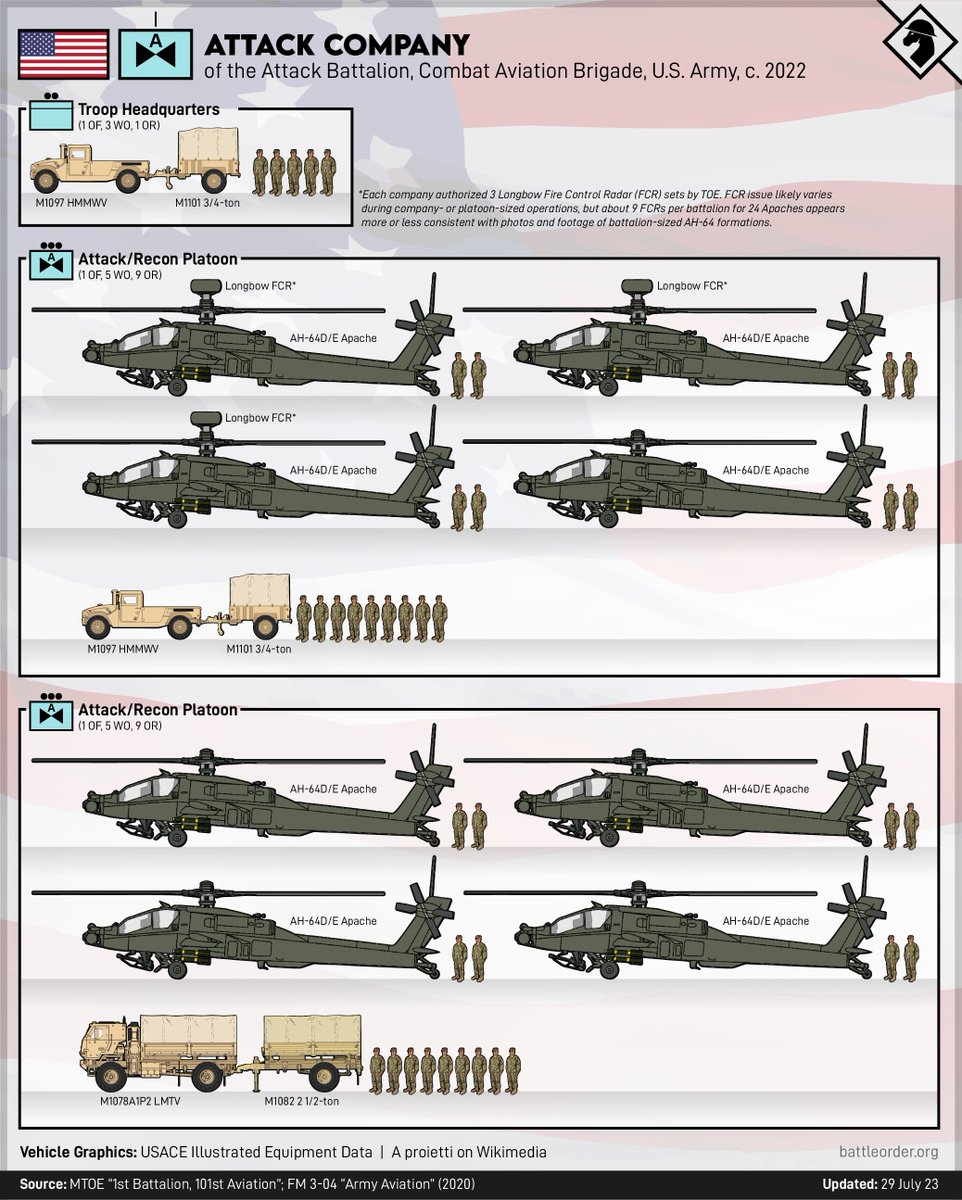
1 | The 🇺🇸 U.S. Army Attack Company, an AH-64D/E Apache attack helicopter formation part of Attack Battalions, Combat Aviation Brigade.
This 🧵thread overviews the evolution of U.S. Army Attack Helicopter organization, as it's changed dramatically several times since the 1960s.
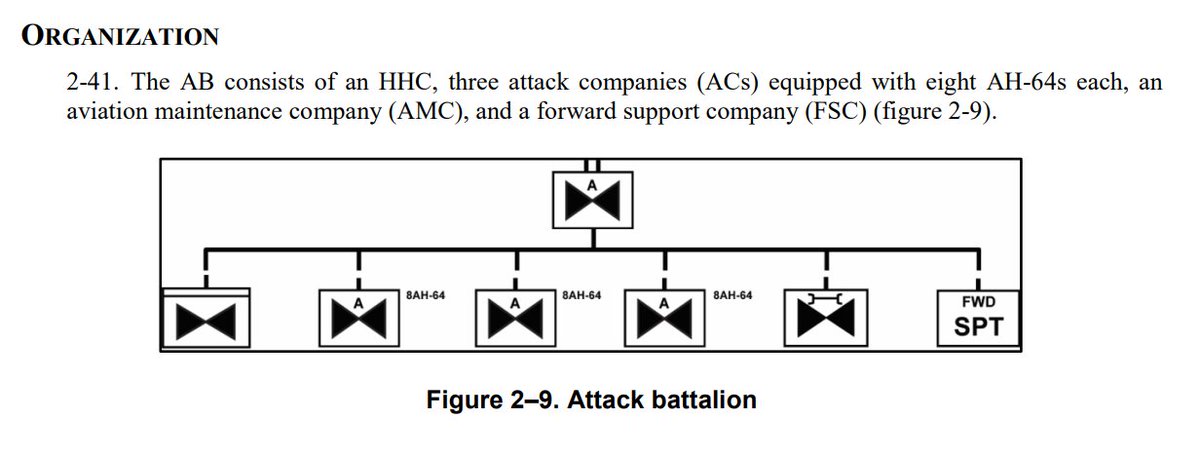
2 | Each Combat Aviation Brigade has an Attack Battalion with 3 Attack Companies, HHC, Aviation Maintenance Company and Forward Support Company. The CAB also has an Air Cavalry Squadron which is similar, but with organic RQ-7BV2 Shadows and an emphasis on recon & security
3 | Since the Longbow Fire Control Radar (FCR) was introduced in the late 1990s, the TOEs I've seen have generally prescribed 3 FCRs per company/troop. In footage you will often find Longbow-equipped Apaches paired with those without.
1 | The 🇺🇸 US Army Medium Tactical Vehicle (MTV) Company, a medium transportation capability. They serve in Composite Truck Companies, which are the C Company of Division Sustainment Support Battalions (formerly numbered companies under CSSBs).
2 | The main equipment of the MTV Platoon is the 5-ton MTV truck and associated trailer, a relative of the Steyr 12M18.
Heavy Divisions have 1 MTV Plt (20 trucks + trailers), 1 HET Plt, and 2 PLS Plts. Light Divisions have 2 MTV (40 trucks + trailers) and 2 PLS Plts.
3 | Unlike the 10x10 PLS trucks specializing in bulk cargo or HETs that can transport tanks and other armor, the MTVs are more suited to transporting personnel and breakbulk cargo.
1 | Part 2 of the Army's Navy, the LSV Detachment operates the U.S. Army's 🇺🇸 Besson-class Logistics Support Vessel (LSV). It is about 7x larger by displacement than the LCU-2000 I covered yesterday and is capable of transoceanic self-deployment.
2 | The LSV is capable of carrying up to 24× M1A2 Abrams tanks or 32× M2A2 Bradleys, 48× double-stacked 20ft containers, or 2,000 short tons of cargo (equivalent to 40× C-17 loads).
Range is 8,200 nautical miles unloaded and 5,500-6,500 nautical miles loaded.
3 | Like other Army watercraft, the LSV can act as a ship-to-shore connector, taking on roll-on/roll-off (RO/RO) loads off-shore from "strategic vessels" like LMSR (which carry the Army's prepositioned stocks afloat), fast sealift ship (FSS) or other RO/RO vessel via an Army RRDF