Read on Twitter
There has been some confusion about prosecutorial decisions of late. What follows is not aimed at any particular case. I know not why some cases are prosecuted and other are not. But the points below are perhaps not widely known.
1- police are not obliged to report to the procurator fiscal every alleged crime. They have a discretion to issue warnings.
2- however, that does not apply where there is an aggravation. I’d there is then, in general, the case must be reported to the PF.
2- however, that does not apply where there is an aggravation. I’d there is then, in general, the case must be reported to the PF.
3- the PF is not obliged to prosecute every reported crime. Again, there is a discretion.
4- once more, however, the discretion not to prosecute is removed, of at least tightly circumscribed, where there is an aggravation.
4- once more, however, the discretion not to prosecute is removed, of at least tightly circumscribed, where there is an aggravation.
5- an aggravation relates to certain (but not all) characteristics. Thus race is covered. As is religion; and sexual orientation; and gender reassignment.
6- misogyny, however, is not an aggravation.
6- misogyny, however, is not an aggravation.
7- likewise, being gender critical may be covered under the Equality Act. But it is not covered by aggravations under the criminal law.
8- accordingly, neither an assault on a woman for being a woman, or for being a gender critical woman, is an aggravated crime. A report of such could be dealt with by police warning, or not prosecuted by the PF, under the discretions mentioned above.
9- on the other hand, a s38 (breach of the leave) which involves no assault but which does involve alleged hate crime (re race, religion, sexual orientation etc - but not misogyny) is aggravated and, in general, must be prosecuted and is not subject to those discretions.
10- what this means is a breach of the peace involving verbal abuse of certain minorities must be prosecuted; but the assault of a woman does not have to be. Whether this is desirable or advisable I leave to others. But it’s where the law stands right now. ENDS
Urg. Breach of the “peace”. Not leave.
Apologies for the typos. Haven’t really worked out how to post threads yet… 😳
@IainMcCord @camtacs You can see the current aggravations here:
Religion is covered. Belief is not. Nor is sex. parliament.scot/bills-and-laws…

Religion is covered. Belief is not. Nor is sex. parliament.scot/bills-and-laws…
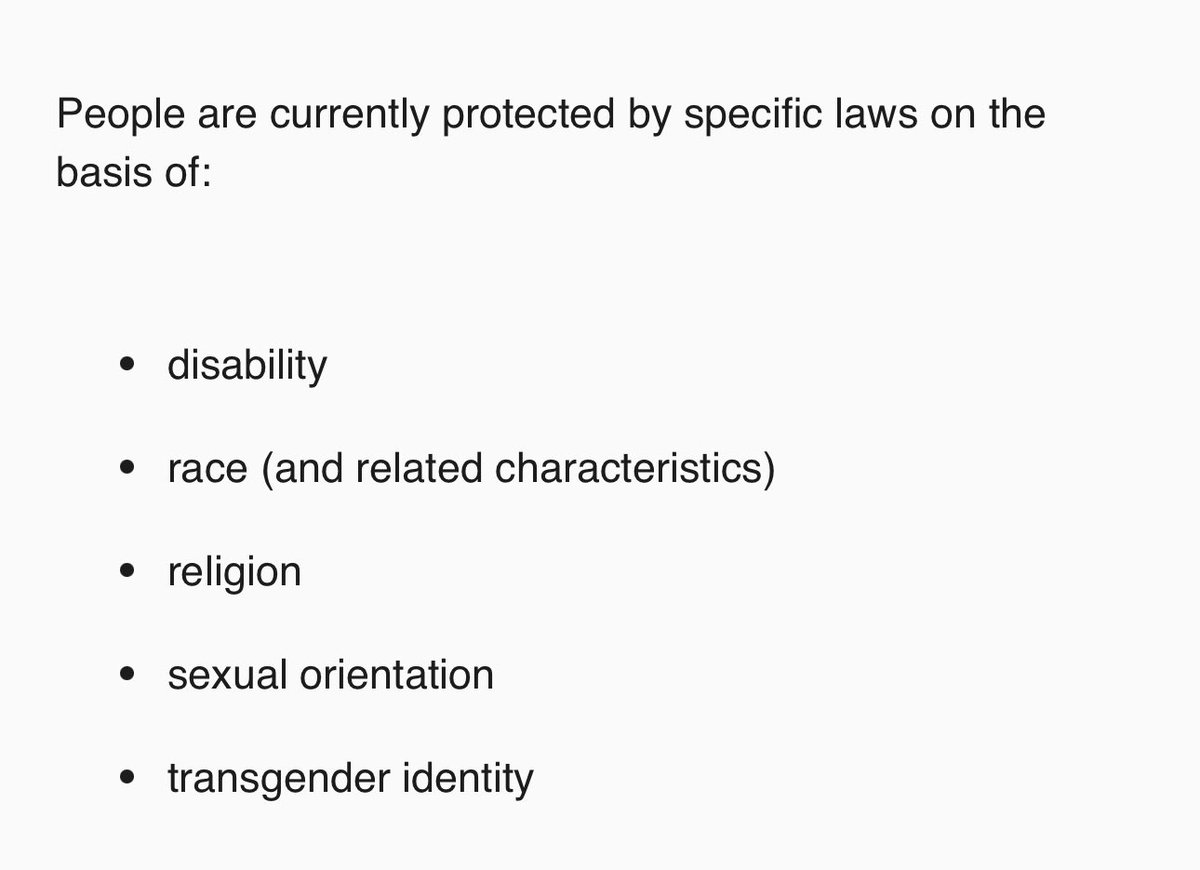
@IainMcCord @camtacs And age is not an aggravation either.
• • •
Missing some Tweet in this thread? You can try to
force a refresh