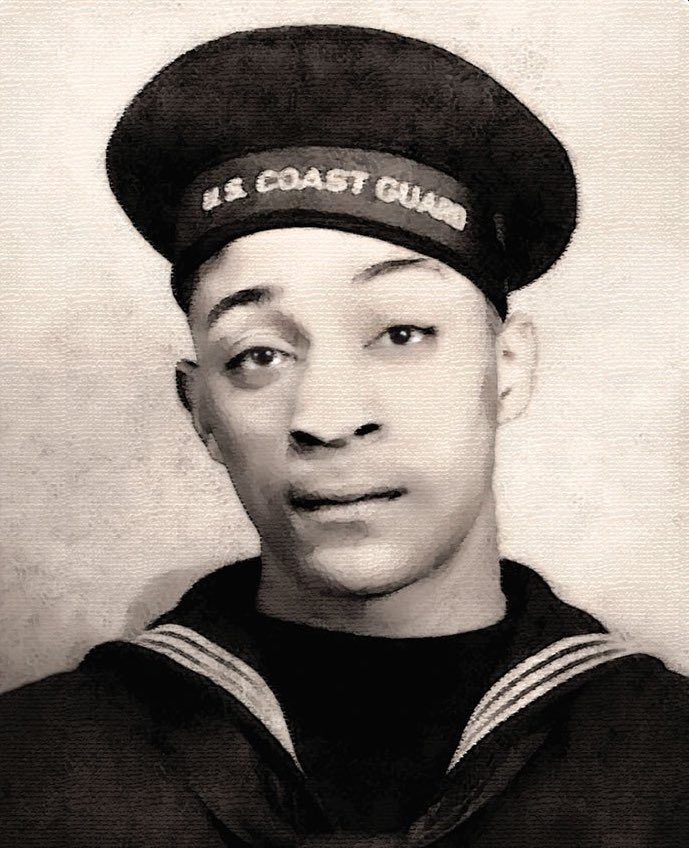
1/ In the late 1800s, the country was faced with 2 serious problems: homeless children in the cities & inadequate farm labor in the west. One of NYC’s “elite”, Charles Brace, saw these 2 issues and came up with a solution… sell the children of the city to rural farmers. 

2/ Brace, a Yale graduate and Calvinist minister from Connecticut, arrived in NYC with the stated intention to help solve the ever-growing problem of “homeless” children that was infecting the city.

3/ Labeled “street rats” or “street Arabs” by the city, the mostly immigrant children were arrested for begging, stealing & other acts they engaged into try and survive.

4/ Brace’s initial solution was to establish orphanages throughout the city to care for the children and put them to work.
Older boys were put to work as “newsboys” and were permitted to live in boys’ homes for the cost of room and board.
Older boys were put to work as “newsboys” and were permitted to live in boys’ homes for the cost of room and board.
5/ At the same time the country was expanding west and reports of farmers unable to find labor were filling the parlors of the wealthy. Brace looked at these 2 issues & decided he had the solution: sell the children to farm families indeed of extra hands.

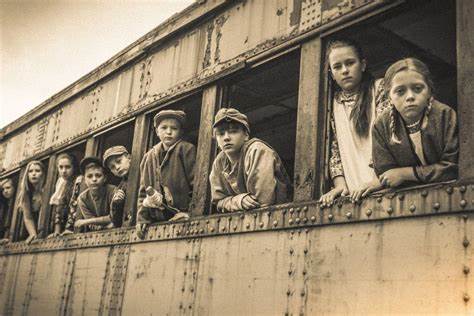
6/ So began the Orphan Trains. Dozens of children at a time were loaded on to trains with a guardian (broker) and shipped off to the great unknown. Prior to their arrival auction fliers were posted throughout the towns, in newspapers and church bulletins.
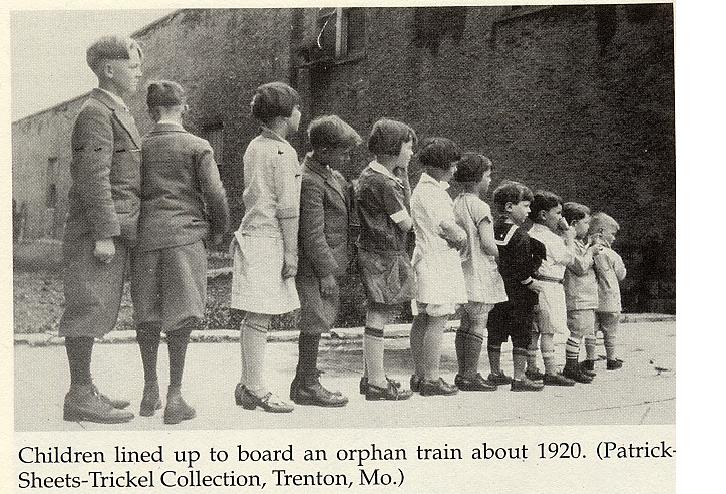
7/Once the children were cleaned up and paraded across a stage in the town. Potential buyers were encouraged inspect, poke and prod them before choosing which child to purchase.
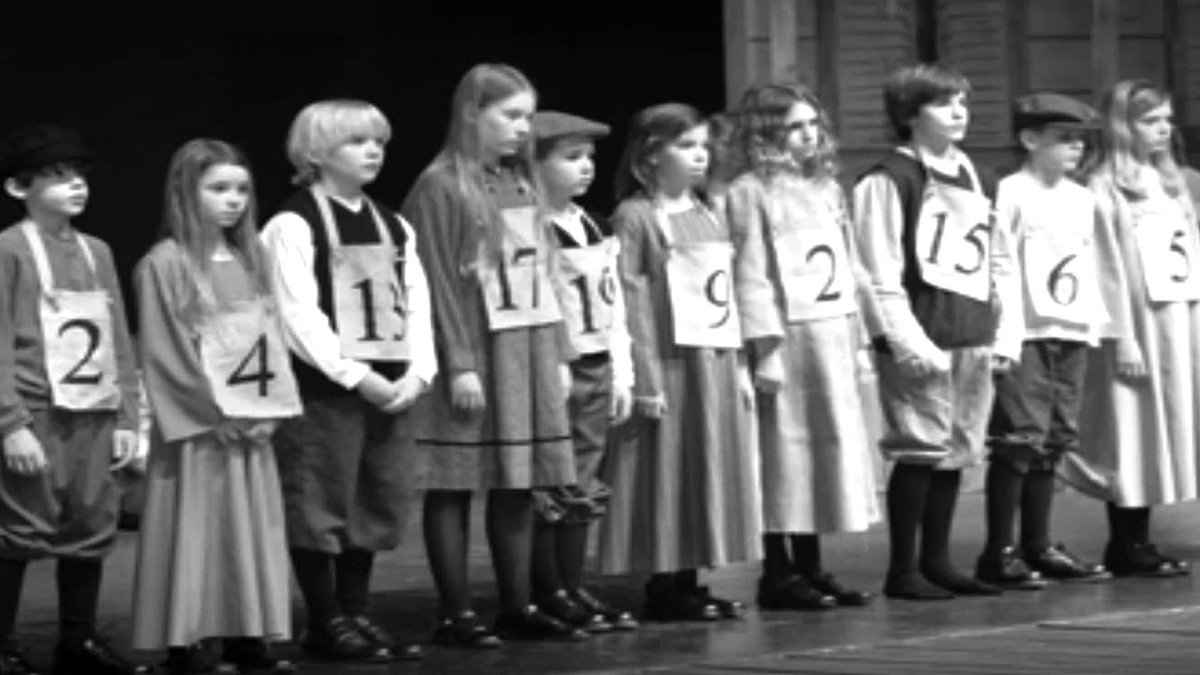
8/ Families were only permitted to purchase one child causing siblings to be separated. Many of these children were completely striped of their previous identity including their name and religion and put to work.
9/ As the market grew, the supply of children struggled to keep up with demand. Reports of children being kidnapped were rampant, as some of the auctioned children were found to have parents. While some poverty-stricken families gave their children to the society, others fought
10/ to keep their children when the society deemed them unable to care for them.
Investigations showed that no prescreening was completed on purchasing parents & follow-up wellness checks were not being conducted resulting in horrible conditions including abuse and slave labor.
Investigations showed that no prescreening was completed on purchasing parents & follow-up wellness checks were not being conducted resulting in horrible conditions including abuse and slave labor.
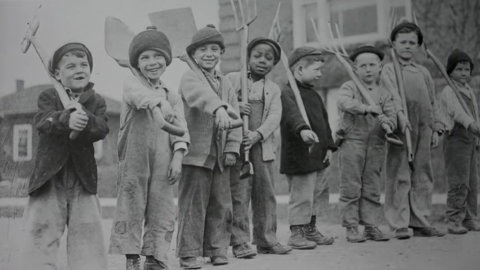
11/ Catholic faith leaders began speaking out, believing that Brace’s true intention was to “rescue” the children from their faith. He had publicly stated that he believed Catholic immigrants were "stupid, foreign criminal class" & the "scum & refuse of ill-formed civilization."
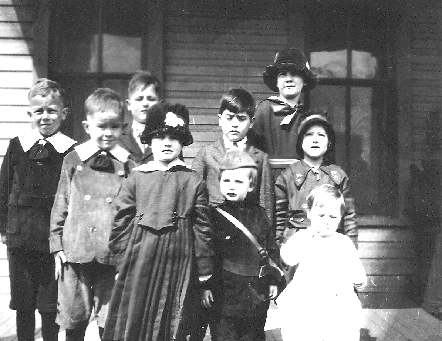
12/ The Orphan Train Movement which began in 1853 out of NYC and spread into cities throughout the country, finally came to an end in 1929, as public outcry rose, legal issues began to arise and the push for child labor laws increased.
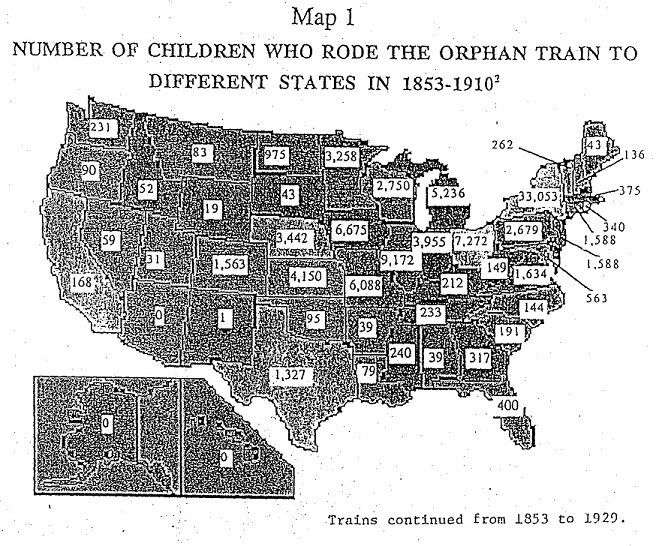
13/ The program had been in practice three-quarters of a century and had expanded to most of the nation's cities resulting in over 200,000 children, including 2 future governors and Billy the Kid, being auctioned in 47 different states and Canada.
• • •
Missing some Tweet in this thread? You can try to
force a refresh