Read on Twitter
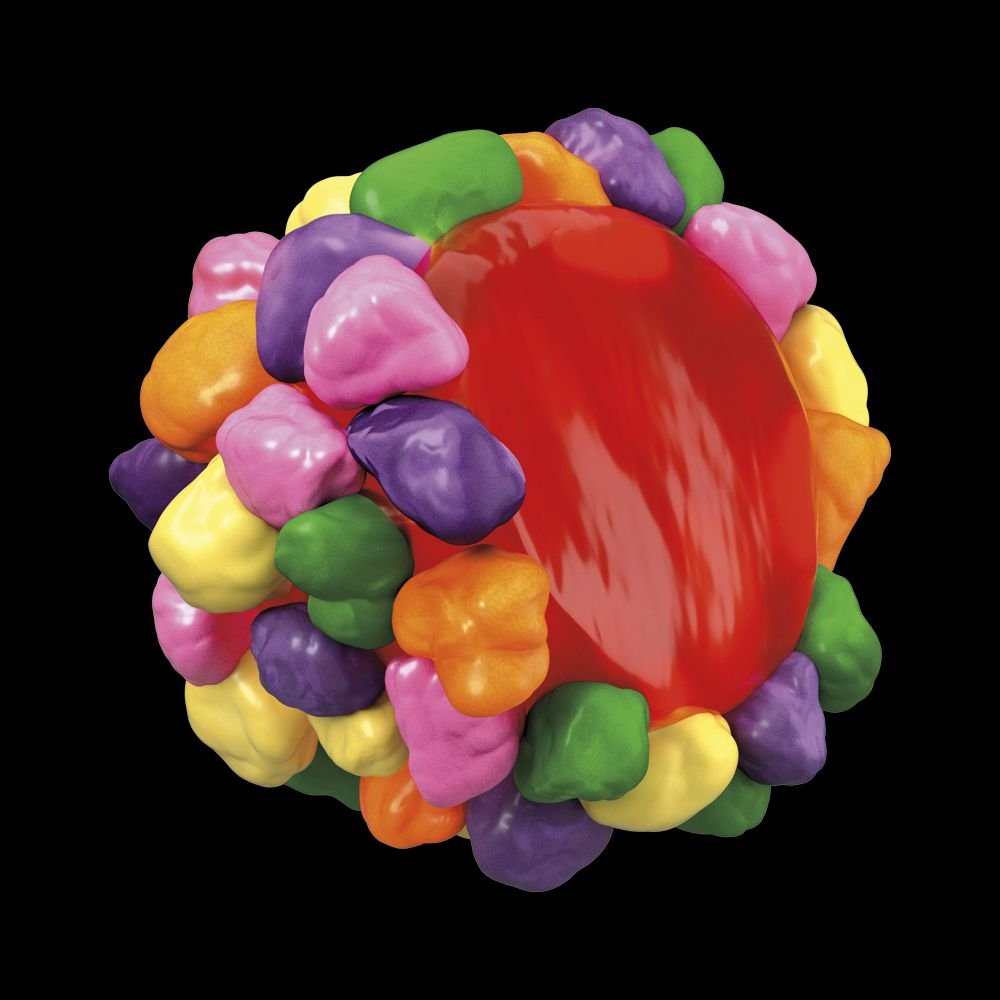
Symplectic geometry starts with a "closed, non-degenerate two form", and turns that into its whole personality. But what does symplectic taste like? IMO, one of these nerd clusters. Crunchy tangy nerds w/ a gummy center.
Here's how symplectic's flavor changed over the years
1/🧵
Here's how symplectic's flavor changed over the years
1/🧵
Here's a picture of the symplectic 2-form, hard at work. It takes in two vectors and turns it into a sum of areas in a non-degenerate way. 2-forms are familiar to geometry, but this one's special because its closed -- Its exterior derivative is 0.
2/
2/

Closed means topology. Closedness gives us Darboux's theorem: Locally, all symplectic forms are the same! Atop a curvy symplectic manifold, we build a scaffolding of standard, flat symplectic manifolds. All interesting forms and their properties are *global*.
3/
3/
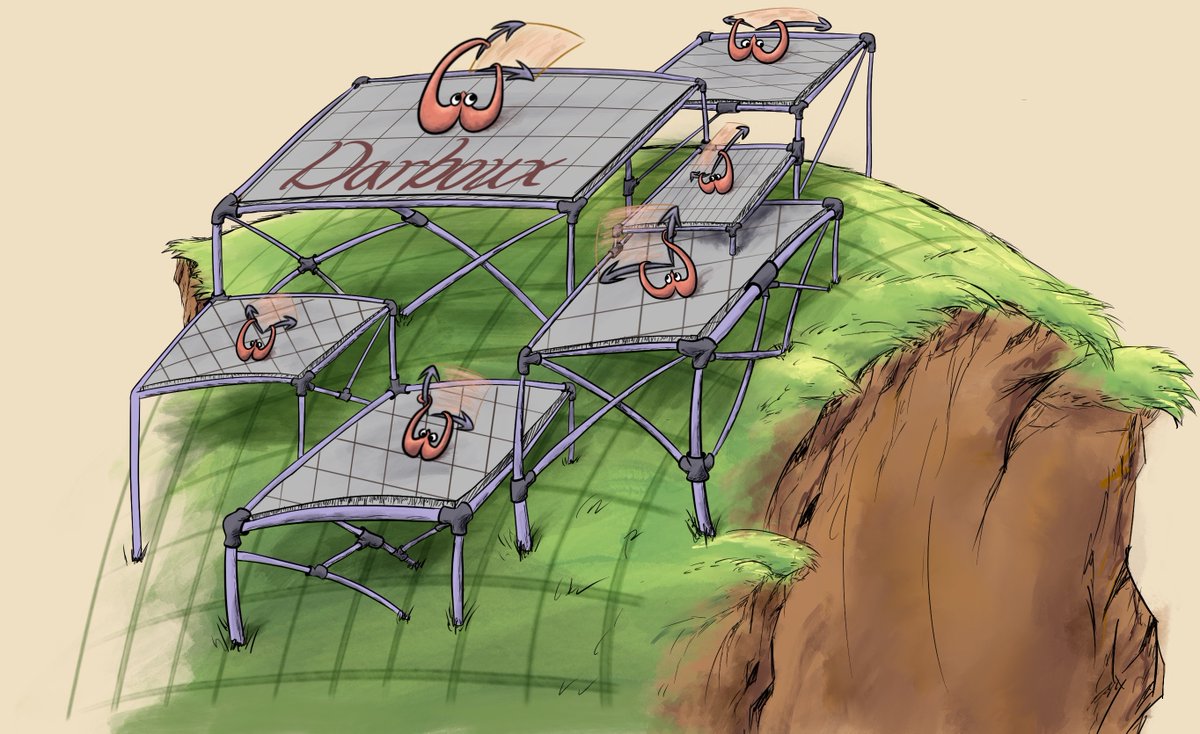
This globalness makes symplectic forms topological, which is the squishy, gummy core of symplectic geometry. The nerds are built upon this, the Potpourri of rigid, crunchy structures with a topological flavor. Let me describe some nerds chronologically by their discovery.
4/
4/
1850s-mid 1930s: The inspiration for symplectic geometry, classical mechanics. The symplectic form turns functions into "hamiltonian vector fields", who's evolution is dynamically "pretty neat". Poincare first built the gummy core around this nerd, circa 1910s.
5/
5/

Classical mechanics used to be cookbook math, with different theories for different systems (like modern PDEs). People tackled problems by looking for symmetries. Maximally symmetric systems have extremely rich and detailed structure, called "integrable systems".
6/
6/

1920s-1930s: new mechanics just dropped. Quantum mechanics gives a new way of looking at classical mechanics, and facts from symplectic geometry become about operators on Hilbert spaces. Things just got analytic in here. (see Weyl quantization)
7/
7/
1930s-1950s: The dark ages. classical mechanics and symplectic geometry sit there gathering dust.
8/
8/
1960s: When the symmetries come from a lie group, quantization turns the dynamics into facts about representation theory. Kirillov drops the "orbit method", an entirely new way of doing representation theory using special symplectic manifolds
9/
9/
1960s: Biiig paradigm shift. Arnold conjectures a precise relationship between dynamics of hamiltonians and topology of manifolds. We can't just look at nice symmetric systems now, we need a general theory. No more cookbook. Ushers in a renaissance of symplectic geometry.
10/
10/
1970s: Everything gets rephrased as general symplectic manifolds, and geometric objects therein. We follow Weinstein's symplectic creed: "Everything is a Lagrangian submanifold", half-dimensional manifolds which kill the symplectic form.
11/
11/
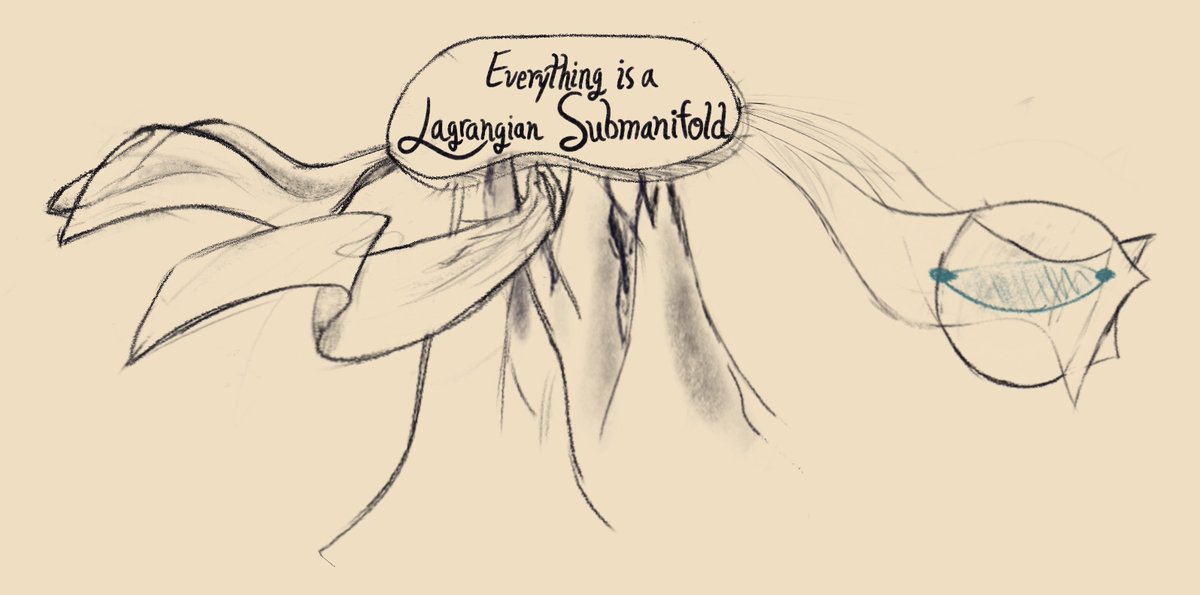
1970s-1980s: Beefing up the orbit method, Konstant, Souriau and friends build up "geomeric quantization". Semiclassical methods provide analytic ways to study symplectic geometry, and symplectic ways to study analysis problems ("microlocal analysis").
12/
12/

1980s: Breakthrough time. Gromov does hard analysis, counts number of curves satisfying certain differential equations ("pseudoholomorphic curves"), and solves like 3 open problems in 1 paper. He built the first nontrivial symplectic invariant, and nopes out of the field.
13/
13/
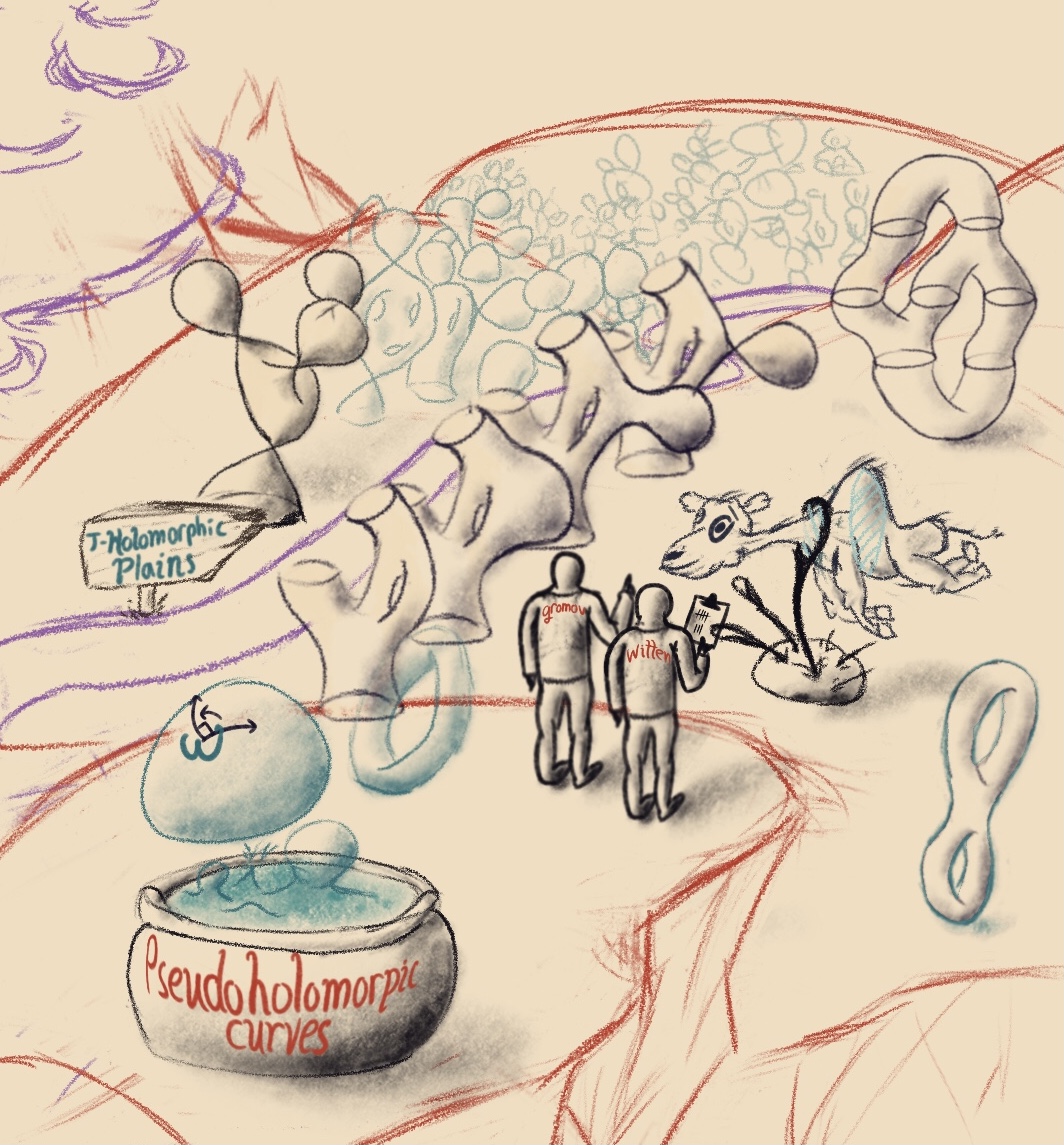
1980s: Floer extends Gromov's methods and solves Arnold's conjecture. Symplectic geometry over, the age of symplectic topology has begun. Tools are incredibly analytically difficult to build, and comparatively easy to use. We moved too fast, leaving shaky foundations.
14/
14/
Concurrently with Gromov, Witten counts the same curves using 2D quantum field theory (QFT). Symplectic geometry has evolved from quantum mechanics to QFT, with all of the difficulties that entails. This analogy motivated many future developments.
15/
15/
1990s onwards: Like mirror symmetry! a QFT duality suggests that symplectic geometry of a space is equivalent to algebraic geometry on a dual space. Kontsevich conjectures this to be an equivalence of categories, but there are many other manifestations.
16/
16/
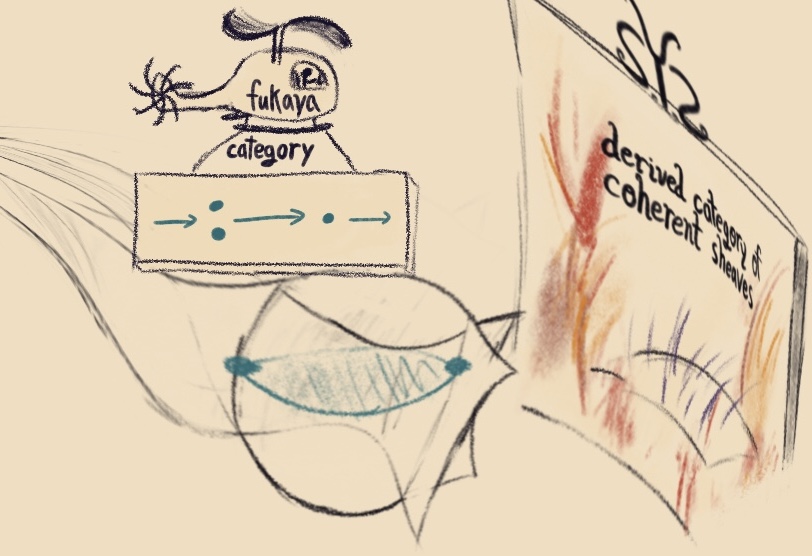
Nowadays sympletic geometry is a victim of the "Categorification crisis". we've used up all the blunt information from QFT, and now we need to contend with the subtle structures. I'm talking higher categories, stacks, derived geometry, etc. Look up "symplectic duality".
17/
17/
Come across a wild symplectic manifold, and you can choose from many nerds, bring you to many fields. Like a kid in a candy store. Over time, the nerds got bigger and harder to bite into. But the flavor is more subtle, deep, and surprising. I'm still acquiring that pallet.
18/18
18/18

Above is an extended answer to this question. For the record, I agree with masses that classical mechanics is the best motivation for symplectic geometry.
https://twitter.com/taz_chu/status/1702694419718168884
Here's a topologists answer, which is more mathematically detailed. She's thinking about symplectic manifolds for their own sake, I'm opining on how to react when faced with a wild symplectic manifold.
https://twitter.com/inannabelian/status/1702706466111869379
Adding another bad boy to the pile
https://twitter.com/inannabelian/status/1702916779990012002
• • •
Missing some Tweet in this thread? You can try to
force a refresh