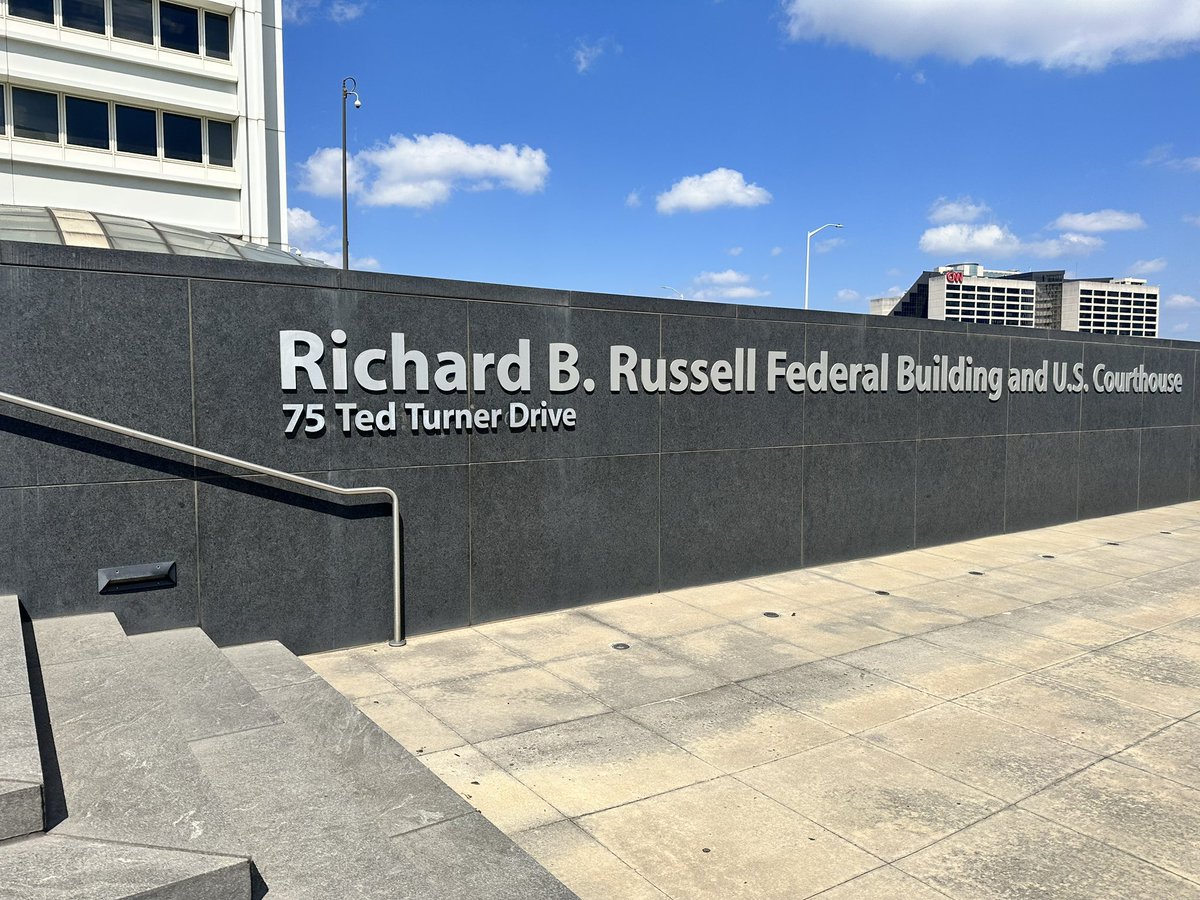
I’m out of the hearing on Jeffrey Clark’s bid to move his Fulton County criminal case to federal court.
Clark did not show up, but what occurred during the hearing does not bode well for his efforts to remove the case to federal court…🧵👇
1/
Clark did not show up, but what occurred during the hearing does not bode well for his efforts to remove the case to federal court…🧵👇
1/
When removing a case to federal court, the defendant—Clark—bears the burden of showing that he acted under color of federal office and that he can raise a “colorable federal defense.”
To carry that burden, Clark needed to admit evidence supporting both of those factors..
2/
To carry that burden, Clark needed to admit evidence supporting both of those factors..
2/
That’s why Meadows took the stand in his own removal hearing: To carry his evidentiary burden.
Here, though, Clark chose not to testify.
Instead, his lawyer tried to admit a written statement by Clark.
But Judge Jones refused to admit the statement into evidence…
3/
Here, though, Clark chose not to testify.
Instead, his lawyer tried to admit a written statement by Clark.
But Judge Jones refused to admit the statement into evidence…
3/
Jones also refused to admit portions of an affidavit by former AG Edwin Meese, which Clark relied on to support the claim that he acted in the scope of his office.
So, in other words, much of the evidence Clark sought to rely on will not be even be considered by the judge.. 4/
So, in other words, much of the evidence Clark sought to rely on will not be even be considered by the judge.. 4/
Jones indicated that there are some exhibits filed by Clark that he may allow into evidence.
Even so, it’s hard to see how Clark can carry his burden for removal absent the declaration or testimony.
And that is precisely what Fulton County prosecutors argued in closing…
5/
Even so, it’s hard to see how Clark can carry his burden for removal absent the declaration or testimony.
And that is precisely what Fulton County prosecutors argued in closing…
5/
Even beyond these evidentiary challenges, Judge Jones seemed to express skepticism about Clark’s arguments for removal.
Jones pressed Clark’s attorney on his clients involvement in 2020 election matters and at times disputed Clark’s version of events..
6/
Jones pressed Clark’s attorney on his clients involvement in 2020 election matters and at times disputed Clark’s version of events..
6/
Meanwhile, Fulton County prosecutors called Jody Hunt, former assistant AG of DOJ’s Civil Division, to testify about the scope of office in that role. (Clark, at the time of the conduct for which he was indicted, served as acting assistant AG in the civil division.)
7/
7/
“In my experience, it is not the role of the civil division” to engage in affirmative activities related to state election matters, Hunt testified.
8/
8/
Clark’s attorney sought counter this by suggesting that Trump had “ratified” Clark’s involvement with election matters at a Jan. 3 meeting at the White House.
In turn, Georgia prosecutors argued that Clark failed to show any evidence supporting that claim.
9/
In turn, Georgia prosecutors argued that Clark failed to show any evidence supporting that claim.
9/
All in all, I got the sense that Clark, like Meadows, will not succeed in his effort to move his Fulton County case to federal court.
Those are some of the high-level takeaways from the hearing, but look for my meticulously detailed dispatch in @lawfare later today!
Those are some of the high-level takeaways from the hearing, but look for my meticulously detailed dispatch in @lawfare later today!
• • •
Missing some Tweet in this thread? You can try to
force a refresh