this week the guardian launched its new european edition with an investigation that found 98% of us live in areas where the air is clogged with more toxic particles than doctors recommend we breathe 1/
concentrations of fine particles are highest in skopje, which i visited last month, where bad air makes people die 2-3 years too early and hits the economy with sick days, brain drain, healthcare spending and self-imposed lockdowns 2/ theguardian.com/world/2023/sep…
in belgrade, where i stopped on the way down, officials had concluded half a century ago that pollution could be cleaned up without curbing economic growth but doctors say little has changed 3/ theguardian.com/world/2023/sep…
toxic air from factories and farms has trapped people at home in crotta d'adda, a village in italy's po valley that my colleague @GiuffridaA visited, where sources of bad air include a byproduct of turning faeces into fertiliser called defecation chalk 4/ theguardian.com/world/2023/sep…
the doctor in charge of environment at the world health organisation said "we need to remind people that any time you breathe, you are breathing something toxic into your body which is having a devastating impact" 5/ theguardian.com/world/2023/sep…
there are lots of easy fixes to clean up europe's air, pollution scientist and guardian writer @DrGaryFuller explains, including actions from governments, farmers, industries and drivers 6/ theguardian.com/environment/20…
the main investigation, from @mrmatthewtaylor and @PorcelinaD, makes it clear how badly europe has been hit by air so dirty it kills some of us and makes others sick 7/ theguardian.com/environment/20…
• • •
Missing some Tweet in this thread? You can try to
force a refresh

i find it kinda hard to make people realise how much heat hurts so imagine a jumbo jet fell from the sky this morning and killed everyone on board 1/
that’s about how many people are dying from heat every day in europe right now, if this summer is anything like the last, only without you hearing about the lives they lived or the grief of their loved ones 2/ https://t.co/YjI9rjWLUknature.com/articles/s4159…
some people are killed outright by heat stroke when they are forced to work in the sun or can’t go anywhere to cool down - builders, farmers, people sleeping rough 3/ theguardian.com/world/2023/jul…
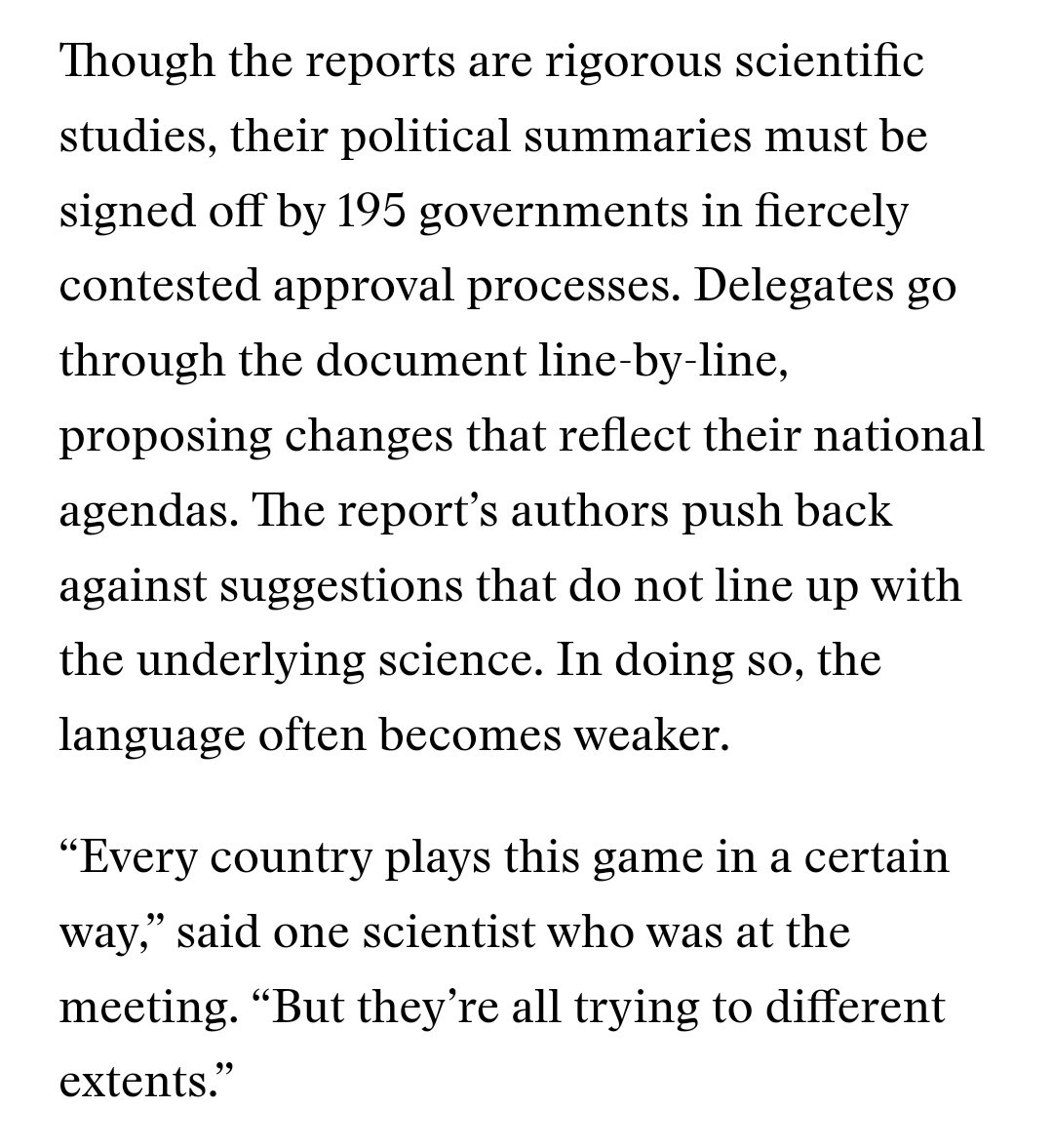
i spoke to scientists, negotiators and observers at the secret approval session of the big new climate report about how badly governments watered down the text in the political summary on which they eventually signed off 1/ heatmap.news/politics/ipcc-…
the intergovernmental panel on climate change writes reports with summaries for policymakers that are drafted by scientists then approved, after fierce negotiations, by delegates from 195 countries pushing their own interests 2/
the process is closed off to journalists — except for the earth negotiations bulletin, a reporting service from a think tank with access to most of the negotiations — so delegates and scientists can speak frankly 3/
the most powerful climate report of the decade was published on monday, after 195 governments fought over the words in its summary for policymakers, and the only media allowed in the room just published its account of who lobbied for what 1/
the earth negotiations bulletin is allowed into approval sessions of the hotly contested ipcc summaries for policymakers (though, as a couple of scientists have pointed out, they do not have access to the huddles where detailed discussions happen) 2/ enb.iisd.org/58th-session-i…
finland tried to say the root cause of climate change is fossil fuels, but saudi arabia pushed back, and the line didn't make it into the summary for policymakers (which is separate from the scientific report that can't be touched by governments) 3/
one phrase that scientists and journalists love, but which has never made any sense to me, is "avoid the worst impacts of climate change" 1/
there is no such thing as the worst impacts of climate change: however bad things get, they can still get worse, until everyone is dead, and even then there's other species to think about, so the actual worst case is wiping out all life on earth 2/
burning fossil fuels might make that scenario a bit more likely — himalayan glaciers that give water to 2 billion people are melting fast, making a war between nuclear powers india and pakistan more likely — but that's still not what people mean by worst impacts 3/
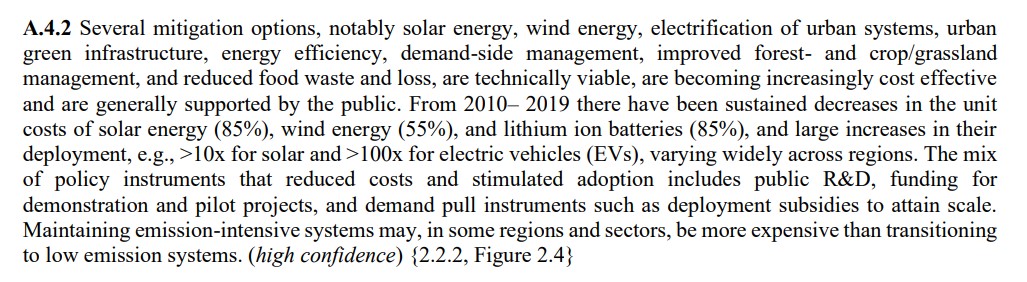
the world's top scientists have written a landmark report about climate change and 195 countries just signed off on a summary that lays out surprisingly clearly what must happen to fossil fuels to keep us safe 1/
most of the greenhouse gases that have polluted the atmosphere, making heat waves hotter and coastal floods stronger, came from burning fossil fuels and using them in industry 2/
the world's coal, oil and gas facilities will heat the planet more than 1.5 degrees celsius — the level to which governments promised to try to stop global warming this century — unless the carbon they belch is captured at high cost and with varying success 3/
an australian climate charity got a polling agency to ask people about extreme weather and mental health and the numbers of people hit are just jaw-dropping 1/
put 5 australians in a room and 4 will tell you they were hit by an extreme weather disaster in the last 3 years 2/
go to an australian city and 1 in 3 people will tell you they were hit by floods in the last few years, 1 in 3 people will tell you they were hit by bushfires - there will be some overlap here - and if you go to rural australia we're talking every second person 3/