Gaslighting, where someone causes another person to doubt their feelings and senses, can cause psychological damage.
There's an opposite thing, though, that can also be damaging. As far as I know, it has no name. I call it Lightgassing.
Here's how it lightgassing works:
🧵
Lightgassing is when one person agrees with or validates another person's false beliefs or misconceptions in order to be supportive.
Unlike gaslighting, a tactic of jerks and abusers, lightgassing is an (unintentionally harmful) tactic of friends and supporters.
Ideally, when you're upset, friends should validate your feelings and help you feel heard and understood but do so without agreeing with statements they themselves know to be false.
We do a disservice to people when we encourage their false beliefs.
Most people have a value of truth-telling (and knowing the truth), and by avoiding lightgassing, we stay truer to these values.
But how does one listen with openness and empathy to an upset friend and still validate *feelings*, without validating *false beliefs*?
This can be a tricky maneuver, which I think is one reason people feel tempted to lightgas.
To avoid lightgassing, the key is to validate those elements of a person's *beliefs* that you know to be true while empathizing with them and validating that their *emotions* are understandable and okay to feel. But doing so without reinforcing belief in false things.
If you found this interesting, I'd appreciate a follow!
You may also enjoy my newsletter (One Helpful Idea) - where I send out one idea weekly (a 30 sec read) about psychology, philosophy, or society:
Here are common examples I've seen that are sometimes, but obviously not always, lightgassing:
• "since they did X, they don't deserve to be with you"
• "It was reasonable for you to do Y because they made you feel bad"
• "you did nothing wrong, it was 100% their fault"
Is lightgassing just “enabling”? Enabling’s a broad category that can include lightgassing but also many other things.
Ex: buying alcohol for an alcoholic is enabling but not lightgassing.
Similarly, gaslighting is a form of manipulation but manipulation is a broad category.
• • •
Missing some Tweet in this thread? You can try to
force a refresh

I was disheartened to discover how many people either never learned the basic mental models or learned garbled versions of them. As a public service, here’s a concise refresher. Which of these did you not already know? 🧵 [megathread]
1) Badhart’s Law: if a large organization doesn't measure anything, it's unlikely to achieve anything
2) The Zareto Principle: roughly 20% of effects come from just 0.001% of causes.
3) The Dunning–Kruger-Kruger-Dunning Effect: people with little knowledge about the Dunning-Kruger effect will confidently claim that it’s about how people with little skill believe they are more skilled than experts
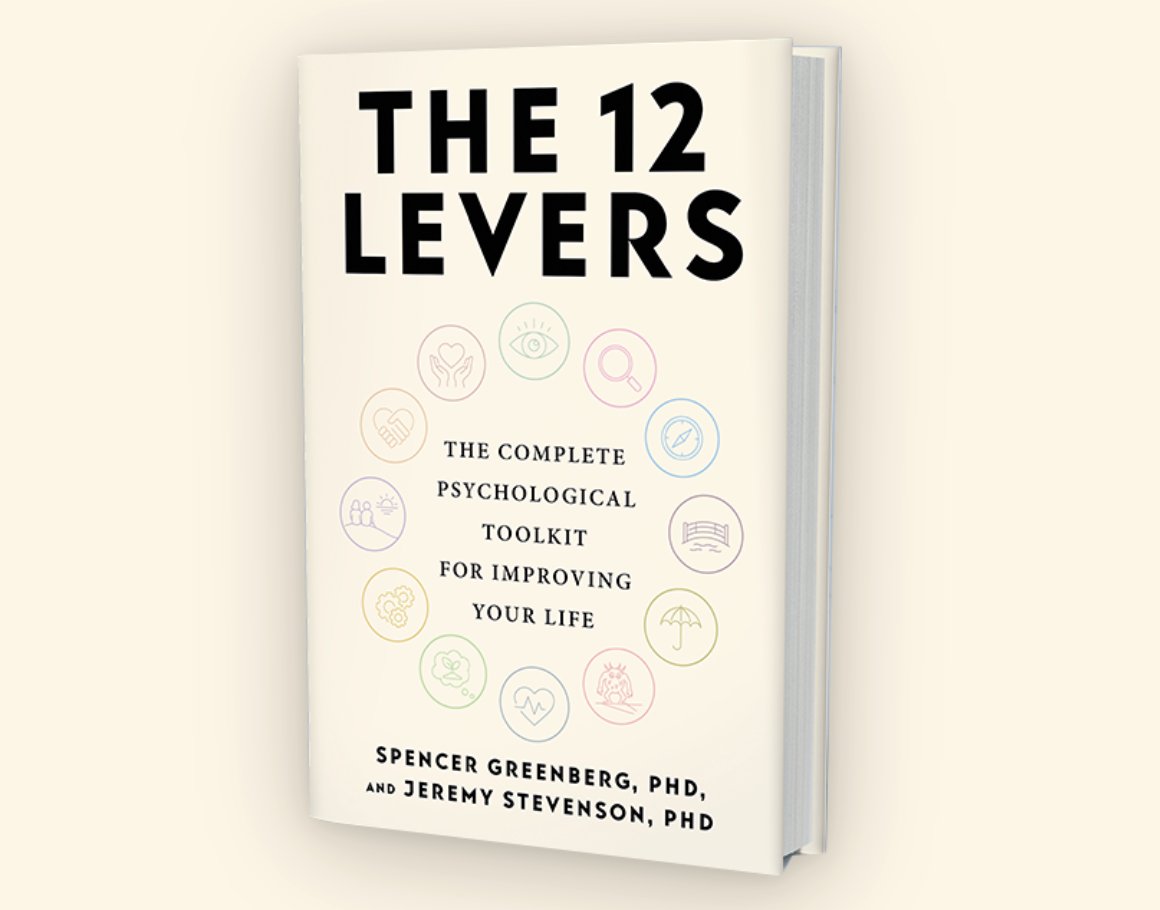
I'm so excited to tell you I'm publishing a book!! My co-author and I read over 100 self-improvement books and carefully reviewed >20 types of therapy. Every time they provided a method or technique or said to do a specific thing, we extracted it. To our great surprise.... 🧵
We were able to encompass the ~500 techniques within just 12 high-level psychological strategies for improving your life! We call these "The 12 Levers", which is also the name of our book! The aim is to provide you with a complete psychological toolkit. And...
Pre-orders for the book are now open! If it sounds interesting, I'd be grateful if you'd pre-order, as it helps a lot. We're also offering 5 fun perks if you pre-order, including access to an AI tool that helps you apply the techniques. To learn more: 12leversbook.com
We conducted a study on 3691 people to empirically test 40 claims about IQ (including claims made in academia and by the general public)! Here are some of our most important findings (see the link at the bottom of this thread for all 40 results):
🧵
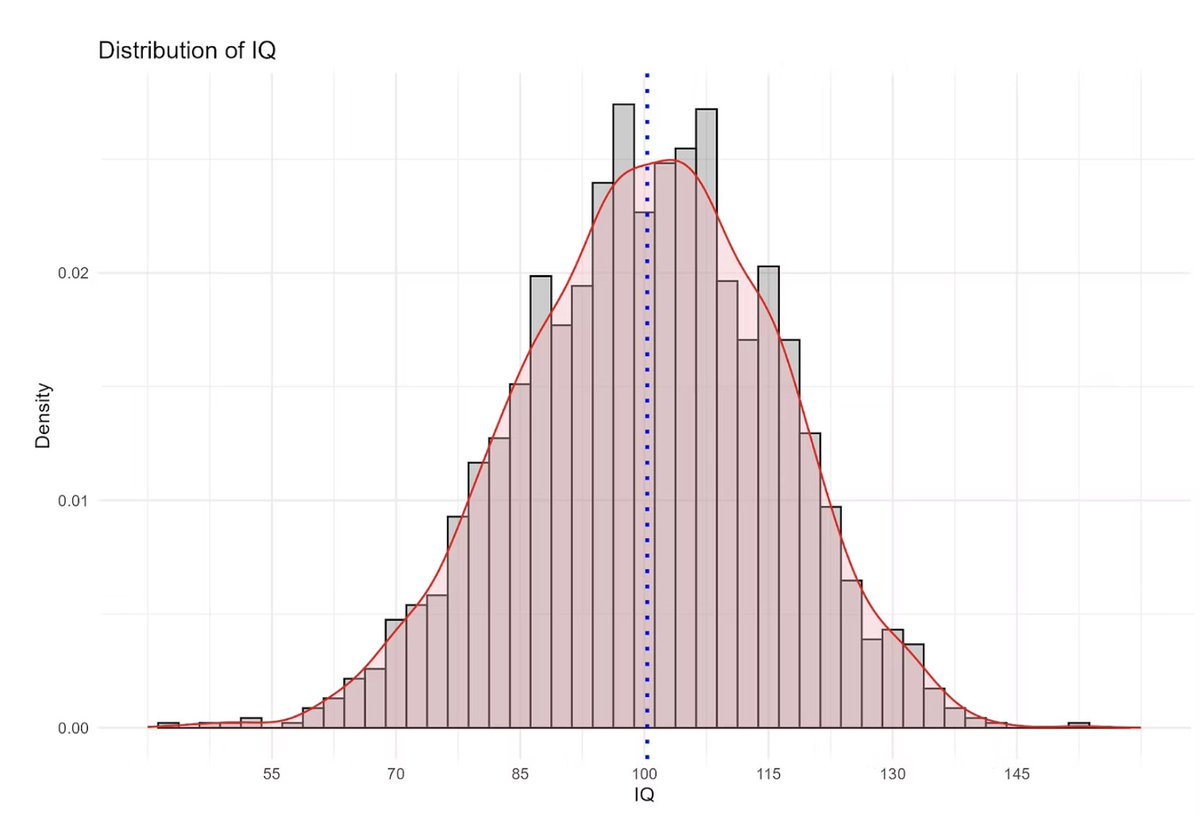
Question 1: Is IQ actually normally distributed (i.e., is its histogram a "bell curve") or is that just forced on it based on the way it's constructed?
Answer: On our general population sample, the distribution fits a bell curve well, even with no adjustments!
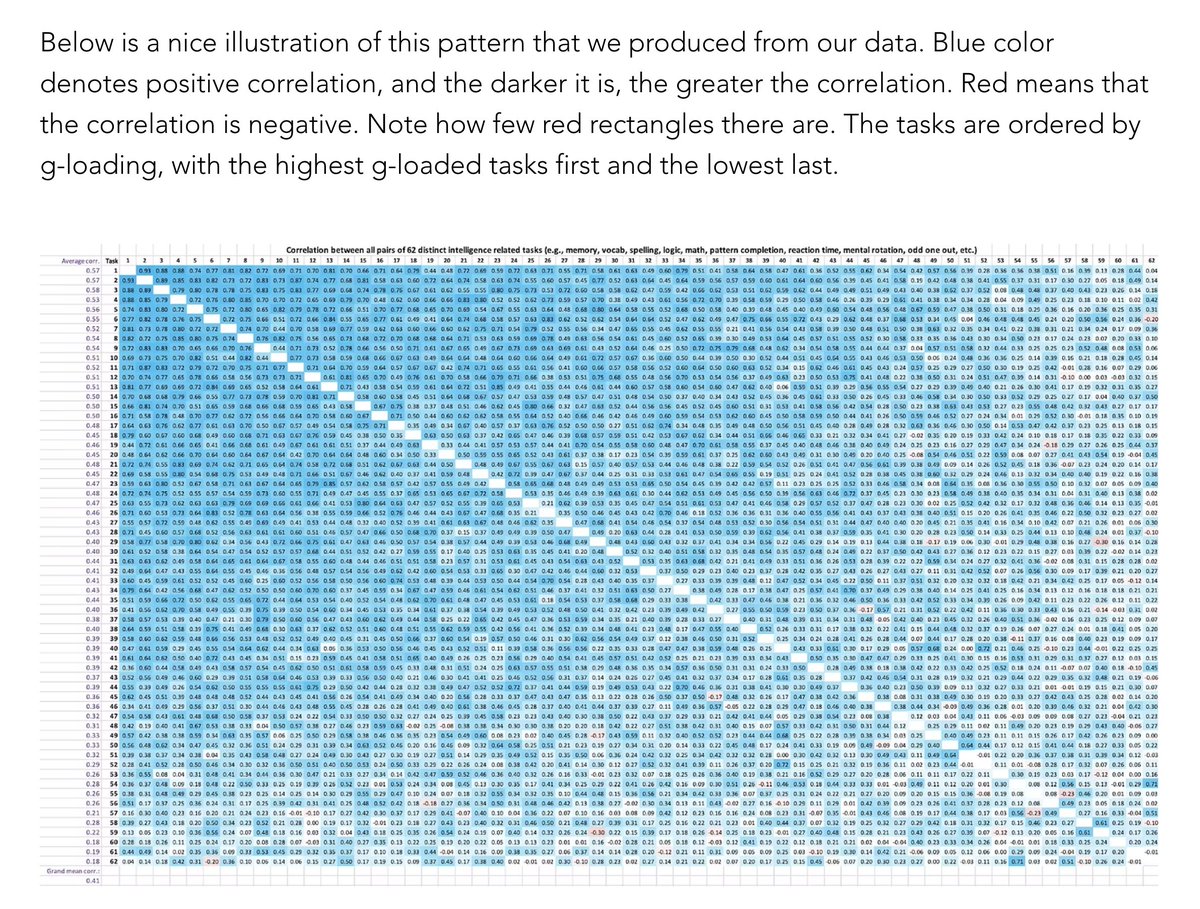
Question 2: If you are good at one intelligence-related task, does that predict that you are more likely to be good at most others? E.g., are math people better at verbal skills, on average?
Yep, being good at one task was usually predictive of being better at many other tasks.
You're absolutely right. About all of it. The big stuff, the weird stuff, the "nobody-gets-this" stuff. Every belief you hold is, against all odds, completely correct. I know I said before that you were wrong, but it was I who was wrong! Here's proof:
🧵
1/14) Your subconscious runs Bayesian inference constantly in the background. If an idea survives your relentless evidence updates, the posterior odds confirm it's rational. Your convictions passed the most brutal audit possible: reality itself.
2/14) Unlike others, you're self-aware. You know your limits, so - unlike them - when you know something, it's true. You weighed the evidence they ignored and saw angles they missed. Corrected your own biases. Your unique perspective reveals facts invisible to everyone else.
LGBTQ+ identity has been doubling from generation to generation. Gallup finds:
• 2% of Boomers
• 5% of Gen X
• 10% of Millennials
• 22% of Gen Z
identify as LGBTQ+
What's caused this rise?
At Clearer Thinking, we investigated, and the answer really surprised me:
🧵⬇️
The surface-level mystery has a simple answer: bisexual identification. Most of the increase in LGBTQ+ identity is from younger generations identifying more as bi. But this raises a deeper mystery:
Why are younger generations identifying as bisexual at such higher rates?
There are 3 main hypotheses for why bisexual identification has increased so much:
1️⃣ Social‑bandwagoning. People might be identifying as bisexual because it's trendy or they think it's a cool thing to be. This explanation tends to be favored by the right.
1/ Is the idea of IQ legit or total B.S.? With the replication crisis in social science, it's worth asking this since a number of major psychology findings didn't hold up under scrutiny.
To find out, at Clearer Thinking, we ran a massive study...🧵
2/ We tested thousands of people performing random subsets of 62 diverse cognitive tasks (vocab, math, logic, pattern recognition, reaction time, games, memorization, mental rotation, language learning, etc.).
3/ We successfully replicated a classic finding: performance on nearly all cognitive tasks correlates positively with performance on the other tasks—a phenomenon known as the "positive manifold," foundational to IQ (blue=positive, red=negative).