
A thread on Declan Rice.
Along with Rodri, he is transforming the DM role from a defensive-minded position into one which controls all aspects of the game.
Here we take a look at
- Controlling the tempo of in-possession play
- Controlling defensive spaces
Along with Rodri, he is transforming the DM role from a defensive-minded position into one which controls all aspects of the game.
Here we take a look at
- Controlling the tempo of in-possession play
- Controlling defensive spaces

Playing for Arsenal and England requires Rice to find positions to recycle and switch play as teams set up low defensive blocks against either team
He understands this role, positioning himself to stop counter attacks while offering a recycle option when space is tight.
He understands this role, positioning himself to stop counter attacks while offering a recycle option when space is tight.
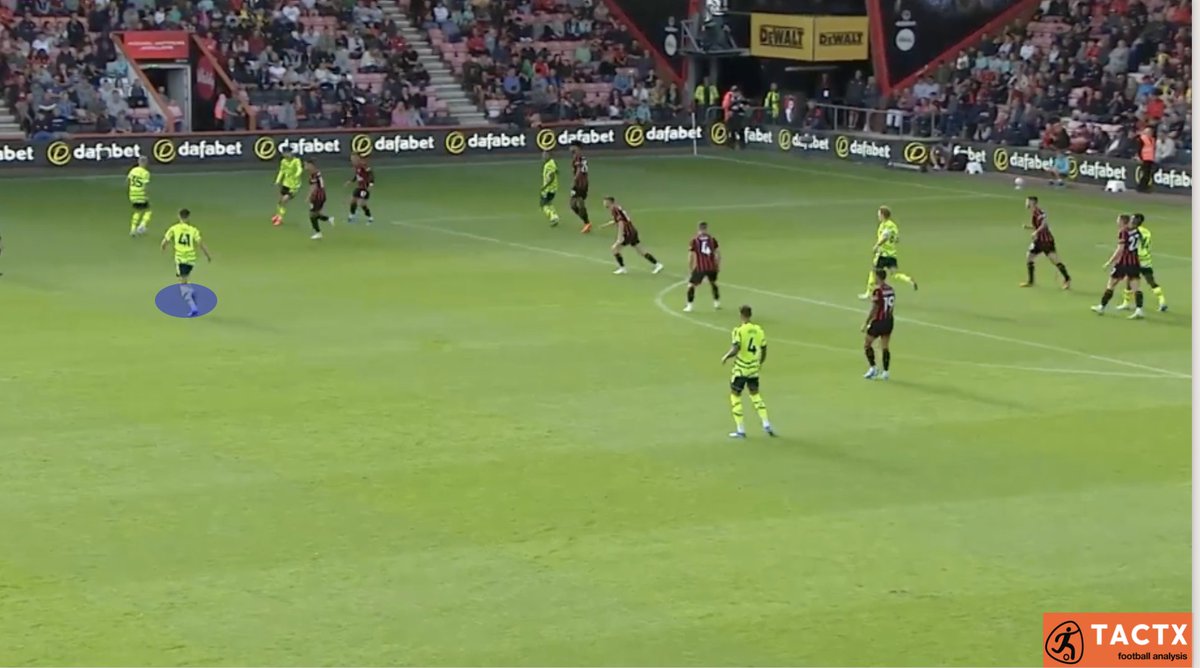
Recycling and switching play is the role of any possession-based DM.
What differentiates Rice is his ability to change the tempo of the attack. He does this in 4 ways
- Forward runs
- Combining with 1-2's
- Forward passes to break the line
- Accelerating/dribbling past players
What differentiates Rice is his ability to change the tempo of the attack. He does this in 4 ways
- Forward runs
- Combining with 1-2's
- Forward passes to break the line
- Accelerating/dribbling past players
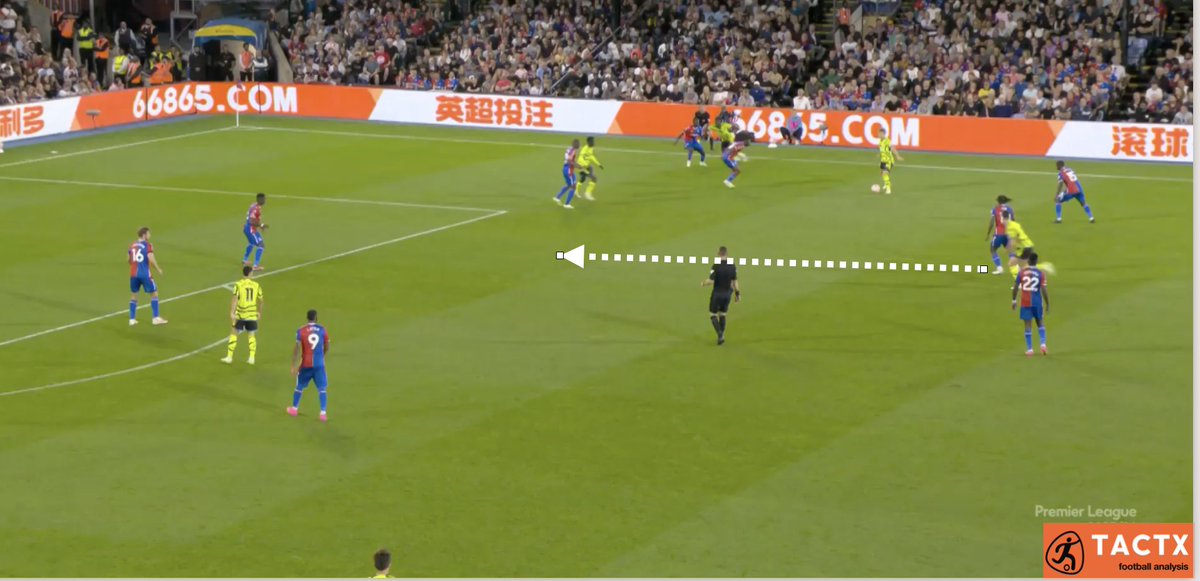
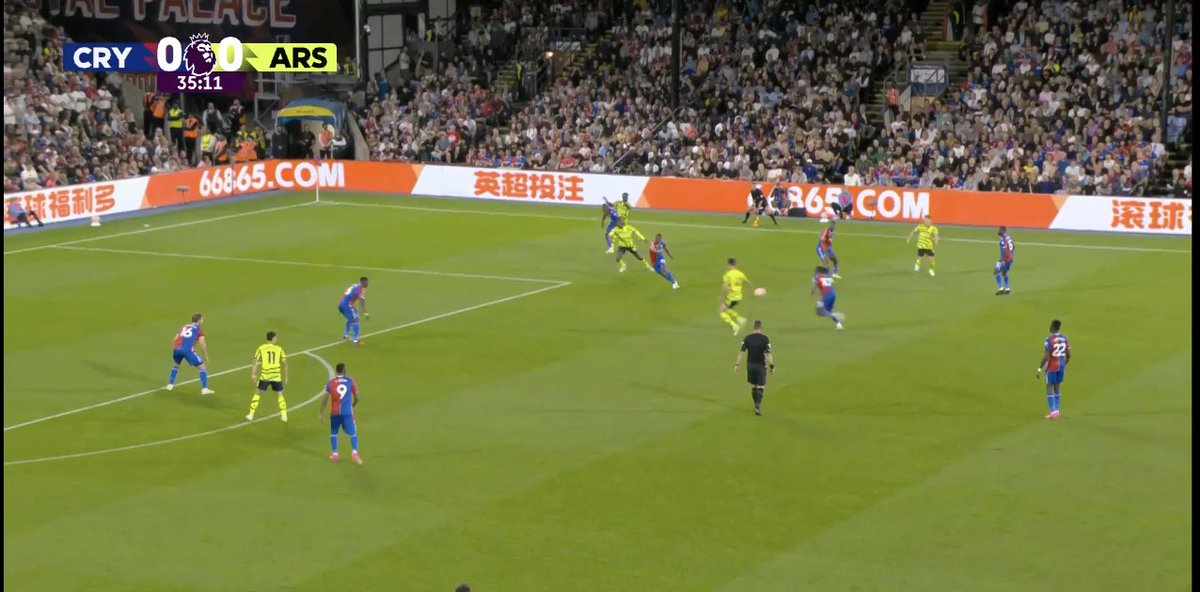
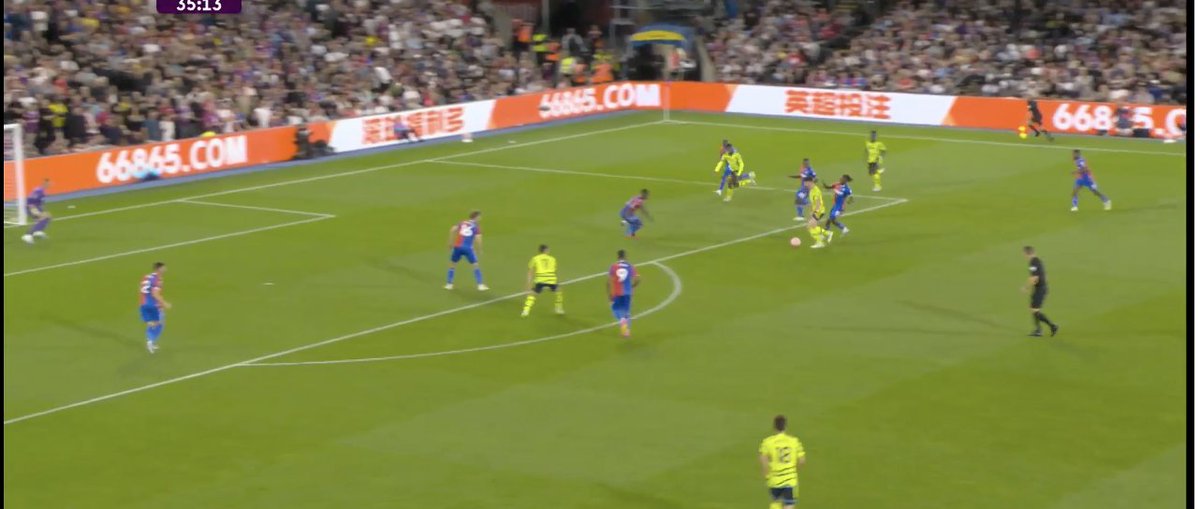
Forward runs
Rice recognises spaces between the back line of the opposition and rather than sit deep to act as a pivot he will make the runs off the back of the opposition midfield and drive into these spaces.
Rice recognises spaces between the back line of the opposition and rather than sit deep to act as a pivot he will make the runs off the back of the opposition midfield and drive into these spaces.
Combining with 1-2's
Rice changes the tempo of the attack.
His action to pass and accelerate communicates to his team mate for a first-time return ball.
The action takes opposition players out of the game and allows the team to break lines
Rice changes the tempo of the attack.
His action to pass and accelerate communicates to his team mate for a first-time return ball.
The action takes opposition players out of the game and allows the team to break lines
Another 1-2 to set up a dangerous position.
The action completely changes the tempo of the attack against a low block.
The action completely changes the tempo of the attack against a low block.
Forward passes to break the line
Again changing the tempo of the attack, Rice will look to break the line with forward passing.
The weight/ accuracy of the pass forces his team mate to increase the tempo.
Rice is controlling the tempo of the attack
Again changing the tempo of the attack, Rice will look to break the line with forward passing.
The weight/ accuracy of the pass forces his team mate to increase the tempo.
Rice is controlling the tempo of the attack
Dribbling
Rice has a deceptive acceleration and will beat players, to open up space for others.
He can change the tempo of the attack in his own movements he slows play down before accelerating past players
Rice has a deceptive acceleration and will beat players, to open up space for others.
He can change the tempo of the attack in his own movements he slows play down before accelerating past players
Understanding the positions where the opposition can hurt you is a key attribute to playing the lone DM role.
He prevents the following from happening time and time again.
- Opposition getting control behind the defensive line
- Opposition breaking the midfield line
He prevents the following from happening time and time again.
- Opposition getting control behind the defensive line
- Opposition breaking the midfield line
Behind the defensive line.
Rice allows his CBs to keep their structure in the box as the opposition gets in behind the full-backs.
Tracking runners and being comfortable to defend in wide areas allows his defenders to defend the box rather than stretched across the pitch
Rice allows his CBs to keep their structure in the box as the opposition gets in behind the full-backs.
Tracking runners and being comfortable to defend in wide areas allows his defenders to defend the box rather than stretched across the pitch
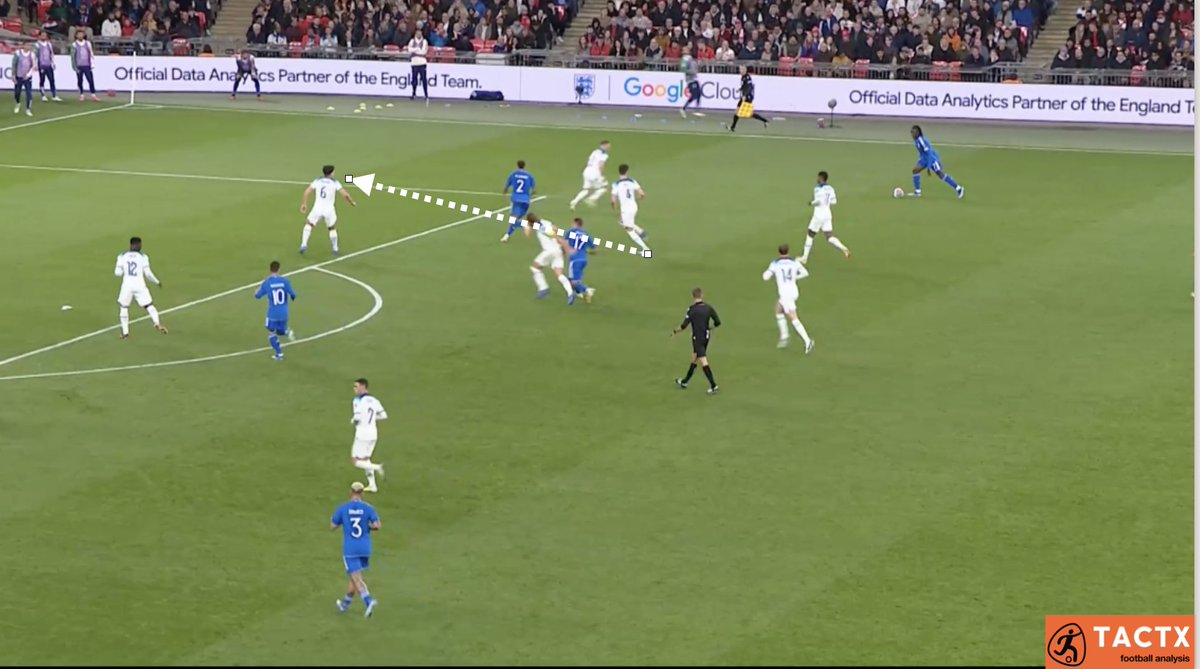
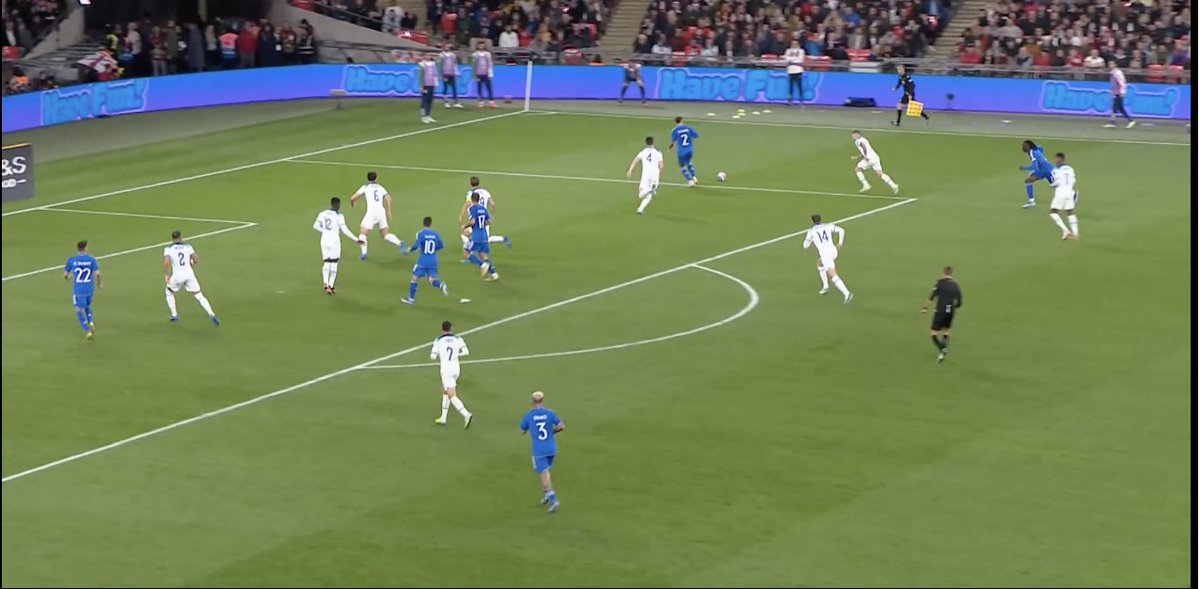
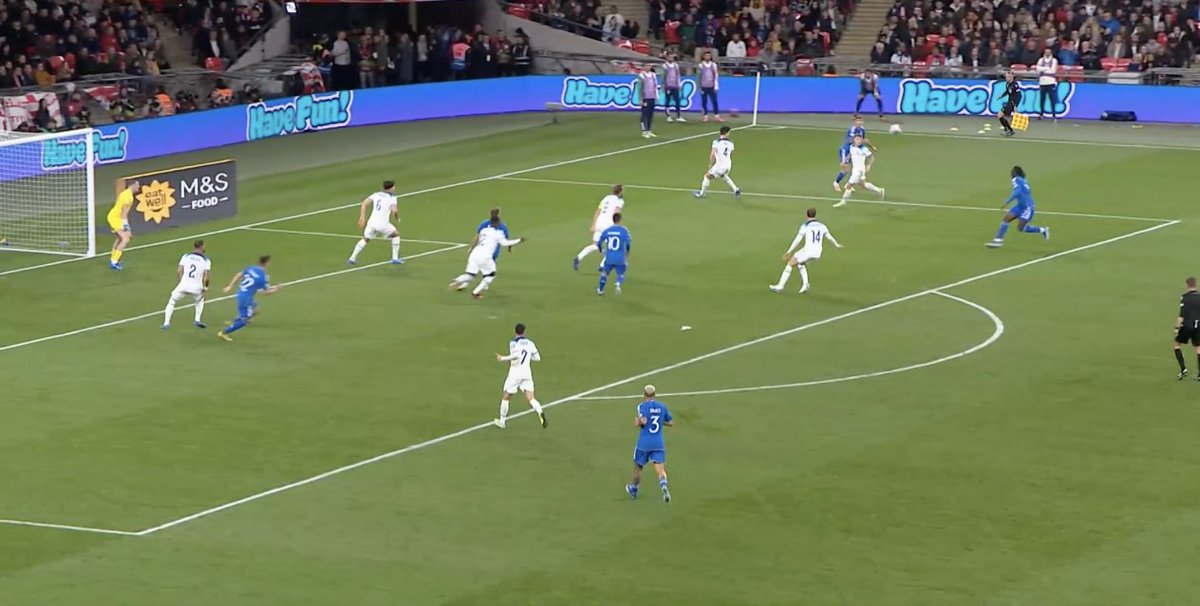
His reading of play and athleticism to recover gives support to his CB's
In this instance, he recognises Lens could get in behind the Arsenal CB's and moves to prevent it.
In this instance, he recognises Lens could get in behind the Arsenal CB's and moves to prevent it.
His greatest understanding of the role is preventing his midfield line from being broke.
Rice constantly adjusts his position based on his team mates and who and how the team mates presses the ball.
His movements mean the midfield line is rarely broken.
Rice constantly adjusts his position based on his team mates and who and how the team mates presses the ball.
His movements mean the midfield line is rarely broken.
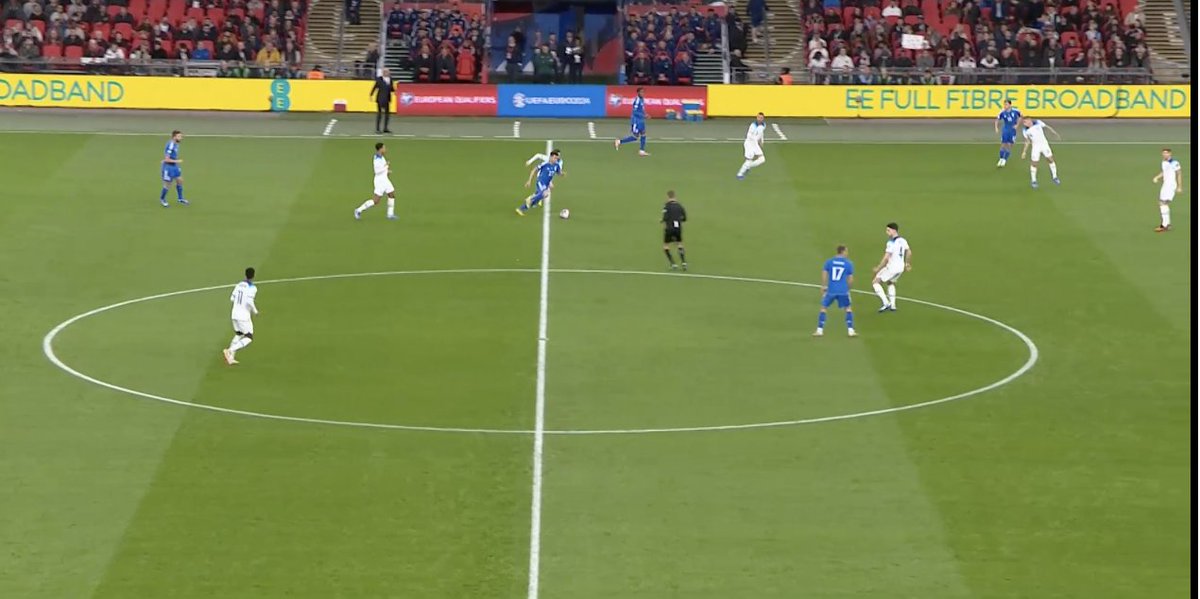
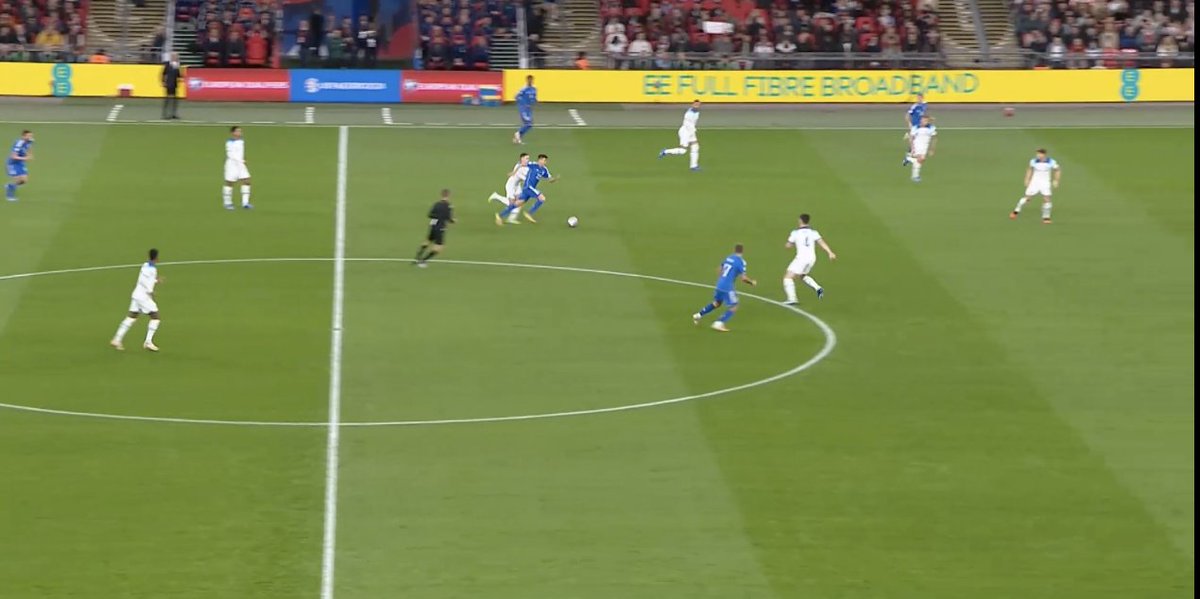
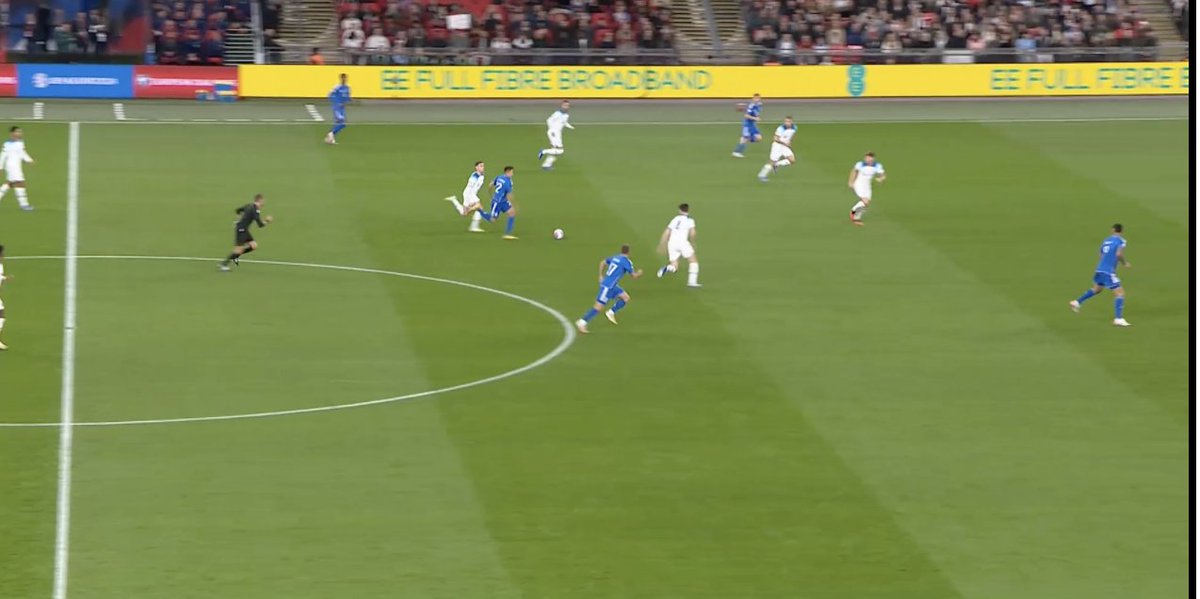
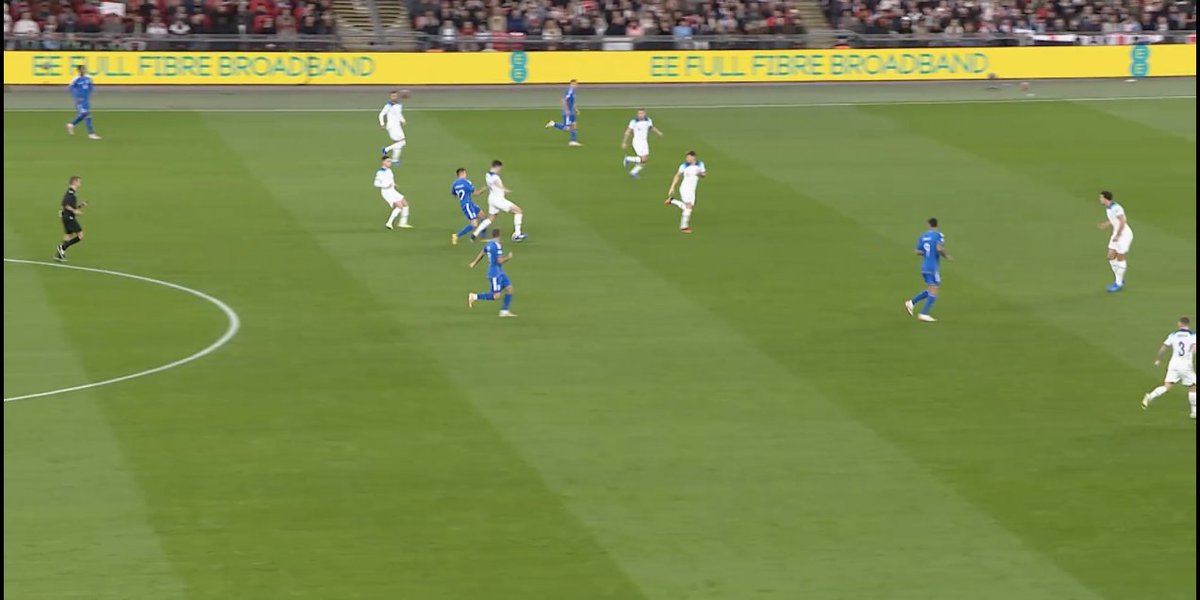
If the midfield line is broken his athleticism and the honesty of his recovery work are at a top level.
Again, his recognition of the danger is a huge attribute along with his tackling and interception ability.
Again, his recognition of the danger is a huge attribute along with his tackling and interception ability.
Differentiating him from a DM who protects his defence is his ability to protect while also pressing in any phase
Note his position protecting the midfield line being broken and his recognition to press the ball as he covers the distance quickly.
Note his position protecting the midfield line being broken and his recognition to press the ball as he covers the distance quickly.
Rice is a huge player for Arsenal and England.
He provides defensive stability, taking the weight off his CBs with his positioning.
In possession, he controls the tempo of the attacks whilst constantly providing options during build-up in attacking areas.
He provides defensive stability, taking the weight off his CBs with his positioning.
In possession, he controls the tempo of the attacks whilst constantly providing options during build-up in attacking areas.
• • •
Missing some Tweet in this thread? You can try to
force a refresh






