Read on Twitter
🧵CMS released final rule for the calendar year (CY) 2024 #Medicare Physician Payment Schedule.
Here is information from a memo by @AmerMedicalAssn Advocacy staff about several key provisions and ongoing AMA efforts to mitigate negative impacts on physician pay.
Here is information from a memo by @AmerMedicalAssn Advocacy staff about several key provisions and ongoing AMA efforts to mitigate negative impacts on physician pay.

2/ The AMA will analyze the final rule and develop a detailed summary in the coming days, but wanted to raise immediate awareness of a handful of key provisions as well as ongoing AMA efforts to mitigate negative impacts on physician pay.
3/ In September, the AMA submitted a comprehensive comment letter in response to the proposed rule.
tinyurl.com/2hc9ce6e
tinyurl.com/2hc9ce6e
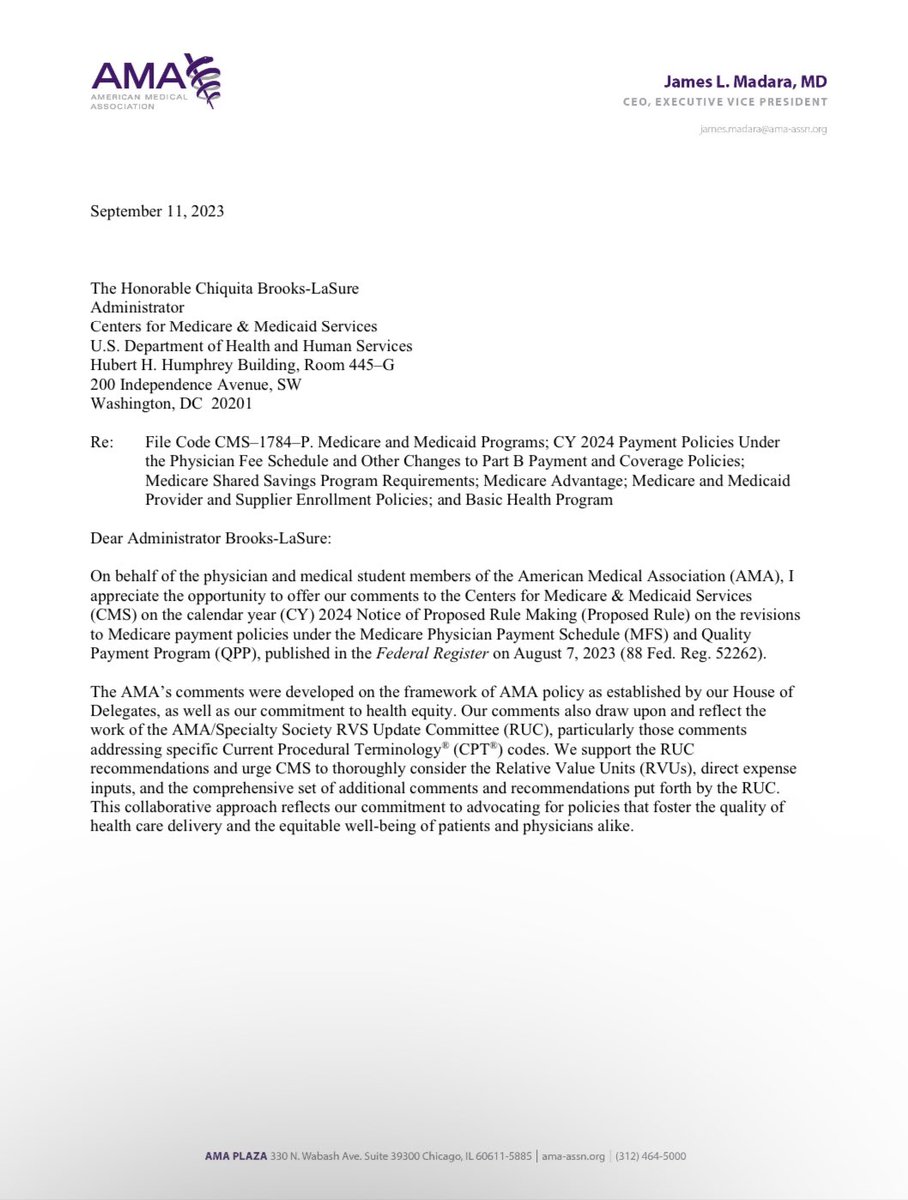
4/ In its September letter, the AMA recommended constructive steps that CMS could take to ensure the 2024 Medicare physician payment system reduced the negative financial impact on physicians and protected patient access to care.
5/ 2 issues will lead to cut in physician payment next year unless Congress intervenes:
(1) expiration of a temporary update under current law; and
(2) finalized budget neutrality adjustment due to the adoption of a CMS-developed add-on code
(1) expiration of a temporary update under current law; and
(2) finalized budget neutrality adjustment due to the adoption of a CMS-developed add-on code
6/ Magnitude of the cut:
The 2024 Medicare conversion factor will decrease by 3.37% from $33.8872 to $32.7442 (correction to Table 116). Similarly, the anesthesia conversion factor will decrease from $21.1249 to $20.4349.
The 2024 Medicare conversion factor will decrease by 3.37% from $33.8872 to $32.7442 (correction to Table 116). Similarly, the anesthesia conversion factor will decrease from $21.1249 to $20.4349.
7/ What about inflation?
Unfortunately, these cuts coincide with ongoing growth in the cost to practice medicine as CMS projects the increase in the Medicare Economic Index (MEI) for 2024 will be 4.6 percent.
Unfortunately, these cuts coincide with ongoing growth in the cost to practice medicine as CMS projects the increase in the Medicare Economic Index (MEI) for 2024 will be 4.6 percent.
8/ Unsustainable
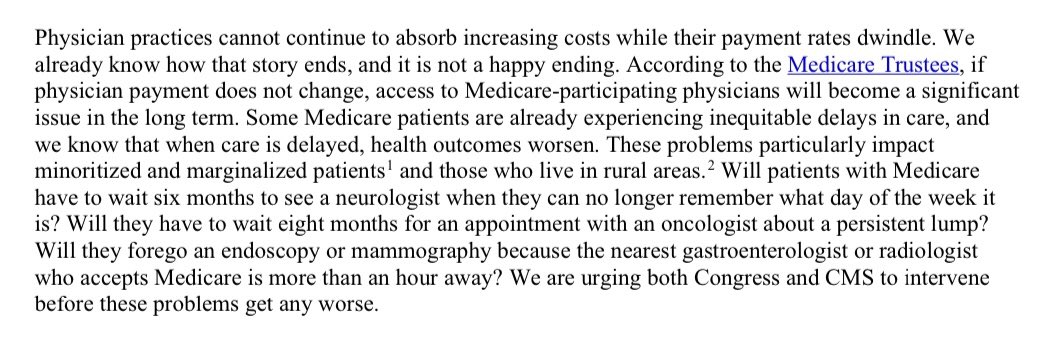
Physician practices cannot continue to absorb these increasing costs while their payment rates dwindle.
Hence, AMA and partners in organized medicine are continuing to mount a full-scale advocacy effort in strong support of H.R. 2474.
tinyurl.com/4r3z5pdy
Physician practices cannot continue to absorb these increasing costs while their payment rates dwindle.
Hence, AMA and partners in organized medicine are continuing to mount a full-scale advocacy effort in strong support of H.R. 2474.
tinyurl.com/4r3z5pdy

9/ H.R. 2474, the Strengthening Medicare for Patients and Providers Act would:
•Provide a permanent, annual update equal to the increase in the MEI
•Allow physicians to invest in their practices and implement new strategies to provide high-value care
•Provide a permanent, annual update equal to the increase in the MEI
•Allow physicians to invest in their practices and implement new strategies to provide high-value care
9/ Visit the AMA’s # Fix Medicare Now site and join the fight for financial stability for physician practices to preserve access to care for Medicare beneficiaries.
fixmedicarenow.org
fixmedicarenow.org

10/ ❗️CMS did not lower the budget neutrality impact of adding the new E/M add-on code, G2211 (finalized in 2021, delayed 3 years by Congress).
CMS maintained the estimated utilization assumption of G2211 at proposed rule’s estimate of 38 % when initially implemented in 2024.
CMS maintained the estimated utilization assumption of G2211 at proposed rule’s estimate of 38 % when initially implemented in 2024.
11/ The AMA highlighted several anticipated barriers to implementing this code that would lower its utilization, including ambiguity about when to use it and how to document it, as well as concerns about patient cost-sharing obligations.
12/ Unfortunately, although the utilization assumption has been greatly reduced compared to when it was initially proposed in 2021, the add-on code will still lead to an additional across-the-board cut to the conversion factor due to budget neutrality requirements.
13/ Must reform budget neutrality:
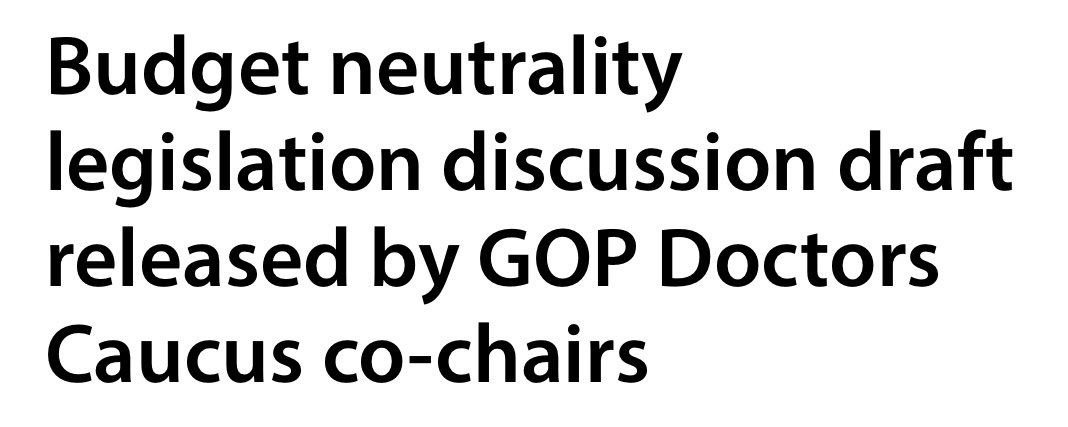
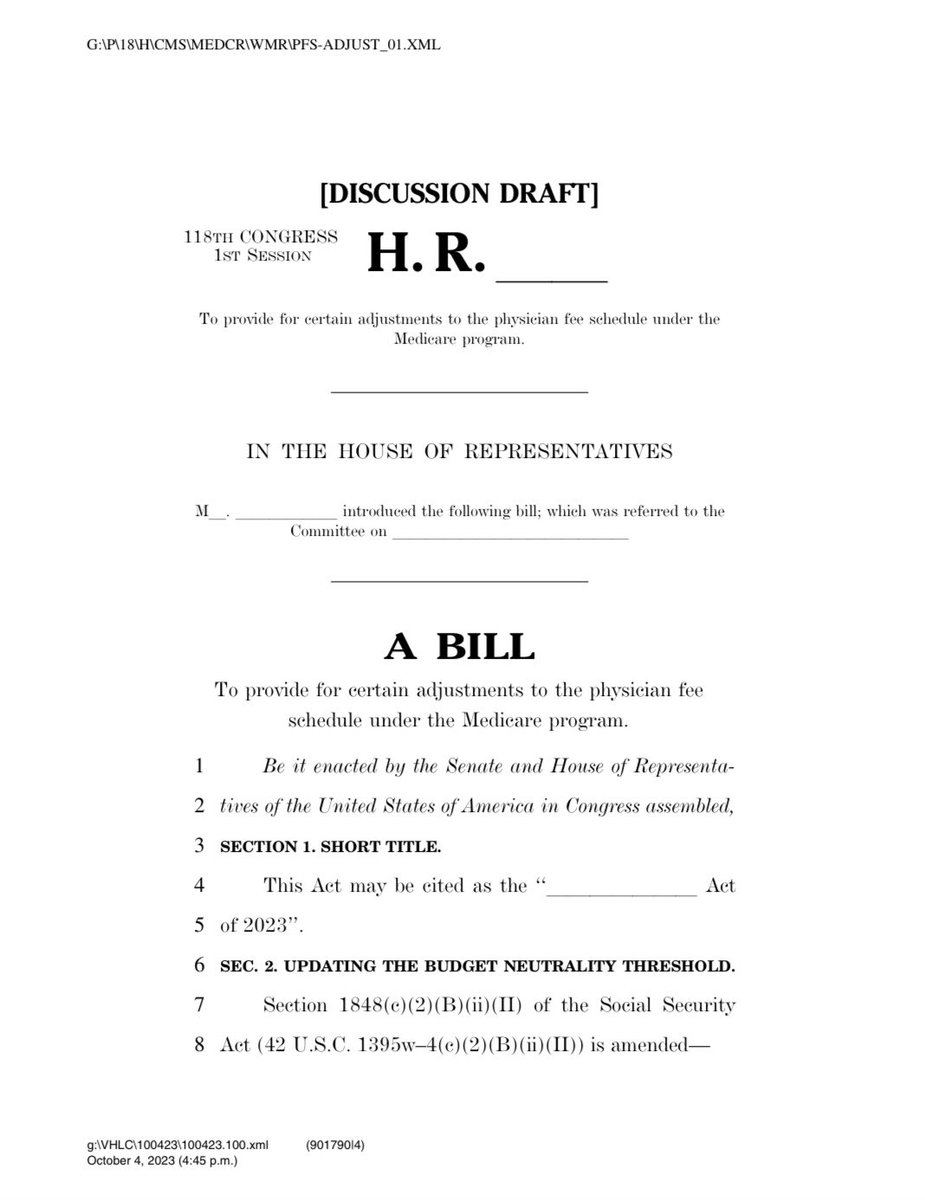
On October 11, GOP Doctors Caucus Co-Chairs, @RepGregMurphy, @RepBradWenstrup @DrBurgessTX working closely w/Ways and Means Committee Chairman @JasonSmithMO and the AMA, released a discussion draft of legislation.
tinyurl.com/mryka72y
On October 11, GOP Doctors Caucus Co-Chairs, @RepGregMurphy, @RepBradWenstrup @DrBurgessTX working closely w/Ways and Means Committee Chairman @JasonSmithMO and the AMA, released a discussion draft of legislation.
tinyurl.com/mryka72y
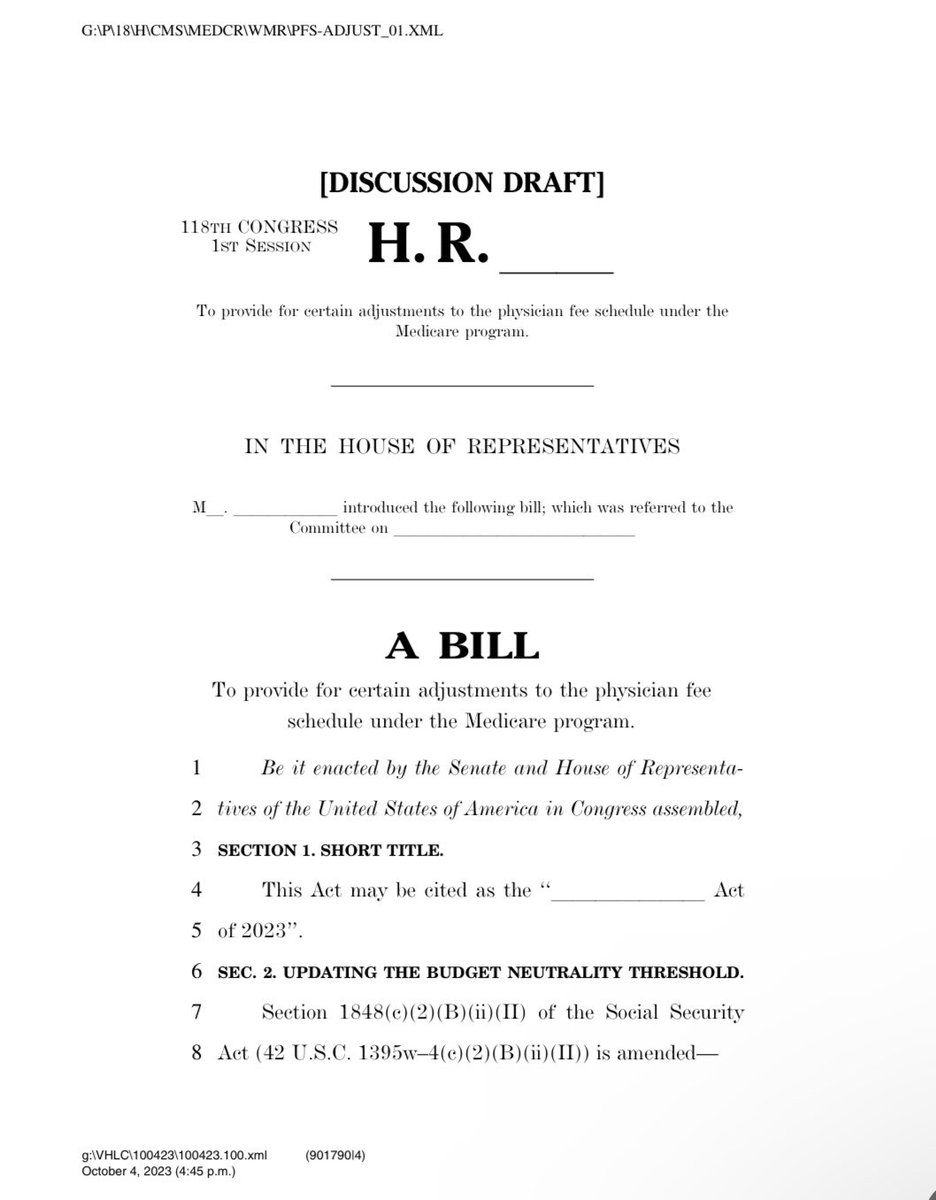
@RepGregMurphy @RepBradWenstrup @DrBurgessTX @JasonSmithMO 14/ The discussion draft seeks to reform the budget neutrality policies applied to the Medicare physician payment schedule in 2025 and future years and organized medicine recently sent a letter of support.
tinyurl.com/5c28etza
tinyurl.com/5c28etza

15/ In last year’s final rule, CMS finalized updated weights for different cost components of MEI for CY 2023. But, CMS postponed implementation of the MEI changes until time uncertain, referencing need for continued public comment d/t significant impact to physician payments.
16/ If MEI weights implementation were budget neutral overall physician work payment would be ⬇️ 7%; professional liability insurance payment would be ⬇️ severalfold mainly d/t a major error in CMS’ analysis of US Census Bureau’s SAS, omitting ~ 200K facility-based physicians.
17/ After correcting for this major omission, the physician work MEI weight would instead ⬆️ and PLI would experience a much smaller reduction.
❗️But…👇
❗️But…👇
18/ 🔥In the CY 2024 final rule, instead of correcting the flaw pointed out by the AMA, CMS only acknowledged the flaw and incorrectly stated that there is currently no mechanism for identifying expenses for facility-based physicians.
19/ CMS reiterated it will continue to postpone implementation of updated MEI weights, referencing the AMA’s national study to collect representative data on physician practice expenses, the AMA Physician Practice Information Survey.
🎇[Complete this impactful survey if asked]
🎇[Complete this impactful survey if asked]
20/ PPI Survey launched on 7/31/2023. Data is anticipated to be shared w/CMS in early 2025.
🎇[If selected, your practice will receive an email from ppisurvey@mathematica-mpr.com. Survey, mailed USPS priority from Mathematica via w/link to survey & supporting info. IMPORTANT]
🎇[If selected, your practice will receive an email from ppisurvey@mathematica-mpr.com. Survey, mailed USPS priority from Mathematica via w/link to survey & supporting info. IMPORTANT]

21/ ❗️Following strong opposition from the AMA, CMS did not finalize its proposal to increase the performance threshold to avoid a penalty in MIPS from 75 points to 82 points.
Instead, the performance threshold will remain at 75 points in 2024.
Instead, the performance threshold will remain at 75 points in 2024.
22/ AMA expressed serious concern with CMS’ proposal as MIPS has been largely paused since 2019 d/t the significant disruptions caused by the COVID-19 pandemic.
23/ Must fix broken MIPS program
Research continues to show that MIPS is:
•unduly burdensome;
•disproportionately harmful to small, rural, and independent practices;
•exacerbating health inequities; and
•divorced from meaningful clinical outcomes.
Research continues to show that MIPS is:
•unduly burdensome;
•disproportionately harmful to small, rural, and independent practices;
•exacerbating health inequities; and
•divorced from meaningful clinical outcomes.

25/ Need to fix the broken quality program
The AMA is urging Congress to make statutory changes to improve MIPS and to address its fundamental problems.
tinyurl.com/5t48tb39
The AMA is urging Congress to make statutory changes to improve MIPS and to address its fundamental problems.
tinyurl.com/5t48tb39
26/ Due to AMA advocacy, CMS finalized its proposal to delay mandatory electronic clinical quality measure adoption by Medicare Shared Savings Program participants, who may continue to utilize the CMS Web Interface in 2024.
tinyurl.com/4rkmf9u7
tinyurl.com/4rkmf9u7

27/ As finalized in previous rulemaking, MSSP participants would have been required to report their quality measures electronically starting in 2024.
28/ AMA is very glad to see CMS concur that the lack of maturity w/HIT standards to seamlessly aggregate data from EHRs from physicians who practice at multiple sites and/or are part of an Accountable Care Organization would have made implementation challenging in 2024.
29/ ❗️Despite AMA opposition, CMS finalized a controversial policy requiring all MSSP participants, including Qualified Participants in Advanced APMs, to report MIPS Promoting Interoperability data, though it delayed implementation until 2025 and finalized certain exclusions.
30/ Following AMA calls for further analysis, CMS did not finalize its proposal to make QP determinations at the individual eligible clinician level and will instead continue to make QP determinations at the APM Entity-level.
31/ AMA staff will analyze final rule & circulate a summary in near future.
From CMS:
Final rule text
Press Release
Fact Sheet - 2024 MPFS final rule
Fact Sheet - MSSP final changes: tinyurl.com/jyyycb5w
tinyurl.com/39epnym4
tinyurl.com/2b4jaj2m
tinyurl.com/mw2ca9c4
From CMS:
Final rule text
Press Release
Fact Sheet - 2024 MPFS final rule
Fact Sheet - MSSP final changes: tinyurl.com/jyyycb5w
tinyurl.com/39epnym4
tinyurl.com/2b4jaj2m
tinyurl.com/mw2ca9c4
Unroll @threadreaderapp
• • •
Missing some Tweet in this thread? You can try to
force a refresh