Did you know that the destruction of the Temple of Solomon was on 9/11 ?
(The 9th day of the 11th month: "Tisha B'av" [1])
The REBUILT Temple of Solomon [2] was destroyed again a SECOND TIME on 9/11 the Ninth of Av !!!
[1]
[2] en.wikipedia.org/wiki/Tisha_B'Av
en.wikipedia.org/wiki/Second_Te…

(The 9th day of the 11th month: "Tisha B'av" [1])
The REBUILT Temple of Solomon [2] was destroyed again a SECOND TIME on 9/11 the Ninth of Av !!!
[1]
[2] en.wikipedia.org/wiki/Tisha_B'Av
en.wikipedia.org/wiki/Second_Te…


Did you know some of the first recorded Christians were a Roman Imperial Family? The Flavius family even produced the first pope (Clement I). Josephus Flavius wrote this parapolitical analysis of Jesus just ~50 years after his death "The Wars Of The Jews"
en.wikipedia.org/wiki/The_Jewis…
en.wikipedia.org/wiki/The_Jewis…
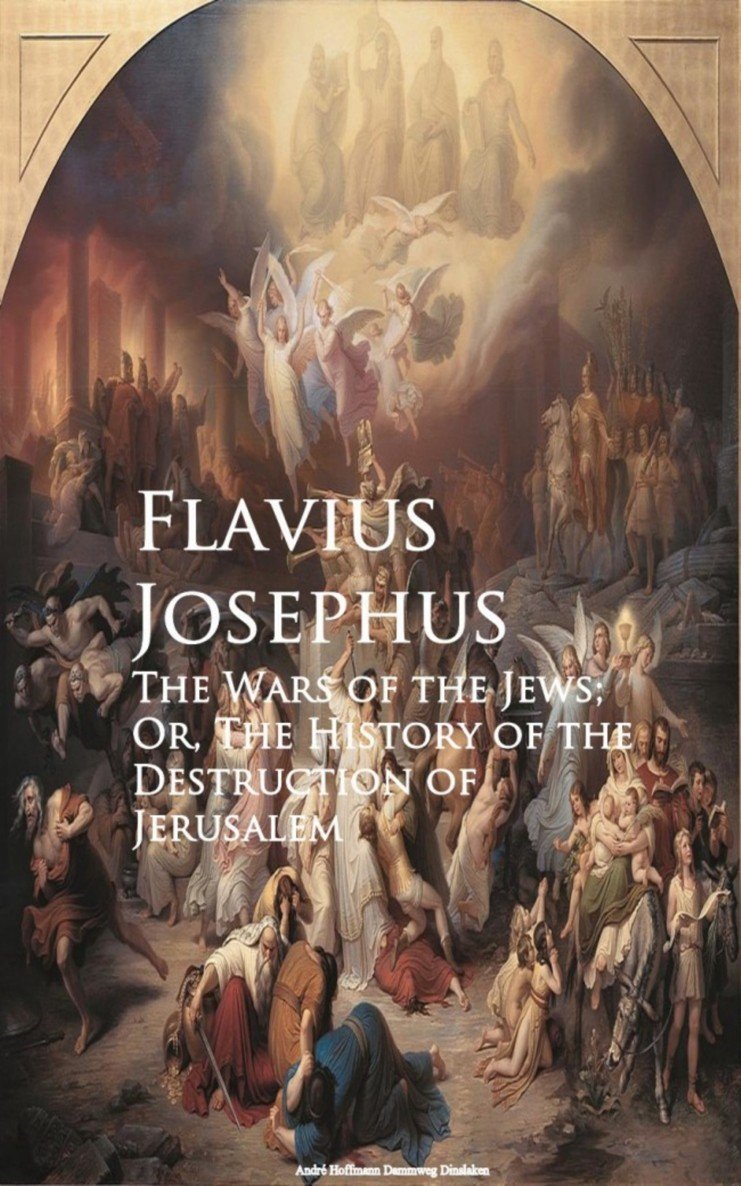
This book by Joseph Atwill is a Jaw dropping historical analysis of Josephus Flavius's writings. Atwill proposes that the New Testament of the Bible was written by the Flavians as a psychological warfare tool to get Messianic Jews to stop rebelling against the Roman Empire

Atwill theorizes the New Testament is actually a retelling of the military campaign of Titus Flavius in Judea (Gaza/ Israel) For example: Josephus's writings say that the walling of Jerusalem (predicted by Jesus in the New Testament) was added to the Bible after Titus did it IRL

Remember at the top of this thread I mentioned the destruction of the Temple of Solomon?
(VERY relevant to current events in Gaza/Israel btw)
Well, guess who destroyed the Second Temple?
Titus Flavius !!
🤯🤯🤯
And he did it, on 9/11 (the Ninth of Av) !!!
en.wikipedia.org/wiki/Second_Te…
(VERY relevant to current events in Gaza/Israel btw)
Well, guess who destroyed the Second Temple?
Titus Flavius !!
🤯🤯🤯
And he did it, on 9/11 (the Ninth of Av) !!!
en.wikipedia.org/wiki/Second_Te…

Throughout the book I got a Joseph-Campbell-"Hero-Of-A-Thousand-Faces" vibe. especially with these "comparative" charts showing parallels of Christian/Jewish scripture and Roman events. Here's one such chart for how Titus' military campaign parallels New Testament scripture.

The book posits that the Flavian family hijacked the historical figure Jesus and his ministries by authoring the New Testament which historians agree was written ~40-79 A.D. (the time of the Flavian reign) to propagandize Romans and "psyop" the Jews to align with them

BTW, this pattern is not far-fetched. I learned (while reading about Imhotep years back) that the Greeks did the same thing to the Egyptians. Ptolomy (a white Greek pharoah) created "Serapis" and other Gods by retelling stories from the Egyptian pantheon but with Greek faces.

This book is a REALLY erudite tour thru the history of the region. It was a page-turner. (BTW Atwill himself was a Christian and attended Jesuit (🚨) theological schools.) Here are more examples of those charts showing parallels between Jewish/Christian scripture and Roman war:


Atwill pulls out of Josephus Flavius's writings other historical bits and contends that the New Testament was always intended to be read ALONGSIDE the writings of Josephus and uses that to justify his thesis.


Regardless of your beliefs, the book feels at times heretical, but even if you dont agree with Atwill's thesis (which I don't, fully) it is nonetheless a REALLY well-cited one-stop-shop tour through tons of the history of Judea (Israel) and the Roman Empire.


(if you aint got time fo' dat whole book) The INTRODUCTION alone is Atwill's complete thesis and serves as an "executive summary" for the entire book.
The book is up (for now) on:
Josephus Flavius' Books/Audiobooks are also on Archive.
</THREAD> archive.org/details/pdfy-9…
The book is up (for now) on:
Josephus Flavius' Books/Audiobooks are also on Archive.
</THREAD> archive.org/details/pdfy-9…

P.S. IMHO, the biggest flaw in Atwill's idea was Josephus himself. His real name? Joseph ben Matityahu and he was a General of the Jewish rebels. Trapped by the Romans he tricked his men into committing suicide to save his own life.
Sus
Atwill omits this.
jewishvirtuallibrary.org/josephus-flavi…
Sus
Atwill omits this.
jewishvirtuallibrary.org/josephus-flavi…

• • •
Missing some Tweet in this thread? You can try to
force a refresh