William Aird Profile picture
Nov 15 8 tweets 3 min read Twitter logo Read on Twitter
1/7

NAME THAT CBC

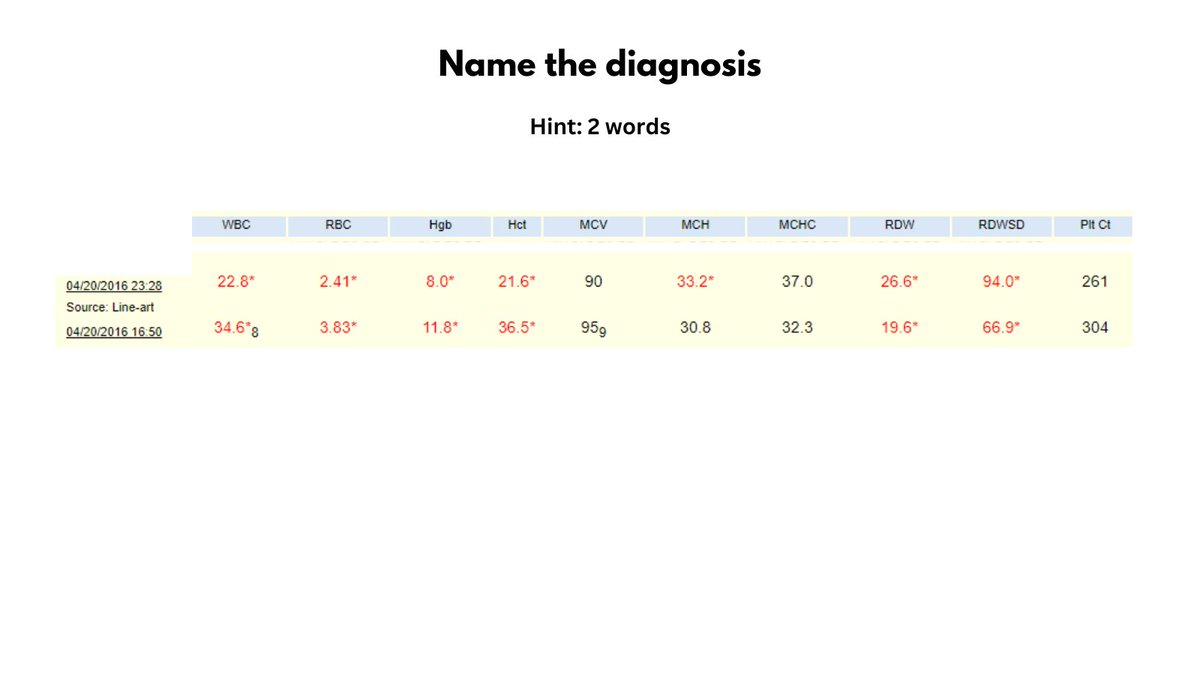
I tweeted a pair of CBCs earlier today and asked for a diagnosis in two words.

Lots of great responses!!

Kudos to @AaronBoothby2 for getting the right answer:

CLOSTRIDIAL SEPSIS

In this thread we will systematically work through the case. Image
2/7

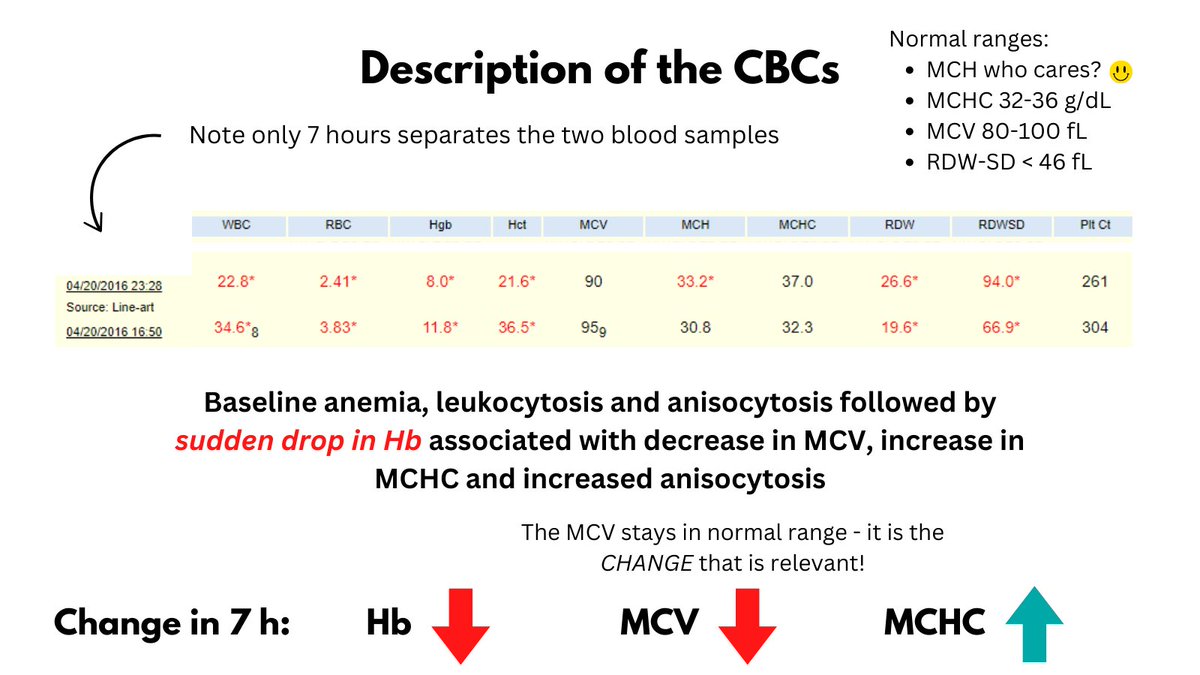
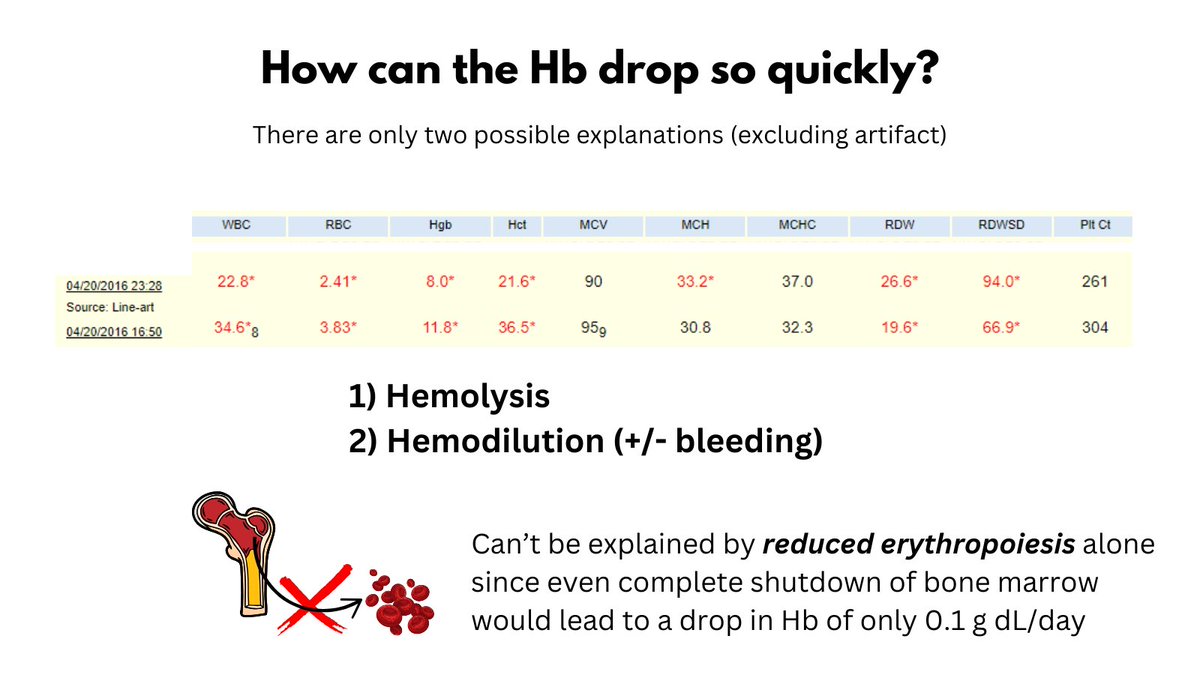
1. The first thing to note is that the two CBCs were taken a mere 7 h apart. Many notable changes occurred during this short time span, including a sudden drop in Hb and MCV and an increase in MCHC and RDW.

... it is the CHANGES in values that are meaningful. Image
3/7

2. How can we explain such a rapid drop in Hb? Certainly not by a production problem. If I completely shut off my bone marrow production of RBCs, my Hb will only drop by 0.1 g/dL/day because of the long survival time of RBCs.

So, this must be hemolysis or hemodilution. Image
4/7

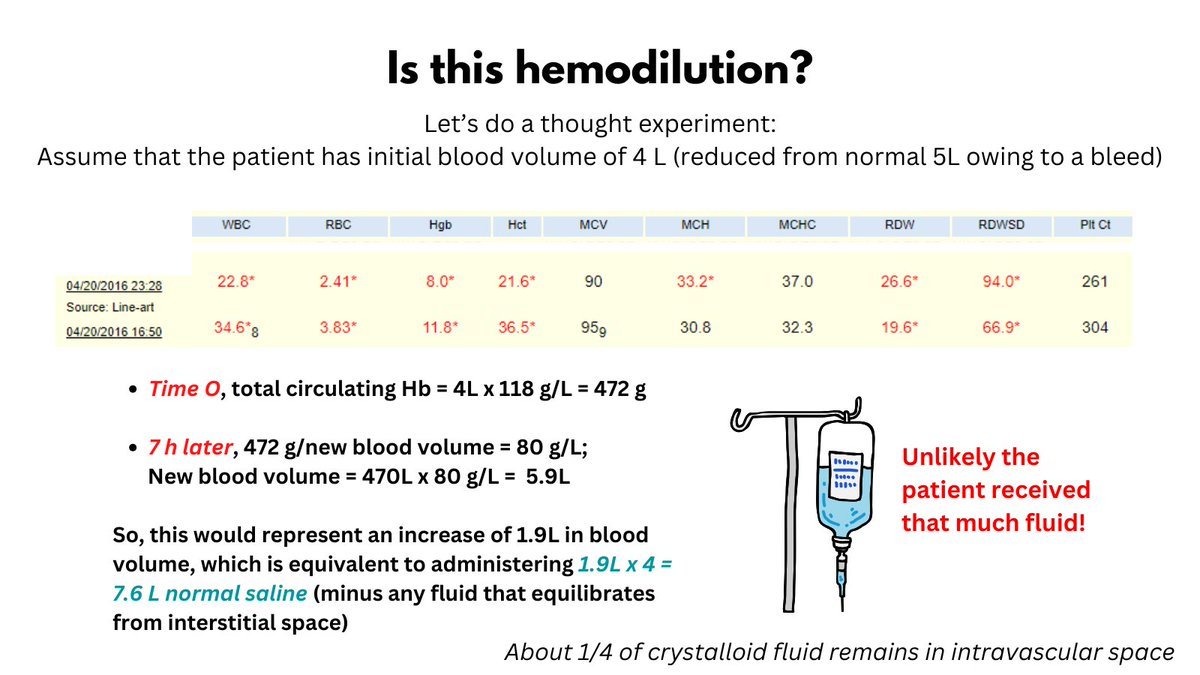
3. Let's consider hemodilution first (which would most likely occur in the context of a bleed). If we work through the numbers we find that the patient would have had to receive a ridiculous quantity of fluid to explain this degree of drop in Hb. Image
5/7

4. That leaves hemolysis as the most likely cause of the reduction in Hb. The ddx of hemolysis includes immune and non-immune causes (extracorpuscular and intracorpuscular). Image
6/7

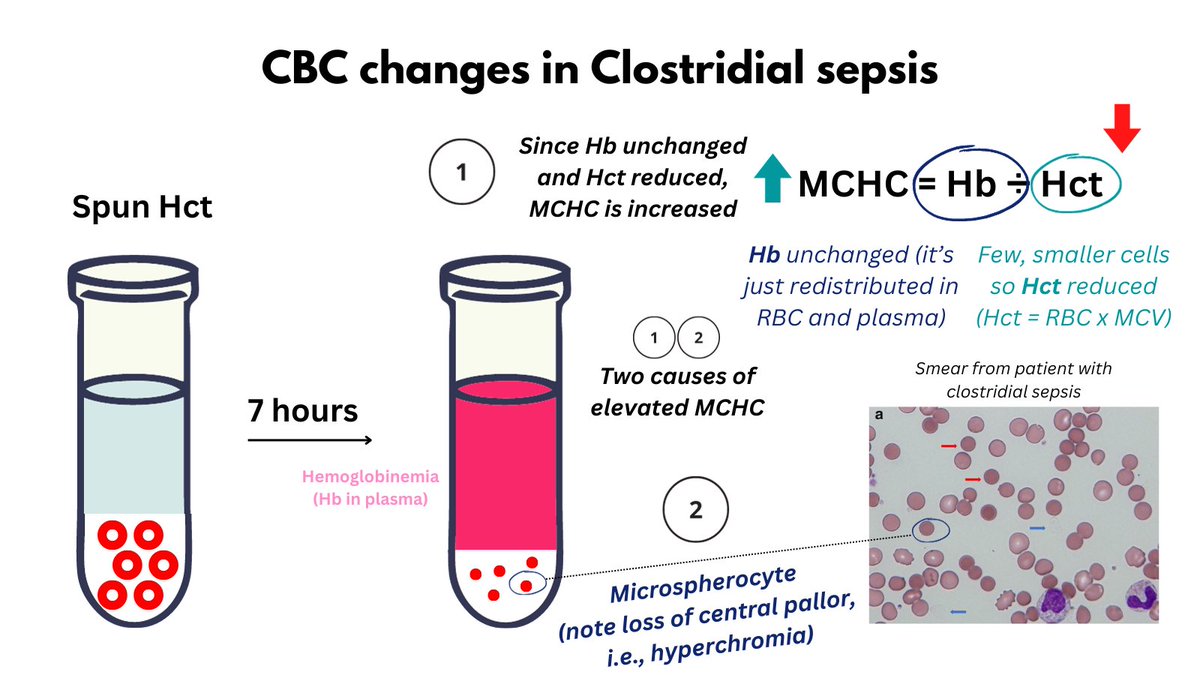
5. Considering causes of HA that are associated with elevated MCHC, the ddx narrows to AIHA (real), CAD (artifact) and infection with clostridial perfringens (real).
6/7

6. The MCV in CAD is artificially elevated, whereas this patient's MCV actually decreased (albeit within the normal range). The latter result is c/w AIHA or clostridium sepsis (especially the latter owing to microspherocytes).
7/7

7. It would very unusual for a warm antibody to result in such rapid hemolysis. Moreover, the leukocytosis is a hint that there may be an underlying infection.

In fact this patient had fulminant clostridial sepsis (including classical microspherocytes on his blood smear). Image
• • •

Missing some Tweet in this thread? You can try to force a refresh

 

Keep Current with William Aird

William Aird Profile picture

Stay in touch and get notified when new unrolls are available from this author!

Read all threads

This Thread may be Removed Anytime!

PDF

Twitter may remove this content at anytime! Save it as PDF for later use!

Try unrolling a thread yourself!

how to unroll video
  1. Follow @ThreadReaderApp to mention us!

  2. From a Twitter thread mention us with a keyword "unroll"
@threadreaderapp unroll

Practice here first or read more on our help page!

More from @WilliamAird4

Nov 17
1/7

I sent a poll an hour ago:

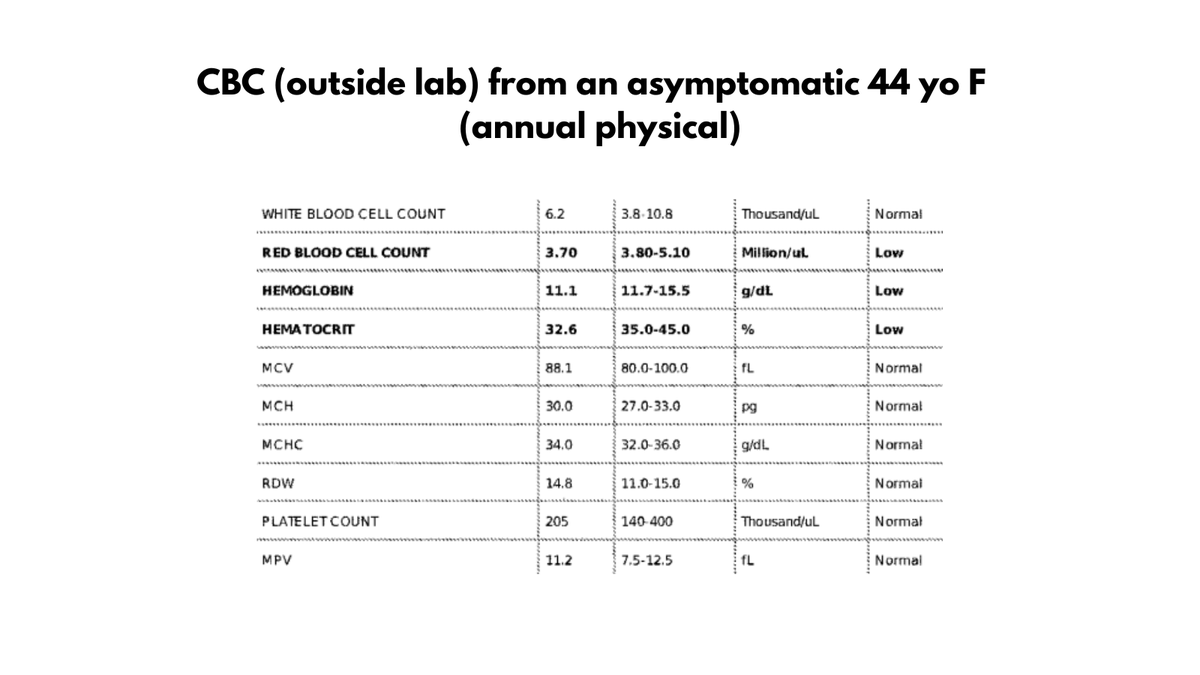
You see a young F patient with incidental finding of normocytic anemia. You get JUST ONE test 😉 to make the diagnosis. What would you choose?

CRP
TSH
Retic count
Ferritin

... already over 370 votes, with retic count and ferritin tied for 1st! Image
2/7

CRP 5.5%
TSH 16.5%
Retic count 39.6%
Ferritin 38.6%

This is obviously an artificial situation. I gave no history (though I mentioned the patient was female, young and asymptomatic ["incidental finding"]), and asked you to choose just one lab.
3/7

There is no right answer. If you were a betting person, you might choose ferritin since the prevalence of iron deficiency anemia in F adults of reproductive age is 5% in the US and up tp 30% are normocytic. Thus, the pretest probability of IDA in this case is unrivaled.
Read 7 tweets
Nov 13
1/9

Hb vs. Hct - PART 2

I recently asked a series of questions about Hb vs Hct. I addressed some earlier and now turn to the remaining ones.

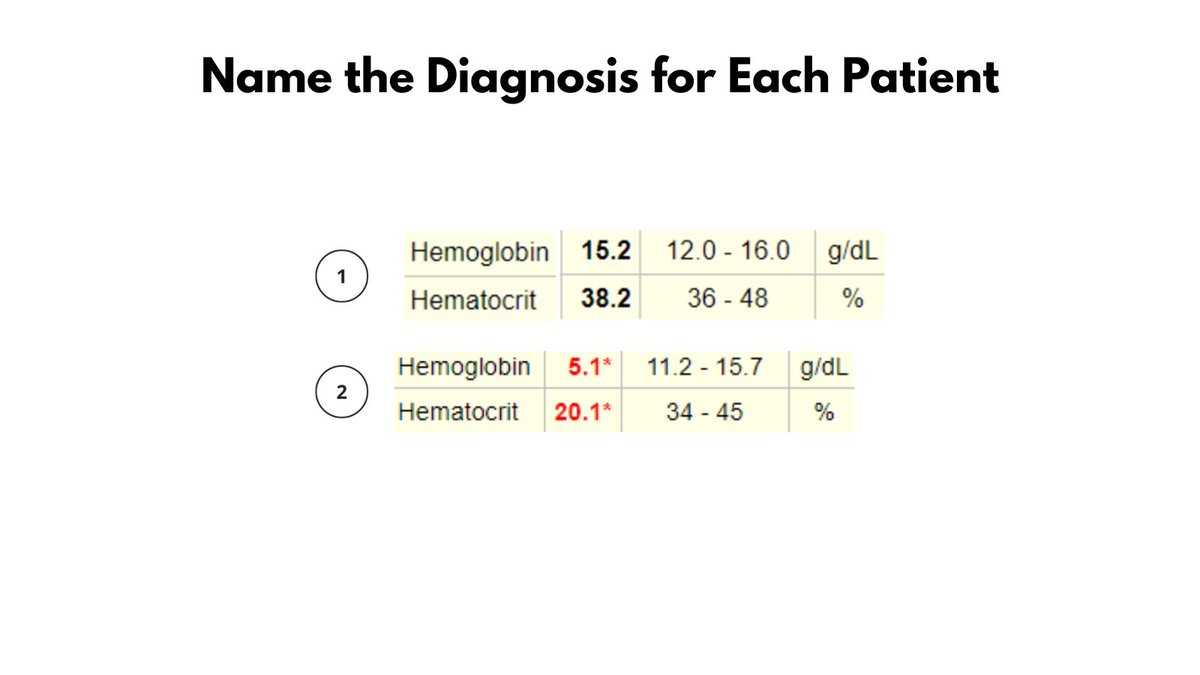
QUESTION: If Hb and Hct are not interchangeable (as we saw), then what different information are you imparting by reporting both?
2/9

ANSWER: Reporting both Hb and Hct provides a SINGLE piece of information that Hb or Hct alone does not, namely the MCHC (MCHC = Hb/Hct).

But who needs to calculate the MCHC when it is provided as part of the CBC?

How about a medical student you wish to put on the spot 😀?
3/9

For example, I might provide the Hb and Hct for the 2 cases shown in the graphic and ask for a diagnosis. See how you do! (Hint: test for a violation of the 3:1 rule which assumes a normal MCHC) Image
Read 9 tweets
Nov 13
1/6

Hb vs. Hct - PART 1

I recently asked a series of questions about Hb vs Hct.

I will address some of the answers here and others in a follow-up thread.

QUESTION: If I give you the Hb of a patient can you predict their Hct? Image
2/6

ANSWER: No, but you can predict a range of Hb's based on first principles:

1. MCHC = Hb/Hct

2. Thus, for a given Hct, the Hb will depend on the MCHC

3. Theoretically the MCHC can range from 0 to about 40 g/dL
3/6

4. In practice, however, MCHC ranges between 22 and 40 g/dL, setting boundaries for a practical Hb range

QUESTION 2: Are the Hb and Hct interchangeable?

No! One value cannot be derived from the other without knowing the concentration of Hb inside the RBC (MCHC)
Read 6 tweets
Nov 7
1/5

METHEMOGLOBINEMIA

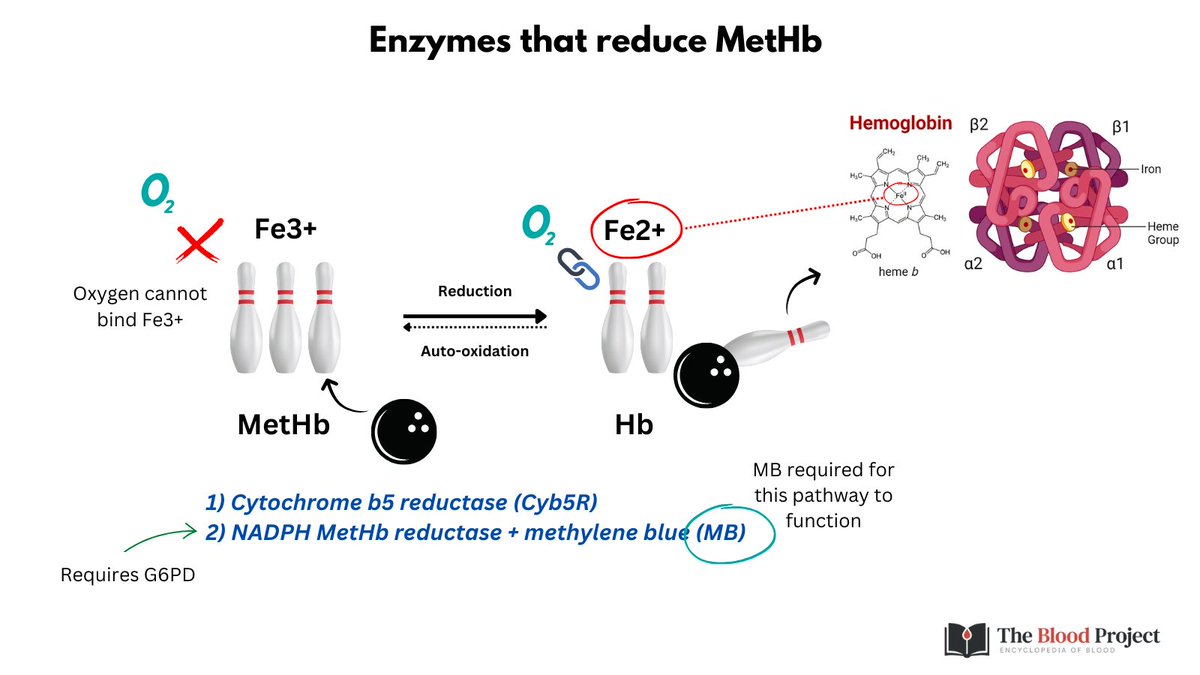
1. MetHb refers to the oxidation of ferrous iron (Fe2+) to ferric iron (Fe3+) within the Hb molecule.

2. Methemoglobinemia occurs when the concentration of methemoglobin in RBCs is >5%.

3. MetHb competes for O2 binding and causes left shift of ODC. Image
2/5

4. NADH cytochrome b5 reductase (Cyb5R) is the most important mechanism for reducing MetHb to Hb.

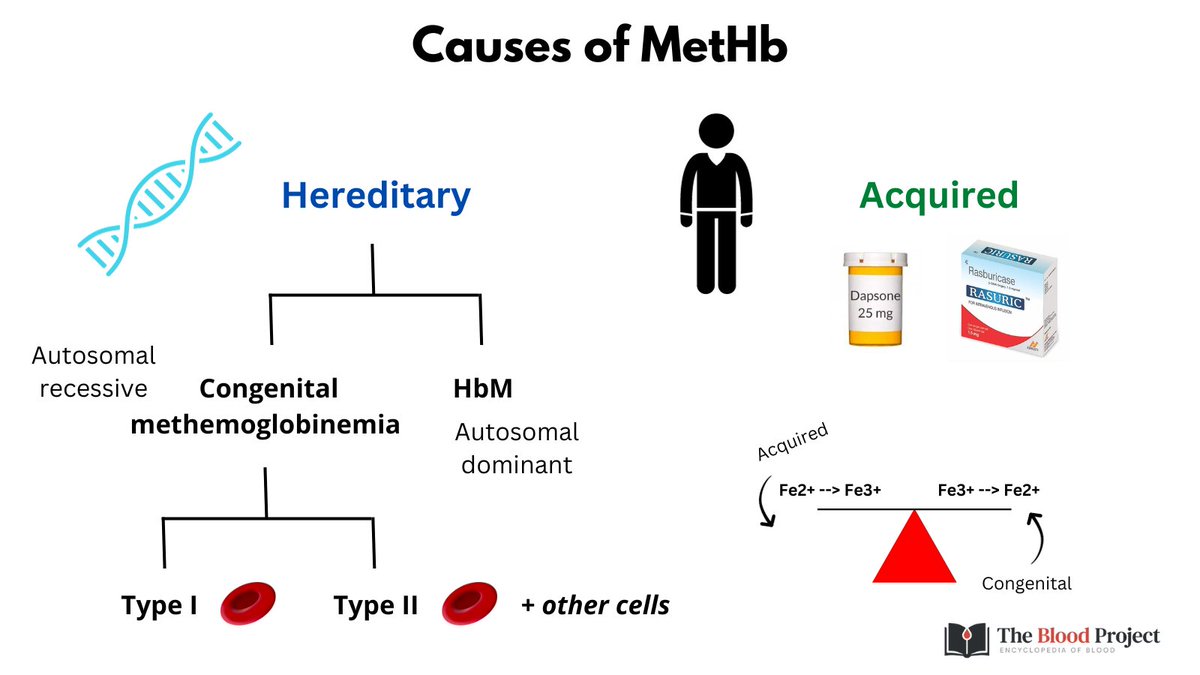
5. Causes of methemoglobinemia include congenital (Cyb5r deficiency, HbM) and acquired (usually ingestion of an oxidant agent, e.g. dapsone or rasburicase). Image
3/5

6. Clinical symptoms include cyanosis and those related to reduced oxygen delivery. Severity of presentation depends on:

a. % MetHb
b. Rate of increase in MetHb levels
c. Reduction capacity
d. Presence of co-morbidities Image
Read 5 tweets
Oct 28
1/9

CASE

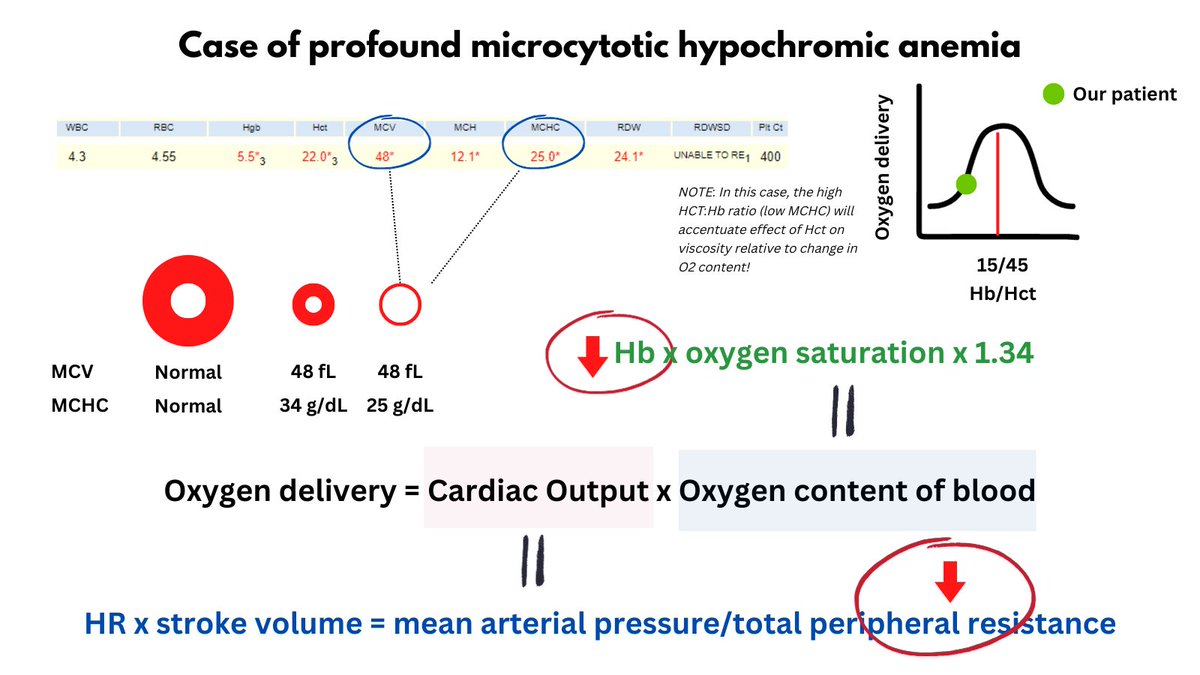
I was referred a case of iron deficiency last week with the lowest MCV I have ever seen in a patient (MCV 48 fL, baseline 77 with normal Hb electrophoresis suggesting concomitant alpha thalassemia trait).

A) What are the implications for oxygen delivery? Image
2/9

1. Oxygen delivery = CO x O2 content of blood.

2. Low Hct in this case results in reduced viscosity, lower total peripheral resistance, and increased CO.

3. Low Hb (disproportionately low relative to Hct owing to low MCHC [MCHC = Hb/Hct]) results in reduced O2 content.
3/9

4. On balance the negative effect of low Hb on O2 content will have a much greater impact on O2 delivery than the salutary of a low Hct on total peripheral resistance (by virtue of reduced blood viscosity).
Read 9 tweets
Oct 26
1/5

SPLENIC CONTRACTION

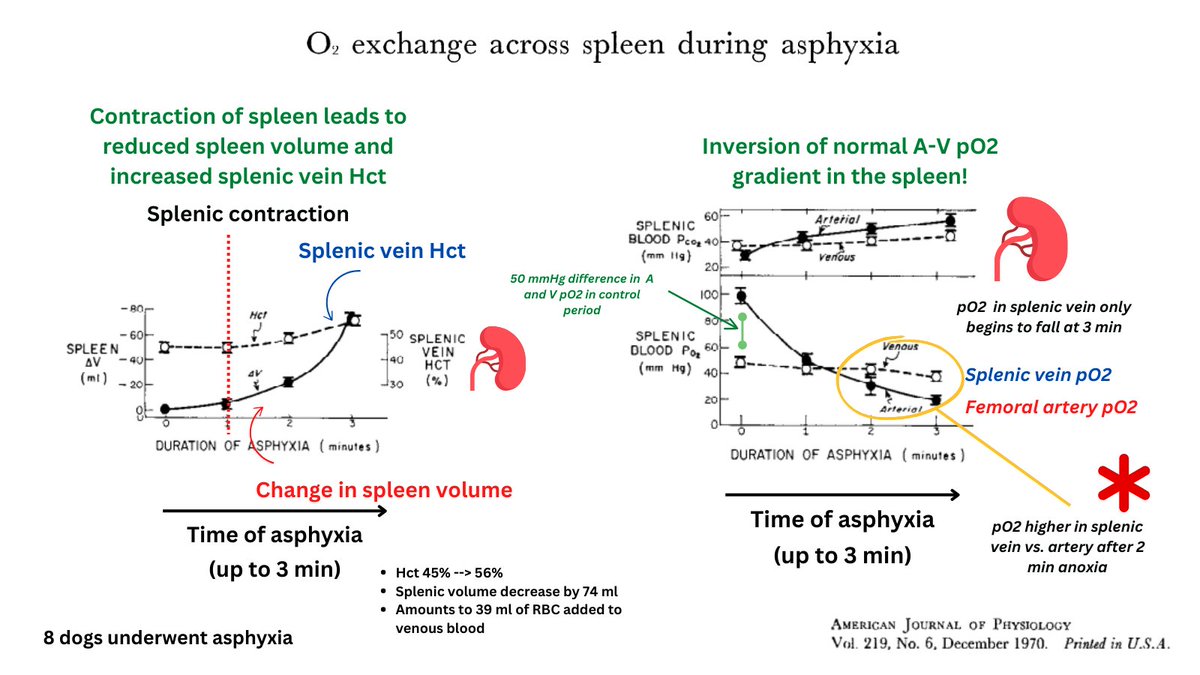
In mammals, contraction of the spleen results in the release of stored RBCs (from red pulp) into the circulation, thereby augmenting oxygen carrying capacity of the blood. Image
2/5

Splenic contraction provides a mechanism for autotransfusion, and is used to advantage by such animals as greyhound dogs, race horses and diving mammals. Even humans contract their spleen (albeit to a much lesser extent) at high altitude and with exercise.
3/5

In the setting of anoxia, red cells released from the spleen will only be helpful in so far as their Hb is oxygenated. A splenic infusion of RBCs containing deoxyHb will only add to blood viscosity and peripheral resistance.
Read 5 tweets

Did Thread Reader help you today?

Support us! We are indie developers!


This site is made by just two indie developers on a laptop doing marketing, support and development! Read more about the story.

Become a Premium Member ($3/month or $30/year) and get exclusive features!

Become Premium

Don't want to be a Premium member but still want to support us?

Make a small donation by buying us coffee ($5) or help with server cost ($10)

Donate via Paypal

Or Donate anonymously using crypto!

Ethereum

0xfe58350B80634f60Fa6Dc149a72b4DFbc17D341E copy

Bitcoin

3ATGMxNzCUFzxpMCHL5sWSt4DVtS8UqXpi copy

Thank you for your support!

Follow Us on Twitter!

:(