Read on Twitter
How do you measure if your financial reporting is successful?
Here are ten KPIs to consider and a deep-dive into each of them 🧵
Here are ten KPIs to consider and a deep-dive into each of them 🧵
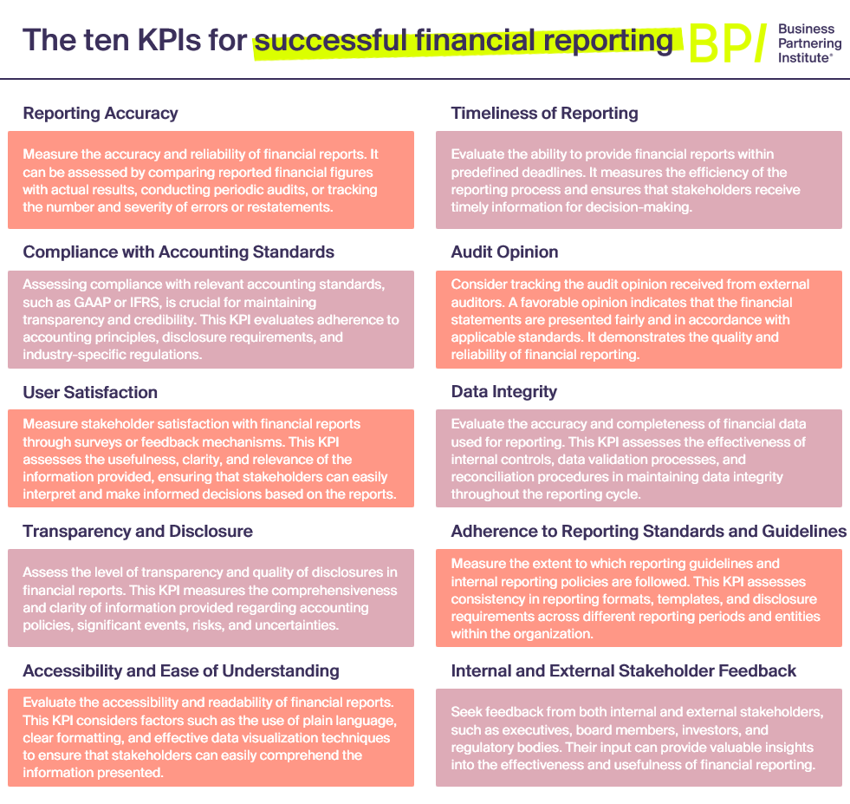
Here's an overview of the ten KPIs:
1. Reporting Accuracy
2. Timeliness
3. Compliance with Standards
4. Audit Opinion
5. User Satisfaction
6. Data Integrity
7. Transparency
8. Use of reporting standards
9. Ease of use
10. Stakeholder feedback
1. Reporting Accuracy
2. Timeliness
3. Compliance with Standards
4. Audit Opinion
5. User Satisfaction
6. Data Integrity
7. Transparency
8. Use of reporting standards
9. Ease of use
10. Stakeholder feedback
1/10 Reporting accuracy
Measure the accuracy and reliability of financial reports.
It can be assessed by comparing reported financial figures with actual results, conducting periodic audits, or tracking the number and severity of errors or restatements.
Measure the accuracy and reliability of financial reports.
It can be assessed by comparing reported financial figures with actual results, conducting periodic audits, or tracking the number and severity of errors or restatements.
2/10 Timeliness of reporting
This KPI evaluates the ability to provide financial reports within predefined deadlines.
It measures the efficiency of the reporting process and ensures that stakeholders receive timely information for decision-making.
This KPI evaluates the ability to provide financial reports within predefined deadlines.
It measures the efficiency of the reporting process and ensures that stakeholders receive timely information for decision-making.
3/10 Compliance with Accounting Standards
Assessing compliance with relevant accounting standards, such as GAAP or IFRS, is crucial for maintaining transparency and credibility.
This KPI evaluates adherence to accounting principles and disclosure requirements.
Assessing compliance with relevant accounting standards, such as GAAP or IFRS, is crucial for maintaining transparency and credibility.
This KPI evaluates adherence to accounting principles and disclosure requirements.
4/10 Audit Opinion
Track the audit opinion received from external auditors.
A favorable opinion indicates that the financial statements are presented fairly and in accordance with applicable standards.
It demonstrates the quality and reliability of financial reporting.
Track the audit opinion received from external auditors.
A favorable opinion indicates that the financial statements are presented fairly and in accordance with applicable standards.
It demonstrates the quality and reliability of financial reporting.
5/10 User Satisfaction
Measure stakeholder satisfaction with financial reports through surveys, feedback mechanisms, or direct interactions.
This KPI assesses the usefulness of the information provided, ensuring that stakeholders can interpret and make informed decisions.
Measure stakeholder satisfaction with financial reports through surveys, feedback mechanisms, or direct interactions.
This KPI assesses the usefulness of the information provided, ensuring that stakeholders can interpret and make informed decisions.
6/10 Data Integrity
Evaluate the accuracy and completeness of financial data used for reporting.
This KPI assesses the effectiveness of internal controls, data validation processes, and reconciliation procedures in maintaining data integrity throughout the reporting cycle.
Evaluate the accuracy and completeness of financial data used for reporting.
This KPI assesses the effectiveness of internal controls, data validation processes, and reconciliation procedures in maintaining data integrity throughout the reporting cycle.
7/10 Transparency and Disclosure
Assess the level of transparency and quality of disclosures in financial reports.
This KPI measures the comprehensiveness and clarity of information provided regarding accounting policies, significant events, risks, and uncertainties.
Assess the level of transparency and quality of disclosures in financial reports.
This KPI measures the comprehensiveness and clarity of information provided regarding accounting policies, significant events, risks, and uncertainties.
8/10 Adherence to Reporting Standards and Guidelines
Measure the extent to which reporting guidelines and internal reporting policies are followed.
This KPI assesses consistency in reporting formats and disclosure requirements across different reporting periods and entities.
Measure the extent to which reporting guidelines and internal reporting policies are followed.
This KPI assesses consistency in reporting formats and disclosure requirements across different reporting periods and entities.
9/10 Accessibility and Ease of Understanding
Evaluate the accessibility and readability of financial reports.
This KPI considers factors such as the use of plain language, clear formatting, and effective data visualization techniques to ensure ease of use for stakeholders.
Evaluate the accessibility and readability of financial reports.
This KPI considers factors such as the use of plain language, clear formatting, and effective data visualization techniques to ensure ease of use for stakeholders.
10/10 Internal and External Stakeholder Feedback
Seek feedback from both internal and external stakeholders, such as executives, board members, investors, and regulatory bodies.
Their input can provide valuable insights into the effectiveness of your financial reporting.
Seek feedback from both internal and external stakeholders, such as executives, board members, investors, and regulatory bodies.
Their input can provide valuable insights into the effectiveness of your financial reporting.
Which KPIs would you add to the list and how would you rate the usefulness of these 10 KPIs?
That's a wrap!
If you enjoyed this thread:
1. Follow me @LiuLindberg for more of these
2. RT this tweet to help others become better at Financial Reporting.
If you enjoyed this thread:
1. Follow me @LiuLindberg for more of these
2. RT this tweet to help others become better at Financial Reporting.
https://twitter.com/815764869966393345/status/1726873254671901003
• • •
Missing some Tweet in this thread? You can try to
force a refresh