Samo Burja Profile picture
Nov 22 5 tweets 2 min read Twitter logo Read on Twitter
The world’s largest modern city is not San Francisco, New York, or Tokyo.

It is the Chinese megalopolis in Guangdong, where 85 million people manufacture electric vehicles, semiconductors, and much more.

Read the new @bismarckanlys Brief here:

1/n brief.bismarckanalysis.com/p/the-worlds-l…
Image
The Pearl River Delta or “Greater Bay Area” spans Hong Kong, Macau, Shenzhen, and Guangzhou, all in Guangdong province in southern China.

Once known for being a cheap labor hub, it has rapidly progressed into high-tech manufacturing and even software.

2/n Image
“China’s Silicon Valley” has more people and more silicon than the original.

It is home to Chinese software giant Tencent, but also innovative hardware companies like Huawei and DJI.

The province plans to build more nuclear power capacity than Russia or Japan.

3/n Image
The megalopolis is increasingly the center of China’s strategy to build an end-to-end advanced semiconductor supply chain.

In the coming decades, there will be perhaps no single greater concentration of software talent, manufacturing expertise, and cheap energy.

4/n Image
To read the full analysis of Guangdong and Shenzhen, subscribe to Bismarck Brief here:


We invite you to subscribe and join us on this ongoing exploration into the global power landscape.

5/nbrief.bismarckanalysis.com/subscribe

• • •

Missing some Tweet in this thread? You can try to force a refresh

 

Keep Current with Samo Burja

Samo Burja Profile picture

Stay in touch and get notified when new unrolls are available from this author!

Read all threads

This Thread may be Removed Anytime!

PDF

Twitter may remove this content at anytime! Save it as PDF for later use!

Try unrolling a thread yourself!

how to unroll video
  1. Follow @ThreadReaderApp to mention us!

  2. From a Twitter thread mention us with a keyword "unroll"
@threadreaderapp unroll

Practice here first or read more on our help page!

More from @SamoBurja

Oct 25
Japan turned off its nuclear plants in 2011 after a devastating earthquake. But since then, it has slowly turned them back on.

Japan won’t denuclearize because it has an arsenal of unassembled nuclear weapons.

Read the new @bismarckanlys Brief:

1/n brief.bismarckanalysis.com/p/the-return-o…
Image
Japan has no oil or gas reserves, so it needs nuclear power for its industry.

The elite coalition behind Japan’s nuclear industry consists of the economy ministry, the industrial conglomerates, and the Liberal Democratic Party, through which Japan is a near one-party state

2/n Image
It is easy to mistake Japan’s nuclear pause in the wake of Fukushima for a degrowth environmentalist nuclear phaseout like Germany’s.

But Japan is now building new reactors and planning for 20% of electricity to come from nuclear by 2030.

3/n Image
Read 5 tweets
Sep 20
Visa is the middleman between thousands of banks, millions of merchants, billions of credit/debit cards, and $12 trillion of payments in 2022.

But the company is a dead player subservient to U.S. banks.

Read the new @bismarckanlys Brief here:

1/n Image
Visa and its competitors are like tech companies that rely on network effects. The more merchants and consumers on a card network, the more valuable that network is to them.

But since banks store the money of merchants and consumers, Visa also needs to appease banks.

2/n Image
It is not Visa that levies most card transaction fees, though it collects them. It is rather the banks, who are effectively taxing consumers, with tax returns in the form of card rewards.

What Visa does could arguably also be done by a government agency or utility.

3/n Image
Read 5 tweets
Aug 10
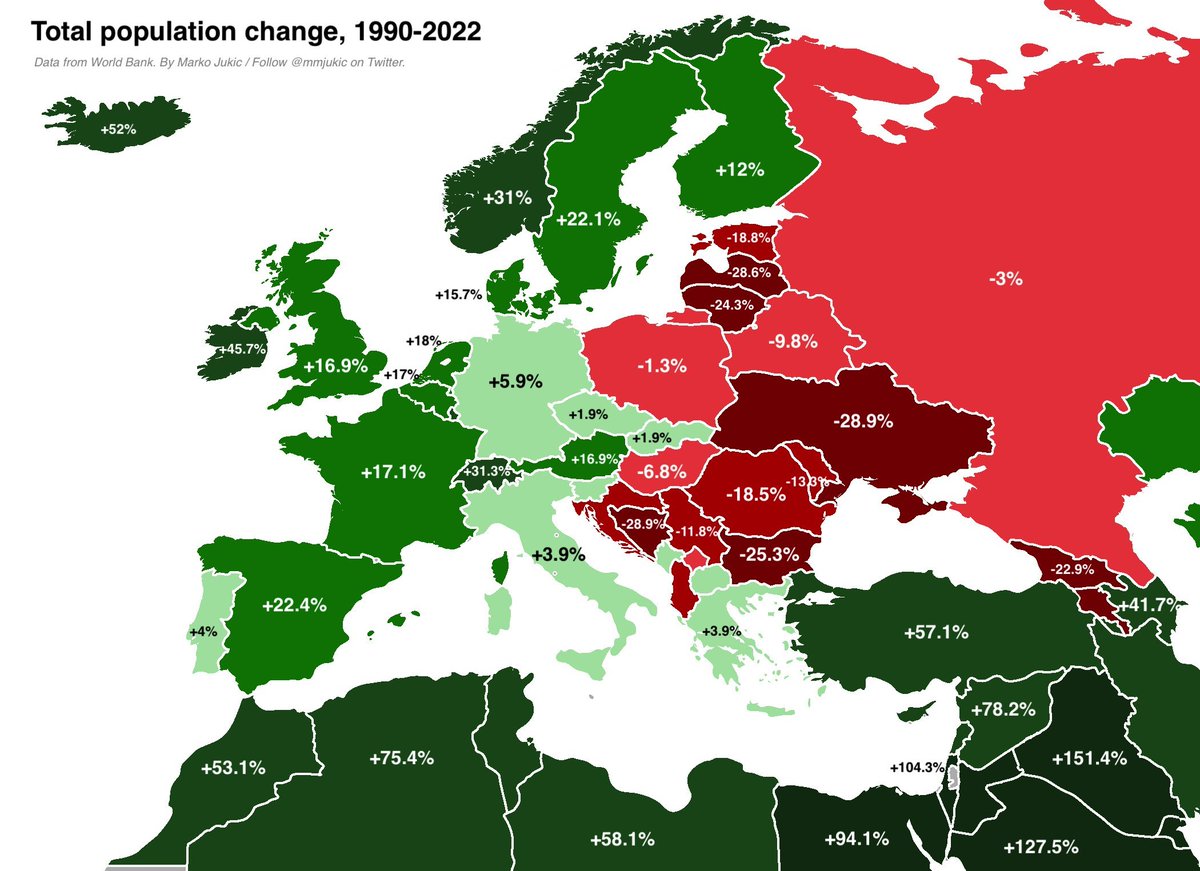
Few economists bite the bullet that if immigration is good for the countries gaining people, emigration is bad for the countries losing people. Image
There is a war of rich on poor: Depriving developing countries of the human capital they need to develop while simultaneously depriving them of cheap energy in name of environmentalism.
Interesting thread on this in the case of Eastern Europe:

Read 11 tweets
Jul 12
"The US is a manufacturing superpower" is the new DC comintern official party line.

Industry after industry, after nearly two hundred cases studies, we at @bismarckanlys find no evidence of this.
What we find is relative decline and absolute stagnation. Technological progress is happening but it isn't outpacing deindustrialization.
When it comes to the numbers on manufacturing they're ludicrously adulterated, including things like mining and construction.

If we define mining as industry, then Australia and Russia are industrial powerhouses.
Read 5 tweets
Jul 12
Brazil has all the natural fundamentals to be a world power. Despite 200 years of high hopes, it still isn’t one.

Brazil is a case study in how dysfunctional political institutions squander great potential.

Read the new @bismarckanlys Brief here:

1/n https://t.co/szEAVG40jwbrief.bismarckanalysis.com/p/the-roots-of…
Image
Brazil might be the world’s largest contiguous breadbasket. The country is vast, warm, and fertile, with many rivers, and Brazil is unsurprisingly one of the biggest exporters of cash crops.

Brazil’s 200 million people get 64% of electricity from hydropower!

2/n Image
Brazil’s problem is that it is a highly decentralized country where elites consistently prioritize costly political battles over development of the economy and institutions.

Brazil has a long history of rebellions, military coups, and, today, politics via the justice system

3/n Image
Read 5 tweets
Apr 5
Whether China becomes a global military superpower will depend on the functionality of its state-owned defense industry.

It is underperforming in quality and quantity compared to China’s civilian economy.

Read the new @bismarckanlys Brief here:
brief.bismarckanalysis.com/p/chinas-laggi…

1/n
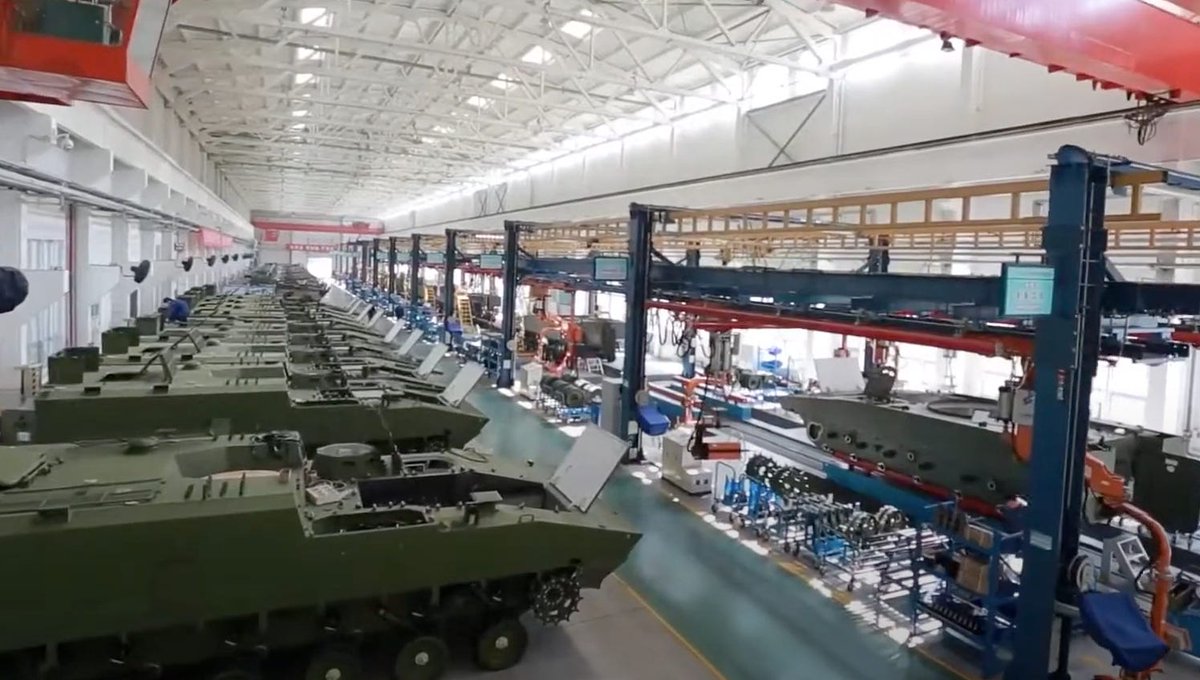
Unlike Western defense co.’s, China’s state-owned enterprises get most of their revenue from civilian business!

This is a legacy of Deng, who corporatized arms factories and directed them to make consumer goods, in hopes expertise and technology would build up faster.

2/n
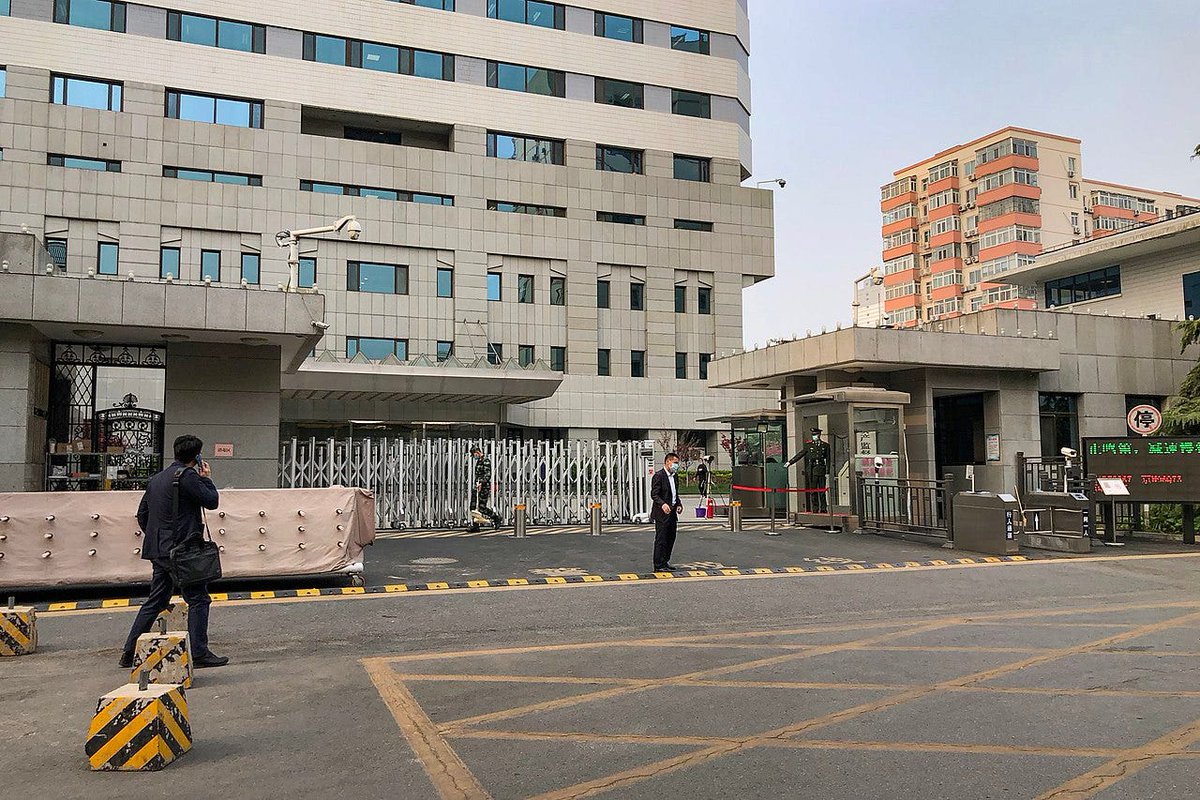
Today, China still lags behind the US and Russia in military technological sophistication.

China relies on Russia & Europe for designs & expertise, especially for aircraft and naval engines. The SOEs make incremental progress and can scale production, but no breakthroughs.

3/n
Read 5 tweets

Did Thread Reader help you today?

Support us! We are indie developers!


This site is made by just two indie developers on a laptop doing marketing, support and development! Read more about the story.

Become a Premium Member ($3/month or $30/year) and get exclusive features!

Become Premium

Don't want to be a Premium member but still want to support us?

Make a small donation by buying us coffee ($5) or help with server cost ($10)

Donate via Paypal

Or Donate anonymously using crypto!

Ethereum

0xfe58350B80634f60Fa6Dc149a72b4DFbc17D341E copy

Bitcoin

3ATGMxNzCUFzxpMCHL5sWSt4DVtS8UqXpi copy

Thank you for your support!

Follow Us on Twitter!

:(