Peter Zeniewski Profile picture
Nov 23, 2023 12 tweets 5 min read Read on X
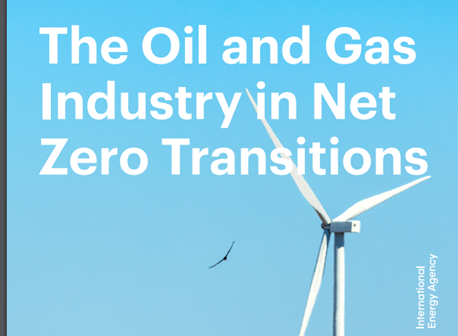
Can the oil and gas industry play a constructive role in transitions? This is one of the burning questions for the climate. Today, the @IEA released a massive new report on the subject. Let’s dive in for a quick one, shall we? Image
If you’re an oil and gas company, how do you play a part in transitions, especially now that a peak in fossil fuels is visible before 2030? How do you plan for a scenario reaching net zero where, for every dollar invested in fossil fuels, 10 dollars gets invested in clean energy? Image
Essentially, you have 2 choices: the first is to disappear. This means winding down operations, not investing in new fields, returning cash to shareholders, and cutting scope 1+2 emissions on your way out. Not selling your assets to a company with low ESG standards would be ideal Image
The second option is to invest in clean energy to future-proof your business. There are many different routes: create a subsidiary, go into the innovation ecosystem with VC, go the M&A route, set up your own shop, or partner up with clean energy firms. The list is endless.
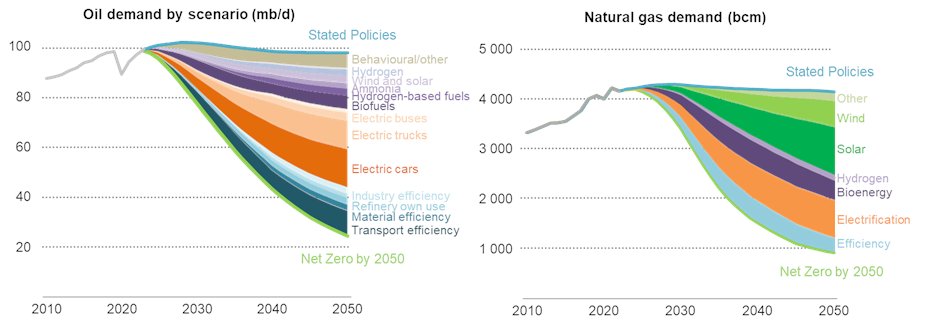
As for technologies – take your pick: solar, wind, biofuels, biogas, synthetic fuels, electrolysers, grids, geothermal, … this is all the stuff that will replace oil and gas, so why not invest in them instead? Image
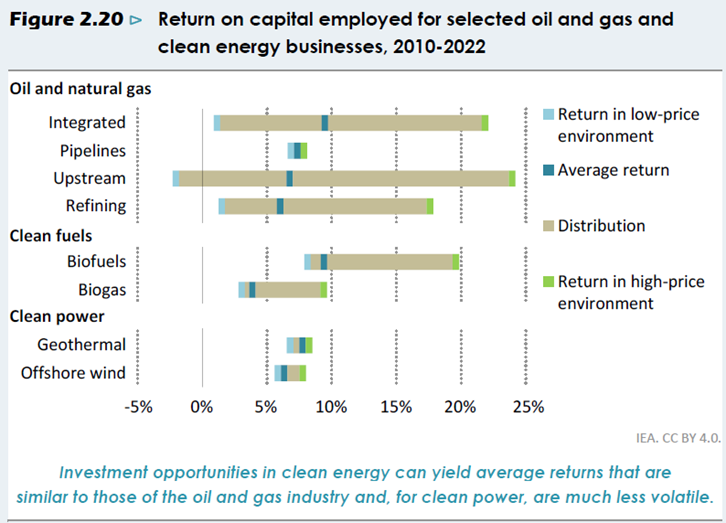
“Because returns are low/there are no bankable projects.” This is a common refrain. But looking back, clean energy yields a 6% return. Not as good as the 6-9% average return on capital invested in oil and gas, but decent… and generally more reliable! Image
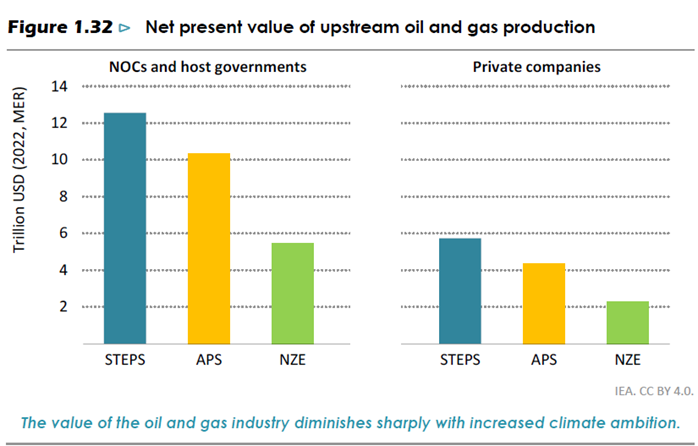
And anyway, who says selling oil and gas will remain profitable in the years ahead? If governments meet their climate ambitions, the value of today’s private oil and gas companies will drop by 25%. If the world reaches 1.5°C, it will be cut in half. Image
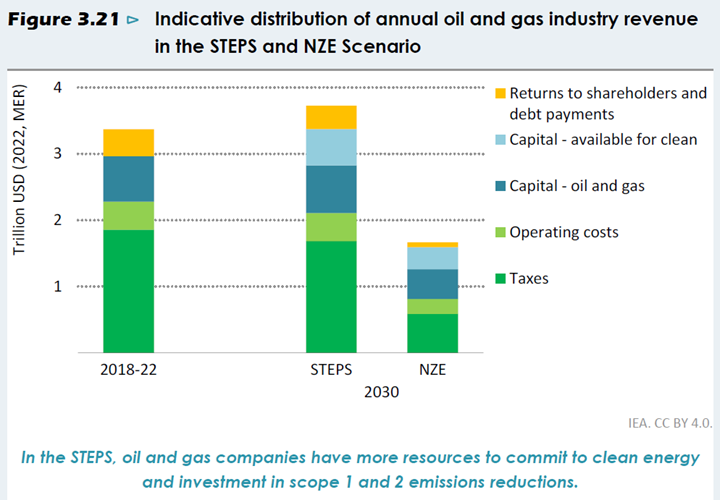
If you think the NZE is unlikely, then know that the capital available to spend on clean energy is even higher in STEPS, because oil and gas demand and prices are higher, leaving more money to throw around. So diversification is sensible risk management, whatever the scenario. Image
There’s no one solution that makes sense for all, but the oil and gas industry generally has some unique strengths – they are good at drilling holes in the ground, carrying gases and liquids around the world, financing and executing big, capital-intensive projects, etc. Image
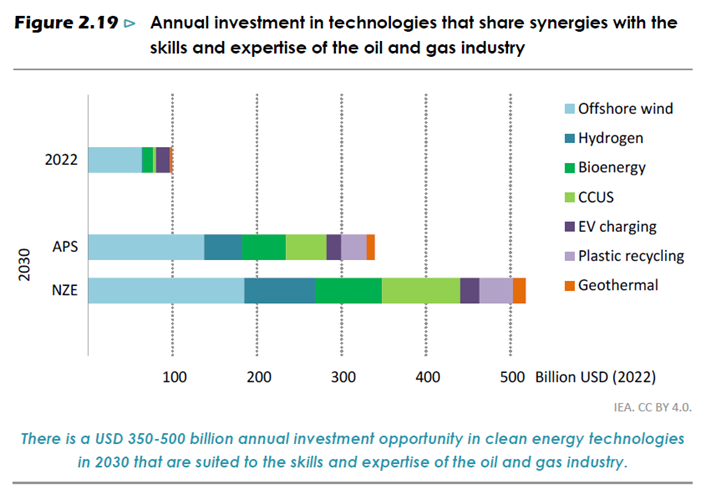
Today, the oil and gas industry invests 2.5% of its capital on clean energy. By 2030, based on our bottom-up assessment of oil and gas demand, supply, prices, and revenue, it could be possible to spend 50% of total CAPEX on clean energy to align with net zero by 2050. Image
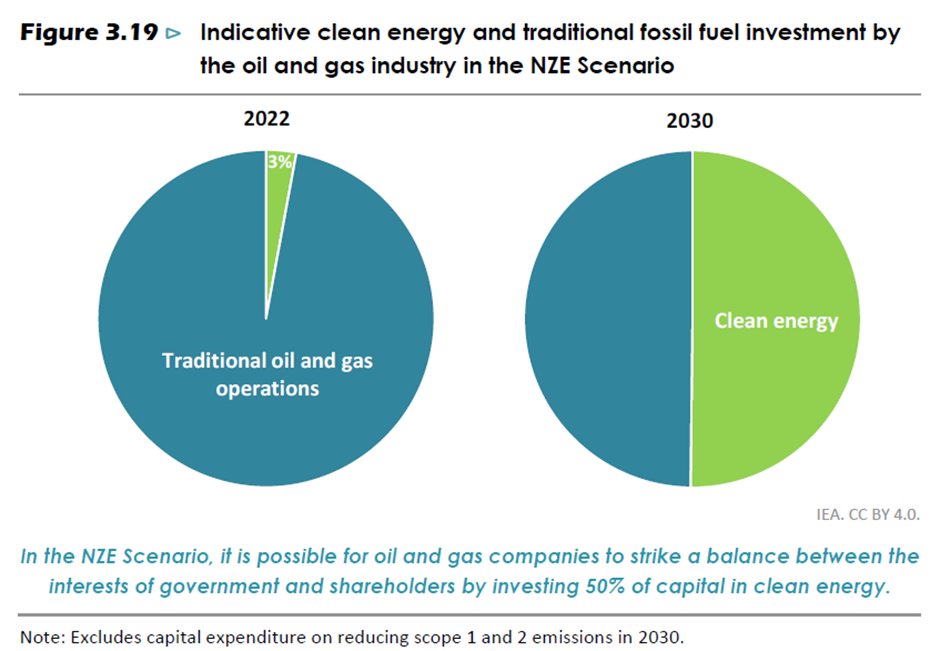
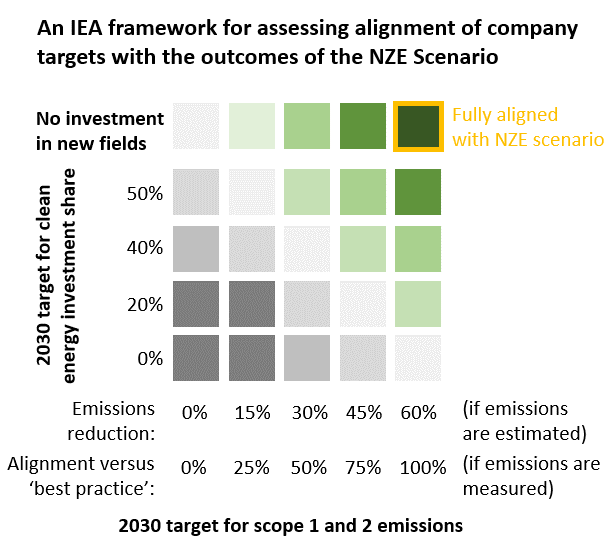
This is a key part of our framework to assess oil and gas industry alignment with net zero transitions. It gives more nuance to companies and financial actors, allowing them some bandwidth to choose the most appropriate pathway based on their skills, resources and strategy. Image
Follow the launch live with here, with starts in 2 minutes:
And the report itself: iea.org/events/the-oil…
iea.li/3R79gDf

• • •

Missing some Tweet in this thread? You can try to force a refresh

 

Keep Current with Peter Zeniewski

Peter Zeniewski Profile picture

Stay in touch and get notified when new unrolls are available from this author!

Read all threads

This Thread may be Removed Anytime!

PDF

Twitter may remove this content at anytime! Save it as PDF for later use!

Try unrolling a thread yourself!

how to unroll video
  1. Follow @ThreadReaderApp to mention us!

  2. From a Twitter thread mention us with a keyword "unroll"
@threadreaderapp unroll

Practice here first or read more on our help page!

More from @PZeniewski

Oct 21, 2024
Is natural gas demand about to peak? This year’s @IEA World Energy Outlook helps shed light on this important question. A quick thread:
Ultimately, if you believe in gas as a transition fuel, you have to accept that it’s not a volume play: you don’t need a lot of gas to back up renewables if they grow at the level implied by today’s policy settings. Image
A case in point is Europe. The continent is rapidly adding renewables, pushing gas into a standby role in most power systems. See below its contribution over the course of a year, today and in 2035. Still important, but less volume required. Image
Read 12 tweets
May 31, 2024
Our new @IEA report finds that that clean energy transitions are cheaper than the path we are currently on. How could this be? Surely sticking with fossil fuels is cheaper than buying fancy new kit like EVs and heat pumps…right? Nope. Let’s get into it. Image
Exhibit A is that clean energy technology costs have come down massively over the past several years (even if there was a period of post-pandemic cost inflation). Image
In fact, on a lifetime cost basis, clean energy is already the cheapest option for millions of consumers around the world. There are of course still areas where costs are higher (like hydrogen or industrial decarb). But the main ingredients for a transition are cost effective: Image
Read 13 tweets
Oct 25, 2023
Lots of reactions to the #IEA World Energy Outlook 2023 finding that fossil fuels reach a peak based on today’s policy settings (the ‘STEPS’ scenario). Worth digging in a bit as to what a peak actually means (and doesn’t). Thread. Image
If you want to dismiss the idea of a peak in fossil fuels, you’d point to the strong historical relationship between GDP and fossil fuels. But this relationship is already changing and, in all our scenarios, it is transformed by the emergence of a clean energy economy.
The energy system is a slow ship to turn. But we are at an inflection point. Early indicators of a peak are visible by tracking flows, not stocks. For example, sales of ICE cars peaked in 2017. The high point for gas and coal power plant capacity additions was in 2002 and 2012. Image
Read 11 tweets
May 3, 2023
Not many people realise that 15% of energy-related GHG emissions come from the process of getting oil and gas out of the ground and transported to consumers. If those emissions were a country, they would be the second largest emitter, after China. How do we reduce them?🧵 Image
Today, the @IEA released a report about these ‘scope 1+2’ emissions, drawing together a body of work many years in the making. The headline message: these emissions can and should drop by more than half by 2030, and it’s one of the cheapest ways of cleaning up the energy system.
We looked at every oil and gas field in the world and calculated its emissions intensity – how much CO2 and methane comes with getting each barrel or cubic metre to consumers. There is a huge range between the ‘best’ and ‘worst’ performing supply chains, mostly due to methane. Image
Read 9 tweets
Mar 14, 2023
EU natural gas demand fell by 55 bcm in 2022, the largest reduction in its history (equivalent to gas use in >40 million homes). There’s been a lot of debate what the main drivers were, and so today the @IEA released a commentary exploring how all this happened. Quick thread.
There was quite a lot of variation between sectors and countries. Germany cut the most gas in absolute terms, but in percentage terms it was the Baltic and Nordic countries.
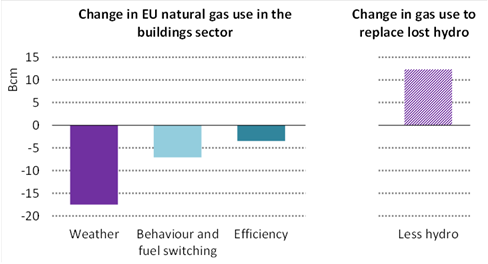
Many think the EU lucked out with weather. And yes, the EU was lucky in some respects, but not in others. A mild winter cut gas use in buildings by over 10% compared to 2021. But drought conditions lowered hydro power generation, meaning 12 bcm of gas needed to fill the gap.
Read 9 tweets
Nov 23, 2022
For the first time ever, the @IEA World Energy Outlook sees a peak in natural gas demand, calling an end to the 'Golden Age of Gas'. This drives the overall peak in fossil fuels we project this year. But what does a peak for gas (or better, a plateau) actually mean? Thread.
Reaching a plateau is indeed big news. Natural gas grew by 20% from 2011 to 2020. The WEO projection is for 5% growth from 2021 to 2030, and then pretty much flat after that.
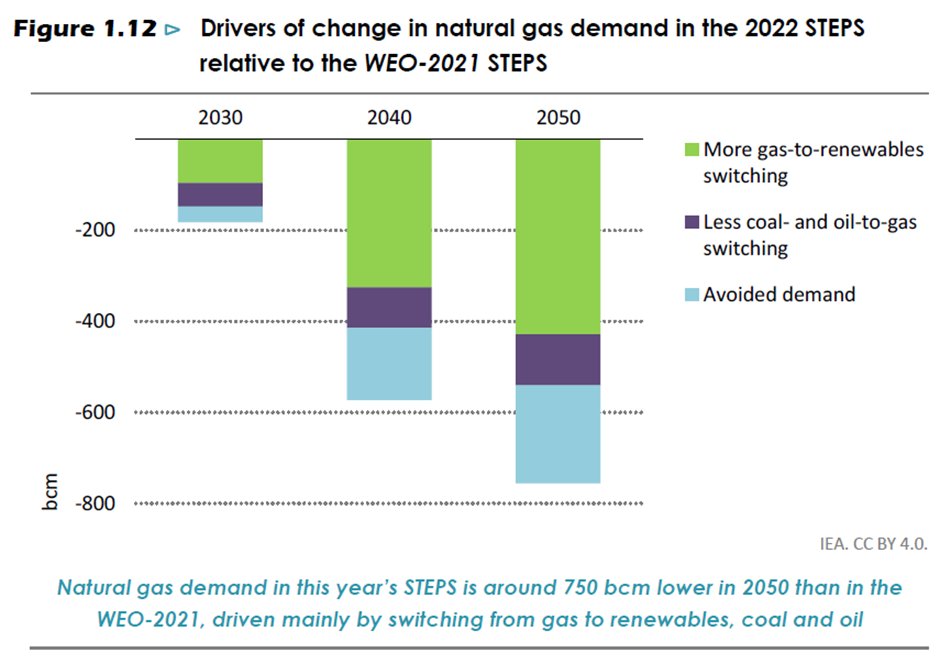
Why? Today’s high prices matter, but they just accelerate pre-existing trends that are dampening gas growth: renewables have a competitive edge in power, and there's a weaker push to switch from coal and oil to gas. Slower economic growth and more efficiency also play a role.
Read 9 tweets

Did Thread Reader help you today?

Support us! We are indie developers!


This site is made by just two indie developers on a laptop doing marketing, support and development! Read more about the story.

Become a Premium Member ($3/month or $30/year) and get exclusive features!

Become Premium

Don't want to be a Premium member but still want to support us?

Make a small donation by buying us coffee ($5) or help with server cost ($10)

Donate via Paypal

Or Donate anonymously using crypto!

Ethereum

0xfe58350B80634f60Fa6Dc149a72b4DFbc17D341E copy

Bitcoin

3ATGMxNzCUFzxpMCHL5sWSt4DVtS8UqXpi copy

Thank you for your support!

Follow Us!

:(