Read on Twitter
This question, asked by Christian, at the Capacity Investment Scheme (CIS) webinar in August is excellent.
He basically asks which has priority:
- reliability
- prices
- supporting industry
The answers are extremely revealing. 1/
He basically asks which has priority:
- reliability
- prices
- supporting industry
The answers are extremely revealing. 1/
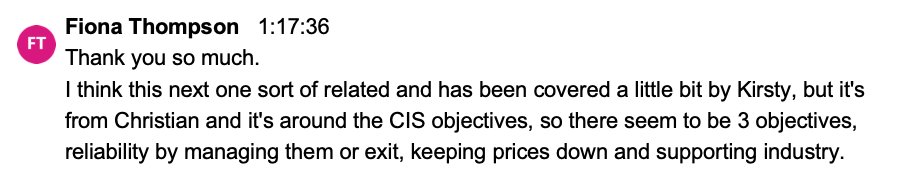
It's directed to Salim Mazouz, General Manager of the CIS at the Dept of Climate Change, Energy etc... Basically the boss of the scheme.
Initially, he says reliability is the priority.
But he goes on... 2/
Initially, he says reliability is the priority.
But he goes on... 2/
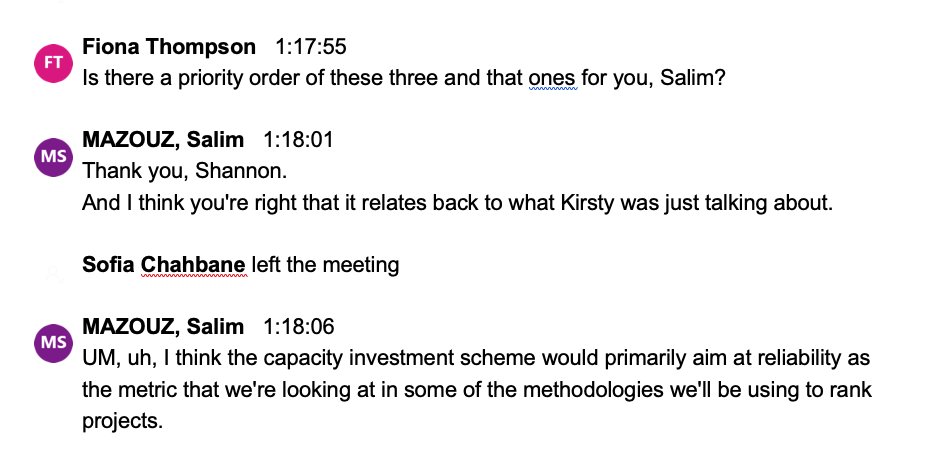
And then claims something extraordinary.
He thinks that success in addressing reliability would push down prices, as a by-product.
Say.... what??
This is a disastrous misconception for someone in charge of the scheme to have... 3/
He thinks that success in addressing reliability would push down prices, as a by-product.
Say.... what??
This is a disastrous misconception for someone in charge of the scheme to have... 3/

... because it shows that the man in charge has failed to grasp the inevitable trade-off between reliability and damping price fluctuations. More of one means less of the other.
I outlined this in detail in my mega-thread on Saturday. 4/
I outlined this in detail in my mega-thread on Saturday. 4/
https://x.com/QuixoticQuant/status/1728246022739263616?s=20
But the pure gold comes from Salim's boss, Kirsty Gowans. Head of Electricity Division and DCCEEW (Federal Energy Dept).
She chimes in (her words) to tell us what the Minister, @Bowenchris, has on his mind.
And what follows is... well it explains everything. 5/
🥁🥁🥁🥁🥁🥁
She chimes in (her words) to tell us what the Minister, @Bowenchris, has on his mind.
And what follows is... well it explains everything. 5/
🥁🥁🥁🥁🥁🥁
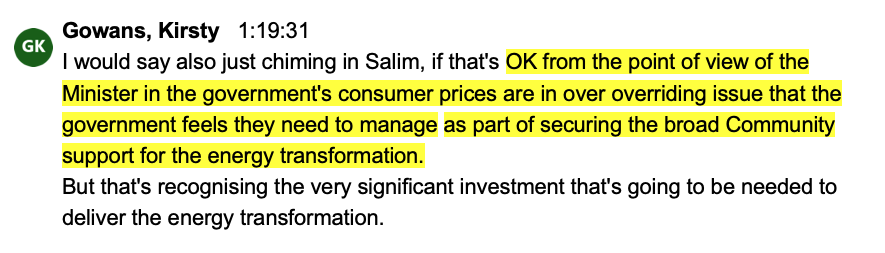
@Bowenchris Chris Bowen is worried about consumer prices.
That's the "overriding issue" that the government is trying to manage.
Why?
"securing the broad community support for the energy transformation" which requires
"very significant investment" to be delivered. 6/
That's the "overriding issue" that the government is trying to manage.
Why?
"securing the broad community support for the energy transformation" which requires
"very significant investment" to be delivered. 6/
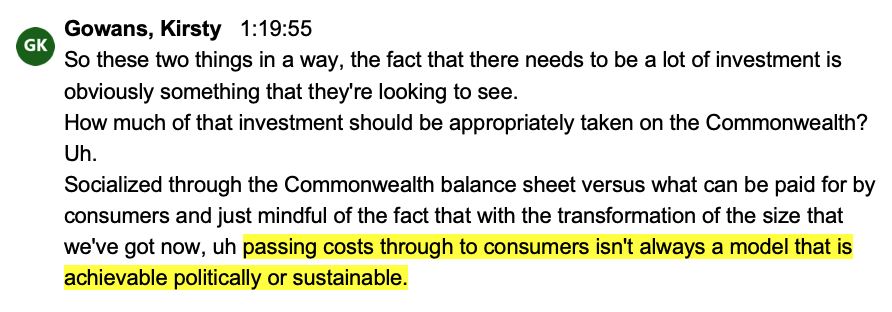
@Bowenchris Kirsty goes on... She spells it all out.
The investment wouldn't be "politically achievable or sustainable" if passed onto consumers. So taxpayers stump up instead.
Boom.
How's that for an admission that the proposed renewable energy transition isn't going to be cheap. 7/7
The investment wouldn't be "politically achievable or sustainable" if passed onto consumers. So taxpayers stump up instead.
Boom.
How's that for an admission that the proposed renewable energy transition isn't going to be cheap. 7/7
@threadreaderapp unroll
• • •
Missing some Tweet in this thread? You can try to
force a refresh