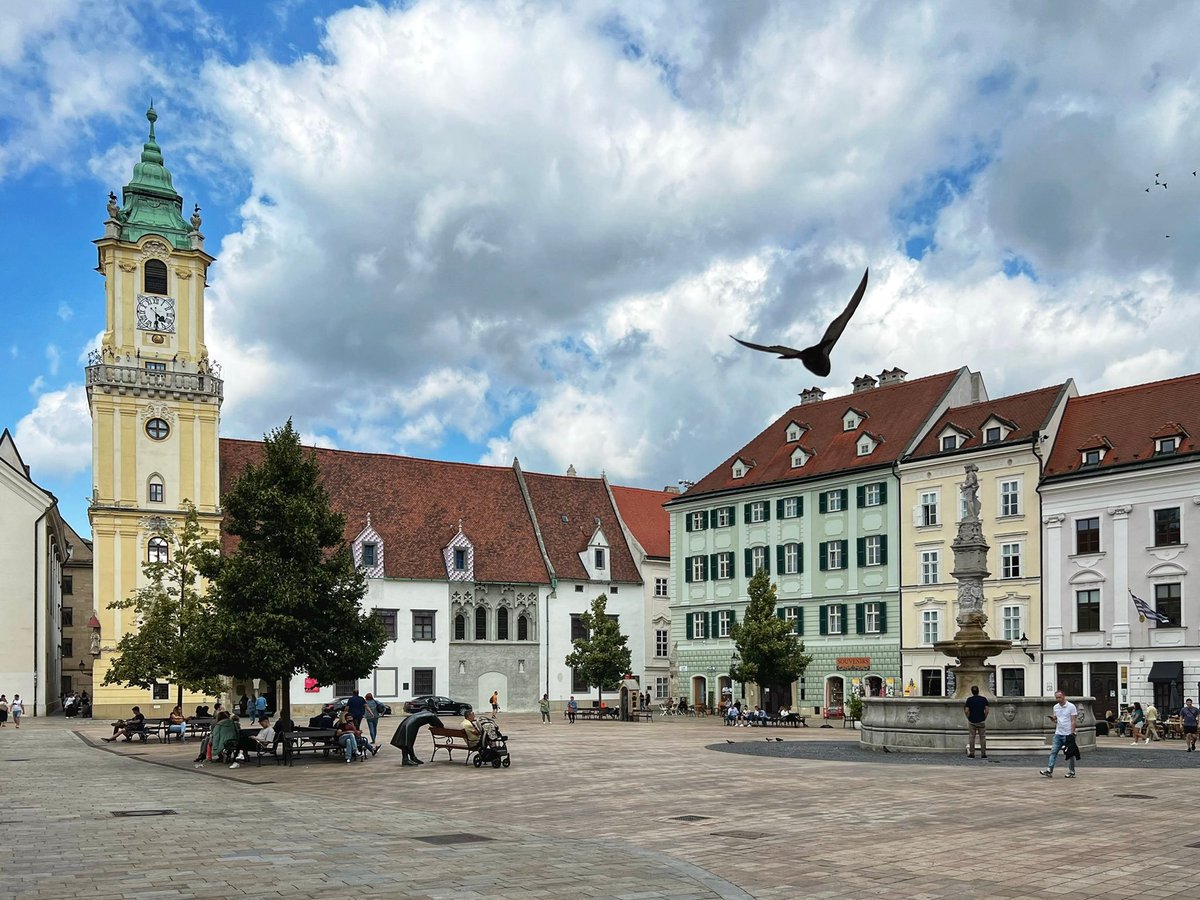
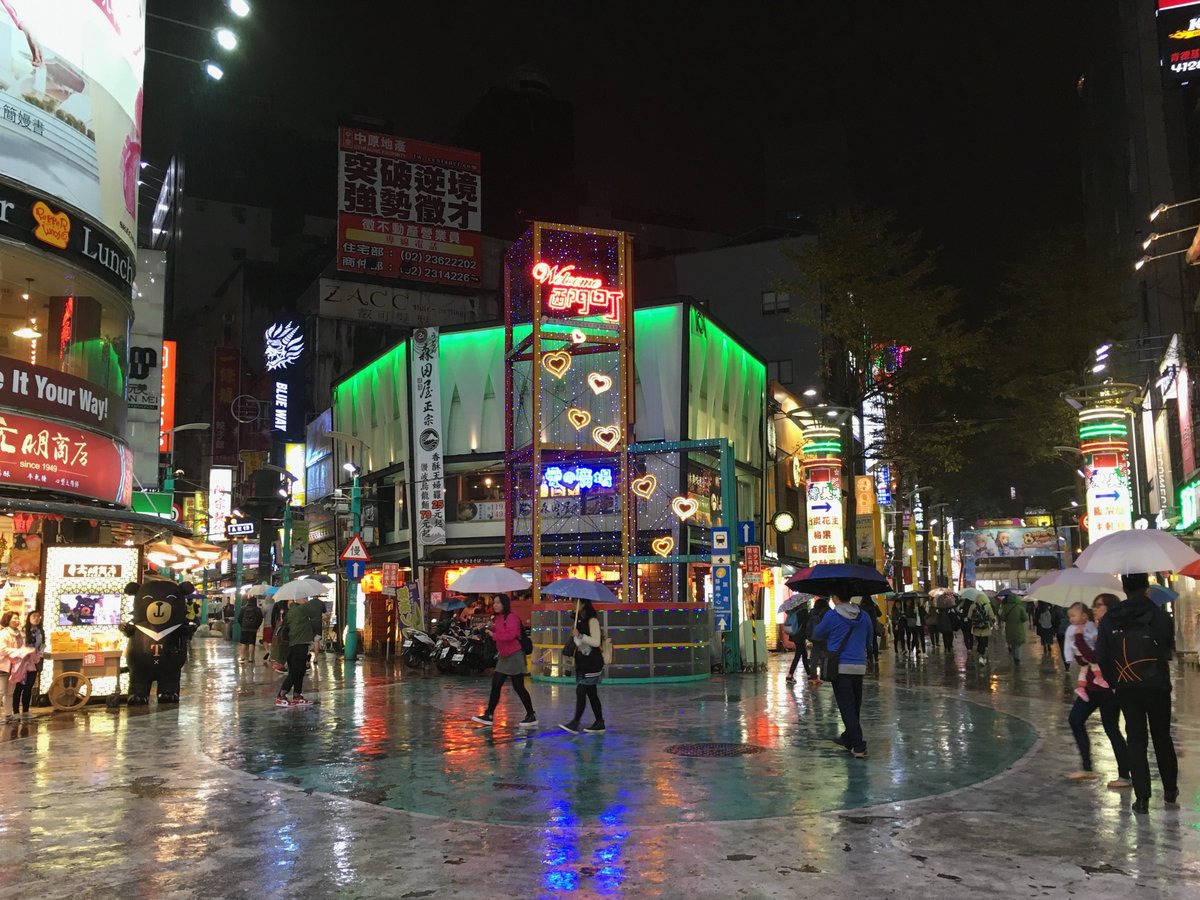
If you thought Superblocks were the big thing in Barcelona, you were right last year but now you're wrong. Here's my WTF IS HAPPENING IN BARCELONA thread. 🧵
https://twitter.com/Qagggy/status/1728519774303318324
Superblocks still exist and are still being built but the ones that have been breaking the brains of an endless stream of visiting journalists and urban planners are really just pilot projects.
https://x.com/Qagggy/status/1462885099557511174?s=20
Superblocks are a proof of concept, a way to carve out high quality pedestrian space while maintaining vehicular access.
https://x.com/Qagggy/status/1468069611274862593?s=20
Superblocks basically redirect vehicular traffic—they're a well-organized set of diverters or modal filters—making the streets useless for cars just passing through, but still useful for cars accessing the local area.
https://x.com/Qagggy/status/1155524108232192000?s=20
By eliminating cut-through traffic, you create room for people walking, biking, and using public space. Barcelona has been innovative in this regard.
https://x.com/Qagggy/status/1592606587423948800?s=20
Superblock concepts can be easily applied to American cities. Here's one I proposed for the Capitol Hill neighborhood in Seattle.
https://x.com/Qagggy/status/1590463705879568384?s=20
So what's going on now? Barcelona is taking the Superblock toolkit and applying it citywide—using permanent materials—along entire corridors.
https://x.com/Qagggy/status/1583346852271108096?s=20
The plans unveiled in that video last year are being put into action and now we can see the results.
https://x.com/Qagggy/status/1731656788670337464?s=20
The before-and-after photos I've been posting over the past week or two are clear evidence of the impressive transformation currently underway.
https://x.com/Qagggy/status/1729867662082388120?s=20
Barcelona has kept the name "superblock" but now they are applying that term to their overarching urban transformation ethos. You can read more here: barcelona.cat/pla-superilla-…


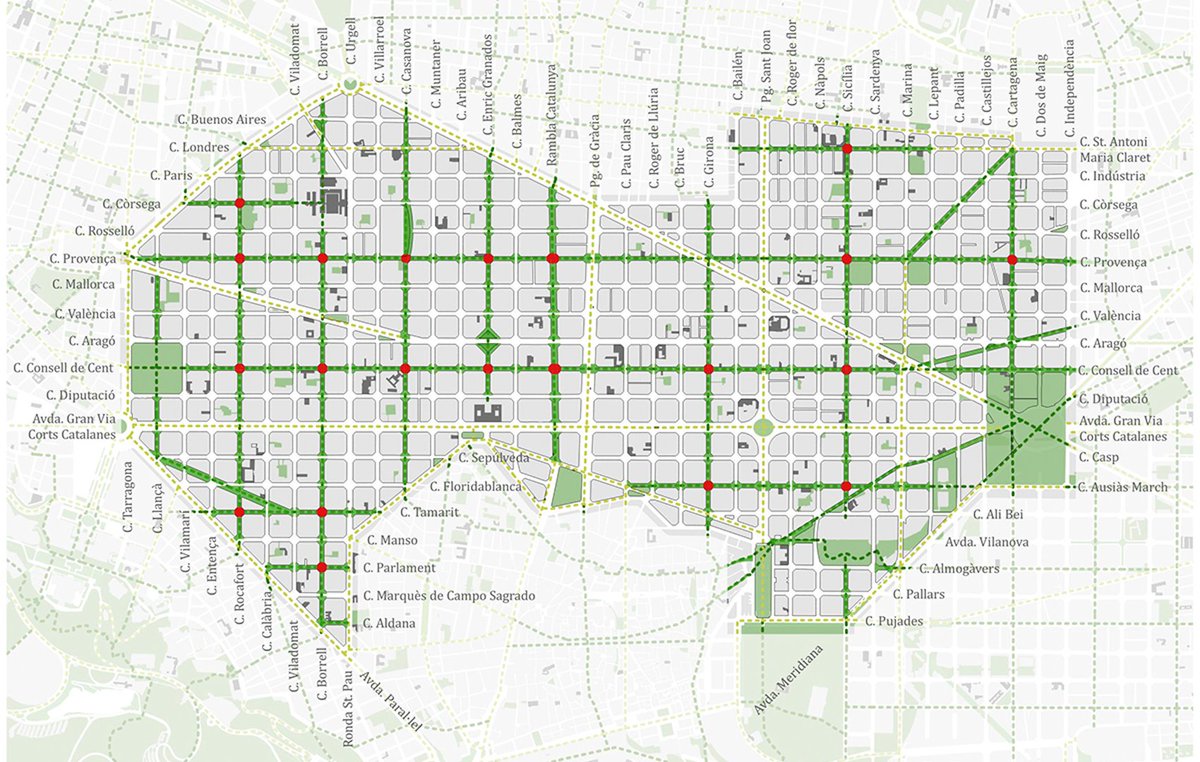
Here is the plan for the Eixample, Barcelona's most populous district. The plan proposes a grid of "green axes"; and where they intersect, "green hubs."
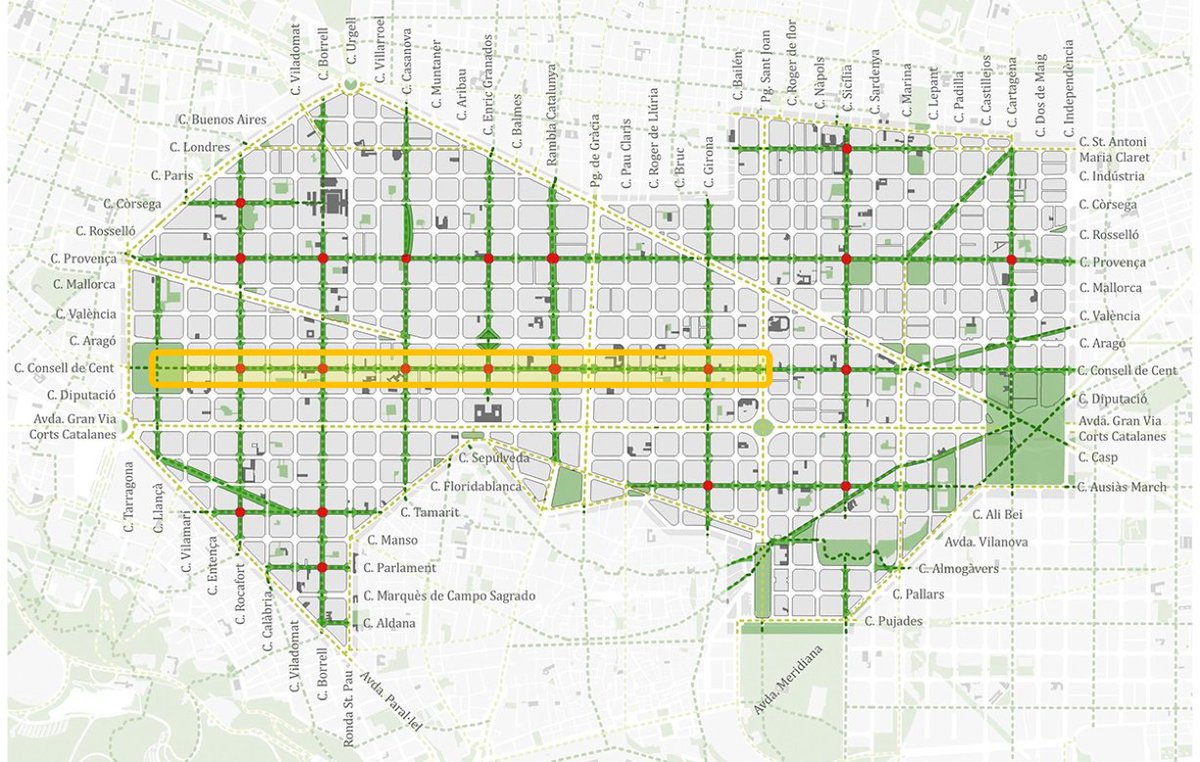
On my latest visit last week, I walked this 2.7km "green axis" segment highlighted in yellow, which was completed this year.
Here's a before and after of a "green axis." The change is dramatic.
https://x.com/Qagggy/status/1729277071640154327?s=20
Here's a before and after of a "green hub" (basically one of the red dots on the previous map). Again, it's a remarkable transformation.
https://x.com/Qagggy/status/1729500107786072521?s=20
(Apologies to readers who live in Barcelona btw. People who come to Seattle and say nice things about our bike lanes or monorail or whatever piss me off too. Sorry.) Here's an article with a foreboding tone that will make you happier. www-zeit-de.translate.goog/mobilitaet/202…
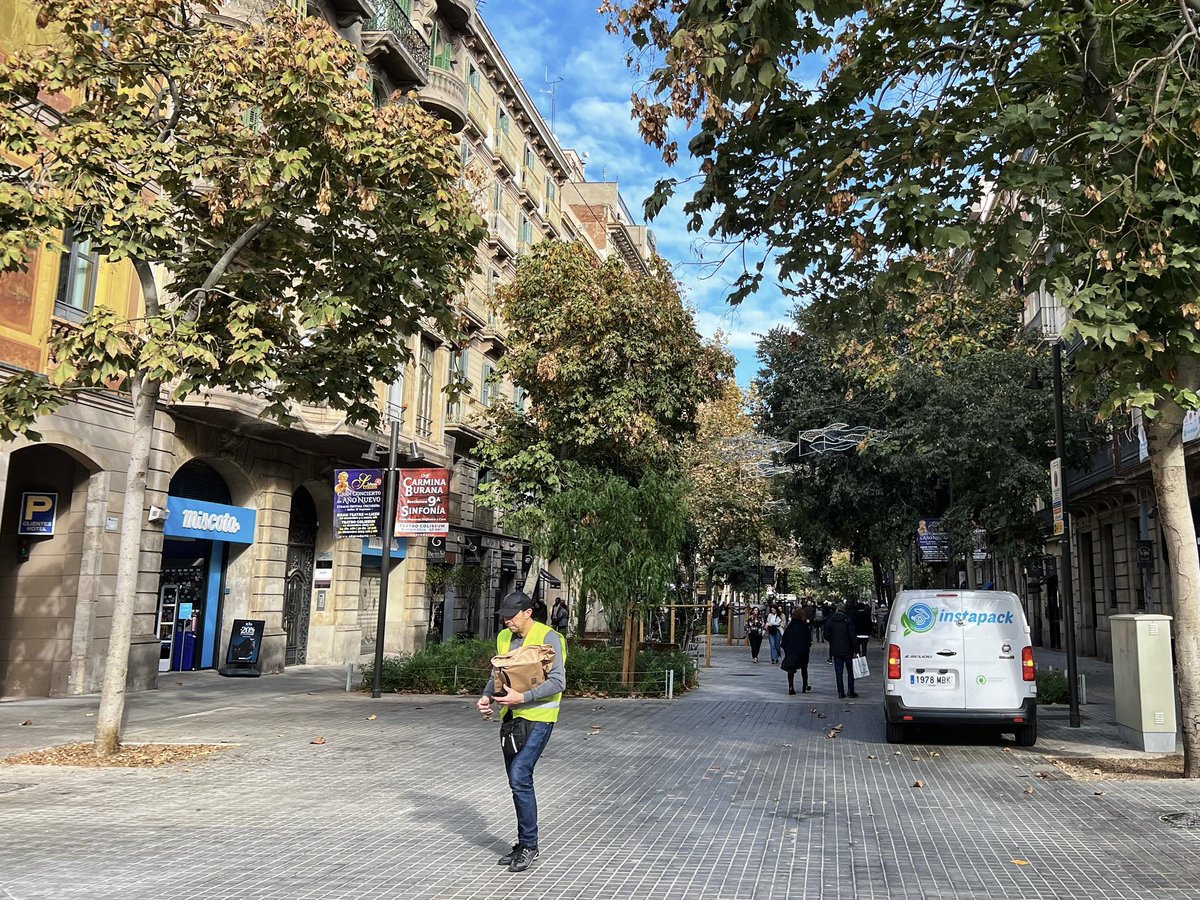
It is important to note that green axes aren't fully pedestrianized. Those streets accommodate existing garages and driveways, and they still get deliveries.
https://x.com/Qagggy/status/1731401713175720130?s=20
Here’s a guy delivering a parcel and you can see a hotel parking garage on the left edge of the photo.
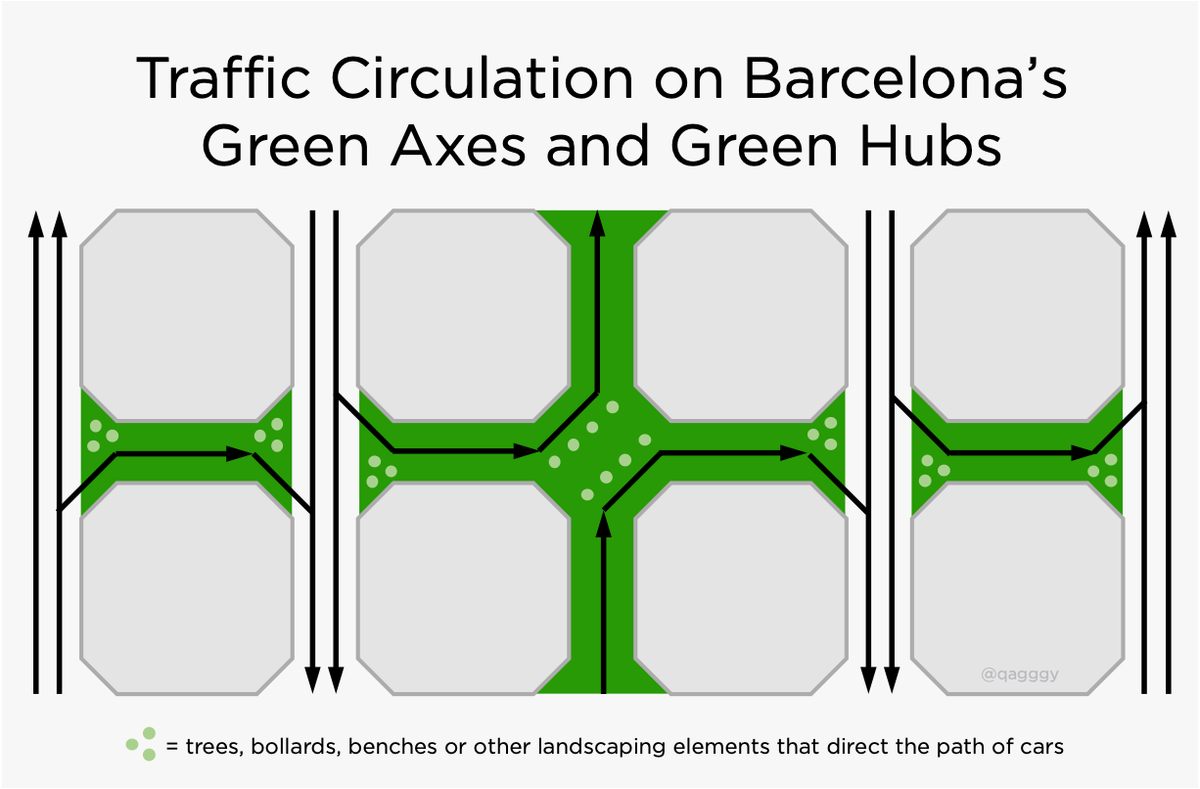
Green axes are like linear superblocks. I made this diagram to illustrate how vehicular traffic circulates (black arrows) along the axis and at green hubs.
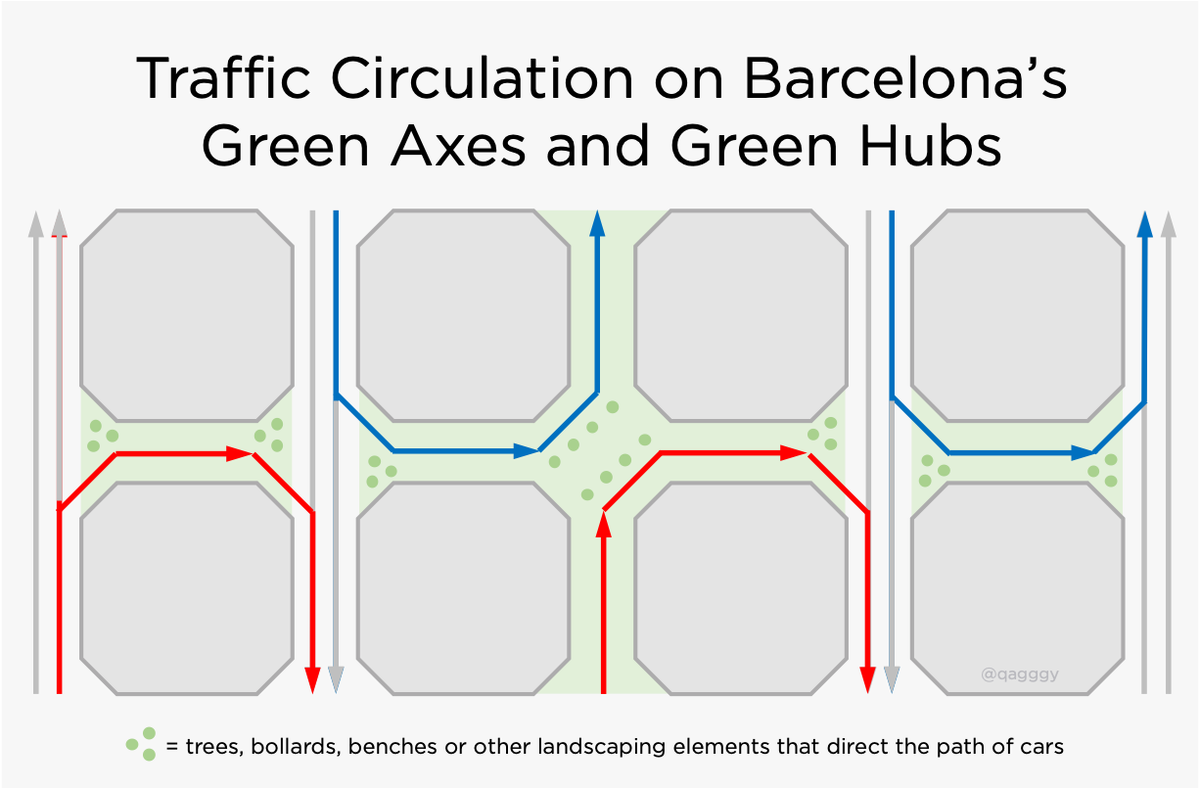
Here I've highlighted the path of cars entering the green axis or hub, red approaching from the south and blue approaching from the north, so you can clearly see cars have full access but are turned back in the direction from which they came.
• • •
Missing some Tweet in this thread? You can try to
force a refresh