
 Read on Twitter
1/ Here's the Rwanda bill - my thread with the main points follows
https://twitter.com/SirJJKC/status/1732439878820905208
2/ The context of the bill is the recently agreed Rwanda treaty. The issues in clause 1.3 *might* be enough to convince courts to change their mind on the safety of Rwanda since the Supreme Court judgment, but as we'll see it's a moot point: the bill dispenses with courts anyway. 

3/ clause 1.4.b is correct: an Act of Parliament that breaches international law is still valid *domestic* law. BUT it will remain a breach of international law.
(We are likely to hear from people who do not understand these basic points)
(We are likely to hear from people who do not understand these basic points)

4/ Clause 2 requires an apparently irrefutable presumption that Rwanda is "safe", including an "ouster clause" seemingly preventing (domestic) courts from hearing a challenge on this point.
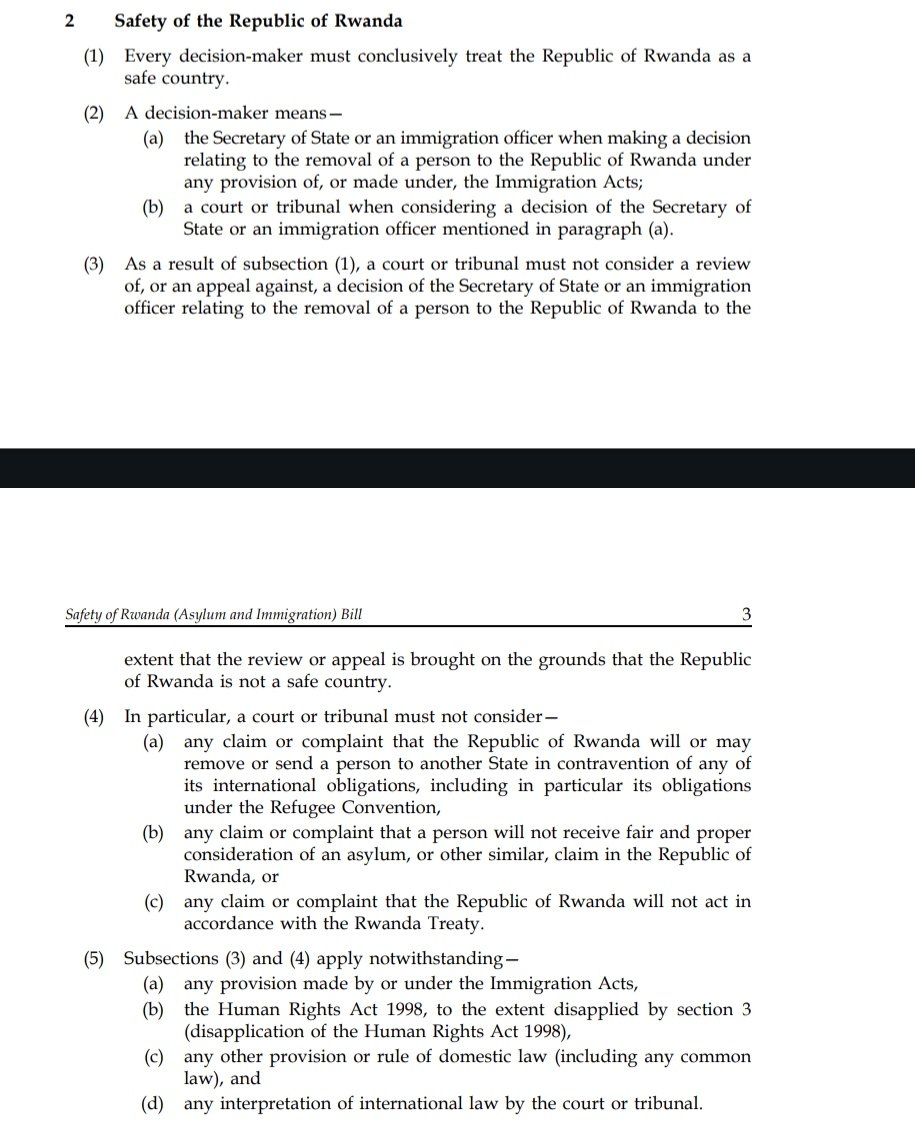
5/ Clause 3 disapplies parts of the Human Rights Act. We'll unpack that in a moment, but first it's necessary to clarify what the bill does to UK participation in the ECHR.
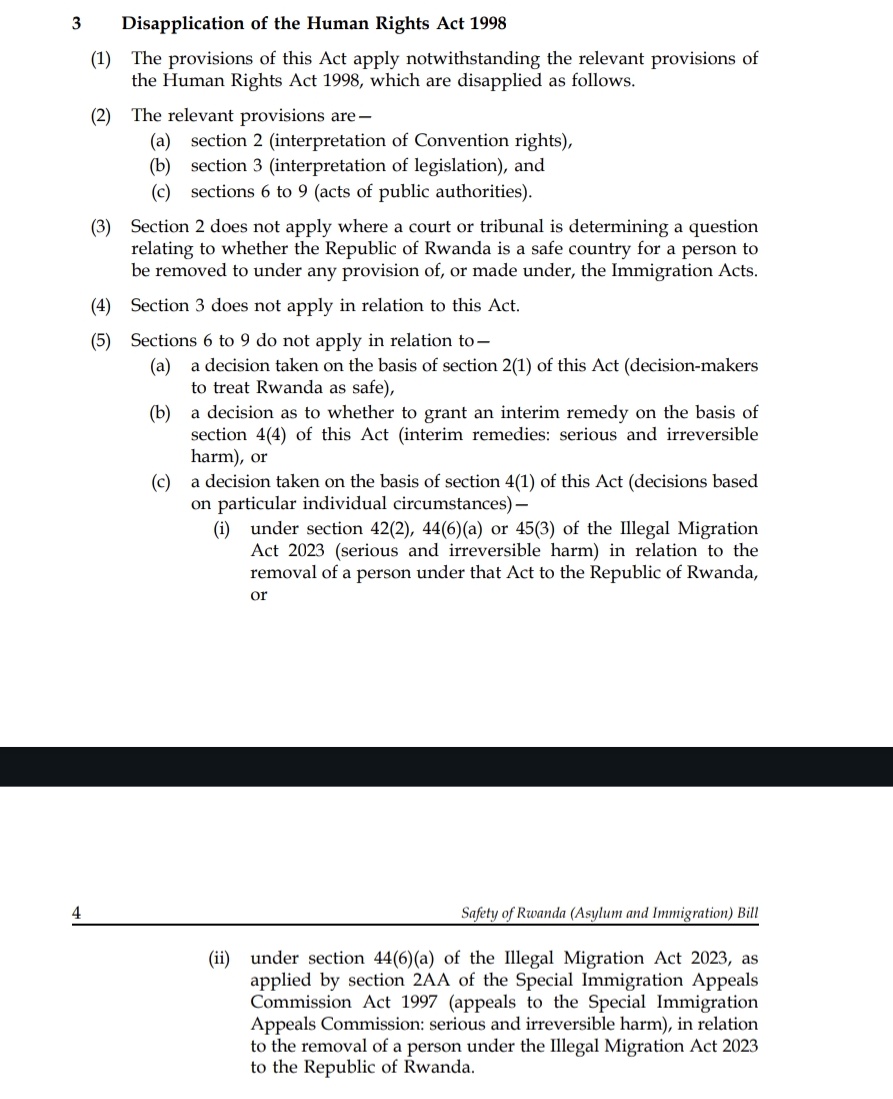
6/ For absolute clarity: the UK is NOT denouncing the ECHR, or any other international treaty. It is simply preventing the application of those treaties (and of customary international law) in its domestic law, in respect ONLY of the "safety" of Rwanda.
7/ It is arguable that the bill, if passed, would be a breach of international law. (Remember: being valid domestic law is NOT an excuse to breach international law). But breaching a treaty does NOT automatically mean denouncing that treaty (or treaties linked to it).
8/ Rather: breaching a treaty (or treaties linked to it) can lead to legal (or political) consequences. For instance, the European Court of Human Rights could still rule that the UK was in breach of it. But that judgment would have no effect in domestic law.
9/ As for linked treaties, first of all the Good Friday Agreement in effect requires the UK to be party to the ECHR, as David Allen Green has explained:
davidallengreen.com/2023/07/why-th…
davidallengreen.com/2023/07/why-th…
10/ Although (again) the bill does NOT denounce the ECHR, the GFA also requires *domestic* court access and remedies, as regards "Northern Ireland law". It might be argued what falls within the scope of the latter. (And we'll be back to NI in a minute)
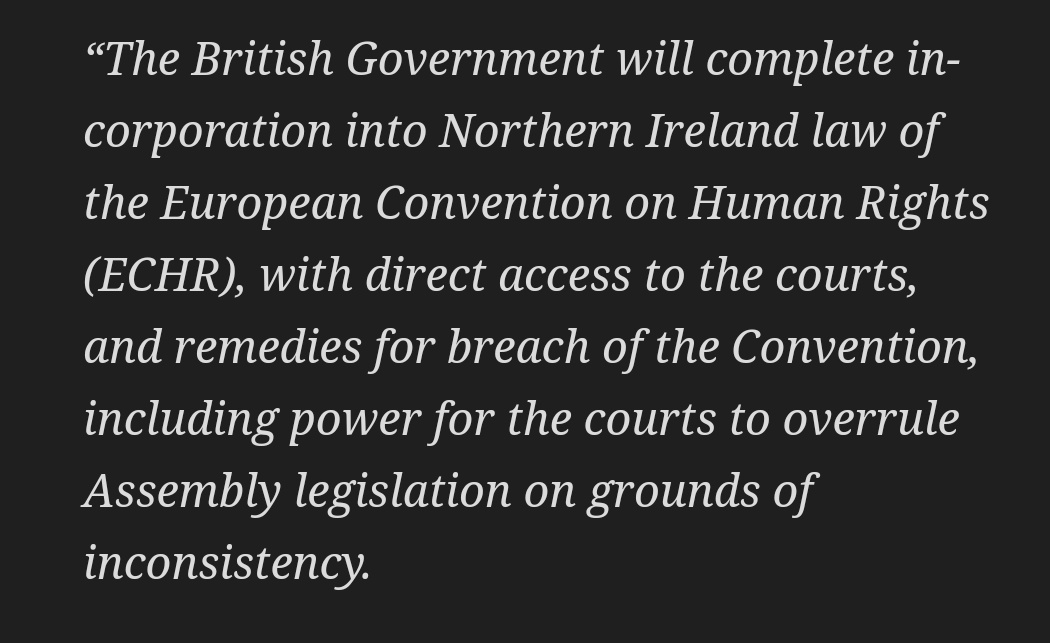
11/ Secondly, the Brexit deal. The EU has made a political commitment to end judicial cooperation under the TCA on a fast track basis if the UK denounces the ECHR. But again, this is not a denunciation.
https://twitter.com/StevePeers/status/1633774505423171585?t=fqh46Nj-vhbP5wOZtxgYTg&s=19
12/ Back to Northern Ireland to consider the third linked treaty: the withdrawal agreement. The NI protocol prevents rights in NI being reduced as a result of Brexit. This applies in principle to changes in asylum law, as recently confirmed by the courts.
13/ Analysis of that judgment here, by @governmentalite
The argument re Rwanda would be that Brexit led to the removal of the guarantee that asylum-seekers could only be removed to a "safe" country they had a "connection" with.eulawanalysis.blogspot.com/2023/11/angeso…
The argument re Rwanda would be that Brexit led to the removal of the guarantee that asylum-seekers could only be removed to a "safe" country they had a "connection" with.eulawanalysis.blogspot.com/2023/11/angeso…
@governmentalite 14/ Of course it might also be argued that Brexit means that other parts of the definition of "safe" countries no longer apply, and that asylum appeals and reliance on international law are being limited re Rwanda.
@governmentalite 15/ However, the bill's definition of the international law which it disapplies in domestic law is wide enough to cover the withdrawal agreement. But that is a breach of that agreement, which requires the UK to give effect to it in domestic law via direct effect and primacy.
@governmentalite 16/ The withdrawal agreement could be enforced at international level, via dispute settlement which could lead to fines and trade sanctions.
@governmentalite 17/ Well, this is a very exciting sub plot.
https://twitter.com/PaulBrandITV/status/1732453413210730743?t=OfB7oN41-IfB7eDOdQRPpw&s=19
@governmentalite 18/ But back to the bill! Remember the Human Rights Act? Clause 3.3 of the bill disapplies s 2 of the Act (basically, the requirement to consider Strasbourg case law) when a court decides if Rwanda is "safe".

19/ Clause 3.4 of the bill wholly disapplies s 3 of the Human Rights Act (interpretation of legislation consistently with the ECHR) to the bill. It "does not apply".

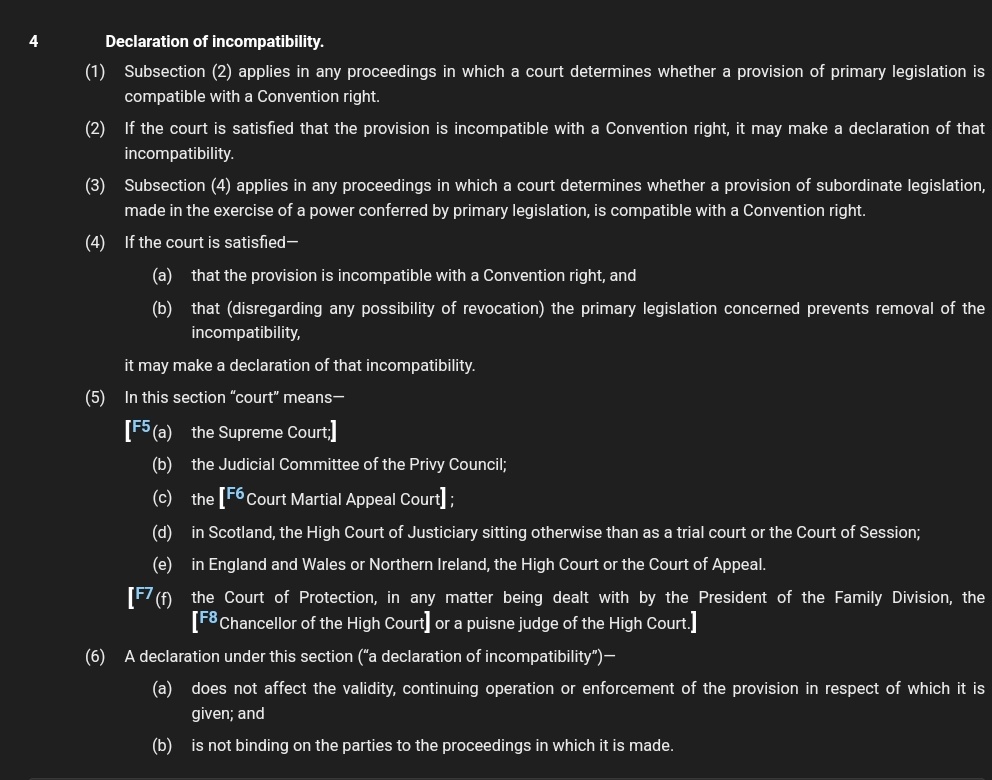
20/ The bill does NOT disapply s 4 of the Human Rights Act: the possibility for a court to declare that an Act is incompatible with the ECHR. But note that such declarations are not binding on the parties, and courts cannot declare an Act invalid (s 4.6).
21/ The bill does disapply ss 6-9 of the HRA (basically obligations on public authorities, and judicial remedies) in certain circumstances - details in clause 3.5 of the bill, screenshot above. The full HRA:
legislation.gov.uk/ukpga/1998/42
legislation.gov.uk/ukpga/1998/42
22/ An important point: the bill DOES allow individual asylum-seekers to argue that Rwanda is unsafe for them *personally*, as distinct from unsafe *as a whole*. Courts can review this point too.
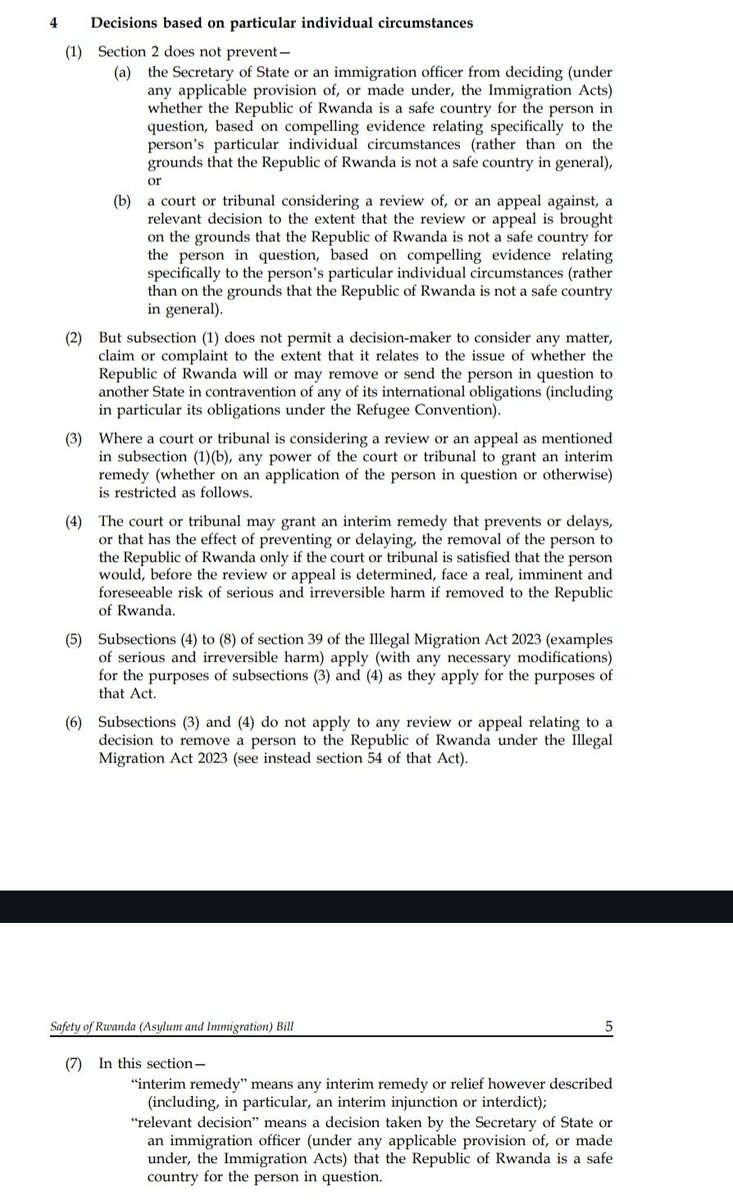
23/ This in effect reinstates what the High Court said: the policy is lawful, but individual challenges could be made. See DAG analysis at the time
HOWEVER at first glance the bill might be setting a higher threshold: any view from immigration lawyers?davidallengreen.com/2022/12/how-th…
HOWEVER at first glance the bill might be setting a higher threshold: any view from immigration lawyers?davidallengreen.com/2022/12/how-th…
24/ Next, the bill switches off (in domestic law) interim measures rulings from the ECHR: they are not binding in domestic law and national courts cannot consider them.

25/ an important point in clause 7.2: the bill does NOT apply to *Rwandans* who apply for asylum in the UK. The general irrefutable presumption of safety only applies to NON Rwandans.
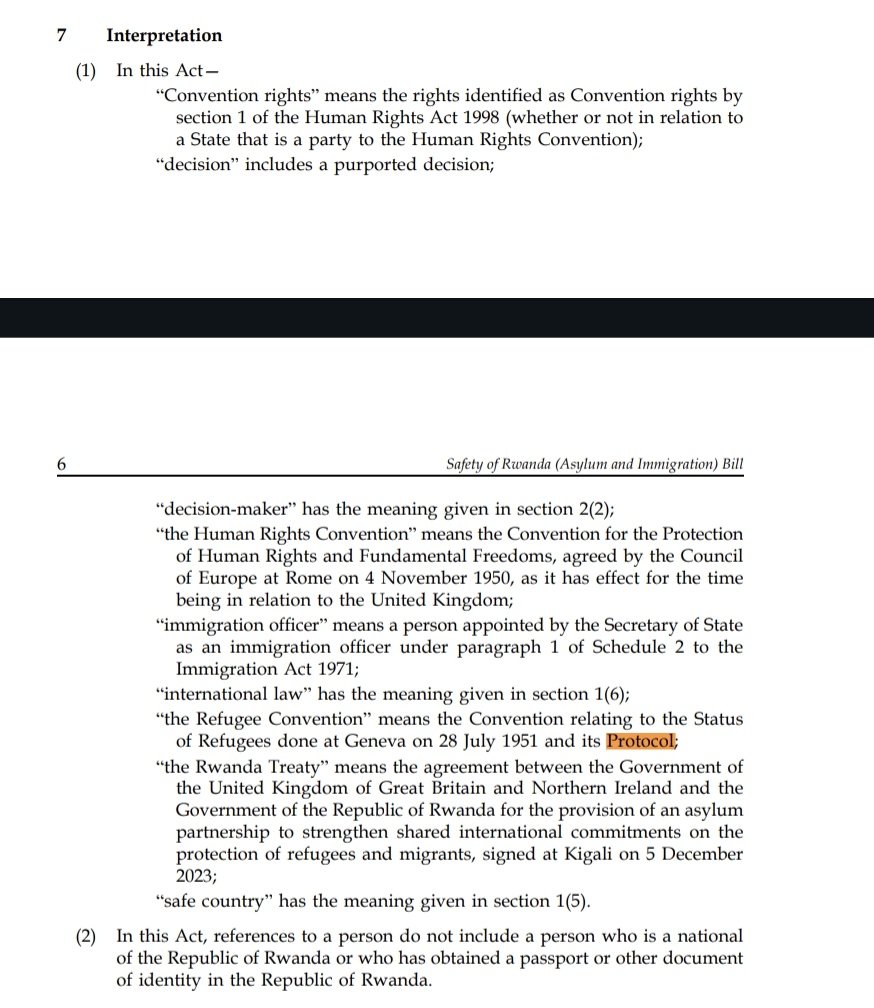
26/ The bill will apply when the Rwanda treaty is in force (and, obviously after Parliament passes it - IF it does so). (Also after royal assent, but please can we skip the fanfic about the King refusing it). Note that it could apply to asylum-seekers who arrived beforehand.

• • •
Missing some Tweet in this thread? You can try to
force a refresh






