Some extracts from Edgerton's book Sick Societies concerning the status of women in certain forager and pastoralist cultures.
Edgerton's main point in this book is to question the idea that all traditions and customs are necessarily healthy or adaptive - for instance the widespread habit in many cultures of denying women, even pregnant women, equal access to high quality foods.
There are many rationalisations for making women carry the heavy stuff, but ultimately men don't want to do it.
Belittling women, telling them they have 'smooth brains', excluding them from cultic activities, threatening them with assault and even rape - examples of such antagonisms can be found all over the world.
Edgerton gives one longer, particularly troubling case study from the Kenyan Bantu people, the Kisii/Gusii. Their cultural strategy of being at war with other clans, but requiring marriage partners from the same rivals, led to bitter spousal relationships.
If you're training your daughters in the physical techniques of resisting consummation, maybe something has gone wrong somewhere?
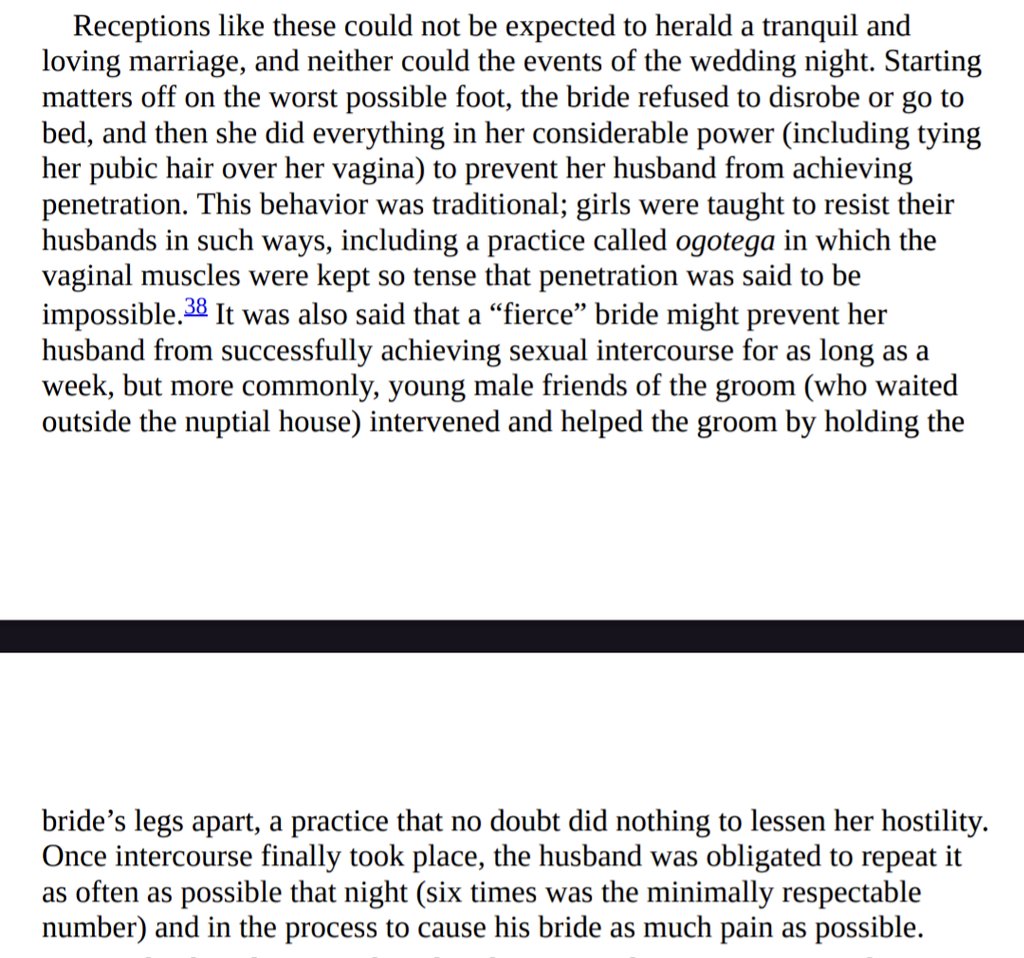
A true atmosphere of enmity seemed to pervade all parts of Gusii life, if this ethnography can be believed.
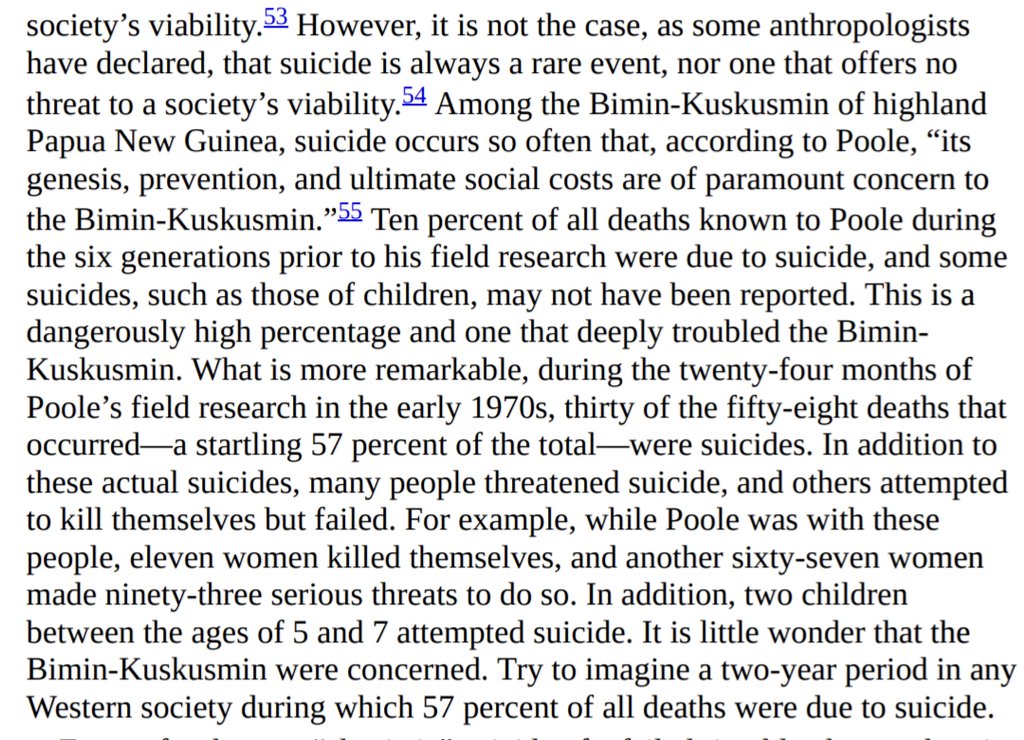
It's hard to see how these kinds of behaviours are beneficial from an evolutionary point of view. Sometimes a culture can hit such a dead-end that men, women and even children will regularly kill themselves to escape it.
• • •
Missing some Tweet in this thread? You can try to
force a refresh

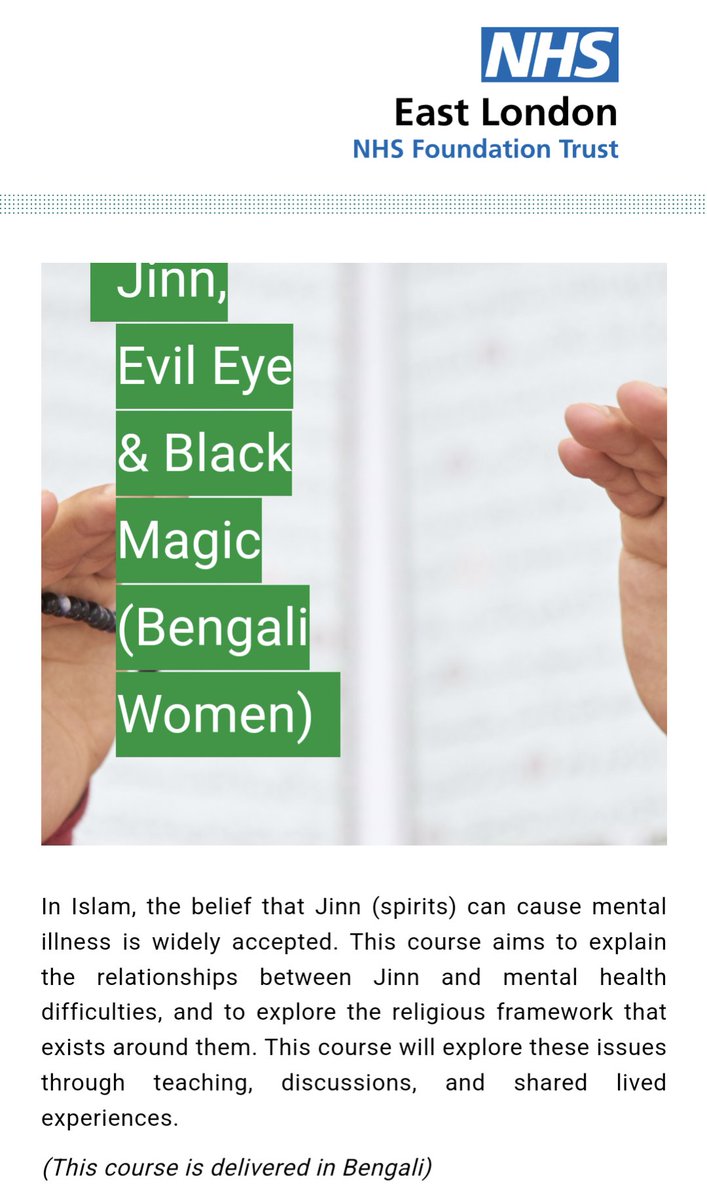
One of the benefits of multiculturalism is that the NHS has finally woken up to the problem of jinns and the evil eye, a topic they have been neglecting for decades. Here we see an NHS workshop correcting this oversight, helpfully delivered only in Bengali.
Bangladeshis, Pakistanis and other 'Asian Muslims' actually suffer worse mental health outcomes compared to other ethnicities - exacerbated no doubt by our ethnocentric blind spot over black magic and jinn affliction.
Jinn do indeed have like their own children and stuff, which is why we need to break the stigma of visiting a wise man when your mental health is not ok.
"The lieutenant had written that the men no longer feared dying but were afraid they would be buried in a foreign land and forgotten"
Some WW1 battlefield archaeology for you on this Remembrance Sunday.
World War One might seem a strange moment in time for the archaeologist to focus on, after all we have records and photographs and even living people who can testify to the conditions and organisation of combat.
But archaeologists were involved from the very start, hoping to prevent objects and places from being obliterated and forgotten.
James Mellaart (1925-2012) was the pioneering archaeologist who discovered Çatalhöyük. He was also a forger and fantasist, creating an elaborate universe of fake artefacts and citations which are yet to be fully unravelled.
Mellaart cut his teeth in field archaeology in Turkey, as a young researcher he identified hundreds of pre Classical sites, including the Bronze Age settlement of Beycesultan.
Despite his fascination with the Sea Peoples, Linear B, the Hittites and the Bronze Age of the Near East, it was the discovery of the much earlier Neolithic 'city' of Çatalhöyük which changed his life.
"A black line on a white page. The Nile, cutting through the desert, was the first straight line in
western culture. Egypt discovered linearity, a phallic track of mind piercing the entanglements of
nature...."
"An absolutist
geography produced an absolutist politics and aesthetics. At its height in the Old Kingdom, pharaonic power created the pyramid, a mammoth design of converging lines. Egyptian linearity cut the knot of nature; it was the eye shot forward into the far distance"
"Social order becomes a visible aesthetic, countering nature’s chthonian invisibilities. Pharaonic construction is the perfection of matter in art. Fascist political power,
grandiose and self-divinizing, creates the hierarchical, categorical superstructure of western mind"
Let's take a look at some of the data from this new paper:
"Selection Landscape and Genetic Legacy of Ancient Eurasians"
The legacy of milk drinking, anxiety, the metabolic shift to agriculture, height, diabetes, lipid processing and more.
To start, a nice visual for the ancestral make-up of modern Europe and esp Britain and Ireland. Britain has a deep Neolithic/Steppe division between the Celtic areas and southern/eastern England. Meanwhile WHG ancestry is highest in central/northern England.
Despite being called a liar, the Father of History was right more often than not, even if archaeology and science has taken a while to catch up.
Let's look at ten times he was actually right.
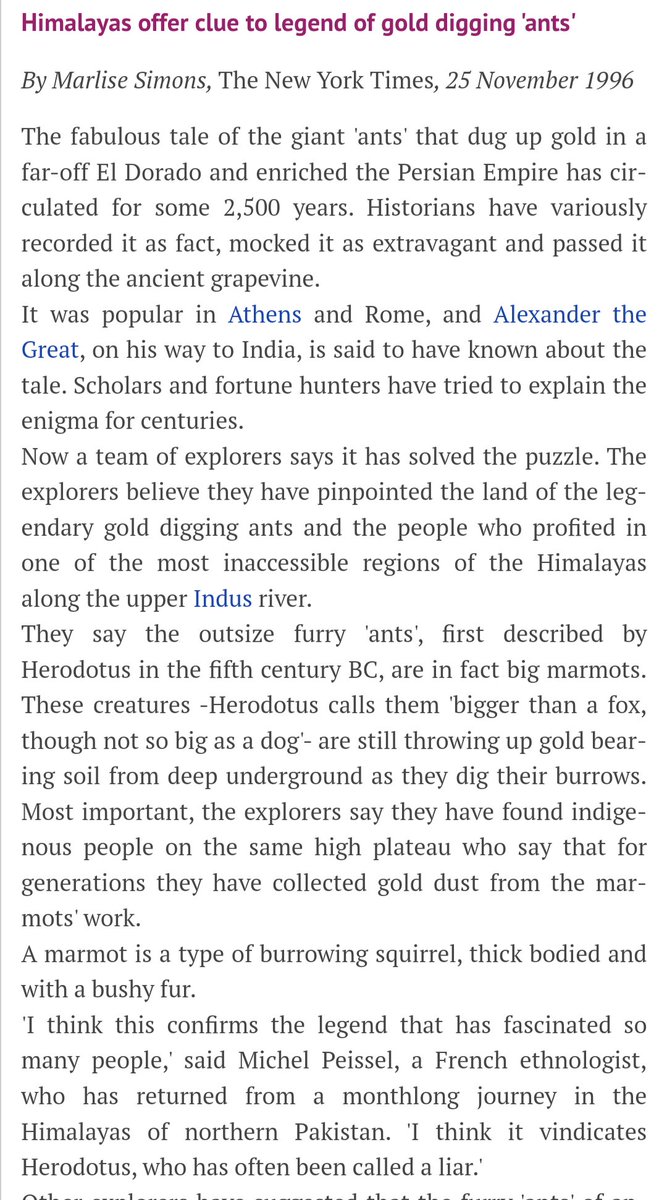
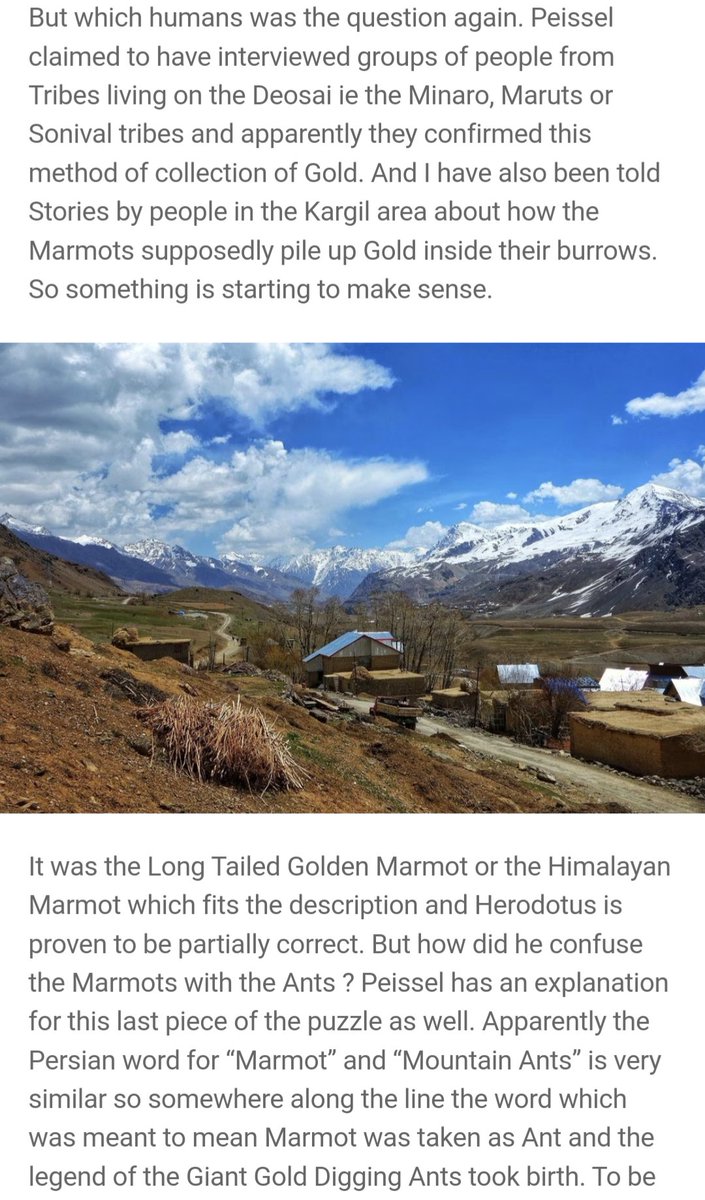
Gold-Digging Ants: Herodotus describes ants bigger than foxes in India, who throw up gold when digging, which is collected by locals.
Fact: Marmots in the Himalayas throw up gold when burrowing, which is collected by the local Minaro people.
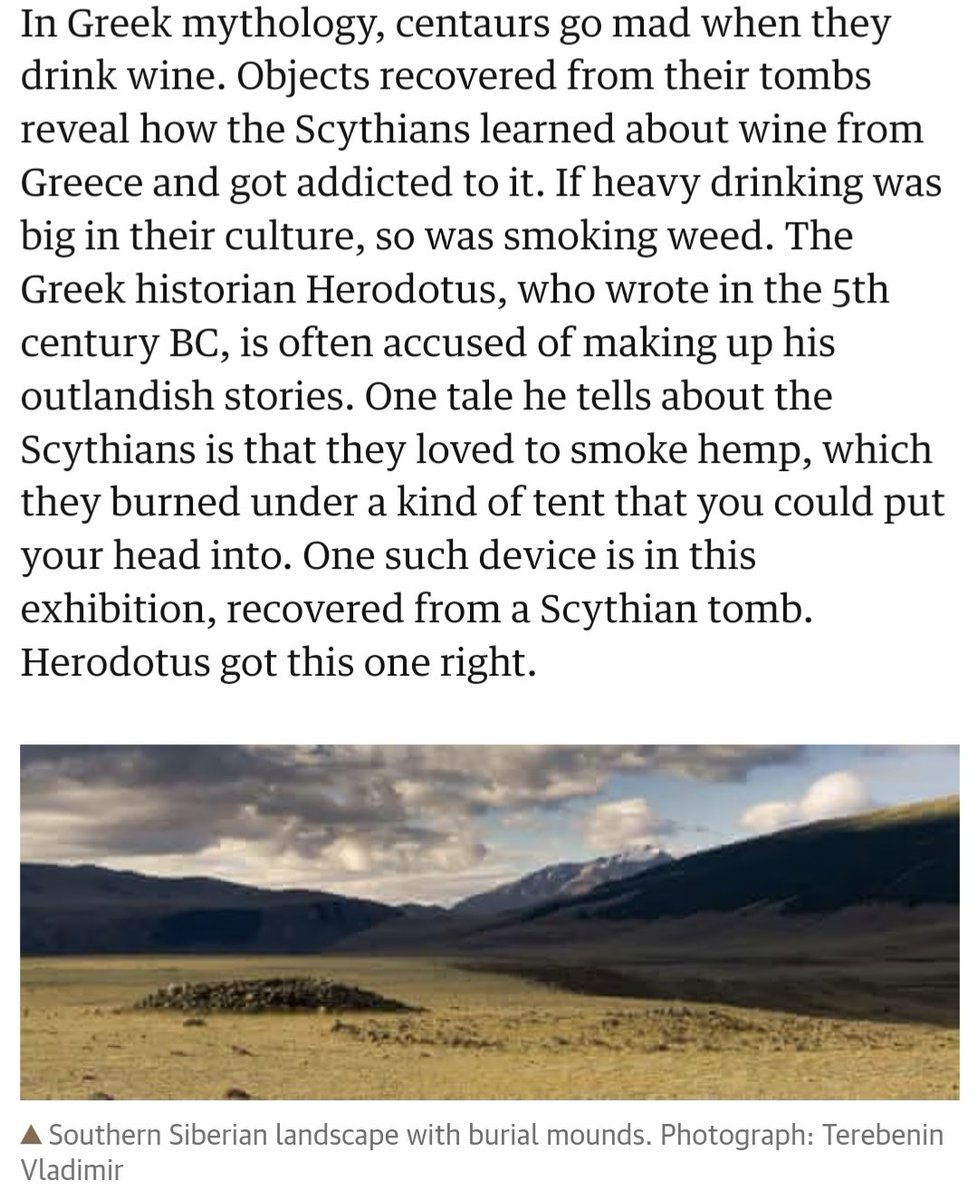
Famously Herodotus described the Scythian ritual of heating hemp seeds in a small tent and becoming excited by the vapours. Long dismissed as fanciful, we now have the archaeology to confirm the story.