The Paperclip Profile picture
Dec 17 17 tweets 4 min read Twitter logo Read on Twitter
On this day, in a quiet corner of Uttar Pradesh, a small yet remarkable celebration takes place every year - Lahiri Diwas. It's a day that remembers a Bengali hero lost in the folds of history. His final words are guaranteed to send shivers down your spine. A thread.

1/16 Image
Rajendranath Lahiri wasn’t just a name; he was a fearless revolutionary who carried out the daring Kakori train robbery. But his story goes beyond that heist. He stood for something bigger—a vision of a free India.

2/16
Born in 1901 in Bengal (now in Bangladesh), Rajendranath Lahiri moved to Varanasi in 1909. Immersed in the revolutionary fervour of the time, Rajendranath became an integral member of the Hindustan Socialist Republican Association while still studying.

3/16 Image
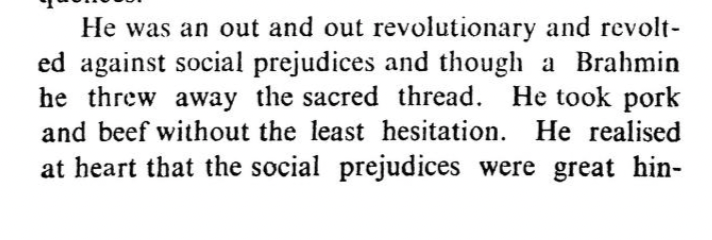
He was a true rebel, challenging social norms. Despite being a Brahmin, he discarded the sacred thread and fearlessly consumed pork and beef. Recognizing that societal prejudices hindered progress, he embraced the ruthless breaking of these barriers—a true rebel at heart.

4/16 Image
He learned the art of bomb making in Calcutta and played a key role in the Dakshineshwar bomb case, which landed him in jail. Lahiri actively participated in revolutionary activities, including dacoities at Bamrauli, Shivpuri, and Dwarikapuri.

5/16
He, in a daring move, stopped the Kakori train by pulling the chain in a second-class compartment. Identified as the key figure in the robbery, on April 6, 1927, Rajen Lahiri was pronounced guilty by Judge Hamilton and sentenced to death on December 19, 1927.

6/16
His fate led him to the Gonda district jail, where, on this very day in 1927, he faced the gallows.  Yet, in the face of death, Lahiri displayed an indomitable spirit.

7/16 Image
From the jail, he penned a letter to his father Informing of his impending hanging within a week. He expressed gratitude to well-wishers, urging them to accept his greetings. Embracing death as a mere transition of the body, he concluded, "I can't write more from jail."

8/16
Few days before his execution, Lahiri shared his final wish with his brother: " I'll utter 'Vande Mataram.' Let its echoes reach me beyond the jail walls; only then can I find peace in death."

9/16
On the evening of December 16, the Jailer informed him that the execution date had been moved forward to December 17 suddenly, to eliminate any risk of escape. But Lahiri was nonchalant.

10/16
On the morning of his hanging, the Jailor witnessed something unexpected: Lahiri engaging in his usual physical training.

"Why?" the bewildered Jailor asked.

11/16 Image
Lahiri's response echoed his unwavering commitment: "I am not dying today, but I shall once again be reborn in a free India to continue the unfinished task."

Nothing short of a goosebump.

12/16
Those words, reverberating with determination, remain etched in the annals of Gonda District Prison—a testament to his unyielding spirit.

13/16
Jogesh Chatterji in his book ‘In search of freedom’ concluded “He accepted death quietly with a glorious smile which was visible even in the dead man’s lips."

"Lahiri did not send any mercy petition.”

14/16 Image
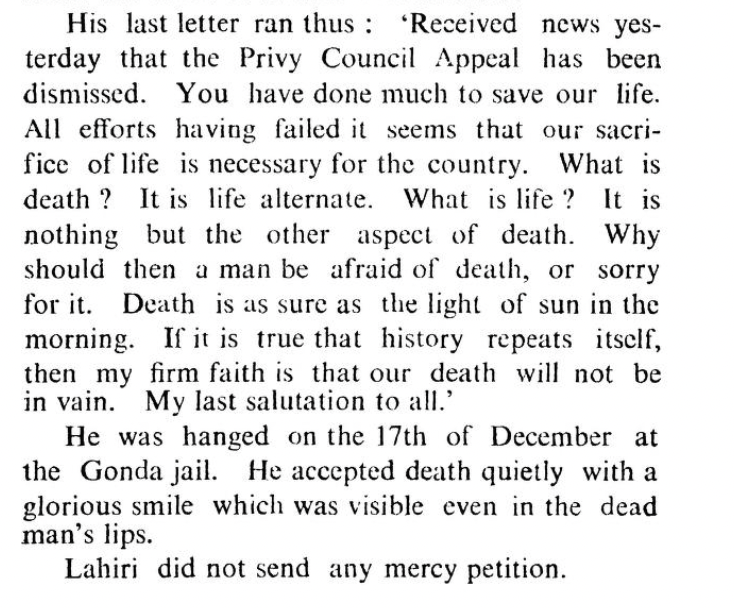
Today, Lahiri Diwas in Gonda district and jail isn’t just a remembrance; it’s a celebration of his sacrifice & an ode to his unbreakable spirit. Cultural activities paint the canvas of homage, echoing the spirit of a man who believed in a truly free and liberated India.

15/16
In the Gonda district jail the authority celebrates Lahiri Diwas every year with ‘havan’, ‘shanti paath’ and National Anthem followed by reiteration of his immortal lines: “I am not going to die, but I am going to be born to free India"

16/16 Image
Sources: Chatterji, Jogesh Chandra, In Search Of Freedom. 1958

Kali Charan Ghosh, The Roll of Honour, 1965

R. K. TANDON, HANGED FOR THEIR PATRIOTISM

Images credit: @WikiCommons

• • •

Missing some Tweet in this thread? You can try to force a refresh

 

Keep Current with The Paperclip

The Paperclip Profile picture

Stay in touch and get notified when new unrolls are available from this author!

Read all threads

This Thread may be Removed Anytime!

PDF

Twitter may remove this content at anytime! Save it as PDF for later use!

Try unrolling a thread yourself!

how to unroll video
  1. Follow @ThreadReaderApp to mention us!

  2. From a Twitter thread mention us with a keyword "unroll"
@threadreaderapp unroll

Practice here first or read more on our help page!

More from @Paperclip_In

Dec 18
When Argentina lifted their first-ever FIFA World Cup in 1978, a remarkable Pakistani born in Bhopal left his indelible mark by helping the Argentines win the trophy. On the anniversary of Leo Messi and Argentina's World Cup victory, looking back at this incredible story.

(1/18) Image
To unearth the personal accounts for this immensely interesting story, we spoke to Ijaz Chaudhry, an eminent sports journalist with roots in both Pakistan and the UK who has written, reported and spoken in several prestigious sports newspapers and on TV/Radio channels (2/18)
1978. Argentina was politically turbulent. Democracy was in tatters, the country was in the grip of a dictatorship. That year, Argentina hosted both the hockey and football World Cups. The hockey event was held in March, and the football extravaganza followed in June (3/18) Image
Read 20 tweets
Dec 16
We had stumbled upon this extraordinary slice of story during our expedition to Russia a few years back. A compelling thread on how does Hema Malini connect to the Siamese twins from a remote village in Kyrgyzstan (1/12) Image
We were partly familiar with how Bollywood classics like Awaara, Bobby and Disco Dancer had made their place in Russian pop culture, but we hardly could imagine, how big ‘Seeta Aur Geeta’ was (2/12)
The phenomenon began with the dubbing of K. A. Abbas’s ‘Dharti Ke Lal’ based on the Great Bengal Famine when Josef Stalin was still around. From then to the late 70s, 200+ Hindi films were dubbed in Russian and thoroughly entertained Soviet cine-lovers (3/12) Image
Read 13 tweets
Dec 10
The Hindi film industry is recently abuzz with news of Salman Khan & Karan Johar coming together for a project titled THE BULL - likely inspired by an Indian operation titled Cactus 35 years ago that catapulted the nation into the international spotlight. A thread (1/17) Image
Situated on the Indian Ocean about 400 nautical miles from the Asian mainland, The Maldives is an island nation comprising 26 atolls. The smallest sovereign nation in Asia, The Maldives secured independence from the UK in 1965 (2/17) Image
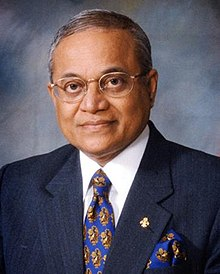
In 1978, Maumoon Abdul Gayoom became the President of The Maldives and ruled for the next 30 years. But the first full decade of Gayoom’s presidency was replete with disturbances. Two coup d'état attempts were made in 1980 and ‘83 but were unsuccessful (3/17) Image
Read 20 tweets
Dec 6
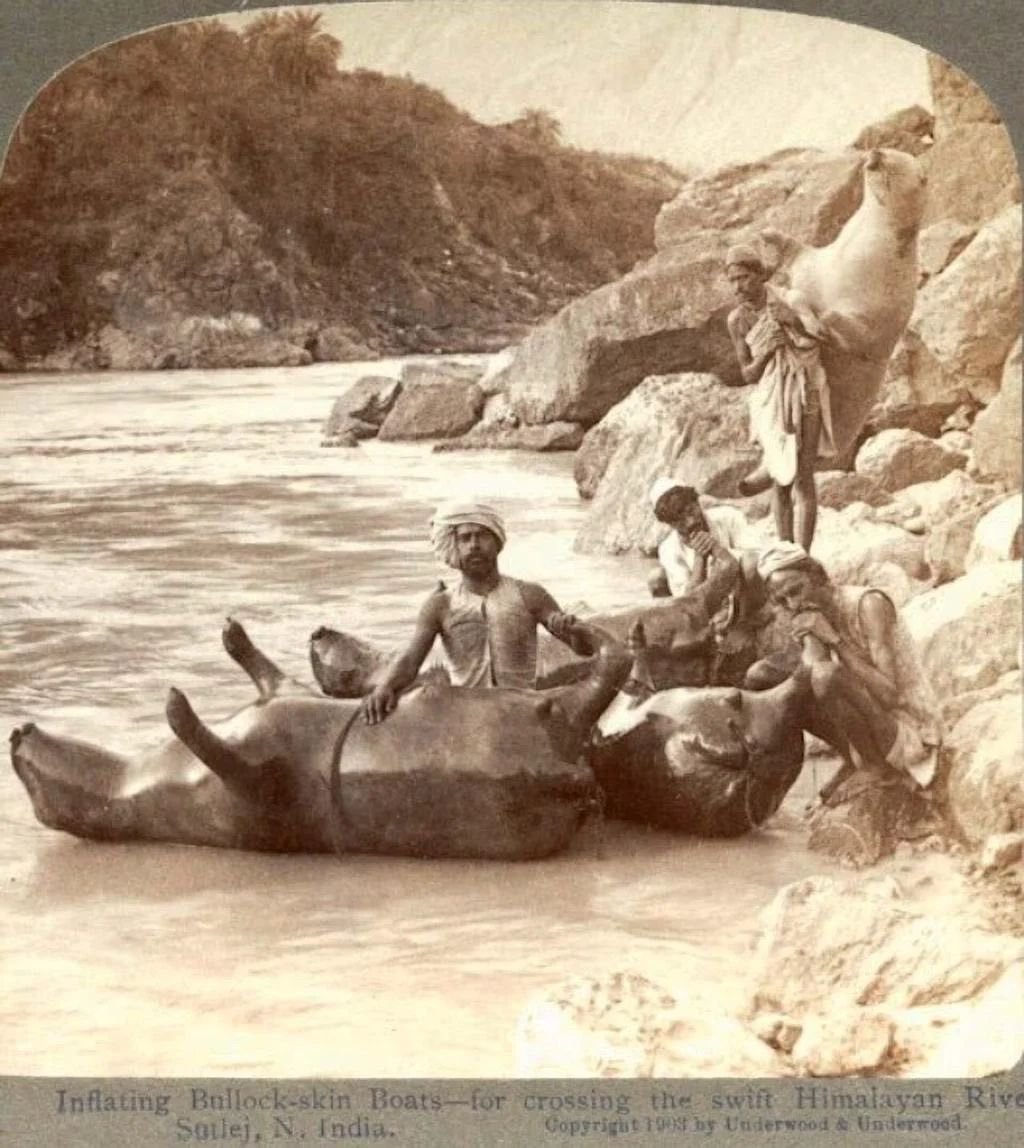
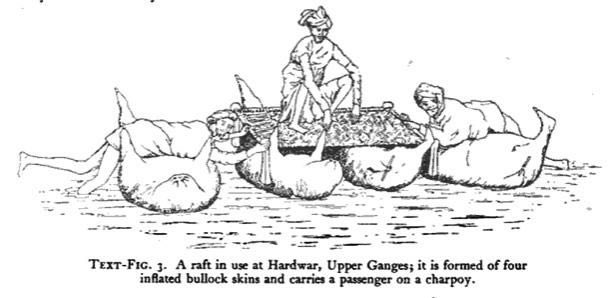
In Colonial India, locals in Himalayas and Punjab region had used inflated bullock skins as boat service to carry passengers across rivers. A short thread on this unusual and strange medium of transport.

(1/16)
The technique of using inflated animal skins as a floating raft has been practised for centuries across cultures, from Babylon to China, from Tibet to Egypt. India too adopted this brilliant ancient technique.

(2/16) Image
The skin from the animal is taken in one piece and all orifices in the skin are closed except in one leg which is kept open for inflation. Then the boatman inflates the skin through that opening in the leg by blowing from his mouth.

Bizarre, yet effective.

(3/16) Image
Read 18 tweets
Dec 4
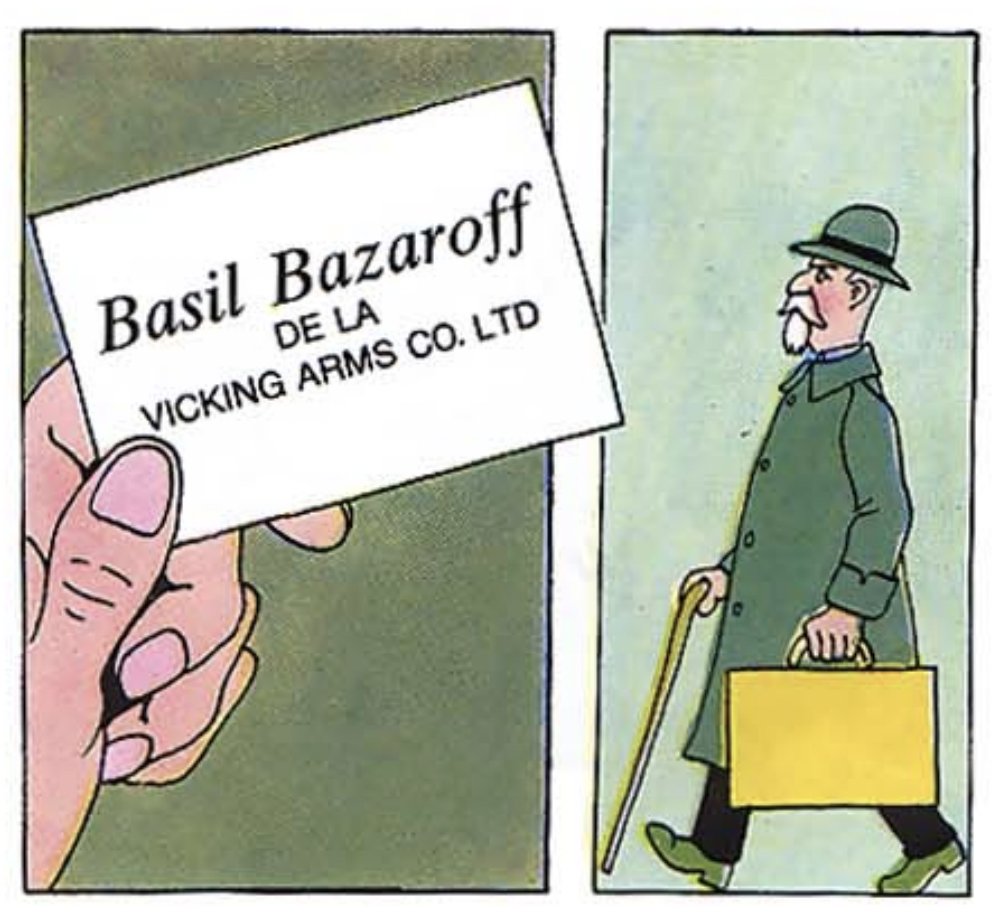
Tintin fans may recognize this odd character from "The Broken Ear." Inspired by a real-life figure known as the "Merchant of Death," his intriguing tale intertwines with the genesis of an iconic Indian Army machine gun.

A thread 1/17 Image
Basil Bazarov, a shrewd arms dealer representing Korrupt Arms GMBH (Vicking Arms in French) in the book selling weapons to both the San Theodoran and Nuevo-Rican governments, is closely based on the real-life arms tycoon, Sir Basil Zaharoff (1849-1936).

2/17 Image
But who was Basil Zaharoff? A name that resonates with mystery and intrigue. Born in a Greek family in Turkey, this enigmatic figure left an indelible mark on the world, navigating the realms of business, diplomacy, and espionage.

3/17 Image
Read 20 tweets
Dec 2
On 20th October, 1962, Chinese PLA launched attacks on Indian positions in both Ladakh and NEFA, sparking off the Sino-Indian border war. The conflict hides a resonating story that would shape Kolkata's vibrant food culture in years to come (1/9) Image
There was a small family of Chinese immigrants who lived in Shillong and owned a small eatery. But things changed for them as the war broke out and on a cold November morning, the sounds of army boots woke the family up (2/9)
One 8-year-old little girl, with her parents and siblings, were overnight uprooted from their home, sent on a train to Jaipur with thousands of other Chinese-origin people, and interned at Deoli refugee camp. But why so? This is indeed a shameful episode of Indian history 3/9
Read 11 tweets

Did Thread Reader help you today?

Support us! We are indie developers!


This site is made by just two indie developers on a laptop doing marketing, support and development! Read more about the story.

Become a Premium Member ($3/month or $30/year) and get exclusive features!

Become Premium

Don't want to be a Premium member but still want to support us?

Make a small donation by buying us coffee ($5) or help with server cost ($10)

Donate via Paypal

Or Donate anonymously using crypto!

Ethereum

0xfe58350B80634f60Fa6Dc149a72b4DFbc17D341E copy

Bitcoin

3ATGMxNzCUFzxpMCHL5sWSt4DVtS8UqXpi copy

Thank you for your support!

Follow Us on Twitter!

:(