A helpful guide to what all those "bits" of buildings are actually called: 
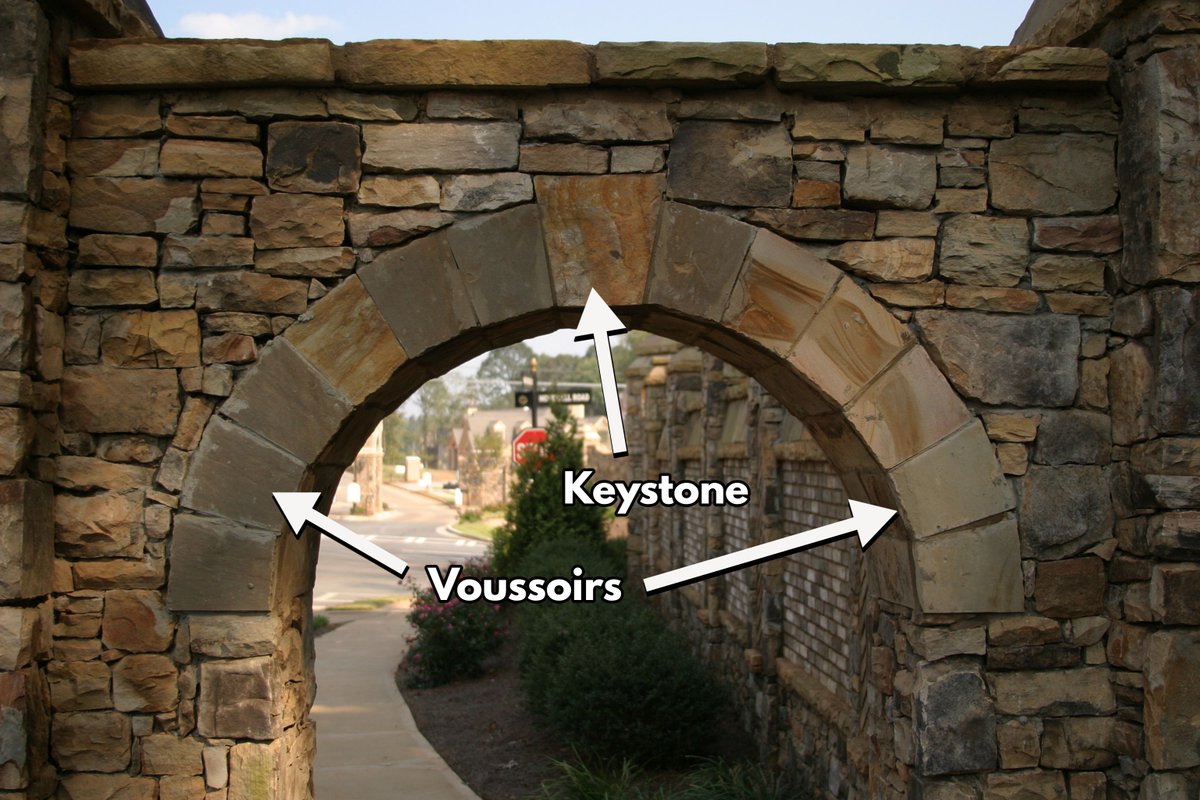
The parts of an arch:
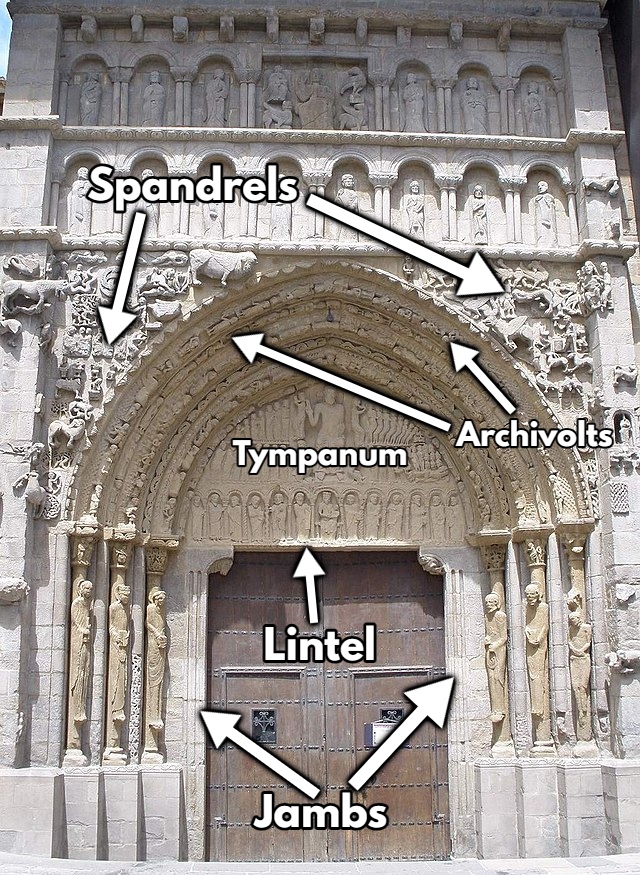
The elements of a doorway:
Types of roofs:

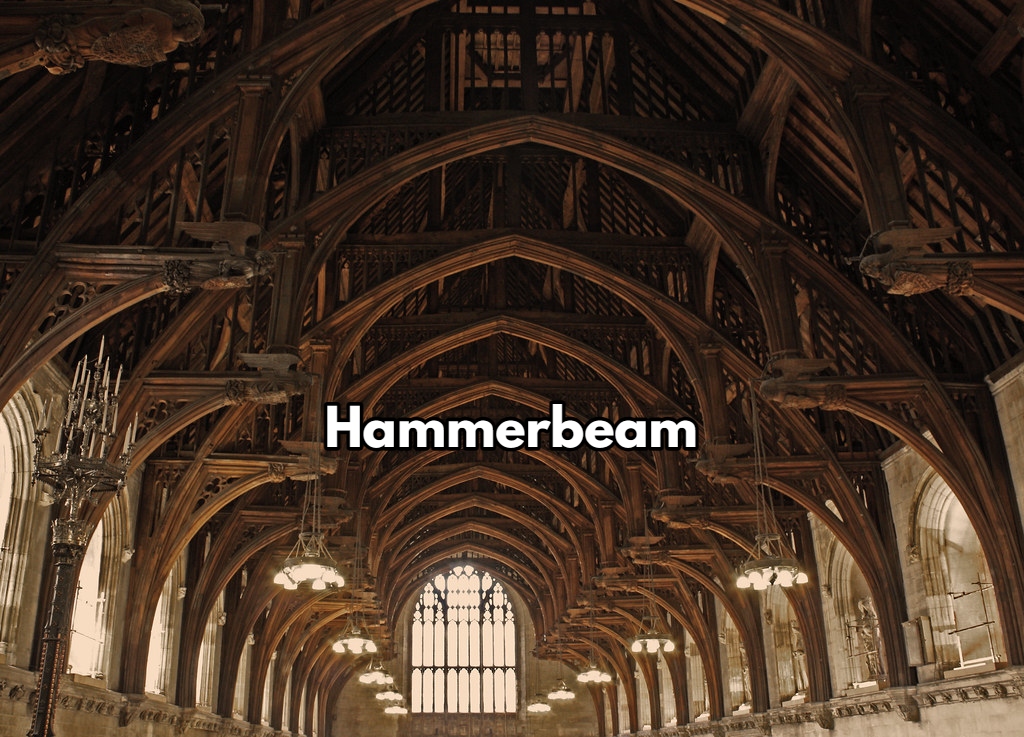

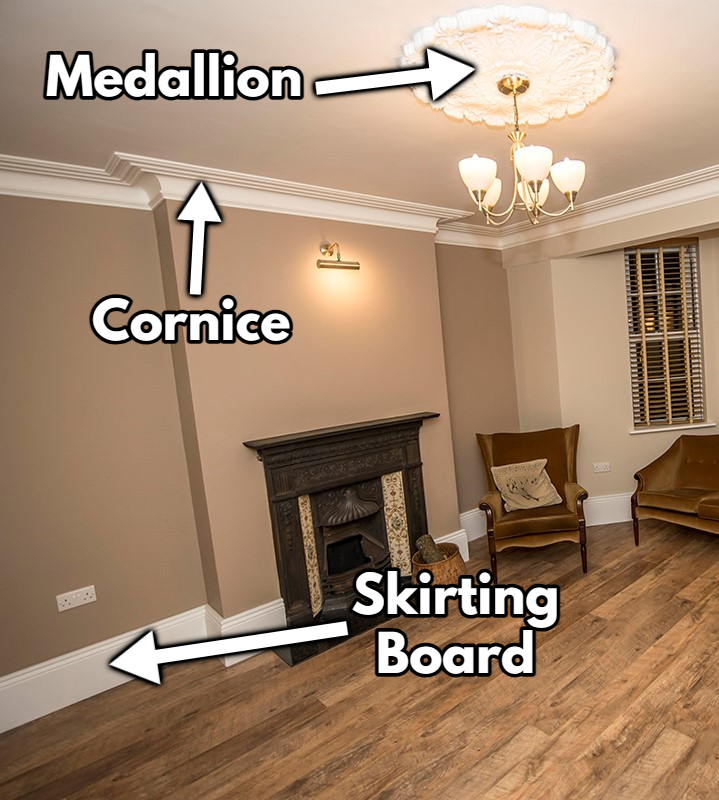
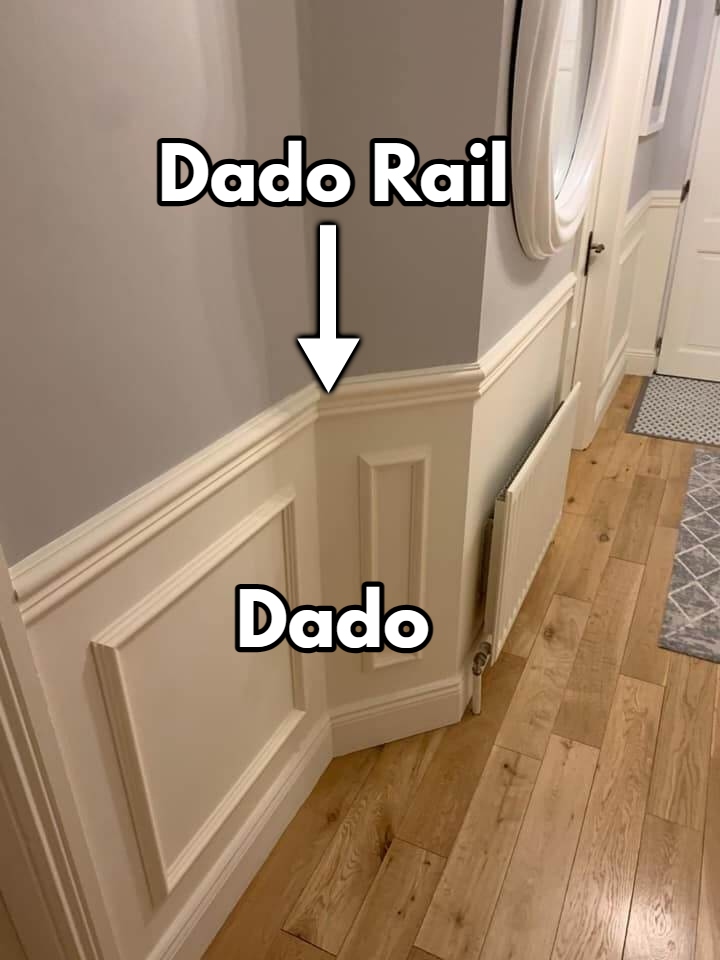
Elements of interior design:
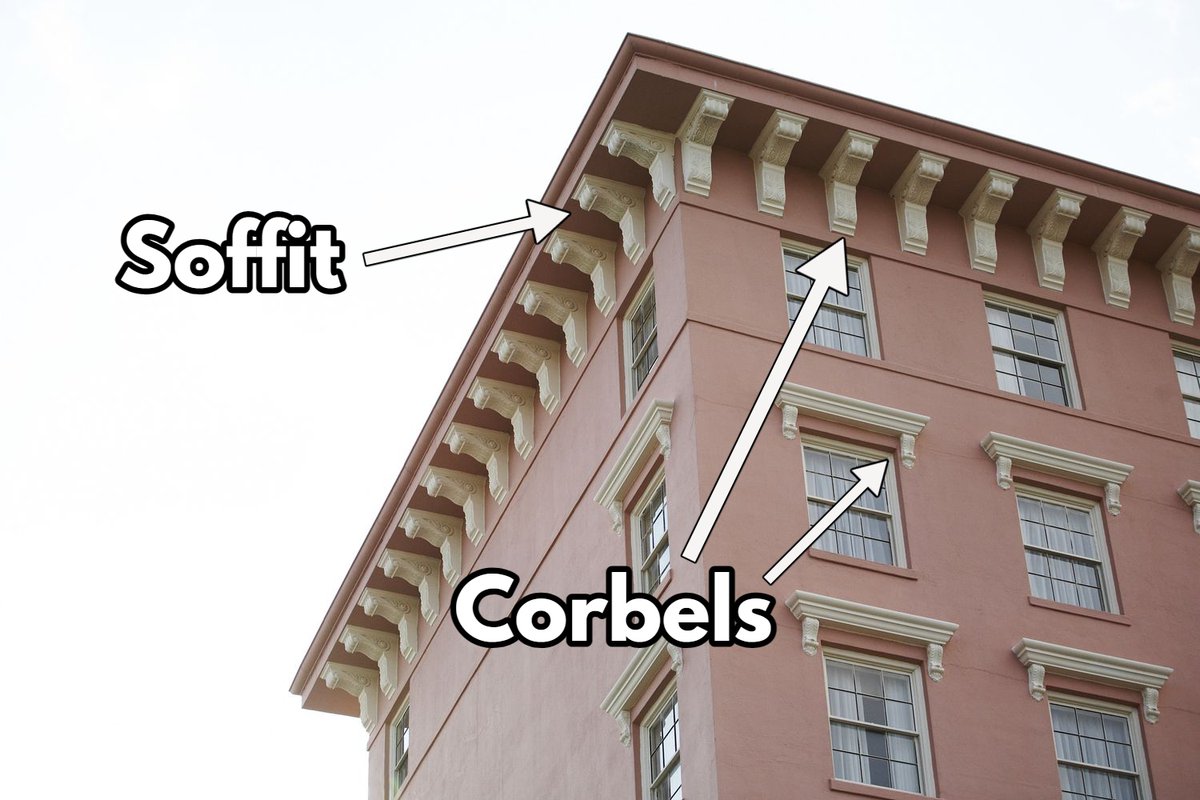
Soffit: the flat underside of any overhanging structure, most often the edge of a roof.
Corbels: structures to help support the weight of any overhanging element, structurally important but often decorated.
Corbels: structures to help support the weight of any overhanging element, structurally important but often decorated.
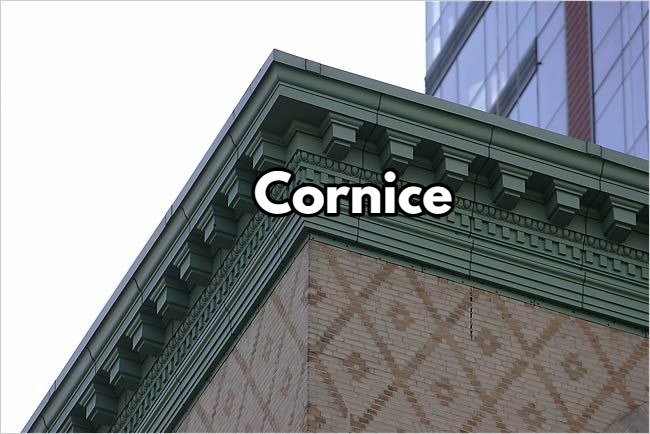
Cornice: that "horizontal bit", projecting out and usually decorated, at the top of a building.
Dentils: those tiny, teeth-like details beneath the cornice.
Dentils: those tiny, teeth-like details beneath the cornice.

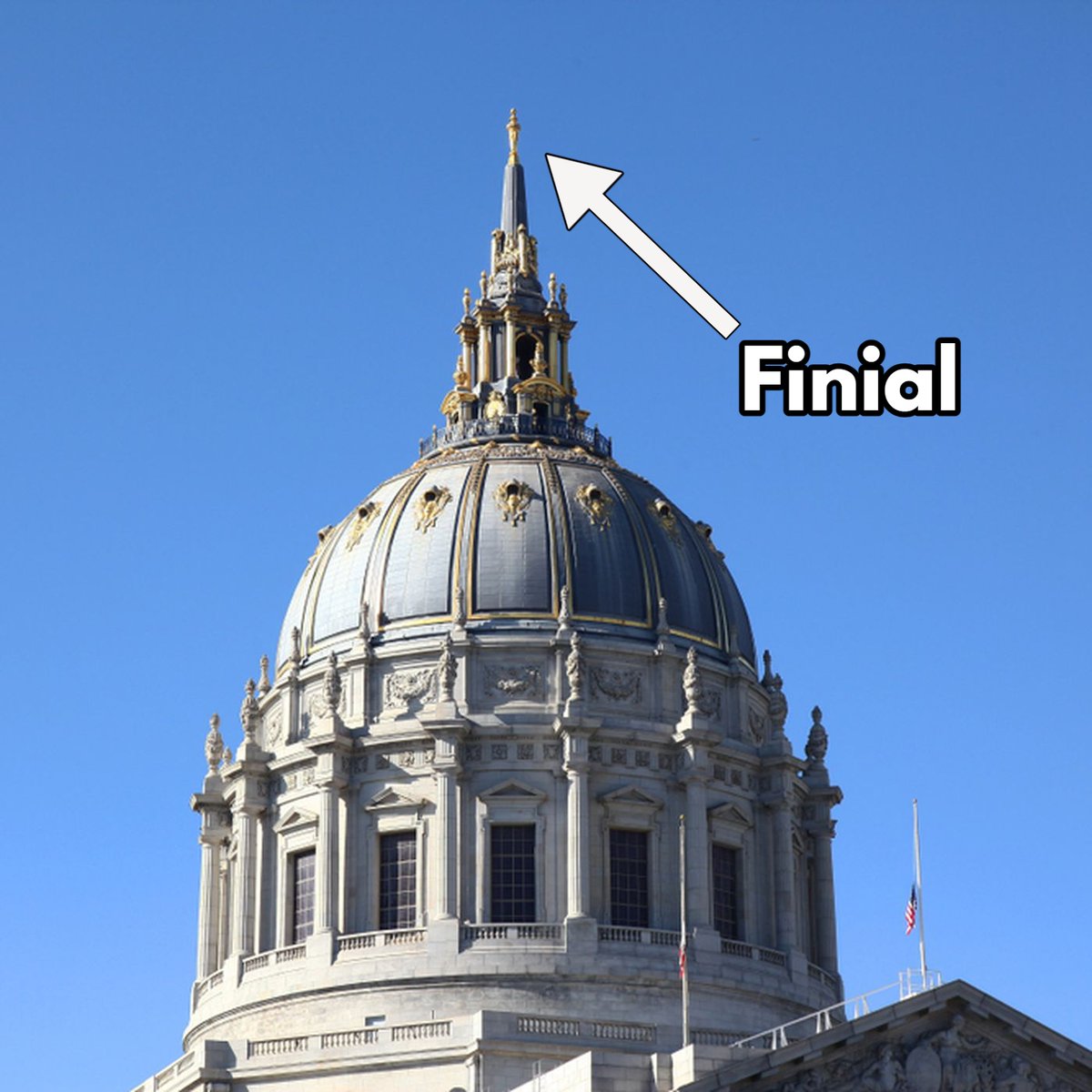
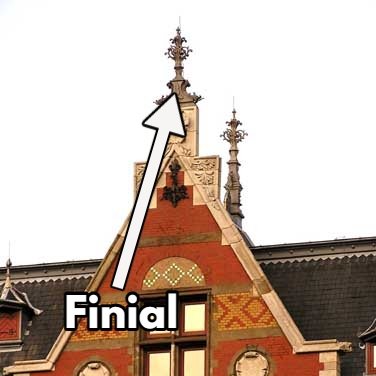
Finial: a sort of finishing decorative element at the very top of any other structure, such as a dome, tower, or spire.
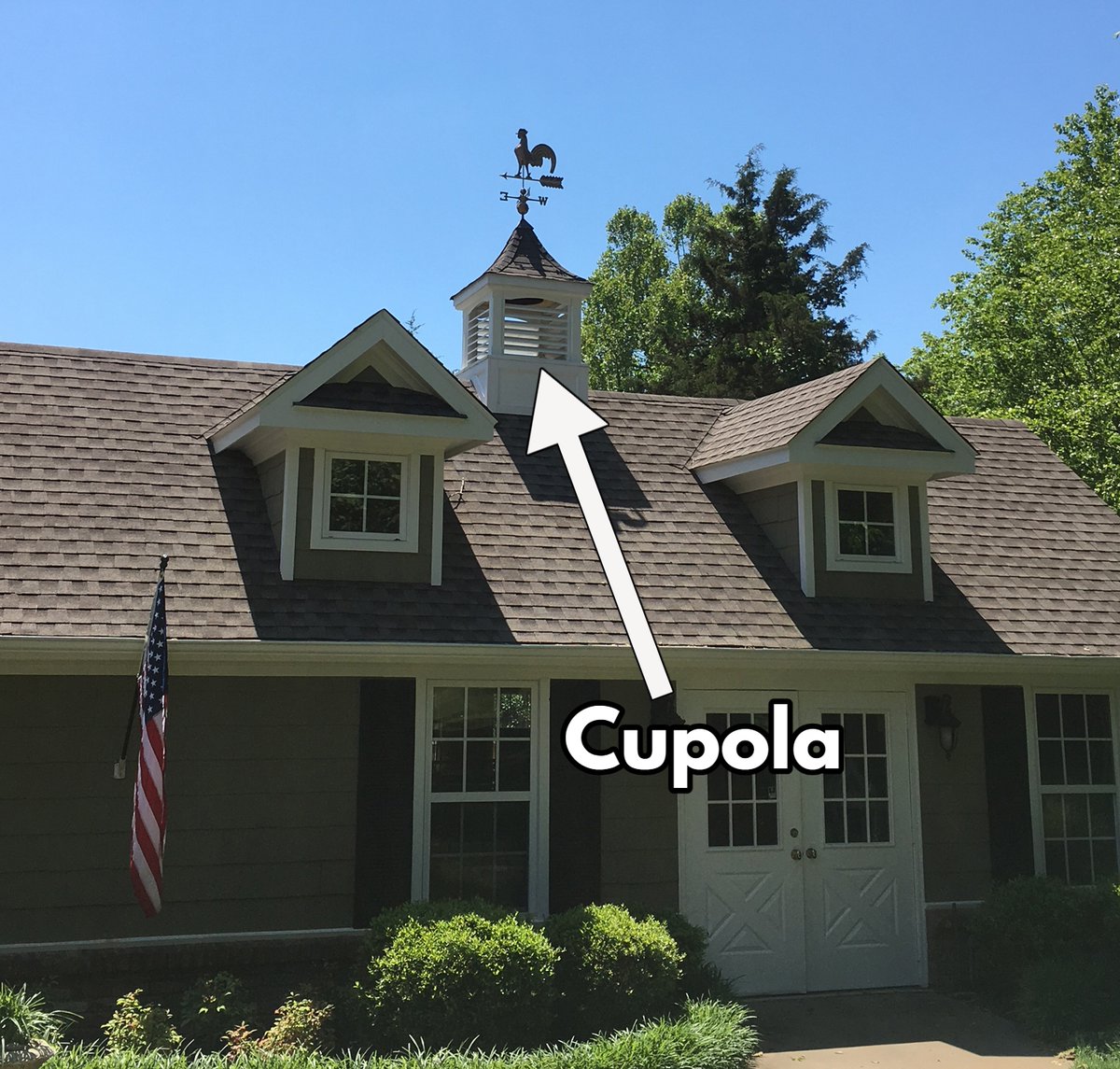
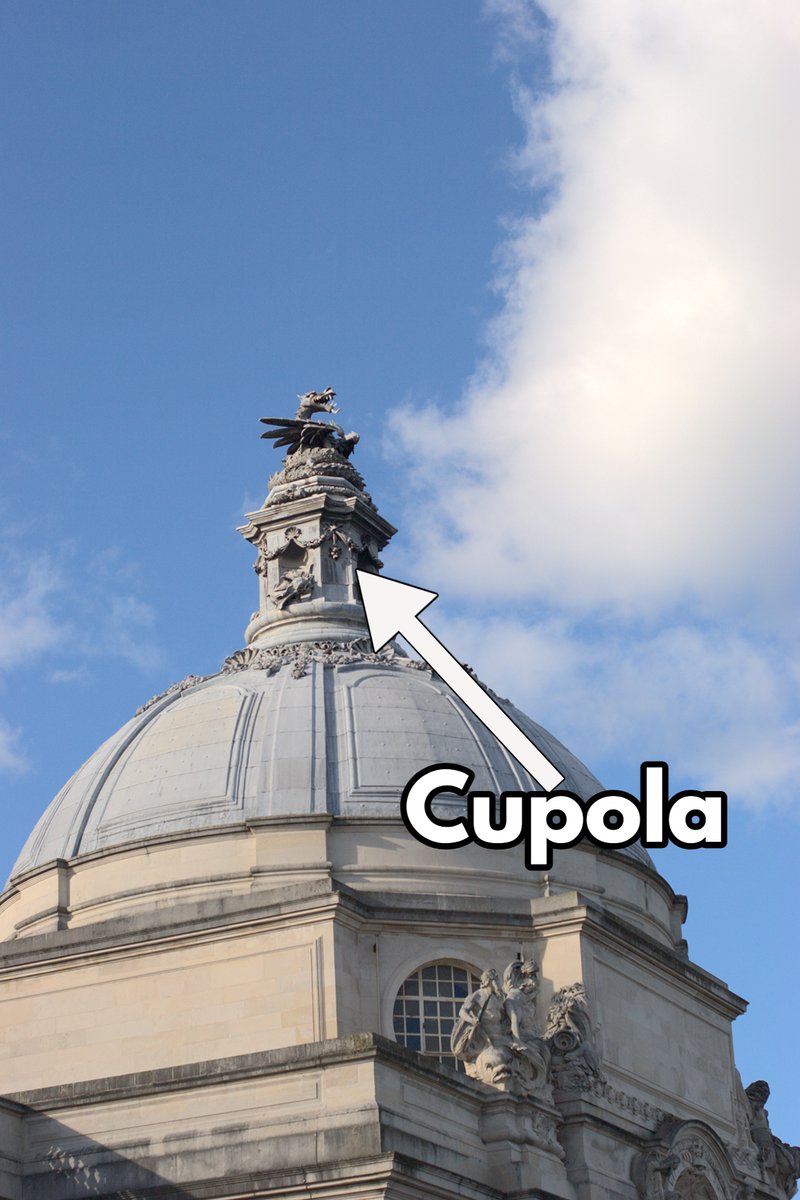
Cupola: a small structure which usually lets in light, often dome-shaped but not always, on top of a larger roof or dome.
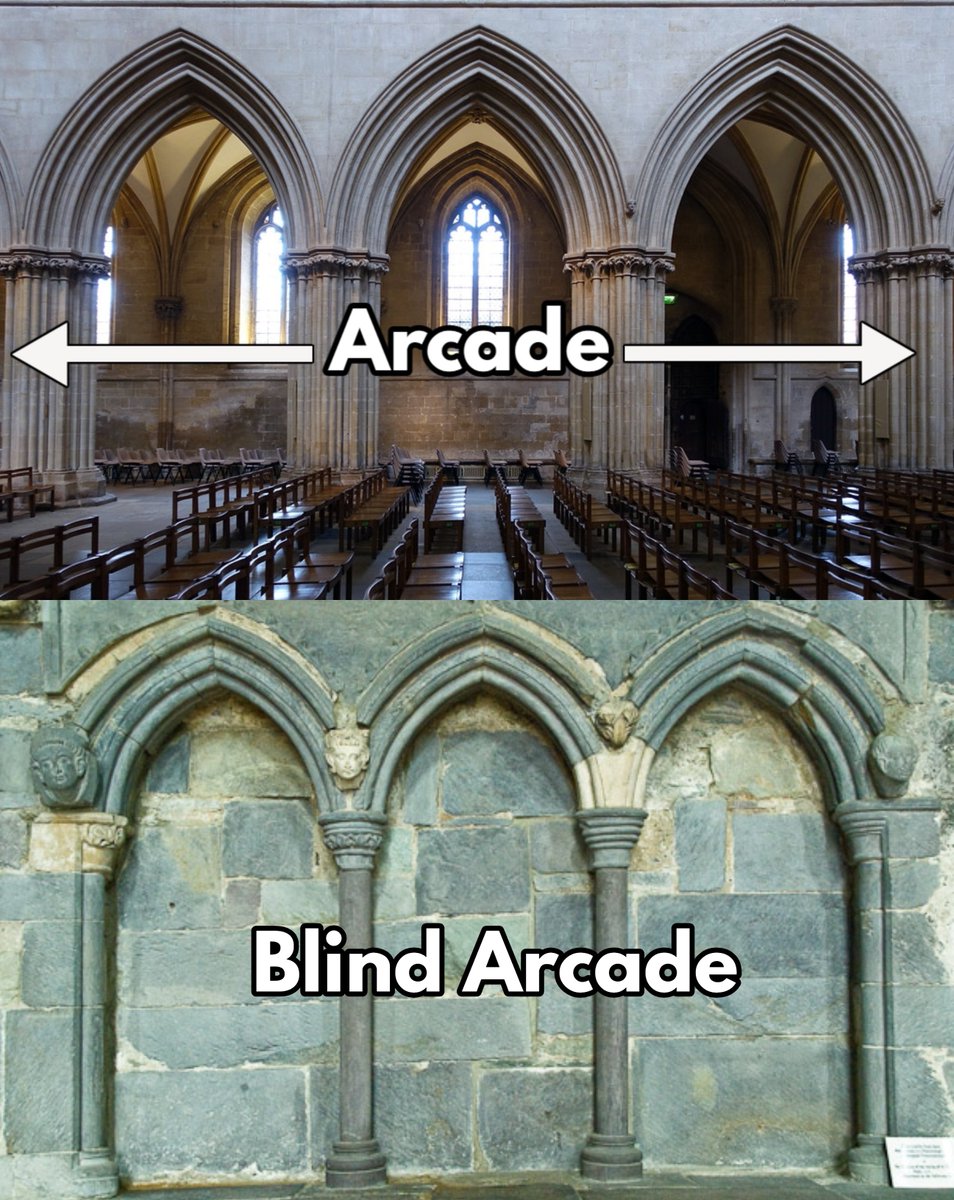
Arcade: any row of arches.
Blind Arcade: a purely decorative arcade which is up against a wall.
Blind Arcade: a purely decorative arcade which is up against a wall.
Pediment: the triangular or semi-circular part above a door or window, originating in classical architecture.

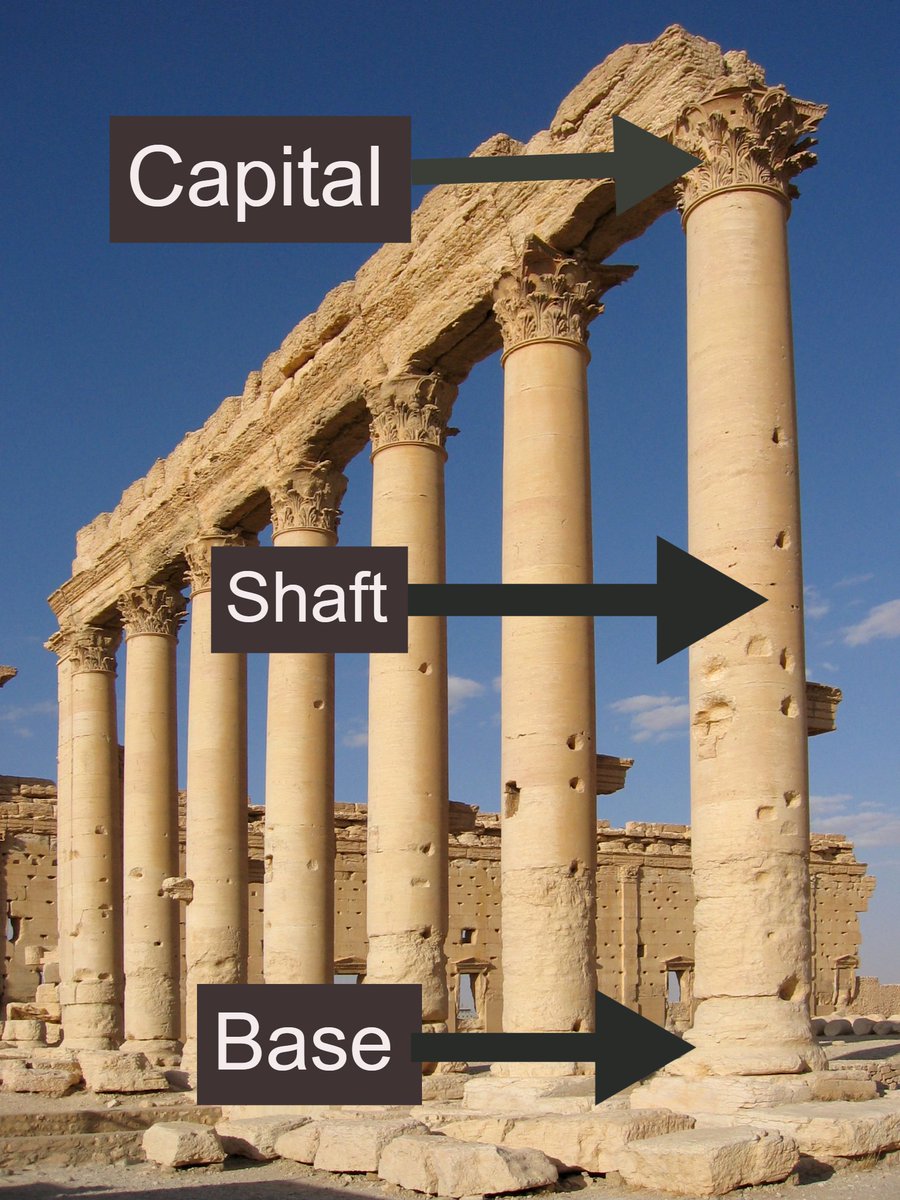
And, speaking of classical architecture, here are the different parts of a column.
(Though these terms do apply to all columns, classical or otherwise).
(Though these terms do apply to all columns, classical or otherwise).
And here are the five "Classical Orders".
An Order include both the column and everything it supports. Each have different proportions, rules, and decorative features.
An Order include both the column and everything it supports. Each have different proportions, rules, and decorative features.

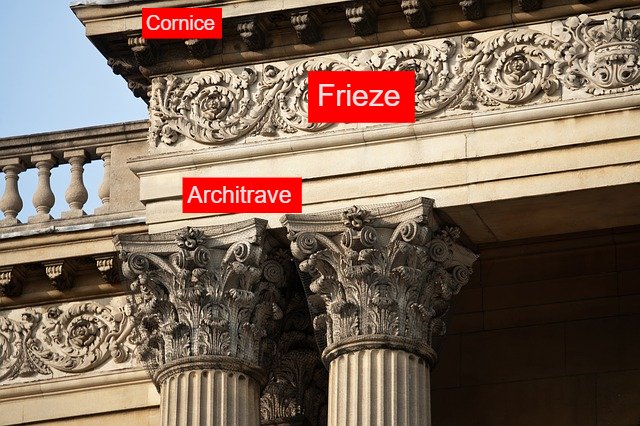
The entablature rests on top of the column. It's made up of the architrave, frieze, and cornice.
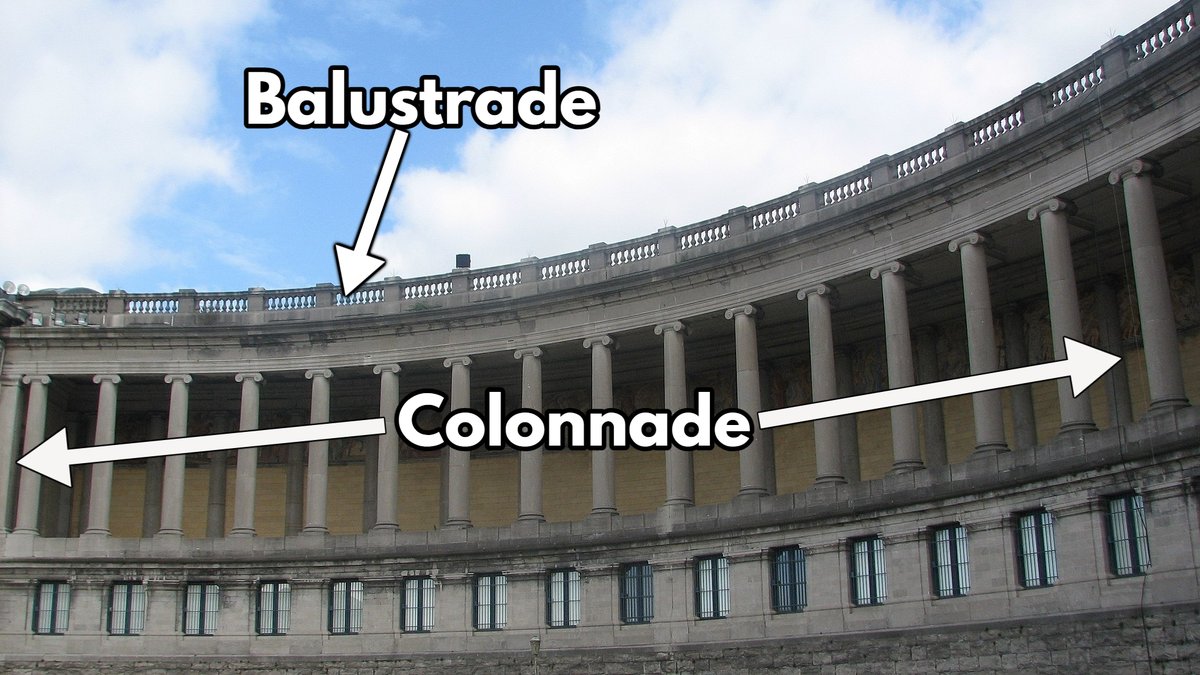
A colonnade is any row of columns, whether as part of another building or standalone.
And a balustrade is a row of balusters, usually as part of a railing or parapet, as here.
And a balustrade is a row of balusters, usually as part of a railing or parapet, as here.
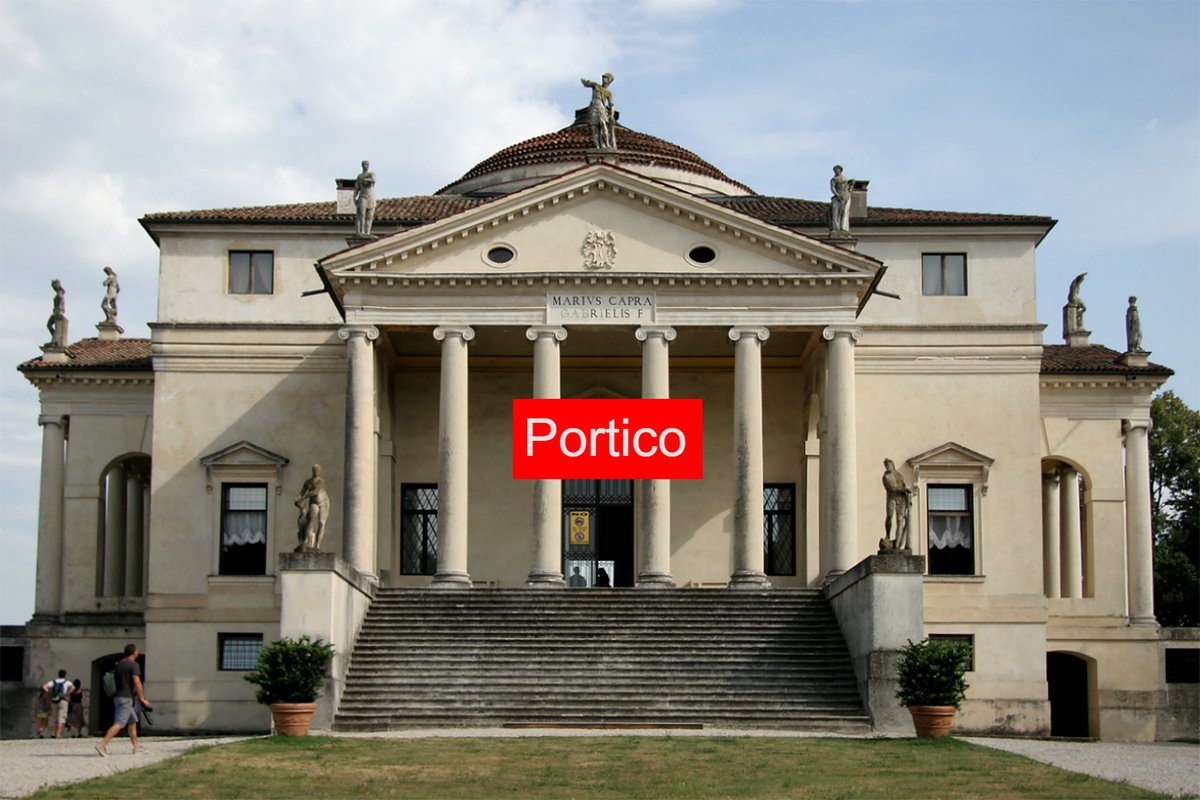
Portico: a porch leading to the entrace of a building supported by a colonnade, often with a pediment too.
These are some elements of Gothic architecture.
Clerestory: the upper level of windows in a church.
Pinnacles: miniature spires on top of buttresses.
Flying buttress: a buttress separated from the wall it supports by an arch.
Clerestory: the upper level of windows in a church.
Pinnacles: miniature spires on top of buttresses.
Flying buttress: a buttress separated from the wall it supports by an arch.

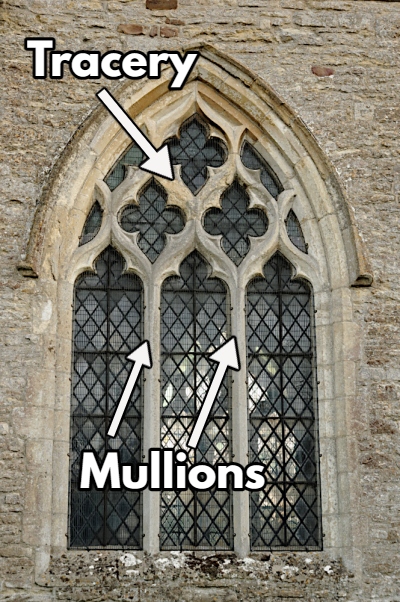
Mullions are the vertical dividing elements in windows.
Tracery is the decorative, carved stonework in the upper parts of the window.
The individual windows separated by the mullions and tracery are called lights.
Tracery is the decorative, carved stonework in the upper parts of the window.
The individual windows separated by the mullions and tracery are called lights.
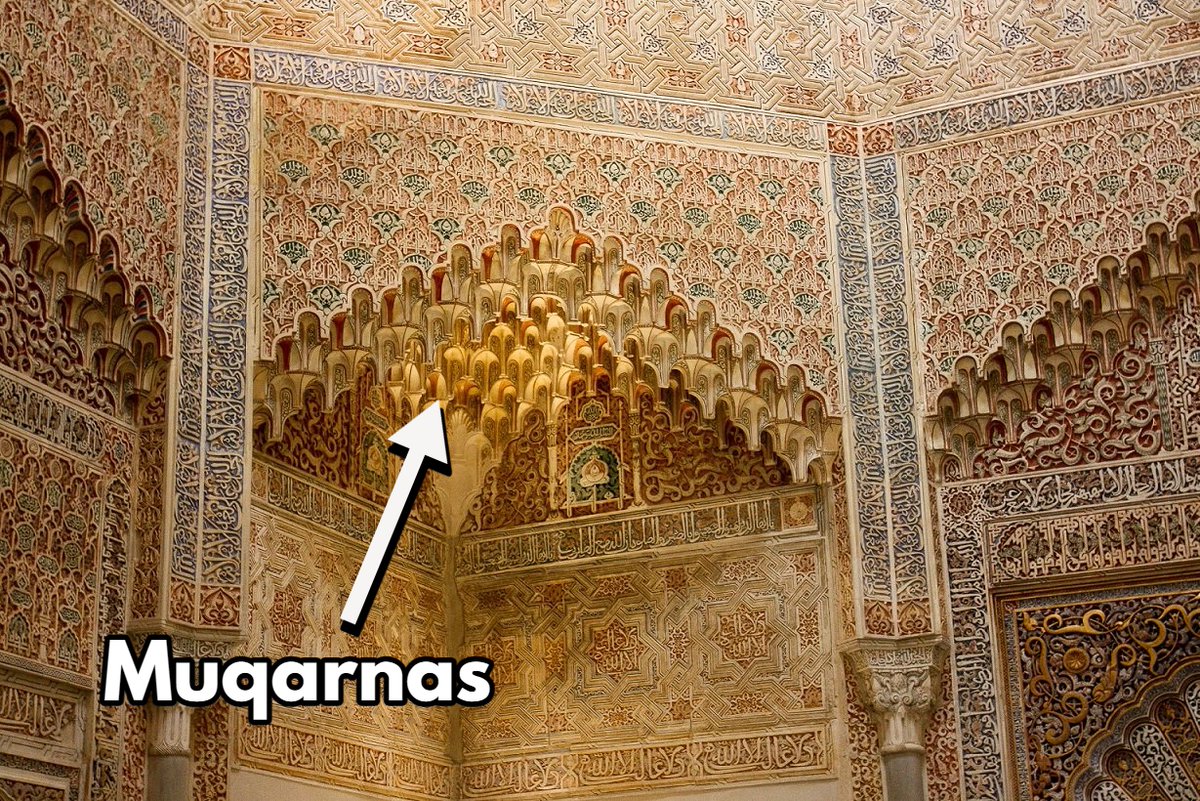
In Islamic architecture there is a wonderful feature called muqarnas.
A complex array of geometrically carved vaulting, almost like honeycomb, on the underside of arches, domes, and semi-domes.
A complex array of geometrically carved vaulting, almost like honeycomb, on the underside of arches, domes, and semi-domes.
The iwan is a vaulted hall walled in on three sides; the unwalled side forms a large entranceway which opens onto a central courtyard.

Some elements of Byzantine Architecture.
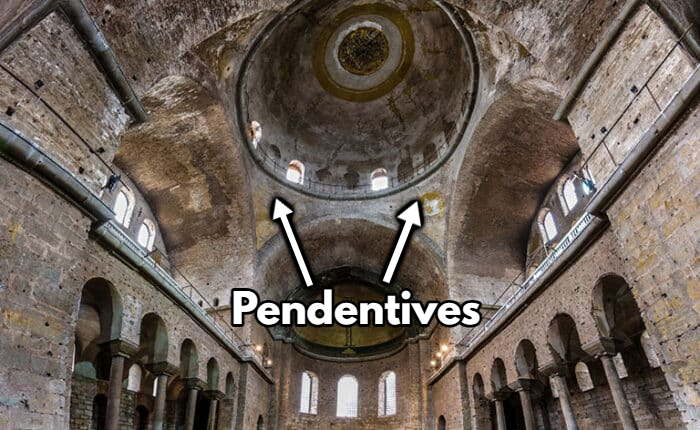
Pendentives: the convex triangles between perpendicular round arches; they create a circle on which a dome or drum can be constructed.
Drum: the cylindrical structure that supports a dome.
Semidomes... it's in the name.
Pendentives: the convex triangles between perpendicular round arches; they create a circle on which a dome or drum can be constructed.
Drum: the cylindrical structure that supports a dome.
Semidomes... it's in the name.


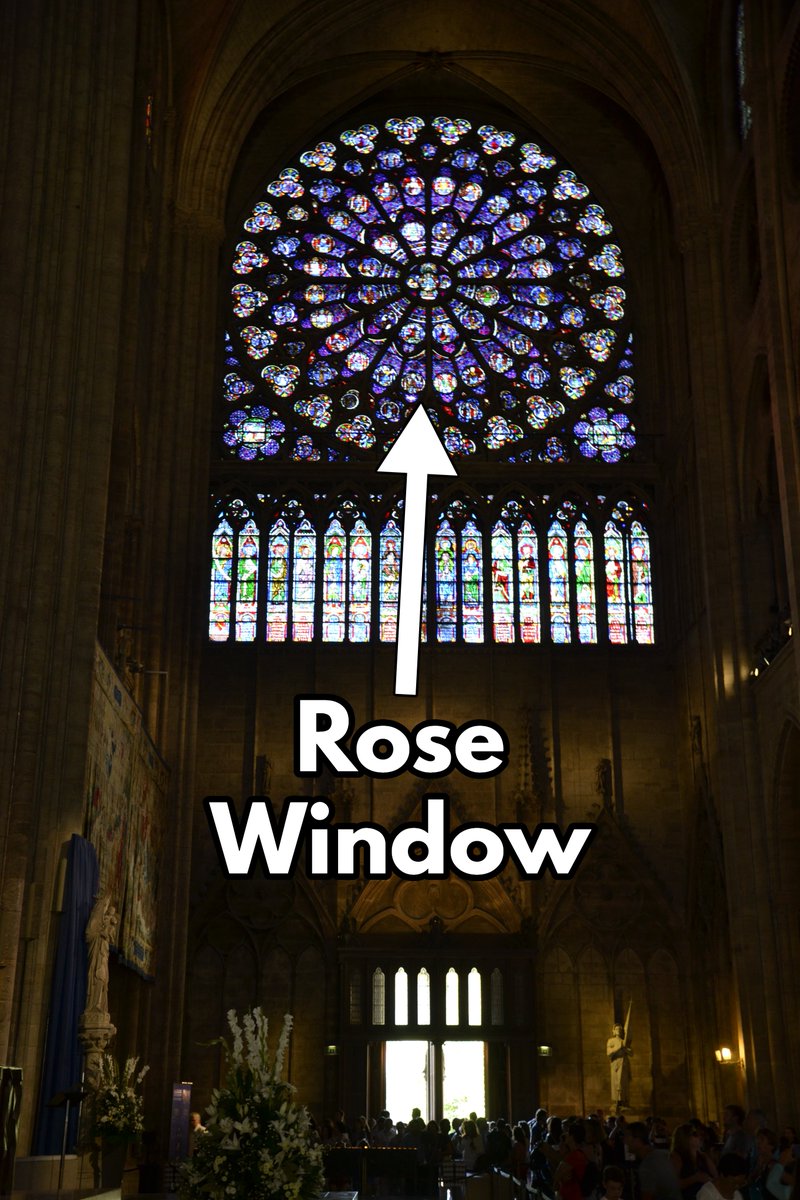
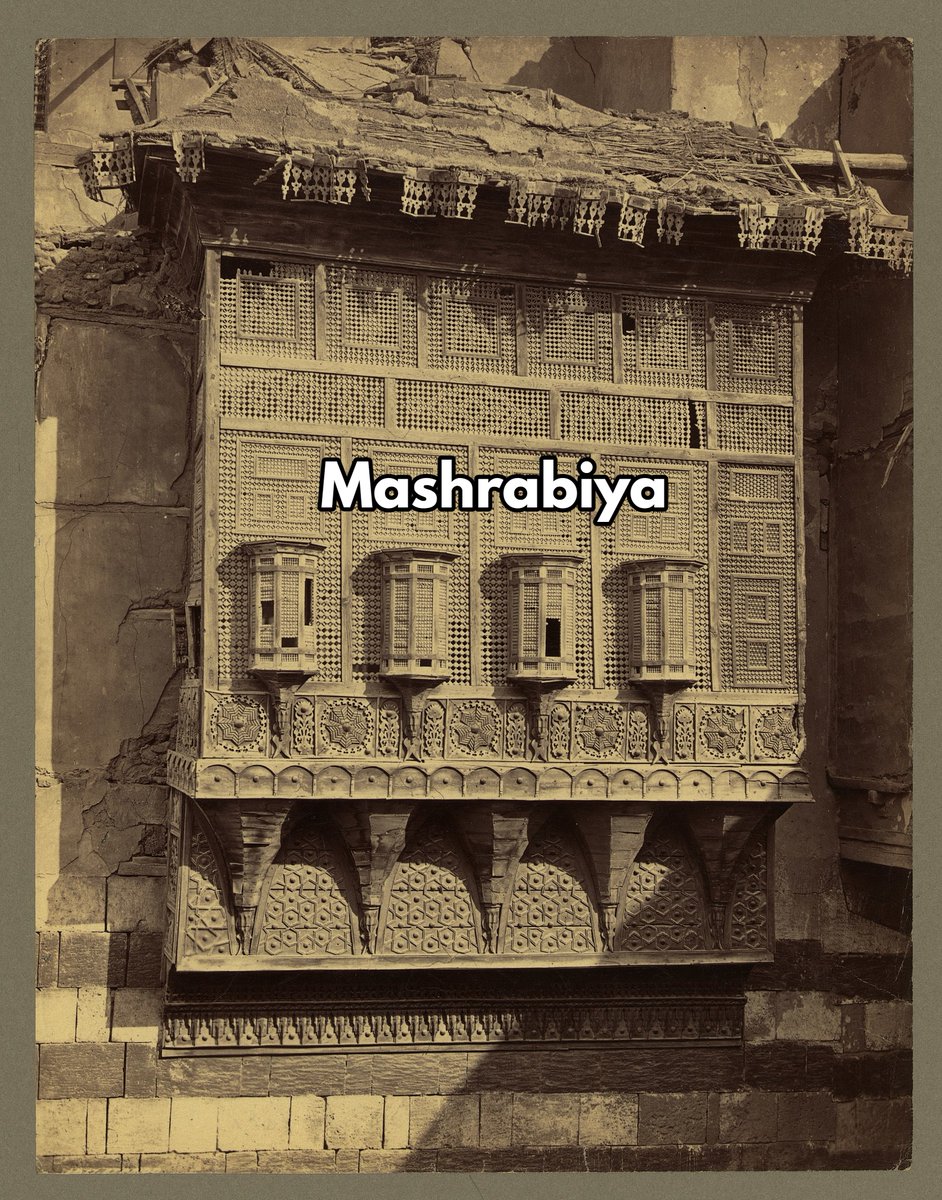
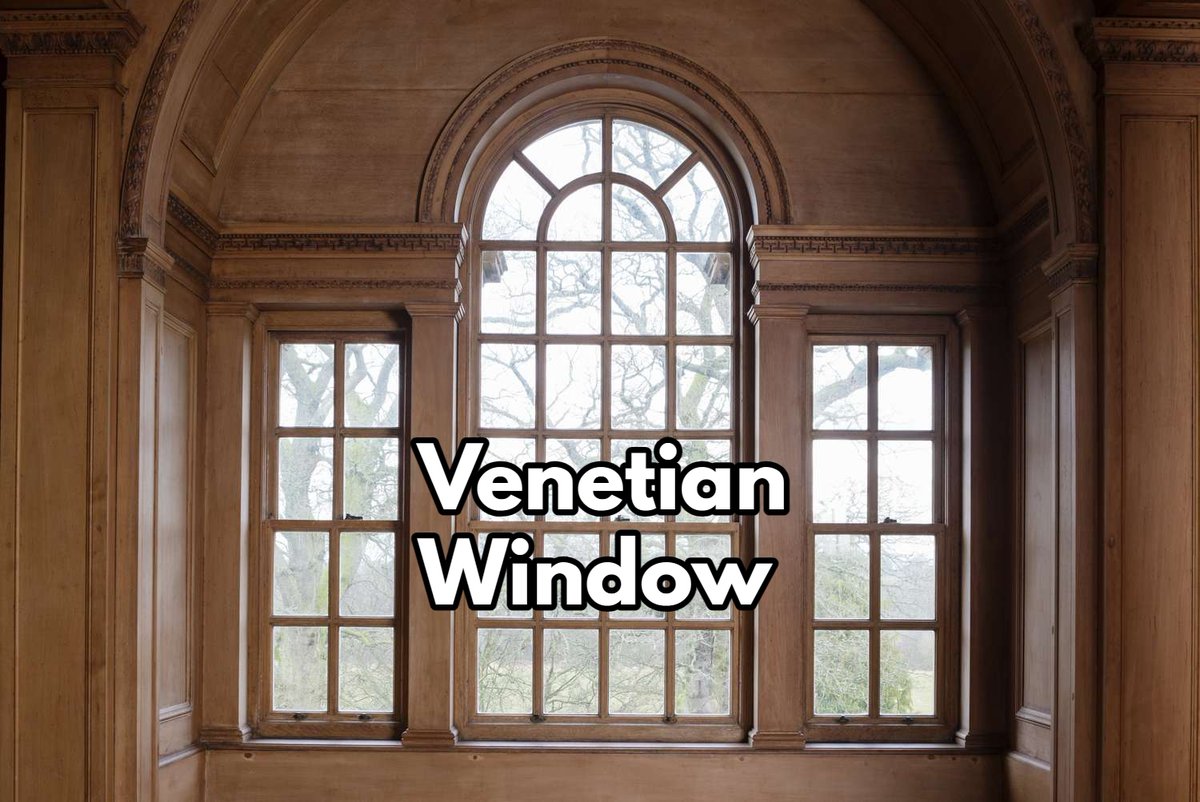
Some types of windows.
Mashrabiya: an upper-storey window which juts out and is enclosed with ornate lattices.
Venetian: one large central window flanked by two smaller ones.
Rose Window: the large, circular windows of High Gothic architecture.
Mashrabiya: an upper-storey window which juts out and is enclosed with ornate lattices.
Venetian: one large central window flanked by two smaller ones.
Rose Window: the large, circular windows of High Gothic architecture.
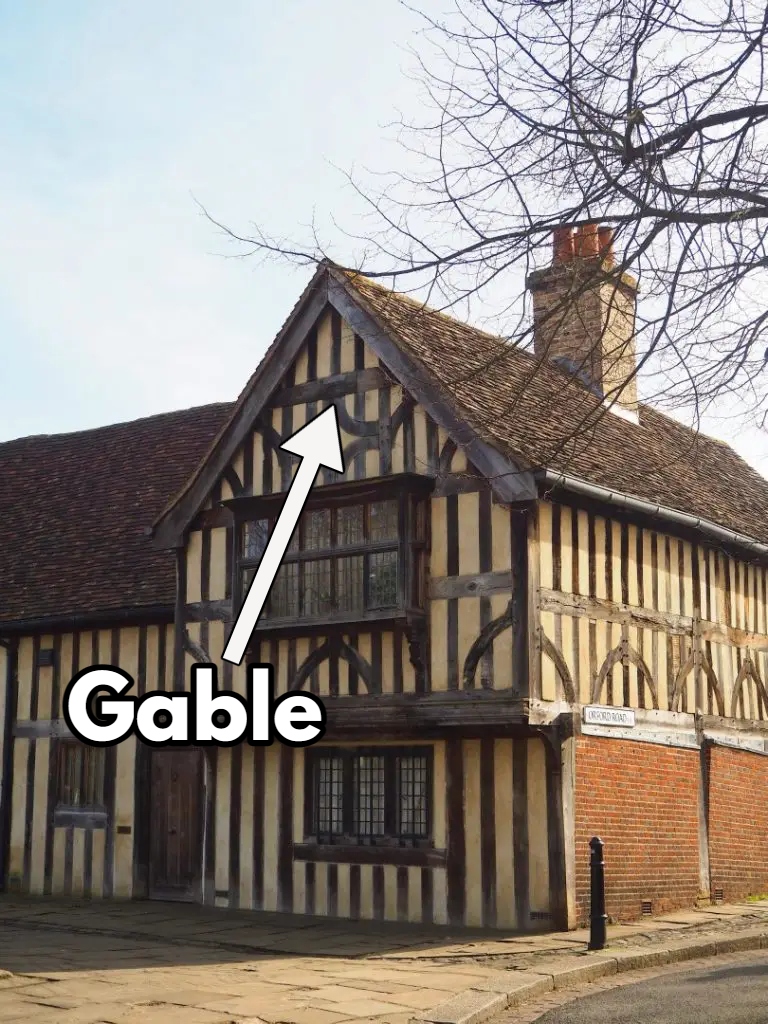
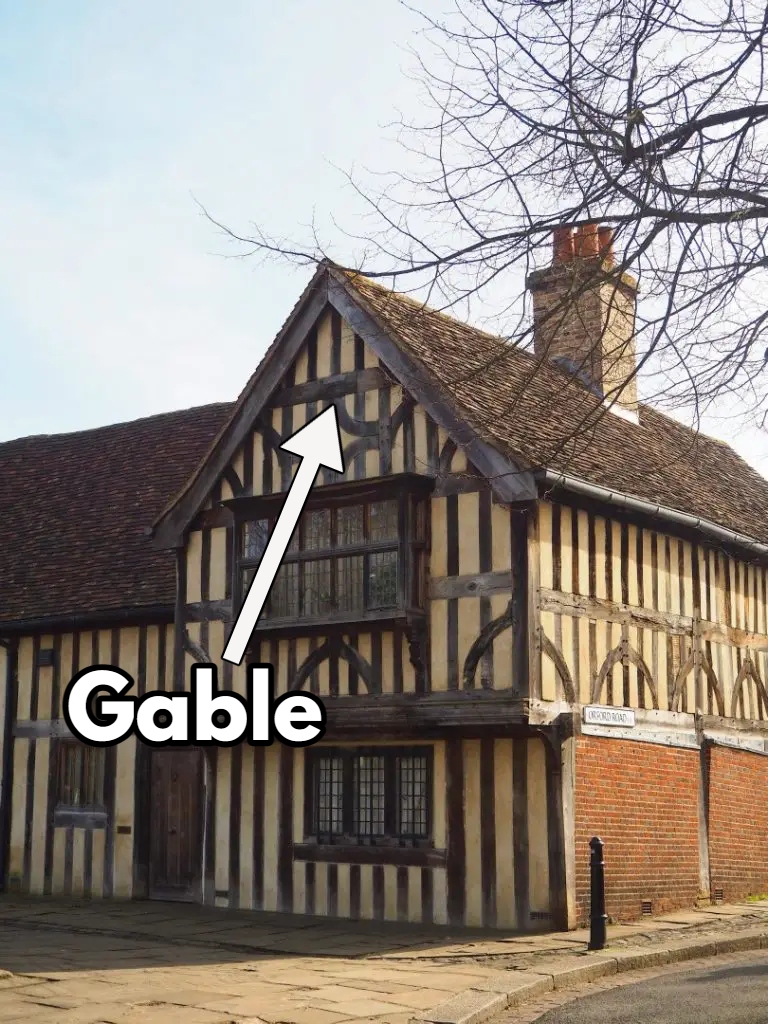
And back to where we started: a gable is the triangular wall at the end of a pitched roof.
Simply knowing what something is called helps to describe, understand, and even *see* it more clearly.
And, indeed, architecture is a language all of its own: the language of our streets, history, and civilisation.
When you speak that language the world comes to life.
And, indeed, architecture is a language all of its own: the language of our streets, history, and civilisation.
When you speak that language the world comes to life.
• • •
Missing some Tweet in this thread? You can try to
force a refresh