200 years ago Francisco Goya painted "The Dog" on the walls of his own home.
And here's why he did it...
And here's why he did it...

The paintings of Francisco Goya (1747-1823) didn't always look like The Dog.
He was born in Spain but, after being denied entry to the Royal Academy in Madrid, moved to Rome and studied there.
He returned to Spain in 1775 and found early success painting things like this.
He was born in Spain but, after being denied entry to the Royal Academy in Madrid, moved to Rome and studied there.
He returned to Spain in 1775 and found early success painting things like this.
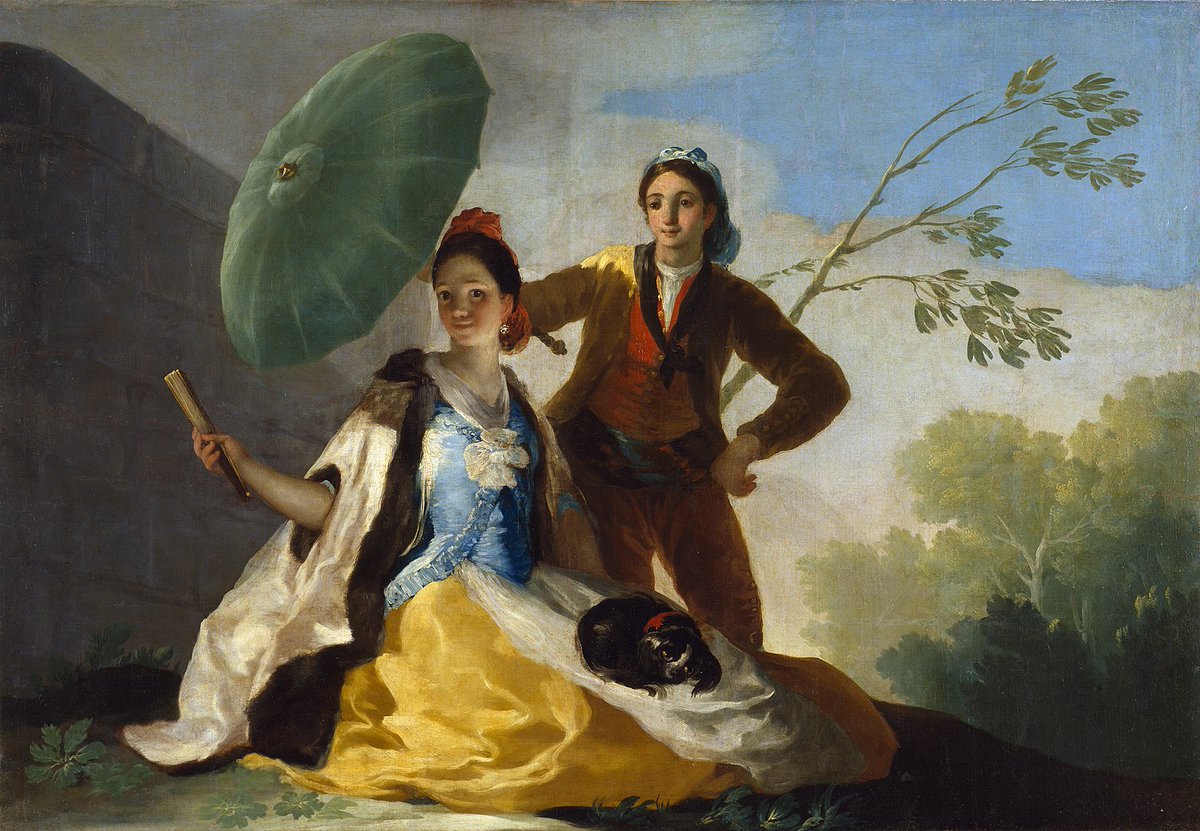
But Goya was suffering from debilitating illnesses which inhibited his ability to work. Even as a young man he became fearful of death, old age, and madness.
The Garrotted Man, from the late 1770s, was a sign of things to come.
Goya's art had unnerving psychological depth.
The Garrotted Man, from the late 1770s, was a sign of things to come.
Goya's art had unnerving psychological depth.

During the 1780s he received commissions from nobility to paint their portraits. Such as Don Luis, the king's half-brother.
And by 1789 he had been appointed as the official court painter, a prestigious and well-paid position.
Goya's artistic career was secured.
And by 1789 he had been appointed as the official court painter, a prestigious and well-paid position.
Goya's artistic career was secured.

But things changed for Goya in the 1790s, as physical and mental illness pushed him to brink of nervous breakdown.
His art slowly became more expressive and stylised — and darker, too.
In Yard with Lunatics (1794) we see Goya's mix of fascination with and horror at madness.
His art slowly became more expressive and stylised — and darker, too.
In Yard with Lunatics (1794) we see Goya's mix of fascination with and horror at madness.

For the Prime Minister Manuel de Godoy he painted the "Maja Desnuda" (1795), said by some to be the first proper female nude in a non-religious or classical context in the history of Western art.
Goya also painted a clothed version; both were for Godoy's private collection
Goya also painted a clothed version; both were for Godoy's private collection

But that was private art; as for his public art...
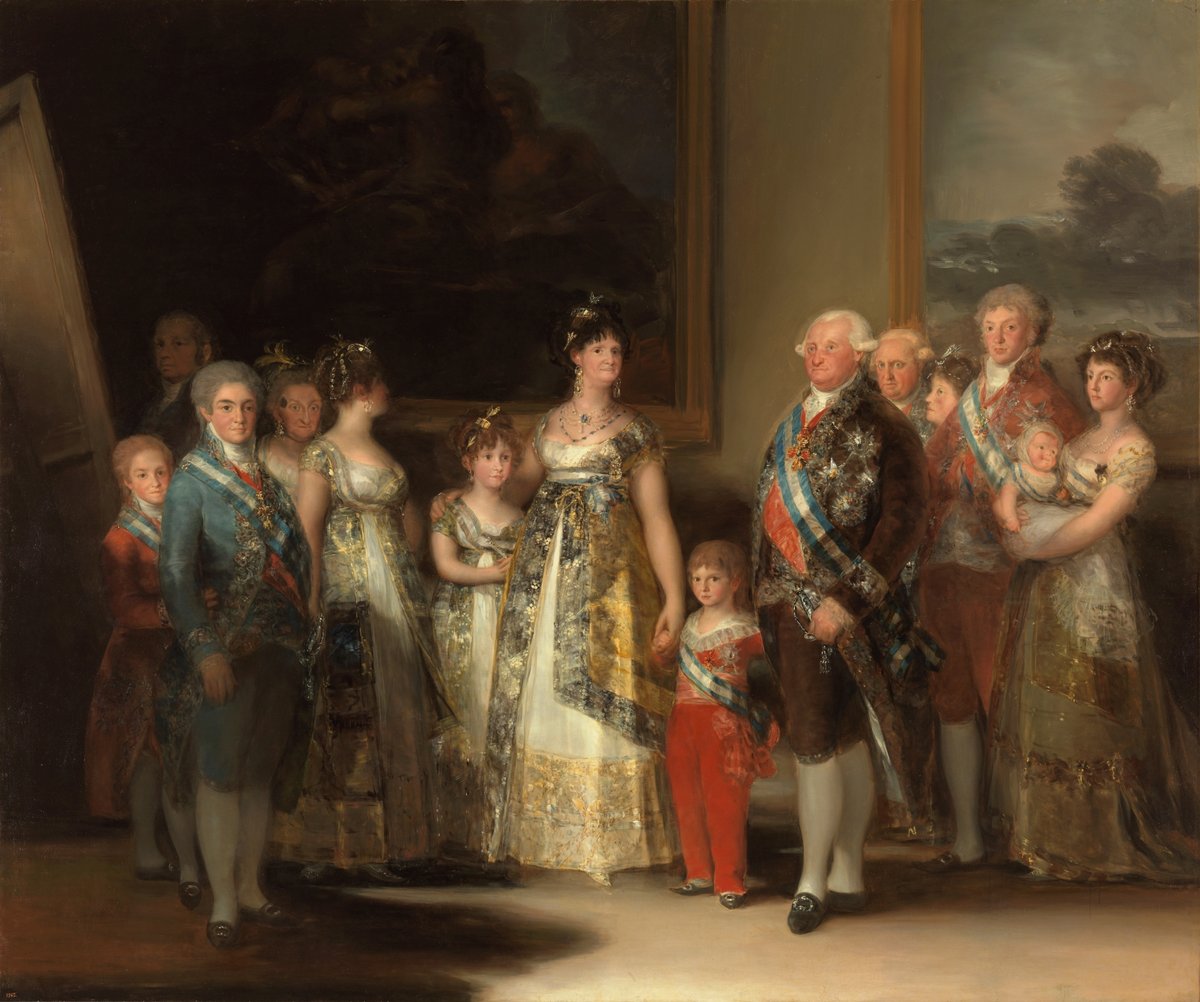
Well, Goya's portrait of King Charles IV and his family, from 1801, isn't exactly a flattering royal representation.
You can sense his conflicting feelings about Spain; Goya was frustrated with his native country..
Well, Goya's portrait of King Charles IV and his family, from 1801, isn't exactly a flattering royal representation.
You can sense his conflicting feelings about Spain; Goya was frustrated with his native country..
"The Sleep of Reason Produces Monsters" was one of Los Caprichos, a series of etchings which allegorised what Goya considered to be the backwards state of Spanish society.
He descried the superstitious and irrational fears that dominated and held back his country.
He descried the superstitious and irrational fears that dominated and held back his country.

They were a mix of bitter Juvenalian satire and fantastical, disturbing visions which touched on Goya's own anxieties and illnesses.
In purely stylistic terms, Goya was decades ahead of his time. Not until Edvard Munch in the 1890s would such art be made in Europe again.
In purely stylistic terms, Goya was decades ahead of his time. Not until Edvard Munch in the 1890s would such art be made in Europe again.


In 1807 Napoleon invaded Spain and the Peninsula Wars broke out. A wave of terrible violence was unleashed.
Goya chronicled the turmoil and terror of this conflict with a mixture of almost cruel irony and deep sympathy in his "Disasters of War" etchings.
Goya chronicled the turmoil and terror of this conflict with a mixture of almost cruel irony and deep sympathy in his "Disasters of War" etchings.

A certain pity — perhaps a cold pity — is visible here. He seemed especially concerned for the suffering of women at the hands of soldiers.
Others are almost too graphic to be shared, depicting severed limbs and mangled corposes beneath sardonic captions.
Others are almost too graphic to be shared, depicting severed limbs and mangled corposes beneath sardonic captions.

It was around this time that the faces in Goya's paintings started to adopt those twisted, haunting grimaces for which he is now so famous.
This is The Third of May 1808 (painted in 1814), depicting a scene from the Peninsula War.
Goya aimed at more than mere "realism".
This is The Third of May 1808 (painted in 1814), depicting a scene from the Peninsula War.
Goya aimed at more than mere "realism".

In 1808 the Maja Desnuda, a painting of a nude female he had made for the Prime Minister, Manuel de Godoy, came back to haunt him.
It was seized from Godoy's private collection by the Inquisition and Goya was put on trial.
He escaped punishment by the skin of his teeth.
It was seized from Godoy's private collection by the Inquisition and Goya was put on trial.
He escaped punishment by the skin of his teeth.

And that was the straw that broke the camel's back. Goya's deep hatred of the Inquisition and of superstitious Spain became all-consuming.
His "Proverbs", another series of etchings from the late 1810s, enter into a new realm of nightmarish vision altogether:
His "Proverbs", another series of etchings from the late 1810s, enter into a new realm of nightmarish vision altogether:

And at the age of 74 Goya moved to the Quinta del Sordo ("Deaf Man's Villa," after a previous tenant), a farmhouse on the outskirts of Madrid.
Here Goya lived, also deaf, a physically sick man verging on madness who hated his society and had withdrawn into solitude.
Here Goya lived, also deaf, a physically sick man verging on madness who hated his society and had withdrawn into solitude.

It was here that Goya created the fourteen "Black Paintings".
He never spoke or wrote about them. They were private works of art, deeply personal expressions of suffering and of complex emotions, painted directly onto the walls of his house.
The Dog was one of them.
He never spoke or wrote about them. They were private works of art, deeply personal expressions of suffering and of complex emotions, painted directly onto the walls of his house.
The Dog was one of them.

And The Witches' Sabbath.
Here his old hatred for the Inquisition, its persecution of witches, and the manifold superstitions and irrational fears of the Spanish people comes out in full force.
Here his old hatred for the Inquisition, its persecution of witches, and the manifold superstitions and irrational fears of the Spanish people comes out in full force.

Or Fantastic Vision, with those same twisted faces.

And Two Old Men.
Goya's fear of old age, of dying, of losing his mind... all that darkness is expressed here, totally unshackled or restrained by any notions of "style".
This was the pure art of psychology; we see into Goya's heart of hearts.
Goya's fear of old age, of dying, of losing his mind... all that darkness is expressed here, totally unshackled or restrained by any notions of "style".
This was the pure art of psychology; we see into Goya's heart of hearts.

Goya also painted a version of Saturn Devouring His Son.
He managed to create an entirely new take on a familiar story from Greek mythology which had been painted many times before.
Here is a Baroque version by Peter Paul Rubens, from 1636, terrifying in its own right:
He managed to create an entirely new take on a familiar story from Greek mythology which had been painted many times before.
Here is a Baroque version by Peter Paul Rubens, from 1636, terrifying in its own right:

But in Goya's painting you sense the work of a man staring into the abyss, one who had moved far beyond trying to paint anything easily palatable or comprehensible.
Goya's vision of Saturn was raw, disturbing, profound, and powerful — almost beyond rational interpretation.
Goya's vision of Saturn was raw, disturbing, profound, and powerful — almost beyond rational interpretation.

Goya left the Quinta del Sordo in 1824 and moved to Bordeaux, where he would die four years later.
It seems Goya partially recovered from the darkness of those lonely years; in Bordeaux he received portraits commissions.
Although he did continue with those leering faces...
It seems Goya partially recovered from the darkness of those lonely years; in Bordeaux he received portraits commissions.
Although he did continue with those leering faces...


The Black Paintings were removed from the walls of the farmhouse after fifty years and placed in a gallery.
Such that now, two centuries later, Goya's private despair had become wholly public.
It almost feels invasive to see such personal art; yet it has become universal.
Such that now, two centuries later, Goya's private despair had become wholly public.
It almost feels invasive to see such personal art; yet it has become universal.
And, to end, here is a portrait of Goya painted by Vicente López Portaña in 1826.
He was, they say, "the last of the old masters", a revolutionary painter, a chronicler of turbulent times, a deeply troubled man, and an artist who tilts our comfortable view of the world.
He was, they say, "the last of the old masters", a revolutionary painter, a chronicler of turbulent times, a deeply troubled man, and an artist who tilts our comfortable view of the world.

• • •
Missing some Tweet in this thread? You can try to
force a refresh