A lot of momentum traders struggle with one basic thing. How to spot a momentum stock and what to do after spotting it.
When I started, I used to see traders buying stocks that were up 10 to 15 percent in a single day. It always surprised me. I used to think how are they even finding these stocks so early.
If you are starting now, you are probably going through the same phase. That is why I am writing this.
This is the exact step by step process I follow.
1. Spotting the stock
I run my scan and the moment I see strong price action with good volume, the stock goes into my watchlist. That is the first signal of momentum.
2. No rush to buy
Adding to watchlist does not mean I will buy it the next day. If the stock keeps moving for the next few days, I still wait. I want the setup to form the way I prefer.
Before Minervini became Minervini, he spent years studying other traders.
Five of them shaped almost everything he built.
A thread 🧵
Richard Love
The first one. The one most people have never heard of.
Minervini picked up Love's book Superperformance Stocks early in his career - before he had a real process, before he had consistent results. It was the first time he read something that made him think in terms of specific stock characteristics rather than tips and gut feel.
Love's core idea was simple: study the stocks that made the biggest moves and reverse engineer what they had in common before the move happened.
That one idea became the foundation of everything Minervini built. SEPA, the VCP, the Leadership Profile - all of it traces back to this.
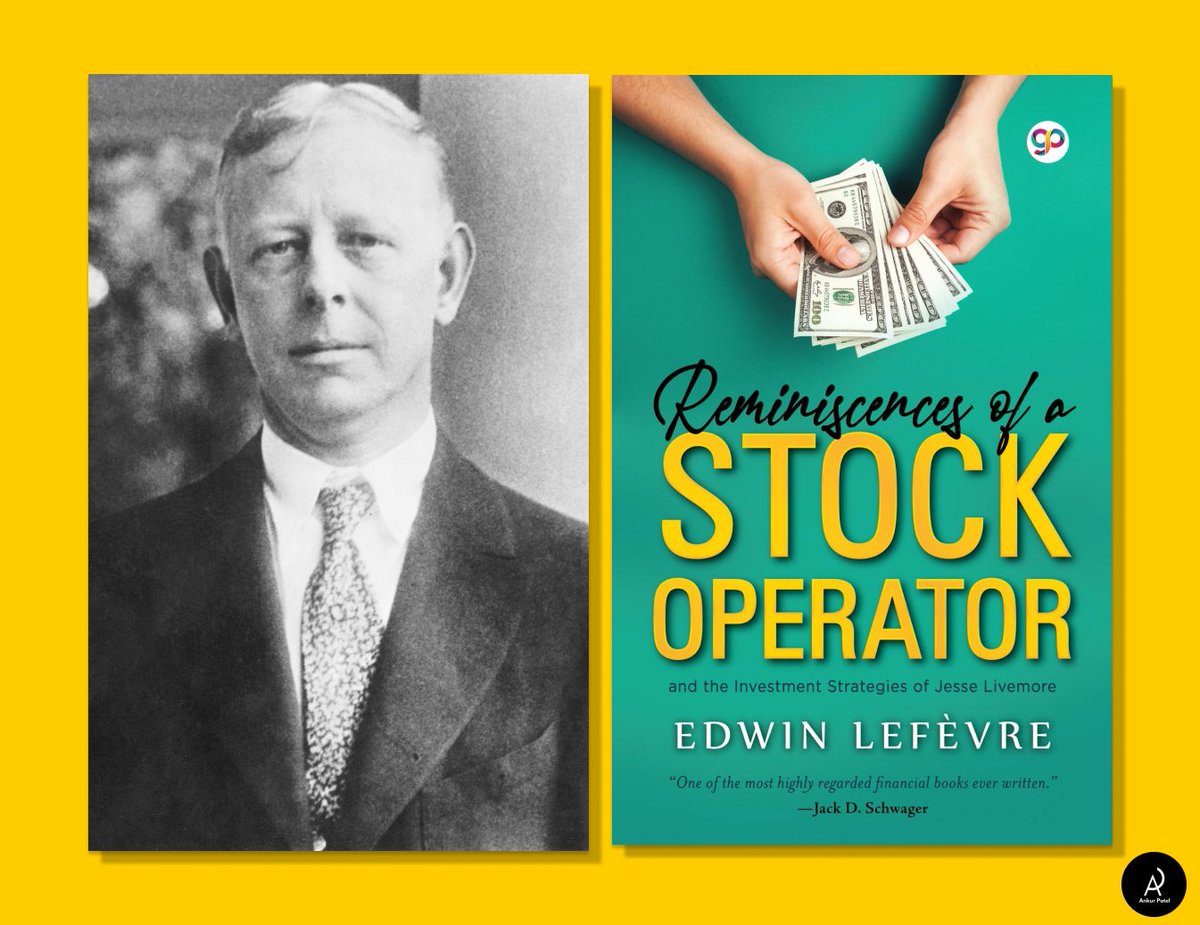
Jesse Livermore
Minervini has called reading Livermore a eureka moment.
Not the strategy. The mindset.
Livermore's core principle - that the market tells you what it wants to do if you stop arguing with it - cut straight through how Minervini was thinking. He was still overriding price action with his own analysis. Livermore made him stop.
Let price be right. Let your opinion be wrong.
That shift - from predicting to reacting - changed how Minervini approached every trade after it.
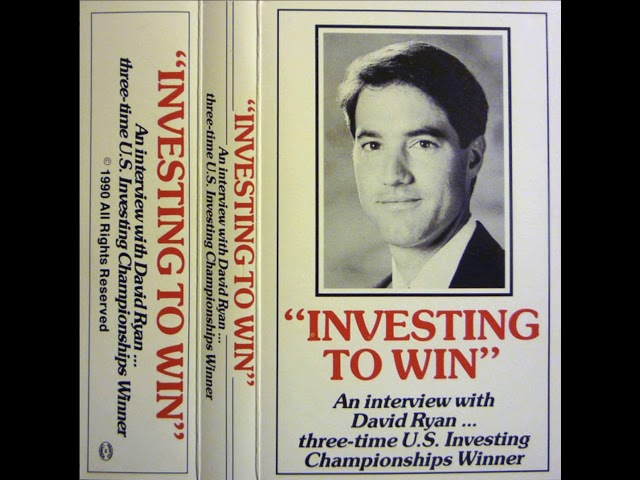
David Ryan won the US Investing Championship three years in a row - 1985, 1986, 1987.
Triple digit returns each year. 1,379% compounded over three years.
Here's the actual method behind it. 🧵
1) He Was O'Neil's Protégé, Not Just a Student
Ryan didn't just read O'Neil's books. He walked into William O'Neil & Co straight out of college and offered to work for free just to get in the door.
He stayed for 17 years. Became Chief Market Strategist and the firm's first Portfolio Manager.
CANSLIM wasn't something he picked up from a book. It was something he built his entire process around under the person who created it.
That's a different level of understanding than most traders ever get.
2) Weekly Charts Only
While most traders are glued to daily and intraday charts, Ryan worked almost entirely off weekly charts.
Every weekend he'd go through hundreds of stocks. No intraday noise, no daily overreaction - just the cleaner, longer-term picture of what a stock was actually doing.
His reasoning was simple. Weekly charts show you what's real. Daily charts show you a lot of things that don't matter.
Most traders look at too short a timeframe and make decisions off too much noise.
Minervini has said it publicly. Qullamaggie has said it publicly. The strategy is the easy part. Most people still don't believe them.
Here are the 5 things that actually separate profitable traders from losing ones.
A thread 👇
1/ They know exactly when not to trade.
Losing traders are always looking for a trade. Profitable traders are looking for the right conditions first. When the market isn't set up, they sit on their hands. That patience alone saves them from a lot of unnecessary losses.
2/ They don't need the trade to work.
Losing traders enter with hope. Profitable traders enter with a plan - and they're completely okay with being wrong. That detachment is what lets them cut losses fast without hesitation.
5 Stop Loss Techniques Every Swing Trader Should Master
If entries are about opportunity, stop losses are about survival.
Bad stop loss = either you lose too much, or you get kicked out too early.
Both kill your returns.
So here are the best stop loss techniques I've seen work consistently for swing traders.
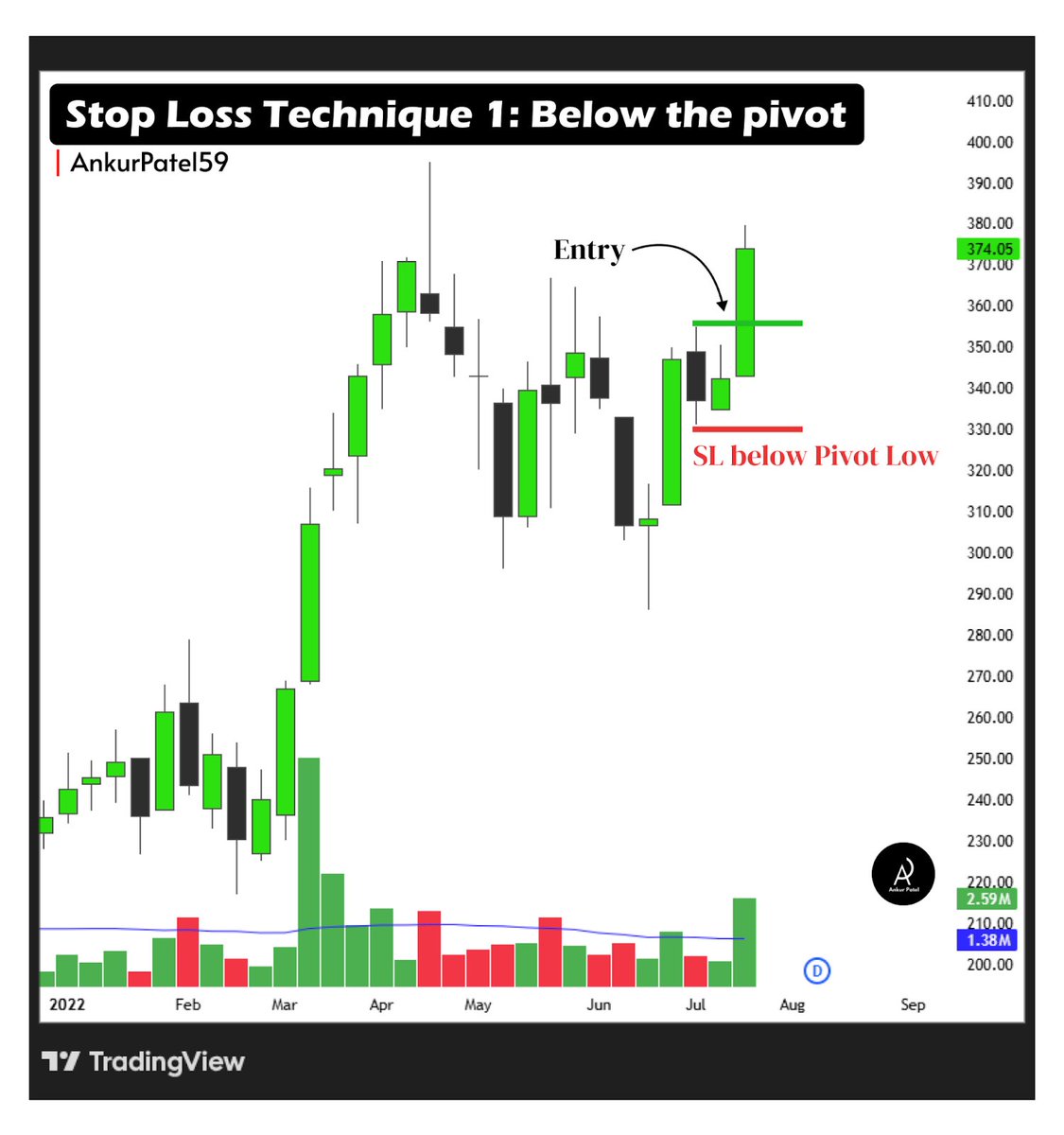
1. Below the Pivot Low
This is the most logical stop for breakout traders.
When a stock breaks out of a consolidation or a base, the low of that base becomes your line in the sand. If the stock falls back below that level, the breakout has failed. Simple.
You place your stop just below that pivot low, maybe 0.5-1% buffer to avoid getting wicked out.
Why it works: The pivot low is the last point where buyers stepped in with conviction. If that level breaks, the thesis is dead. You're not hoping or guessing, you're respecting structure.
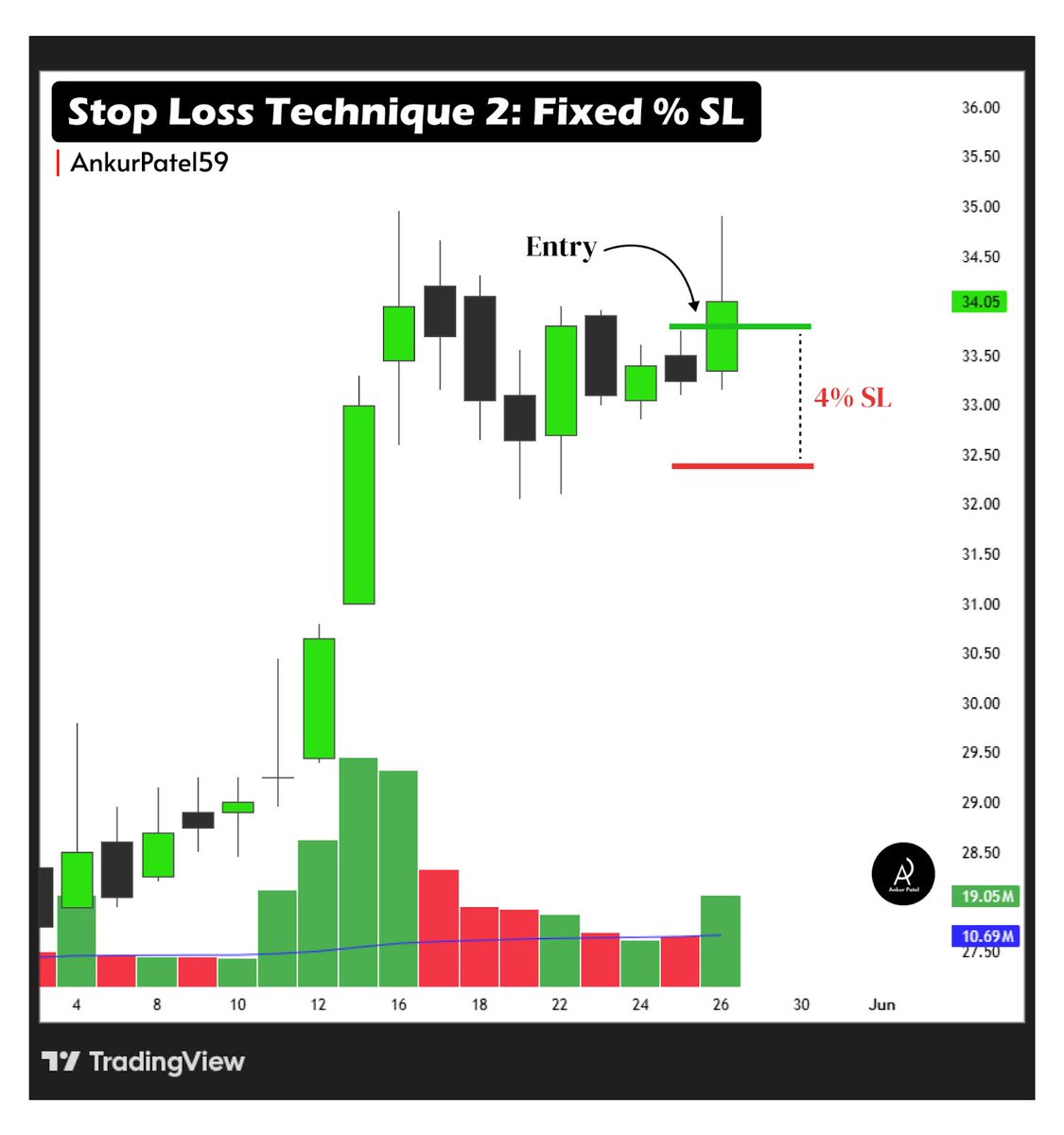
2. The 3-4% Rule (Percentage-Based)
This one comes straight from Mark Minervini's playbook.
No matter where you place your stop structurally, it should never be more than 3-4% away from your entry. If the structure demands a wider stop, either skip the trade or wait for a lower-risk entry point.
This does two things: it forces you to buy at the right time (near the pivot, not extended) and it caps your downside on any single trade.
Why it works: It's a hard ceiling on stupidity. Even if your analysis is wrong, you're not blowing up your account. And it naturally filters out trades where the risk/reward doesn't make sense.