To put 2024 into perspective, here's what was happening around the world in 1924.
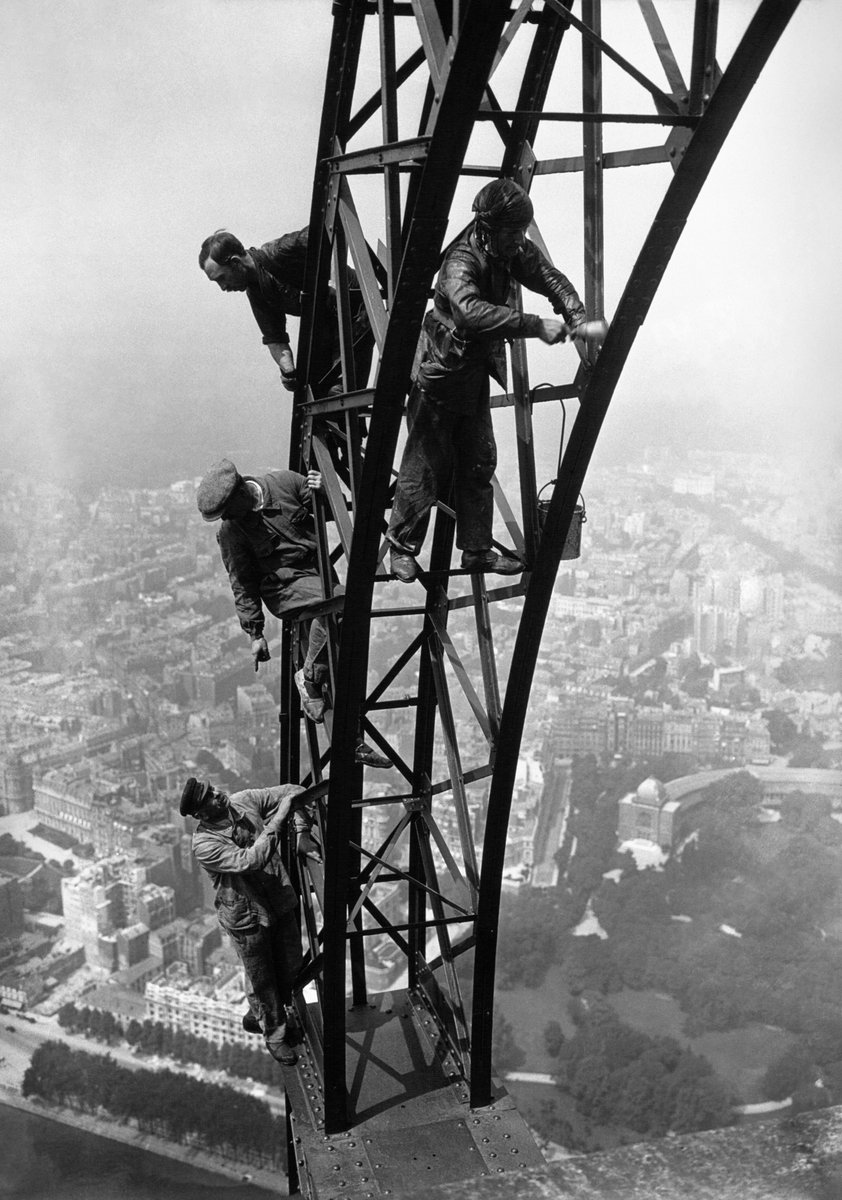
From the rise of Stalin to the creation of Surrealism, and a precarious repainting of the Eiffel Tower...
From the rise of Stalin to the creation of Surrealism, and a precarious repainting of the Eiffel Tower...
Vladimir Lenin, leader of the Russian Revolution and first leader of the Soviet Union, died in January 1924.
Here his coffin is being taken to Gorki train station, to be transported to Moscow.
Stalin, one of the pallbearers at Lenin's funeral, would soon take over as leader.
Here his coffin is being taken to Gorki train station, to be transported to Moscow.
Stalin, one of the pallbearers at Lenin's funeral, would soon take over as leader.


The First World War had only ended six years ago — as recently as 2018 for us.
And so the world was still recovering, financially and physically and culturally and politically.
Even in 1924 memorials were still being built. Like this, the Helles Monument, in Gallipoli.
And so the world was still recovering, financially and physically and culturally and politically.
Even in 1924 memorials were still being built. Like this, the Helles Monument, in Gallipoli.

One consequence of WW1 had been the collapse of the Ottoman Empire, to be replaced by Mustafa Kemal Atatürk's Republic of Turkey.
In 1924 the final Ottoman Caliph, Abdulmejid II, was removed and the Caliphate officially abolished.
The world was changing and modernising.
In 1924 the final Ottoman Caliph, Abdulmejid II, was removed and the Caliphate officially abolished.
The world was changing and modernising.


But it wasn't only grave or important political changes.
In January of 1924 the first ever Winter Olympic Games were held in Chamonix, France.
In January of 1924 the first ever Winter Olympic Games were held in Chamonix, France.

And 1924 just about marks the beginning of the beloved artistic movement we now call "Art Deco".
Raymond Hood's American Radiator Building, completed in 1924, was one of the first skyscrapers built in this nascent style, years before the Empire State or Chrysler.
Raymond Hood's American Radiator Building, completed in 1924, was one of the first skyscrapers built in this nascent style, years before the Empire State or Chrysler.

But even as Art Deco emerged there was something else in the offing.
In 1924 a man called Le Corbusier was busy designing the "Pavillon de L'Esprit Nouveau" for an exhibition in Paris the following year.
Modernist Architecture was being created — a sign of things to come.
In 1924 a man called Le Corbusier was busy designing the "Pavillon de L'Esprit Nouveau" for an exhibition in Paris the following year.
Modernist Architecture was being created — a sign of things to come.

The 1920s were a prosperous and optimistic decade — a time of revolutionary changes in politics, technology, society, and the arts.
Captured in architecture by the striking "Brick Expressionism" of the Chilehaus in Hamburg, completed in 1924.
Captured in architecture by the striking "Brick Expressionism" of the Chilehaus in Hamburg, completed in 1924.

Then there's cinema. This was a new art form and so the 1920s was an age of experimentation. Theatres were packed and the world of film as we now know it was being created.
Metro-Goldwyn-Mayer, for example, was formed in 1924 by a merger of three existing companies.
Metro-Goldwyn-Mayer, for example, was formed in 1924 by a merger of three existing companies.

Paris was the place to be. It's astonishing to think how many famous names were in that city in the 1920s: Hemingway, Fitzgerald, Picasso, Joyce, Stein, Le Corbusier, Lempicka, Stravinsky, Coco Chanel... and the Surrealists, who published their manifesto in 1924.
A Golden Age?
A Golden Age?


But not too far away, even in 1924, Claude Monet was still painting ceaselessly at his beloved garden in Giverny. Though his eyesight was failing, the old master continued to produce masterpieces.

We are familiar with Monet's timeless lilies, but a map of the world in 1924 isn't so recognisable.
Borders have changed, entire countries have gone, and new ones have been created.
Plus there was no UN — the League of Nations was the international organisation at the time.
Borders have changed, entire countries have gone, and new ones have been created.
Plus there was no UN — the League of Nations was the international organisation at the time.

And it was during the "Roaring Twenties" that the seeds of the troubles to come were sown.
In April of 1924 a certain Adolf Hitler was sentenced to five years in prison for his involvement with the failed Munich Putsch in 1923.
He was released in December.
In April of 1924 a certain Adolf Hitler was sentenced to five years in prison for his involvement with the failed Munich Putsch in 1923.
He was released in December.

In Italy, meanwhile, Benito Mussolini's Republican Fascist Party won the 1924 Italian General Election with a landslide victory, two years after forcibly taking power during the March on Rome.
Stormclouds beginning to gather over Europe once again.
Stormclouds beginning to gather over Europe once again.

Political change was a universal in those days — then again, are they not also now?
In 1924 the Greek King was ousted and the Second Hellenic Republic declared; in Britain Ramsay MacDonald led the Labour Party to its first ever electoral victory.
In 1924 the Greek King was ousted and the Second Hellenic Republic declared; in Britain Ramsay MacDonald led the Labour Party to its first ever electoral victory.


In China Feng Yuxiang led the Beijing Coup during the Second Zhili–Fengtian War; Ibn Saud, the founder of Saudi Arabia, conquered Mecca in the same year.
It was also in 1924 that Mahatma Gandhi was released from prison by the British Empire.
Our modern world was being shaped.
It was also in 1924 that Mahatma Gandhi was released from prison by the British Empire.
Our modern world was being shaped.

Indeed, we take for granted simple scientific facts like the existence of other galaxies, but that was hardly obvious in the past.
In 1924 Edward Hubble first recognised that the "Andromeda Nebula" was, in fact, another galaxy, and that the Milky Way is therefore not alone.
In 1924 Edward Hubble first recognised that the "Andromeda Nebula" was, in fact, another galaxy, and that the Milky Way is therefore not alone.

The entire 20th century was defined by its technological progress.
Like the Zuiderzeewerken in the Netherlands, by which vast tracts of land were reclaimed from the sea.
The first phase of these colossal works, the Amsteldiepdijk, was finished in 1924. A miracle of engineering.
Like the Zuiderzeewerken in the Netherlands, by which vast tracts of land were reclaimed from the sea.
The first phase of these colossal works, the Amsteldiepdijk, was finished in 1924. A miracle of engineering.

And, speaking of technology, is it not impossible to imagine a world without television? Well, it didn't exist in 1924.
But it wasn't far off. A Scottish inventor called John Logie Baird had just created what would eventually become TV.
Another revolution about to start.
But it wasn't far off. A Scottish inventor called John Logie Baird had just created what would eventually become TV.
Another revolution about to start.

2024 has begun, and it's impossible to know what events from this coming year people a century from now will look back on as the most important, disastrous, influential, or inspiring.
What does the future hold?
What does the future hold?
• • •
Missing some Tweet in this thread? You can try to
force a refresh