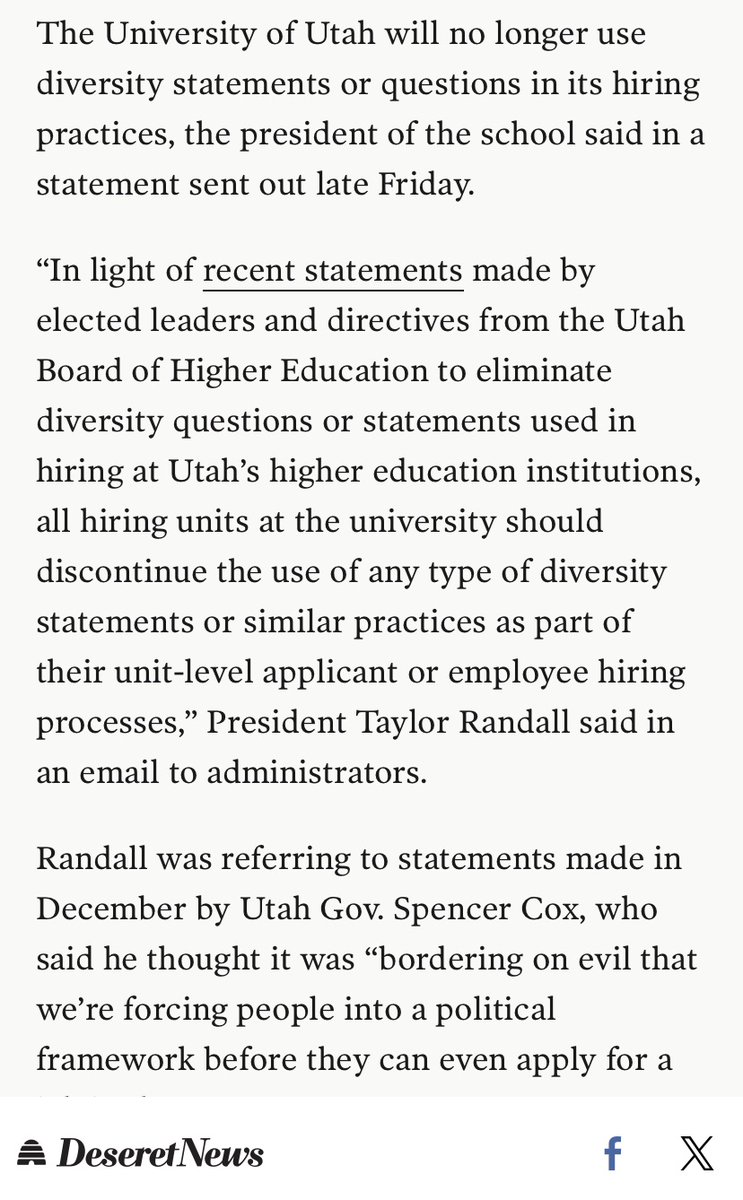
The university’s president told administrators yesterday to eliminate “any type of diversity statements or similar practices” in the application or hiring process.
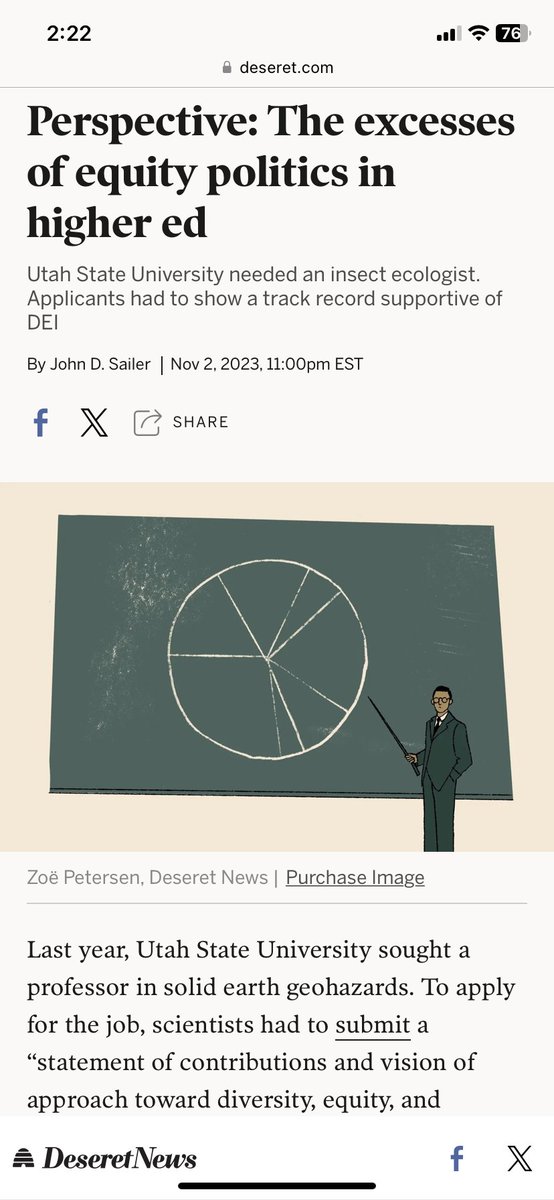
In November, I used a public records request to show how Utah’s universities had heavily weighed diversity statements.
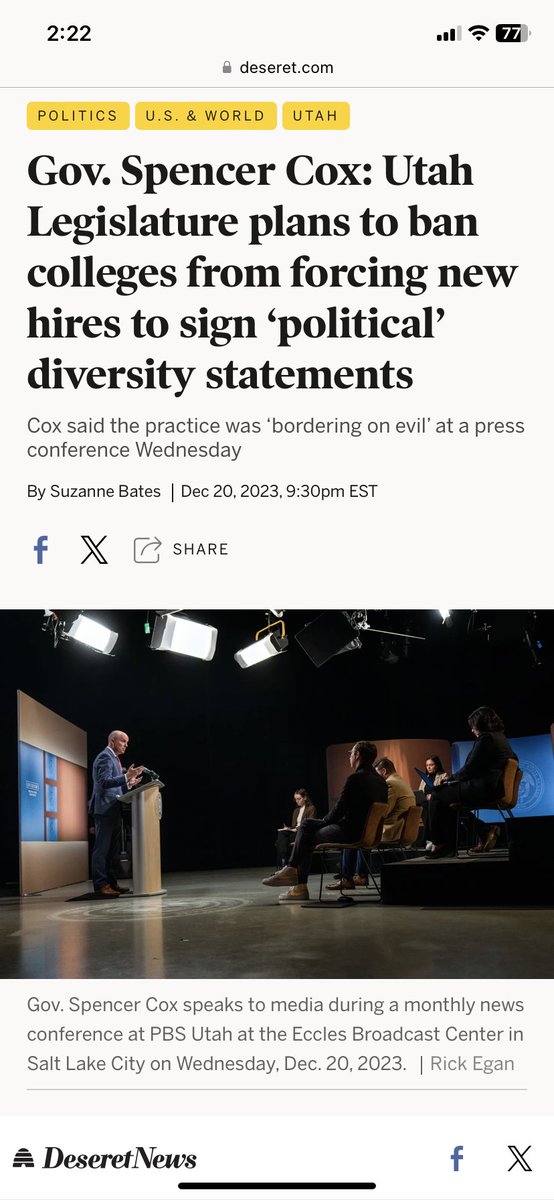
In December, Governor Cox surprised us and announced that he strongly opposes DEI statements.
In January, Utah’s flagship university ended the policy.
• • •
Missing some Tweet in this thread? You can try to
force a refresh

It’s been an interesting year. My writing primarily focused on institutional capture in higher ed. Put simply, DEI.
Now more than ever, the issue is front and center.
So consider this both a highlight reel and list of (self) recommended pieces.
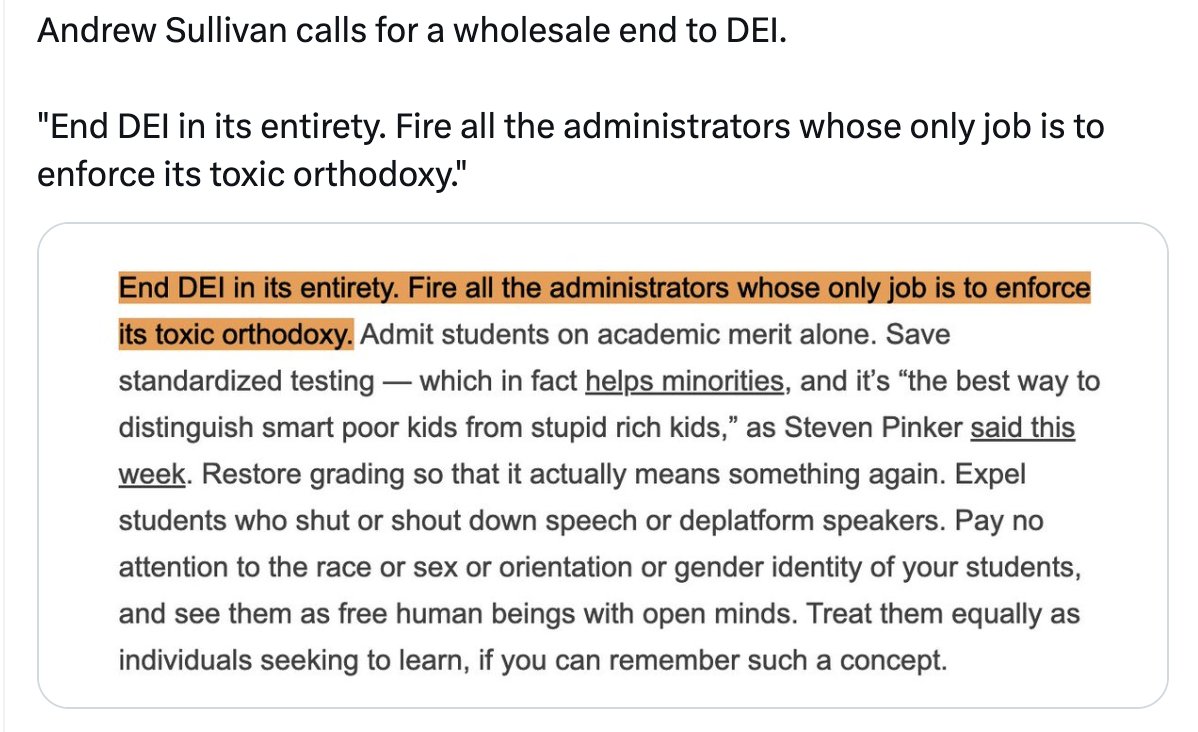
The issue is especially relevant right now, as journalists like @FareedZakaria have decried higher ed's mission creep, and @bariweiss and @sullydish have called for the end of DEI.
I’ve aimed to shine a light with my reporting. So without further ado…
@FareedZakaria @bariweiss @sullydish 1. For @bariweiss, I started the year with “How DEI Is Supplanting Truth as the Mission of American Universities.”
Drawing from more than two dozen interviews, the piece gives a sweeping overview of the how DEI policies have dominated higher ed.
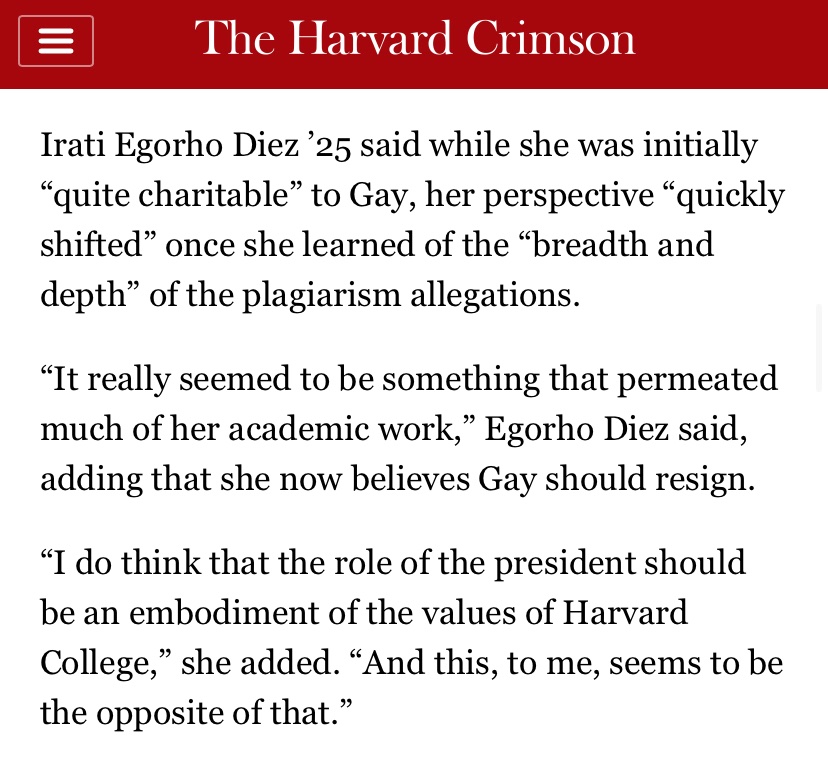
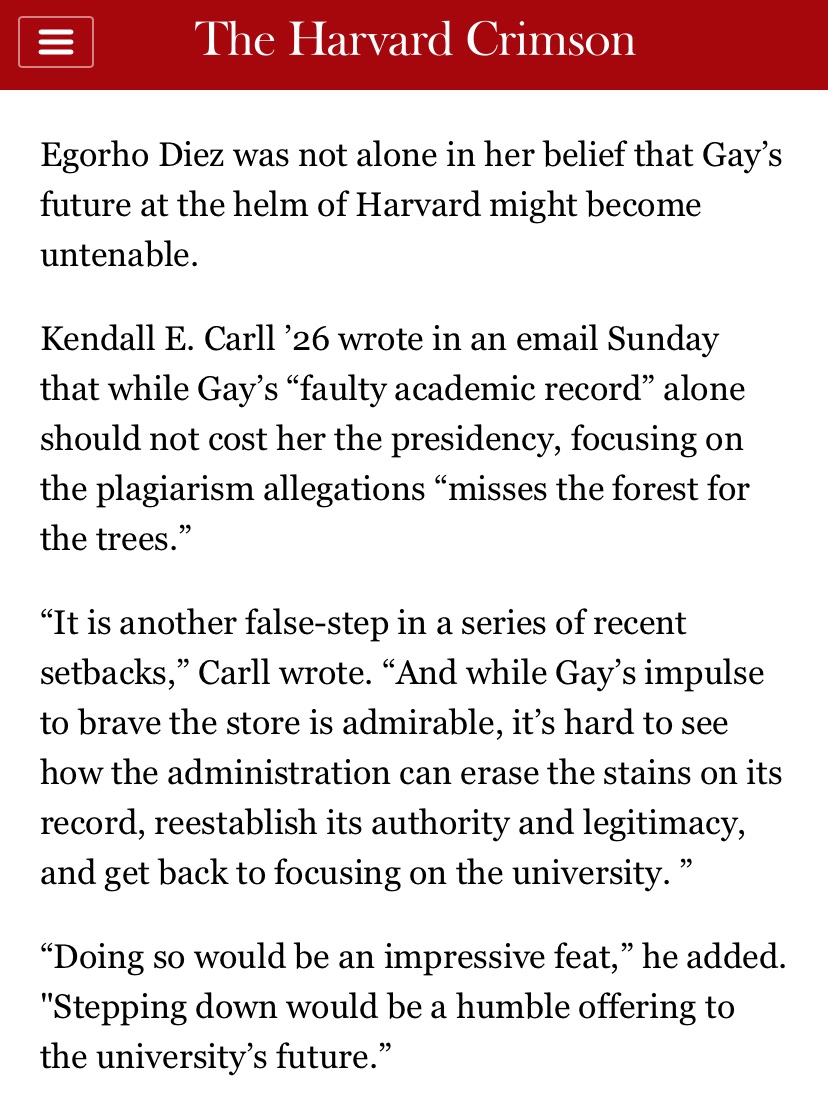
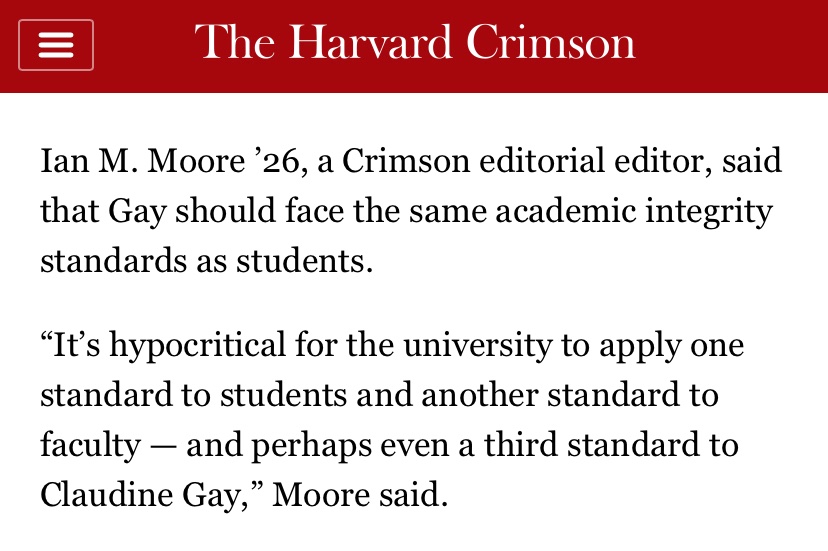
In this new Crimson piece, several Harvard students are quoted saying, basically, that Claudine Gay has to go.
One said she was initially sympathetic to Gay, but now thinks her plagiarism embodies “the opposite” of “the values of Harvard College.”
Another: “Stepping down would be a humble offering to the university's future.”
And here’s one of Crimson’s editorial editors:
“It's hypocritical for the university to apply one standard to students and another standard to faculty - and perhaps even a third standard to
Claudine Gay.”
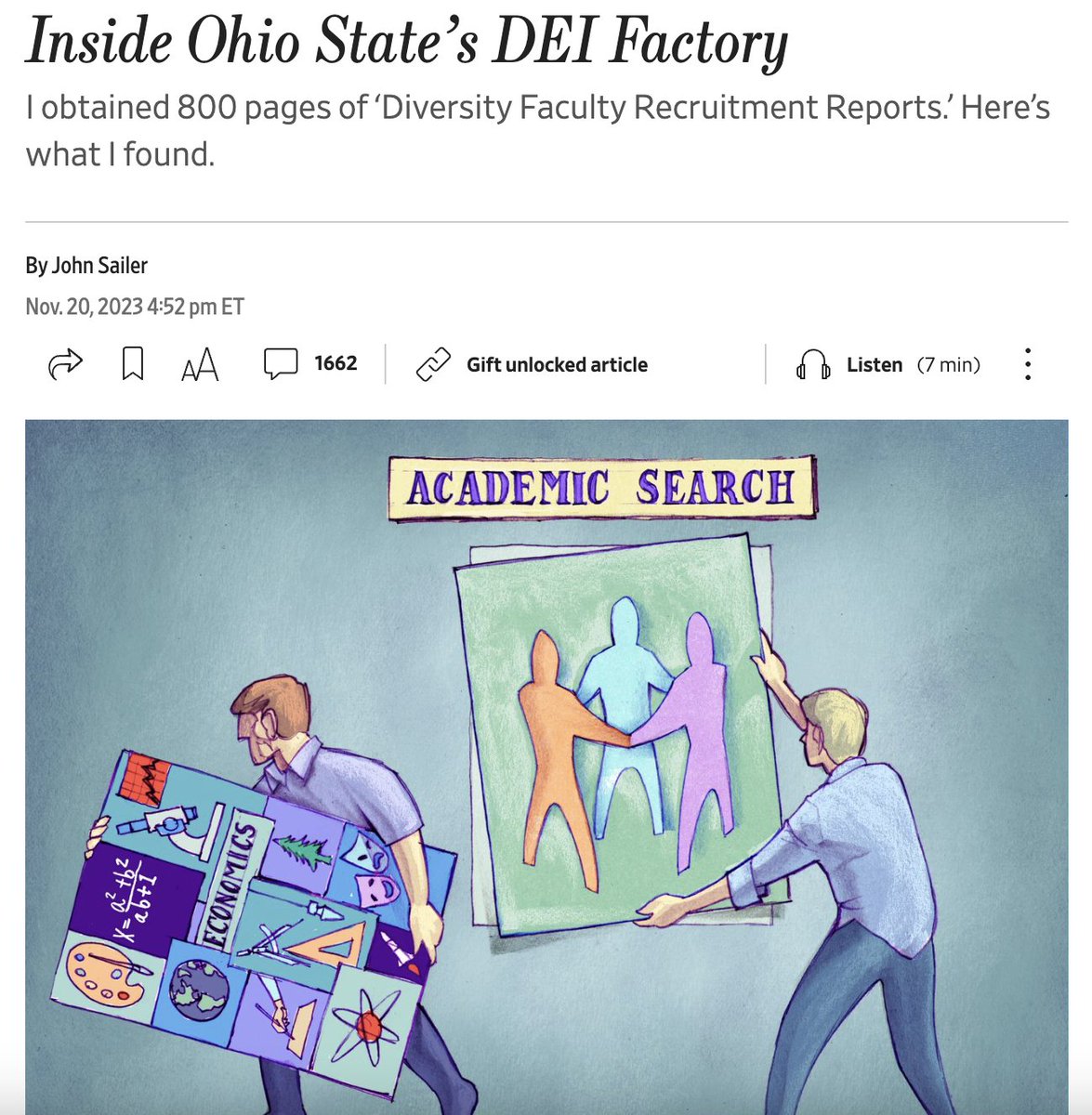
A dean at OSU's College of Arts and Sciences—where, until recently, every search committee had to get dean approval on extensive "diversity faculty recruitment reports" in order to move forward with job interviews—laughs at the idea that admin pushes politicized hiring.
Keep in mind: Ohio State's admin has gone further than any other university I know of to push politicized, DEI-focused hires.
Its RAISE Initiative alone promised to hire 150 new faculty members focused on race and "social equity." Here's the OSU president's description.
Thus, last year, almost all of the jobs in OSU's College of Arts and Sciences focused on race or social justice.
Things like “race in the philosophy of science," physics with a focus on "educational equity," archeology with an focus on decolonization and queer theory.
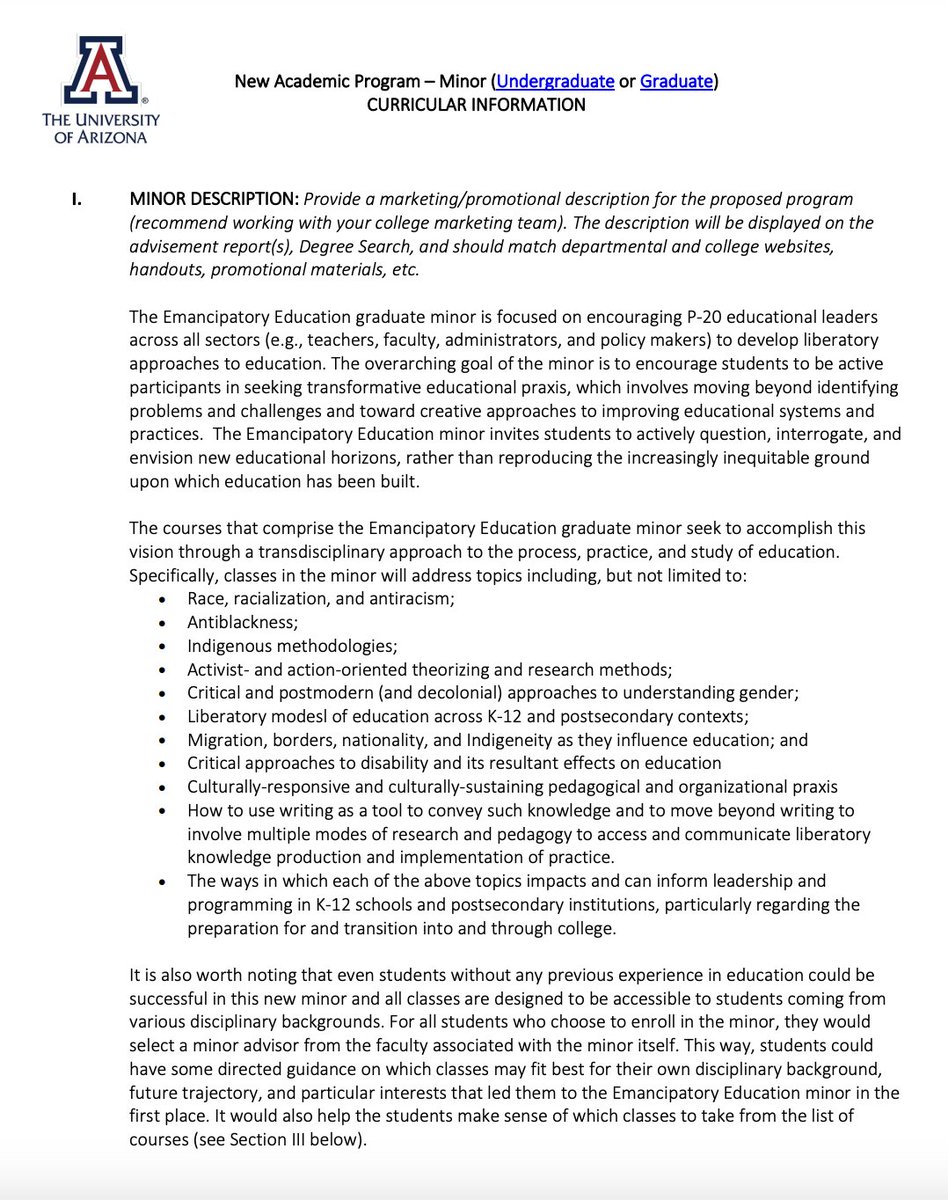
Today, the University of Arizona faculty will consider adding a minor in "Emancipatory Education."
It'll cover topics such as "Indigenous methodologies," activist approaches to research, and "Critical and postmodern (and decolonial) approaches to understanding gender."
Thread
Potential classes to complete the minor will include:
Leadership for Social Justice
Theories of Inequality, Oppression, and Social Stratification
Whiteness and Education
Activism in Higher Education
Indigenous Statistics and Survey Research
Decolonial Thinking
and more!
Here are the proposed learning outcomes.
They include applying "critical, postmodern, and emancipatory concepts," developing "praxis-based" concepts for "social-justice based" interventions, and articulating the "importance of emancipatory education."
This is an OSU search committee on its proposed finalists:
The committee was "keenly aware" of the need to hire a "visible minority," and "thus chose three Black candidates," declaring that "diversity was just as important as perceived merit as we made our selections."
🧵
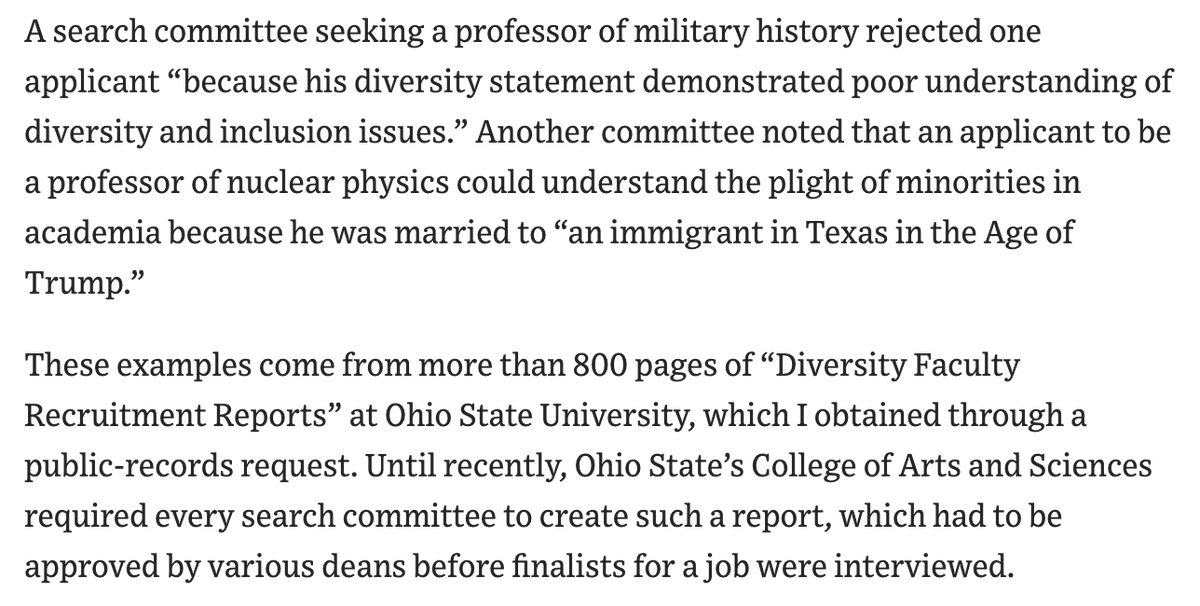
That’s from a search for a professor of French Studies focused on “Black France.” Throughout the documents I acquired—800 pages of diversity recruitment reports—casual allusions to racial preferences abound.
Here are some examples of the outcomes.
For a role in Medical Anthropology, 67 scholars applied, the four finalists include the only two black applicants and the only Native American applicant. (Note what counts as a "contribution to DEI.")
Colleges often reward job applicants for their “contributions to DEI.” Records I acquired show exactly how that worked for many departments at Ohio State.
For example, "Dr. [redacted] also identifies as 'a first generation, fat, queer scholar of color.'"
A quick thread.
These are official recruitment reports—submitted to the college’s dean.
Some departments didn’t play along w/ the requirement. A few bemoaned the dearth of conservatives.
But many others highlighted boutique identity categories and rewarded the embrace of identity politics.
One committee emphasized how important it was that the new hire shared the core value of social justice.
It then praises a candidate for calling for “painful conversations" that "address privilege, systemic inequality, microaggressions, and white fragility."