It is important to understand that DEI is not simply an admin arm of higher ed but an ideological apparatus that grew from a body of academic literature. In 2018, @HPluckrose, @ConceptualJames, @MikeNayna, & I exposed the DEI-related fields as totally fraudulent. THREAD
2. We engaged in a one-year immersive exploration of DEI-related fields. We attempted to understand DEI disciplines as “outsiders within” and test their scholarship at its highest levels. (We using fake identities.)
3. Our success metric was three papers in leading DEI-related journals. We thought if we could get three absurd papers published at the highest level it would be the academic scandal of the century & higher ed would be forced to address the problem.
4. SEVEN papers were eventually accepted, most in top-tier journals, with seven more in peer review that were on track to acceptance as the story broke.
5. Our dog-humping research paper used black feminist criminology to interpret bogus data and concluded that we can repair rape culture in humans by emulating dog training methods on men. It won special recognition for excellence. @joerogan
6. Although purposely absurd & satirical, our papers are indistinguishable from the other work in these fields. Think about how crazy that is considering it’s taught in classes, taken up by activists, and informs politicians and journalists.
7. Instead of addressing the problem, DEI activist-academics leaned on my employer to come after me for the hoax project. I was subjected to endless investigations and hostilities that wore me down & led me to resign .shorturl.at/mDG23
8. The clips in this thread are from the inimitable @MikeNayna, who made a documentary series about the hoax project . If you're not following & supporting his work you should be.shorturl.at/fkvR7
• • •
Missing some Tweet in this thread? You can try to
force a refresh

There are ways you can circumvent ideological corruption. You can think more clearly, critically, and less tribally and ideologically. But you have to want it, and wanting is a disposition. Here are 7 techniques:
1) Identify the core reason you hold a position and eliminate it from the deliberation (“the real reason check”). Are your other arguments sufficient to warrant belief?
2) Make good arguments against what you believe. The more moral the belief the more important this becomes
3) Try to figure out how your belief could be wrong (related to #2)
4) Publicly admit when a belief was incorrect, esp about a core position. Bonus: If you criticized someone apologize to them.
5) Habituate yourself to think in terms of counterexamples
After Charlie Kirk’s murder, many were shocked to see people celebrate killing someone for mainstream conservative views. I’m not. As a professor, I saw the ideology that taught “disagreement = harm” take over higher ed. This is the endgame of that lesson. 🧵
In this campus culture, to even question the ideology is to cause harm. That belief fueled extreme reactions to speech. Administration and students relentlessly harassed me for holding mainstream liberal positions until I resigned. 2
A society that equates argument with injury will normalize violence toward opinion. What's worse, the ideology that seeded this holds radical views far outside the values of middle America. 3
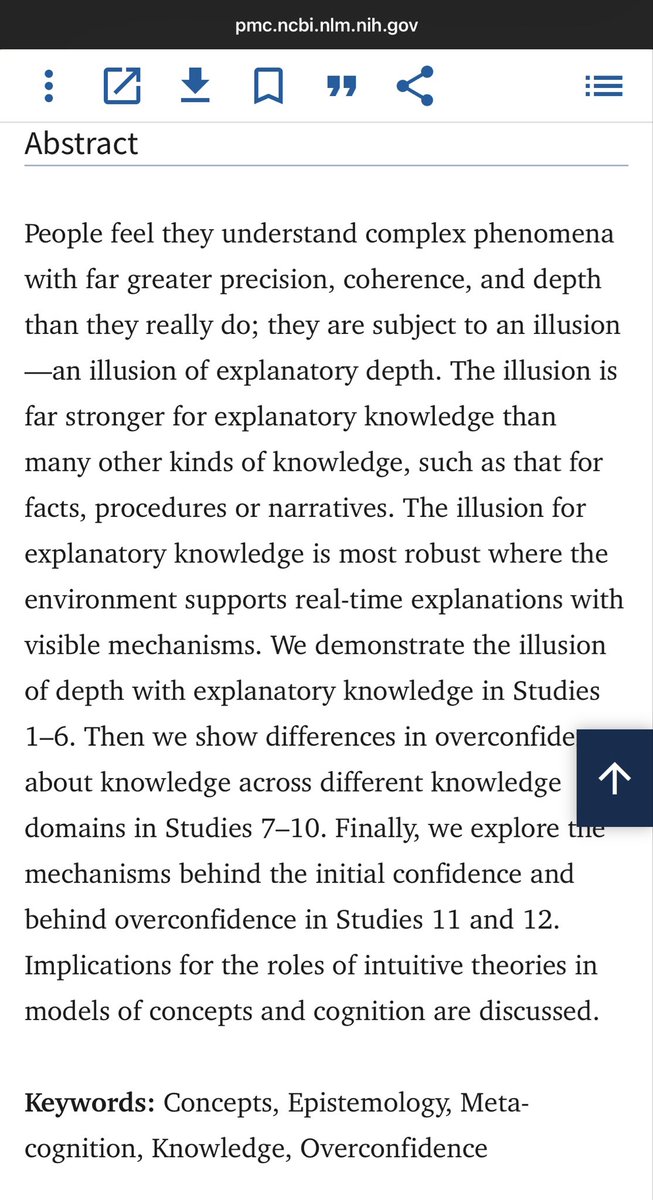
We think we understand something until we’re asked to explain it. Often, we’re clueless. Breakdown, consequence, fix. 1/5
Example: A toilet. Most would claim knowledge, but describing its mechanics exposes one’s ignorance. We overestimate our grasp of policies, tech, even zippers. 2/5.
This breeds arrogance, pettiness, and shallowness. Conversations falter: Weak arguments, dogmatism, uninformed opinions. People think we’re dicks. It’s not stupidity, it’s cognitive default. Recognition sharpens our thinking. 3/5
Here’s my take on the “Triggernometry Meets Guilty Feminist” discussion: It’s a tragic example of how to NOT have a discussion. In this thread, I’ll cover mistakes in conversation and reasoning while offering basic suggestions for improvement. 1
@triggerpod
While this conversation is funny and engaging, it is also tragic. The guest is hopelessly trapped in a moral and epistemic cage of her own making. Her unwarranted conviction makes her situation not only tragic but also pitiable. 2
Harris, @tegmark and others are incorrect in their assumptions about math. Here’s my heretical take: Math, at its core, is empirical. All numbers derive from counting. It’s observable. 🧵
Consider these two propositions which I’ll reference below:
Math starts with numbers.
Counting is a form of measuring.
We define a measurement, like an inch, and count. 1, 2, 3, etc.
Take the coaster on my table. We agree to call a thing on my table a coaster. There are one and one and one coasters; there are three coasters on the table.