The Chevron doctrine—under which federal courts more-or-less blindly defer to a federal agency’s interpretation of a law that the agency is charged with administering—certainly hurts “the little guy” and helps “the big guy,” as Justice Gorsuch suggested.
But it’s much worse than that.
Administrative lawmaking as a whole excludes the people from the process—all in the name of “letting the experts work out the details.”
Hardworking Americans can vote against lawmakers they don’t like.
But—unlike big corporations—they have no effective means at their disposal to influence federal agencies.
Consequently, voices of the rich and powerful are heard, while all others are silenced.
Congress needs to give the American people a seat at the table again by passing the REINS Act, which would require all “major rule” regulations to be passed into law by Congress before taking effect.
The REINS Act would include the American people in the lawmaking progress, and that’s something the Constitution already requires—albeit in ways that Congress and the courts have been ignoring for decades.
The REINS Act would fix that problem. It’s time to pass it.
#PassTheREINSAct
• • •
Missing some Tweet in this thread? You can try to
force a refresh

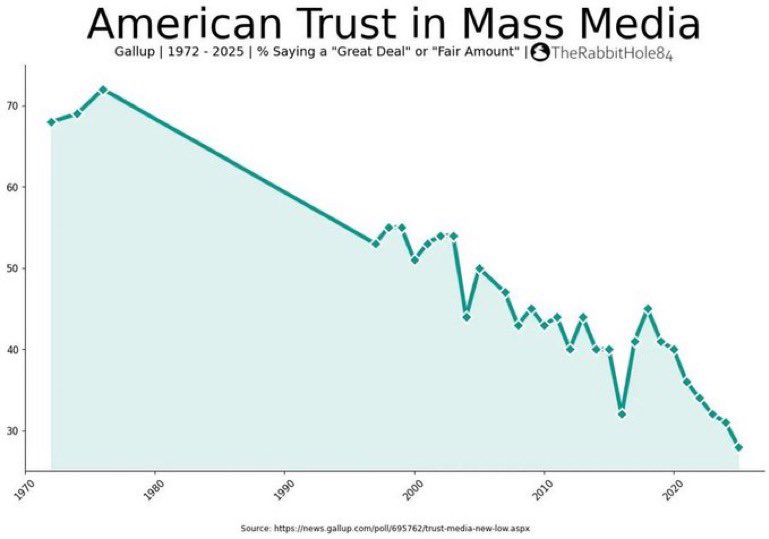
It might have something to do with the Supreme Court’s ruling in NY Times v. Sullivan (1964).
2. Before the Court’s ruling in NY Times v. Sullivan, if the media lied about a public figure and wrecked his or her reputation, he or she could sue for defamation, typically in state court under state defamation law—just like anyone else.
3. But then the Warren Court invented a brand-new “actual malice” rule out of thin air: now public figures have to prove the media either *knew* their story was false OR recklessly disregarded the truth.
2. No, ChatGPT didn’t hallucinate; that’s literally what SCOTUS said in *Wickard v. Filburn*: growing wheat on your own land for your own use can be regulated by the U.S. government because it affects “interstate commerce.”
New Deal judicial activism at its peak.
3. Ohio farmer Roscoe Filburn grew extra wheat—a little more than federal regulators in Washington had “allowed” him to grow—to feed his animals and family.
But that wheat never entered interstate commerce.
In fact, it was never sold and never even left Filburn’s family farm in Montgomery County, Ohio (near Dayton).
2. It’s unwise and even reckless to run all spending bills through a single committee for at least three independent reasons
First, it makes no sense from a workload-distribution standpoint
3. The staggering size, cost, and complexity of the federal government are such that no sane person would assign all of the workload associated with all spending bills to one committee
Responsibility for spending bills should be distributed broadly among all who have been elected to either chamber of Congress—not just to a select few who happen to serve on one committee
🧵1. Congress should be *passing* the SAVE Act to stop noncitizens from voting—not paying leftists to lobby against it
The Labor/HHS spending bill advanced by the Senate Appropriations Committee contains an earmark giving $500,000 to leftists falsely claiming the SAVE Act would “disenfranchise millions of Americans”
🧵 1. The massive fraud schemes in Minnesota—billions in stolen federal funds from child nutrition, autism services, housing stabilization & childcare programs—aren’t just a failure of oversight
These areas (welfare, education aid, health services) lie far outside Congress’s enumerated powers under the Constitution
And they likely represent just the tip of a much larger iceberg—with other schemes going on in many other states
2. Strictly speaking, the federal government has no sound constitutional authority—rooted in the plain text and original understanding of that document—to run or fund state-level social welfare programs like these
3. When Congress acts where it’s not authorized, that’s an overreach
As the Tenth Amendment makes clear, functions not deemed federal by the Constitution are reserved to the states or to the people
Nothing in the Constitution authorizes Congress to fund Somali daycare centers
🧵Return of the Walking Earmarks: A Deadly Epidemic🧵
1/ After a decade-long moratorium, Congress has reverted to “congressionally directed spending”—the polite, new name for pork-barrel projects subtly slipped into must-pass bills with almost no review or opportunity for debate
2/ Earmarks are sold as “only 1% of spending,” but that 1% creates a corrupting process that helps perpetuate $2 trillion annual deficits
Let’s talk about why they’re so toxic ok
3/ Legalized Vote “Purchasing”
Members trade votes on massive spending bills for pet projects back home
“You vote for my bridge to nowhere, I’ll vote for your turtle tunnel”
It’s not about good policy
It’s about buying votes with taxpayer money—all to make politicians look good