This painting is 115 years old.
It's by Zinaida Serebriakova, a remarkable artist with a remarkable life involving both World Wars, the Russian Revolution, Paris, and personal tragedy.
This is her story...
It's by Zinaida Serebriakova, a remarkable artist with a remarkable life involving both World Wars, the Russian Revolution, Paris, and personal tragedy.
This is her story...

Zinaida Lanceray was born in 1884 near Kharhiv, then part of the Russian Empire, to an artistic family.
Her father was a sculptor, her grandfather a famous architect, and her uncle a painter.
She followed in their footsteps and pursued art from a very young age.
Her father was a sculptor, her grandfather a famous architect, and her uncle a painter.
She followed in their footsteps and pursued art from a very young age.

She was tutored by Ilya Repin, the Russian master of Realism, and later travelled to Europe, where she studied in France and Italy.
In her paintings of Paris we can see how Serebriakova was influenced by the ideas and methods of Impressionism:
In her paintings of Paris we can see how Serebriakova was influenced by the ideas and methods of Impressionism:

Even as a teenage painter she was interested in the lives of common people, of peasants and shepherds and fishermen, especially their clothes, and of the agricultural world as a whole.
This was a theme she would return to time and time again throughout her life.
This was a theme she would return to time and time again throughout her life.
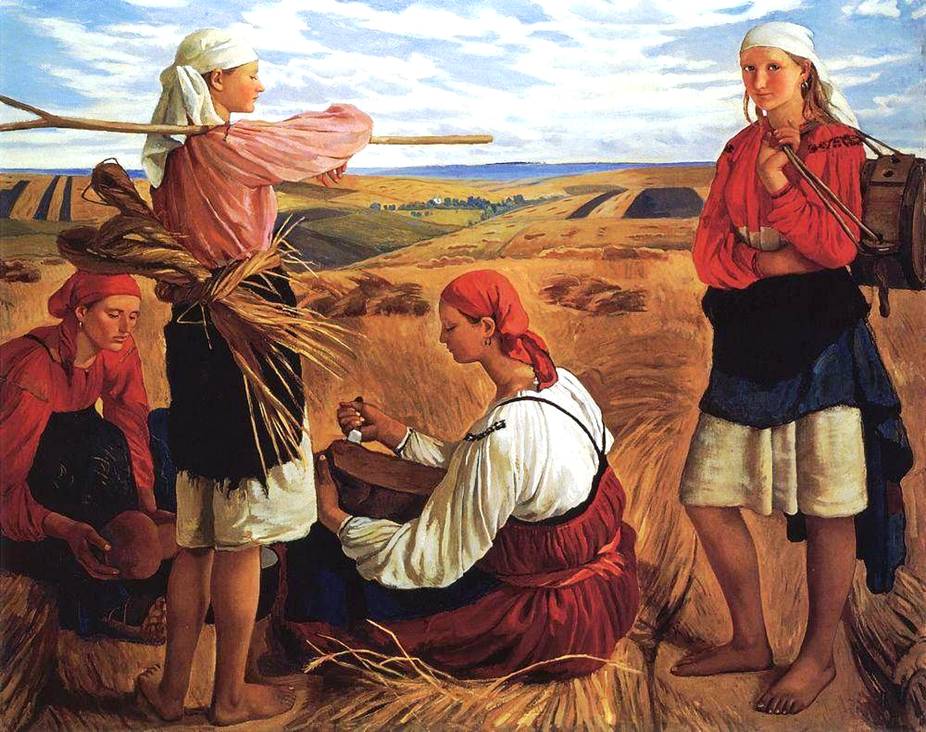
In 1905 Zinaida married Boris Serebriakov and together they had four children.
This marked the beginning of the happiest part of her life, and here we see emerge another of the themes that would dominate Serebriakova's art — family.
As in her tender portraits of Boris:
This marked the beginning of the happiest part of her life, and here we see emerge another of the themes that would dominate Serebriakova's art — family.
As in her tender portraits of Boris:
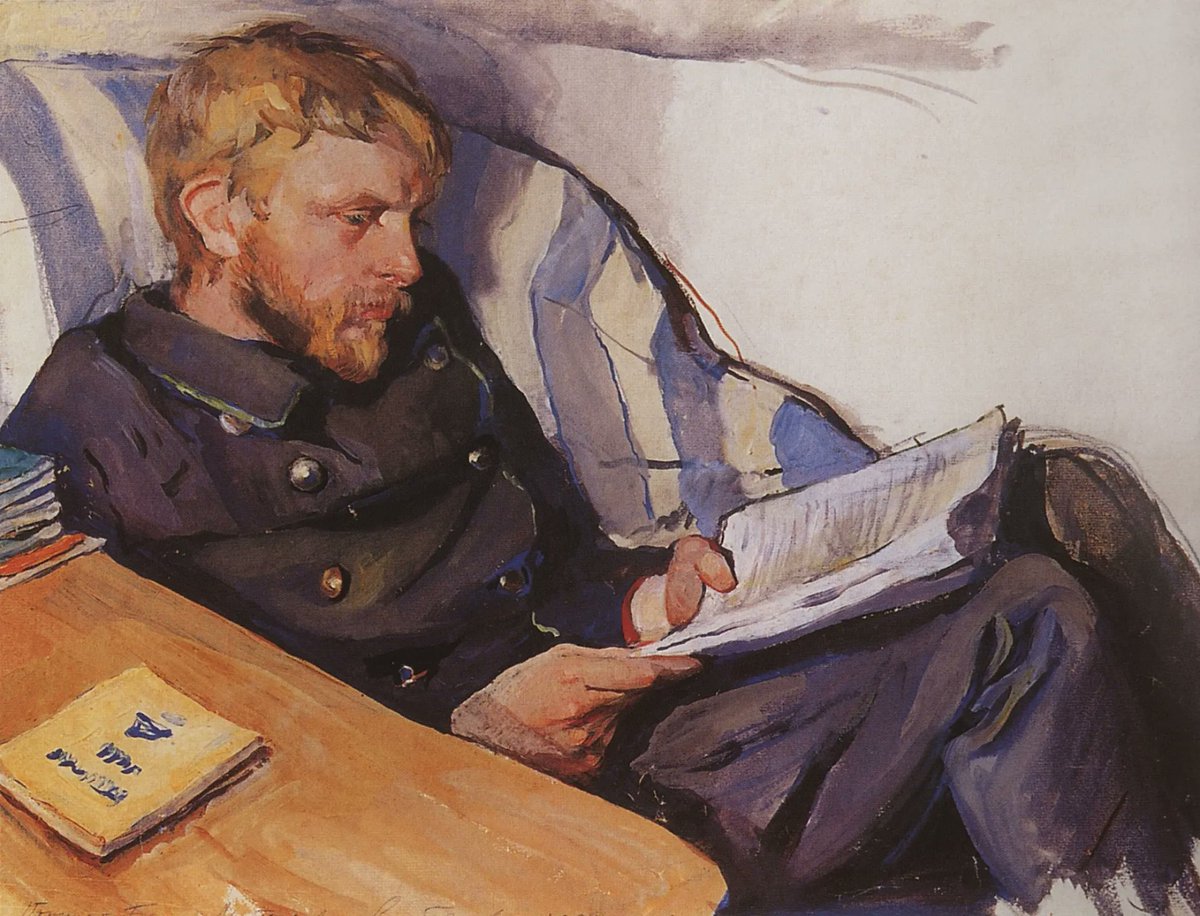
Or, above all, of her children.
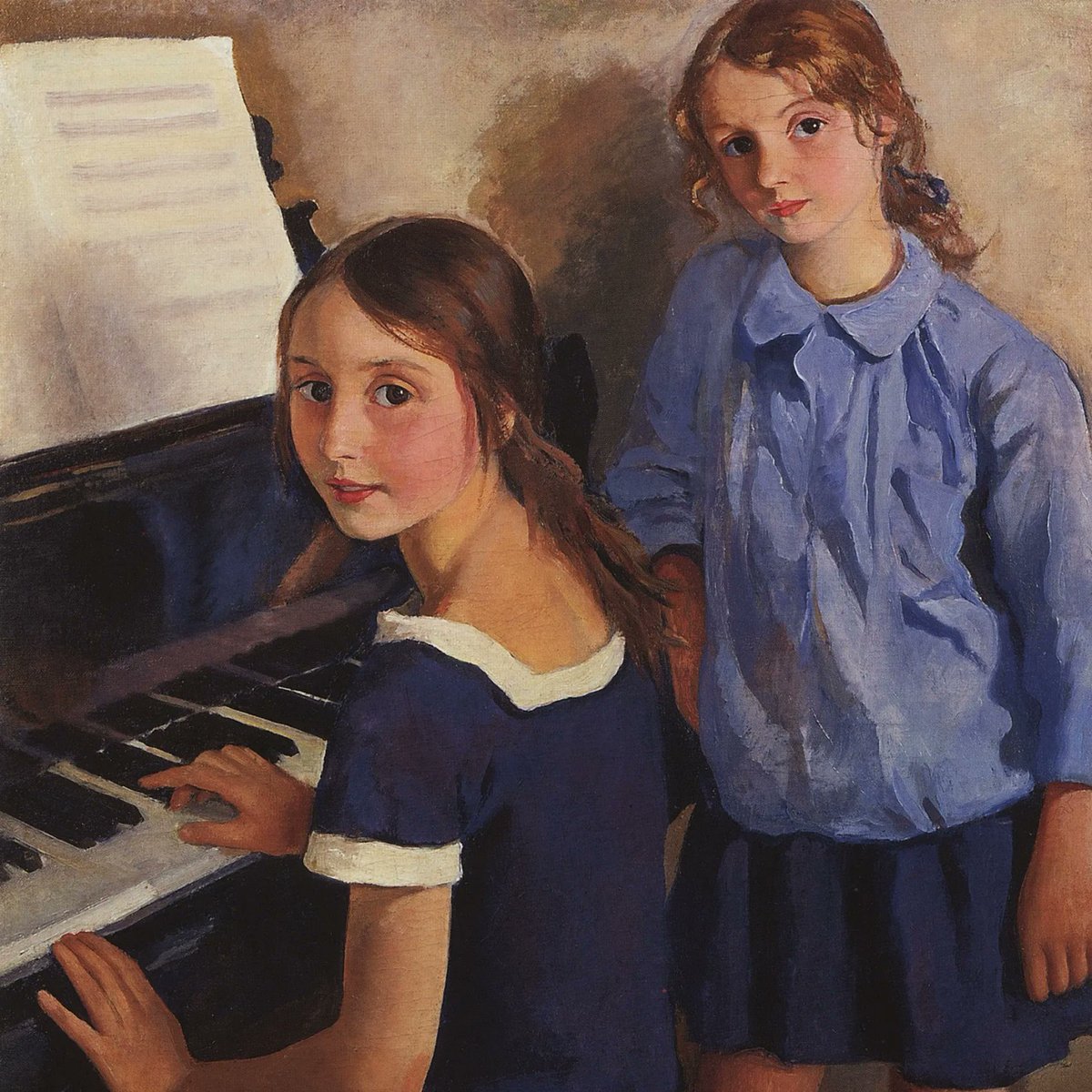
Whether at breakfast, with the wetnurse, all together for dinner, at the piano... Serebriakova painted her children time and again as they grew up, thus creating an intimate chronicle of her family.
Whether at breakfast, with the wetnurse, all together for dinner, at the piano... Serebriakova painted her children time and again as they grew up, thus creating an intimate chronicle of her family.

Serebriakova also made self portraits thoughout her life, in the end creating an autobiography of paintings.
Vivacious, honest, fresh... we get to know her personality in these portraits — they might be her best work.
As with her playful Self-Portrait as Pierrot:
Vivacious, honest, fresh... we get to know her personality in these portraits — they might be her best work.
As with her playful Self-Portrait as Pierrot:

She often included herself in the family paintings — these were family self-portraits.
Like here, in the mirror with her children, where Serebriakova's unassuming and simple style shines:
Like here, in the mirror with her children, where Serebriakova's unassuming and simple style shines:
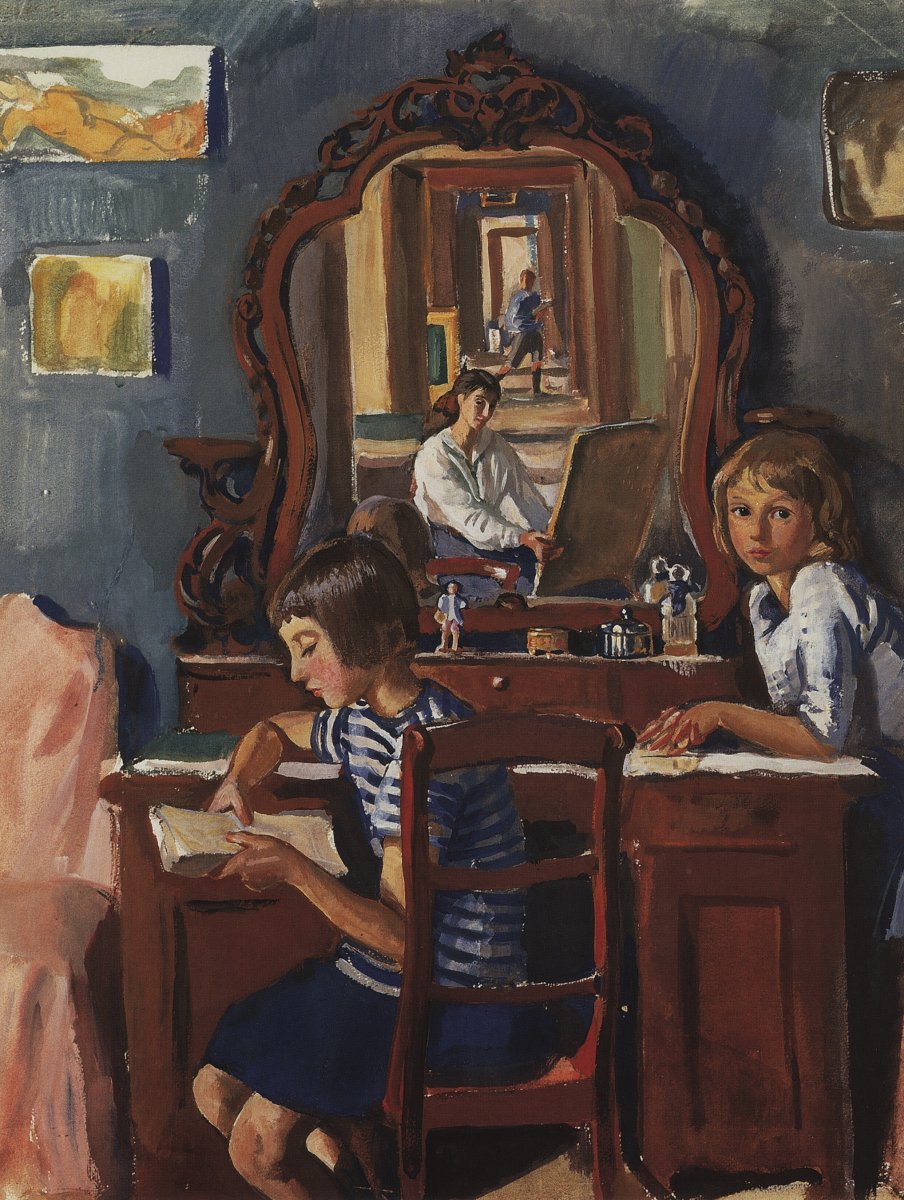
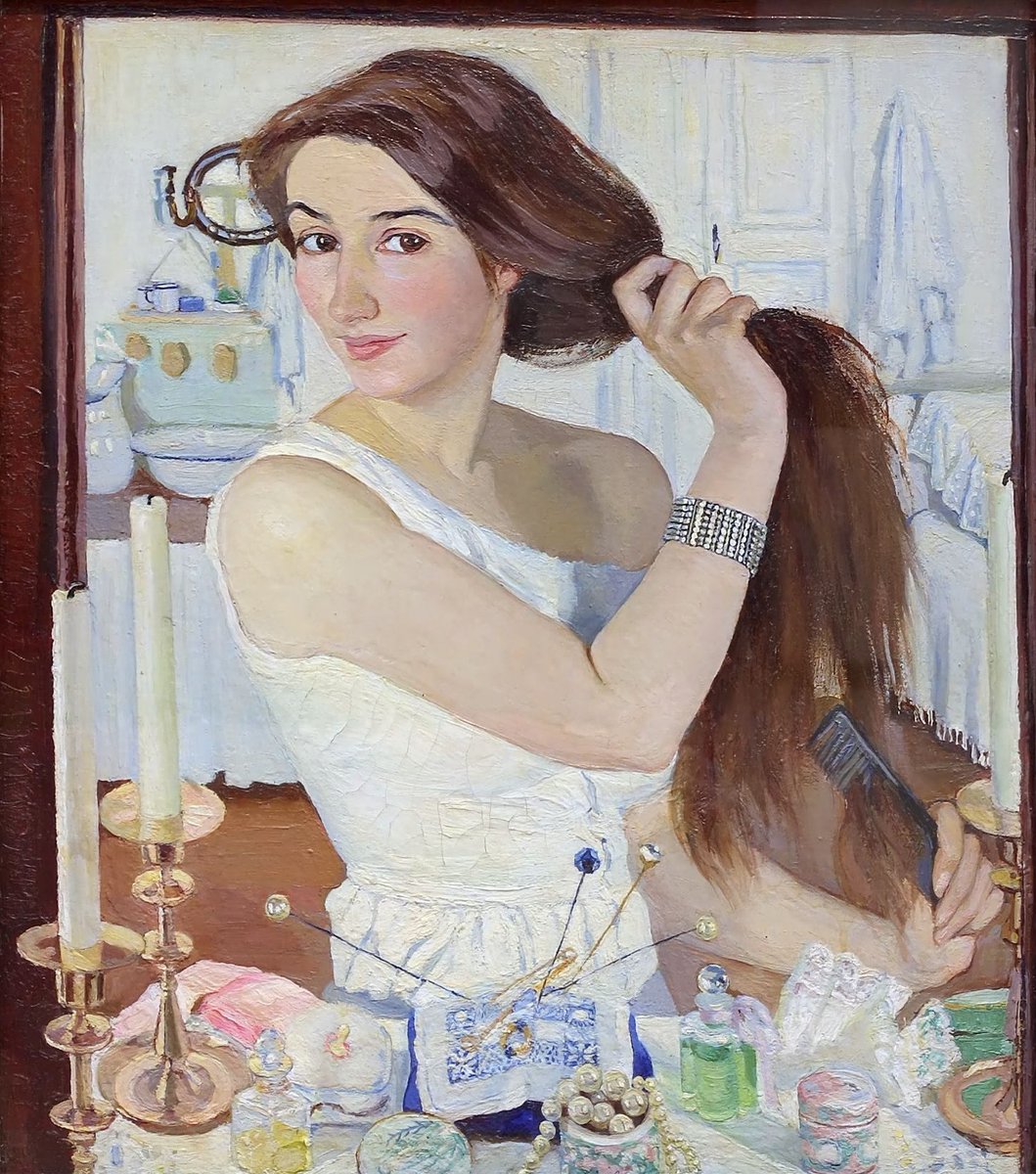
Serebriakova sent her Self-Portrait At the Dressing Table to an exhibition in 1909 — it was received, perhaps unsurprisingly, with critical acclaim.
Even then her lively expression was a hit.
Along with Green Autumn and Peasant Girl, all were successfully auctioned.
Even then her lively expression was a hit.
Along with Green Autumn and Peasant Girl, all were successfully auctioned.


From 1914 Serebriakova started to reach artistic maturity, and enjoyed the most successful years of her career with acclaimed paintings like Harvest (1915) and Bleaching Linen (1917).
Indeed, she was all set to become join the Imperial Academy of Arts in St Petersburg...
Indeed, she was all set to become join the Imperial Academy of Arts in St Petersburg...

Until everything changed with the Russian Revolution of 1917.
The first problem was artistic: her "old fashioned" style was no longer welcome in the abstract world of avant-garde, of the Suprematist and Constructivist art favoured by the new Communist regime.
The first problem was artistic: her "old fashioned" style was no longer welcome in the abstract world of avant-garde, of the Suprematist and Constructivist art favoured by the new Communist regime.
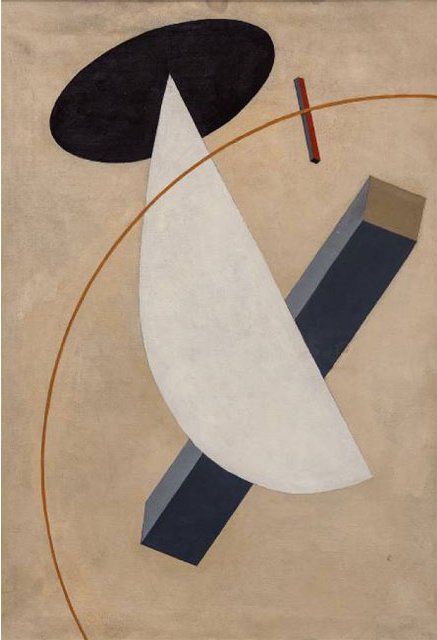
And there was personal tragedy — her beloved husband Boris was arrested in 1919 and died of typhus in jail.
Without his income and with declining commissions under the new regime, things took a downward turn.
Serebriakova was now a single mother with four children to raise:
Without his income and with declining commissions under the new regime, things took a downward turn.
Serebriakova was now a single mother with four children to raise:

They left the family estate, which had been plundered, and moved to an apartment in Petrograd.
She could no longer afford oil paints, but Serebriakova continued to paint and draw, particularly scenes from ballet and theatre, which her daughter Ekaterina had taken up:
She could no longer afford oil paints, but Serebriakova continued to paint and draw, particularly scenes from ballet and theatre, which her daughter Ekaterina had taken up:

She never stopped painting her children, perhaps now with a streak of melancholy rather than the purer joy that had come before, but always with that same, almost disarming sense of familiarity that makes her portraits so lively.
But something had to give...
But something had to give...

In 1924 she travelled to Paris, hoping to find commissions there and raise enough money to support her family.
Little could Serebriakova have known that travel would soon be restricted by the Soviet government.
She was refused re-entry into Russia and became an exile.
Little could Serebriakova have known that travel would soon be restricted by the Soviet government.
She was refused re-entry into Russia and became an exile.

Serebriakova did find both work and community in Paris, partly thanks to the many Russians living there, and sent her earnings home.
In 1926 her youngest son, Alexander, was allowed to join her, and in 1928 Ekaterina followed.
In 1926 her youngest son, Alexander, was allowed to join her, and in 1928 Ekaterina followed.


Here we see Serebkriakova in a 1930 self-portrait, looking perhaps a little more world-weary than in her earlier self-portraits.
But, against the odds, she had managed to make a new life for herself and at least some of her family.
But, against the odds, she had managed to make a new life for herself and at least some of her family.

Serebriakova also visited Morocco several times, and it left a deep impression on her.
There she found great delight in painting the ordinary people, as once she had done in Russia:
There she found great delight in painting the ordinary people, as once she had done in Russia:

And back in France Serebriakova continued to paint the common people, whether fishermen or bakers, alongside commissions for wealthier clients:

But during the Second World War, because of her nationality and frequent contact with her family in the USSR, Serebriakova became suspect in Nazi occupied Paris.
She was forced to renounce her Russian citizenship — and seemingly any hope of seeing the rest of her family again.
She was forced to renounce her Russian citizenship — and seemingly any hope of seeing the rest of her family again.

Zinaida Serebriakova's life and career had been long and tumultuous, affected by both World Wars and marred by personal tragedy... and yet she had also become a successful and respected painter.
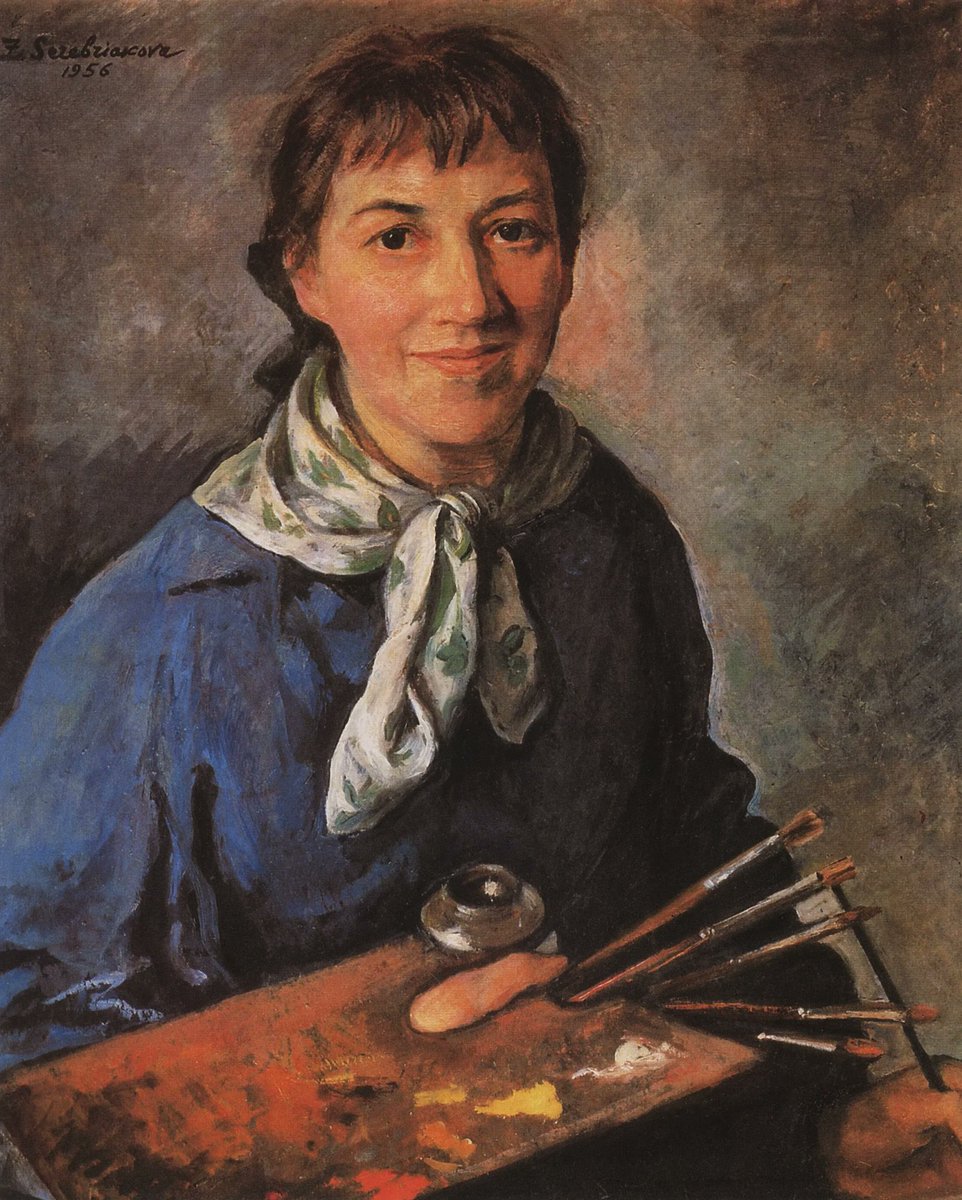
Here we see a happier self-portrait from 1956:
Here we see a happier self-portrait from 1956:
But there was one great twist left.
Thanks to Khrushchev’s Thaw her daughter Tatiana was given permission to visit her mother in Paris, in 1960, and they were reunited after 36 years.
Zinaida Serebriakova was 76 at that point, Tatiana 50.
Thanks to Khrushchev’s Thaw her daughter Tatiana was given permission to visit her mother in Paris, in 1960, and they were reunited after 36 years.
Zinaida Serebriakova was 76 at that point, Tatiana 50.

And in 1966 a vast exhibition of Serebriakova's work was held in Moscow — her work was a critical and commercial success.
Serebriakova had even travelled there, returning to Russian soil for the first time in nearly four decades, to witness it.
Closure at last.
Serebriakova had even travelled there, returning to Russian soil for the first time in nearly four decades, to witness it.
Closure at last.

Zinaida Serebriakova went back to Paris and died there the following year, in 1967, at the age of 82.
A remarkable woman whose remarkable life is told by the chronicle of her art — few painters have conveyed such tenderness and intimacy or live on so vividly in their work.
A remarkable woman whose remarkable life is told by the chronicle of her art — few painters have conveyed such tenderness and intimacy or live on so vividly in their work.
• • •
Missing some Tweet in this thread? You can try to
force a refresh