Since it's come up again, let's remember the Orthodox doctrine of the divine-human hypostasis of Christ.
A 🧵
A 🧵
https://twitter.com/SolusChristus73/status/1753164297004634345
1. Through the incarnation, the hypostasis of the Divine Logos assumed human nature.
— So the incarnate Logos is not only God by nature, but also man by nature.
— So the incarnate Logos is not only God by nature, but also man by nature.
2. Through the incarnation, the divine nature and the human nature are united without confusion.
— So the divine nature and human nature are not fused into some new hybrid “synthetic nature.”
— So the divine nature and human nature are not fused into some new hybrid “synthetic nature.”
3. Through the incarnation, the divine nature and the human nature are united without change.
— So the divine nature does not change into something it wasn't before.
— And the human nature does not change into something it wasn't before.
— So the divine nature does not change into something it wasn't before.
— And the human nature does not change into something it wasn't before.
4. Through the incarnation, the divine nature and the human nature are united in the one hypostasis of the divine Logos.
— So, in the incarnate Logos, the hypostasis of the divine nature is one and the same as the hypostasis of the human nature.
— So, in the incarnate Logos, the hypostasis of the divine nature is one and the same as the hypostasis of the human nature.
5. The incarnation of the divine Logos did not create a new hypostasis.
— The hypostasis of the Logos is pre-eternal and did not begin to exist at the incarnation.
— No new hypostasis began to exist with the incarnation.
— The hypostasis of the Logos is pre-eternal and did not begin to exist at the incarnation.
— No new hypostasis began to exist with the incarnation.
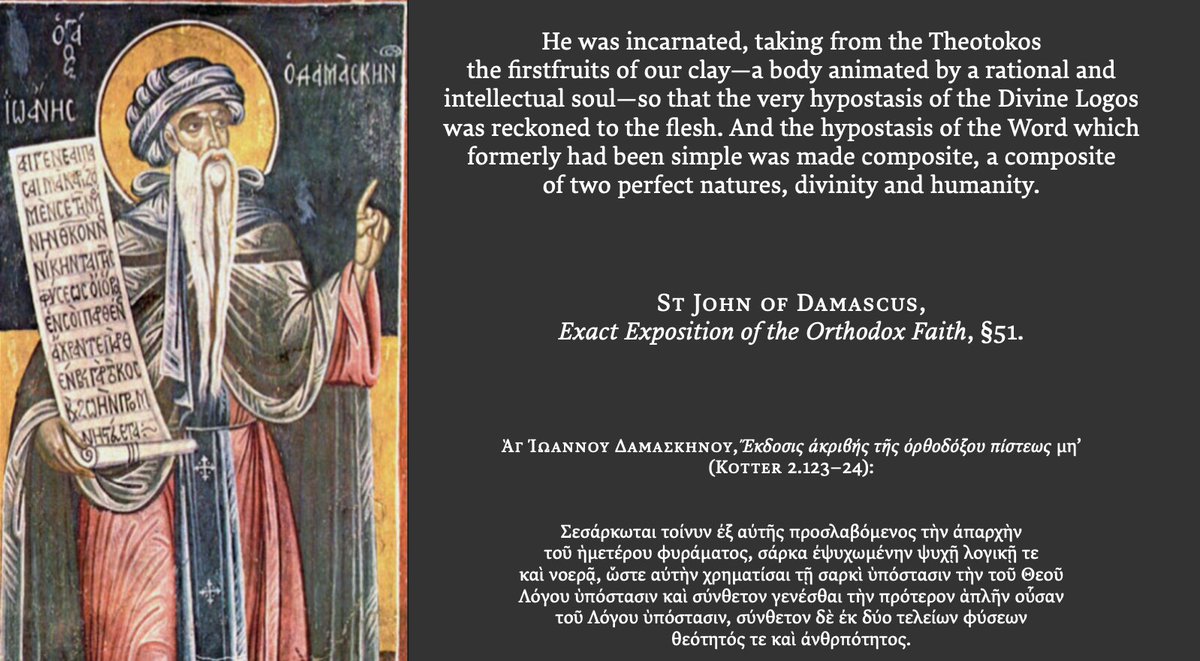
6. Through the incarnation, the hypostasis of the divine Logos became composite.
— Before the incarnation, the hypostasis of the Logos was simple, since it was in only one nature.
— After the incarnation, the hypostasis of the Logos is composite, since it is in two natures.
— Before the incarnation, the hypostasis of the Logos was simple, since it was in only one nature.
— After the incarnation, the hypostasis of the Logos is composite, since it is in two natures.
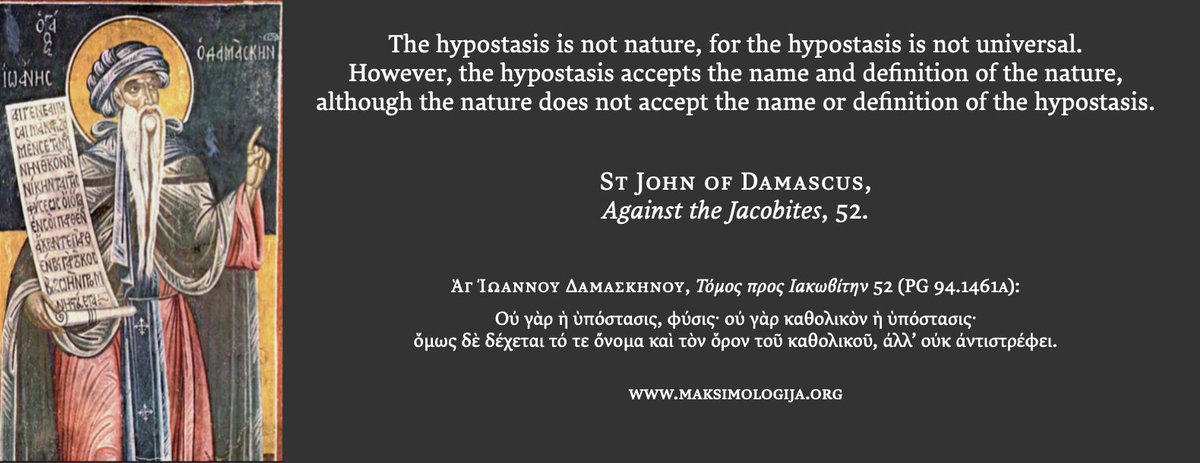
7. Through the incarnation, the hypostasis of the divine Logos became a divine-human hypostasis.
—The hypostasis takes the name of the nature.
—By nature, the incarnate Logos is both divine and human.
—So the hypostasis of the incarnate Logos is a divine-human hypostasis.
—The hypostasis takes the name of the nature.
—By nature, the incarnate Logos is both divine and human.
—So the hypostasis of the incarnate Logos is a divine-human hypostasis.
8. Through the incarnation, the hypostasis of the divine Logos became one of the hypostases of humanity.
— The hypostasis takes the name of the nature.
— The incarnate Logos is human by nature.
— So the one hypostasis of the incarnate Logos is one of the hypostases of humanity
— The hypostasis takes the name of the nature.
— The incarnate Logos is human by nature.
— So the one hypostasis of the incarnate Logos is one of the hypostases of humanity

• • •
Missing some Tweet in this thread? You can try to
force a refresh