Pre-diabetes!!
As the name suggests,pre-diabetes is a stage just before diabetes
Your body has started showing functional changes similar to diabetes but not high enough for it to be diagnosed as Diabetes
A thread 🧵on what is pre-diabetes&simple ways to manage it
Lets go👇
As the name suggests,pre-diabetes is a stage just before diabetes
Your body has started showing functional changes similar to diabetes but not high enough for it to be diagnosed as Diabetes
A thread 🧵on what is pre-diabetes&simple ways to manage it
Lets go👇
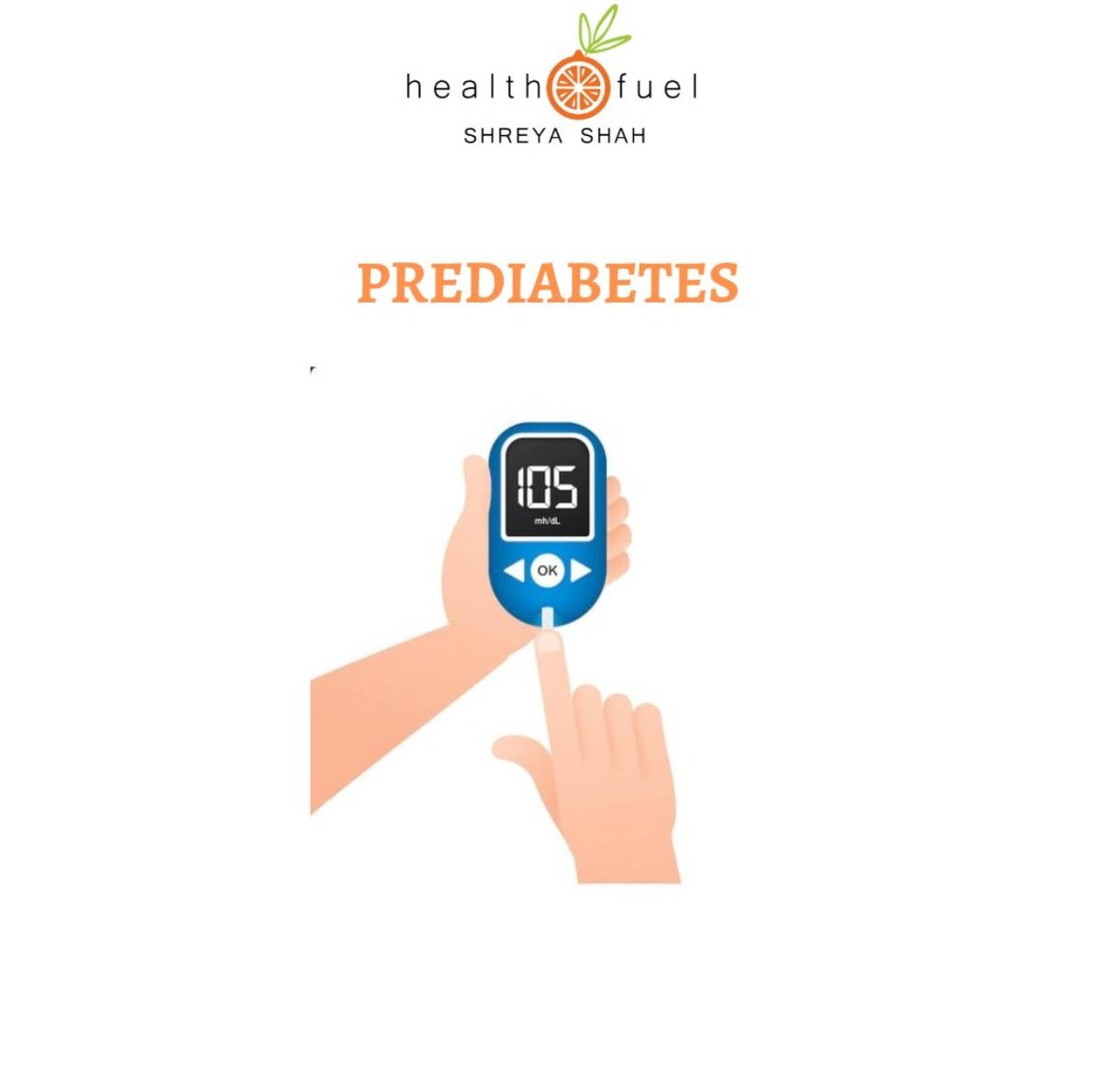
🔸There is a very high prevalence of pre-diabetes in India.
The scariest being teens who are not more than 15-16years of age are struggling with this just as much as older people.
Most people stay pre-diabetic for 5-10 years before getting diagnosed.
The scariest being teens who are not more than 15-16years of age are struggling with this just as much as older people.
Most people stay pre-diabetic for 5-10 years before getting diagnosed.
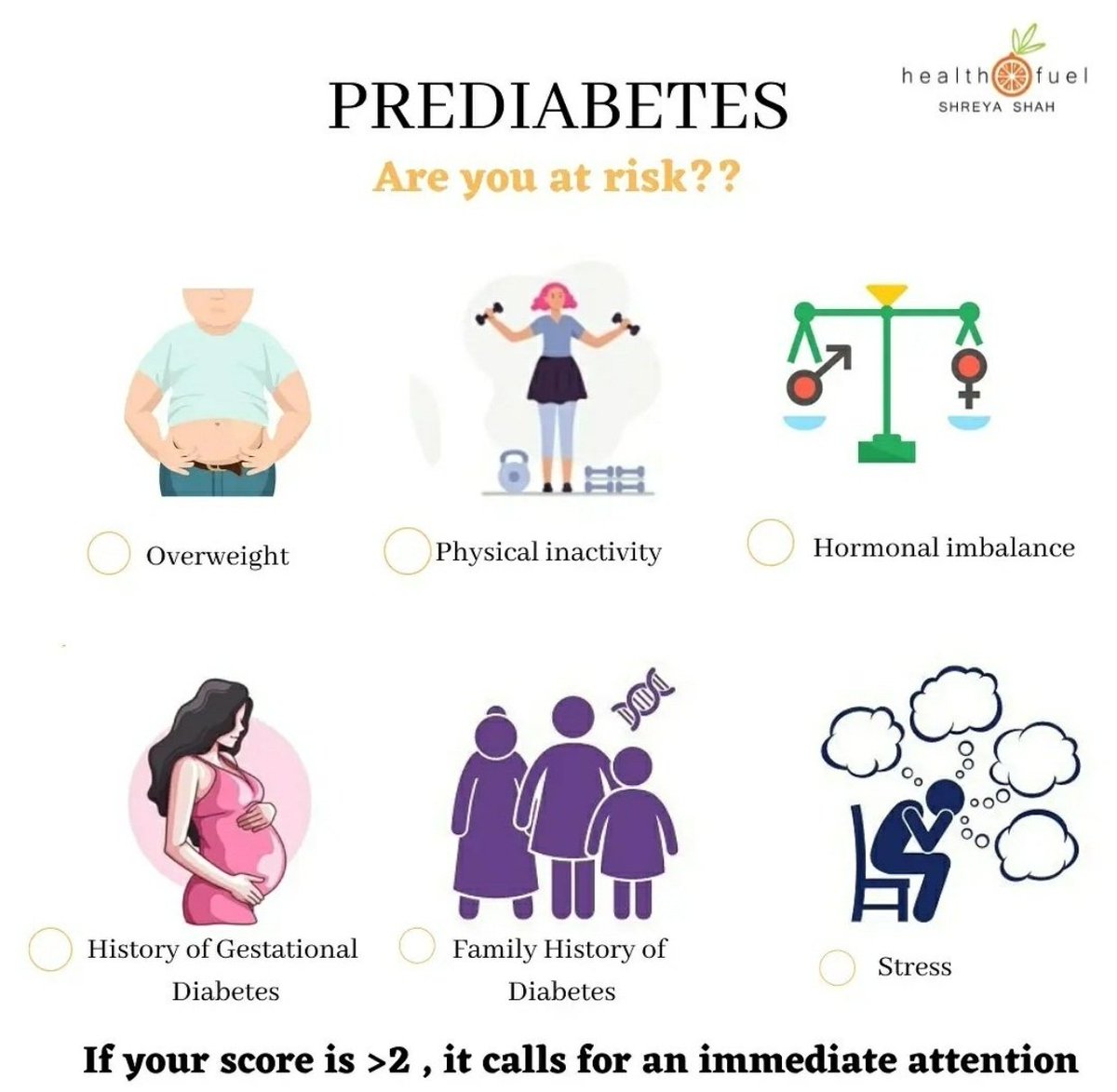
🔸Are you at risk??
Our body is usually good at giving signs if there is an existing issue internally.
I'm sharing these signs/ risk factors/ Symptoms in the picture below👇
If your score is more than 2 it calls for immediate attention!!
Our body is usually good at giving signs if there is an existing issue internally.
I'm sharing these signs/ risk factors/ Symptoms in the picture below👇
If your score is more than 2 it calls for immediate attention!!
🔸Additional clinical criteria to check whether you're at risk are as follows👇
▪️ Hypertension (≥ 140/90mmhg)
▪️HDL cholesterol ≤35mg/dl
▪️ Triglycerides ≥ 250mg/dl
▪️Other clinical conditions related to insulin resistance (obesity and acanthosis nigricans)
▪️ Hypertension (≥ 140/90mmhg)
▪️HDL cholesterol ≤35mg/dl
▪️ Triglycerides ≥ 250mg/dl
▪️Other clinical conditions related to insulin resistance (obesity and acanthosis nigricans)
🔸Now, that you know what pre-diabetes is,and the risk factors, the next step is to identify,if you're a pre-diabetic.
You can identify pre-diabetes with some basic blood investigation
You can identify pre-diabetes with some basic blood investigation
🔸Blood tests to be done
Diagnostic criteria for Normal, pre-diabetes and diabetes👇
Diagnostic criteria for Normal, pre-diabetes and diabetes👇

🔸Typically, people with prediabetes do not show symptoms, are unaware that they have it& never have their blood sugar tested
It is recommended to screen for most adults from age 30&before that(even about 20 years)if one is overweight&has additional risk factors for prediabetes.
It is recommended to screen for most adults from age 30&before that(even about 20 years)if one is overweight&has additional risk factors for prediabetes.
🔸Can Prediabetes be prevented or avoided?
Prediabetes can be delayed&,in some cases,even prevented
When people are overweight, losing weight and maintaining a healthy diet and exercise are the usual methods used to manage the condition.
Prediabetes can be delayed&,in some cases,even prevented
When people are overweight, losing weight and maintaining a healthy diet and exercise are the usual methods used to manage the condition.
🔸Management of Pre-diabetes
So here are a few starter steps to prevent or reverse pre-diabetes.
These will obviously improve your diabetes, PCOS, weight, cholesterol issues, anxiety,and gut issues.
So here are a few starter steps to prevent or reverse pre-diabetes.
These will obviously improve your diabetes, PCOS, weight, cholesterol issues, anxiety,and gut issues.
▪️ Healthy eating plan for prediabetes
🔹Full half of your plate with non-starchy veg - this will keep your overall carb intake low, high fibre will ensure you get host of phytonutrients
🔹Full half of your plate with non-starchy veg - this will keep your overall carb intake low, high fibre will ensure you get host of phytonutrients
🔹 Include Healthy fat
- Fat stabilizes blood sugars,this helps in keeping your insulin levels lower&hence less stress in the pancreas to produce insulin
- By fat,I mean the real, natural foods that happen to contain fat,not the processed food
- Eg:nuts&seeds,avocado,fatty fish
- Fat stabilizes blood sugars,this helps in keeping your insulin levels lower&hence less stress in the pancreas to produce insulin
- By fat,I mean the real, natural foods that happen to contain fat,not the processed food
- Eg:nuts&seeds,avocado,fatty fish
🔹 Protein
▪️When you eat carb in combination with protein&healthy fat,it can take longer for ur body to convert the carbs into glucose,leading to lower post-meal blood sugar levels
▪️Protein reduces the calorie intake by providing satiety,which also helps in blood sugar control
▪️When you eat carb in combination with protein&healthy fat,it can take longer for ur body to convert the carbs into glucose,leading to lower post-meal blood sugar levels
▪️Protein reduces the calorie intake by providing satiety,which also helps in blood sugar control
▪️Low muscle mass is a contributor to insulin resistance.
▪️Try to get protein in every meal for maximum benefit
▪️The best sources of proteins are dairy products like milk, curd, paneer as well as eggs, fish&poultry
▪️Try to get protein in every meal for maximum benefit
▪️The best sources of proteins are dairy products like milk, curd, paneer as well as eggs, fish&poultry
🔹Avoid
- processed foods
- simple carbs like refined flour(maida), refined sugar
- sugary drinks and fruit juices
- High carbohydrate meal
- processed foods
- simple carbs like refined flour(maida), refined sugar
- sugary drinks and fruit juices
- High carbohydrate meal
▪️ Exercise
🔹Exercise helps control weight, manage blood pressure,lower triglycerides, raise healthy HDL cholesterol,strengthen muscles,&improve ur general well-being
🔹Exercise lowers blood glucose levels&boosts your body's sensitivity to insulin,countering insulin resistance
🔹Exercise helps control weight, manage blood pressure,lower triglycerides, raise healthy HDL cholesterol,strengthen muscles,&improve ur general well-being
🔹Exercise lowers blood glucose levels&boosts your body's sensitivity to insulin,countering insulin resistance
🔹All forms of exercise—aerobic, resistance/doing both (combined training)—were equally good at lowering HbA1c values
🔹The goal is to get at least 150 minutes per week of moderate-intensity activity
🔹One way to do this is to try to fit in at least 20-25 min of activity/day
🔹The goal is to get at least 150 minutes per week of moderate-intensity activity
🔹One way to do this is to try to fit in at least 20-25 min of activity/day
▪️Manage your stress
🔹Chronic stress can wreak havoc on health and well-being.
🔹stress hormones like cortisol can contribute to weight gain and elevated blood sugar.
🔹Add stretching exercises, meditation or deep-breathing exercises to your daily routine.
🔹Chronic stress can wreak havoc on health and well-being.
🔹stress hormones like cortisol can contribute to weight gain and elevated blood sugar.
🔹Add stretching exercises, meditation or deep-breathing exercises to your daily routine.
▪️ Prioritize Sleep
🔹Getting inadequate amounts of sleep can negatively impact blood sugar levels, short and long term
🔹Too little sleep puts stress on your body, causing it to release hormones, including cortisol.Cortisol increases insulin resistance & blood sugar levels
🔹Getting inadequate amounts of sleep can negatively impact blood sugar levels, short and long term
🔹Too little sleep puts stress on your body, causing it to release hormones, including cortisol.Cortisol increases insulin resistance & blood sugar levels
🔸Conclusion
Prediabetes if uncontrolled can open a Pandora's box full of diseases for you.
So, i strongly recommend getting yourself diagnosed and start these lifestyle changes, if you have more than 2 of the above mentioned risk factors
Prediabetes if uncontrolled can open a Pandora's box full of diseases for you.
So, i strongly recommend getting yourself diagnosed and start these lifestyle changes, if you have more than 2 of the above mentioned risk factors
• • •
Missing some Tweet in this thread? You can try to
force a refresh