1/4. Neonics are mainly used for treating seeds, before planting. They're not significantly present in pollen & nectar, so they do not affect pollinators.
The campaign against neonics is based on lies. It's really a campaign against food production, and hence against people.entomologytoday.org/2014/02/06/neo…
@BeeAsMarine @GreenpeaceUK @NehoNana 2/4. Also, beware of climate industry propaganda claiming that the current trend to slightly milder climates is harmful. The scientific evidence is compelling that the opposite is true.
@BeeAsMarine @GreenpeaceUK @NehoNana 3/4. Does that surprise you? Read the agronomy literature and see for yourself! There've been thousands of rigorous studies & excellent papers about it, of far higher quality than the politicized drek which dominates "climate science." Here are a few: sealevel.info/negative_socia…
@BeeAsMarine @GreenpeaceUK @NehoNana 4/4. Environmental issues and climatology are both extremely politicized. To understand politicized topics, you need balanced information. If sounds like you haven't been getting it, but I'm here to help! sealevel.info/learnmore.html
1/4. We've discussed this before, Mark. Don't you remember this thread?
E.g., do you REALLY believe that global average temperatures 3000 years ago are known with a 1σ uncertainty of just 0.2°C, and 2σ (95%) of just 0.4°C? You've GOT to know that's absurd!
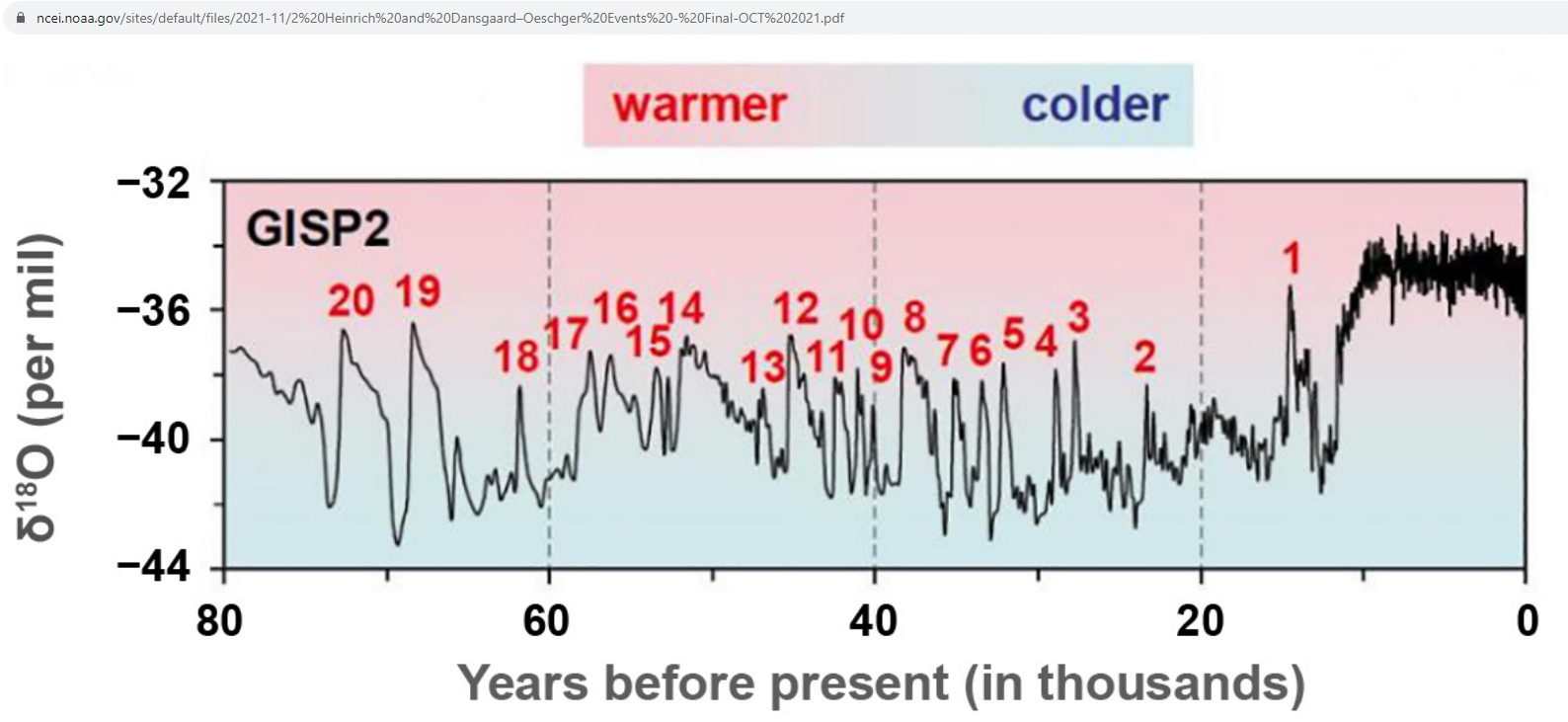
The Hockey Team even completely erased Dansgaard-Oeschger event #1, which was the HUGE warming event, recorded in ice cores, that you can see in this NOAA plot:
1/18》The current slight warming trend is generally GOOD for crops, and rising CO2 levels are VERY GOOD for crops. Scientists call the periods of highest temperatures "climate optimums," because, by all objective measures, they're BETTER. scholar.google.com/scholar?as_sdt…
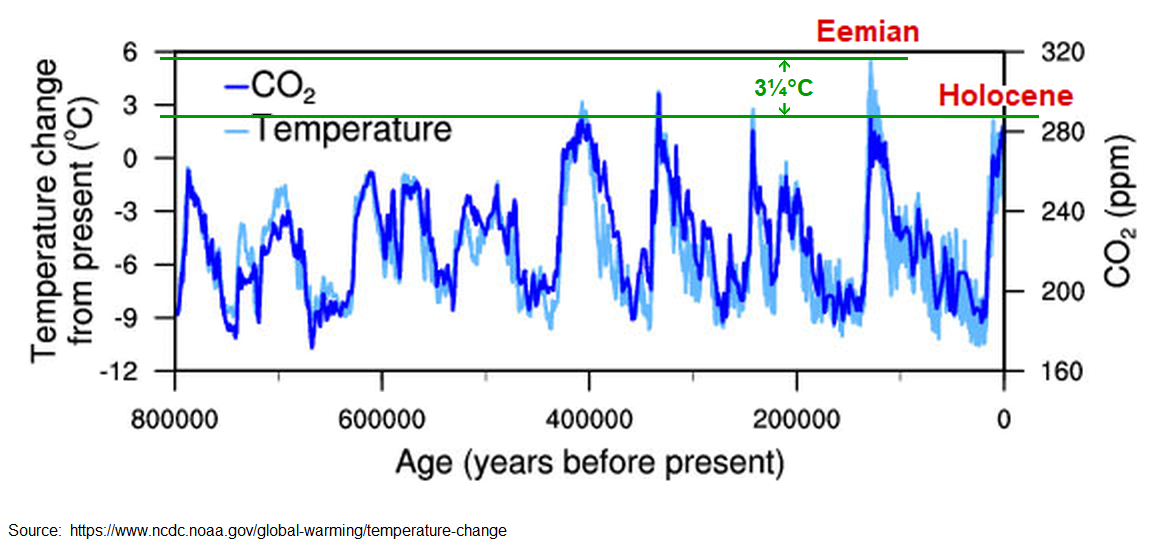
2/18》That includes times substantially warmer than now, like the Eemian Optimum, which is thought to have been, on average, several degrees warmer than our current climate. sealevel.info/Temperature-ch…
3/18》 We'll never get anywhere near that much warming, from the effects of burning fossil fuels. We might, plausibly, get 1°C of additional warming, but probably not in our lifetimes. Do you understand how miniscule that is?
1/6> annmclan wrote, "but the oceans are already too hot for coral reefs🪸"
You've been lied to, Ann.
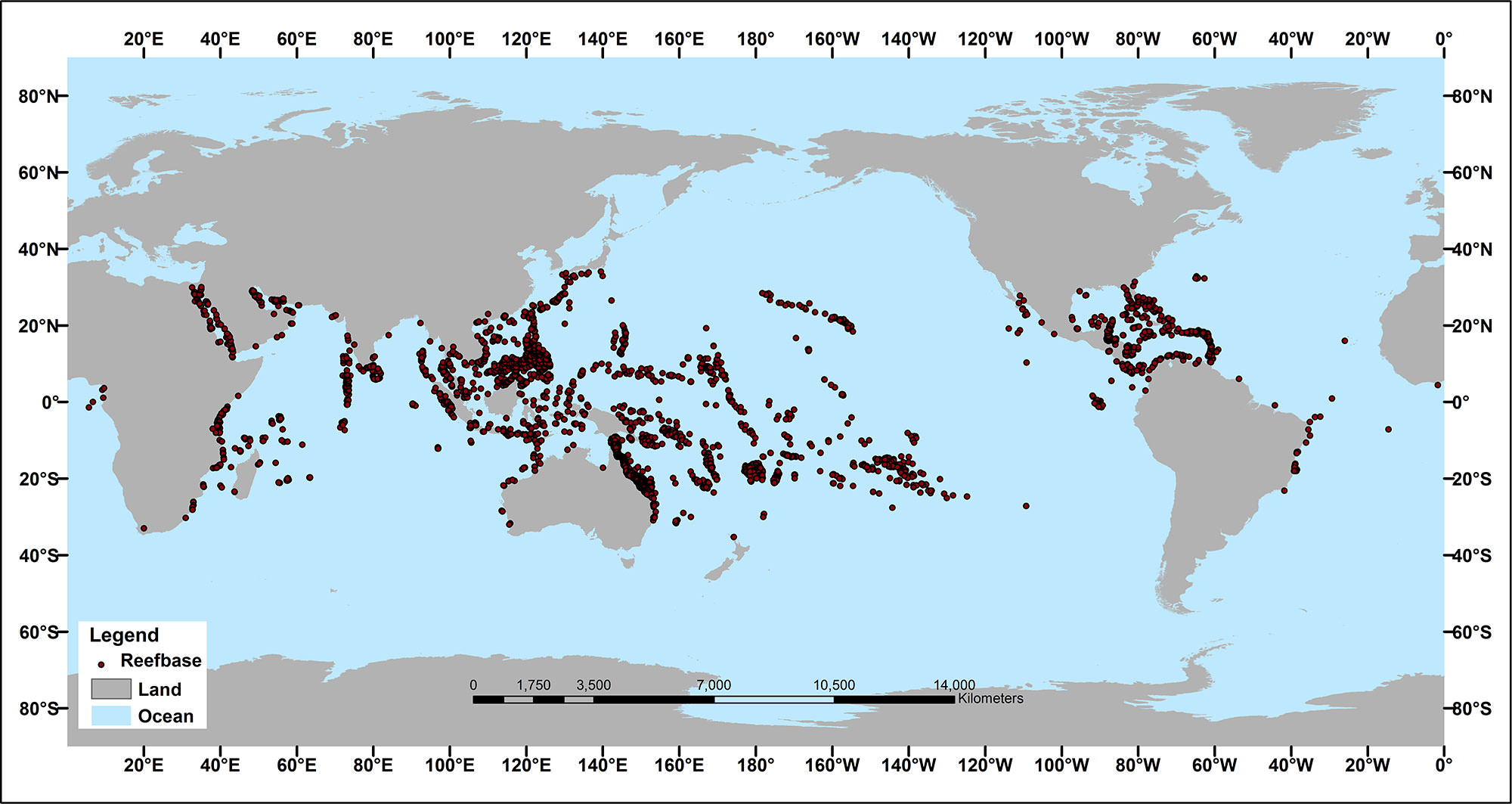
Most coral thrive best in the warmest water. If you look at a map of coral reef locations, you'll see that they're clustered around the equator: sealevel.info/coralreefmap.j…
2/6> Even the very warm southern Red Sea is dotted with healthy coral reefs (unlike the cooler Mediterranean). Why do you think that is?
Some coral inhabit temperate zones, but most prefer tropics. In fact, where there are seasons, corals grow fastest in summer.
In fact, where there are seasons, corals are commonly dated like trees, by "coring" them, and examining the growth rings. The thick rings represent summers, because that's when the coral grows fastest.
@annmclan @Kenneth72712993 @RoelofBoer @Mark_A_Lunn @Willard1951 @GneissName @gazpacho_now @KCTaz @ShroedingerBird @priscian @AristotleMrs @Veritatem2021 @FD2you @DawnTJ90 @BradPKeyes @Callan23474387 @0Sundance @TheDisproof @BointonGiles @DoesThisW0rk @3GHtweets @Climatehope2 @Jaisans @S_D_Mannix @TWTThisIsNow @JustThi30117912 @paulp1232 @MartinJBern @Data79504085 @ammocrypta @ChrisBBacon3 @EthonRaptor @B_Bolshevik100 @rosmadiwahab @Robert76907841 @Anvndarnamn5 @EricWil06256732 @ProfMickWilson @FillmoreWhite @TommyLambertOKC @JohnDublin10 @NoTricksZone @DawnJT90 @DawnTj9 @PeterDClack @FriendsOScience @wattsupwiththat @AlexEpstein 3/6> At 7:20 in this BBC video you can hear how wonderfully healthy the coral are in warmest part of the very warm southern Red Sea, off Eritrea.
1/8》
The temperature indexes are inconsistent, but you can't tell that from Priscian's misleading graph.
An honest graph would offset the traces so you can tell them apart, or else start them at the same temp. Instead he aligned the full-period averages, to hide the spread.
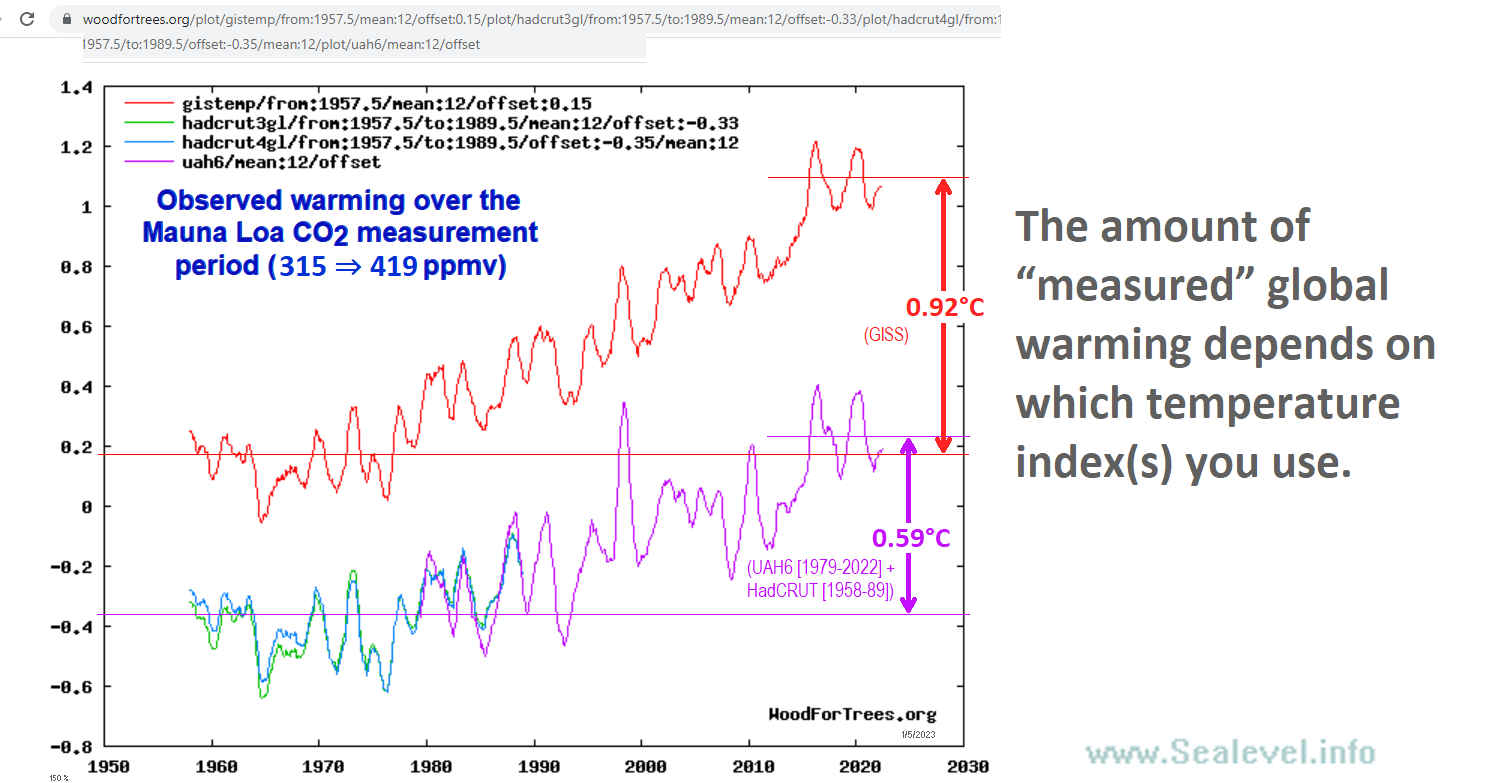
Here's what he's hiding:
What Jim Java / Priscian doesn't want you to notice is that the GISS (and Berkeley Earth, etc.) surface temperature indexes show much more warming than the UAH and NOAA STAR satellite-based lower troposphere measurements.
Land "surface" measurements are air temperatures measured with thermometers in Stevenson screens, usually 1.25 to 2 meters above ground. Satellite "lower troposphere" indexes (UAH, NOAA STAR, RSS) are from higher altitudes. Due to "lapse rate feedback," the (higher) altitudes where satellites measure temperatures should see a slightly greater warming trend than is seen 1.25 to 2 meters above the surface. Instead, they see less.
So, UAH6 & NOAA STAR satellite-based measurements suggest that those high-end surface temperature indexes are reporting at least 56% too much warming.
But even if it is exaggerated, the warming isn't worrisome. After all, humans are a tropical species, and most of the Earth is much too cold.
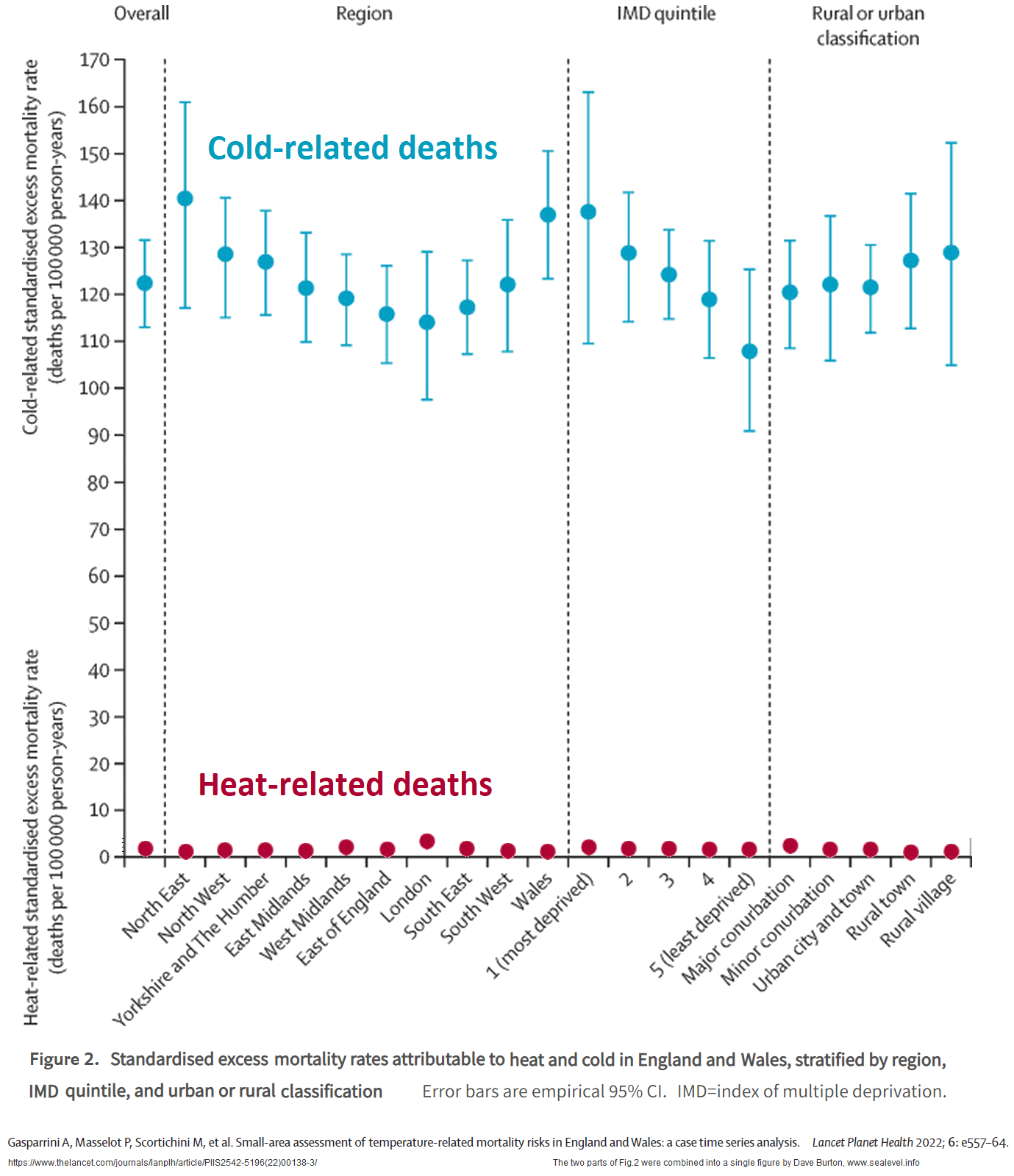
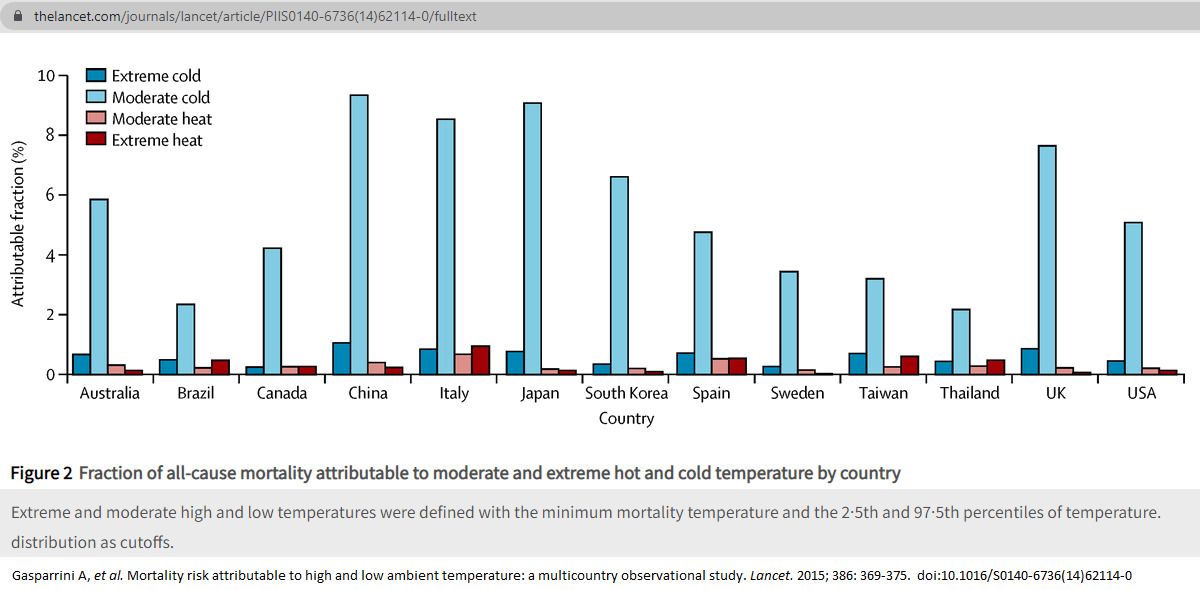
Warming saves lives, and excess cold causes many times more human deaths than excess heat — even in tropical counties, believe it or not! Here are some recent papers about it:
1. Masselot et al (2023).
2. Gasparrini et al (2022).
Composite of two figures from the paper:
3. Zhao et al (2021).
Discussion:
Summary:
4. Gasparrini et al (2015).
Fig. 2:
Are you familiar with the term "climate optimum?" If you go to ResearchGate or Google Scholar, and search for "Climate Optimum" (or Eemian Optimum, Mid-Holocene Optimum, Roman Optimum, or Medieval Optimum), you'll find thousands of papers using that terminology. Those "optimums" were warm periods.
The reason so many academic papers call the warmest periods in history "climate optimums" is that there is a consensus among historians and scientists that those warm "climate optimums" — including periods warmer than now — were, by all objective measures, better than colder periods.
Or, look at the flip side: cold periods, like the Dark Ages Cold Period (DACP) and the Little Ice Age (LIA). There's a broad consensus that those cold periods were, by all objective measures, worse for humanity than the warm "optimums."
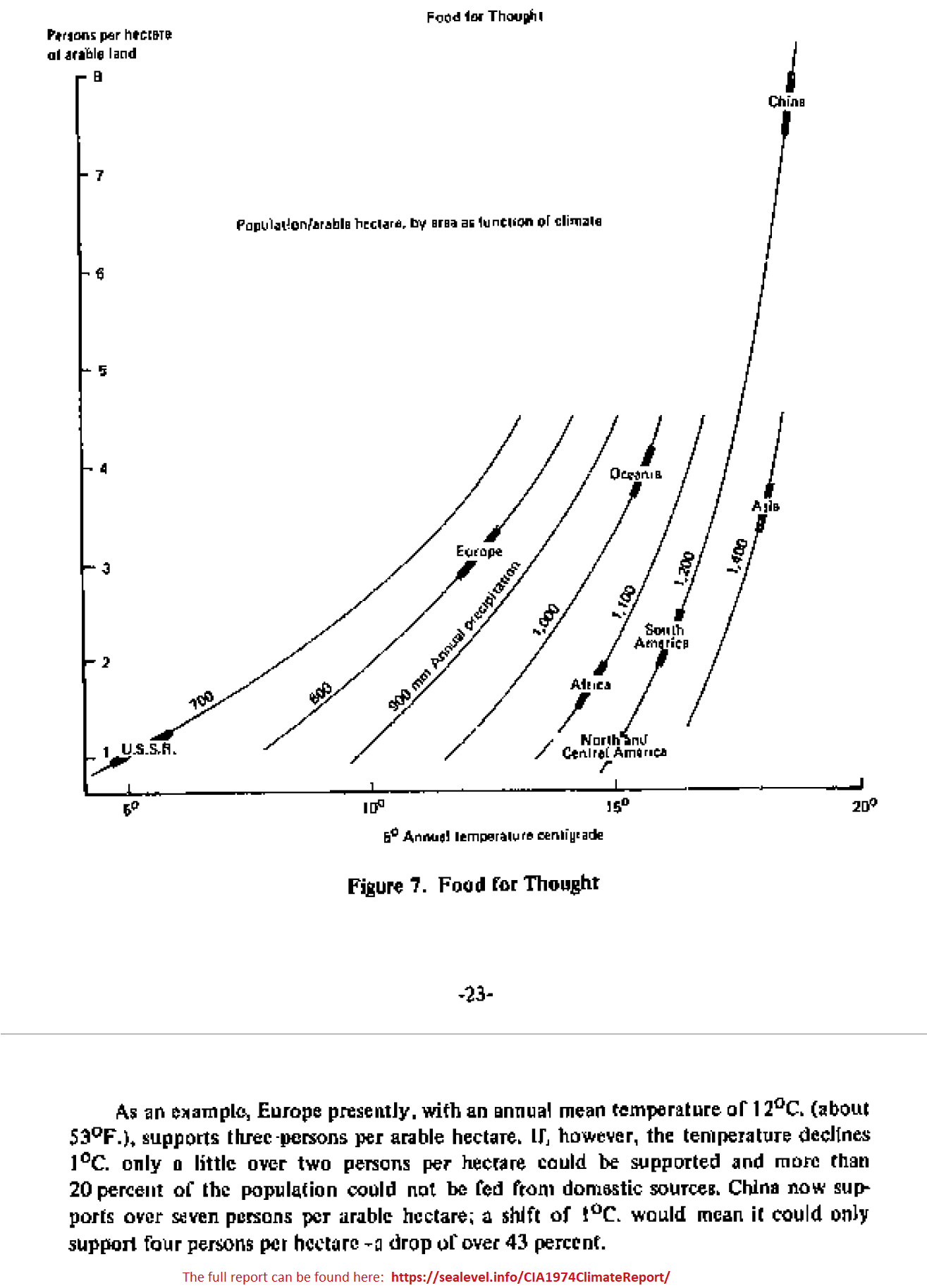
Here's a 1974 CIA study about the threat of global cooling:
This graph from that study shows how cooling temperatures threaten food supplies:
3/8》
Depending on whose temperature index you use, we’ve seen an average of between 0.59 and 0.92 °C of warming since 1958 (when Mauna Loa CO2 measurements began).
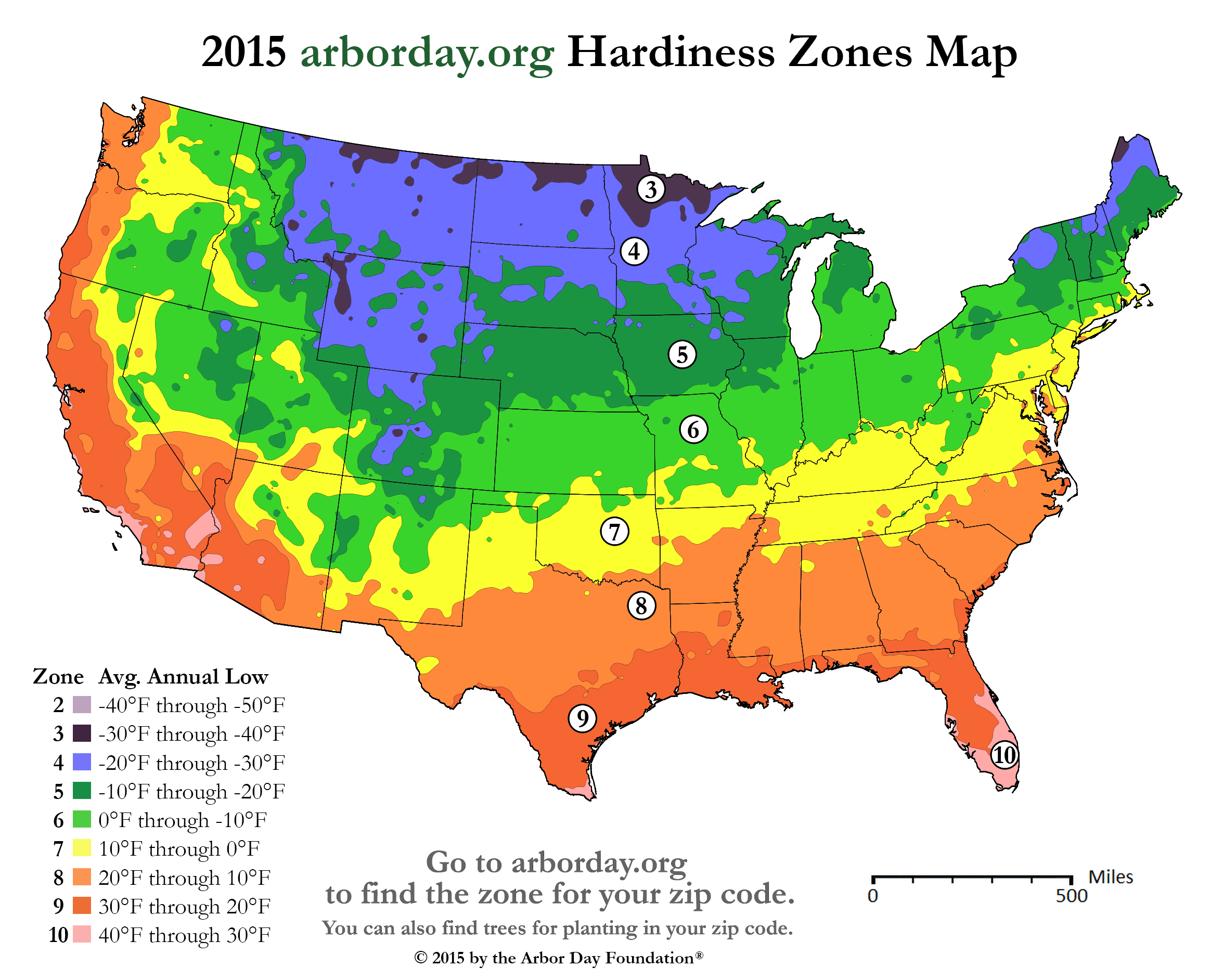
That warming has shifted growing zones and “temperature isotherms” slightly toward the poles (northward, in the NH). So, the obvious question is, how far?
That’s easy to answer, by looking at an agricultural growing zone map. Here's one, shared by permission from the Arbor Day Foundation:
From eyeballing the map, you can see that 1°C (1.8°F) = about 50-70 miles latitude change.
Here's James Hansen and his GISS colleagues reporting a similar figure:
Excerpt: "A warming of 0.5°C... implies typically a poleward shift of isotherms by 50 to 75 km..."
1/3. MunichRe is not just an insurance company. It's the giant German reinsurance company which bankrolls Rahmstorf and Potsdam Institute (PIK). They're among the worst and most extreme promoters of crackpot climate alarmism, just short of XR.
●
●
● investors.com/politics/edito… rogerpielkejr.substack.com/p/2023-update-…
2/3. Hyping climate alarmism is a business strategy for MunichRe, because they realized climate alarmism is good for their business. When people expect worsening disasters, they're willing to pay more for reinsurance.
3/3. Do you know where the "extreme weather" nonsense came from? Not from evidence, but from James Hansen's epic confusion.
Somehow he avoided learning about Arctic Amplification. He thought AGW would warm the tropics MORE than high latitudes.
That's a clip of Hansen on Letterman, explaining it. Hansen claimed that the “increasing temperature gradient” [between high & low latitudes] would "drive stronger storms.”
That's just plain wrong. The temperature gradient is DECREASING, not increasing.
You see, "global warming" isn't really very global. Thanks to stronger-than-linear negative feedbacks, such as Planck cooling, warm climates are more stable than cold climates. So AGW disproportionately warms chilly high latitudes. The tropics are affected much less (which is nice, because the tropics are warm enough already).
Hansen wrote a ridiculous book based on his confusion, and did a whirlwind publicity tour, pitching the book & spreading the claim that AGW will cause worsening storms / weather. (That's why he was on Letterman.)
Nearly all climate scientists know that's wrong, but none of them challenged him. Nearly everyone in the climate biz (maybe even Hansen, by now), has heard of Arctic Amplification, but the climate industry is so corrupt that neither Hansen's colleagues nor anyone else in the industry corrected his error. sealevel.info/feedbacks.html… amazon.com/Storms-My-Gran…
2/18.
Lyme disease was first identified in chilly Lyme, CT. Rocky Mountain Spotted Fever was first found in frigid Idaho & Montana. Both spread SOUTH — obviously NOT due to global WARMING.
Like every other climate scare, this one is a lie.
There's no evidence at all that climate change is spreading ticks and the diseases they carry, or any other disease. One degree of warming is equivalent to just 50-70 miles latitude change — completely trivial compared to tick ranges.
@zteirstein 3/18.
Here's a tweetstorm where you can learn many things about CO2 and climate that Grist and the rest of the Climate Industry will never tell you.