On the topic of day fighters, one of the more misunderstood day fighters is the F-104. However, it suffered from many issues of light/day fighters of the era.🧵 

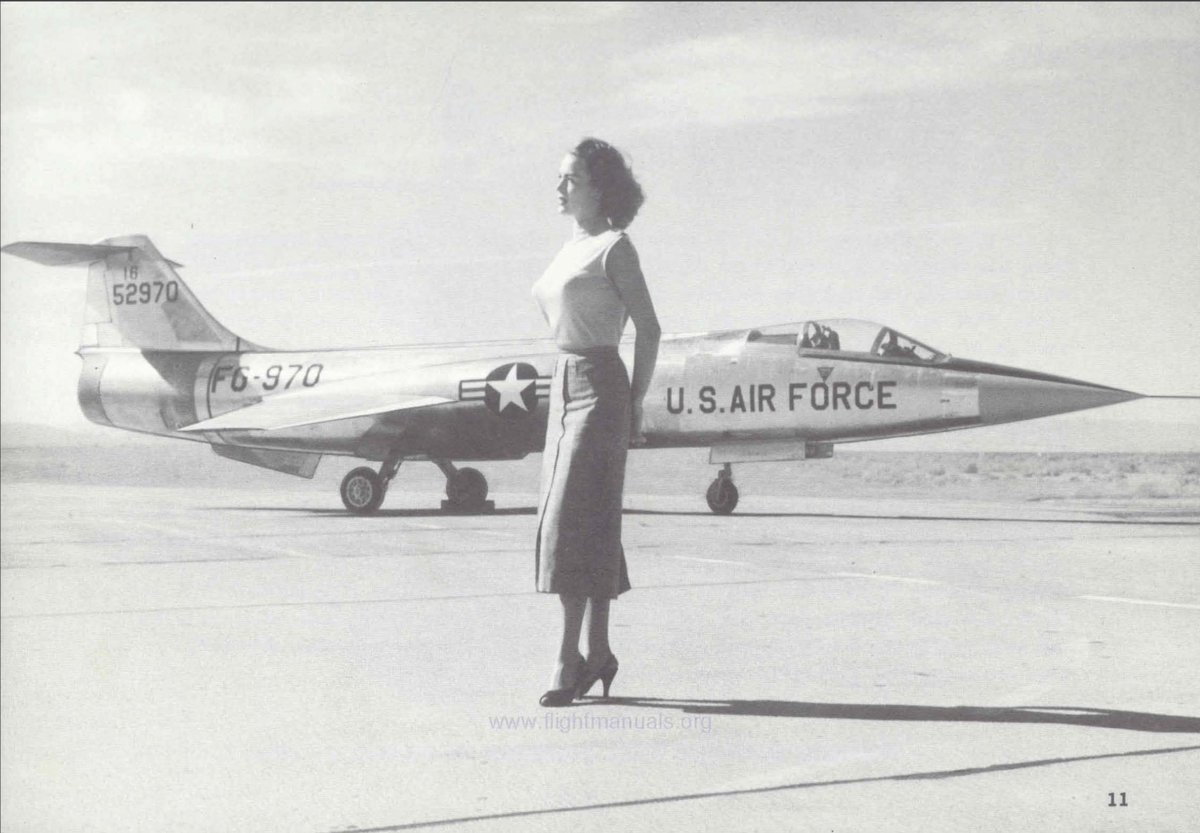
The concept of the F-104 came from an unusual place--pilot opinions. Kelly Johnson interviewed pilots in the Korean War on what they wanted from a new fighter.
The answers were almost unanimous. Fast, simple, maneuverable, and with good high-altitude performance.
The answers were almost unanimous. Fast, simple, maneuverable, and with good high-altitude performance.
The F-104 was the answer to that call. It was an air superiority fighter, first and foremost. It was lightweight, incredibly fast, responsive for the time, and nearly untouchable above mach.
In a way, this was the 1950s predecessor to the LWF concept.
In a way, this was the 1950s predecessor to the LWF concept.

And, when I say light, I mean it. The Starfighter was nearly a ton LIGHTER than the F-16A. The engine alone weighed almost a third of the empty aircraft!
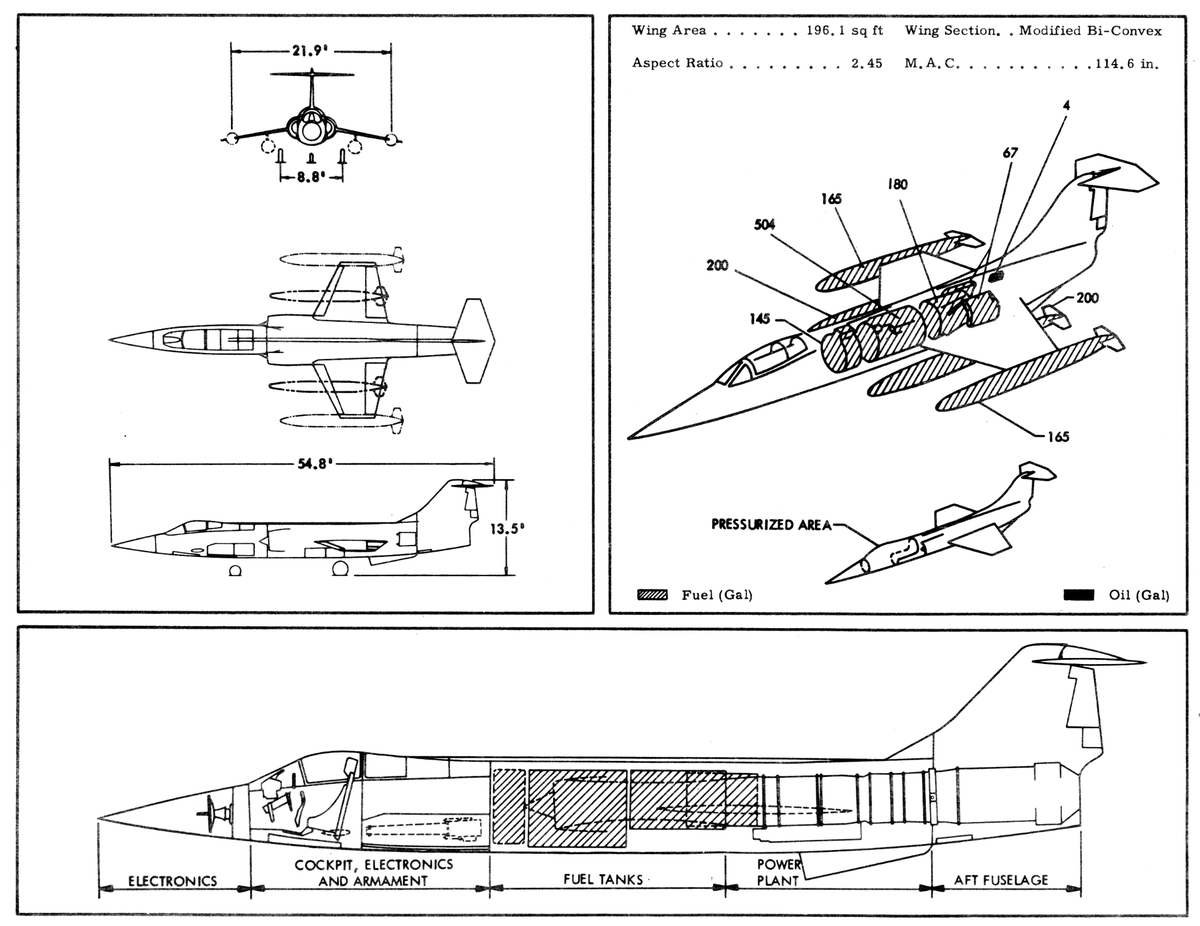
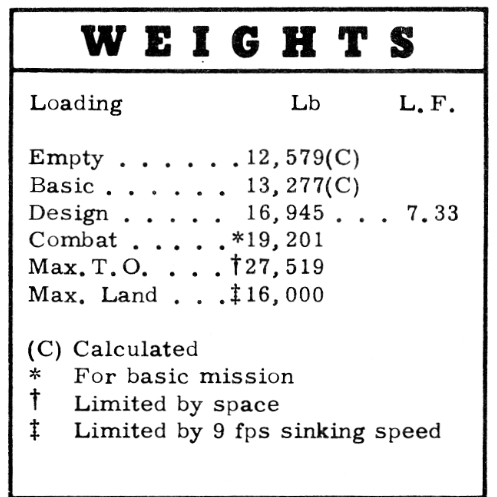
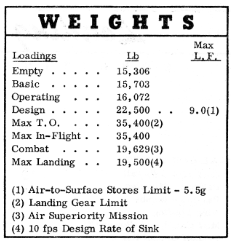
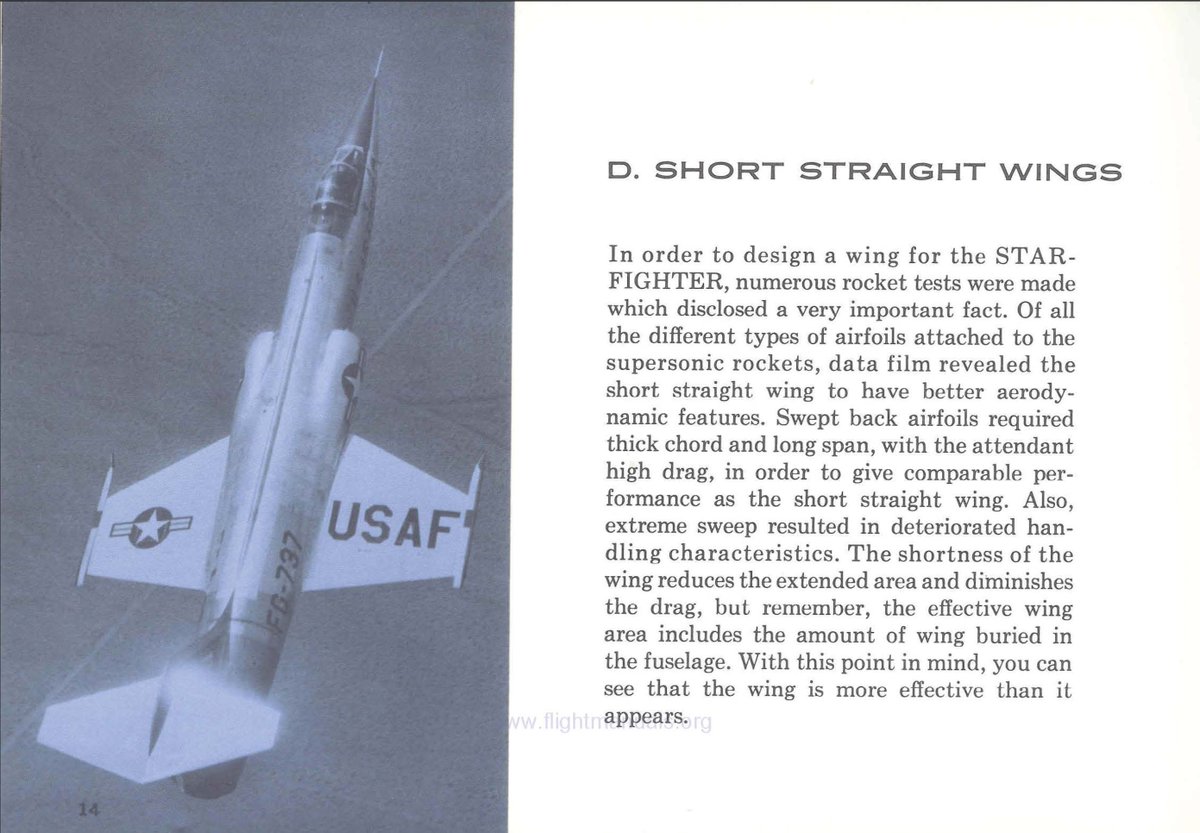
One of the design goals throughout the 104's development was the minimization of drag to increase performance. The narrow, small, and very fine wings are a representation of that.
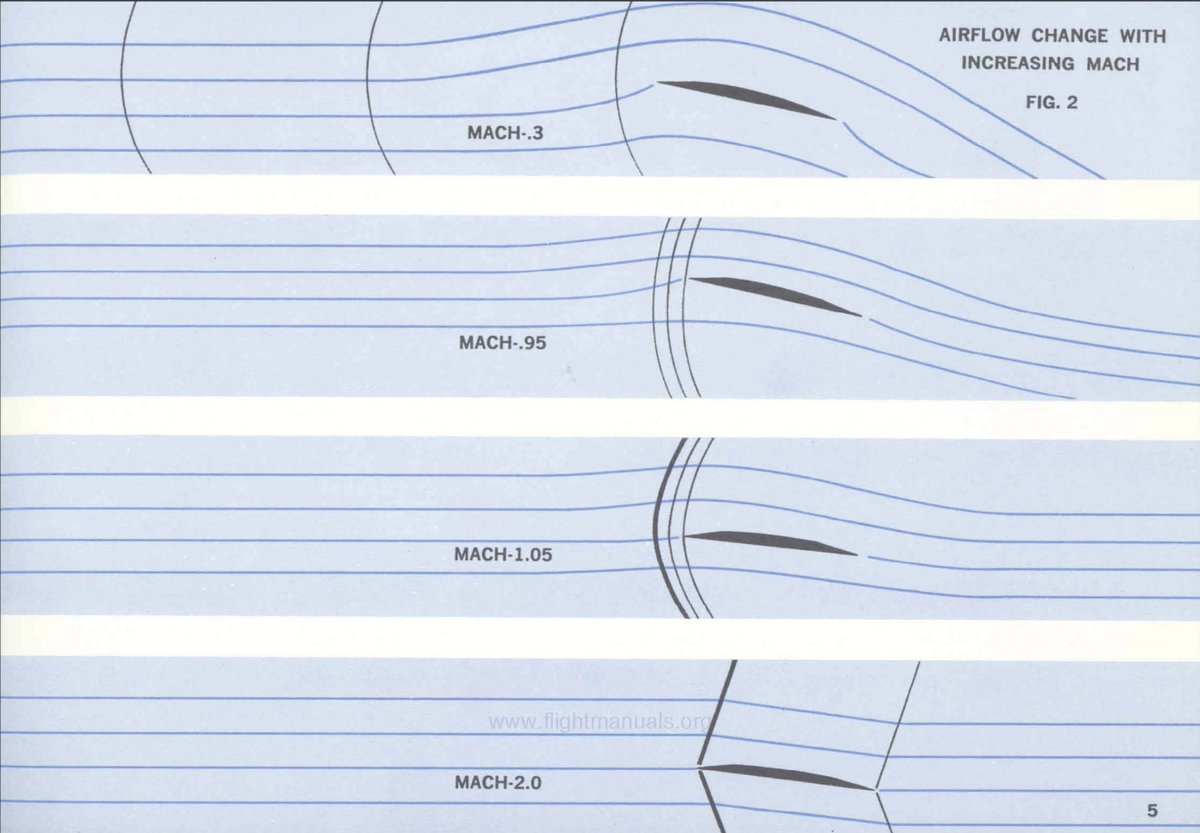
Another issue that Korean War pilots fought was the aerodynamics of their own aircraft. Early fighter jets were not well equipped to handle the transonic region and suffered all sorts of odd and hard-to-control effects. @BaA43A3aHY can probably explain these better than I.
The 104's very thin wings helped prevent these issues.
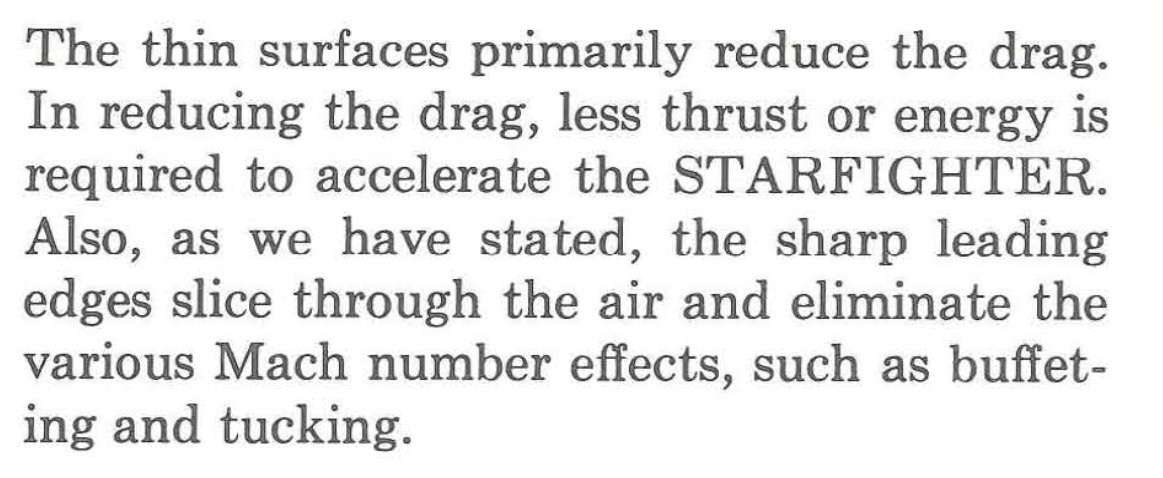
But the 104's wings weren't designed for just low drag. They were designed to give optimum maneuver performance across the range of expected combat speeds. The same was true of the high T-tail.

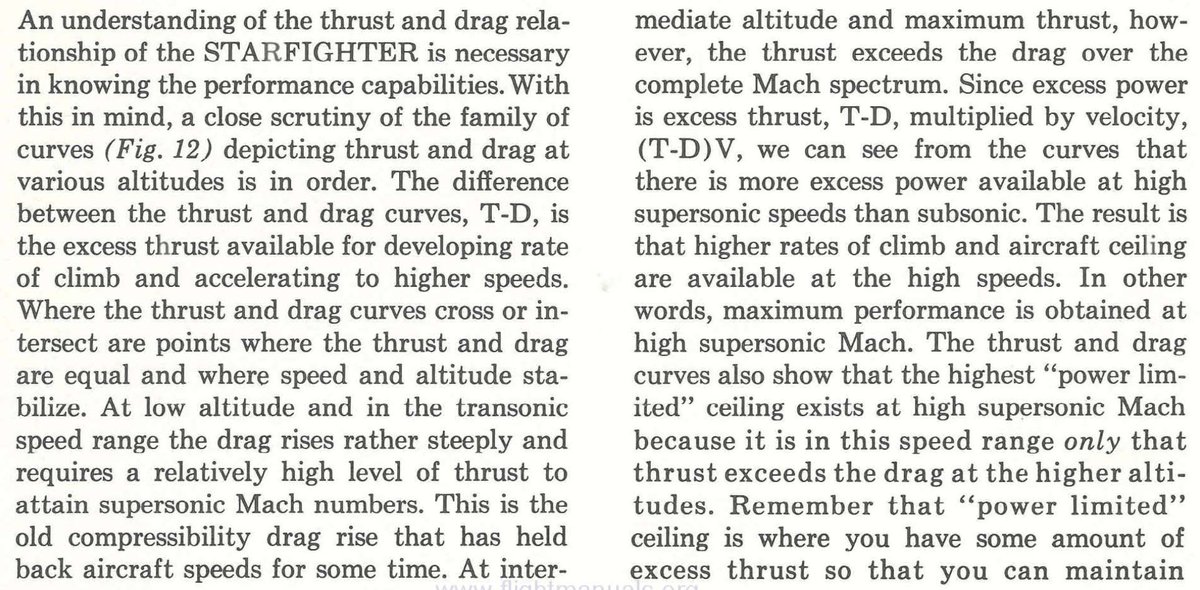
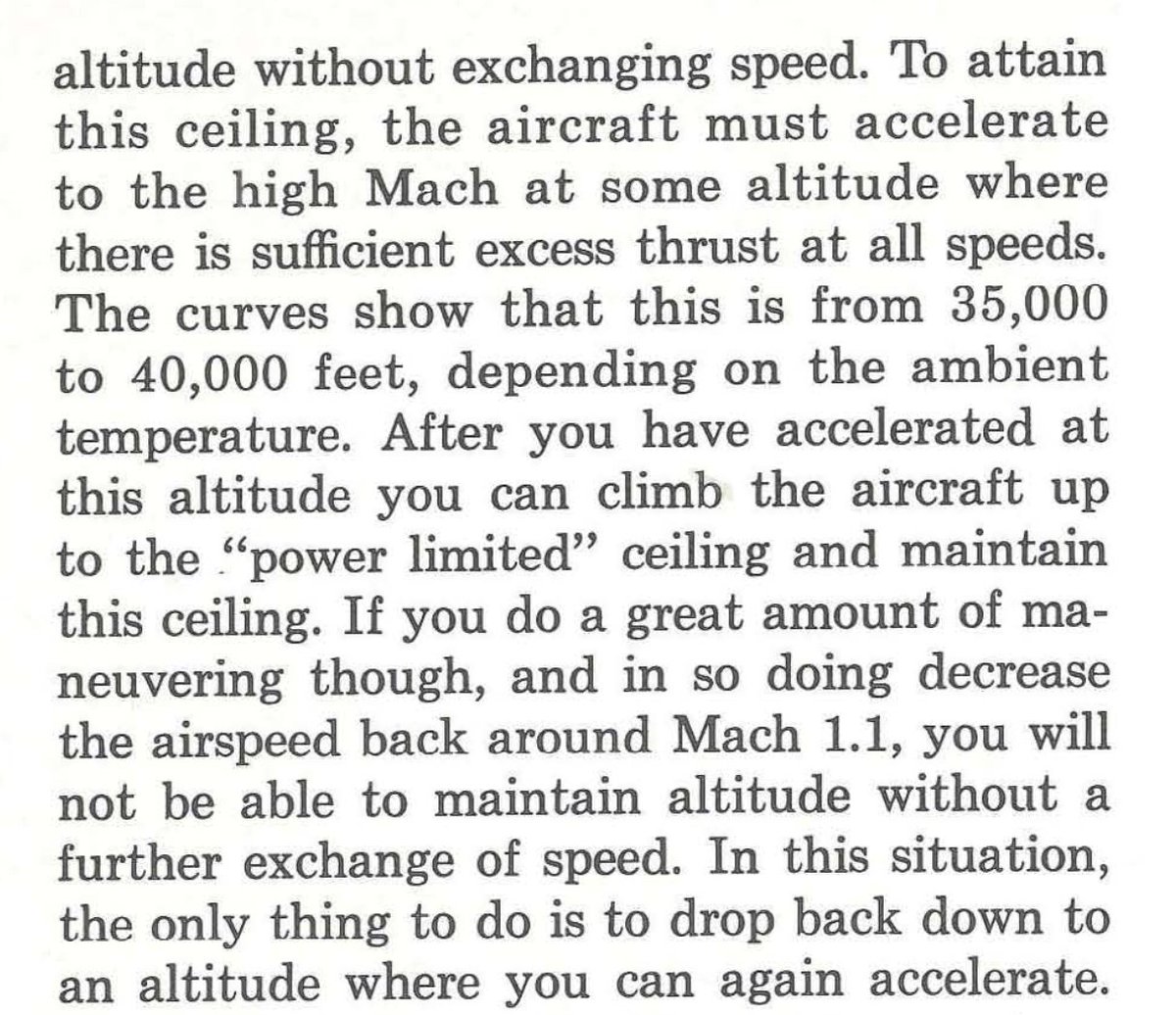
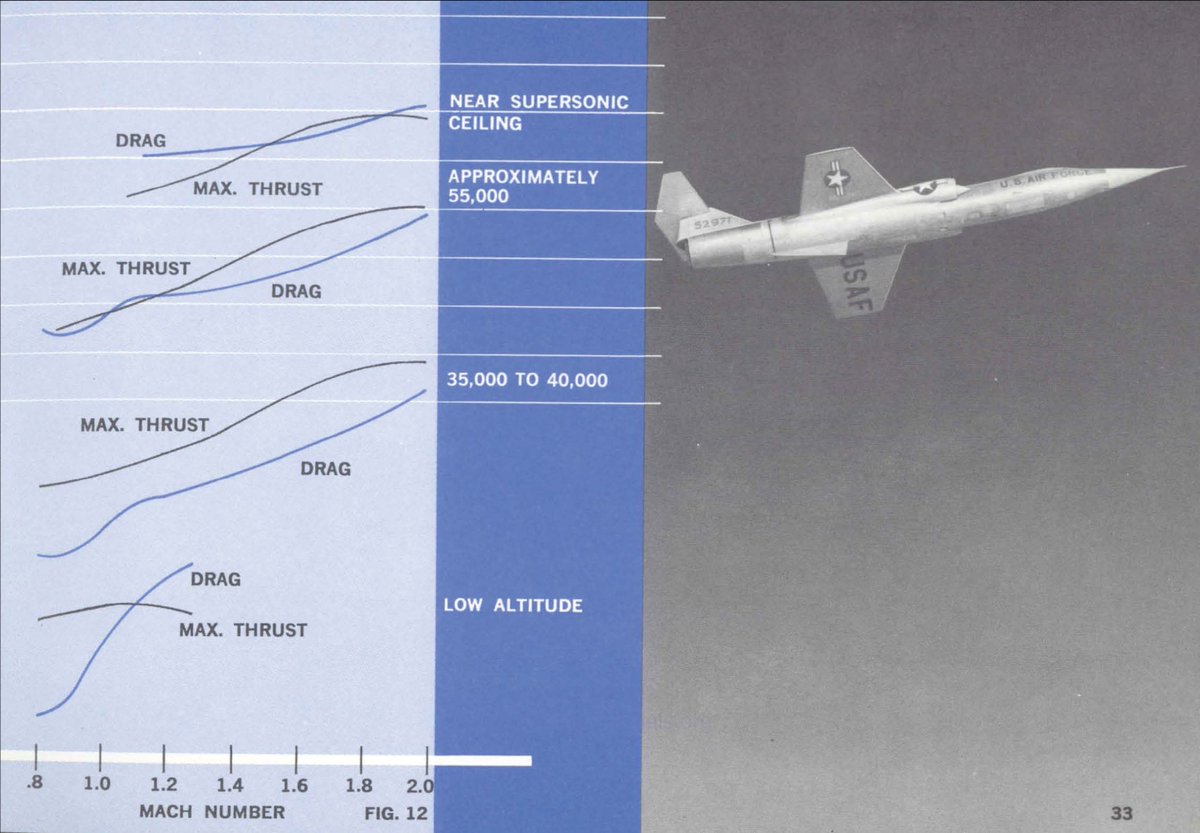
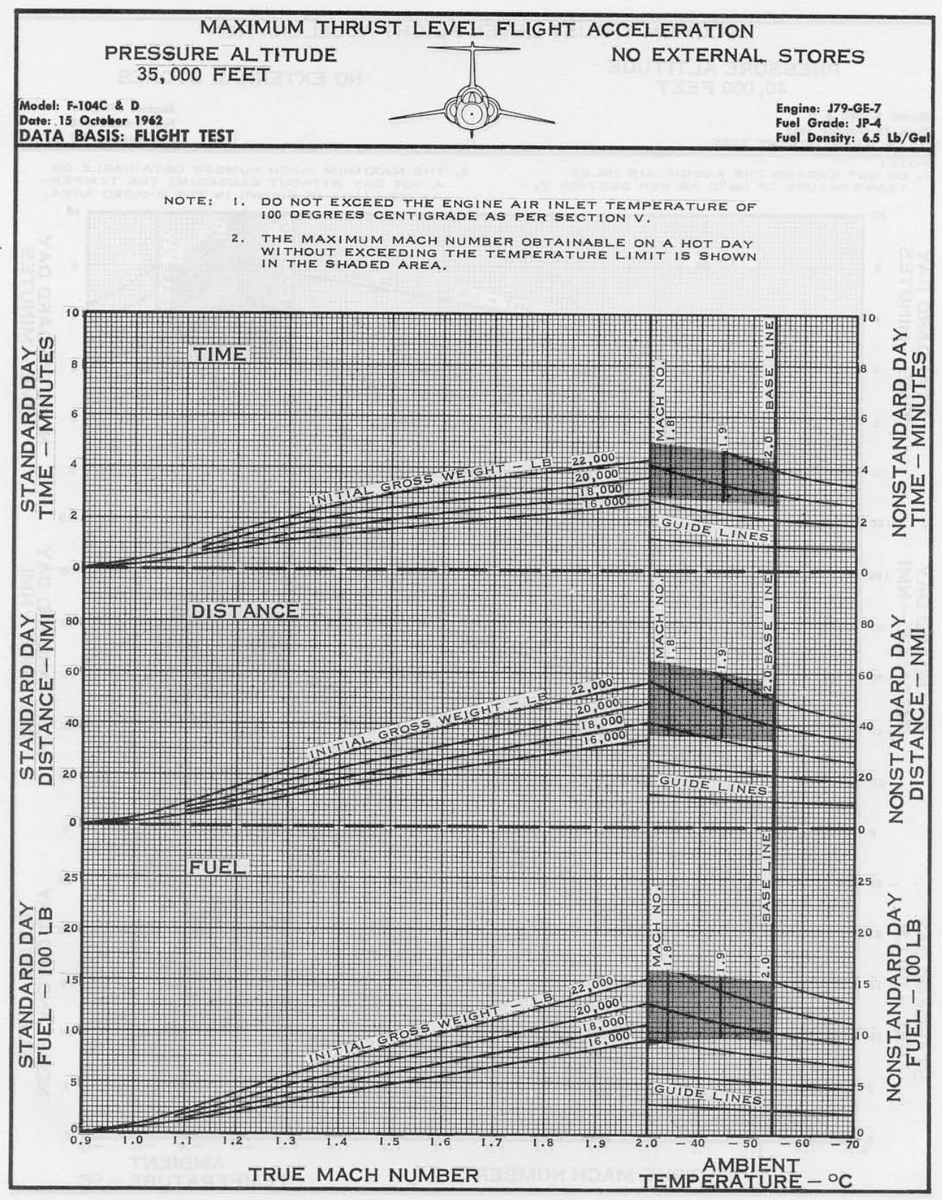
And now a few snippets that describe thrust-drag as it relates to the Starfighter, and an acceleration chart of the 104C.
Yes, that is 4 minutes from Mach 0.9 to Mach 2.0 at 35,000 feet.
The acceleration at lower altitudes was even more extreme, though no charts exist.
Yes, that is 4 minutes from Mach 0.9 to Mach 2.0 at 35,000 feet.
The acceleration at lower altitudes was even more extreme, though no charts exist.
And now, turn performance. While I cannot find any information in manuals on lower altitude turns, from what I've read, it still performs well, though you should probably try to keep any fights at 10,000 feet or above.
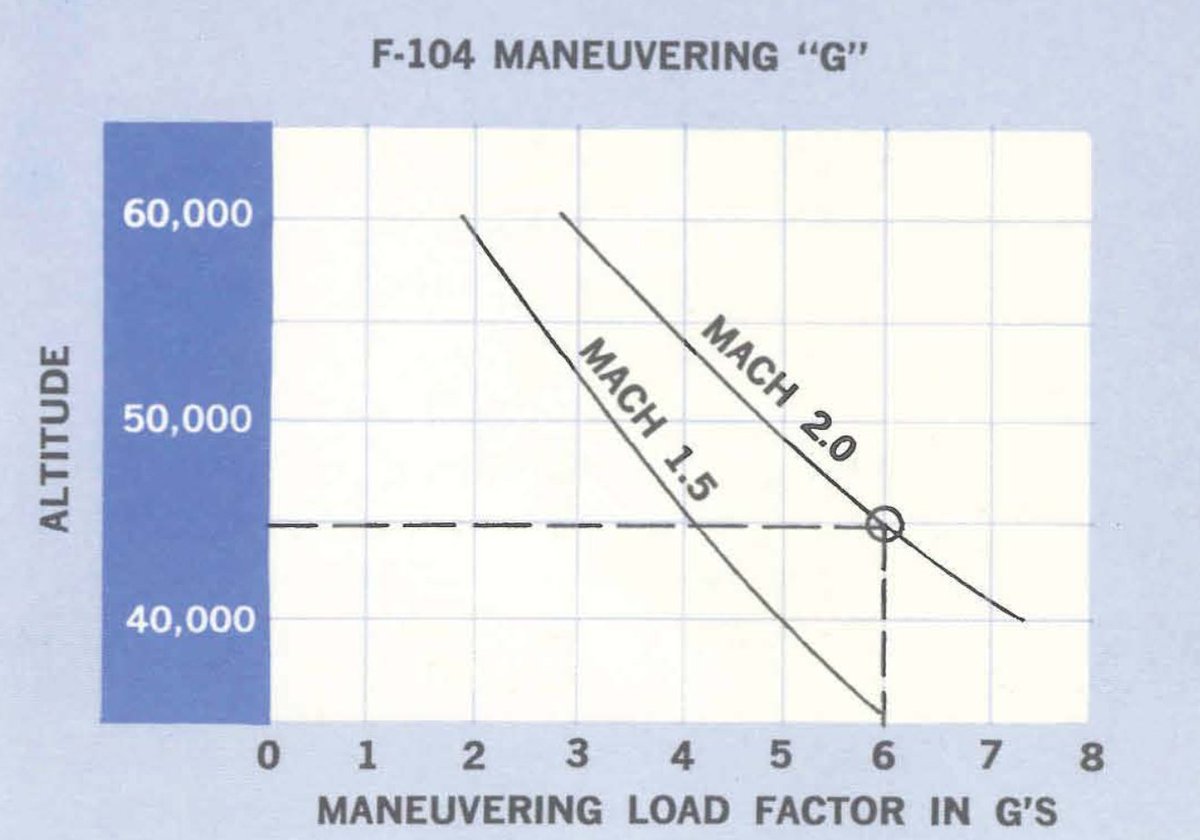
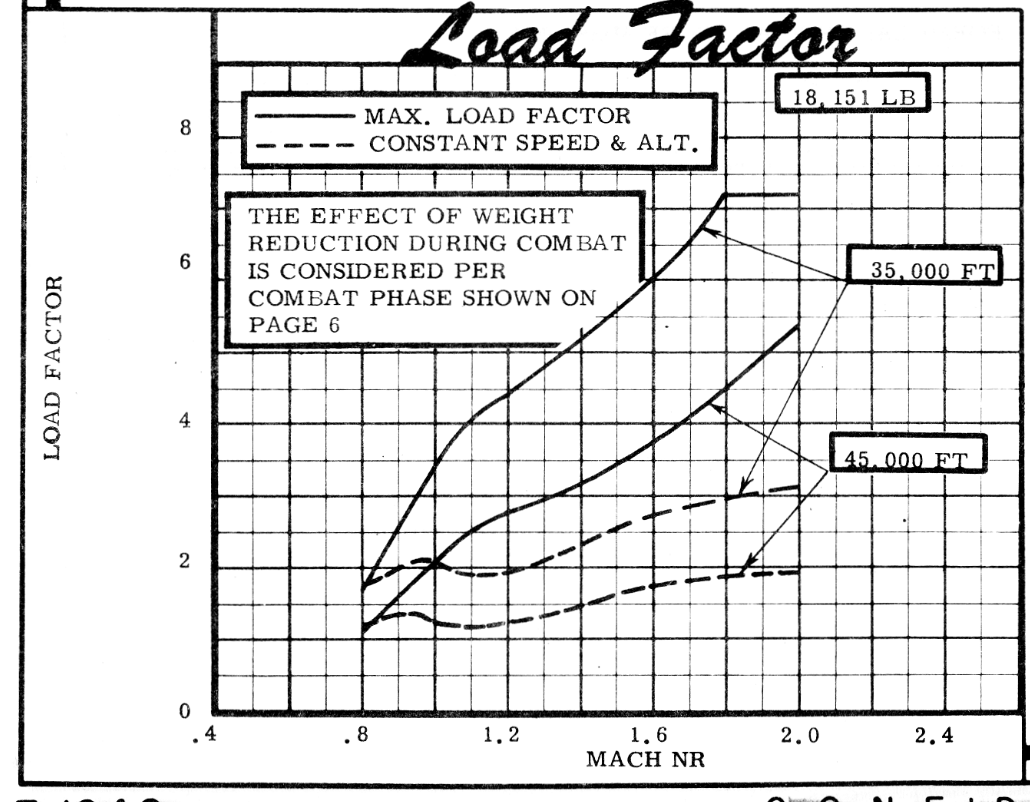
Above Mach, though, the F-104 was one of, if not the most, maneuverable fighter in US service until the F-15.
Some of the emphasis on the dogfighter nature of the F-104 can be seen in the design of the early 104's fire control system: its main goal was to lead the pilot into visual range of the target through a simple and easy-to-understand radar.
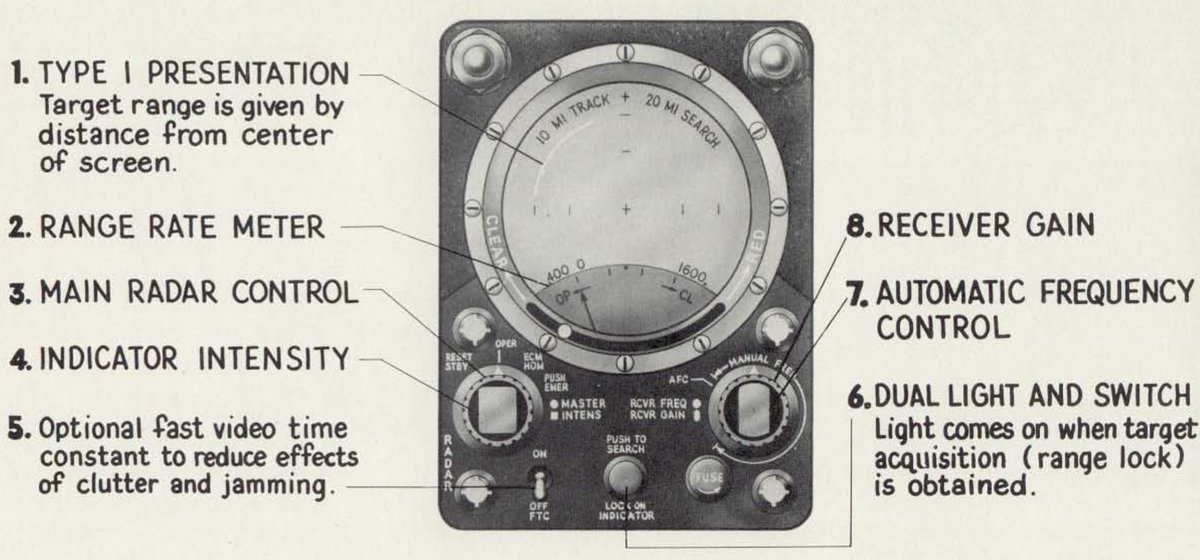
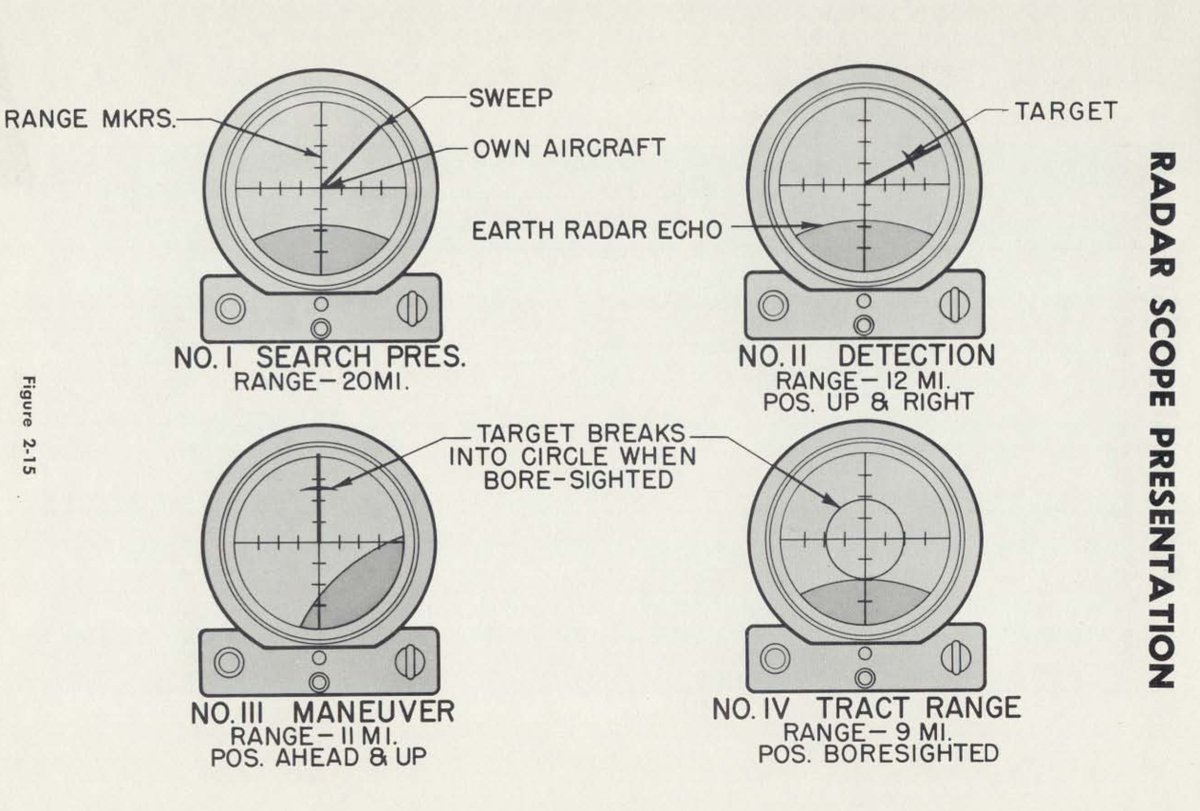
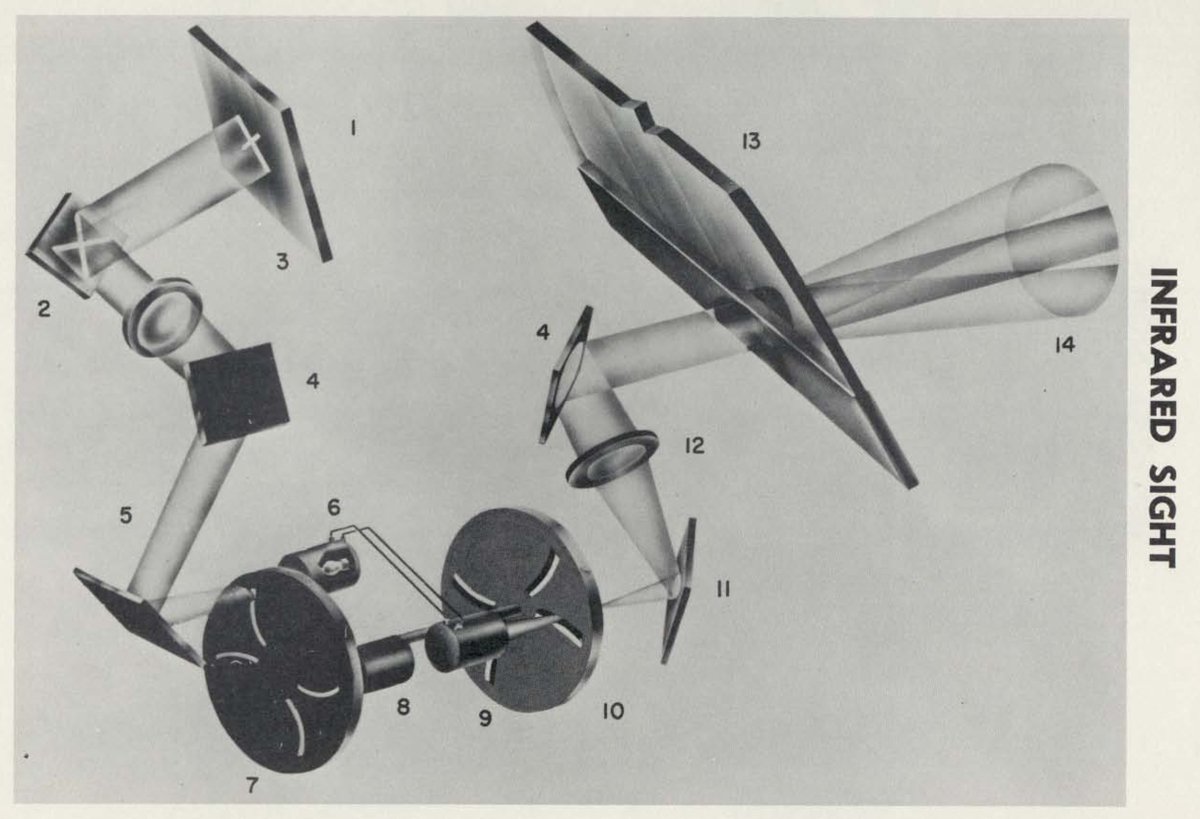
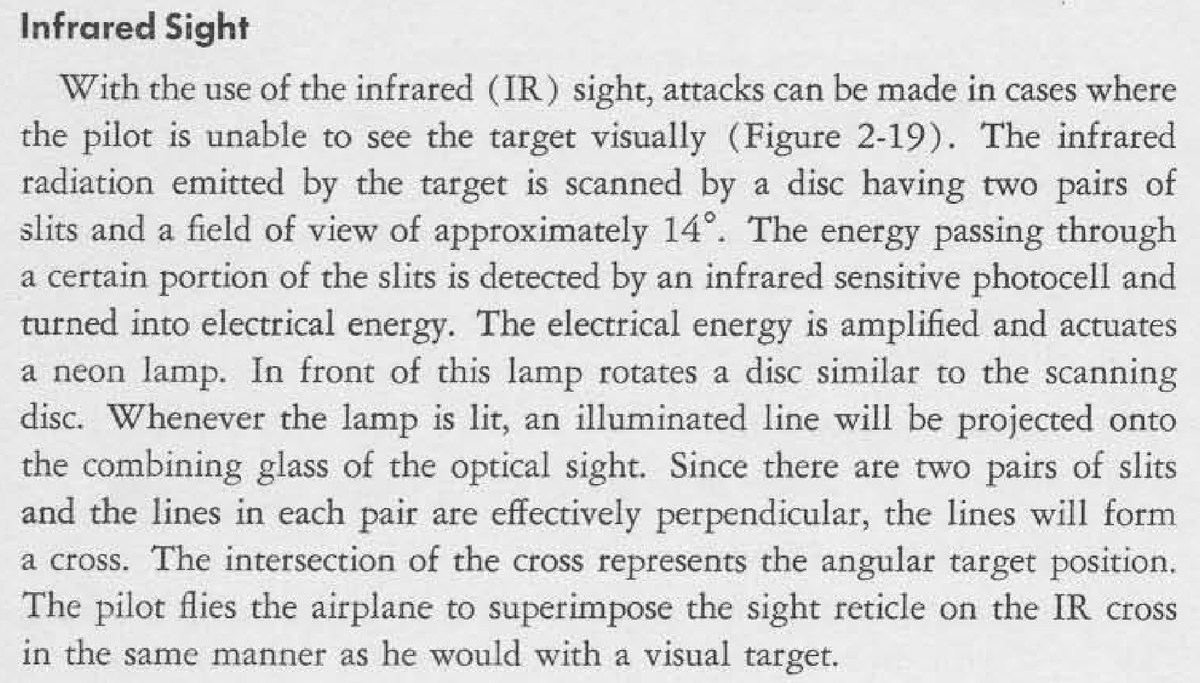
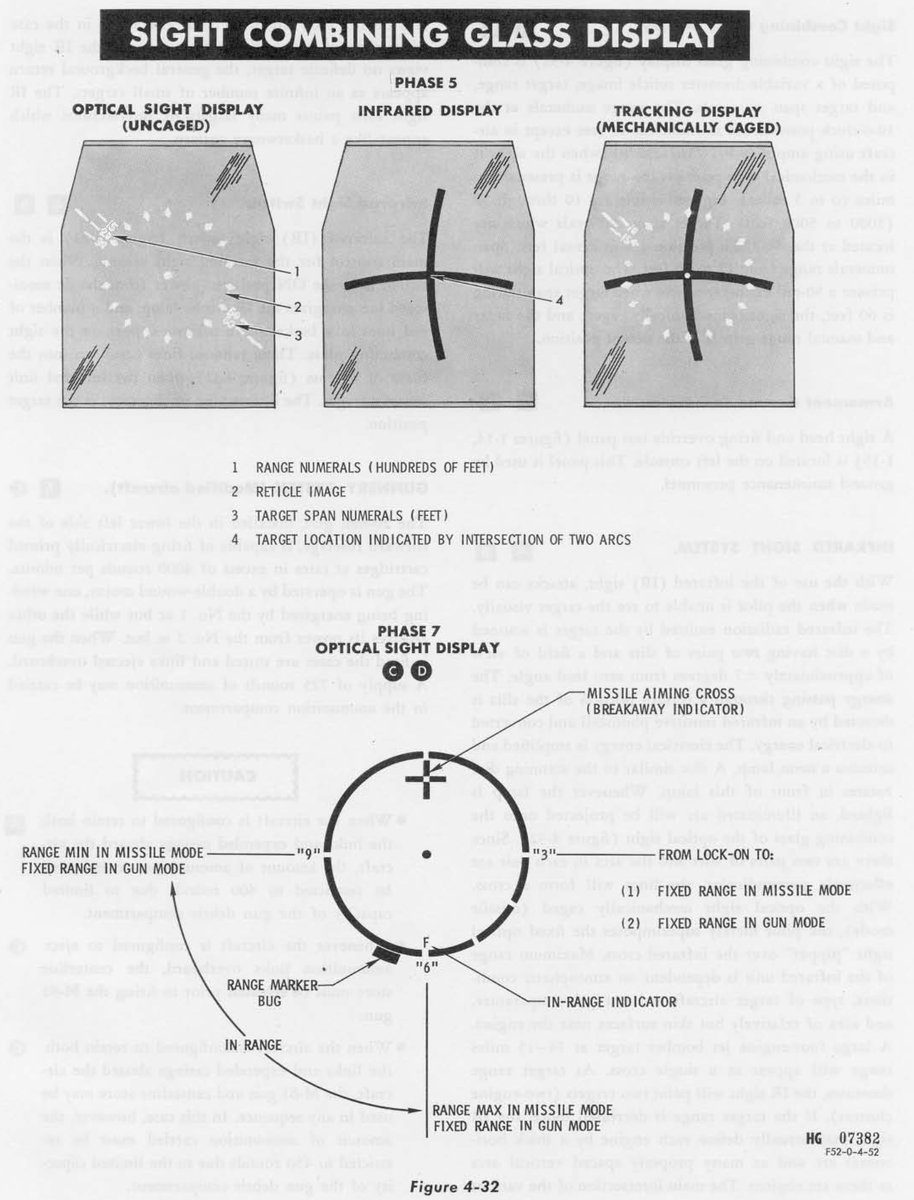
The 104C even contained an advanced optical sight to aid in target engagement by ensuring the pilot knows when he is "in range".
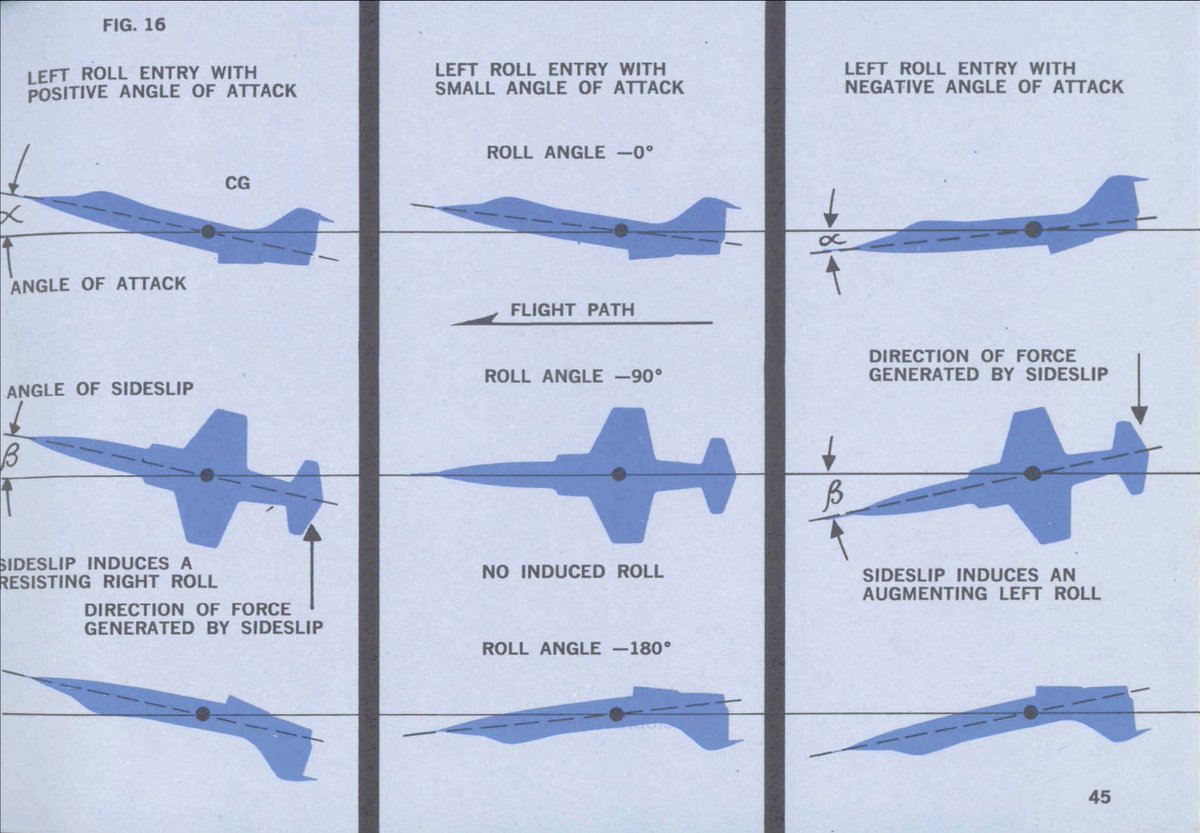
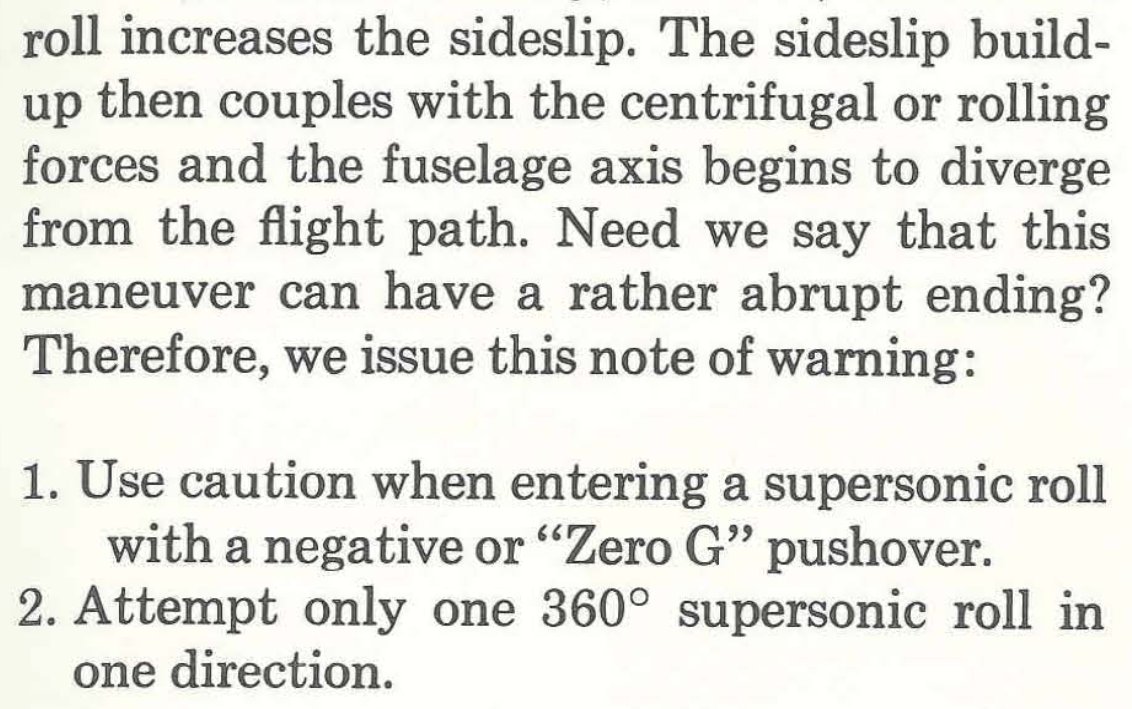
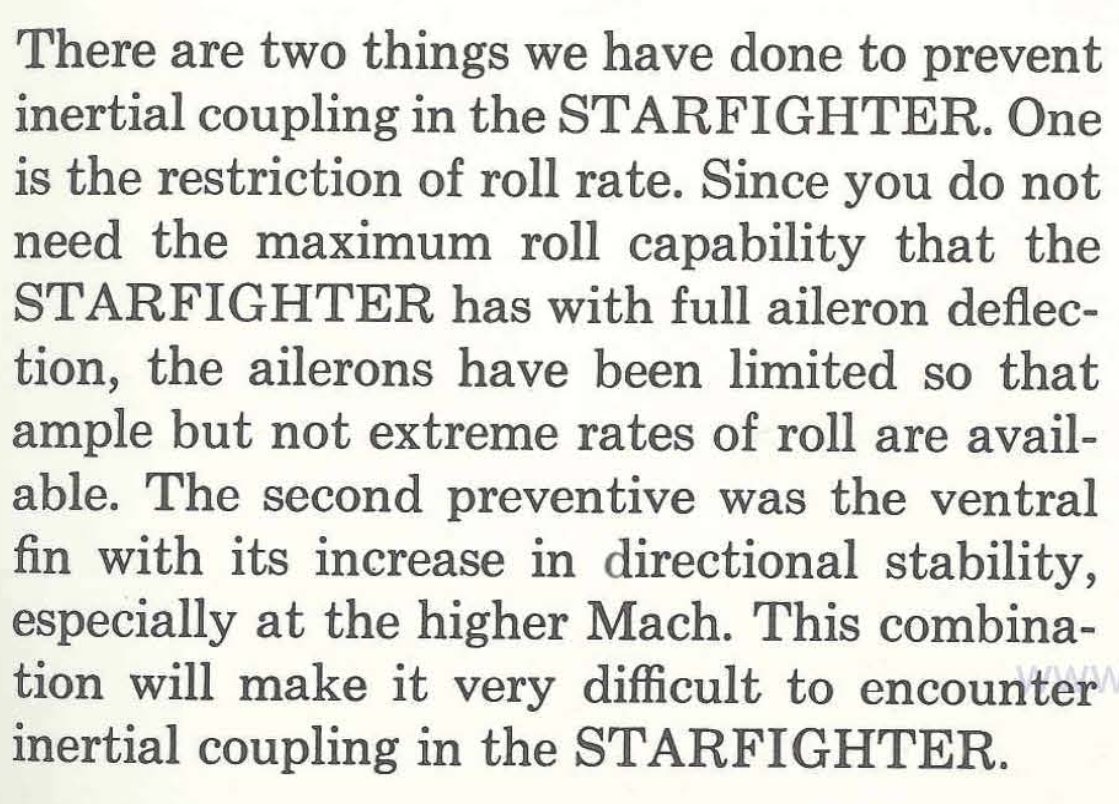
There were a few small aerodynamic problems with the 104, such as the low-speed performance and the inertial coupling, which could destroy the plane if the control limiters were not operating. However, I know of no losses to internal coupling related issues.
Now, we get into some of the problems. The first one that everyone points to is the ejection seat. The choice to go with a downward firing seat was novel and in many ways designed to protect the pilot as much as possible.
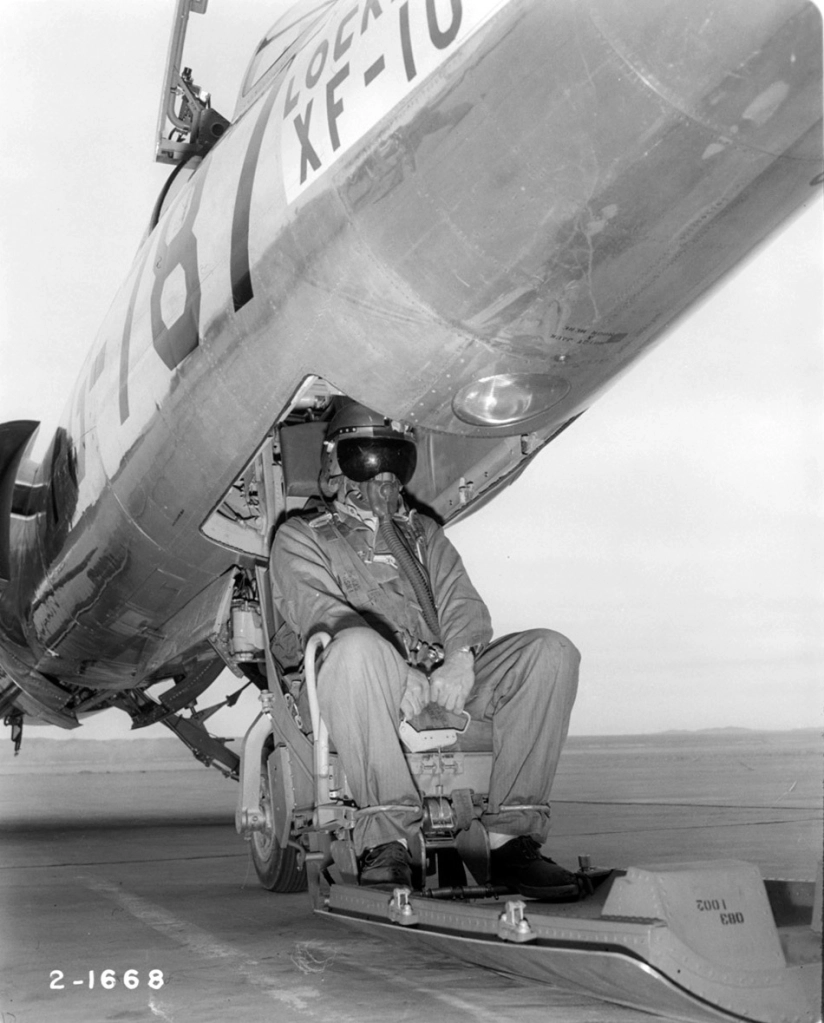
In a combat ejection scenario, which was when the seat was expected to be used, the ejection seats of the mid-1950s would not throw the pilot clear of the looming T-tail of the F-104. The only thing that pilots would have to train to do is remember to roll when at low altitudes.
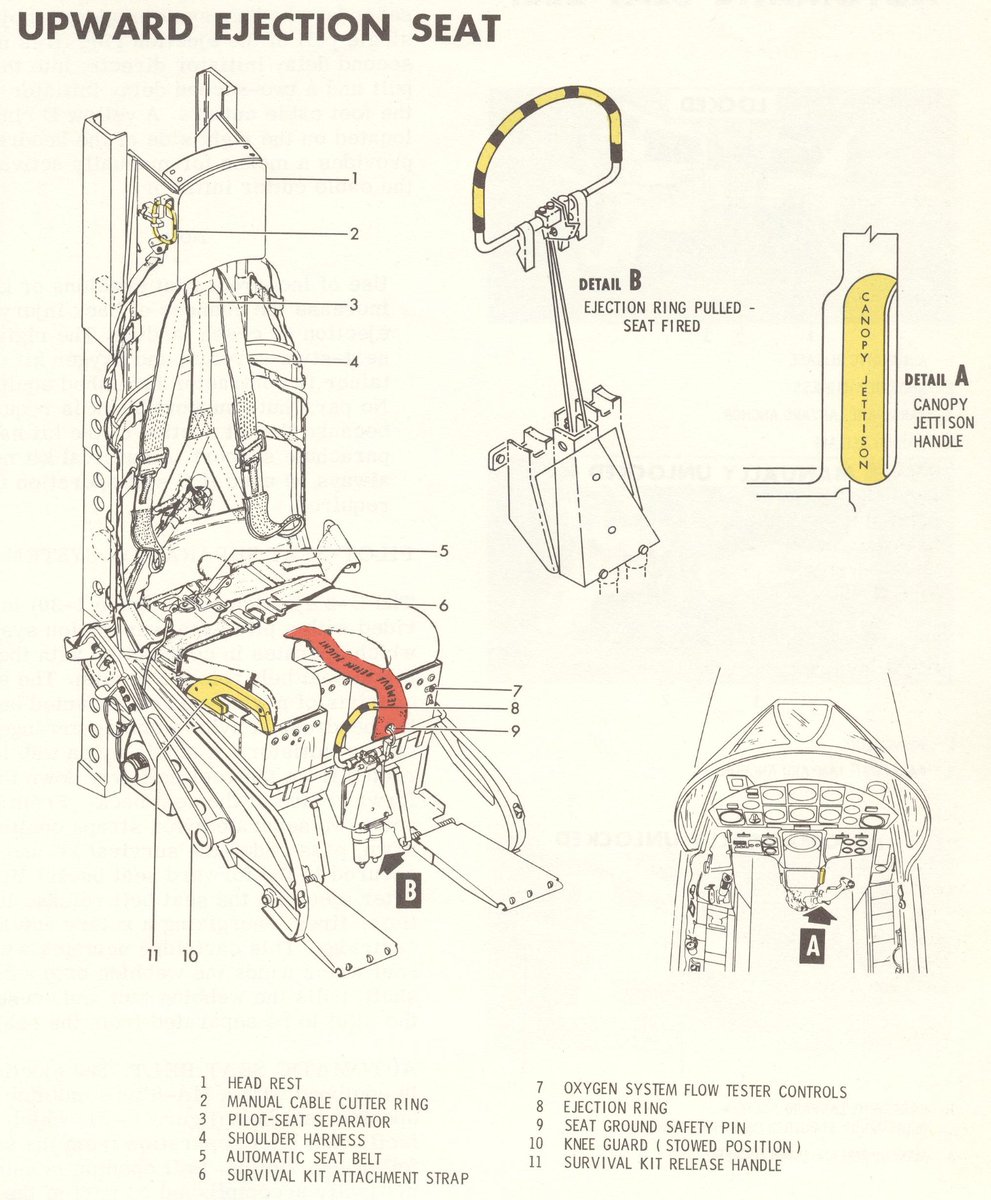
Once seats had been improved, though, it was also better understood that ejections were very rare at speed and altitude, and that an upward-firing ejection seat would be more than adequate for the F-104.
The biggest issue that the F-104 faced was the eternal problem of the day fighter. Without longer-range missiles, a powerful radar, and with a limited payload of what missiles it could carry, it quickly became less relevant as the wonderful air superiority fighter it was born as.
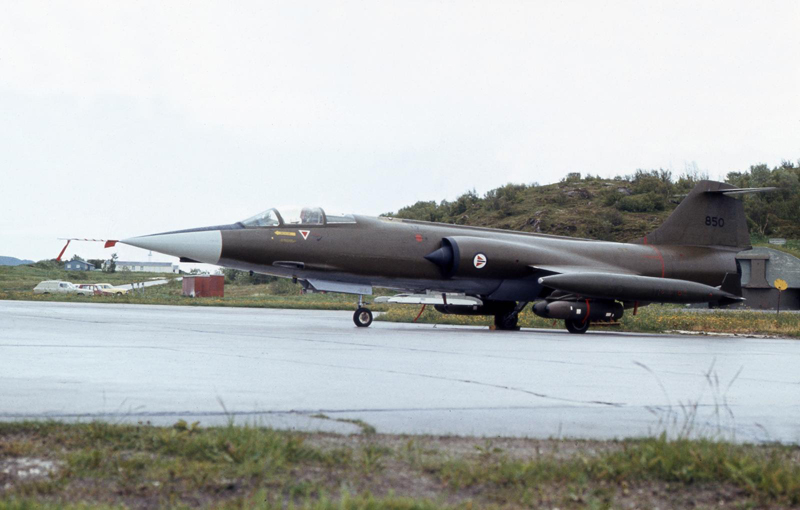
It was, however, still an incredibly stable, simple and durable mach 2 capable airframe. The F-104G that would go on to serve in the Air Forces of many nations expanded on this capability, turning this high-speed dogfighter into a lightweight, multi-role fighter-bomber.
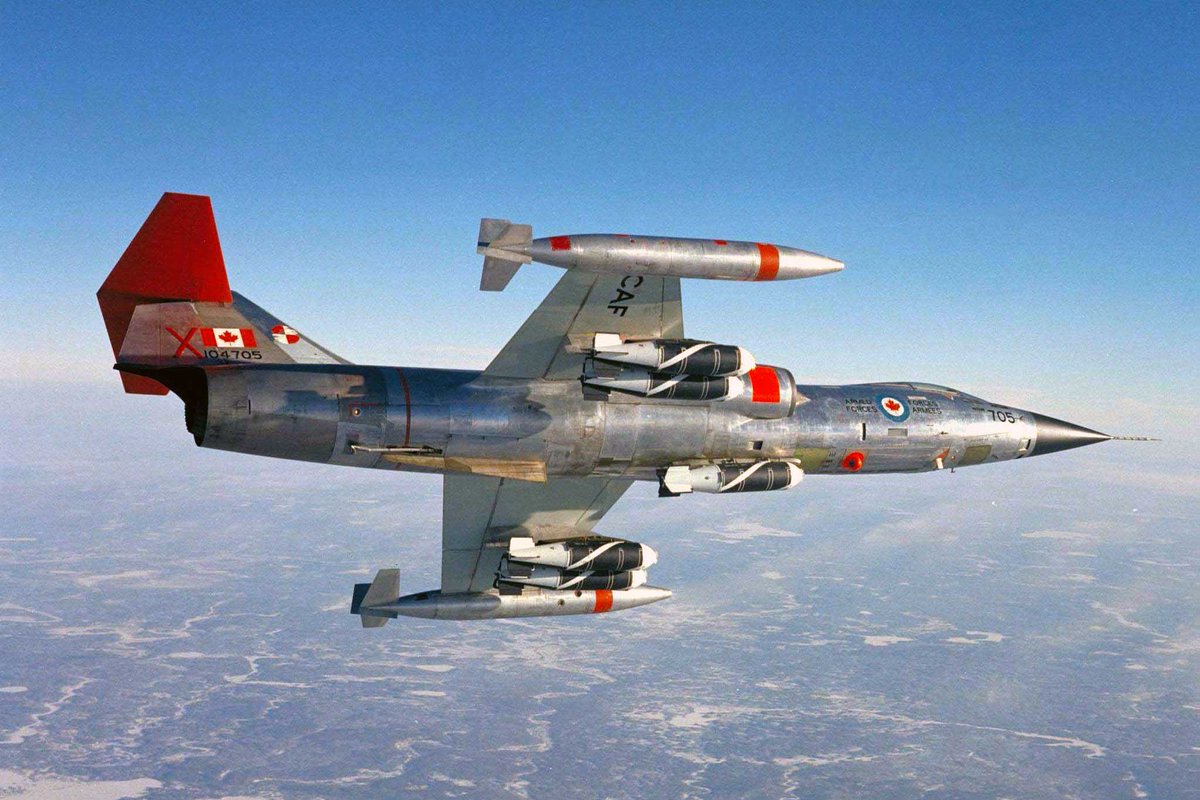
Given this, it should come as little surprise that four of the European nations that operated F-104s, Netherlands, Belgium, Denmark, and Norway, signed on to purchase the F-16. Like the 104, it was easy to produce and maintain at home and was a very capable multirole day fighter.
There are many other topics I could cover on the 104, including poor training in many countries, loss rate as a statistic versus accidents/100,000 flight hours, and more. I've promised a friend that I'd let him write an article on 104 safety on my website, so we'll have to wait.
In the next few days, though, I should be receiving an uncommon F-104G manual that details the weapons systems and the radar. I think we'll go over it when I have some time to sit down and digest it.
Until then,
Until then,
• • •
Missing some Tweet in this thread? You can try to
force a refresh