Heatloss Profile picture
Feb 17 22 tweets 9 min read Read on X
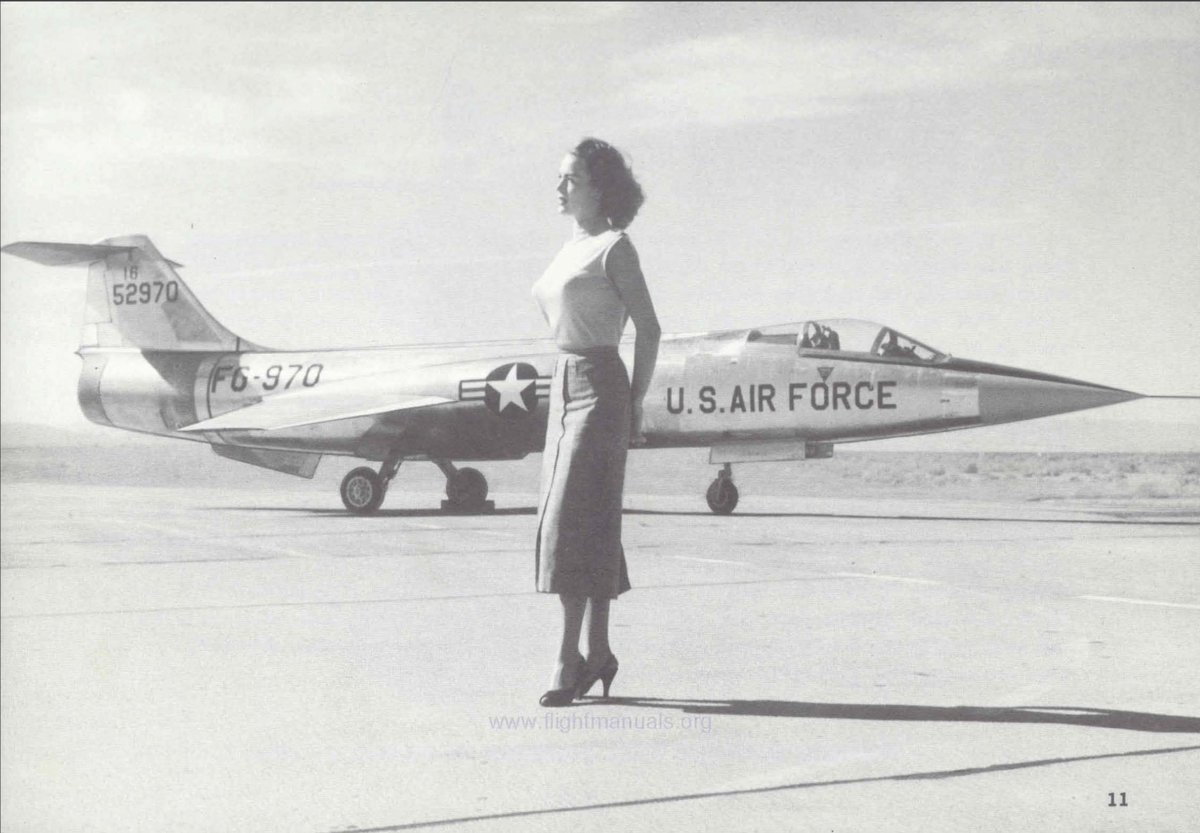
On the topic of day fighters, one of the more misunderstood day fighters is the F-104. However, it suffered from many issues of light/day fighters of the era.🧵 Image
The concept of the F-104 came from an unusual place--pilot opinions. Kelly Johnson interviewed pilots in the Korean War on what they wanted from a new fighter.
The answers were almost unanimous. Fast, simple, maneuverable, and with good high-altitude performance.
The F-104 was the answer to that call. It was an air superiority fighter, first and foremost. It was lightweight, incredibly fast, responsive for the time, and nearly untouchable above mach.
In a way, this was the 1950s predecessor to the LWF concept. Image
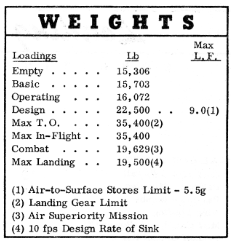
And, when I say light, I mean it. The Starfighter was nearly a ton LIGHTER than the F-16A. The engine alone weighed almost a third of the empty aircraft!
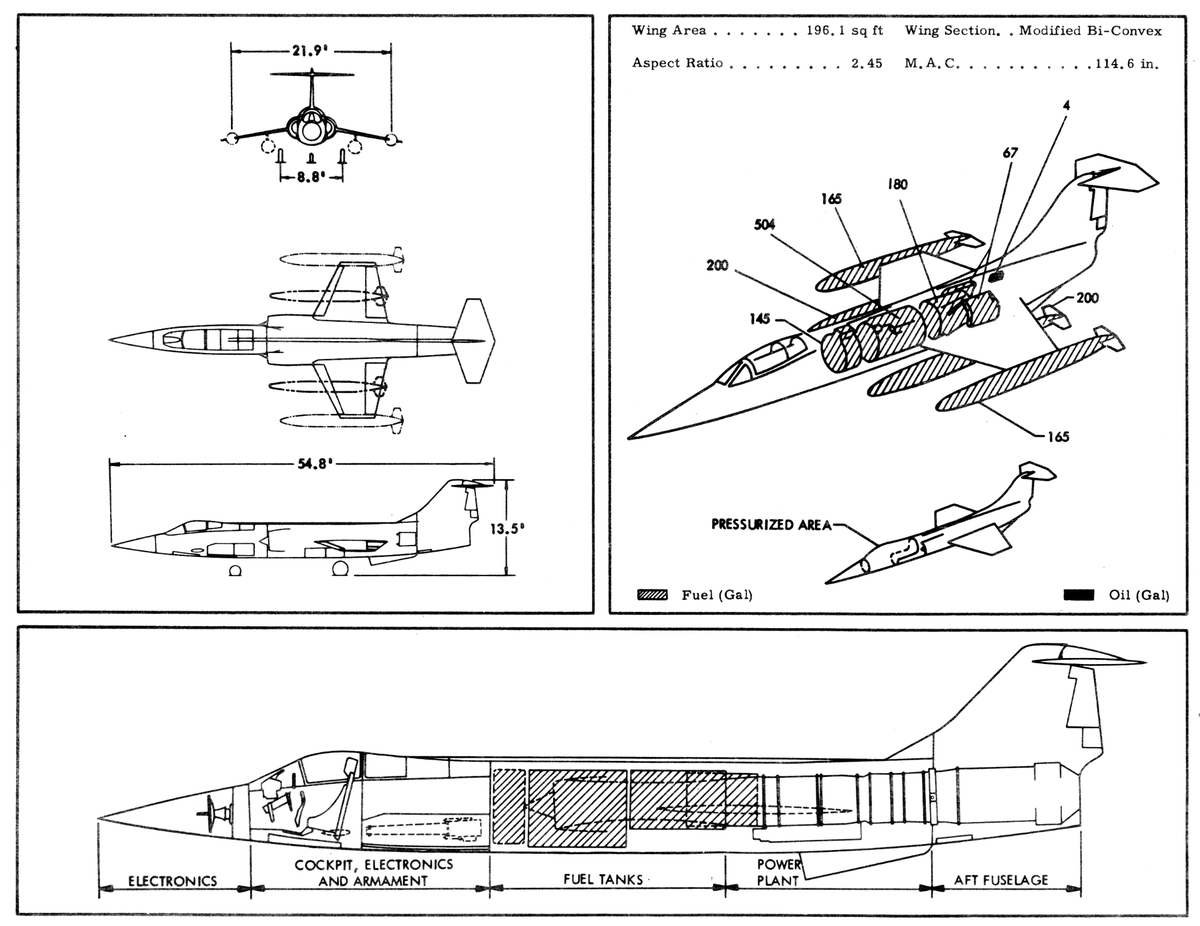
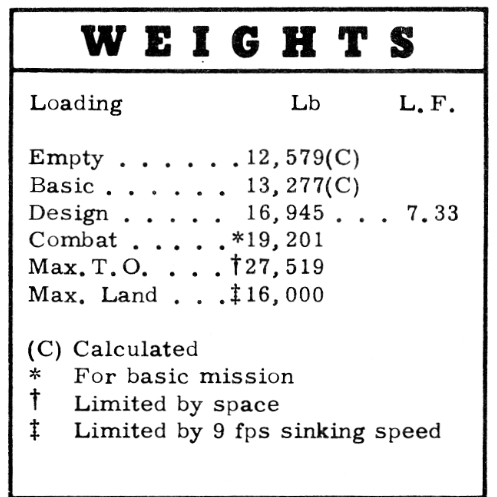
Image
Image
Image
One of the design goals throughout the 104's development was the minimization of drag to increase performance. The narrow, small, and very fine wings are a representation of that.
Image
Image
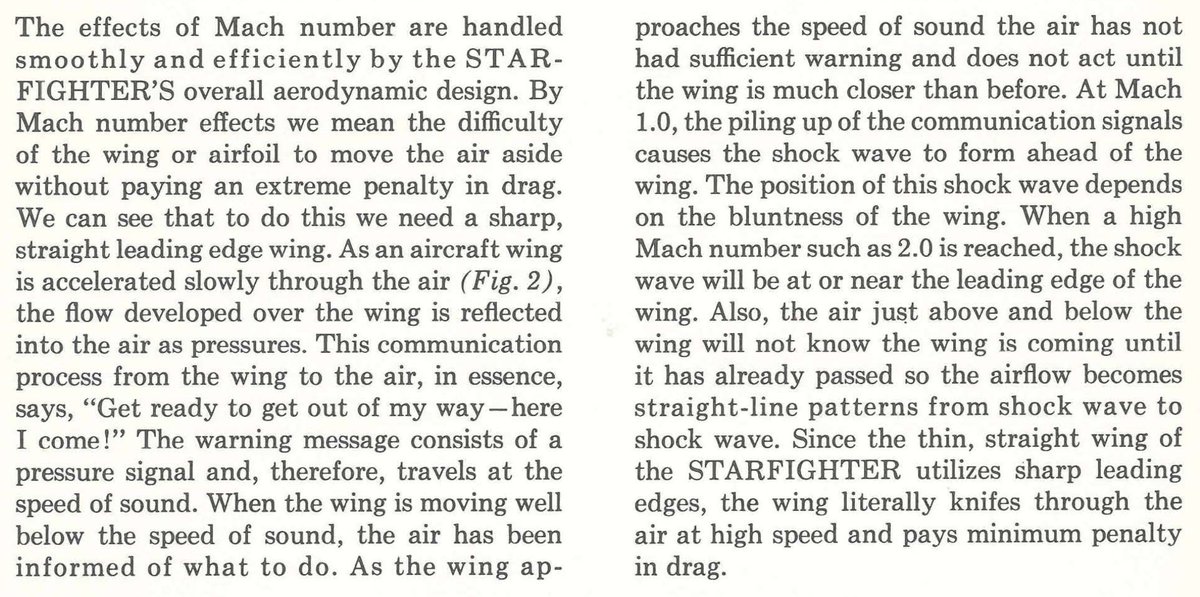
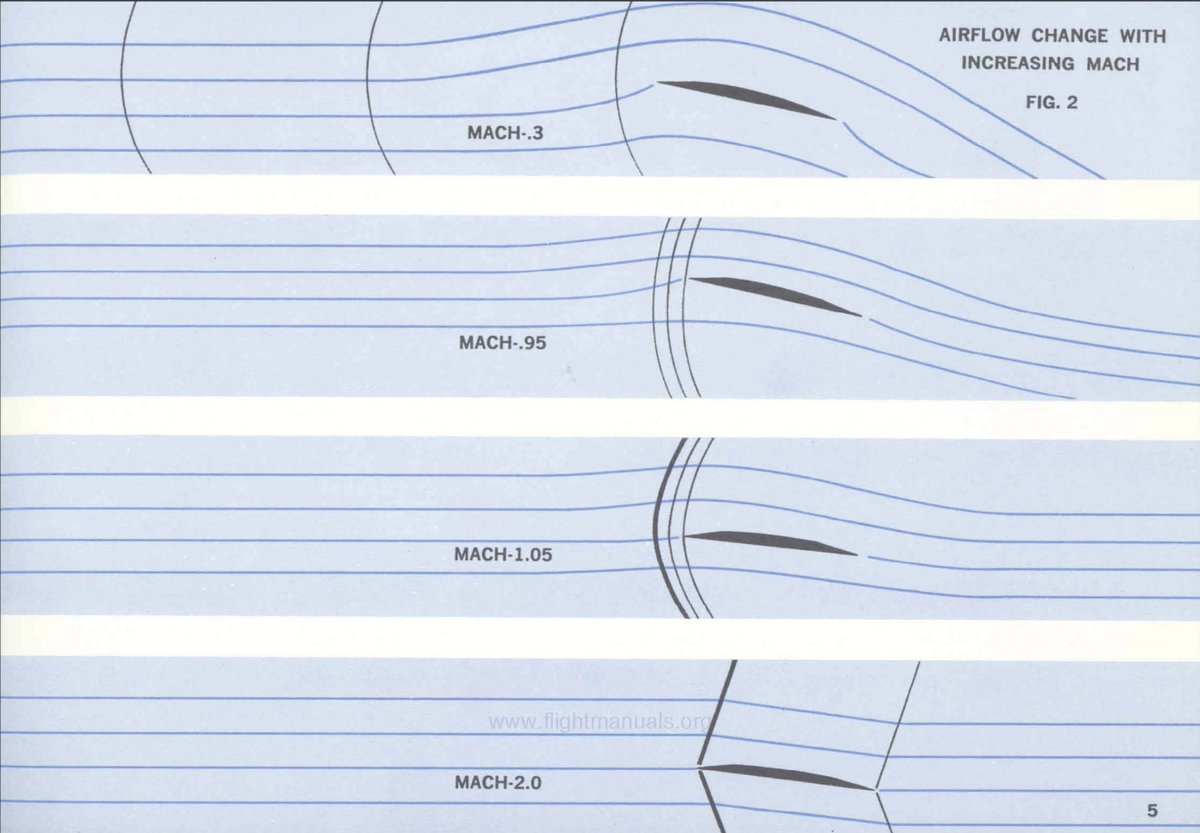
Another issue that Korean War pilots fought was the aerodynamics of their own aircraft. Early fighter jets were not well equipped to handle the transonic region and suffered all sorts of odd and hard-to-control effects. @BaA43A3aHY can probably explain these better than I.
The 104's very thin wings helped prevent these issues. Image
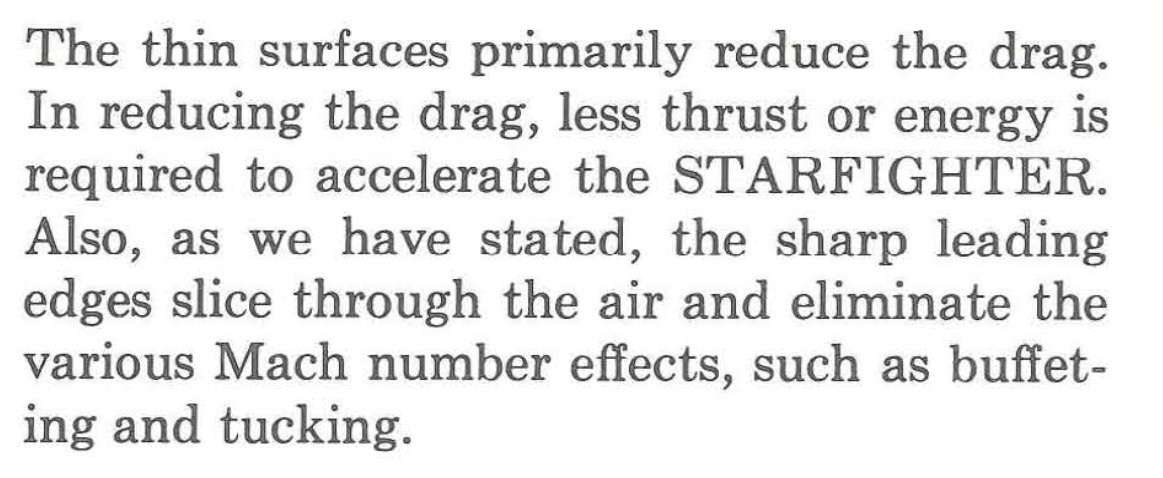
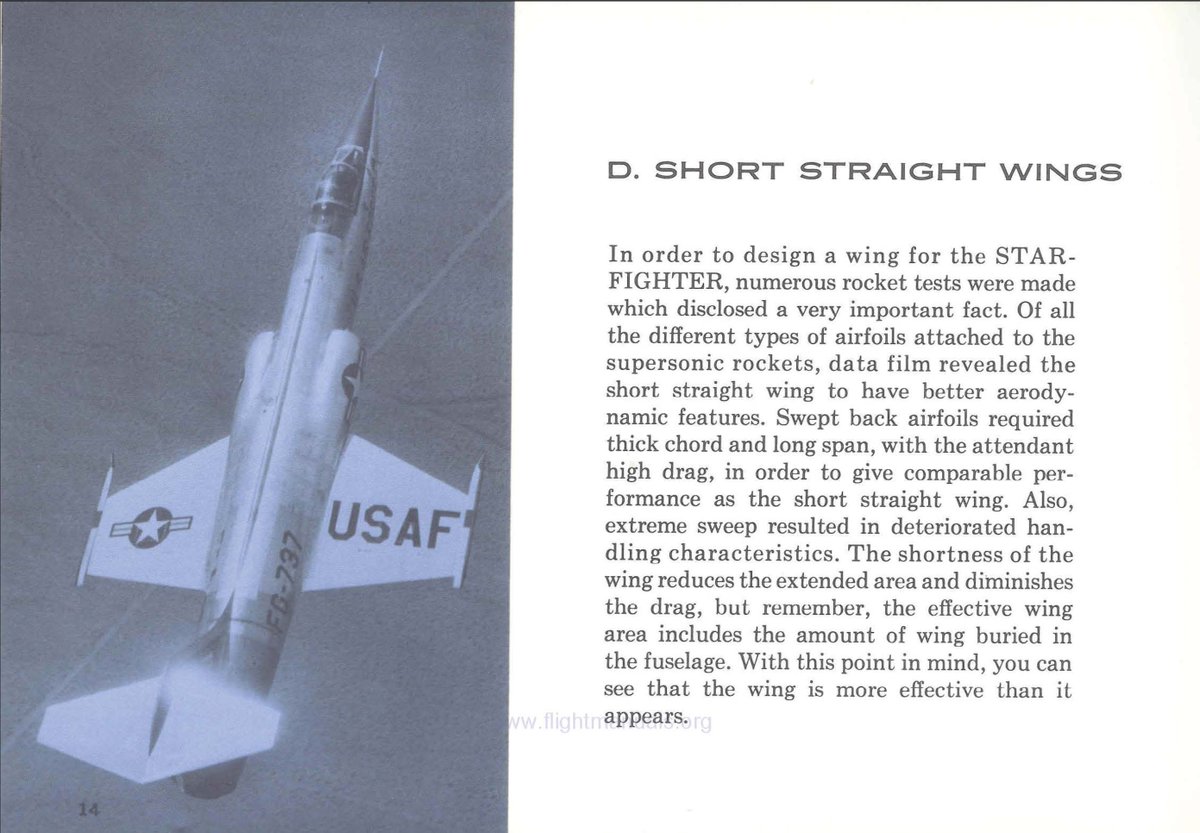
But the 104's wings weren't designed for just low drag. They were designed to give optimum maneuver performance across the range of expected combat speeds. The same was true of the high T-tail.
Image
Image
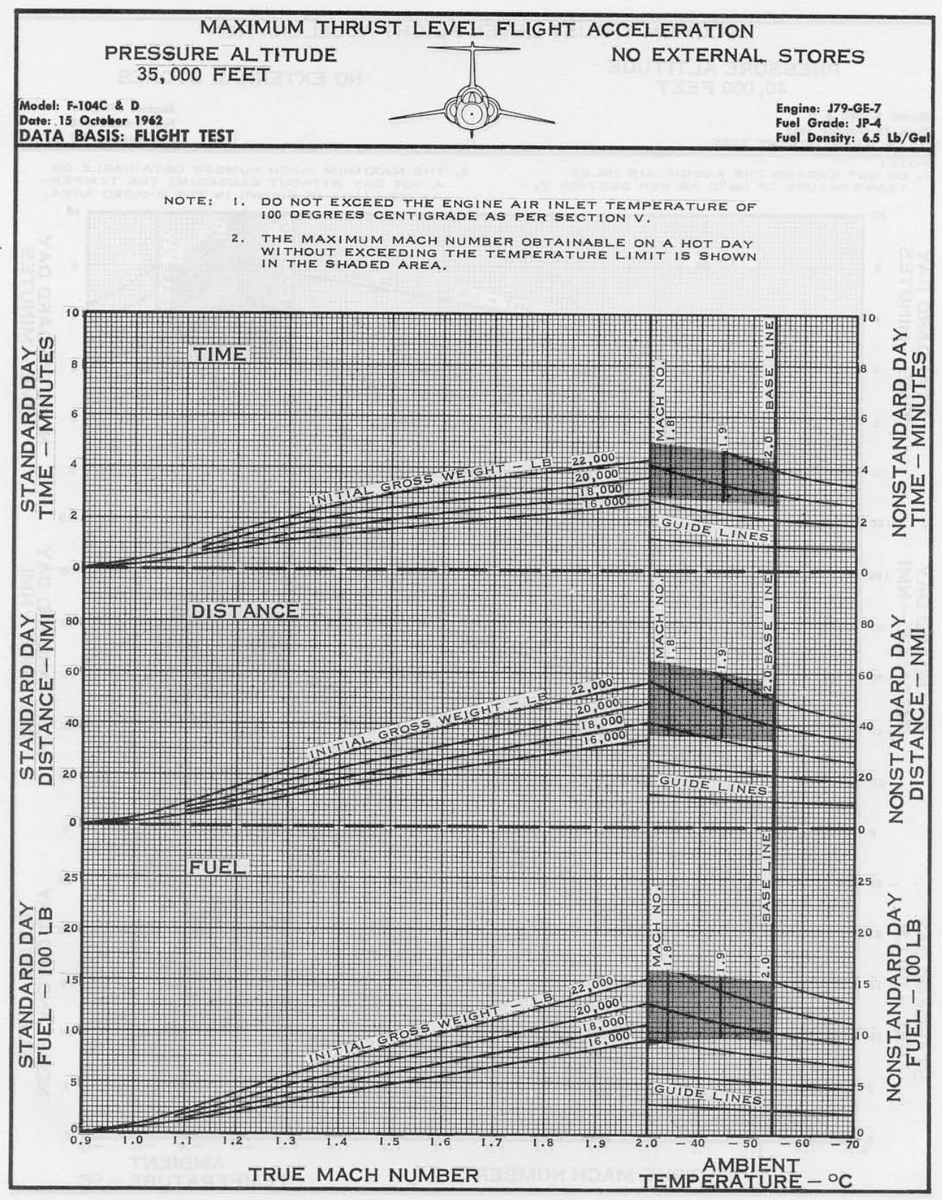
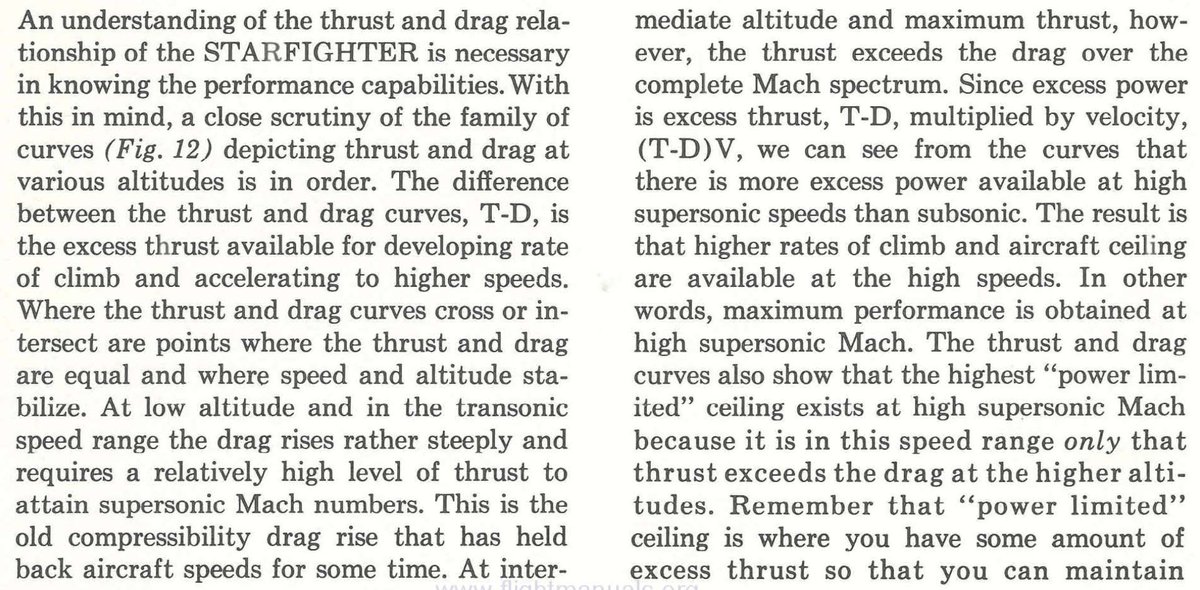
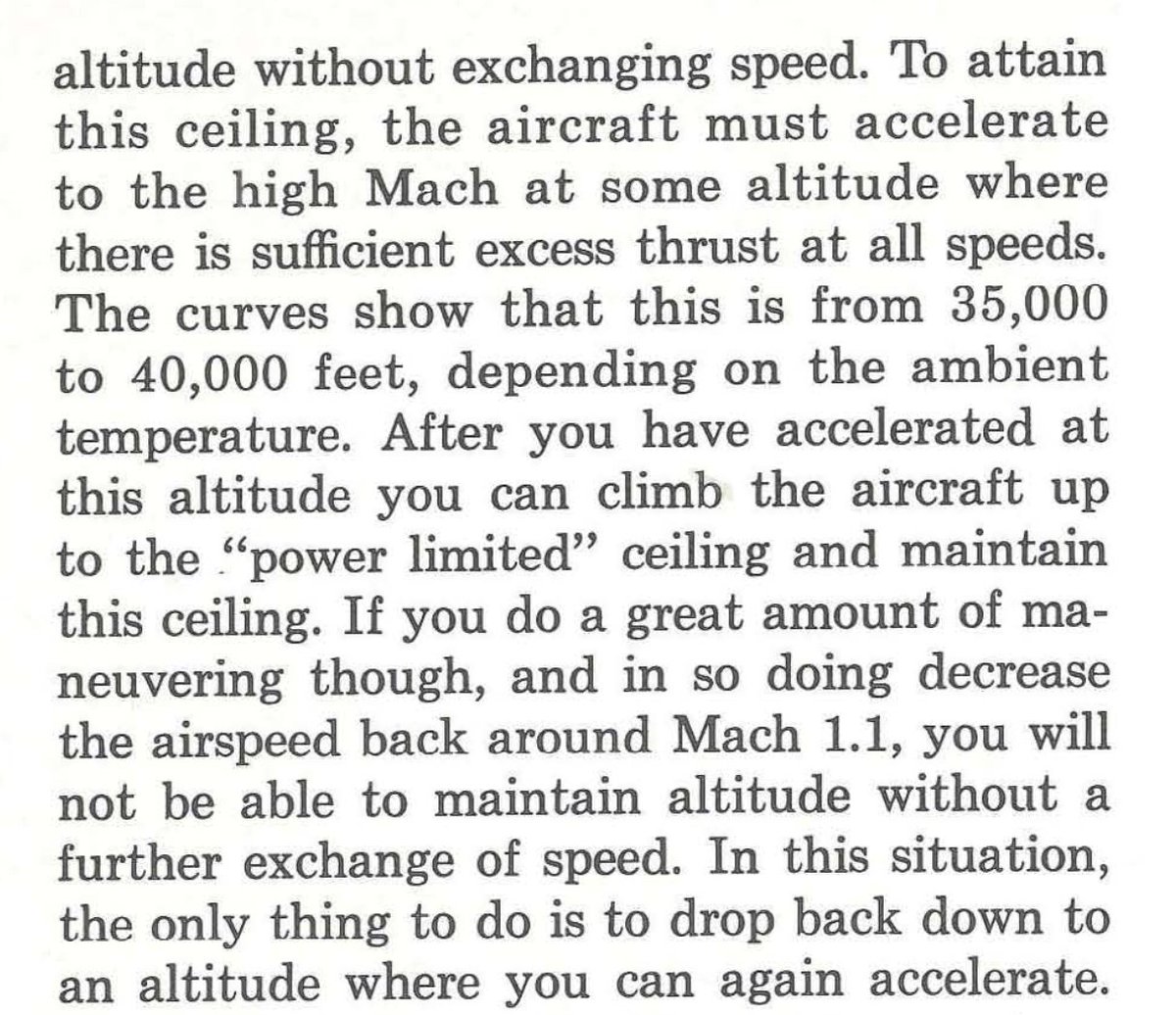
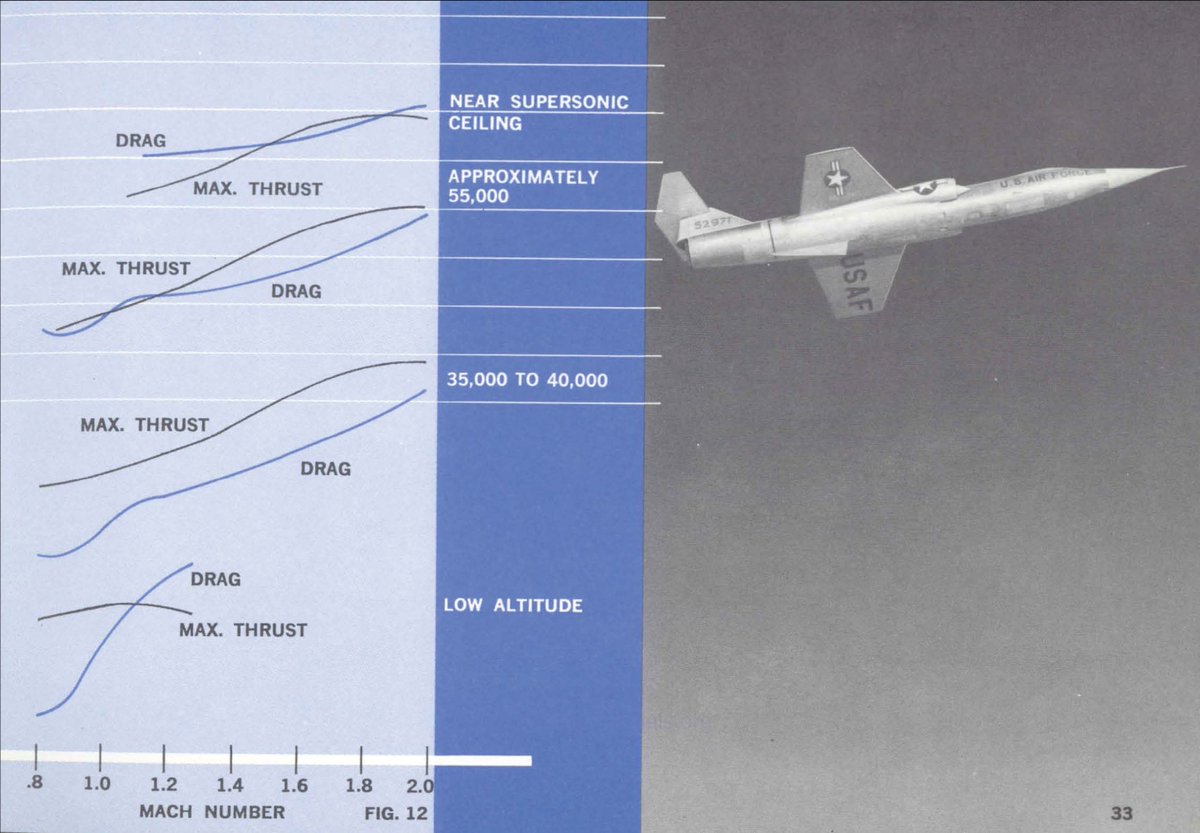
And now a few snippets that describe thrust-drag as it relates to the Starfighter, and an acceleration chart of the 104C.
Yes, that is 4 minutes from Mach 0.9 to Mach 2.0 at 35,000 feet.
The acceleration at lower altitudes was even more extreme, though no charts exist.
Image
Image
Image
Image
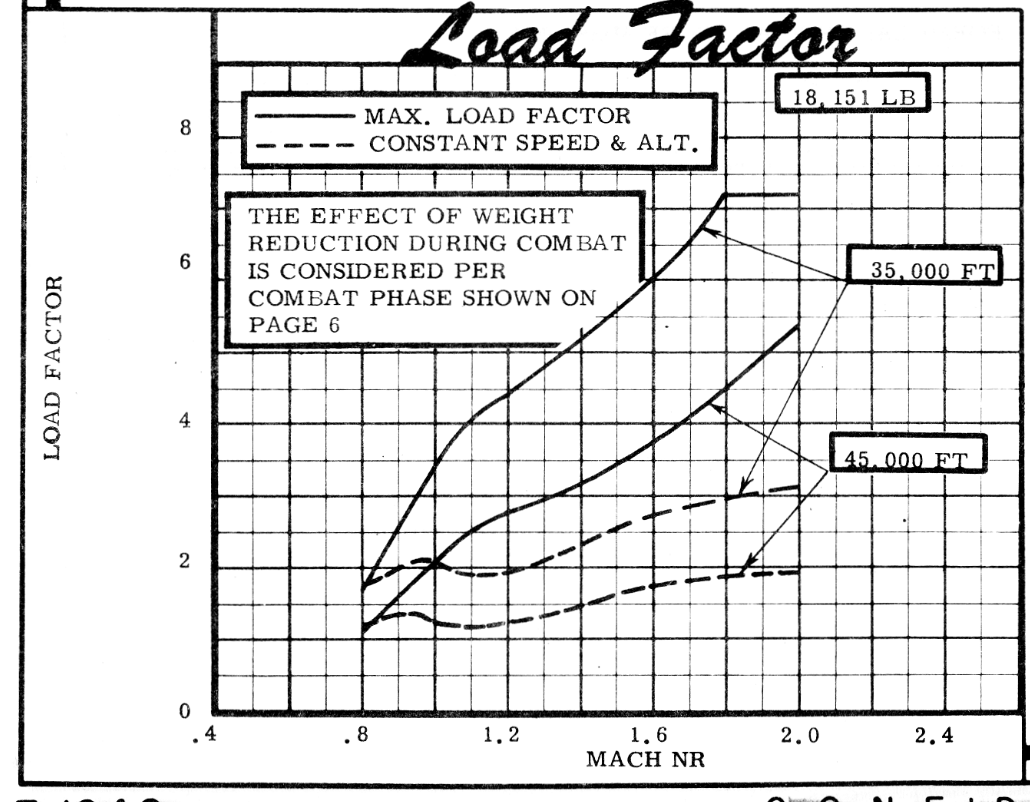
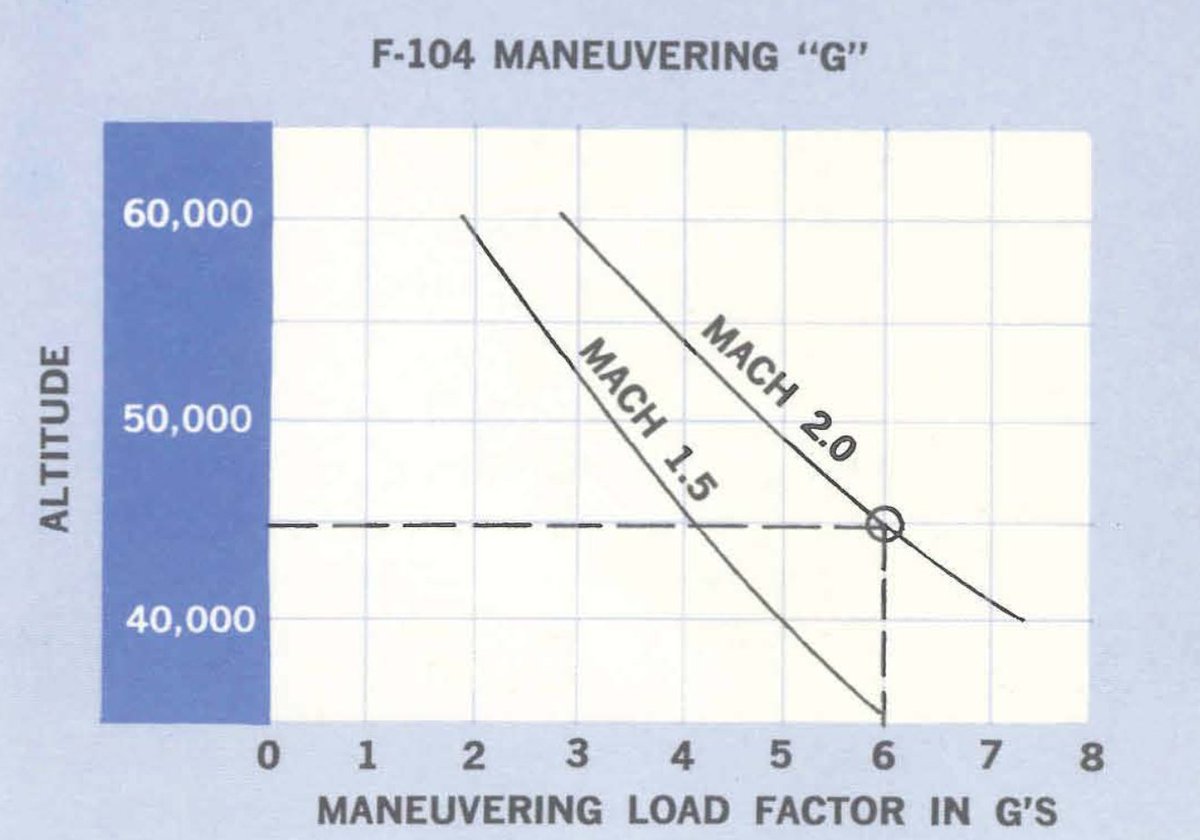
And now, turn performance. While I cannot find any information in manuals on lower altitude turns, from what I've read, it still performs well, though you should probably try to keep any fights at 10,000 feet or above.
Image
Image
Above Mach, though, the F-104 was one of, if not the most, maneuverable fighter in US service until the F-15.
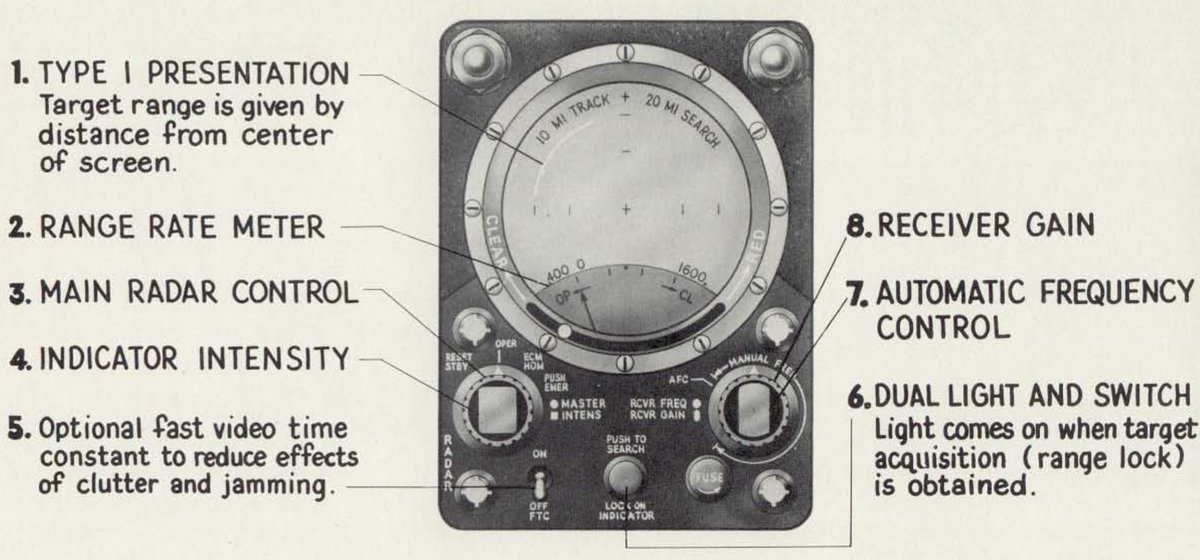
Some of the emphasis on the dogfighter nature of the F-104 can be seen in the design of the early 104's fire control system: its main goal was to lead the pilot into visual range of the target through a simple and easy-to-understand radar.
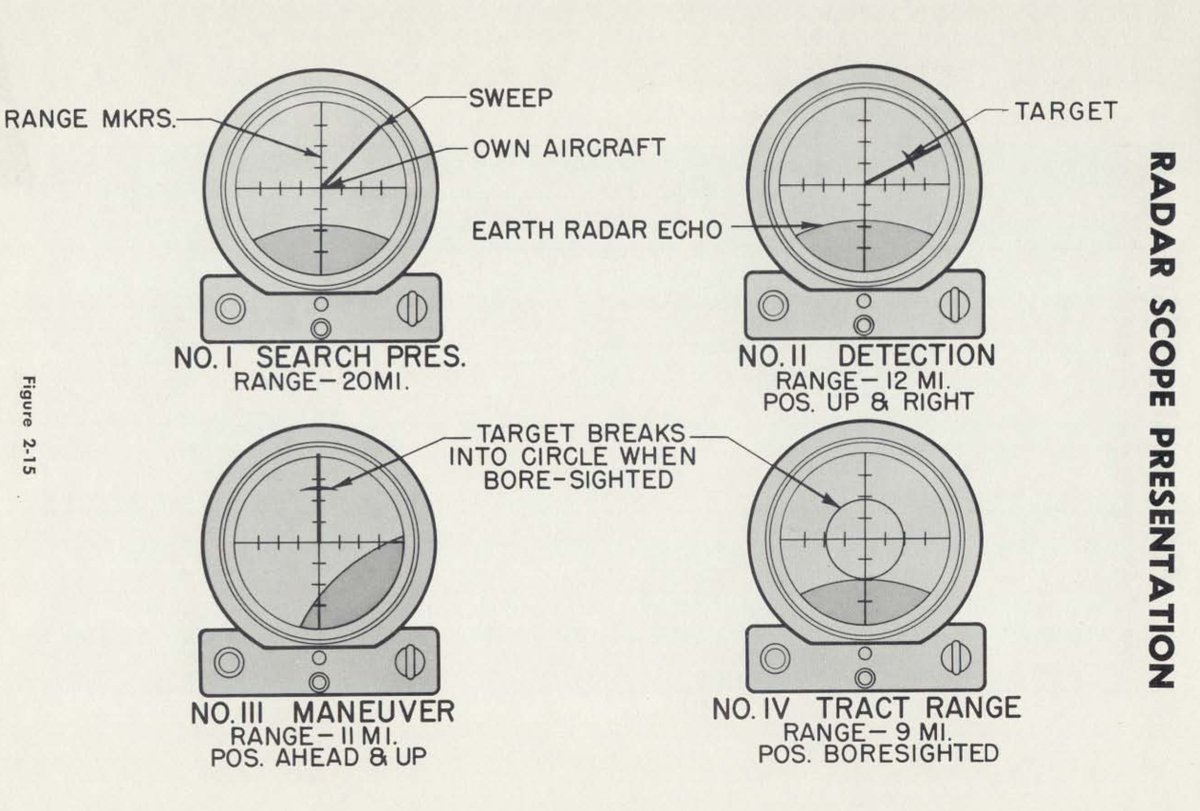
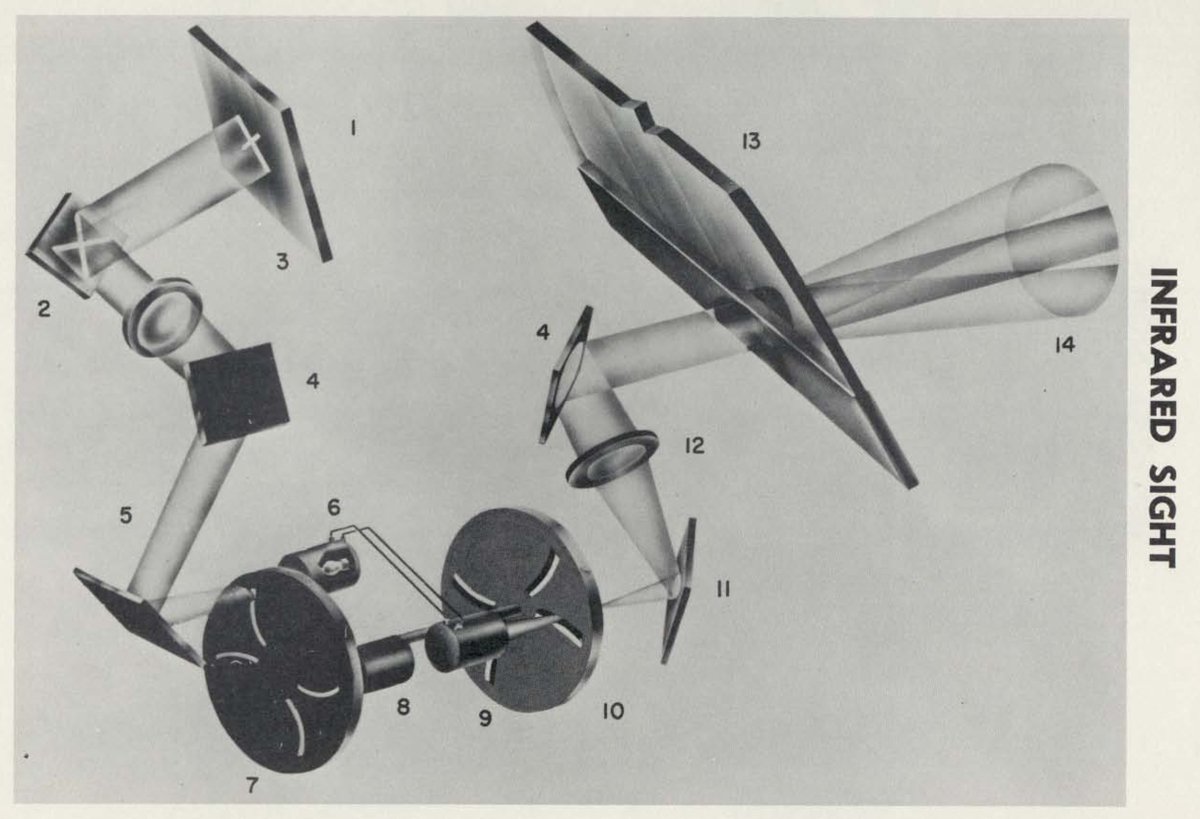
Image
Image
Image
Image
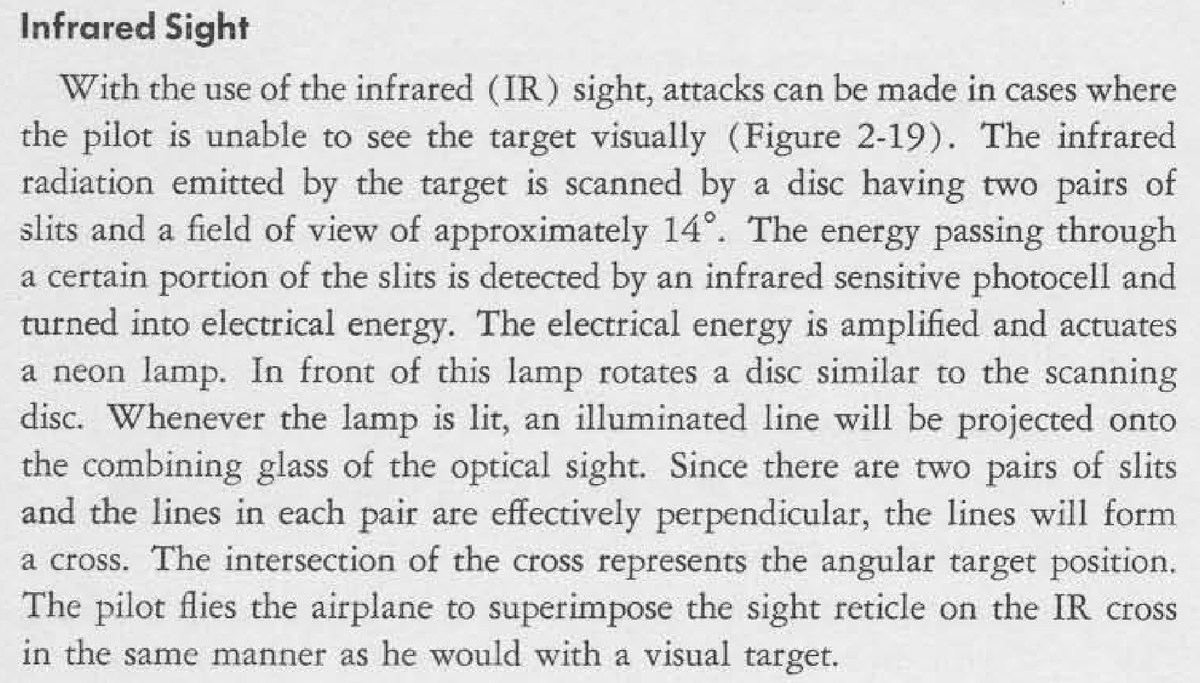
The 104C even contained an advanced optical sight to aid in target engagement by ensuring the pilot knows when he is "in range". Image
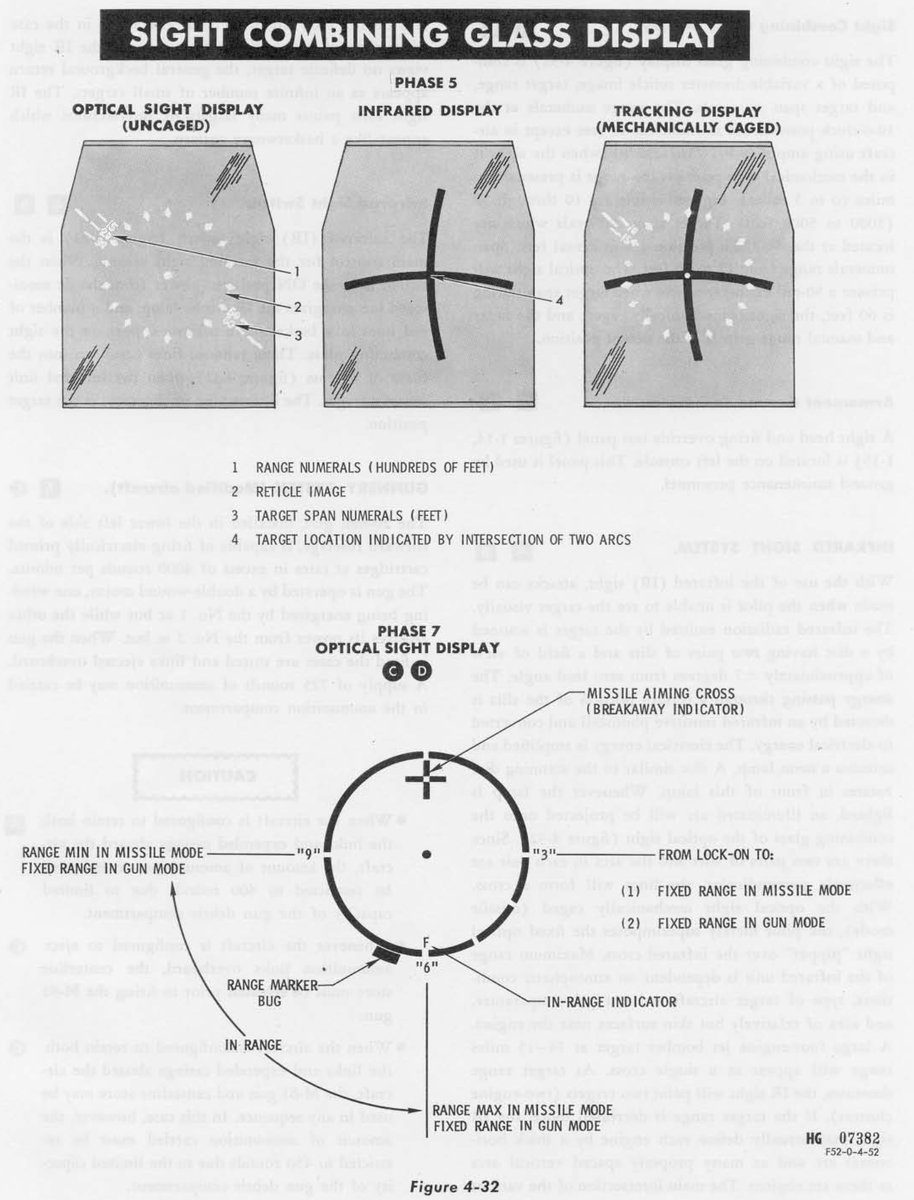
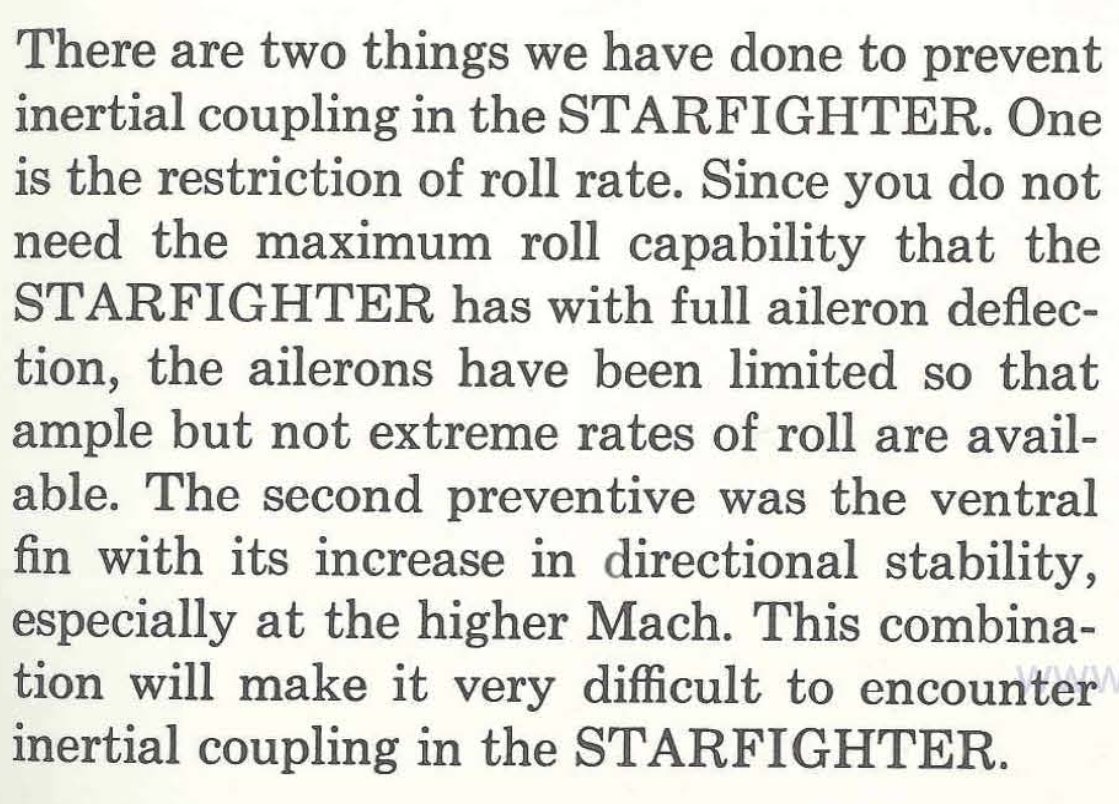
There were a few small aerodynamic problems with the 104, such as the low-speed performance and the inertial coupling, which could destroy the plane if the control limiters were not operating. However, I know of no losses to internal coupling related issues.
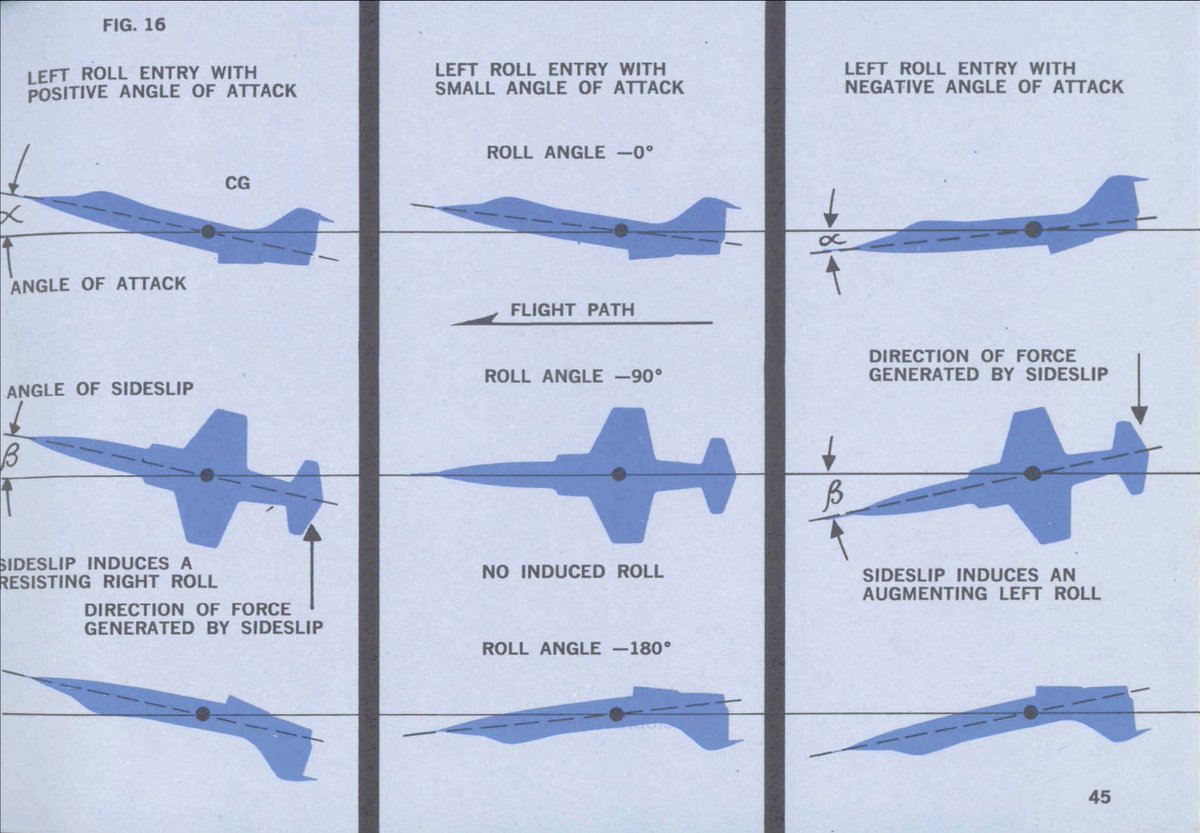
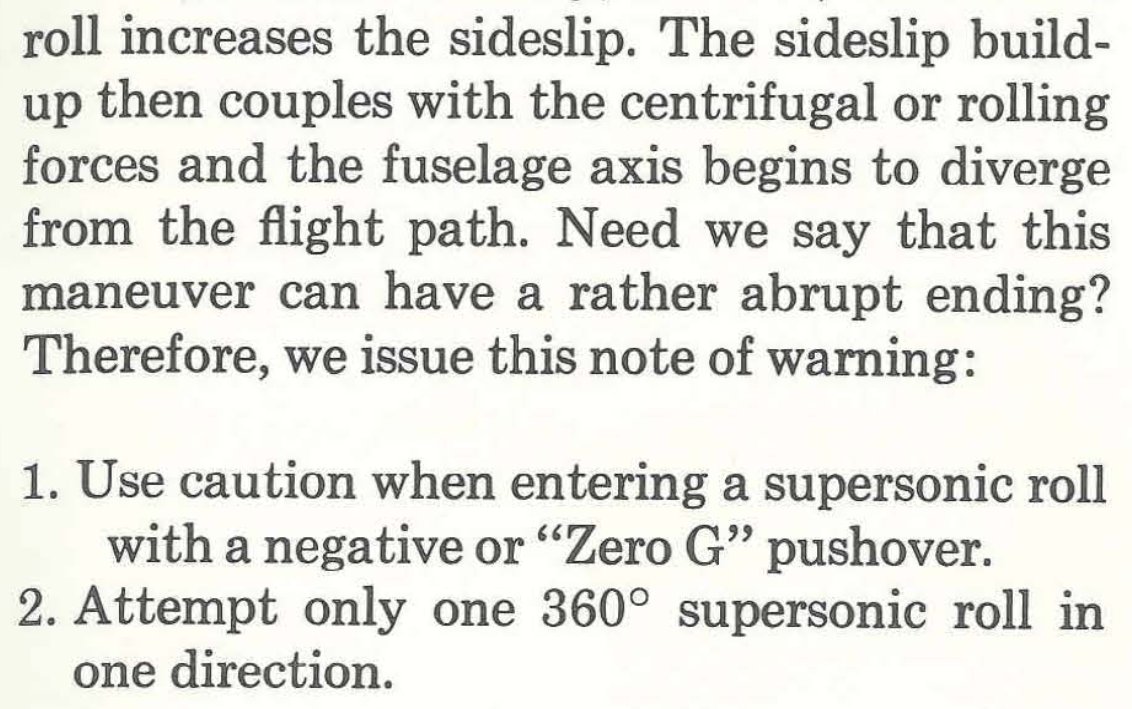
Image
Image
Image
Now, we get into some of the problems. The first one that everyone points to is the ejection seat. The choice to go with a downward firing seat was novel and in many ways designed to protect the pilot as much as possible. Image
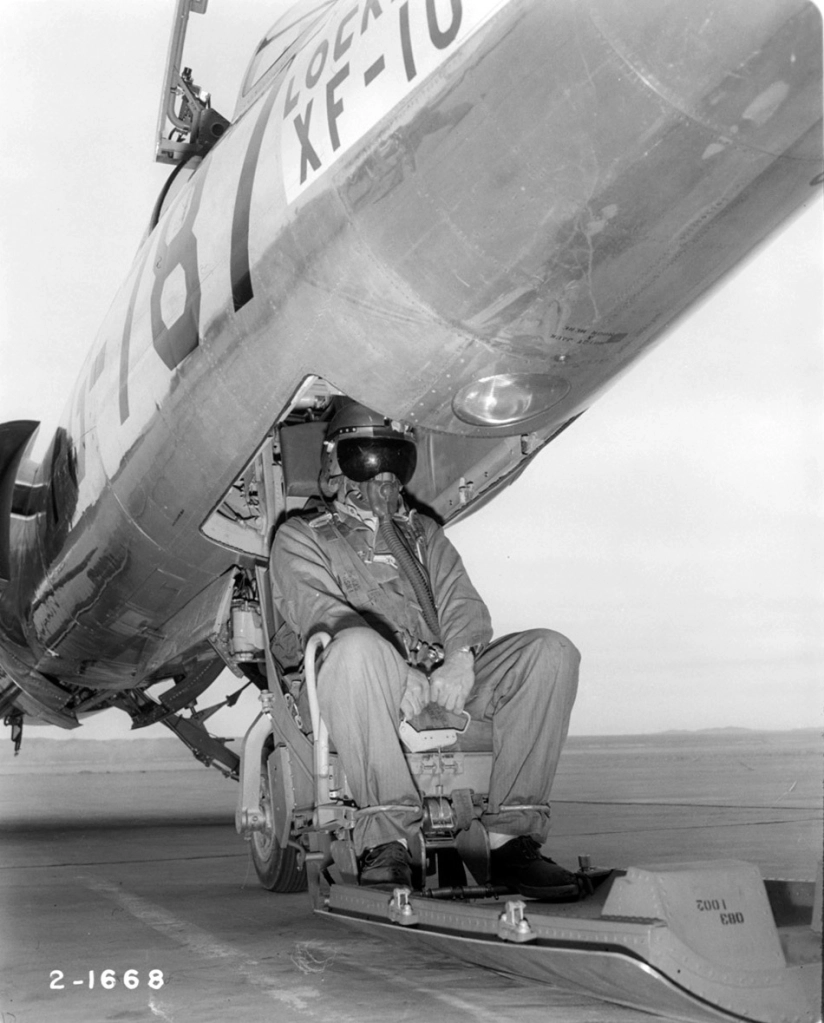
In a combat ejection scenario, which was when the seat was expected to be used, the ejection seats of the mid-1950s would not throw the pilot clear of the looming T-tail of the F-104. The only thing that pilots would have to train to do is remember to roll when at low altitudes.
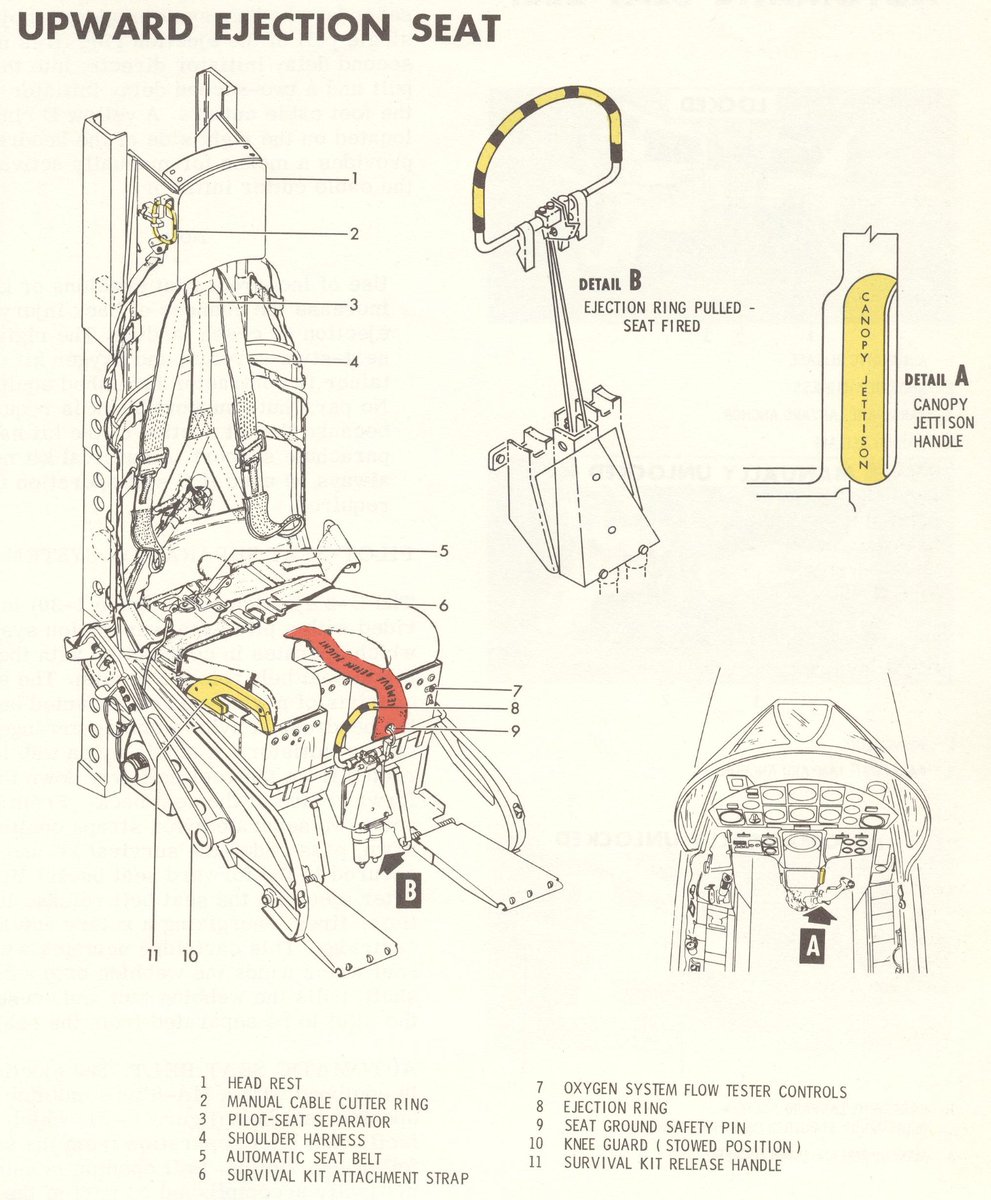
Once seats had been improved, though, it was also better understood that ejections were very rare at speed and altitude, and that an upward-firing ejection seat would be more than adequate for the F-104. Image
The biggest issue that the F-104 faced was the eternal problem of the day fighter. Without longer-range missiles, a powerful radar, and with a limited payload of what missiles it could carry, it quickly became less relevant as the wonderful air superiority fighter it was born as.
It was, however, still an incredibly stable, simple and durable mach 2 capable airframe. The F-104G that would go on to serve in the Air Forces of many nations expanded on this capability, turning this high-speed dogfighter into a lightweight, multi-role fighter-bomber. Image
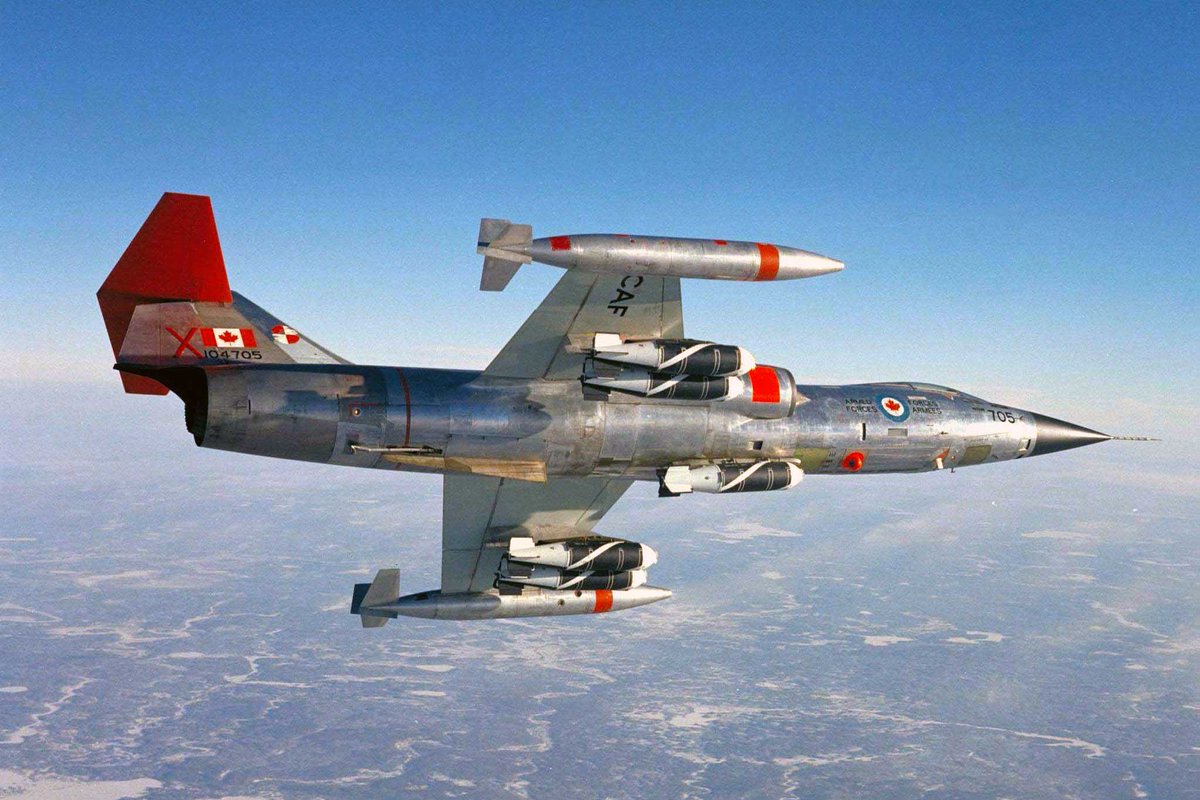
Given this, it should come as little surprise that four of the European nations that operated F-104s, Netherlands, Belgium, Denmark, and Norway, signed on to purchase the F-16. Like the 104, it was easy to produce and maintain at home and was a very capable multirole day fighter. Image
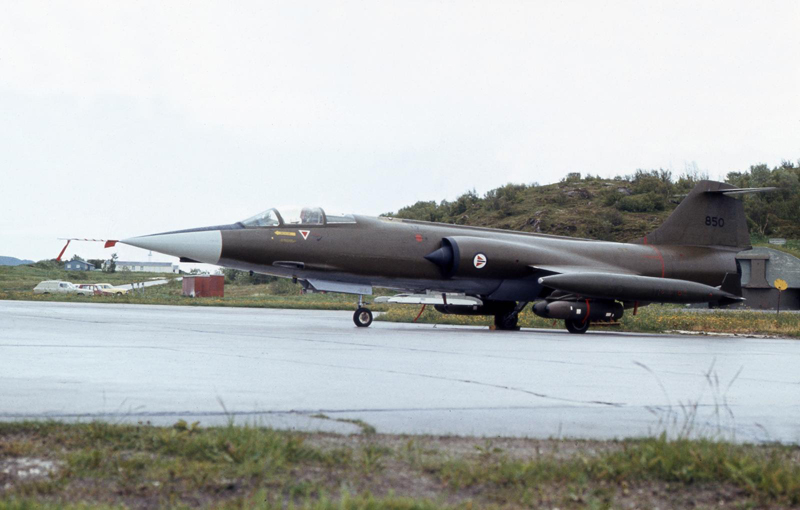
There are many other topics I could cover on the 104, including poor training in many countries, loss rate as a statistic versus accidents/100,000 flight hours, and more. I've promised a friend that I'd let him write an article on 104 safety on my website, so we'll have to wait.
In the next few days, though, I should be receiving an uncommon F-104G manual that details the weapons systems and the radar. I think we'll go over it when I have some time to sit down and digest it.
Until then, Image

• • •

Missing some Tweet in this thread? You can try to force a refresh

 

Keep Current with Heatloss

Heatloss Profile picture

Stay in touch and get notified when new unrolls are available from this author!

Read all threads

This Thread may be Removed Anytime!

PDF

Twitter may remove this content at anytime! Save it as PDF for later use!

Try unrolling a thread yourself!

how to unroll video
  1. Follow @ThreadReaderApp to mention us!

  2. From a Twitter thread mention us with a keyword "unroll"
@threadreaderapp unroll

Practice here first or read more on our help page!

More from @heatloss1986

Feb 18
The improved Sidewinder was a significant redesign, correcting a number of the shortcomings of the first. 🧵

Image
The most obvious visual change was to the front. The gyro assembly shrunk significantly, leading to a much more streamlined profile and therefore lower drag. The magnesium fluoride window is translucent to the visible spectrum but is transparent in the relevant IR band. Image
Now for the elephant in the room: the changes to the guidance and control group. The most significant change was the addition of detector cooling by way of liquid nitrogen.
Image
Image
Read 22 tweets
Feb 16
The first F-16A MLUs are starting to appear with Ukrainian markings. It's time to talk a little bit about the F-16A and the MLU, mostly focusing on the F-16A's development history.🧵 holosameryky.com/a/pilot-phanto…
NOTE: This will be different from my normal threads. All F-16A and 16A MLU manuals found online are export-restricted, so I will not use them, nor reference any information in them. I will use third-party sources and public documents.
I will not do legwork for the Russians.
During the Vietnam War, the advanced F-4 was struggling to handle MiG-19s and early MiG-21s, which were classed as "Day Fighters." Day fighters are a type of fighter aircraft designed primarily to operate, as the name implies, during the day. VPAF MiG-19 and MiG-21F-13 below.
Image
Image
Read 33 tweets
Feb 12
The US Navy, like the US Air Force, wanted a better solution for bomber interception after the end of the Second World War.
The engineers at Naval Ordnance Test Station China Lake came up with a low-cost, simple, and highly reliable missile. The Sidewinder. 🧵 Image
A short admin note. I'm going to start by explaining the function of 9A/B, then do my best to track the changes between 9B to 9D, then cover the combat record of 9B and 9D, the development of SEAM and 9G/H, and maybe on to 9L. These different stages will be different threads.
First, AIM-9A/Sidewinder 1/Sidewinder Mk. 2 Mod 0. This version of the Sidewinder was mostly used for initial operational testing and evaluation, but the basics of Sidewinder guidance were pioneered here. (Two pictures are supplied because AIM-9A descriptions & depictions vary)
Image
Image
Read 23 tweets
Feb 9
The AIM-7E Sparrow failed in Vietnam. Today, I intend to explain what went wrong, how, and what was done to correct it.
🧵 Image
The early members of the AIM-7 family were complicated. For the sake of brevity, we're going to skip over the AIM-7A and B. Those were very different missiles from the 7C/D/E, which were known as the Sparrow III.
The AIM-7C was the first semi-active radar homing of the three, introduced in 1958. It was mated to the AN/APA-127 missile guidance set in the F3H-2 (F-3B) Demon.
Image
Image
Read 30 tweets
Jan 27
The APG-63 thread is going to end up as a whole article on my substack, probably. But we'll do some stuff here for now.
APG-63, while not massively revolutionary on its own, put a bunch of advanced(for the time) radar design elements together into one. Image
By the mid-1980s, it was one of the most powerful and effective fighter radars that ANY nation possessed.
How did it get to be so good?
The answer lies in Hughes innovation and careful design.
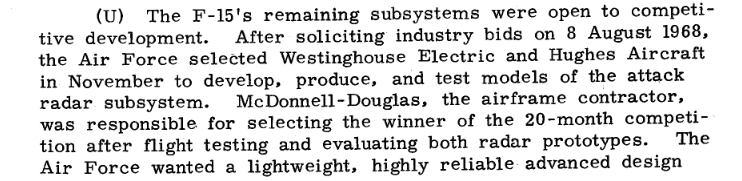
The F-15, designed to be a fighter to solve the deficiencies of the F-4E in Vietnam, put a high focus on flight performance, easy maintenance, and high reliability. This was a requirement carried over to the radar.

Image
Image
Image
Read 11 tweets
Jan 4
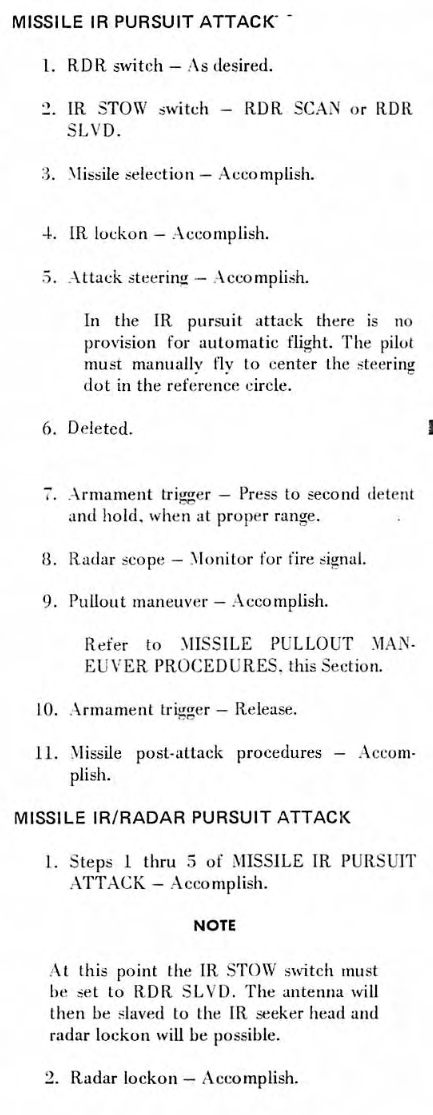
The feature of the F-106 that I am by far the most interested in(and know very little about) is multi-sensor FCS integration. This is something I know about primarily from secondhand sources, corroborated by only a few primary sources such as this passage. Image
Pilots indicate that the IR and Radar could be slaved to one another to allow for a more stable lock through one type of countermeasure, IRCM or ECM. One pilot report suggests that the IRSTS, against a cold, clear sky, could outrange the radar against BOMARC targets!
The IRSTS most likely used a similar InSb detector to that of the AIM-4G/D, given that they were introduced around the same time (1963) and were both made by Hughes. Unfortunately, I have no details about this. Image
Read 4 tweets

Did Thread Reader help you today?

Support us! We are indie developers!


This site is made by just two indie developers on a laptop doing marketing, support and development! Read more about the story.

Become a Premium Member ($3/month or $30/year) and get exclusive features!

Become Premium

Don't want to be a Premium member but still want to support us?

Make a small donation by buying us coffee ($5) or help with server cost ($10)

Donate via Paypal

Or Donate anonymously using crypto!

Ethereum

0xfe58350B80634f60Fa6Dc149a72b4DFbc17D341E copy

Bitcoin

3ATGMxNzCUFzxpMCHL5sWSt4DVtS8UqXpi copy

Thank you for your support!

Follow Us!

:(