TAXI DRIVER was released 48 years ago this week. One of Hollywood’s great studies of loneliness, and among the best of the Martin Scorsese/Robert De Niro collaboration, the making of story is as morally bankrupt as NYC…
1/51

1/51


isolated and alone in LA, he went weeks doing nothing but working as a delivery driver, visiting porn theaters, and slaving away at his typewriter on his new screenplay.
2/51
2/51


Schrader worked on his semi-autobiographical script with a loaded gun in his desk drawer. He called it Taxi Driver and in 1973, it was optioned by husband-wife film production team Michael and Julia Phillips.
3/51
3/51


The Phillips struggled to get any financing until later that year when their movie The Sting became a huge box-office hit (and Oscar-winner). Columbia Pictures offered the Phillips’ a multi-picture deal, and the first one they wanted to make was Taxi Driver.
4/51
4/51


John Milius, Irvin Kershner and Tony Bill were all reportedly considered to direct. Schrader, though, had just struck up a friendship with Brian De Palma after interviewing him. After reading the script, De Palma wanted to make Taxi Driver.
5/51
5/51


The Phillips’ had other ideas, though. After seeing an early cut of his upcoming film, Mean Streets, they were interested in Martin Scorsese. When he read Schrader’s script, Scorsese instantly connected with it.
6/51
6/51


Schrader had written the main character of Travis Bickle with Jeff Bridges in mind. Later, stories came out of Al Pacino and Burt Reynolds turning down the chance to play Travis. And Dustin Hoffman said he turned it down because “I thought [Scorsese] was crazy!”
7/51
7/51


Mean Streets had featured Robert De Niro in the cast and, by this time, his career had skyrocketed after winning an Oscar for The Godfather Part II. The producers offered Scorsese a deal: ‘Get De Niro on board, and Taxi Driver is yours.’
8/51
8/51


De Niro was being offered a reported $500k to star in other films but, with Taxi Driver having a budget of just $200k for the entire cast, De Niro agreed to play Travis for $35k.
9/51
9/51


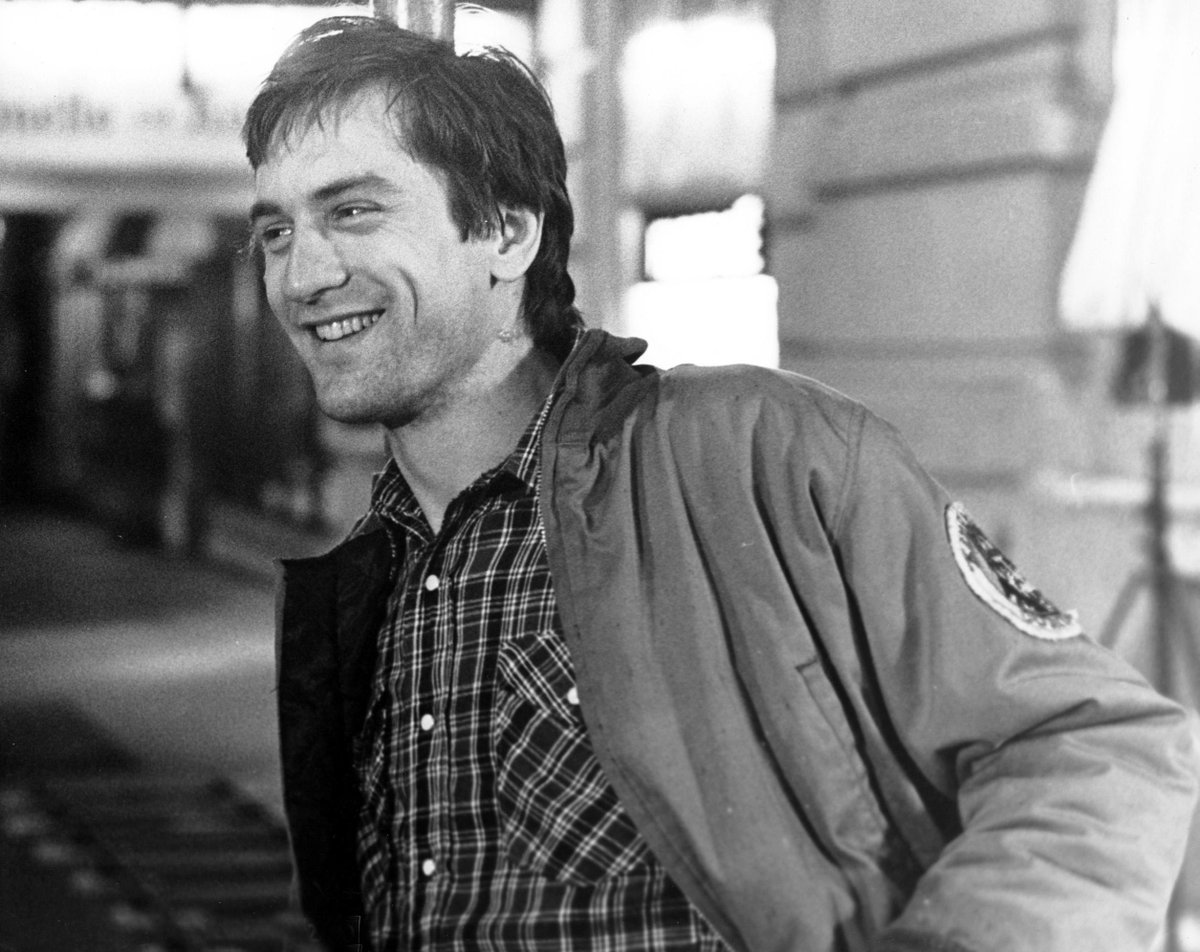
De Niro was filming Bernardo Bertolucci's 1900 in Italy. In prep for Taxi Driver, he’d finish shooting on a Friday in Rome, fly to New York, spend the weekend driving a cab (having obtained a license) then return to Italy to shoot the following week.
10/51
10/51

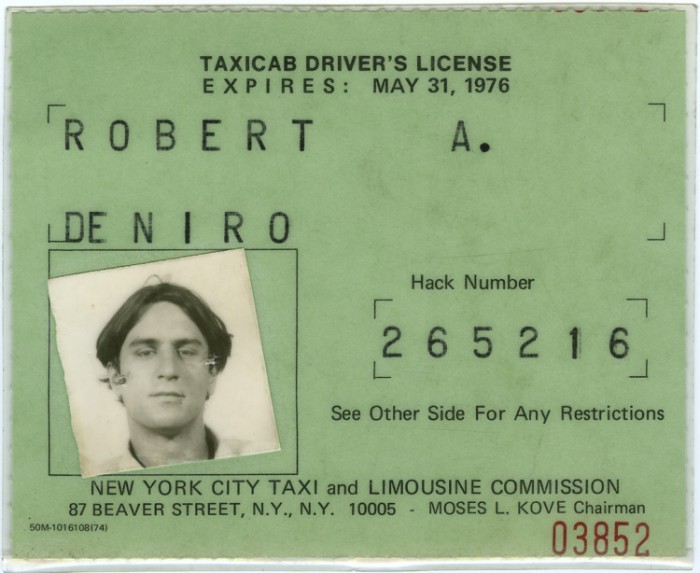
He also visited a US Army base in Northern Italy and studied mental illness (Travis being a PTSD-suffering Vietnam War vet). He recorded conversations with soldiers to perfect a Bronx accent, and lost 35 pounds in weight for the role.
11/51
11/51


Casting the part of 12-year-old prostitute Iris was a trickier task. Tatum O’Neal (fresh from Paper Moon) was offered the part but turned it down, reportedly telling the producers "[The part is] too small! After all, I am an Oscar winner you know!"
12/51
12/51


When Brian De Palma was attached to direct, he’d been interested in Melanie Griffith as Iris, but her mother (Tippi Hedren) had said no. When Scorsese came on board he was interested in Linda Blair (of the Exorcist), who also said no.
13/51
13/51


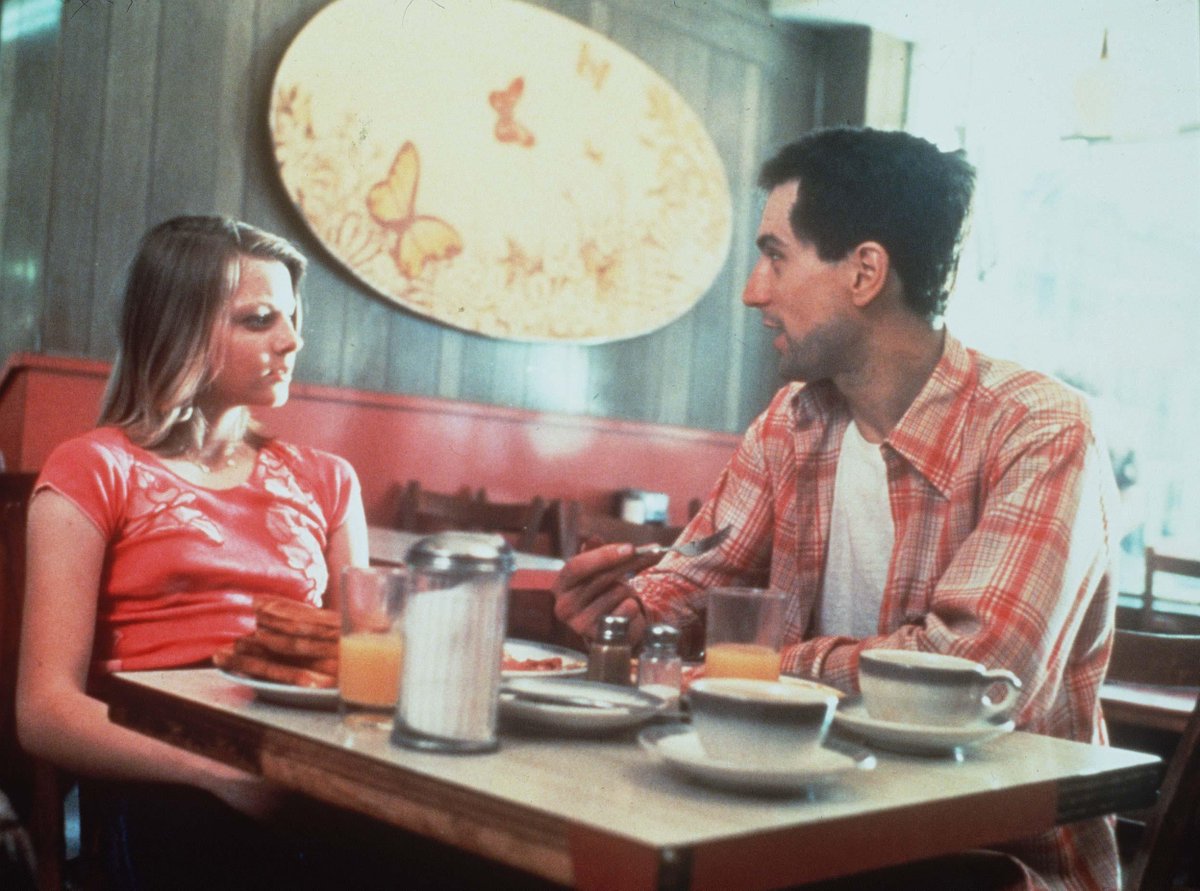
A casting process was undertaken and over 250 young actresses auditioned for the part, including Carrie Fisher, Michelle Pfeiffer, and Mariel Hemingway. Scorsese eventually settled on 12 year old LA native, Jodie Foster.
14/51
14/51


Still pre-teen at the time, Foster was too young to film the more explicit moments. As such, her 19-year-old sister, Connie, stood in for some scenes. Jodie was also sent to counselling to ensure she was mentally strong enough to deal with the role.
15/51
15/51


There was also a child welfare worker on the set who would oversee Foster’s involvement on the set. Foster later said the worker “saw the daily rushes of all my scenes and made sure I wasn't on the set when Robert De Niro said a dirty word.”
16/51
16/51


Foster and De Niro would meet for coffee to rehearse. She said De Niro would improvise lines and weave in and out of the written dialogue. She later said this was instrumental in teaching her how to create a character beyond the script.
17/51
17/51


The other female lead is Betsy, the object of Travis’ affections. Mia Farow reportedly wanted the role, but Scorsese turned her down, while Julia Phillips was interested in Farrah Fawcett, but she said no.
18/51
18/51


Phillips put word out that the production was looking for “A Cybill Shepherd-type” to play Betsy. When Sherpherd’s agent, Sue Mengers heard this, she called Phillips and said “Why not just hire Cybill Shepherd?”
19/51
19/51


Julia Phillips later claimed Scorsese cast Shepherd due to her sex appeal and, apparently, the size of her backside. He and Shepherd had a strained relationship, though, with Scorsese having to often feed her lines before approving her delivery.
20/51
20/51


Shepherd reportedly had trouble remembering her lines, which would frequently upset De Niro. And Julia Phillips later recalled how she and editor Marcia Lucas would laugh about all the unusable footage they binned in the editing room due to Shepherd.
21/51
21/51


Harvey Keitel had already appeared in three Scorsese films at this point and was offered the part of campaign worker, Tom. Keitel though, wanted the smaller role of Sport – the pimp -as he knew a pimp in his Hell’s Kitchen neighbourhood.
22/51
22/51


Keitel brought the real pimp to some rehearsals and together they beefed up Sport’s dialogue. And the scene where Sport and Iris dance was improvised. It’s one of only two scenes in the film that don't focus on Travis.
23/51
23/51
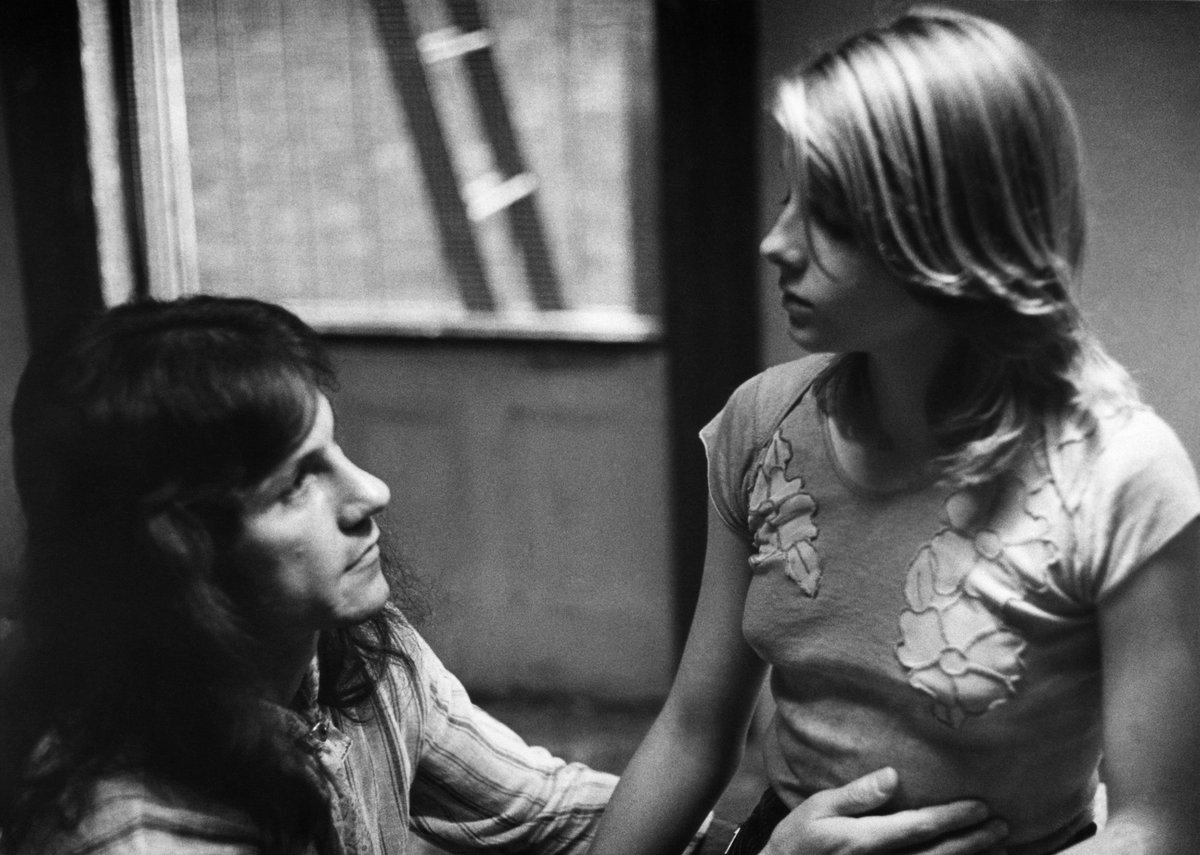

When Schrader was writing, he realised he was writing about the pathology of loneliness. His theory was that young men (such as Schrader himself and Travis) push others away to maintain isolation, even though the source of their anguish is isolation.
24/51
24/51


Schrader injected some elements of his life. Betsy was named after his former girlfriend. Travis was named after Mick Travis from If… (1968) and the dialogue about ‘God’s Lonely Man’ came from a poem by Thomas Wolfe.
25/51
25/51


During pre-production, Schrader met a young woman in a bar. Taking her to his room, he realised she was an underage prostitute named Garth Avery. They met Scorsese for breakfast the next morning and rewrote Iris to be more like Garth. She’s in the film as Iris’ friend…
26/51
26/51


Originally, the characters of Sport, the Mafioso, and the hotel clerk were all black. Scorsese told Schrader it was leaning too heavily towards racism, and Schrader changed the characters to be white.
27/51
27/51


When the film released, Scorsese called Taxi Driver "my feminist film, because it takes macho to its logical conclusion. The better man is the man who can kill you.”
28/51
28/51


Earlier, Scorsese had wanted designed Dan Perri to create the title sequence for Alice Doesn’t Live Here Anymore but the studio wouldn’t hire an unknown. By the time of Taxi Driver, Perri had worked on The Exorcist and Scorsese hired him no problem.
29/51
29/51


To compose the music, Scorsese went after industry legend, Bernard Hermann – and was promptly turned down, Hermann saying “I don’t write music for car movies.” He changed his mind when he read Schader’s script.
30/51
30/51


The film’s most famous piece is the sax-driven driven So Close to Me Blues. Jazz wasn’t Herrmann's forte, so he asked composer Christopher Palmer to arrange something from the existing score, which Palmer did. It became the motif of the film.
31/51
31/51


Sadly, Bernard Hermann passed away just a few hours after completing the recording sessions for Taxi Driver – on Christmas Eve, 1975. The film is dedicated to his memory.
32/51
32/51


Production took place during the summer of 1975. New York already had a reputation for being a dirty place at the time, and this was made worse by the heatwave and garbage truck strike taking place during filming.
33/51
33/51


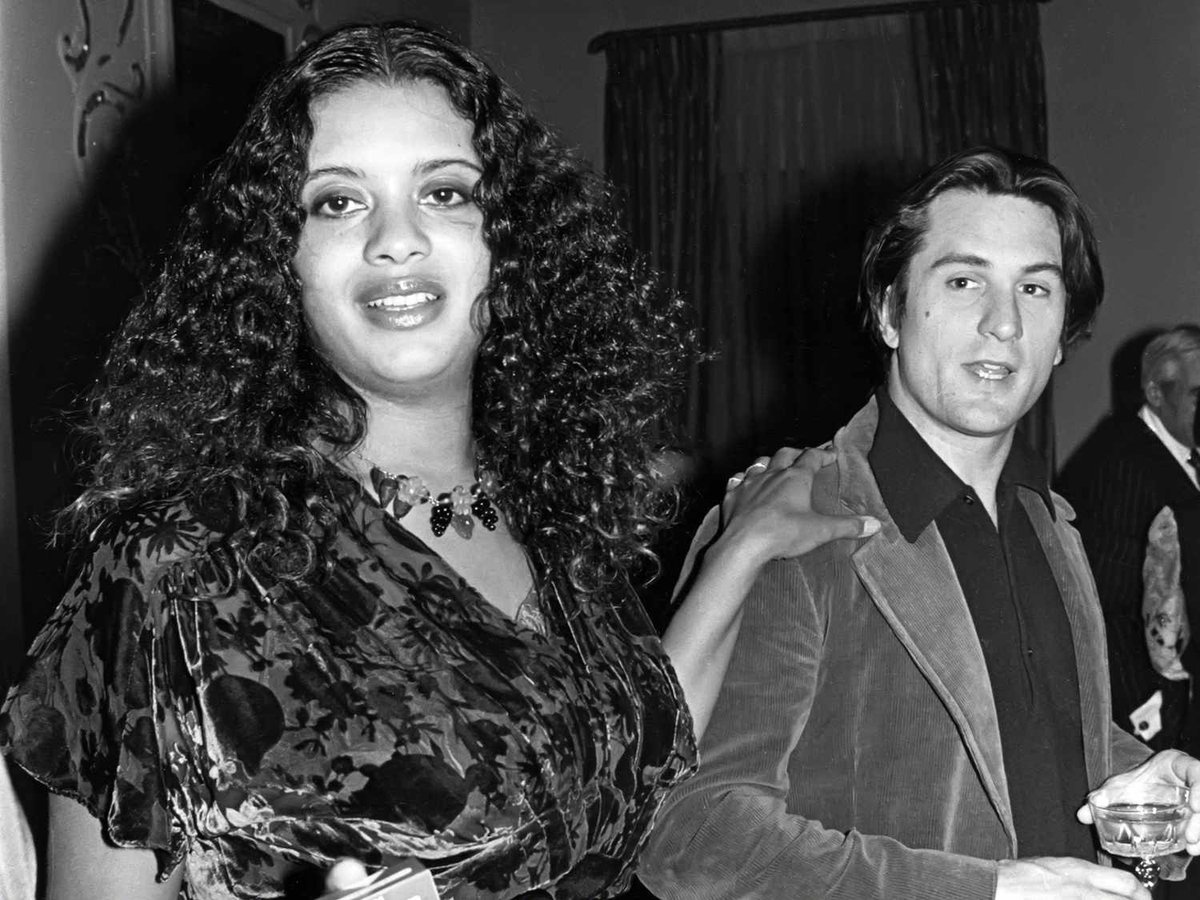
De Niro's girlfriend at the time, Diahnne Abbott, has a cameo. She appears as the concession girl in the porn theatre, and acts a little aloof towards Travis.
34/51
34/51

In the coffee scene with Betsy, Travis orders apple pie with melted cheese. Schrader took this from real life: When serial killer Ed Gein was arrested, he apparently asked the police for a slice of apple pie with melted cheese in exchange for a confession.
35/51
35/51


Scorsese says the important shot in the film is when Travis is on the phone trying to get another date with Betsy. The camera slowly pans away as if to suggest the conversation is so difficult to bear, even the camera cannot watch.
36/51
36/51


The shot of Travis dissolving a tablet in water is a reference to a similar shot in Jean-Luc Godard's Two or Three Things I Know About Her... (1967). And the opening of Travis’ eyes reflected in the rear mirror is from Nicholas Ray's In a Lonely Place (1950).
37/51
37/51


George Memmoli had appeared in Mean Streets and was cast to play one of Travis’ taxi passengers. When he had to pull out due to being injured filming The Farmer (1977), Scorsese stepped in to play the part.
38/51
38/51


Scorsese had to sit on a blanket to be seen over the front seat, due to being only 5 feet and 3 inches tall. And he improvised one or two lines that he subsequently cut for being too much (and dropping the c-bomb).
39/51
39/51


Easy Andy was played by Steven Prince, a friend of Scorsese’s. Scorsese has said Prince’s real life personality is basically what we see in the film, and the list of other illegal things Easy Andy had for sale was improvised by Prince.
40/51
40/51


During filming, Spanish artist Salvador Dalí was staying at the same hotel as the cast and crew. Scorsese said he’d see the surrealist painter almost every day, and was tempted to put him in the film, but abandoned the idea.
41/51
41/51


The famous scene where Travis is talking to himself in the mirror was ad-libbed by De Niro. Schrader’s script just said “Travis looks in the mirror” and Scorsese asked De Niro to improvise some words.
42/51
42/51
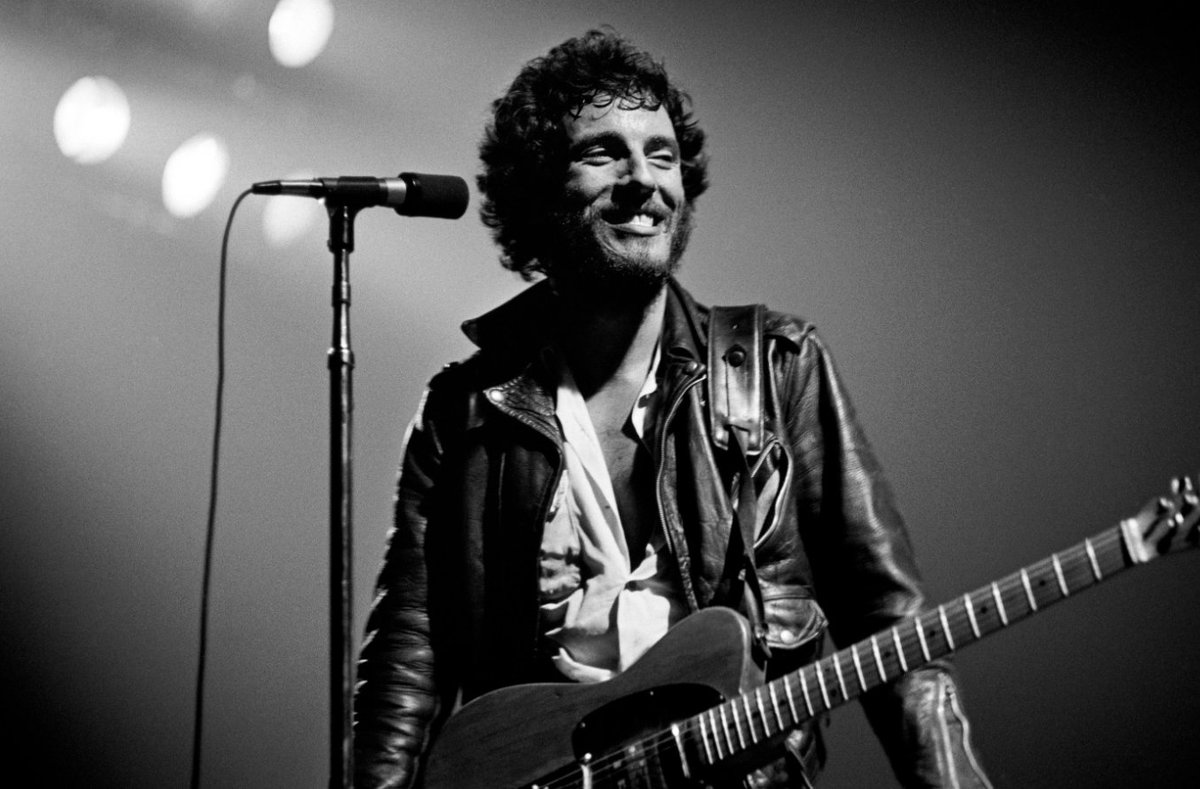
De Niro said he got the most famous line in the scene from Bruce Springsteen. De Niro saw him perform in Greenwich Village a few days earlier, and when the audience yelled out “Bruuuuucee!” The Boss replied “You talkin’ to me?”
43/51
43/51

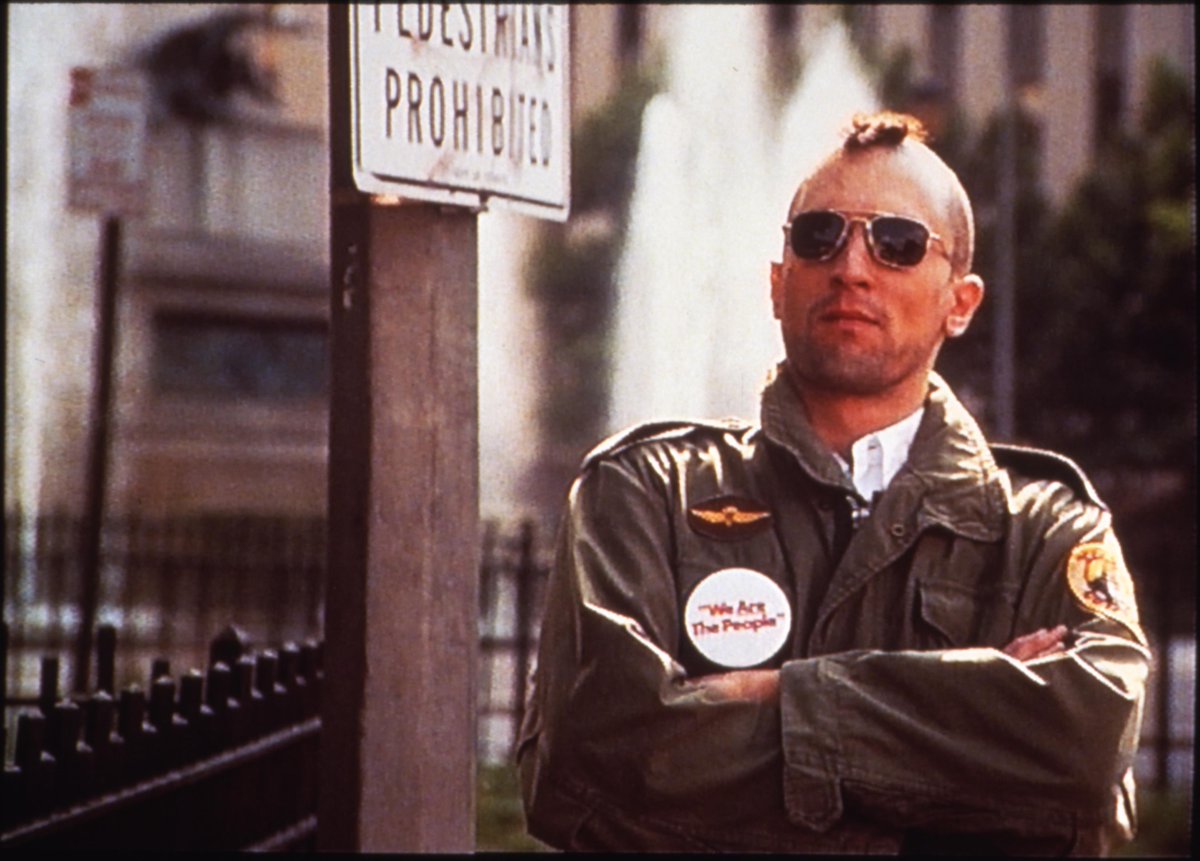
The King Kong Patch on Travis’ jacket symbolises that Travis is like the giant ape trying to save Fay Wray: he doesn’t really understand what he’s doing, and scares Betsy because of his behaviour.
44/51
44/51


Travis’ major character transformation is marked when he cuts his hair into a Mohawk. This was suggested by actor Victor Magnotta on set, who served in Vietnam. He told Scorsese that some soldiers would cut their hair into Mohawks when they were going on a special mission.
45/51
45/51


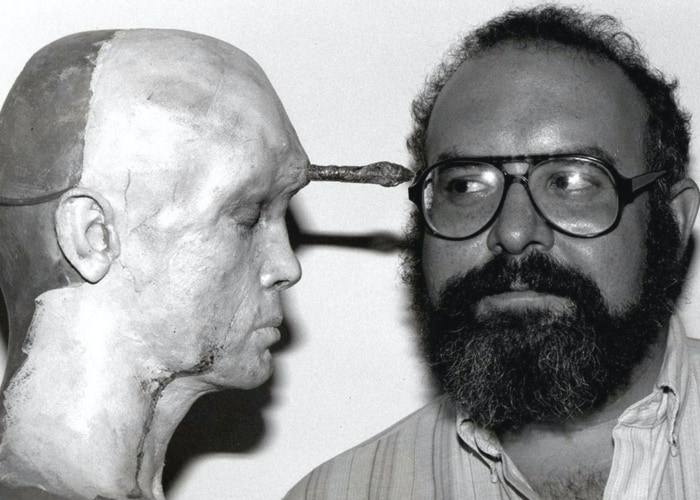
The Mohawk wasn’t real. Make-up Artist Dick Smith created a bald cap that was glued to De Niro's head, and the Mohawk was made of thick horse hair. The hairpiece is on display at the Museum of the Moving Image in New York.
46/51
46/51


The final tracking shot over the apartment was the only camera movement in the script. It took three months of preparation, as they had to cut through the ceiling. And De Niro said it took a long time to shoot as the carnage caused a lot of humour on the set.
47/51
47/51


On seeing it, Columbia wanted the shootout removed entirely, saying it was too graphic. According to legend, Scorsese stayed up all night drinking with a loaded gun in his hand, preparing to shoot the executive at Columbia the next day if they cut it.
48/51
48/51


Scorsese showed his pal Steven Spielberg the climax, who said it was brilliant. Instead of murder, Scorsese decided to mute the colours (lessening the impact of the blood) in the climax, and the film got its required R-rating.
49/51
49/51


On a budget of $1.8m, Taxi Driver took $28.6m at the box office, so was an enormous hit. It was nominated for 4 Oscars, and placed Scorsese among the greatest filmmakers in Hollywood. He’s been there ever since.
50/51
50/51


Finally… after seeing Taxi Driver, crazed fan John Hinckley Jr. grew obsessed with Jodie Foster. In a letter, he told her he was going to assassinate the President, Ronald Reagan. He was true to his word and was convicted after non-fatally shooting Reagan on March 30, 1981.
51/51
51/51


If you liked our making of story behind TAXI DRIVER, please share the first opening post 😀
https://x.com/ATRightMovies/status/1759910457152794693?s=20
• • •
Missing some Tweet in this thread? You can try to
force a refresh