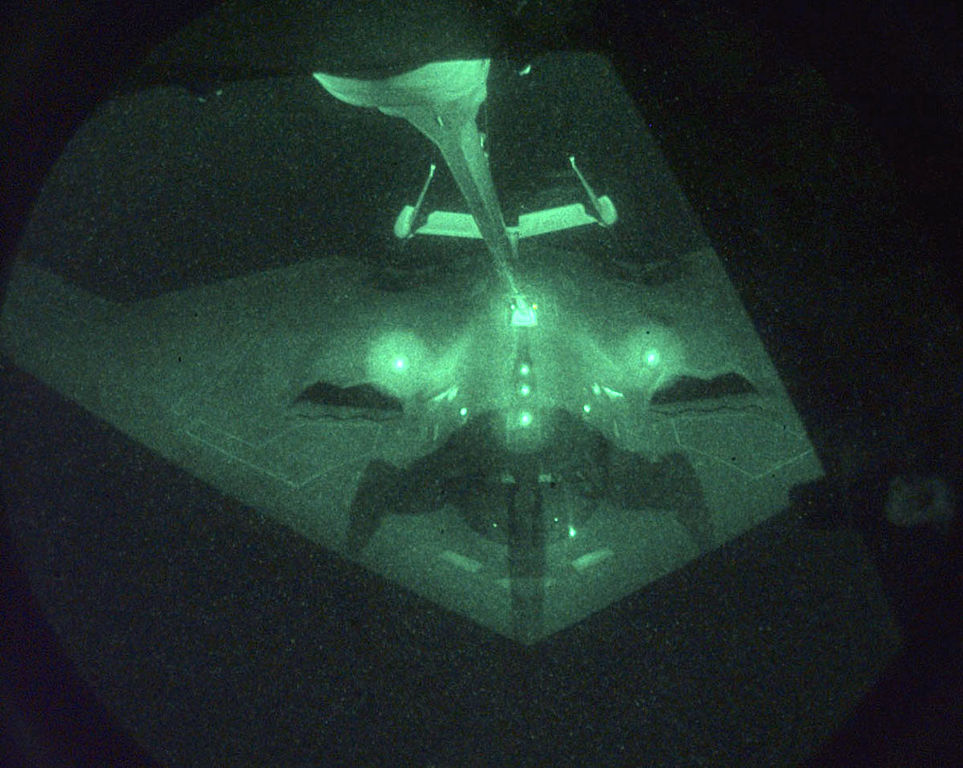
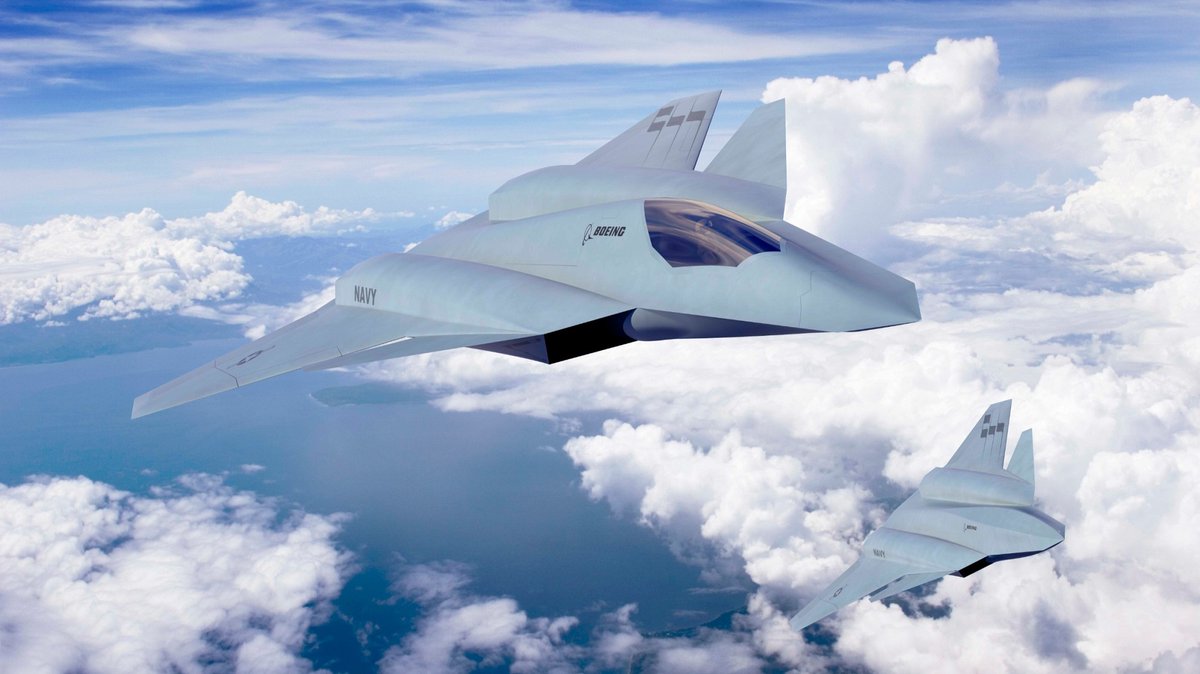
If you ever hear me talking about FIM-92 Stinger as if it's the best thing since sliced bread, that's cause it kinda is.
A short thread on the Stinger-Passive Optical Seeker Technique(POST) seeker.
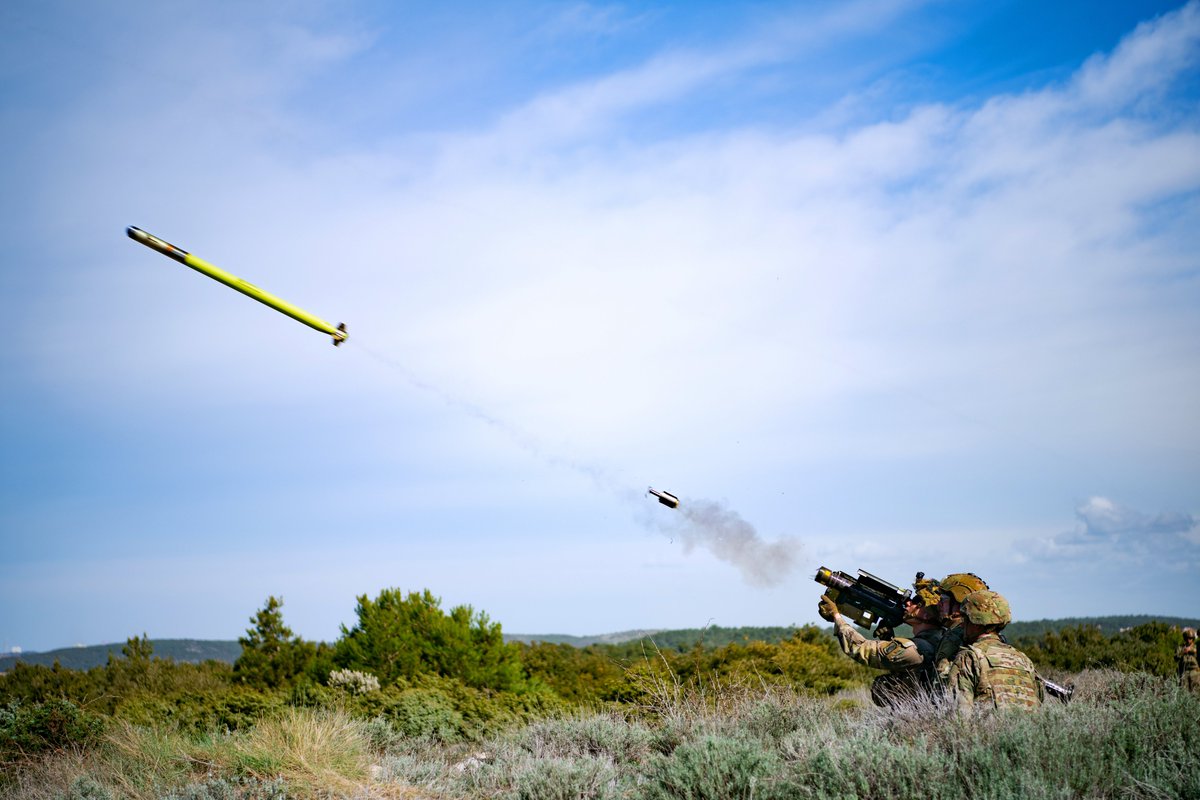
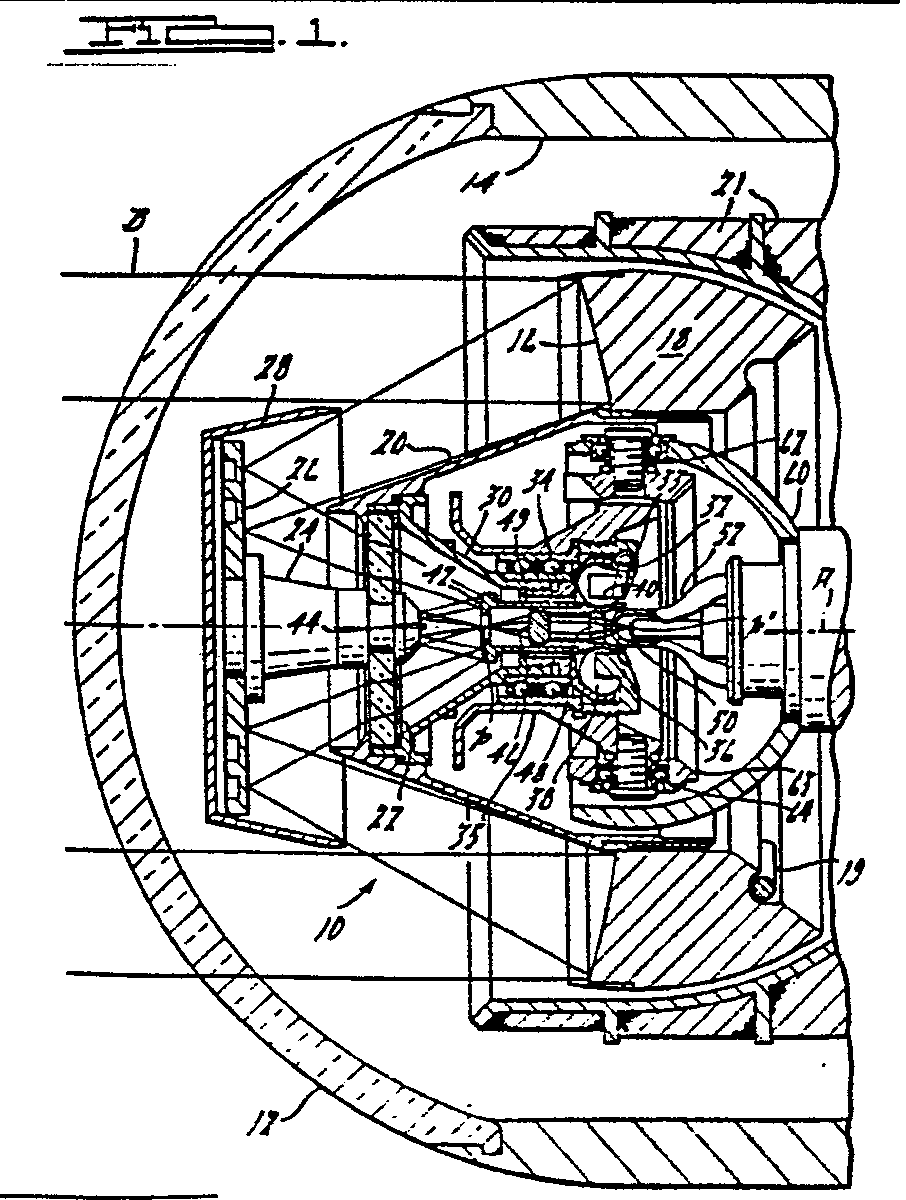
The POST seeker is a pretty exceptional piece of kit. It provides advanced countermeasure rejection through two different methods that I'll walk through.
Let's start with the easy one: dual color. A dual-color IR/UV seeker looks for a positive infrared signal and a negative UV signal because an aircraft blocks out UV.
Stinger POST used Indium Antimonide for IR and Cadmium Sulfide for UV.
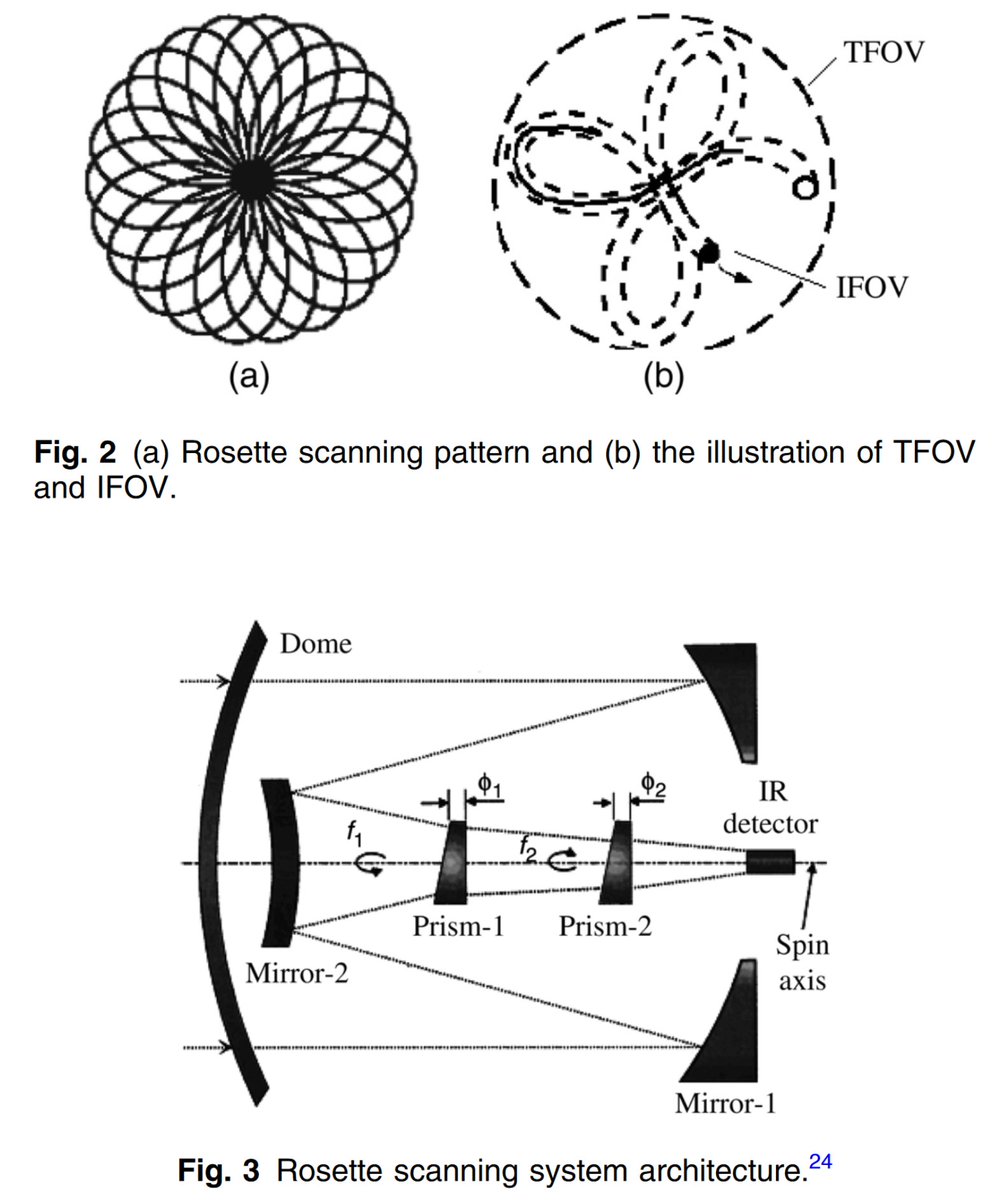
On its own, this is moderately powerful, but it gets far more effective when combined with the other technique: rosette scanning. This is a system that operates with a very narrow field of view and relies on a complex scan pattern to cover a larger FoV and detect the target.
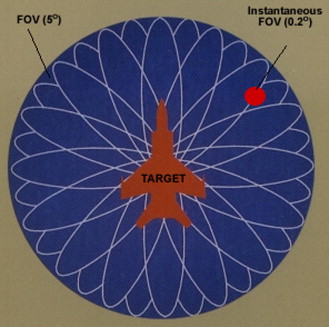
Rosette scanners work using two counterrotating prisms to create this complex pattern. TFOV stands for True Field of View, and IFOV for Instantaneous Field of View. The IFOV needs to be small to increase the resolution of this scan.
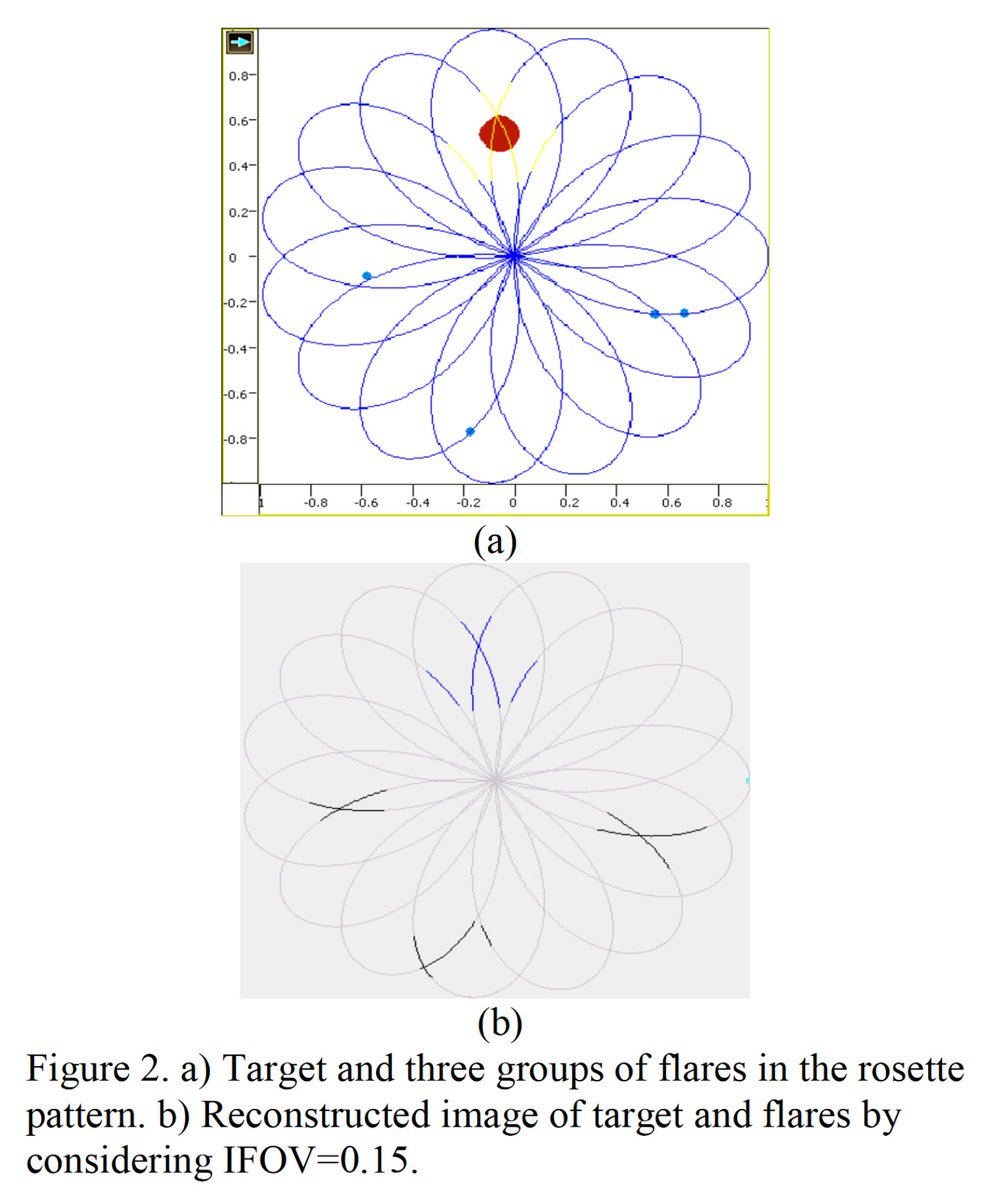
Now here's what it looks like with a target and flares. The red dot with a white circle around it (sorry this image sucks) is a target, and the four blue dots are flares. As you can see, the target is larger and will show up during more passes of the scan pattern.
Rosette scanning is referred to as a form of "pseudo-imaging", and it allows for some basic counter-countermeasures through signal processing, but it isn't perfect on its own.
But wait, remember that second seeker color? The target blocks UV, but flares do not! In the second color, all of the rosette scan would provide a positive return, including the areas with flare groups, except for the target!
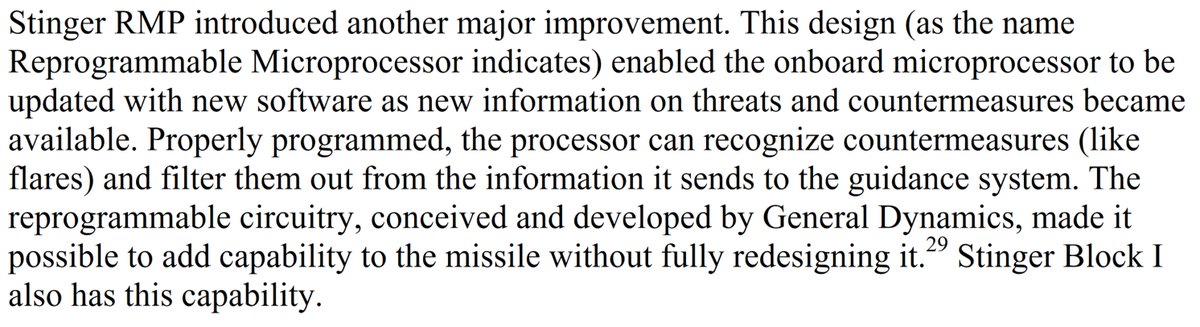
This allows the processor to rule out the sectors with flares as not-the-target. The biggest downside to rosette scanning is the processing penalty it incurs, but this was made possible by the digitization of the Stinger.

Someone asked me to do a comparison of capabilities between F-35A and JAS-39E Gripen. A ton of material is classified but I will do my best here.
In short, Gripen is not even in the same class as F-35A. It isn't awful, but it is not a competitor with F-35.
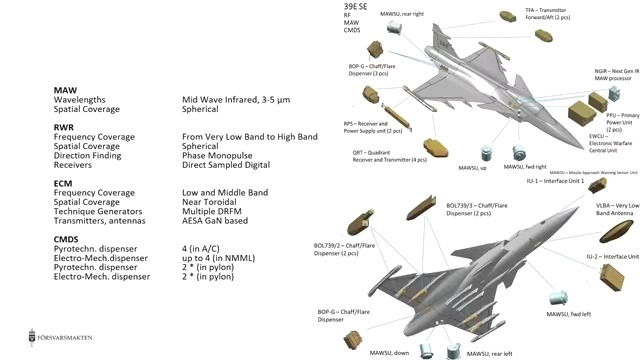
Let's start with one of the greatest advantages of the Gripen: its electronic warfare systems. The Gripen has a relatively robust signal receiver network across the aircraft, with several antennas capable of electronic attack, such as the wingtip pods and external jammers.
The Gripen's wingtip pods provide an uncommon capability called "crosseye jamming." Crosseye jamming can create a positional false target in the horizontal or vertical plane, rather than just range.
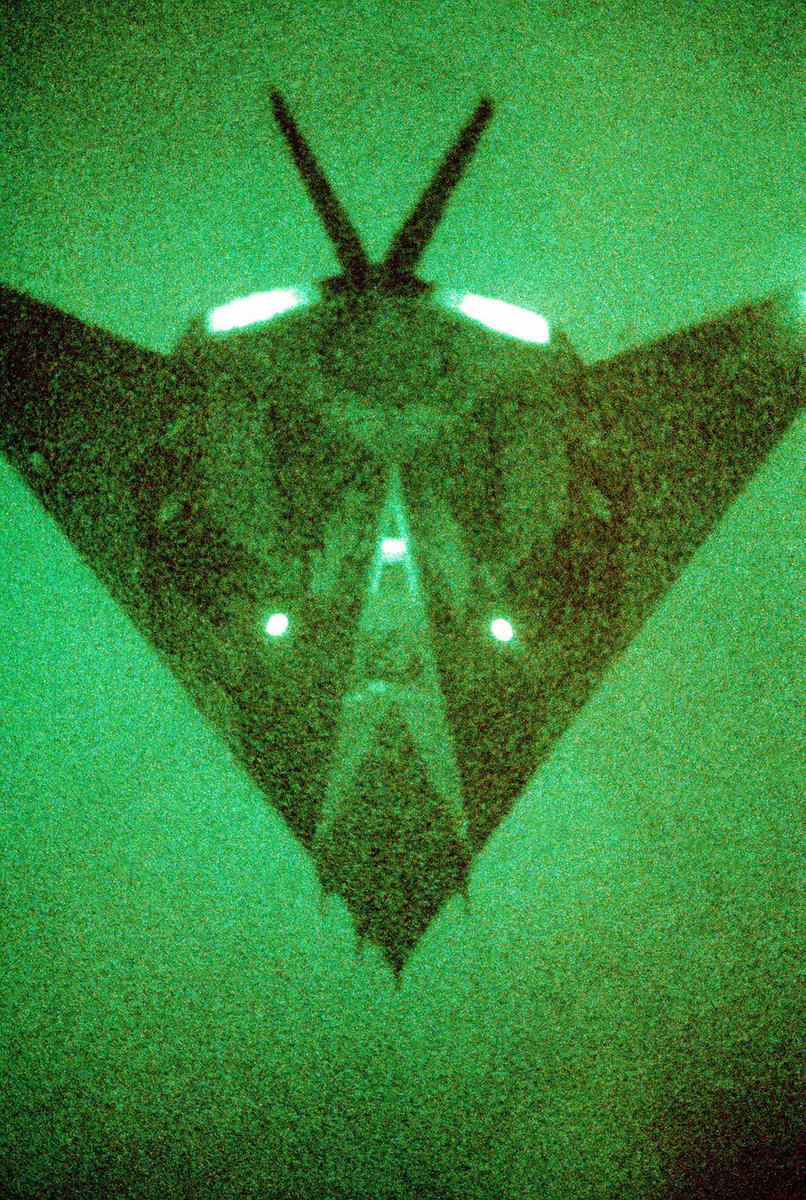
If you want to try to optically track a target with damn near zero contrast, be my guest.
The Japanese Navy found that at night the human eye struggled to pick up ships over about five miles. A ship on the horizon is a significantly bigger target than a B-2 or F-117.
For a computer, greater signal to noise ratios are required to effectively track a target. This is why imaging infrared is preferable to optical contrast. Shown below is the last few seconds of flight of an AIM-9X.
This uses imaging infrared to detect and track the target.
Since the end of the Cold War in 1991, the US Navy's ability to conduct air superiority and offensive strikes has been slowly diminishing. Today, we stand at an inflection point, where the F/A-XX program to deliver a new strike fighter to the Navy is in Jeopardy.
🧵
This thread is a pitch for a congressional write-in campaign. The first part is a history of the degradation of the Navy's air wing. The second part is an analysis of a recent oversight hearing. The last post of this thread contains instructions for emailing your representatives.
In the 1980s, the A-6F was proposed for development. This was to be an updated A-6E including modern avionics, new engines, and AMRAAM. This would have provided the Navy with a relatively low cost program, retaining a two-seat crew with a large payload and good mission systems.
Some very interesting stuff going on here with the Shenyang aircraft. 🧵
Exhaust appears visually similar to the F-22's with 2D thrust vectoring and shrouding. Wing shaping is nothing particularly special but seems good. Like JH-36, it retains some conventional control surfaces.
The all moving wingtips are a novel solution. I don't know what the trade offs are but they must be at least somewhat worth it. Potentially these are considered lower risk, higher strength, or more effective than the semi-morphing control surfaces on the JH-36.
The intake design is interesting. Unlike JH-36, which uses caret intakes underneath and uses a DSI above, the Shenyang aircraft uses what appears to be two DSIs below. The gear appears to fold sideways into a bay ABOVE the side bays, giving it a J-20-esque four bay arrangement.
With the renewed interest in the Europa wars, this may be the best time to bring up the unusual short ranged missile developed for space-superiority craft.
The AIM-95E "Europa Agile," the only missile designed for operation in deep space AND within thin atmospheres.🧵
First off, I apologize in advance for the lack of photos on this topic. All existing photos of Agile are of the ones designed in the 1970s for operation within Earth's atmosphere. Therefore, you will have to imagine some of these changes to the system.
The Agile for aerial use was cancelled in the mid 1970s after about $50m was wasted developing several different airframes and seekers. This spelled the end for the program as most know it, but this would only be the starting point for the Europa Agile.
For my entire life I have been taught about the importance of effective searches. Since May 2024, I have fought with an unwanted feature that has made my experience worse.
A rant about "AI Overview," AI assisted search and their impact on using Google as a tool for research.🧵
Google has billed these features as "taking the legwork out of searching" and "able to answer complex questions." This is a bald faced lie.
The AI has wasted more time than it has saved me, lied about results, and forced me to learn methods to get around it rather than to use it.
I do a lot of research using keywords that I need matched exactly. For example, right now, I was looking up the specific thrust of the General Electric F414 engine used in the X-59, an experimental plane in development for NASA. This should be a simple question to answer.