Heatloss Profile picture
Feb 24 10 tweets 5 min read Read on X
If you ever hear me talking about FIM-92 Stinger as if it's the best thing since sliced bread, that's cause it kinda is.
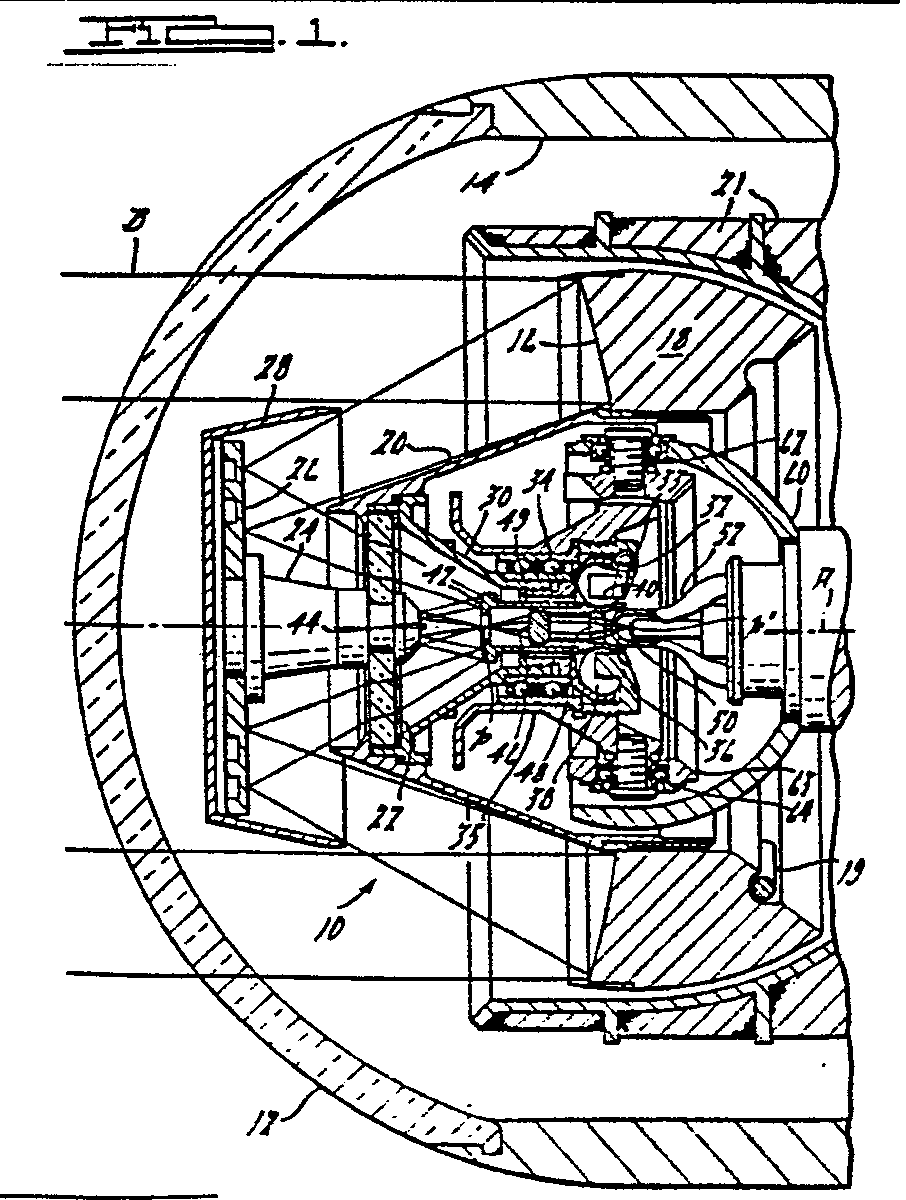
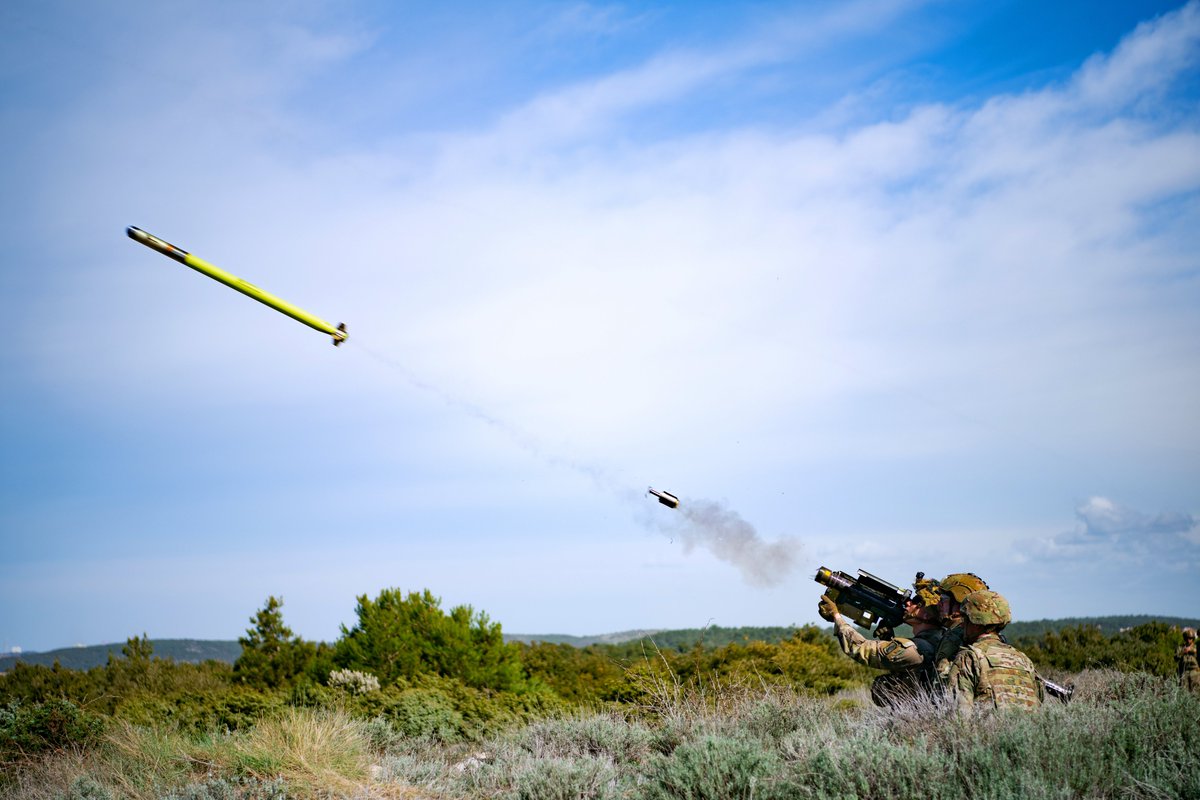
A short thread on the Stinger-Passive Optical Seeker Technique(POST) seeker. Image
The POST seeker is a pretty exceptional piece of kit. It provides advanced countermeasure rejection through two different methods that I'll walk through.
Let's start with the easy one: dual color. A dual-color IR/UV seeker looks for a positive infrared signal and a negative UV signal because an aircraft blocks out UV.
Stinger POST used Indium Antimonide for IR and Cadmium Sulfide for UV.

Image
Image
Image
On its own, this is moderately powerful, but it gets far more effective when combined with the other technique: rosette scanning. This is a system that operates with a very narrow field of view and relies on a complex scan pattern to cover a larger FoV and detect the target. Image
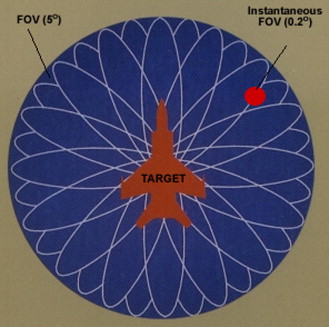
Rosette scanners work using two counterrotating prisms to create this complex pattern. TFOV stands for True Field of View, and IFOV for Instantaneous Field of View. The IFOV needs to be small to increase the resolution of this scan.
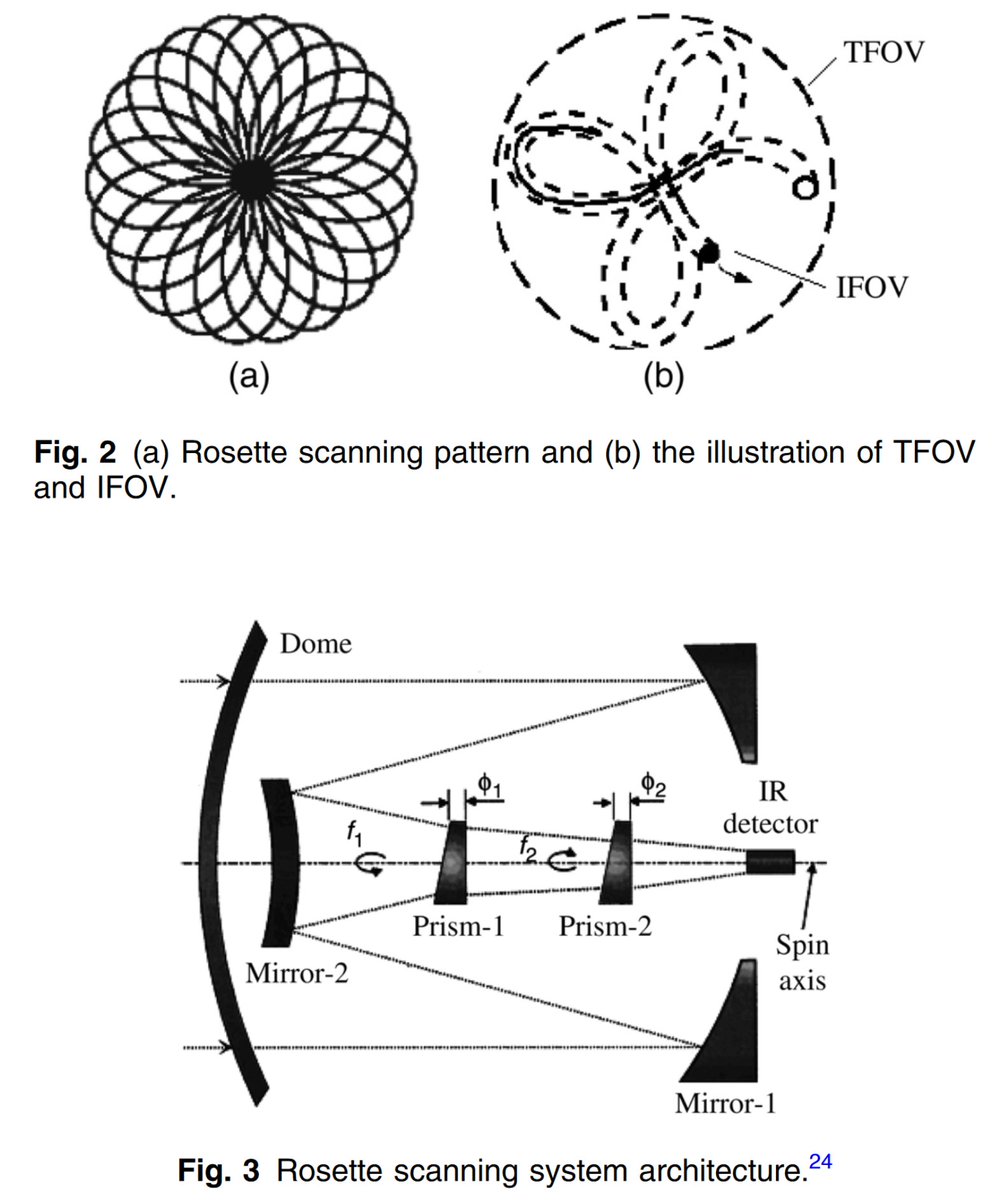
Image
Image
Now here's what it looks like with a target and flares. The red dot with a white circle around it (sorry this image sucks) is a target, and the four blue dots are flares. As you can see, the target is larger and will show up during more passes of the scan pattern. Image
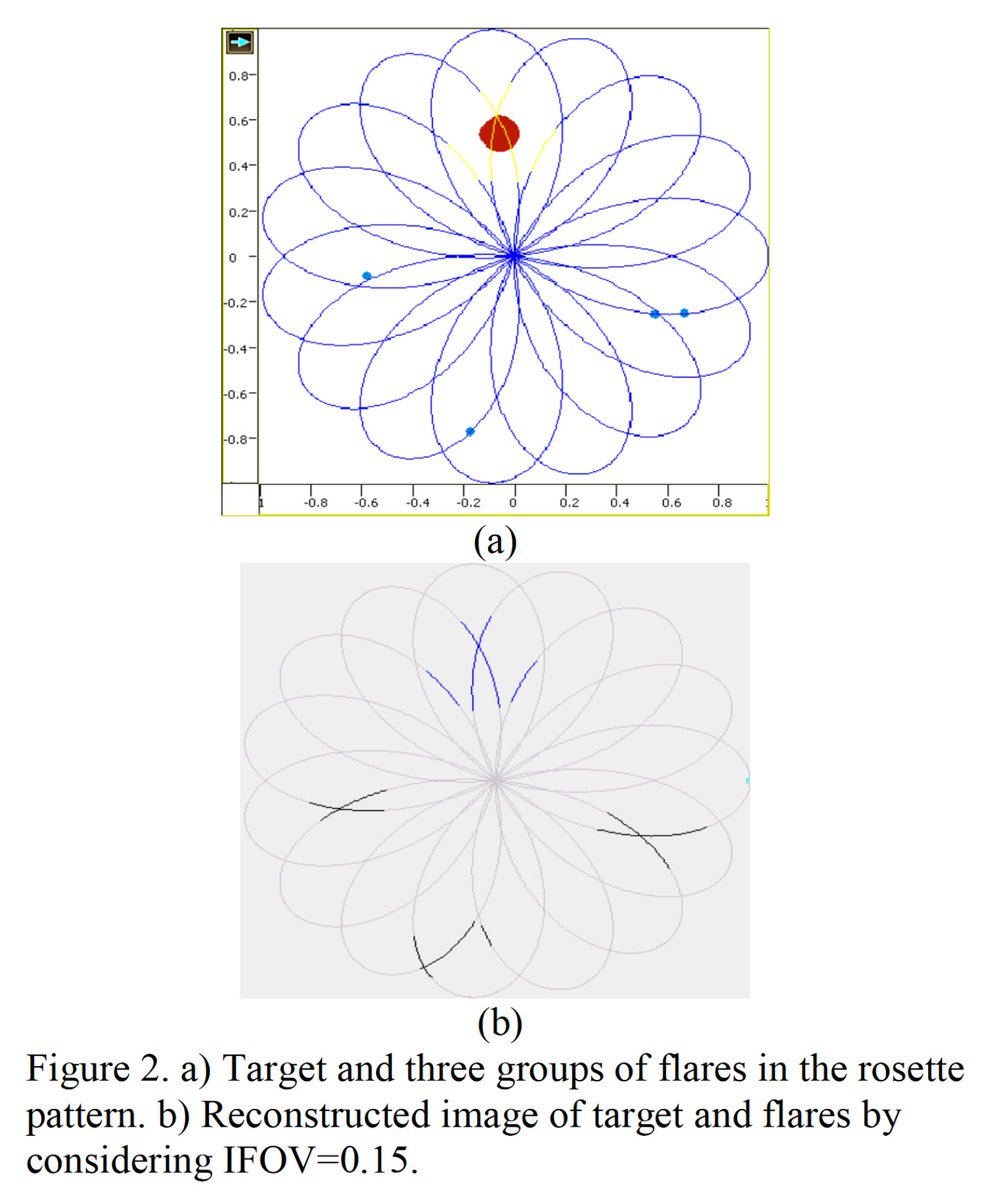
Rosette scanning is referred to as a form of "pseudo-imaging", and it allows for some basic counter-countermeasures through signal processing, but it isn't perfect on its own.
But wait, remember that second seeker color? The target blocks UV, but flares do not! In the second color, all of the rosette scan would provide a positive return, including the areas with flare groups, except for the target!
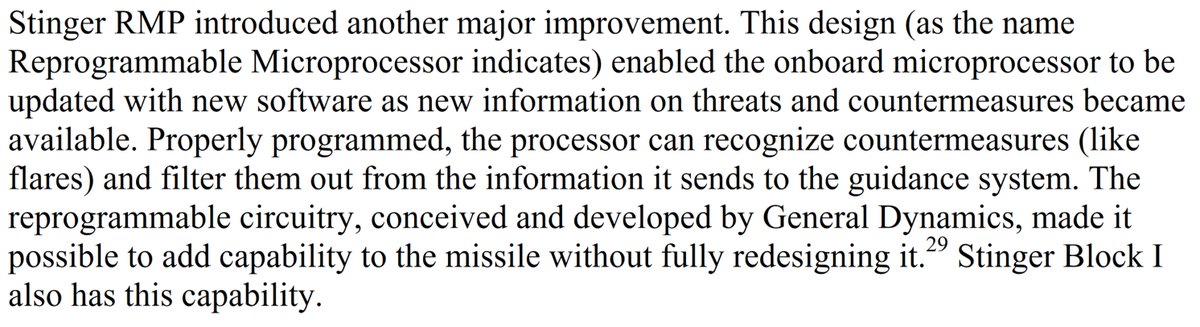
This allows the processor to rule out the sectors with flares as not-the-target. The biggest downside to rosette scanning is the processing penalty it incurs, but this was made possible by the digitization of the Stinger.


Image
Image
Image
for the stuff about Stinger. I'm honestly quite surprised that this is completely public info, which is the only reason I considered posting about this.apps.dtic.mil/sti/pdfs/ADA45…
history.redstone.army.mil/miss-stingerav…
odin.tradoc.army.mil/WEG/Asset/FIM-…

• • •

Missing some Tweet in this thread? You can try to force a refresh

 

Keep Current with Heatloss

Heatloss Profile picture

Stay in touch and get notified when new unrolls are available from this author!

Read all threads

This Thread may be Removed Anytime!

PDF

Twitter may remove this content at anytime! Save it as PDF for later use!

Try unrolling a thread yourself!

how to unroll video
  1. Follow @ThreadReaderApp to mention us!

  2. From a Twitter thread mention us with a keyword "unroll"
@threadreaderapp unroll

Practice here first or read more on our help page!

More from @heatloss1986

Feb 22
Impressive look-up performance for that small of a radar. Now let's see look down RWS.
Image
Warning: I don't have a ton of information on APG-67, so I'm kinda shooting from the hip here based on what I can find online and what I know about other systems.
I have some respect for it given what they did with that small of a space tbh, but that chart is pretty generous. 5m^2(7dBsm) is a pretty hot target. APG-65 on the F-18 does about the same range against a 3dBsm(2m^2) target. At least they use 85% probability rather than 50%.
Read 11 tweets
Feb 21
The Sidewinder was primarily a passive infrared-guided missile. However, there was one that stood out from the rest in design. This was Sidewinder 1C-SAR or AIM-9C, the radar-guided brother to AIM-9D.🧵
Image
First, what does "Sidewinder 1C-SAR" mean? Well, it was very similar to the AIM-9D, the other Sidewinder 1C, in design, having the same warhead, same safety system, same rocket motor, and interchangeable influence fuzes. However, it used a Semi-Active-Radar GCG.

Image
Image
Image
So what was the purpose of the AIM-9C? It was developed for use with the F-8D/E Crusader. The crusader had no provisions for Sparrow carriage, and the Navy wanted to give it radar weapons capability.
This would allow the F-8 to engage targets when IR could be blocked by weather.
Image
Image
Read 20 tweets
Feb 19
I've mentioned it a few times, but I've realized that most people don't know what it was. This will be a short primer on SAGE, or Semi-Automatic Ground Environment, an air defense command and control system that helped protect the United States between 1958 and the 1980s. Image
Shortly after the end of the Second World War, the US learned that the Soviet Union was developing nuclear weapons. For obvious reasons, this was a serious concern for national security. Until this point, the US had been the only nation with nuclear weapons.
An MIT professor by the name of George Valley, who had experience working with and designing radars, took an interest in the state of the US radar detection and interception network, only to learn that it was wholly unequipped to handle the Soviet intercontinental bomber threat. Image
Read 15 tweets
Feb 18
The improved Sidewinder was a significant redesign, correcting a number of the shortcomings of the first. 🧵

Image
The most obvious visual change was to the front. The gyro assembly shrunk significantly, leading to a much more streamlined profile and therefore lower drag. The magnesium fluoride window is translucent to the visible spectrum but is transparent in the relevant IR band. Image
Now for the elephant in the room: the changes to the guidance and control group. The most significant change was the addition of detector cooling by way of liquid nitrogen.
Image
Image
Read 22 tweets
Feb 17
On the topic of day fighters, one of the more misunderstood day fighters is the F-104. However, it suffered from many issues of light/day fighters of the era.🧵 Image
The concept of the F-104 came from an unusual place--pilot opinions. Kelly Johnson interviewed pilots in the Korean War on what they wanted from a new fighter.
The answers were almost unanimous. Fast, simple, maneuverable, and with good high-altitude performance.
The F-104 was the answer to that call. It was an air superiority fighter, first and foremost. It was lightweight, incredibly fast, responsive for the time, and nearly untouchable above mach.
In a way, this was the 1950s predecessor to the LWF concept. Image
Read 22 tweets
Feb 16
The first F-16A MLUs are starting to appear with Ukrainian markings. It's time to talk a little bit about the F-16A and the MLU, mostly focusing on the F-16A's development history.🧵 holosameryky.com/a/pilot-phanto…
NOTE: This will be different from my normal threads. All F-16A and 16A MLU manuals found online are export-restricted, so I will not use them, nor reference any information in them. I will use third-party sources and public documents.
I will not do legwork for the Russians.
During the Vietnam War, the advanced F-4 was struggling to handle MiG-19s and early MiG-21s, which were classed as "Day Fighters." Day fighters are a type of fighter aircraft designed primarily to operate, as the name implies, during the day. VPAF MiG-19 and MiG-21F-13 below.
Image
Image
Read 33 tweets

Did Thread Reader help you today?

Support us! We are indie developers!


This site is made by just two indie developers on a laptop doing marketing, support and development! Read more about the story.

Become a Premium Member ($3/month or $30/year) and get exclusive features!

Become Premium

Don't want to be a Premium member but still want to support us?

Make a small donation by buying us coffee ($5) or help with server cost ($10)

Donate via Paypal

Or Donate anonymously using crypto!

Ethereum

0xfe58350B80634f60Fa6Dc149a72b4DFbc17D341E copy

Bitcoin

3ATGMxNzCUFzxpMCHL5sWSt4DVtS8UqXpi copy

Thank you for your support!

Follow Us!

:(