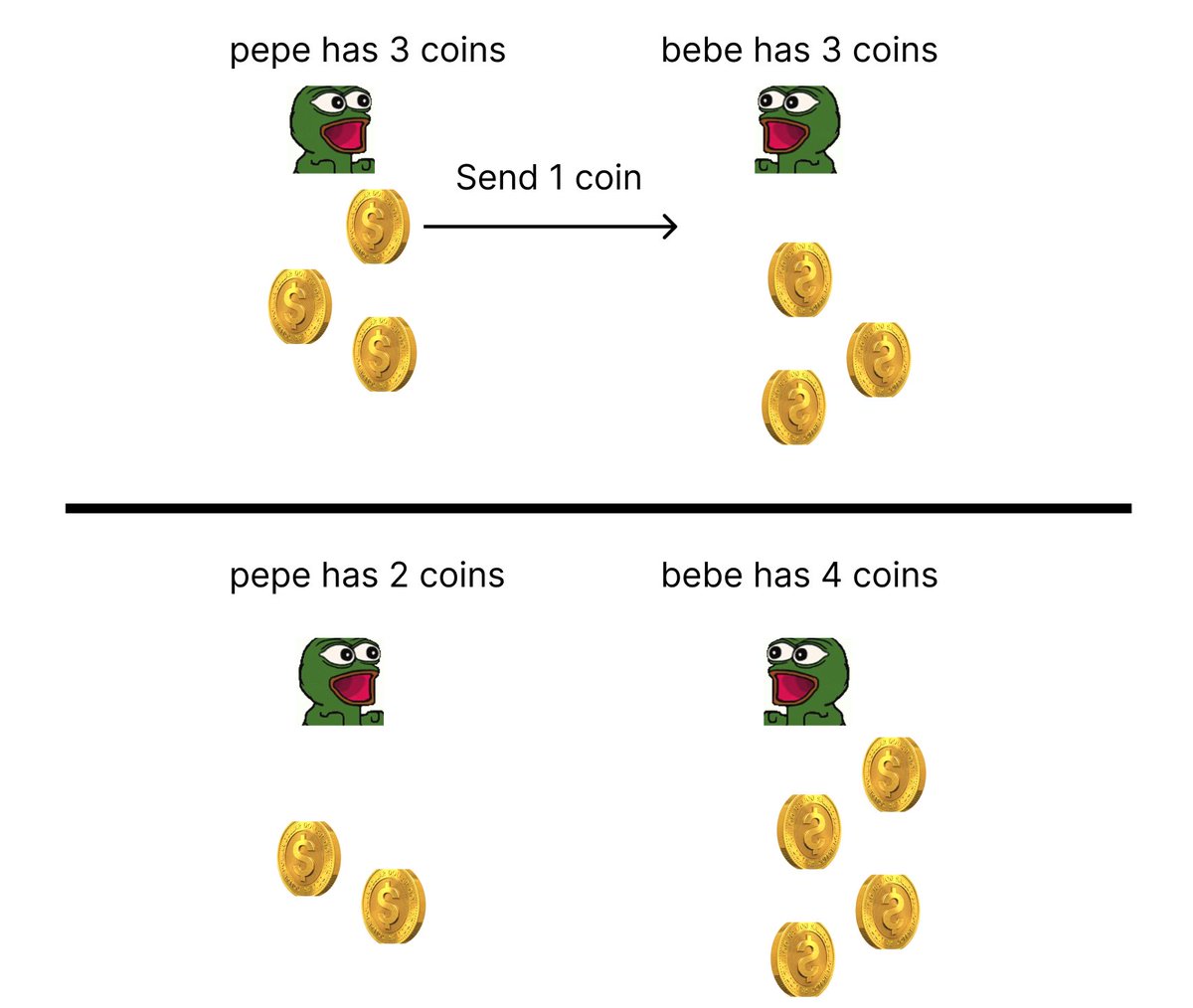
Ohm devs cooked something called Baseline that supposedly is infinite liquidity, no liquidation leverage, and up-only.
FYI I bought tokens but it's genuinely an interesting mechanism - NFA, it might go down + I have some improvements I would make.
Here's how it works:
FYI I bought tokens but it's genuinely an interesting mechanism - NFA, it might go down + I have some improvements I would make.
Here's how it works:

First of all, there are 2 distinct products: Baseline is the protocol and $YES is the first token launched on top of Baseline.
We will go over how everything works.
Baseline effectively is an automated liquidity manager for tokens.
We will go over how everything works.
Baseline effectively is an automated liquidity manager for tokens.
Baseline launches tokens on V3 AMMs with single sided liquidity - effectively 'ICOing' token launches initially.
quick recap, V3 has a concept of 'ticks', which are just liquidity ranges.
As people buy/sell the token (price discovery), fees are accumulated in a clever way.
quick recap, V3 has a concept of 'ticks', which are just liquidity ranges.
As people buy/sell the token (price discovery), fees are accumulated in a clever way.
Rather than taxing buys/sells, which is the traditional way to rake fees, Baseline changes the liquidity depth between ticks on buys/sells to increase slippage.
This effectively accrues fees (in ETH) to the protocol in a cleaner way than taxing traders.
This effectively accrues fees (in ETH) to the protocol in a cleaner way than taxing traders.
Where do those fees go? They go into something called 'floor' and 'anchor' ticks - this effectively is a price FLOOR on the token price.
As people are buying/selling the tokens on Baseline, the fees accrued are used to increase the floor tick.
As people are buying/selling the tokens on Baseline, the fees accrued are used to increase the floor tick.
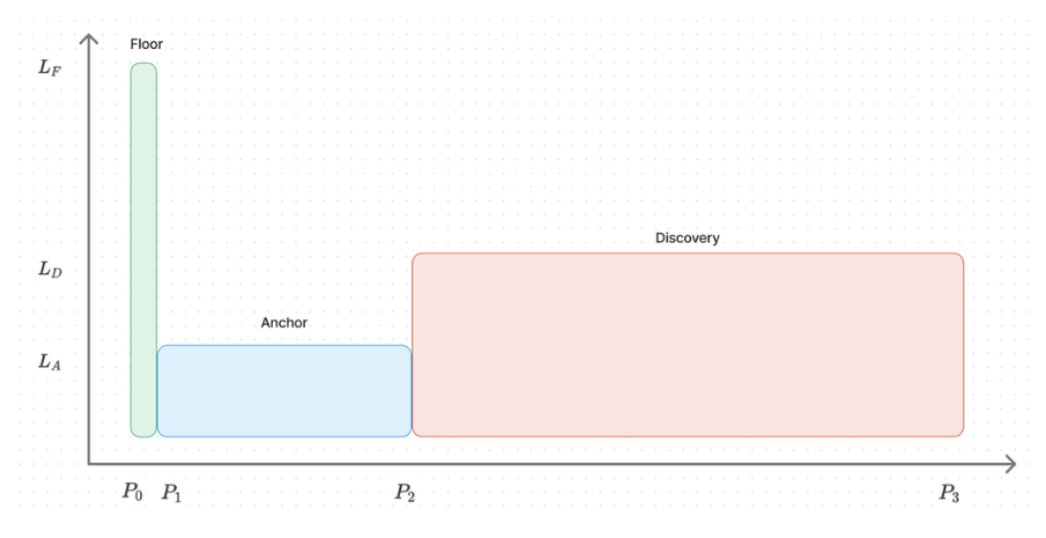
This floor tick can withhold ALL sell pressure of the floating supply of the token - this is the LOWEST price the token can go.
The 'discovery' ticks are ticks that only contain the token - effectively where traders buy new tokens from.
The 'discovery' ticks are ticks that only contain the token - effectively where traders buy new tokens from.
The anchor ticks facilitate smoother trading between the floor tick and discovery ticks.
As trading happens, the protocol is constantly accruing fees in ETH. When the token price appreciates past a certain tick, a function called 'shift' is executed.
As trading happens, the protocol is constantly accruing fees in ETH. When the token price appreciates past a certain tick, a function called 'shift' is executed.
Shift rebalances the entire liquidity supply. Let's say the price of the token increased 25%, the liquidity would be rebalanced where the floor tick would move up (floor value of token increases), anchors will be reset, and token price discovery ticks would shifted up as well.
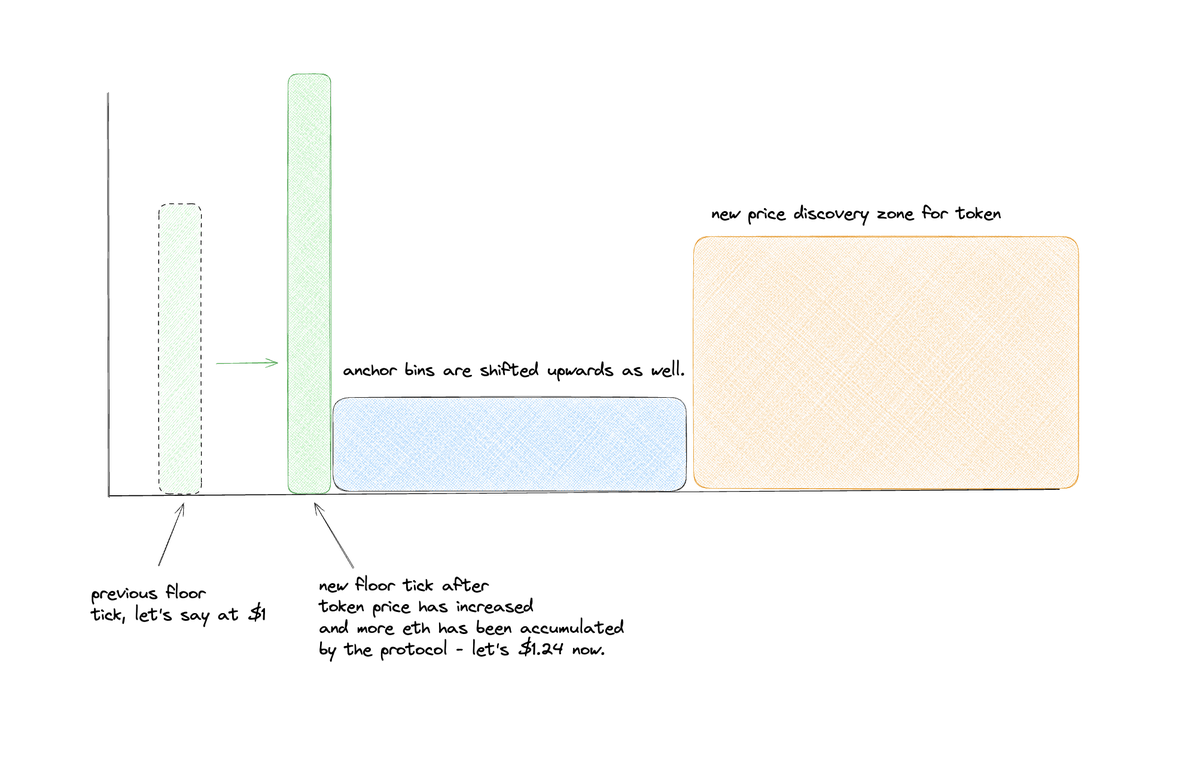
When the token price decreases past a certain anchor tick, a function called 'slide' is executed.
The floor bin will still try to move up if enough fees are accrued (or stay if not) and anchor ticks and price discovery ticks will be rebalanced in the opposite direction.
The floor bin will still try to move up if enough fees are accrued (or stay if not) and anchor ticks and price discovery ticks will be rebalanced in the opposite direction.
It's important to note, the floor tick can ONLY go up.
We can see the current token price relative to the floor price - right now the token price is trading ~45% premium relative to the floor. We can also see the floor slowly increasing as trading happens.
We can see the current token price relative to the floor price - right now the token price is trading ~45% premium relative to the floor. We can also see the floor slowly increasing as trading happens.

A really neat feature the floor tick offers is that you can actually have native leverage with the token.
By locking up the token (in this case $YES), those tokens are taken out of circulation and can't be sold, effectively allowing you to take ETH out of the floor tick.
By locking up the token (in this case $YES), those tokens are taken out of circulation and can't be sold, effectively allowing you to take ETH out of the floor tick.
This allows you to continuously leverage on your $YES tokens without any risk of liquidation. Since you borrowed from the floor bin that can never go below it's current price, your position is always solvent.
No need for oracles either.
No need for oracles either.
As the floor moves up, you can re-leverage your existing position.
https://twitter.com/fungiblecoin/status/1764199479895531875?s=20
So is this up-only technology?
kind of- there is a fair value that your tokens can never go below and depending on trading activity, that floor will move up.
However, as the price of the token trades at a higher premium to the floor, it becomes riskier as traders may dump.
kind of- there is a fair value that your tokens can never go below and depending on trading activity, that floor will move up.
However, as the price of the token trades at a higher premium to the floor, it becomes riskier as traders may dump.
But on the flip side, buying the token close to floor means your downside is capped significantly.
Some suggestions I would have for the next token to launch on Baseline is to thin out liquidity in the price discovery zone.
Some suggestions I would have for the next token to launch on Baseline is to thin out liquidity in the price discovery zone.
I believe the liquidity in the price discovery ticks are too thick and price insensitive to bids.
This would be alleviated if every single user looped on leverage to clear out the ticks and send this to Valhalla, but it's not something a token should rely on.
This would be alleviated if every single user looped on leverage to clear out the ticks and send this to Valhalla, but it's not something a token should rely on.

Thinning out liquidity would allow this to be much more sensitive to buys, which is always good as price can swing upwards faster and the floor bins would mitigate some downside.
Regardless, very interesting mechanism and the new age spin on protocol owned liquidity.
Regardless, very interesting mechanism and the new age spin on protocol owned liquidity.
Will continue to keep up with @BaselineMarkets developments and improvements!
• • •
Missing some Tweet in this thread? You can try to
force a refresh