Thread 🧵
𝘽𝙄𝙂 𝘽𝘼𝙉𝙂:
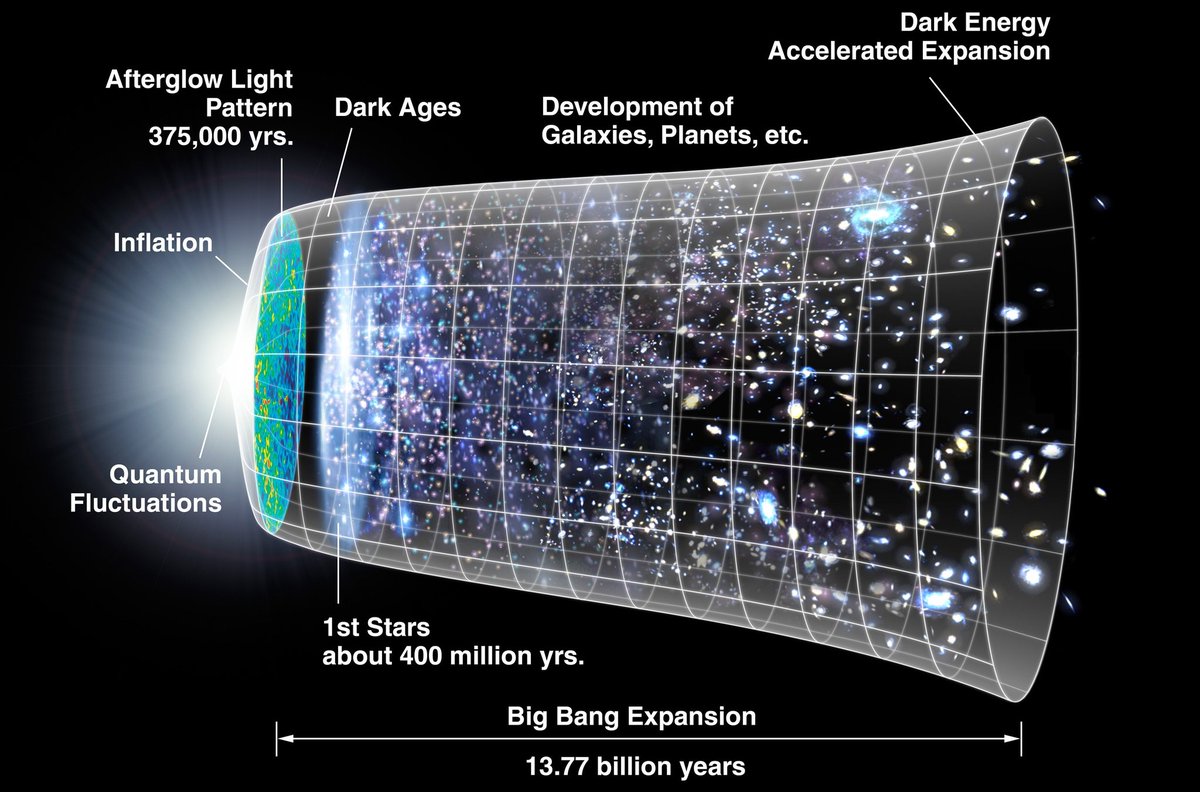
The Big Bang theory is the widely accepted theory, explains the beginning of the universe. It was proposed in 1931, and the term 'Big Bang' was coined in 1949. It seems like there was an explosion from name, but actually, the Big Bang is a misnomer.
𝘽𝙄𝙂 𝘽𝘼𝙉𝙂:
The Big Bang theory is the widely accepted theory, explains the beginning of the universe. It was proposed in 1931, and the term 'Big Bang' was coined in 1949. It seems like there was an explosion from name, but actually, the Big Bang is a misnomer.
𝙎𝙄𝙉𝙂𝙐𝙇𝘼𝙍𝙄𝙏𝙔:
The Big Bang theory suggest that the universe began from Singularity, point of infinite density and temp. Then a rapid expansion started and the temperature started to fall. This expansion is still continuing and everything in the universe is moving apart
The Big Bang theory suggest that the universe began from Singularity, point of infinite density and temp. Then a rapid expansion started and the temperature started to fall. This expansion is still continuing and everything in the universe is moving apart

𝘽𝙀𝙂𝙄𝙉𝙉𝙄𝙉𝙂 𝙊𝙁 𝙏𝙄𝙈𝙀:
According to Big Bang theory time began with the Big Bang. And before the Big Bang there was no time mean there was no before. While the string theory suggest the possibility of the existence of time even before Big Bang so it's still a mystery
According to Big Bang theory time began with the Big Bang. And before the Big Bang there was no time mean there was no before. While the string theory suggest the possibility of the existence of time even before Big Bang so it's still a mystery

𝙁𝙊𝙐𝙍 𝙁𝙐𝙉𝘿𝘼𝙈𝙀𝙉𝙏𝘼𝙇 𝙁𝙊𝙍𝘾𝙀𝙎:
𝘗𝘓𝘈𝘕𝘊𝘒 𝘌𝘙𝘈:
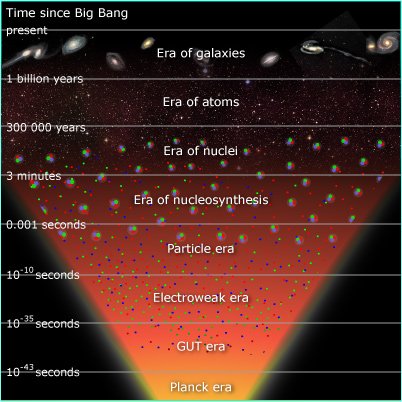
In the beginning, the universe was in a hot and dense state where the four fundamental forces were unified into a single superforce. It was the first Era, and it lasted for 10-⁴³ seconds after the Big Bang.
𝘗𝘓𝘈𝘕𝘊𝘒 𝘌𝘙𝘈:
In the beginning, the universe was in a hot and dense state where the four fundamental forces were unified into a single superforce. It was the first Era, and it lasted for 10-⁴³ seconds after the Big Bang.
𝘎𝘜𝘛 𝘌𝘙𝘈:
The next era is known as the GUT era when gravity became distinct, and the other three forces remained unified. This era lasted for 10-³⁵ seconds after the Big Bang.
𝘌𝘓𝘌𝘊𝘛𝘙𝘖𝘞𝘌𝘈𝘒 𝘌𝘙𝘈:
As the universe continued to cool further, the strong nuclear
The next era is known as the GUT era when gravity became distinct, and the other three forces remained unified. This era lasted for 10-³⁵ seconds after the Big Bang.
𝘌𝘓𝘌𝘊𝘛𝘙𝘖𝘞𝘌𝘈𝘒 𝘌𝘙𝘈:
As the universe continued to cool further, the strong nuclear

force also became distinct. This era is known as the Electroweak era because the electroweak force is still combined. At this point, the temperature of the universe had dropped from infinity to 10¹⁵K. There are no matter particles, just photons and energy.
𝙀𝙇𝙀𝙈𝙀𝙉𝙏𝘼𝙍𝙔 𝙋𝘼𝙍𝙏𝙄𝘾𝙇𝙀𝙎:
After 10-¹⁰ seconds of the Big Bang the four forces became distinct, allowing particles to form. However, matter and antimatter both formed in equal amounts. As the universe was so dense, matter and antimatter continued to meet with each
After 10-¹⁰ seconds of the Big Bang the four forces became distinct, allowing particles to form. However, matter and antimatter both formed in equal amounts. As the universe was so dense, matter and antimatter continued to meet with each

other and annihilate into energy again. So the cycle of creation and destruction of matter and antimatter continued until 0.001 second from the Big Bang. When the temperature of the universe dropped to 10¹² K, the amount of matter formation slightly increased than antimatter.
𝙌𝙐𝘼𝙍𝙆-𝙂𝙇𝙐𝙊𝙉 𝙋𝙇𝘼𝙎𝙈𝘼:
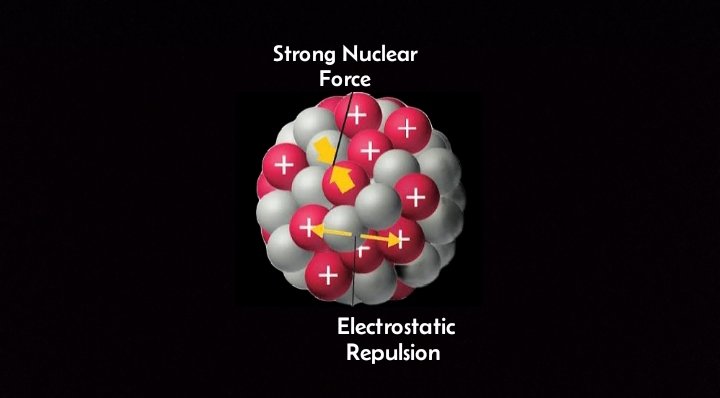
Matter existed in a very hot and dense state, a soup-like mixture of quarks and gluons known as quark-gluon plasma. Quarks are the building blocks of proton and neutron, and the gluons overcome the repulsion between positively charged protons.
Matter existed in a very hot and dense state, a soup-like mixture of quarks and gluons known as quark-gluon plasma. Quarks are the building blocks of proton and neutron, and the gluons overcome the repulsion between positively charged protons.

𝙉𝙐𝘾𝙇𝙀𝙊𝙎𝙔𝙉𝙏𝙃𝙀𝙎𝙄𝙎:
After 1 ms of the Big Bang quarks and gluons started to combine to form proton and neutron, while the first nuclei were not formed until 3 min after the Big Bang when the temperature of the universe dropped to 10⁹K, allowing nucleons to combine.
After 1 ms of the Big Bang quarks and gluons started to combine to form proton and neutron, while the first nuclei were not formed until 3 min after the Big Bang when the temperature of the universe dropped to 10⁹K, allowing nucleons to combine.

𝙉𝙐𝘾𝙇𝙀𝙐𝙎:
As the Universe was too hot to form neutral atoms particles were present in the form of atomic nuclei and free electrons or in other words matter was present in the form of plasma. The Universe was so dense and the particles and photons were not allowed to escape
As the Universe was too hot to form neutral atoms particles were present in the form of atomic nuclei and free electrons or in other words matter was present in the form of plasma. The Universe was so dense and the particles and photons were not allowed to escape
𝙉𝙀𝙐𝙏𝙍𝘼𝙇 𝘼𝙏𝙊𝙈:
Approximately 380,000 years after the Big Bang the universe had cooled enough for electrons to combine with nuclei. This event is known as recombination. It allowed photons to travel freely through space for the first time and created the first light.
Approximately 380,000 years after the Big Bang the universe had cooled enough for electrons to combine with nuclei. This event is known as recombination. It allowed photons to travel freely through space for the first time and created the first light.

𝘾𝙊𝙎𝙈𝙄𝘾 𝙈𝙄𝘾𝙍𝙊𝙒𝘼𝙑𝙀 𝘽𝘼𝘾𝙆𝙂𝙍𝙊𝙐𝙉𝘿:
In the beginning there was no light. As photons are the particles that carry light and it was not allowed to travel freely through space. It was 380,000 years after the Big Bang when the first light generated known as the CMB
In the beginning there was no light. As photons are the particles that carry light and it was not allowed to travel freely through space. It was 380,000 years after the Big Bang when the first light generated known as the CMB

The CMB was the first light in the universe and it filled the universe in all directions. CMB is still present in the universe. It has been traveling through space since it was first emitted cooling down as the universe expands. The current temperature of the CMB is approx 2.7K.
𝙎𝙏𝘼𝙍𝙎 𝘼𝙉𝘿 𝙂𝘼𝙇𝘼𝙓𝙄𝙀𝙎:
Chemically light elements formed after the Big Bang (hydrogen 75%, helium 24%, lithium <1%) gathered to form stars. Gravity caused regions of slightly higher density to attract more matter eventually leading to the formation of the first stars
Chemically light elements formed after the Big Bang (hydrogen 75%, helium 24%, lithium <1%) gathered to form stars. Gravity caused regions of slightly higher density to attract more matter eventually leading to the formation of the first stars

𝘿𝘼𝙍𝙆 𝙀𝙉𝙀𝙍𝙂𝙔:
As mentioned earlier, the universe is continuously expanding. Here the question arises: why is it expanding? Should not be it contracting due to gravitational force? Dark energy is believed to be the cause of the continuous expanding universe.
As mentioned earlier, the universe is continuously expanding. Here the question arises: why is it expanding? Should not be it contracting due to gravitational force? Dark energy is believed to be the cause of the continuous expanding universe.

𝘽𝙄𝙂 𝘾𝙍𝙐𝙉𝘾𝙃:
Everything has an end; the Big Bang is not only the starting point; it can also be the end point of the universe, means another Big Bang. The universe is expanding, but one time will come when it'll start to contract again. And when will it happen?
Everything has an end; the Big Bang is not only the starting point; it can also be the end point of the universe, means another Big Bang. The universe is expanding, but one time will come when it'll start to contract again. And when will it happen?

It depends on the amount of dark energy present in the universe As we understand, dark energy is in limited amount so one time will come when its influence will become less than that of gravity And gravity will cause universe to contracting again until it reach singularity.
End
End
• • •
Missing some Tweet in this thread? You can try to
force a refresh