Heatloss Profile picture
Mar 7 10 tweets 3 min read Read on X
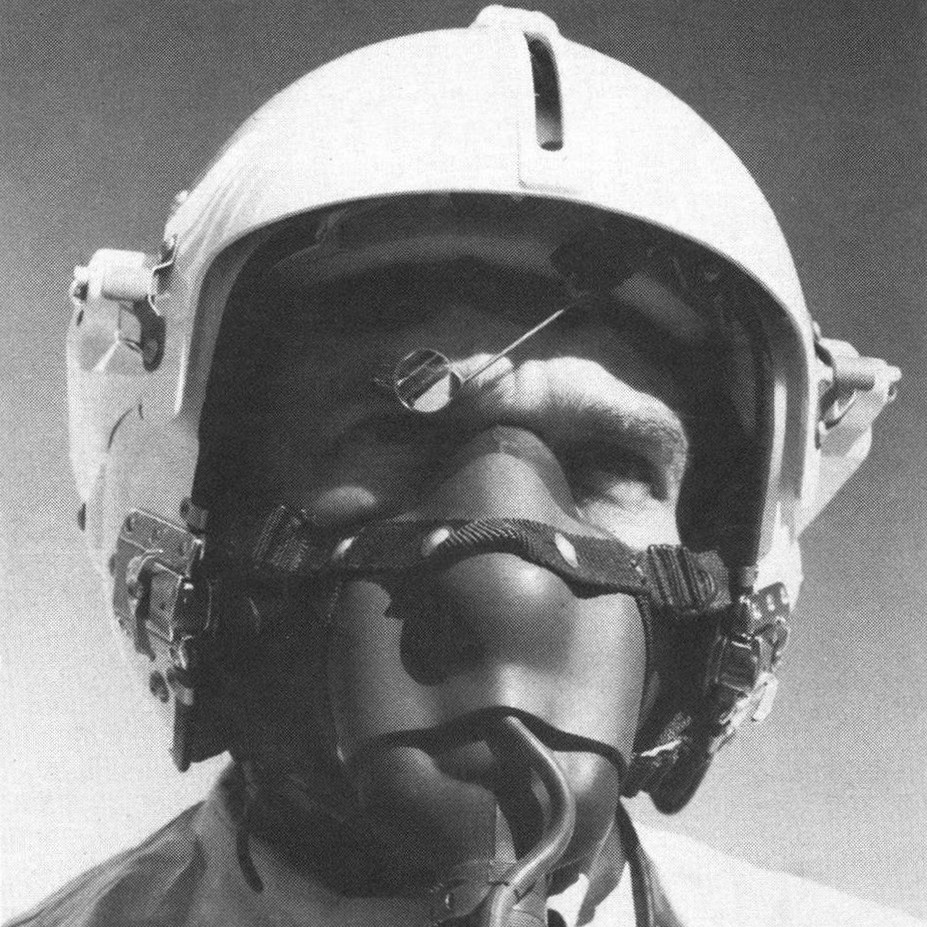
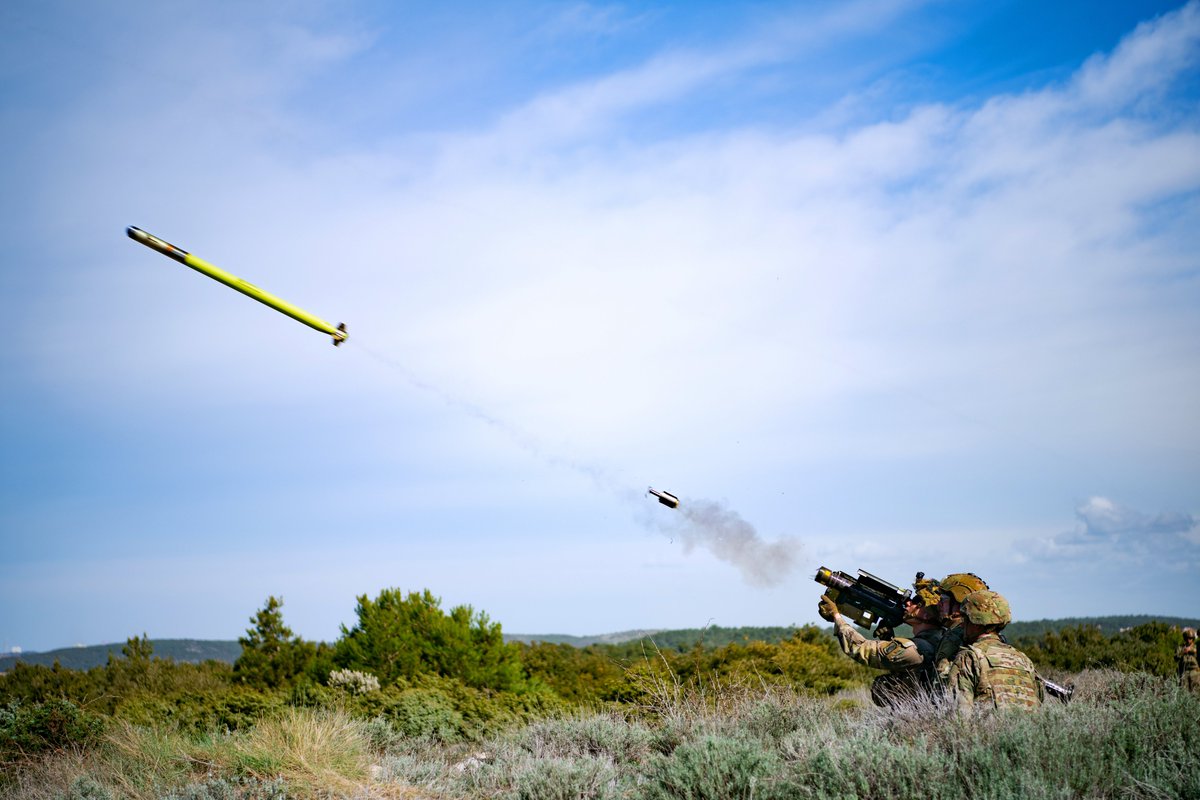
The AIM-9L was an incomplete product when it entered service. It was intended to contain flare rejection logic, be fully digital, and have high sensitivity, but these requirements would have to wait until 9M. The Brits would take it upon themselves to modify 9L to increase range. Image
How did they accomplish that? By removing the "chirp tone" that provided the pilot with an audible positive confirmation of lock-on. The threshold for the chirp tone generation was far higher than the detection threshold. This left the only indication of a lock as hud symbology. Image
It is my understanding that this chirp tone is generated by circuitry in the launching aircraft, much like the "chirp tone" of later rear aspect Sidewinders, which drove the seeker off-center during radar-slaved lock to ensure the seeker was tracking a target and not a cloud. Image
Given what I know about 9L's seeker design, I don't believe that this was the method used to generate the chirp, but I suspect the mechanism was similar.
However, given what I can find, this indicates that the dechirped 9L was relegated to being a radar-slaved IR missile. Image
This removal of the chirp tone was absolutely horrendous for the purposes of 9L as a dogfight missile.

However, I think I have an explanation for this somewhat questionable choice. This comes back to the mission planning and intended targets of the Tornado Air Defense Variant.
The Tornado ADV was intended to intercept low-flying Soviet bombers, and the usage of Skyflash meant that only one target could be intercepted at a time. Skyflash was a semi-active radar-homing missile, and therefore the launching aircraft needed to acquire a single-target-track. Image
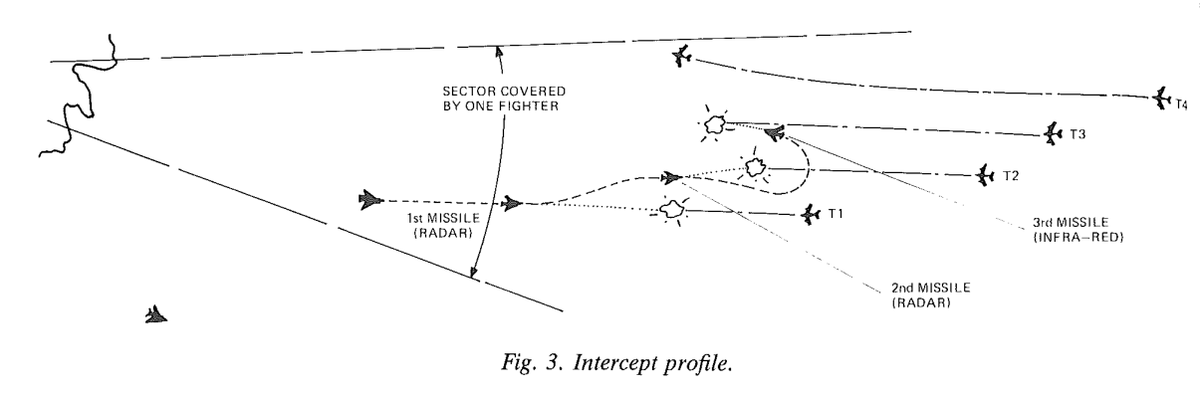
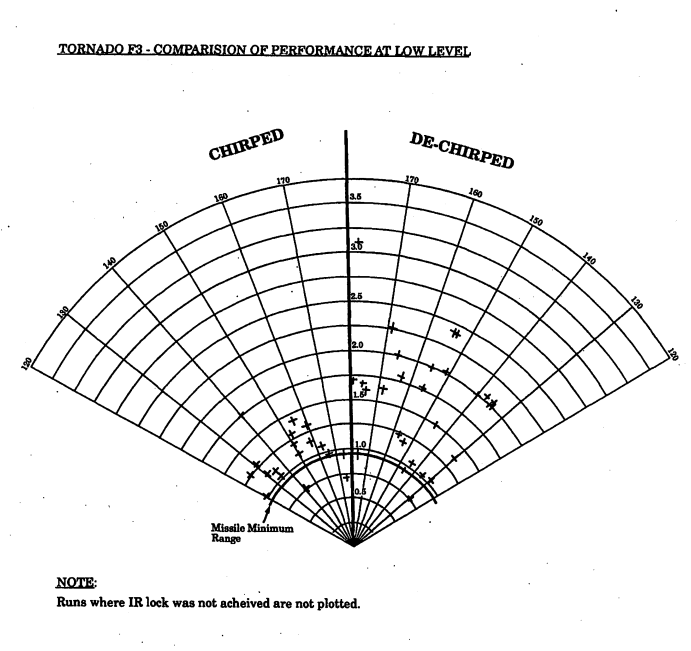
This meant that the Tornado was expected to have to intercept targets with its IR AAMs as well as its Radar AAMs. At lower altitudes, the lower seeker sensitivity of 9L(and therefore shorter lock range) hurt its range performance especially compared to 9M.
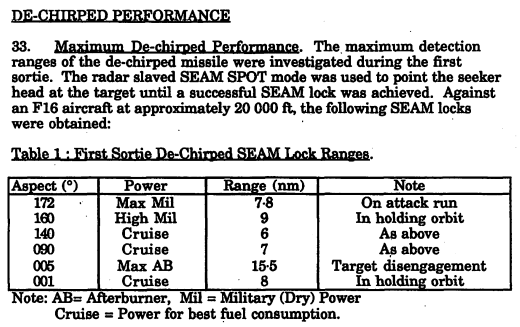
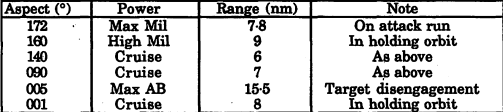
You'll notice in this chart the significant differences between lock ranges on cruise power versus afterburner power, and this was at high altitudes! Bombers would also likely not put out as much heat as an F-16, and therefore a more faint IR signature (180° appears to be front). Image
As the first diagram in this thread shows, de-chirping did solve the problem of low-altitude performance as intended.
I still think it was a terrible idea and a bodge job to cover for the ADV being a questionable interceptor design, but that's a conversation for another time.
If you've read this far, please consider checking out this fundraiser for a friend fighting in Ukraine.

• • •

Missing some Tweet in this thread? You can try to force a refresh

 

Keep Current with Heatloss

Heatloss Profile picture

Stay in touch and get notified when new unrolls are available from this author!

Read all threads

This Thread may be Removed Anytime!

PDF

Twitter may remove this content at anytime! Save it as PDF for later use!

Try unrolling a thread yourself!

how to unroll video
  1. Follow @ThreadReaderApp to mention us!

  2. From a Twitter thread mention us with a keyword "unroll"
@threadreaderapp unroll

Practice here first or read more on our help page!

More from @heatloss1986

Mar 2
A thread on Honeywell's VTAS: the world's first operational helmet-mounted cueing system, entering service in 1969. I will cover the program's origin, the function of VTAS, and the differences between VTAS I and II for now. Image
Much of this story begins in 1968 with the Ault Report. At the time, the F-4 was limited in its ability to launch missiles to radar boresight only or a full fire control system track. Image
For infrared missiles, 9B and 9D for the Navy, the seekerhead was slaved to the radar boresight, meaning that the pilot had to put the gunsight on the target to achieve a lock. In a high-G situation, this could prove difficult.
Read 25 tweets
Feb 24
If you ever hear me talking about FIM-92 Stinger as if it's the best thing since sliced bread, that's cause it kinda is.
A short thread on the Stinger-Passive Optical Seeker Technique(POST) seeker. Image
The POST seeker is a pretty exceptional piece of kit. It provides advanced countermeasure rejection through two different methods that I'll walk through.
Let's start with the easy one: dual color. A dual-color IR/UV seeker looks for a positive infrared signal and a negative UV signal because an aircraft blocks out UV.
Stinger POST used Indium Antimonide for IR and Cadmium Sulfide for UV.

Image
Image
Image
Read 10 tweets
Feb 22
Impressive look-up performance for that small of a radar. Now let's see look down RWS.
Image
Warning: I don't have a ton of information on APG-67, so I'm kinda shooting from the hip here based on what I can find online and what I know about other systems.
I have some respect for it given what they did with that small of a space tbh, but that chart is pretty generous. 5m^2(7dBsm) is a pretty hot target. APG-65 on the F-18 does about the same range against a 3dBsm(2m^2) target. At least they use 85% probability rather than 50%.
Read 11 tweets
Feb 21
The Sidewinder was primarily a passive infrared-guided missile. However, there was one that stood out from the rest in design. This was Sidewinder 1C-SAR or AIM-9C, the radar-guided brother to AIM-9D.🧵
Image
First, what does "Sidewinder 1C-SAR" mean? Well, it was very similar to the AIM-9D, the other Sidewinder 1C, in design, having the same warhead, same safety system, same rocket motor, and interchangeable influence fuzes. However, it used a Semi-Active-Radar GCG.

Image
Image
Image
So what was the purpose of the AIM-9C? It was developed for use with the F-8D/E Crusader. The crusader had no provisions for Sparrow carriage, and the Navy wanted to give it radar weapons capability.
This would allow the F-8 to engage targets when IR could be blocked by weather.
Image
Image
Read 20 tweets
Feb 19
I've mentioned it a few times, but I've realized that most people don't know what it was. This will be a short primer on SAGE, or Semi-Automatic Ground Environment, an air defense command and control system that helped protect the United States between 1958 and the 1980s. Image
Shortly after the end of the Second World War, the US learned that the Soviet Union was developing nuclear weapons. For obvious reasons, this was a serious concern for national security. Until this point, the US had been the only nation with nuclear weapons.
An MIT professor by the name of George Valley, who had experience working with and designing radars, took an interest in the state of the US radar detection and interception network, only to learn that it was wholly unequipped to handle the Soviet intercontinental bomber threat. Image
Read 15 tweets
Feb 18
The improved Sidewinder was a significant redesign, correcting a number of the shortcomings of the first. 🧵

Image
The most obvious visual change was to the front. The gyro assembly shrunk significantly, leading to a much more streamlined profile and therefore lower drag. The magnesium fluoride window is translucent to the visible spectrum but is transparent in the relevant IR band. Image
Now for the elephant in the room: the changes to the guidance and control group. The most significant change was the addition of detector cooling by way of liquid nitrogen.
Image
Image
Read 22 tweets

Did Thread Reader help you today?

Support us! We are indie developers!


This site is made by just two indie developers on a laptop doing marketing, support and development! Read more about the story.

Become a Premium Member ($3/month or $30/year) and get exclusive features!

Become Premium

Don't want to be a Premium member but still want to support us?

Make a small donation by buying us coffee ($5) or help with server cost ($10)

Donate via Paypal

Or Donate anonymously using crypto!

Ethereum

0xfe58350B80634f60Fa6Dc149a72b4DFbc17D341E copy

Bitcoin

3ATGMxNzCUFzxpMCHL5sWSt4DVtS8UqXpi copy

Thank you for your support!

Follow Us!

:(