views

As I've covered in the past, the AN/ASG-14 Radar Fire Control System of the early model F-104s was primarily designed to bring the pilot toward his target in a very simple and easy-to-understand manner. However, a friend provided me with some more information on its origins. 🧵 

Special shoutout to Katherine, who doesn't use Twitter, whom I feel I have to acknowledge for providing me with one of the documents I'm referencing today. (Now send me volume 4, dammit)
The origins of ASG-14, previously known as MA-10, come from the issues presented by extremely high-speed cannon-only operation for an air-superiority fighter. Thus, it was necessary for a computing optical sight to be matched to a simple search and ranging radar.

The decision was made to begin testing with an APG-30 ranging radar, the same system as the F-86F, coupled with a derivative of the K-19 computing optical sight, the star of our show today.


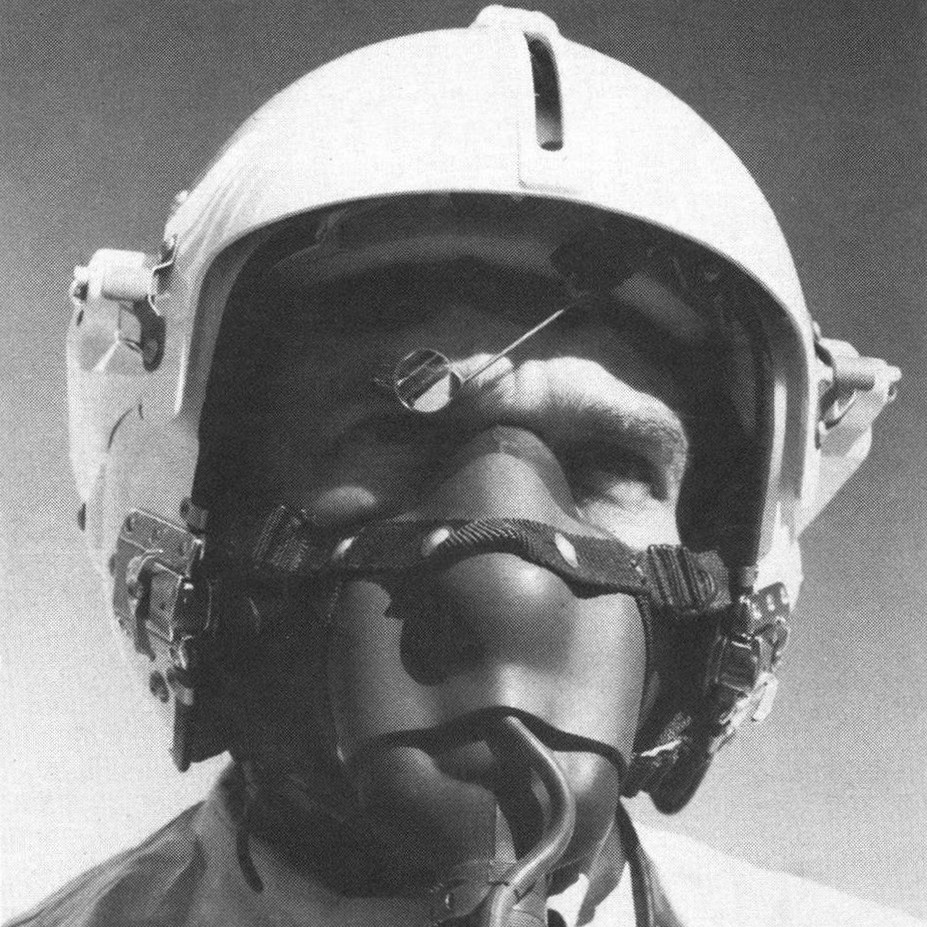
What was K-19? It was a gyro-lead sight, employing a single gyroscope rather than a multiple gyro system. This would calculate all of the necessary components for the projectile ballistic trajectory in relation to the firing aircraft, leaving the pilot to put the sight on target.


As designed, the K-19 had provisions for manual ranging and radar ranging alike. Manual ranging was conducted in a very similar manner to the WWII-era K-14, with a throttle twist grip to adjust the size of the reticle circle. K-14 reticle instructions for visual reference.


The USAF was obsessed with trying to eliminate the radar ranging requirement from their new fighter, but it was not fast enough in adjusting to compensate for the extremely high speeds of the F-104.

Shortly after these tests, the K-19 in its initial configuration was canceled. However, lessons learned from its development would influence further sighting systems. Now, back to the main story.

Unlike K-19, which provided some air-to-ground delivery modes for ordnance, MA-10 was designed to be an air-to-air-only system. Note that the calibration was for gun armament to be fired ABOVE mach 1.0!


XMA-10 was initially tested on a modified F-94C Starfire, likely because they were plentiful and already contained provisions for a radar fire control system.

The radar used a somewhat unusual spiral-scan system for its search mode, which provided easy rendering of the C-scope type display used by the F-104. Its track mode, which used a conical scanning system, physically altered the antenna to change the beam shape.


For the time, this form of radar display was very simple. The search and track modes were very straightforward and provided the pilot with surprisingly detailed target relative position information.


Now, here's the important part that ties into K-19. The ranging system for the radar was connected to the range input for the optical sight on the F-104, meaning that when the target was centered and tracked and the sight was in "radar mode", the range was adjusted automatically.


This significantly lowered pilot workload, which allowed for better accuracy and better pilot situational awareness, key factors in an air superiority fighter such as the 104.
The wingspan adjustment was left in the sight as a backup system for manually finding the target range, though as tests showed prior, the speeds involved likely made this useless. From what I can tell, the F-104C would drop the manual ranging option.
The last major feature was that of the Infrared sighting system, which provided the pilot with the ability to visually track a target at night for a gun kill. Before air-to-air missiles, this was one of the better ways of providing nighttime gun attack capabilities.


The XMA-10 would eventually receive Sidewinder firing capability and provisions for SAGE datalink integration, becoming AN/ASG-14, though the datalink integration was unused.
This would be the final form to enter service on the F-104A.
This would be the final form to enter service on the F-104A.

• • •
Missing some Tweet in this thread? You can try to
force a refresh