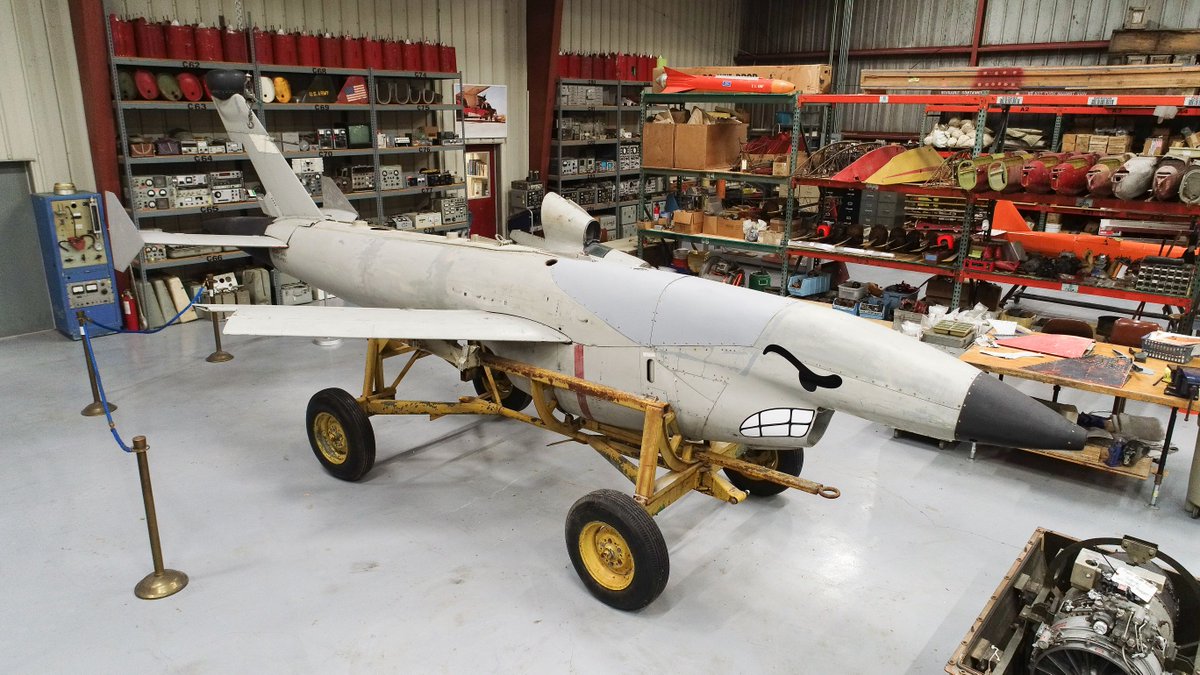
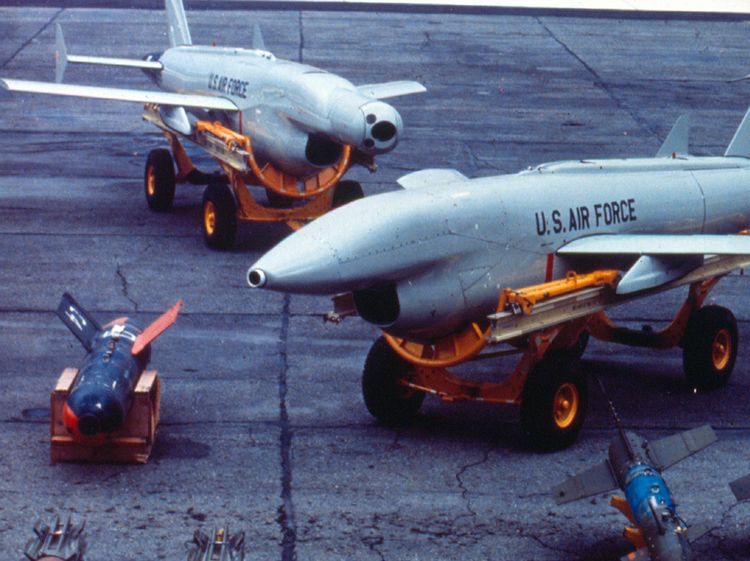
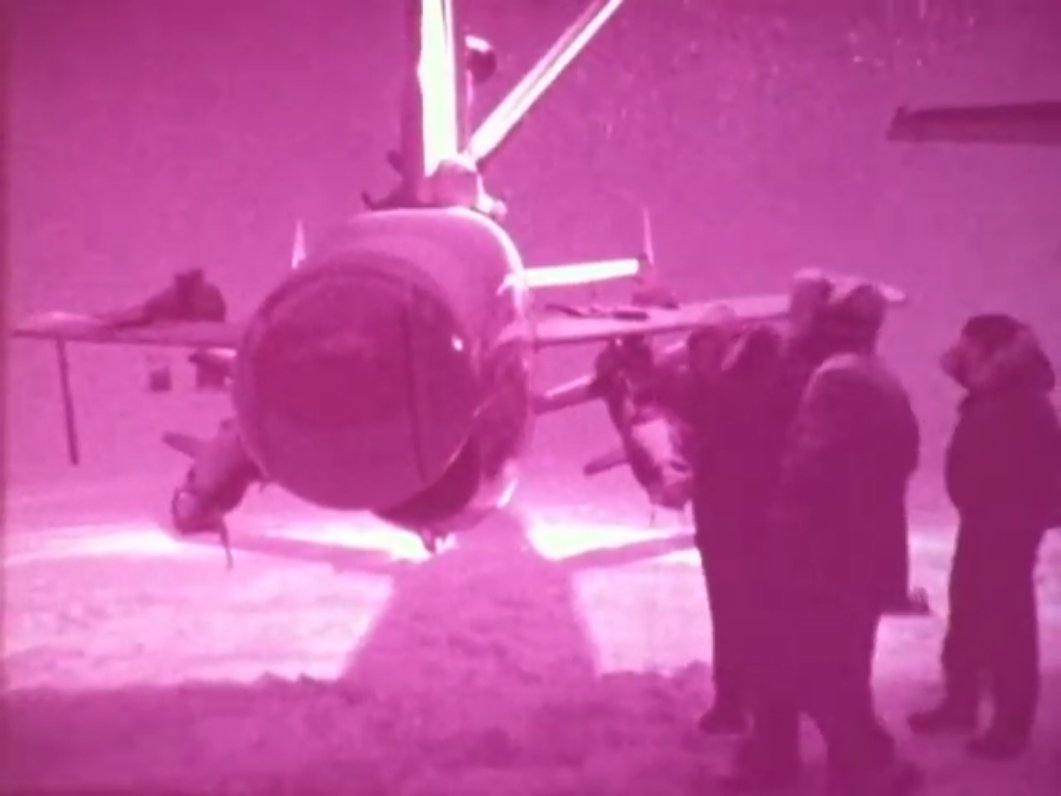
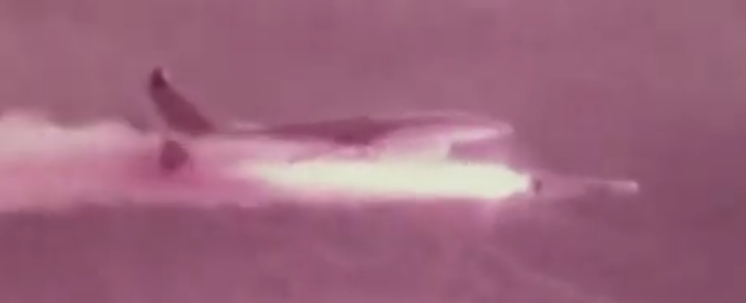
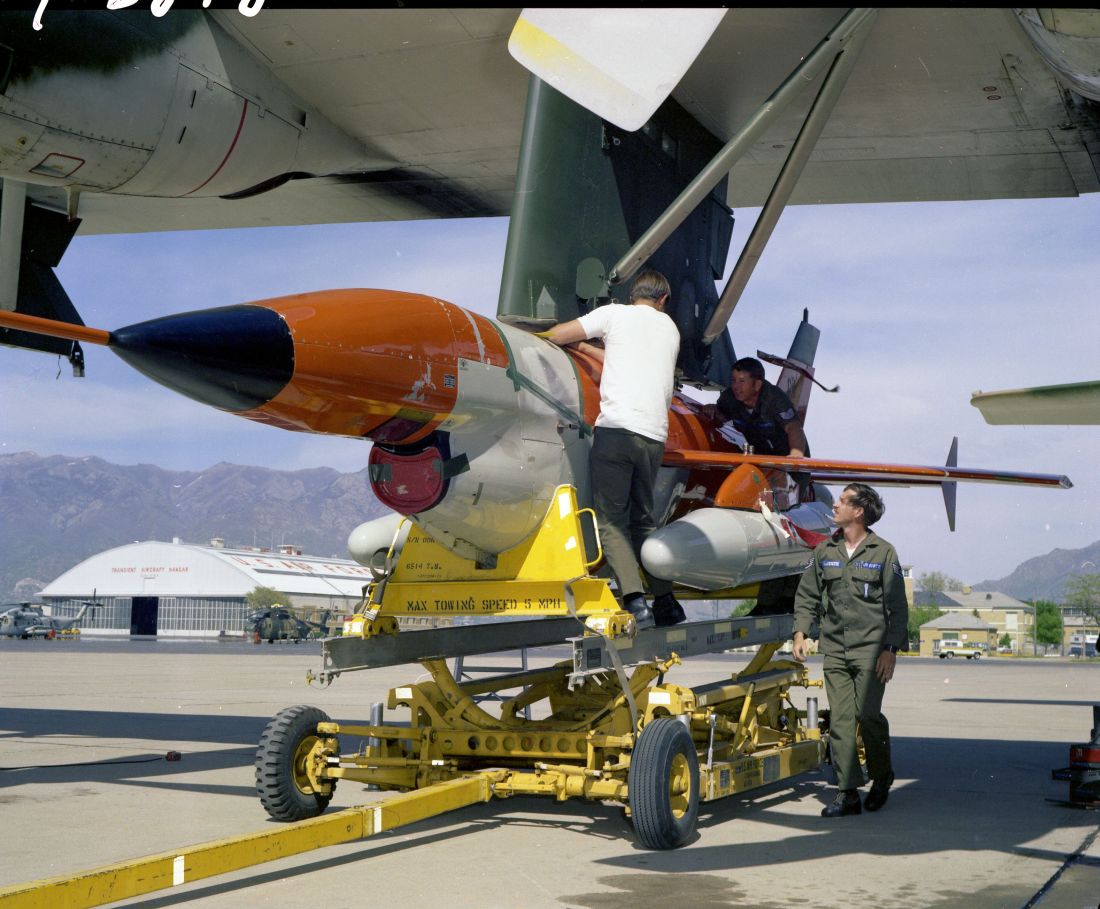
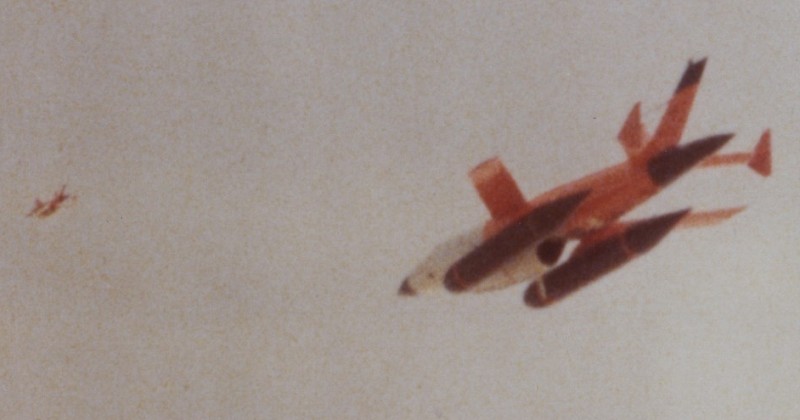
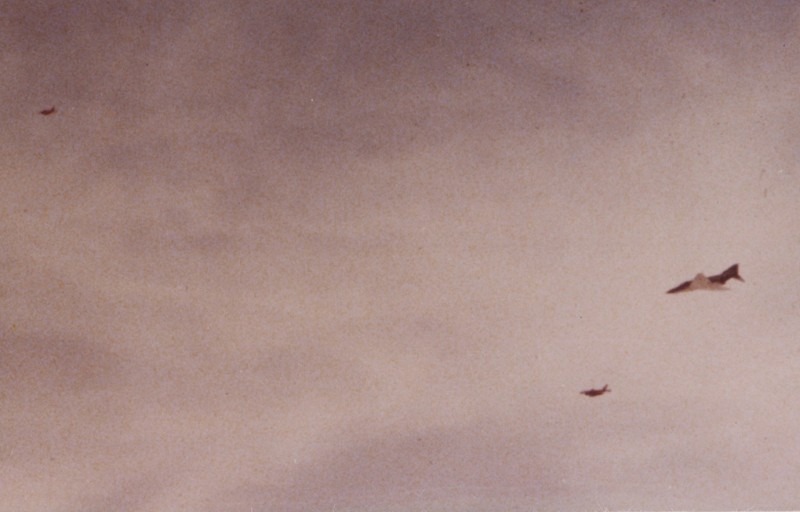
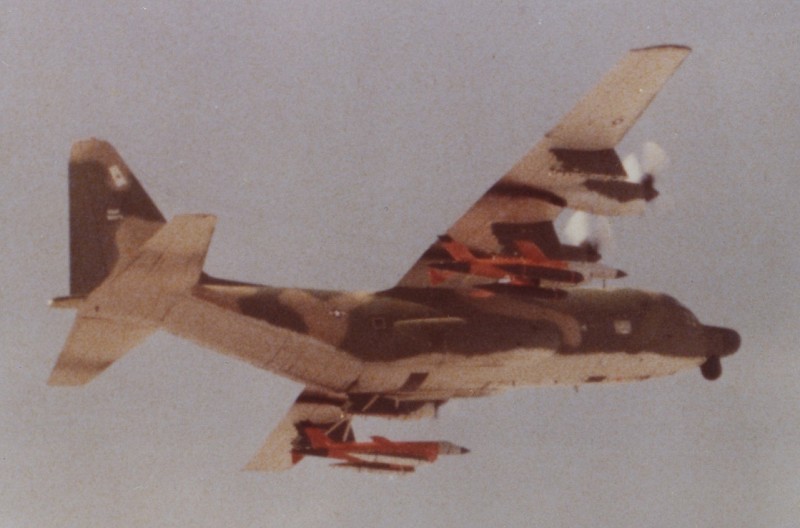
In Vietnam, high loss rates in Wild Weasel SEAD missions led to the Air Force showing interest in a modified Teledyne Ryan Model 147 Lightning Bug for high-risk missions. This would become the BGM-34 (Ryan Model 234) series. 🧵
I don't know a ton about it, nor is there much information, but I'll try to cover it the best I can.
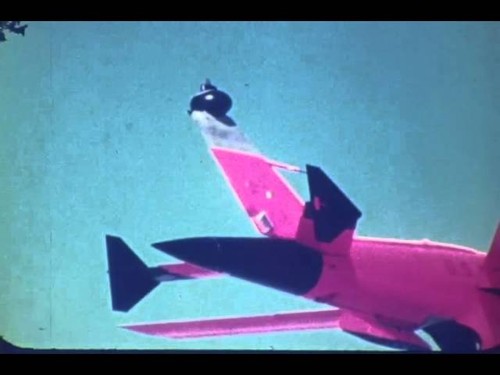
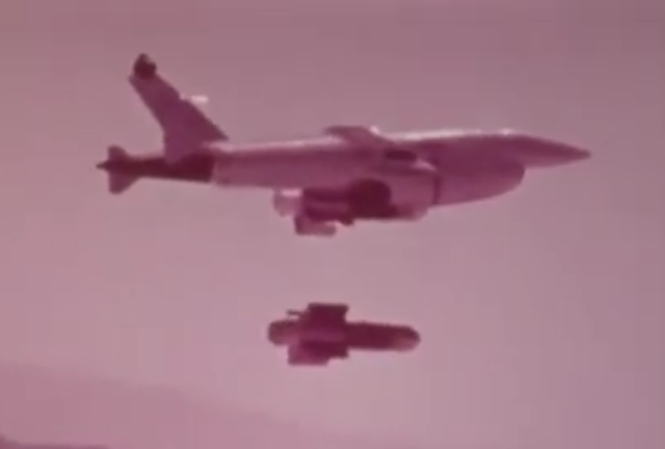
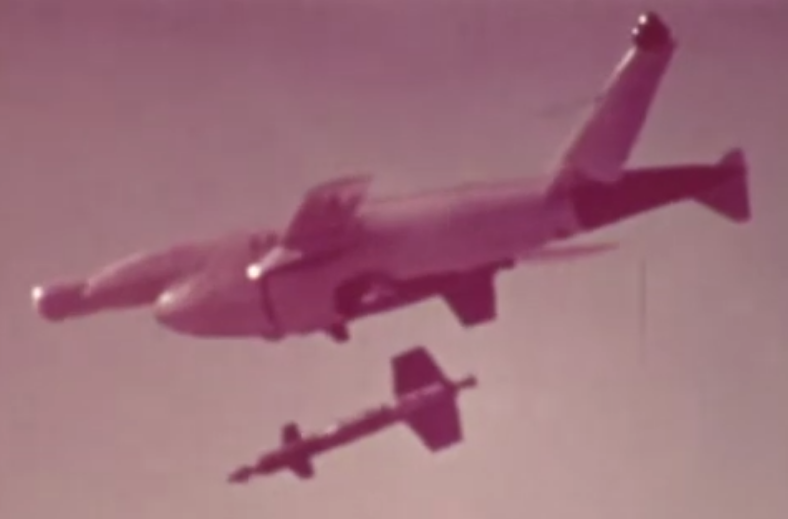
The first model, BGM-34A, began flight tests in 1971. It could be armed with Mavericks, as seen in the first image, or AGM-45 Shrikes, such as this example.
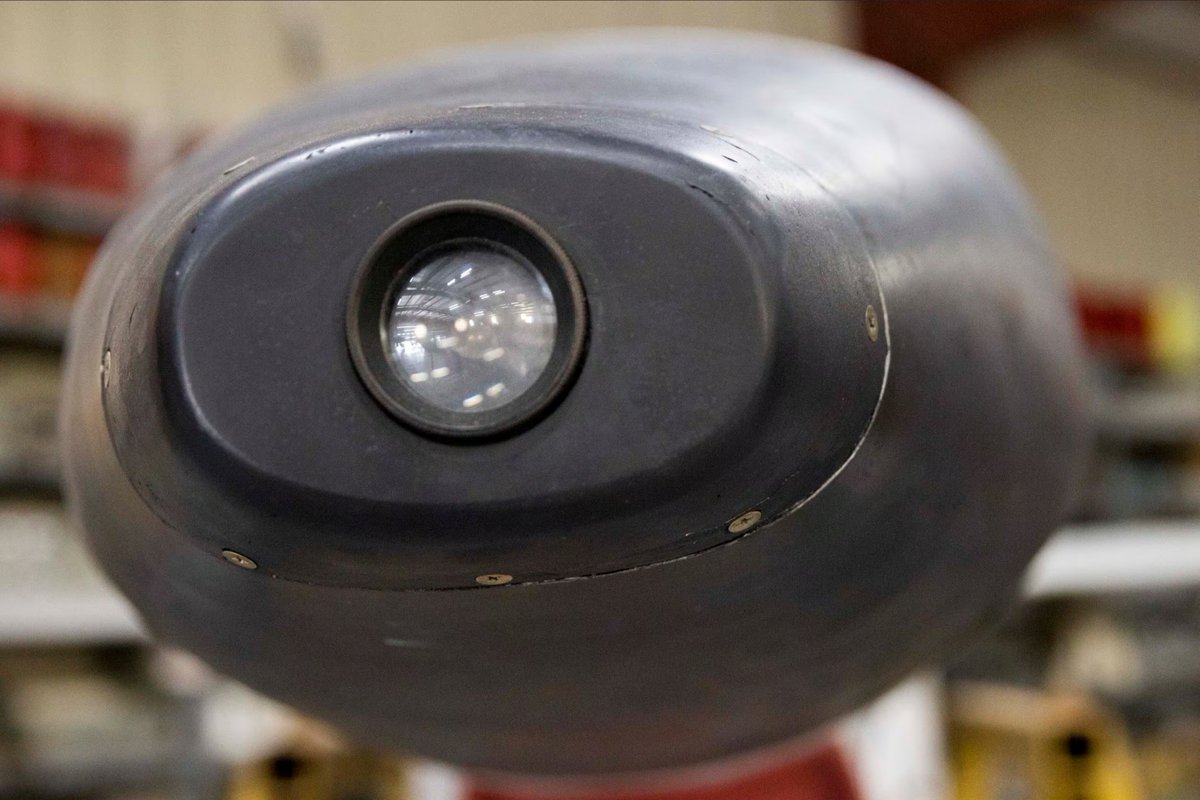
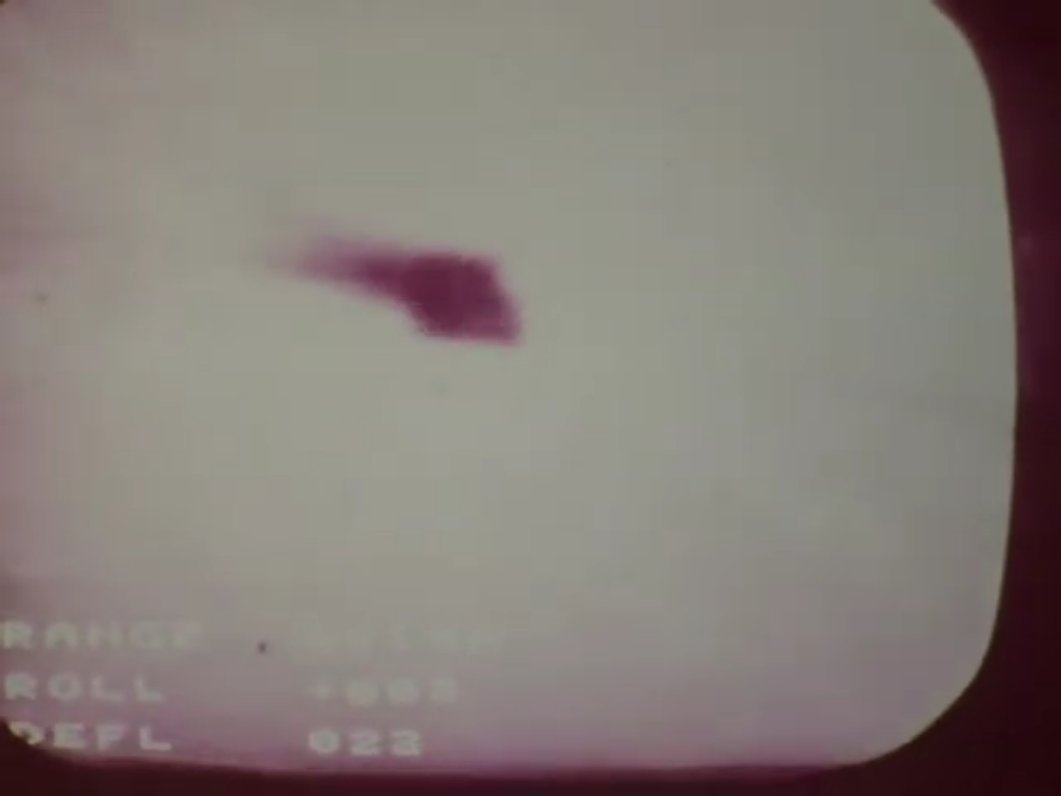
To accomplish this remote weapons delivery capability, a datalink antenna was installed on the top of the vertical stabilizer, which transmitted a feed from the nose-mounted TV camera back to the drone operator, as well as some flight information.
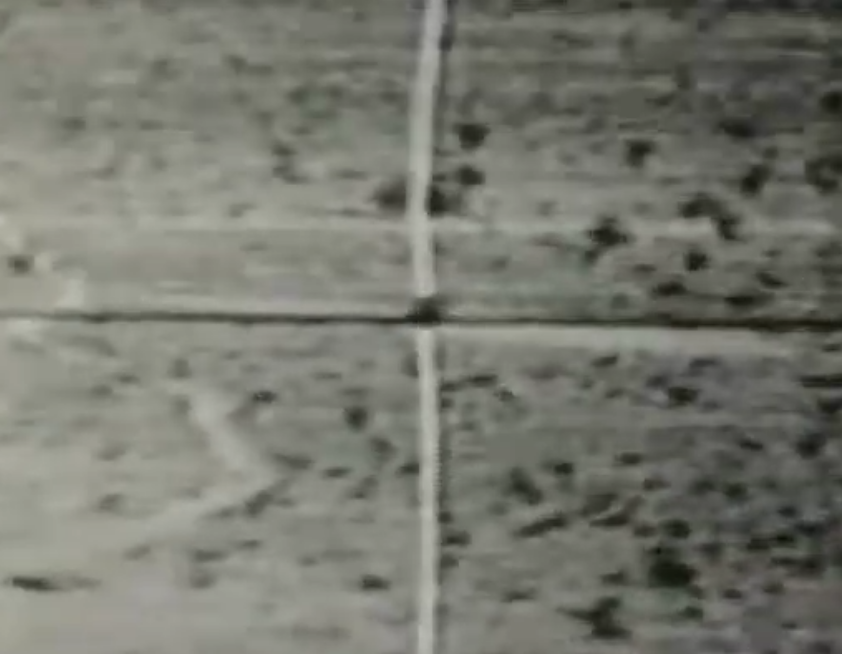
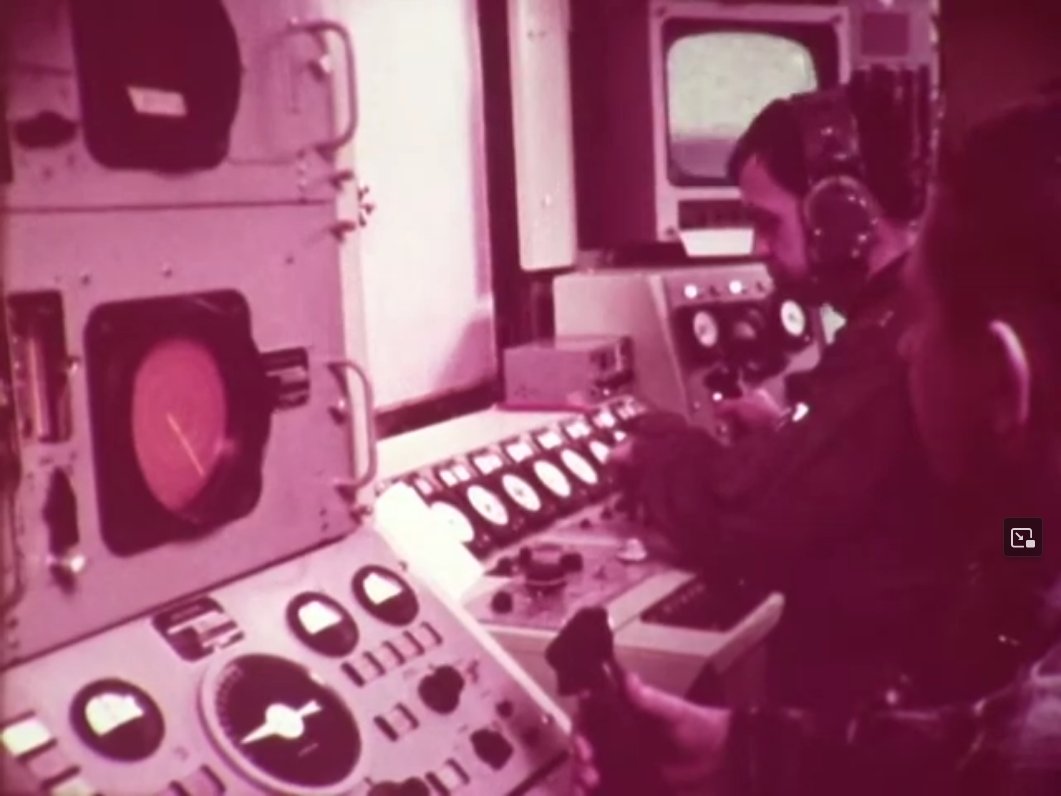
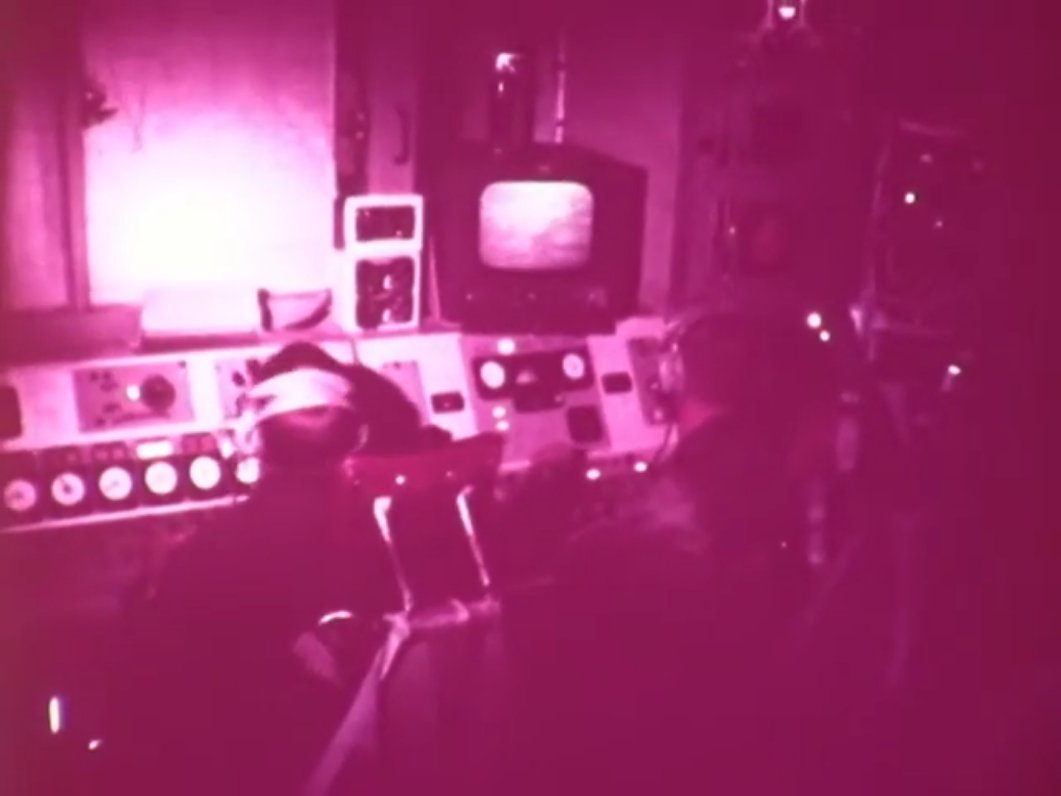
A couple stills from a video of the BGM-34 Control Center and video information from a BGM-34B.
These initial tests were promising, but some improvements were necessary. The BGM-34B (Model 234A) began testing in 1973, and featured a more powerful engine, larger control surfaces, and some drones were modified with a better TV camera and laser designator.
These were tested with Paveways and Mavericks, primarily, but they appear to have been also tested with TV-guided bombs as well.
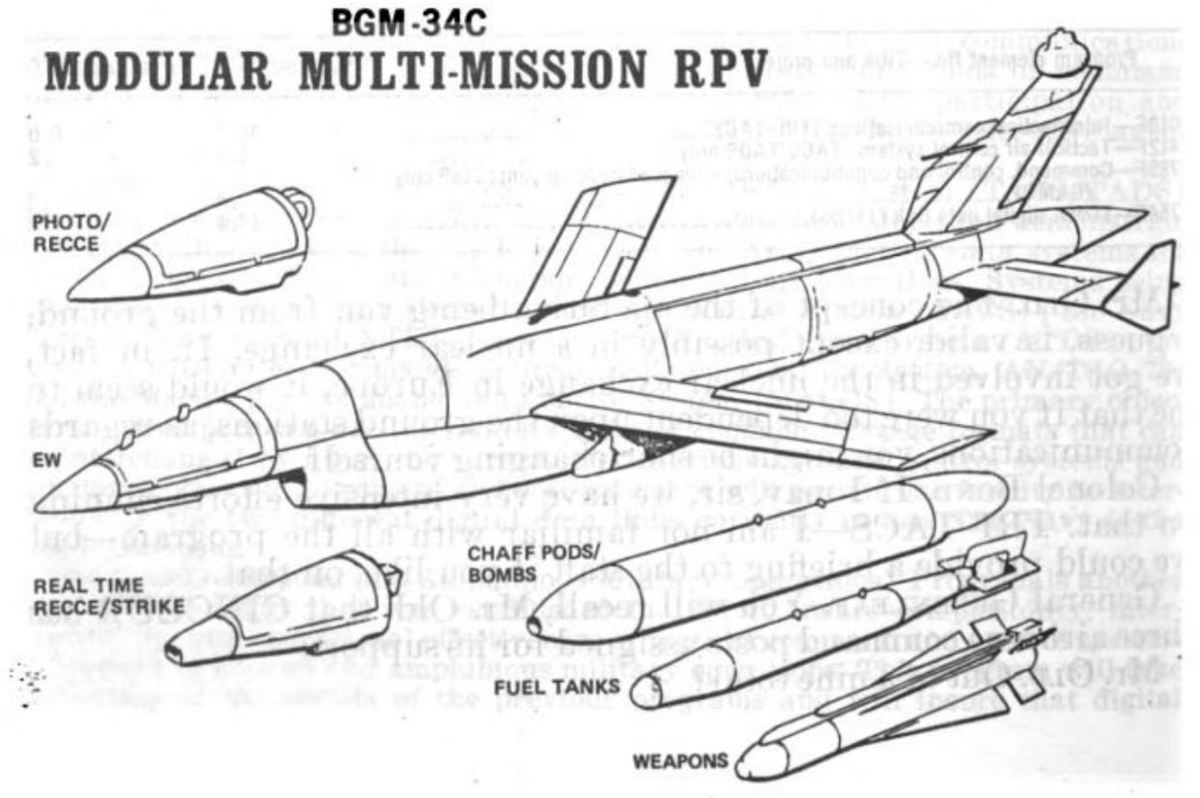
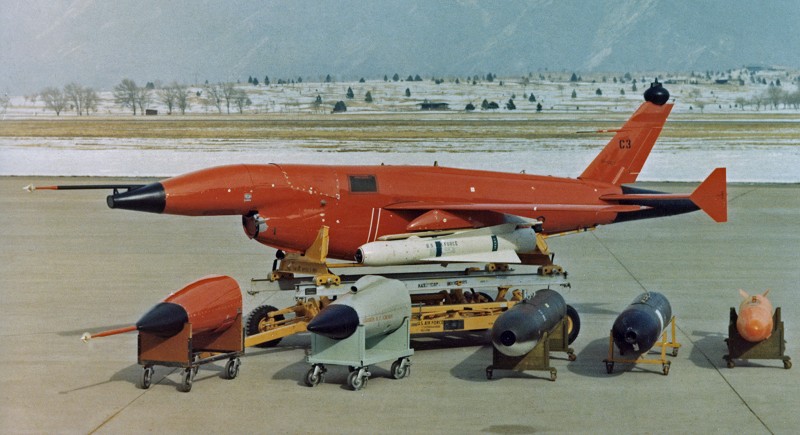
BGM-34C (Model 259), which began testing in 1976, allowed for interchangeable "mission modules." The first contained a KS-10A strike camera, and the EW section likely contained deception jammers that operated in Soviet SAM bands to provide a SAM-free corridor for strike aircraft.
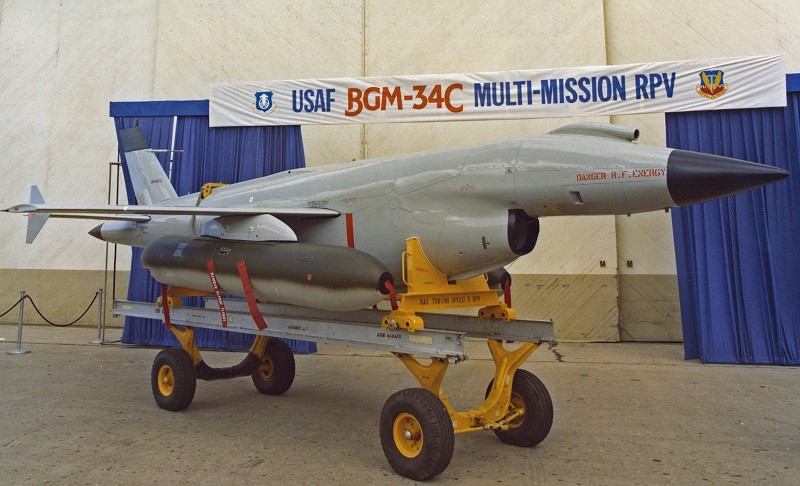
The last section, mounted on the BGM-34C here, was a real-time strike TV camera, likely an improved version of the ones used on the BGM-34A and early BGM-34B.
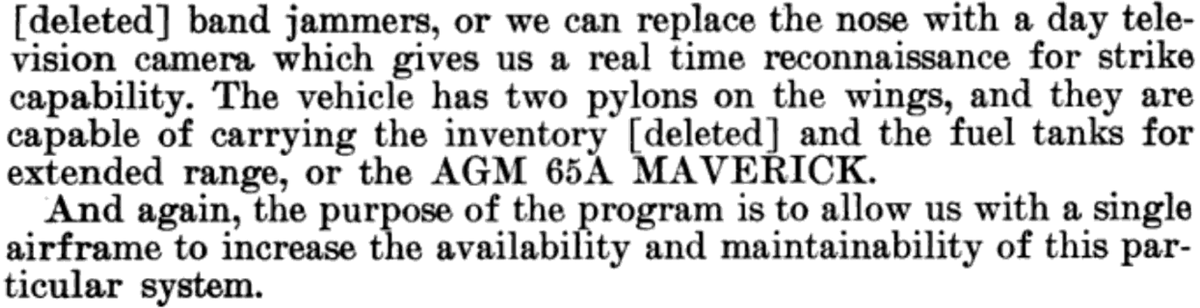
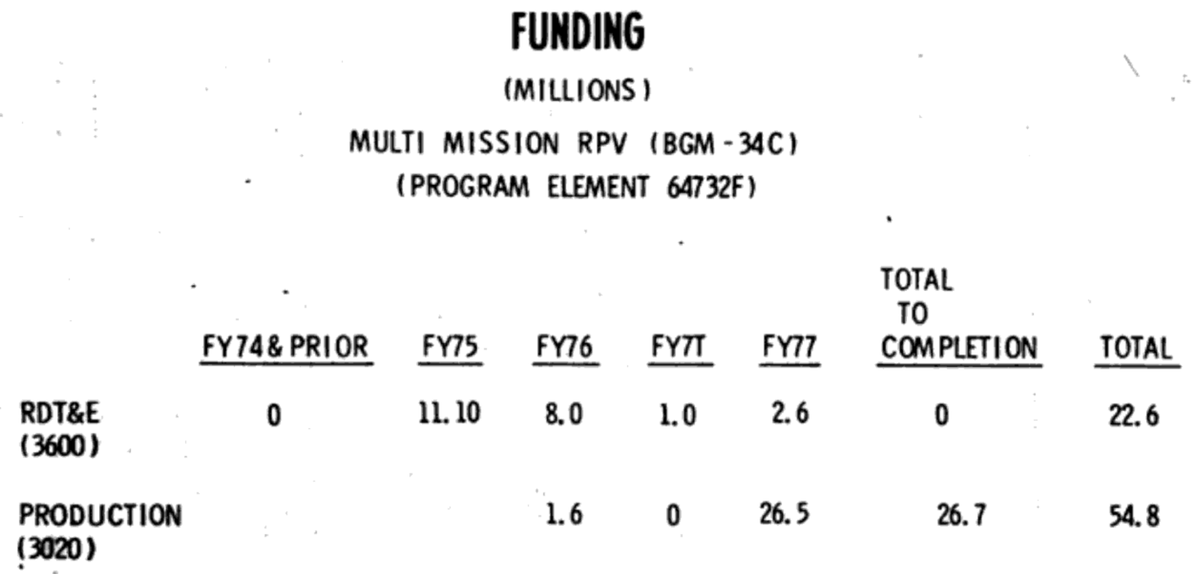
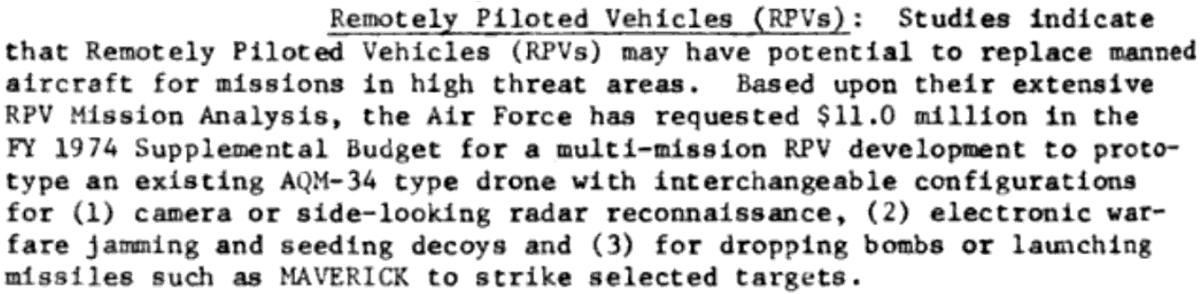
A few excerpts from various Defense Appropriations Congressional Hearings in regards to the BGM-34C program and funding for it.
Here are a few pictures with the KS-10A camera mounted.
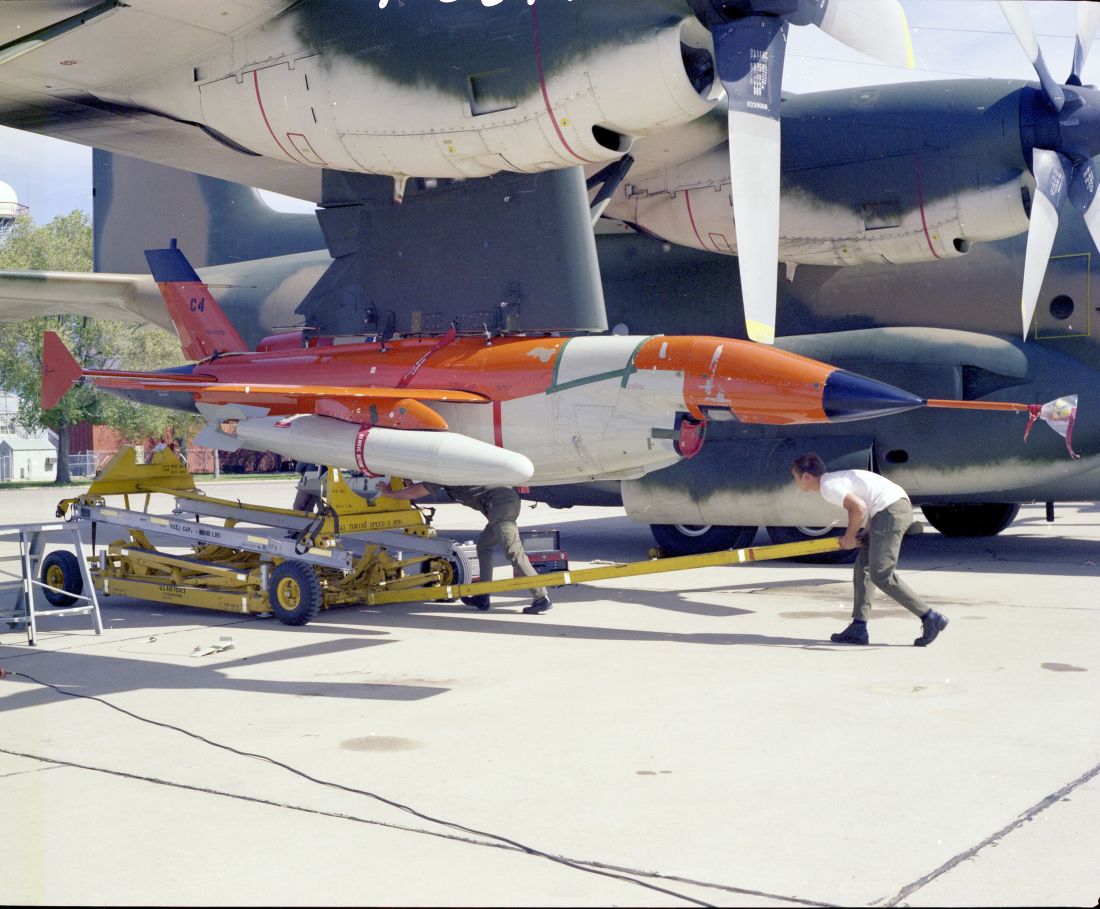
The BGM-34C would have replaced the AQM-34G EW variant of the Model 147, and the AQM-34L photo-recon variant, as well as provide strike capabilities. However, funding appears to have dried up after 1978.
Sources vary on why funding dried up. Some claim that it was deemed unnecessary after the end of the Vietnam War, and others claim that Tactical Air Command leadership saw it as a "threat" to manned vehicles. Either way, the program would never make it into production.
Also, since there's only a few more weeks remaining for this, please consider donating to the fundraiser for my friend working on counter drone operations in Ukraine. They need to hit at least half their goal.
As I've covered in the past, the AN/ASG-14 Radar Fire Control System of the early model F-104s was primarily designed to bring the pilot toward his target in a very simple and easy-to-understand manner. However, a friend provided me with some more information on its origins. 🧵
Special shoutout to Katherine, who doesn't use Twitter, whom I feel I have to acknowledge for providing me with one of the documents I'm referencing today. (Now send me volume 4, dammit)
The origins of ASG-14, previously known as MA-10, come from the issues presented by extremely high-speed cannon-only operation for an air-superiority fighter. Thus, it was necessary for a computing optical sight to be matched to a simple search and ranging radar.
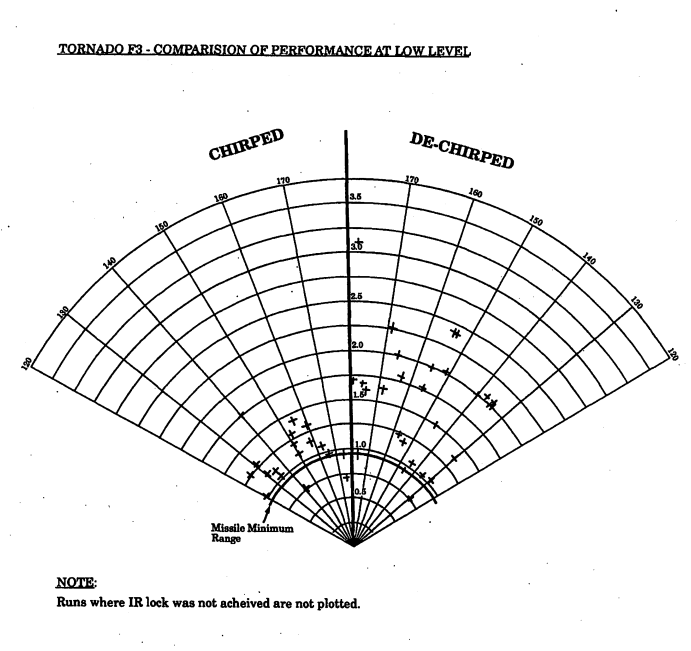
The AIM-9L was an incomplete product when it entered service. It was intended to contain flare rejection logic, be fully digital, and have high sensitivity, but these requirements would have to wait until 9M. The Brits would take it upon themselves to modify 9L to increase range.
How did they accomplish that? By removing the "chirp tone" that provided the pilot with an audible positive confirmation of lock-on. The threshold for the chirp tone generation was far higher than the detection threshold. This left the only indication of a lock as hud symbology.
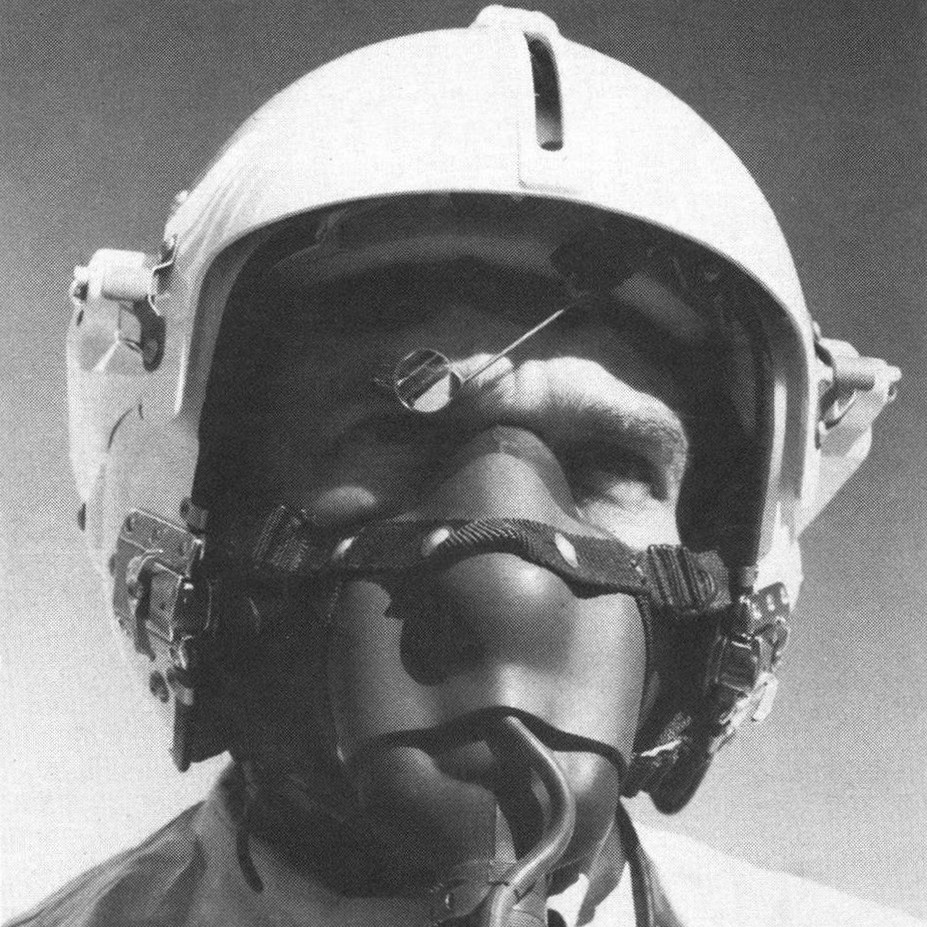
It is my understanding that this chirp tone is generated by circuitry in the launching aircraft, much like the "chirp tone" of later rear aspect Sidewinders, which drove the seeker off-center during radar-slaved lock to ensure the seeker was tracking a target and not a cloud.
A thread on Honeywell's VTAS: the world's first operational helmet-mounted cueing system, entering service in 1969. I will cover the program's origin, the function of VTAS, and the differences between VTAS I and II for now.
Much of this story begins in 1968 with the Ault Report. At the time, the F-4 was limited in its ability to launch missiles to radar boresight only or a full fire control system track.
For infrared missiles, 9B and 9D for the Navy, the seekerhead was slaved to the radar boresight, meaning that the pilot had to put the gunsight on the target to achieve a lock. In a high-G situation, this could prove difficult.
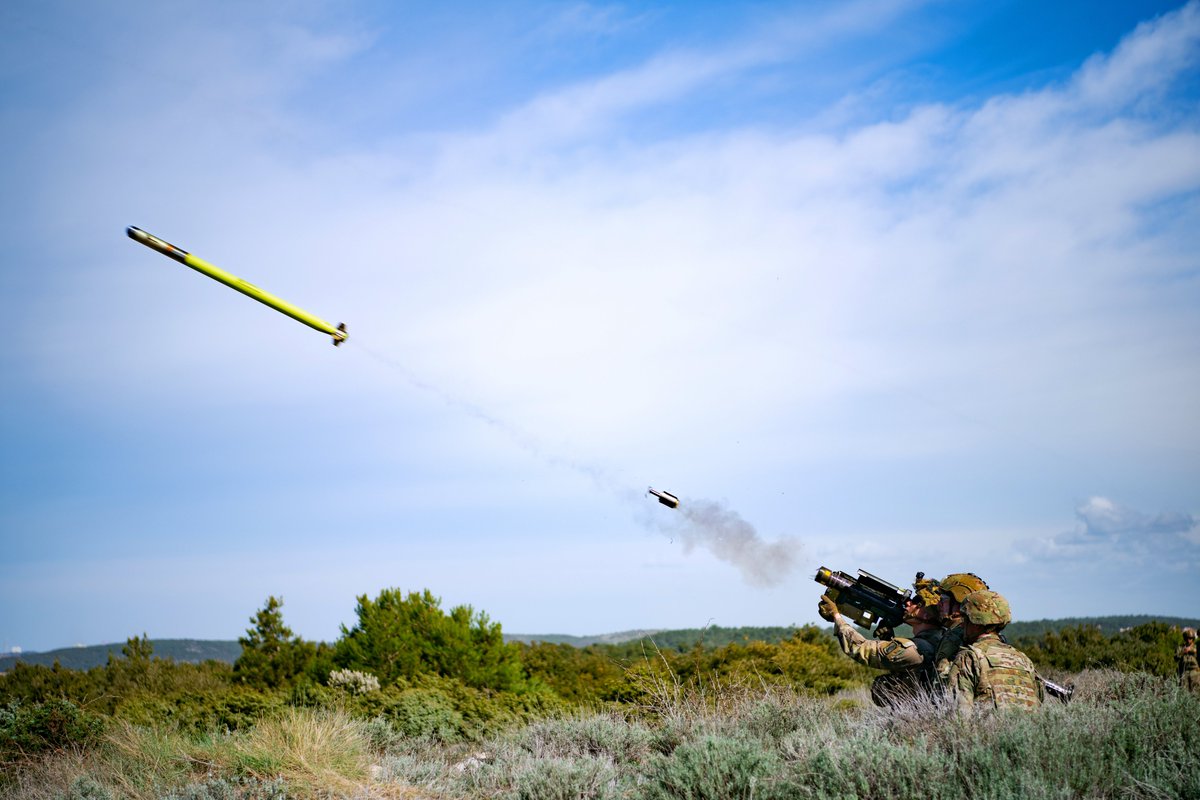
If you ever hear me talking about FIM-92 Stinger as if it's the best thing since sliced bread, that's cause it kinda is.
A short thread on the Stinger-Passive Optical Seeker Technique(POST) seeker.
The POST seeker is a pretty exceptional piece of kit. It provides advanced countermeasure rejection through two different methods that I'll walk through.
Let's start with the easy one: dual color. A dual-color IR/UV seeker looks for a positive infrared signal and a negative UV signal because an aircraft blocks out UV.
Stinger POST used Indium Antimonide for IR and Cadmium Sulfide for UV.
Warning: I don't have a ton of information on APG-67, so I'm kinda shooting from the hip here based on what I can find online and what I know about other systems.
I have some respect for it given what they did with that small of a space tbh, but that chart is pretty generous. 5m^2(7dBsm) is a pretty hot target. APG-65 on the F-18 does about the same range against a 3dBsm(2m^2) target. At least they use 85% probability rather than 50%.
The Sidewinder was primarily a passive infrared-guided missile. However, there was one that stood out from the rest in design. This was Sidewinder 1C-SAR or AIM-9C, the radar-guided brother to AIM-9D.🧵
First, what does "Sidewinder 1C-SAR" mean? Well, it was very similar to the AIM-9D, the other Sidewinder 1C, in design, having the same warhead, same safety system, same rocket motor, and interchangeable influence fuzes. However, it used a Semi-Active-Radar GCG.
So what was the purpose of the AIM-9C? It was developed for use with the F-8D/E Crusader. The crusader had no provisions for Sparrow carriage, and the Navy wanted to give it radar weapons capability.
This would allow the F-8 to engage targets when IR could be blocked by weather.