It’s been 5 months since the war, and the Lebanese front is no different when it comes to the wider conflict. The depth of exchanges on the border has varied over time. Yet there were three targets that Hezbollah had hit with high significance, the Mount Meron air control base, the Northern Command HQ in Safed, and the Golan.
As for Safed, there was no claim of responsibility, Meron has been hit several times now, and it’s a strategic target, but what about The Golan? The significant difference here is that it’s the first time since 1973 that the occupied territory has been under continuous attacks, that’s a clear indication that Hezbollah has decided to expand horizontally is a response to Israel’s vertical expansion of attacks.
Since the beginning of 2024, Israel has made some bold moves in Lebanon, assassinated Hamas commander Saleh Arouri in Beirut southern suburb, attacked near Sidon and Tyre, and in February and March launched airstrikes in the Bekaa to the east of Lebanon.
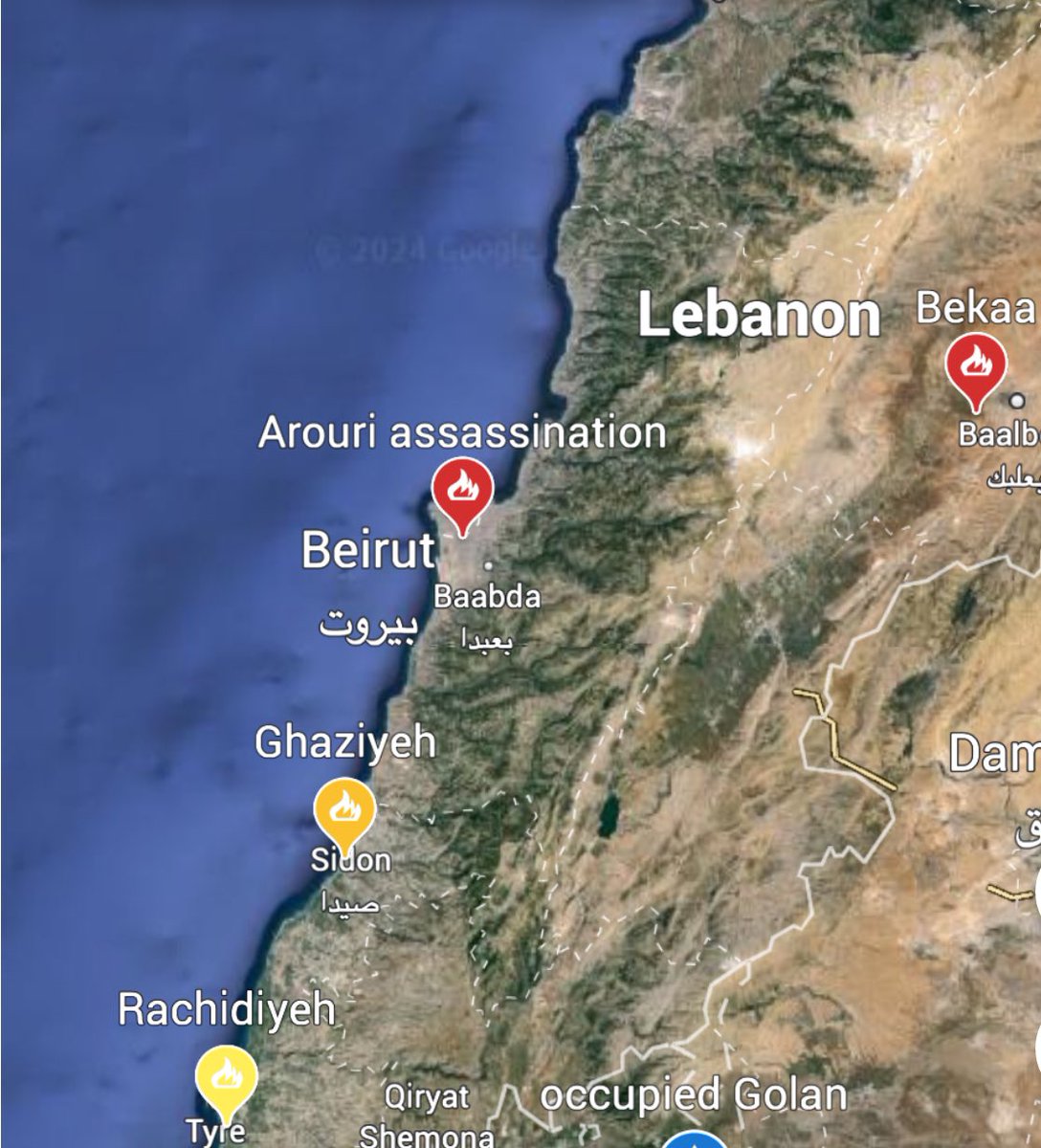
What’s interesting is that after five months, both Hezbollah and Israel are still fighting on the edge without any side taking the initiative towards an all out war despite all the threats. It’s still a campaign between wars, or to be accurate during an existing war. This applies to other fronts too.
My analysis is that we can’t anymore refer to rules of engagement based on depth and distance, rather targets, and this is going to be the determining factor for the direction of events. What’s Hezbollah’s objectives and what’re those of Israel?
Israel’s main objective is getting Hezbollah out of the border area, and destroy as much infrastructure as possible based on its bank of targets. It’s succeeding in turning the border area into a burned area, but Hezb is still present at the front edge. Also, Israel is provoking Hezb to use its strategic weaponry.
and that’s not happening, the group is still far from being pushed to do that, all what’s in use is operational assets that Israel experienced over the years, or saw Hezb using in Syria or Iraq. And that’s preventing Israel from knowing or tracing the warehouses or launching areas for such weapons.
That’s one of the reasons why an all out war hasn’t erupted yet. Hezbollah’s use of modified Katyusha rockets isn’t only helping to drive the fight further, but also depleting Israel’s stockpiles of antimissile batteries. It’s also burning hundreds of thousands of dollars in each launch.
This salvo, maybe 40 rockets (1x$2000 each) was intercepted by Iron dome (1x$70,000 each), the math is part of the war here. Israel too is intensifying its strikes to deplete Hezbollah forces, assassinations is proving to be a very serious issue for Hezb.
On both sides of the border there’re now empty villages with more than 100,000 people displaced on each front, that’s a heavy price for both without doubt.
It’s a war of points and each side is trying to make the most of it while keeping away from an miscalculated adventure, that’s why we’ve been seeing this battle escalate day after day but feeling that’s it’s the same thing every day. Too much mind games to watch and analyse.
• • •
Missing some Tweet in this thread? You can try to
force a refresh

حسابات الفوز والخسارة في حرب إيران وإسرائيل الأولى… هذه مواجهة ما بعد الظل، إسرائيل تحمل أهدافا عديدة، تدمير النووي، تدمير الصاروخي، وإسقاط النظام. أما إيران هدفها واحد، الصمود. لذلك في حسابات الفوز والخسارة، نجد إسرائيل تلجأ إلى ترامب لاستدراجه ولو لتنفيذ ضربة يمكن أن تشكل صورة النصر، إلا وهي ضربة فوردو.
بغض النظر عن نتيجة الحرب، إلا أن فوردو اصبحت عنوانا للضربة الكبرى، في الوقت الذي يعلم المتابع للشأن الإيراني أن الوكالة الإيرانية للطاقة الذرية نقلت جزءاً كبيراً من المعدات والمواد مسبقا إلى خارج المنشأة.
وإذا قررت إيران حقيقة تحويل برنامجها النووي من سلمي إلى عسكري، فمن غير المرجّح أن تلعب المواقع النووية المعلنة أي دور في ذلك. بل ويجب أن يكون الموقع مؤهلا في الأصل للعب هذا الدور. الارجح عندها أن منشأة نووية سرية ستقوم بالعمل.
سلسلة تغريدات سريعة عن آخر التطورات في المنطقة والخطوات الأميركية:
🚩 للتأسيس، ما يحدث اليوم هو نتيجة طبيعية لتراكم الضربات الاسرائيلية على المحور الذي تقوده إيران خلال الأشهر الماضية. وهو الخطوة الأخيرة في خطة نتنياهو لضرب ما يصفه بالأخطبوط الإيراني من خلال قطع الأذرع ومن ثم الاجهاز على الرأس.
السؤال الأكبر هنا:
🚩 هل تريد إسرائيل توجيه ضربة لبرنامج إيران النووي، أم تسعى مع الولايات المتحدة وحلفائها لضعضعة النظام تمهيدا لسيناريو مشابه للعراق 2003؟
يصعب التكهن بما تتضمنه الخطة، لكن يبدو جليا أن إسرائيل تريد منع أي فرضية تسمح باستعادة إيران للمبادرة واعادة تنظيم صفوف المحور.
🚩 السيناريوهات المحتملة تتضمن ضربة عسكرية تقليدية من خلال الجو وصواريخ أرض أرض، وهو ما قد يحمل مخاطر إشعال المنطقة بأسرها دون نتيجة حاسمة، أو عمليات أمنية خاصة واسعة النطاق تستهدف شخصيات أساسية وشل مؤسسات النظام وتفعيل خلايا محلية وهو ما بدوره يهدد بحرب داخلية.
Our latest piece, co-authored by @mashabani and me, explores Hezbollah, Iran, and the collapse of Bashar Assad’s regime.
In brief, the sudden and unforeseen downfall of the Assad dynasty signals the end of the Iran-led Axis of Resistance as it once was, along with the significant leverage it had amassed in the Levant.
First and foremost, Russia played a pivotal role as events unfolded. According to one high-ranking regional diplomatic source, Assad’s recent visit to Moscow was a turning point.
While Assad’s Russian host and counterpart, Vladimir Putin, had promised assistance, the senior regional source suggested that this support was limited to ensuring a safe exit. Given that Assad and his wife are now apparently in Russia, this promise has been kept—at least for now.
Israel's actions against Hezbollah go beyond simply targeting its commanders; they are dismantling the trust between the group and its surrounding community, which has always believed they were safeguarded by a highly professional military and security apparatus.
This isn’t anymore a limited confrontation, it’s complex and multilayered war that involves technology, psychological warfare, military attacks, and clandestine operations, all without any sort of redlines. The rules of engagement are gradually vanishing.
Hezbollah’s strive to keep the conflict within certain parameters is coming with a high cost for them. The argument from their side is that whatever the cost should be, the war should be kept within the ceilings of the “support front”, but Israel is putting heavy pressure on Hezbollah to go beyond its own objectives.
This is a thread about AlQassam’s commander Mohammed Deif. Israel said it killed him but Hamas continues to deny the claim. Who’s Mohammed Deif, the actor who became the most wanted man to Israel.
For over twenty years, Mohammed Deif served as the leader of the Ezzedine Al Qassam brigades, Hamas's military wing. Israel has described him as "the son of death" and targeted him in numerous assassination attempts, one of which tragically killed his wife and son.
Mohammed Deif was believed to be the mastermind behind the October 7th attacks. Despite keeping a low profile for years, this is his only interview with Al Jazeera from 2005. Watch it here:
This is a thread about Yehya Sinwar, Hamas’ new political leader. The picture is from his teens when he was a student at the Islamic University.
Six decades before, in 1962, Sinwar was born in the Khan Younis refugee camp in southeastern Gaza.
His family were refugees from Majdal Askalan, or what became Ashkelon after the creation of Israel in 1948.
Sinwar finished his studies at the Islamic university of Gaza with a BA in Arabic studies. He was in his early twenties when first arrested. In 1988, he was detained and charged with planning the abduction and killing of two Israeli soldiers. He was handed four life sentences.