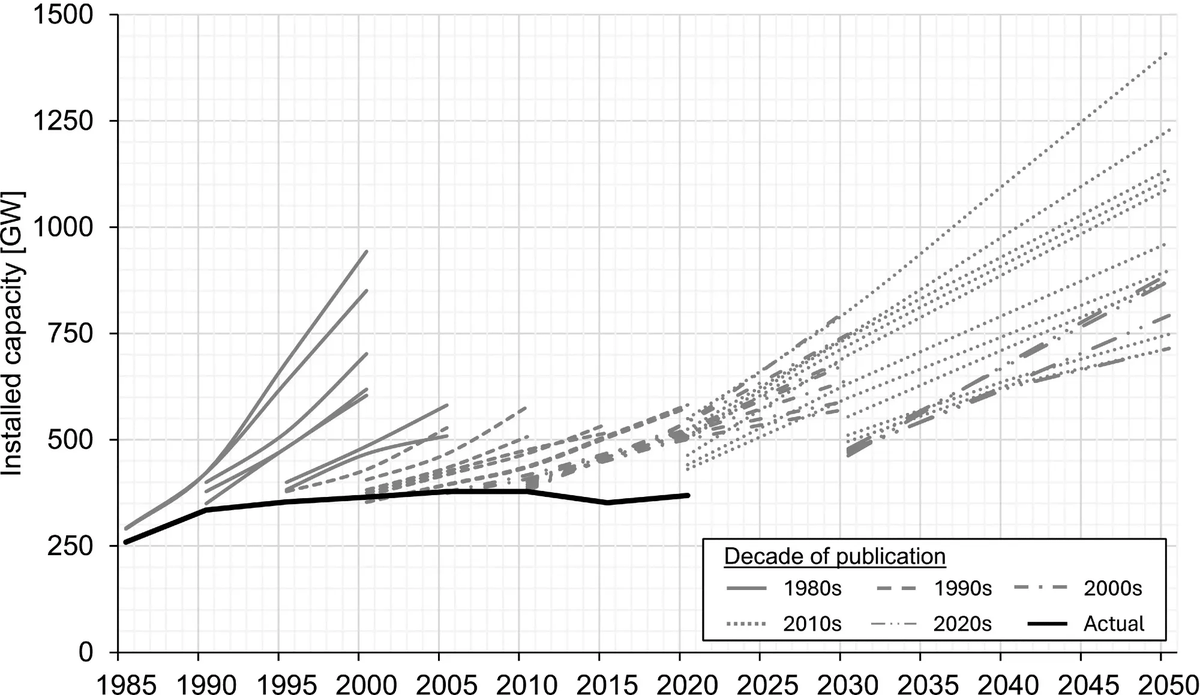
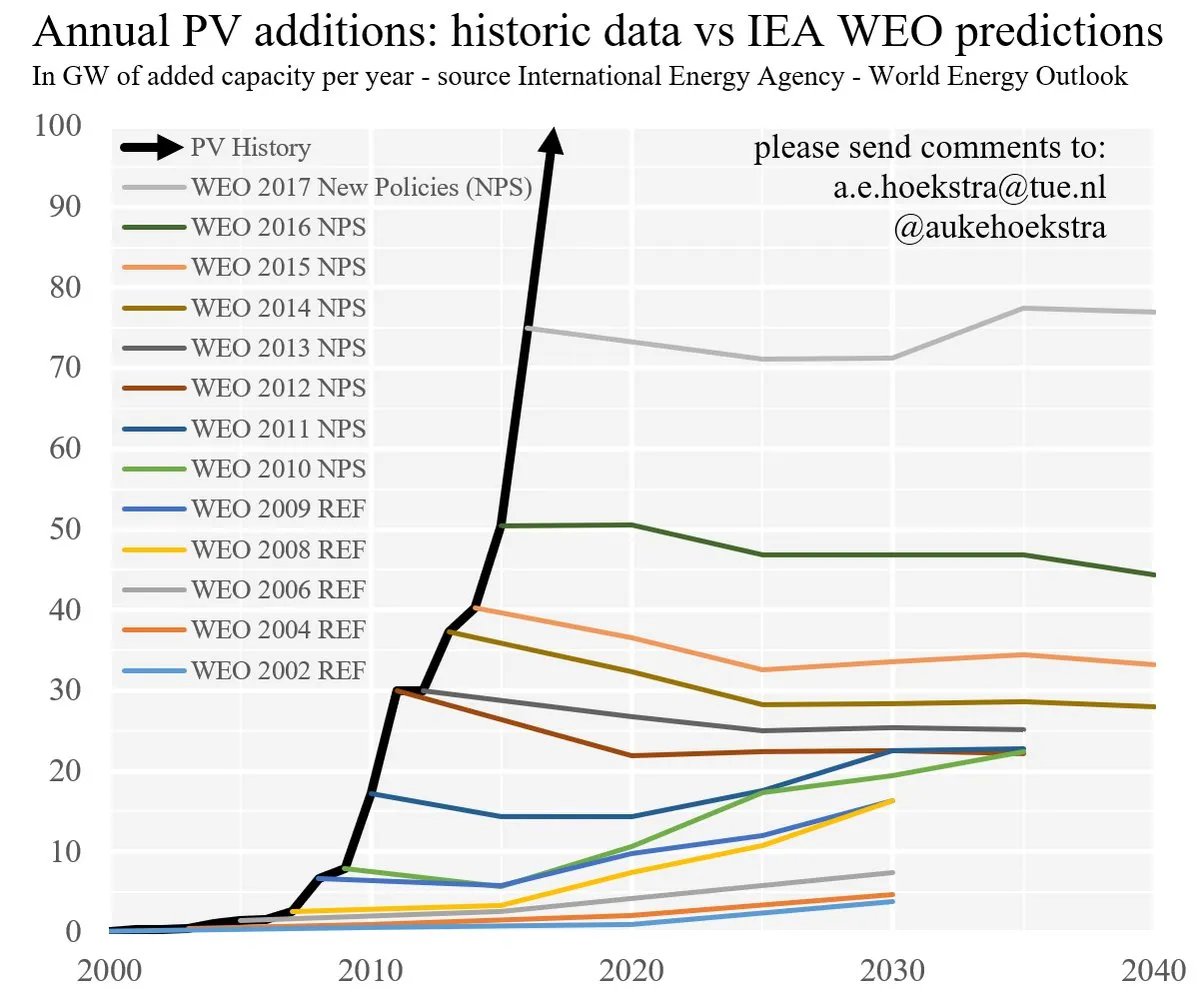
Grid congestion is THE bottleneck for economic growth and sustainability in the Netherlands.
But it doesn't have to be!
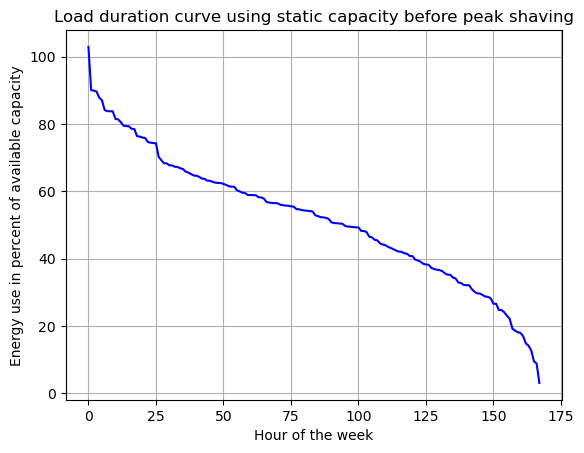
When we combine Dynamic Line Rating with Peak Shaving we could move three times more electricity with the current grid!
🧵
But it doesn't have to be!
When we combine Dynamic Line Rating with Peak Shaving we could move three times more electricity with the current grid!
🧵
What is Peak Shaving?
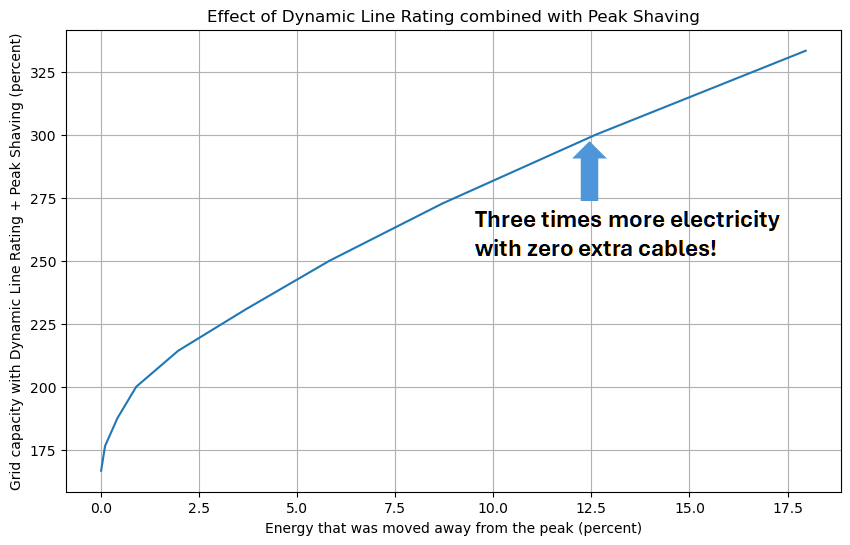
Peak shaving means that you take measures to lower the peaks in electricity usage. Peaks are what limits use of a power line. In the example graph below you can see the demand is too high a few yours per week. But there is more than enough capacity overall
Peak shaving means that you take measures to lower the peaks in electricity usage. Peaks are what limits use of a power line. In the example graph below you can see the demand is too high a few yours per week. But there is more than enough capacity overall
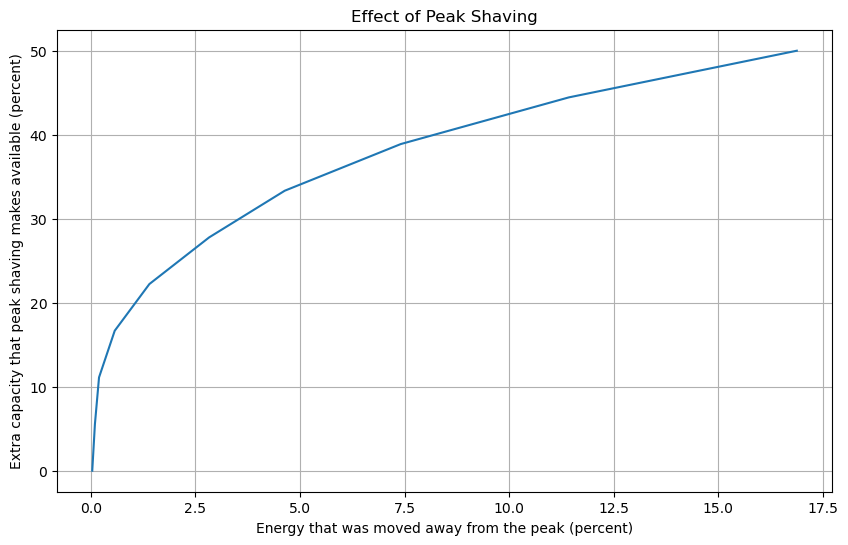
Adjusting only the 2.5% of electricity demand that causes the biggest peaks adds 25% of capacity.
Removing 17% of energy from the peaks (e.g. with dynamic pricing, batteries, smart charging, etc. etc.) provides 50% more capacity.
But now we add dynamic line rating!
Removing 17% of energy from the peaks (e.g. with dynamic pricing, batteries, smart charging, etc. etc.) provides 50% more capacity.
But now we add dynamic line rating!
What is Dynamic Line Rating (DLR)?
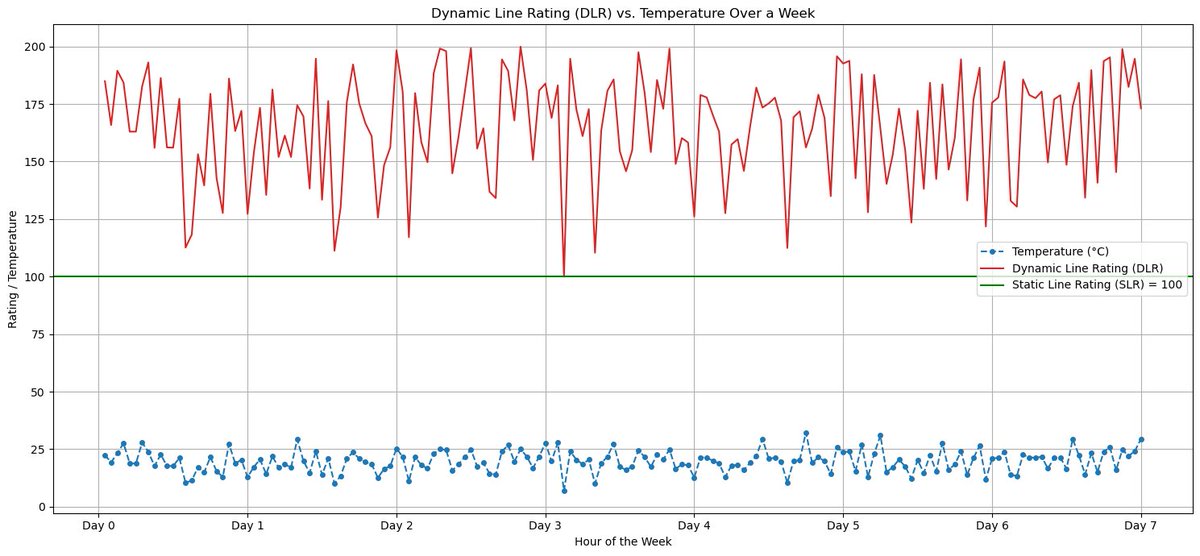
Currently grid operators use static line rating (SLR) which means they use one number for the amount of electricity that a power line can carry.
But in reality, it's the heat that is limiting.
Max power is different for each point in time.
Currently grid operators use static line rating (SLR) which means they use one number for the amount of electricity that a power line can carry.
But in reality, it's the heat that is limiting.
Max power is different for each point in time.

Dynamic line rating takes this into account, either by measuring (e.g. the temperature) in real time or by using a model that estimates the power a line or transformer can handle for every time step.
I asked ChatGTP (warning again) to create an example.
irena.org/-/media/Files/…
I asked ChatGTP (warning again) to create an example.
irena.org/-/media/Files/…
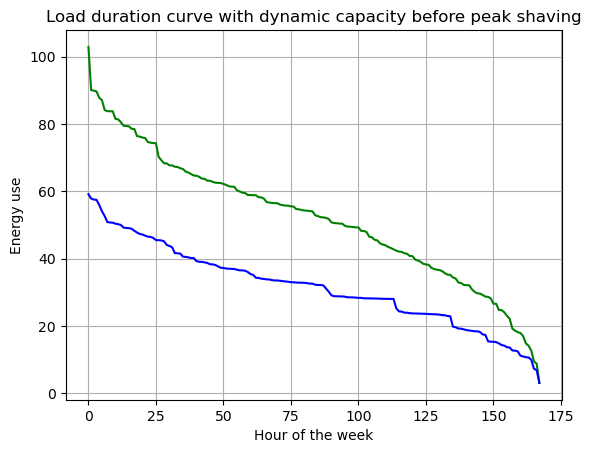
If we add dynamic line rating, all of a sudden the load duration curve looks very different. It turns out we are not even close to the maximum capacity!
The static line rating gave us bad advice and cheated companies out of a grid connection!
The static line rating gave us bad advice and cheated companies out of a grid connection!
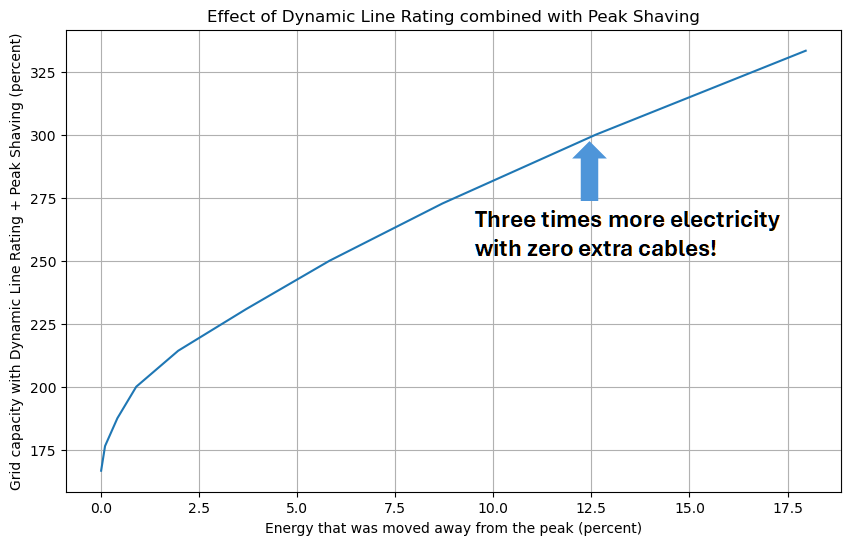
It gets even better when we combine dynamic line rating with peak shaving. In the graph you can see that shaving off just 12.5% of energy from the peaks gives you THREE TIMES the carrying capacity of your grid!
I'm NOT saying this makes grid new power-lines & transformers unnecessary!
I AM saying that dynamic line rating + peak shaving could make a comparable difference for a tiny fraction of the cost and can solve our grid congestion woes much faster.
What are we waiting for?
/end
I AM saying that dynamic line rating + peak shaving could make a comparable difference for a tiny fraction of the cost and can solve our grid congestion woes much faster.
What are we waiting for?
/end
Wow: a lot of pushback.
To clarify:
- I'm not saying this will be trivial
- I'm not claiming 3x more capacity will result
Maybe it will be 'just' 2x more capacity if we combine peak shaving with DLR and all the other stuff that dynamically impacts our grid.
That's still huge!
To clarify:
- I'm not saying this will be trivial
- I'm not claiming 3x more capacity will result
Maybe it will be 'just' 2x more capacity if we combine peak shaving with DLR and all the other stuff that dynamically impacts our grid.
That's still huge!
This smart approach is also very cost effective. Where grid reinforcements cost 250 billion over the next 20 years, smart measures often pay for themselves because they e.g. avoid storage.
https://x.com/Mayk_12/status/1769726257946669355?s=20
And on top of that, smart interventions promise results faster, which means they accelerate the energy transition and economic growth.
Simply put: we save gigatons of emissions, tens of thousands of jobs, and billions in wealth if we implement smart solutions quickly.
Simply put: we save gigatons of emissions, tens of thousands of jobs, and billions in wealth if we implement smart solutions quickly.
I often propose we invest 1/10th of the investment in grid reinforcement for smart solutions.
That's tens of thousands of people during ten years.
As I said: not trivial.
That's tens of thousands of people during ten years.
As I said: not trivial.
Even if we are less ambitious the rewards will be huge.
@JigarShahDC provided a ballpark for the low hanging fruit: 30% more capacity with $10 billion investment in the US grid.
Since NL has ~20x less people,
we might get 30% more for just 500 million!
@JigarShahDC provided a ballpark for the low hanging fruit: 30% more capacity with $10 billion investment in the US grid.
Since NL has ~20x less people,
we might get 30% more for just 500 million!
https://x.com/JigarShahDC/status/1768996057420071211?s=20
Countries taking the lead will establish great jobs at home and be at the forefront of a lucrative international market for creating cost effective smart grids.
To my fellow Dutchmen I want to say:
"Wake up! This is what the Dutch are supposed to be good at!"
To my fellow Dutchmen I want to say:
"Wake up! This is what the Dutch are supposed to be good at!"
I admit these are rough first calculations.
More illustrations really.
But I really don't understand why there isn't a massive push to ask the grid operators for open dynamic grid data. And to reward those that use it to provide flexibility.
There is SO MUCH to be gained!
/end
More illustrations really.
But I really don't understand why there isn't a massive push to ask the grid operators for open dynamic grid data. And to reward those that use it to provide flexibility.
There is SO MUCH to be gained!
/end
• • •
Missing some Tweet in this thread? You can try to
force a refresh