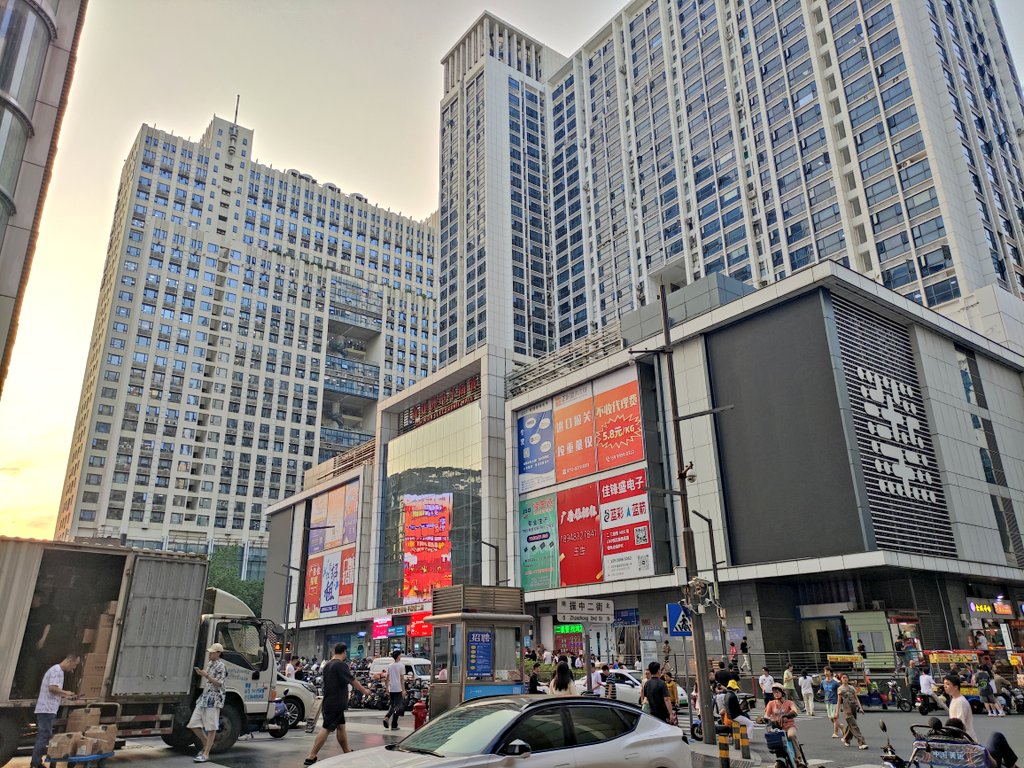
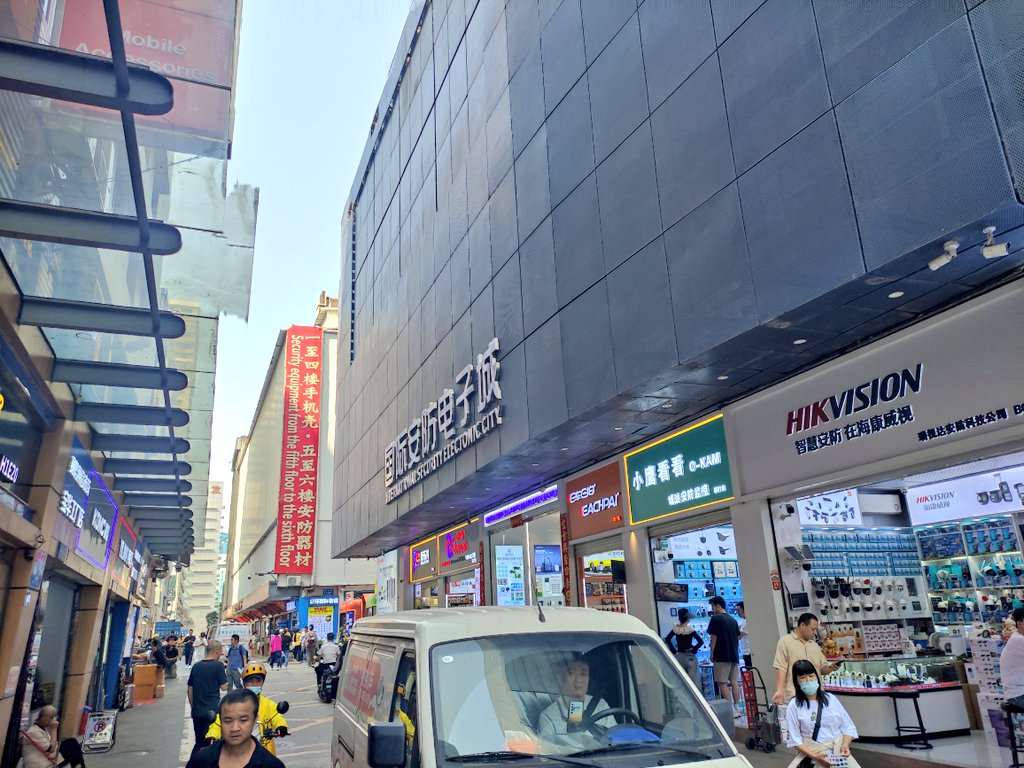
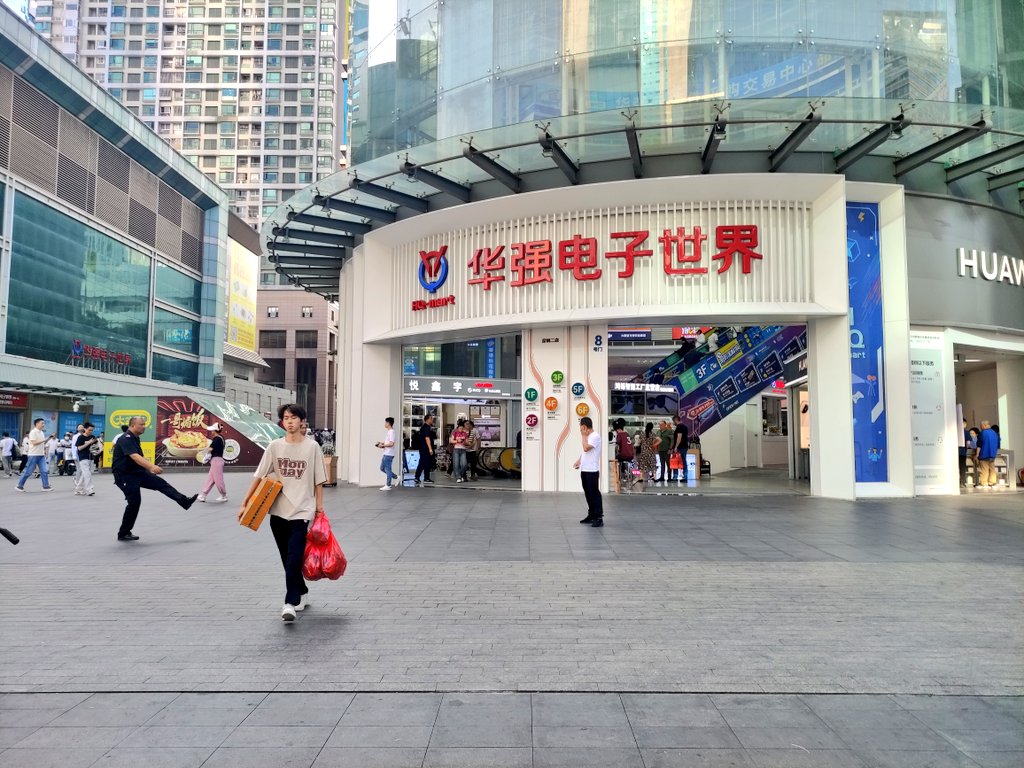
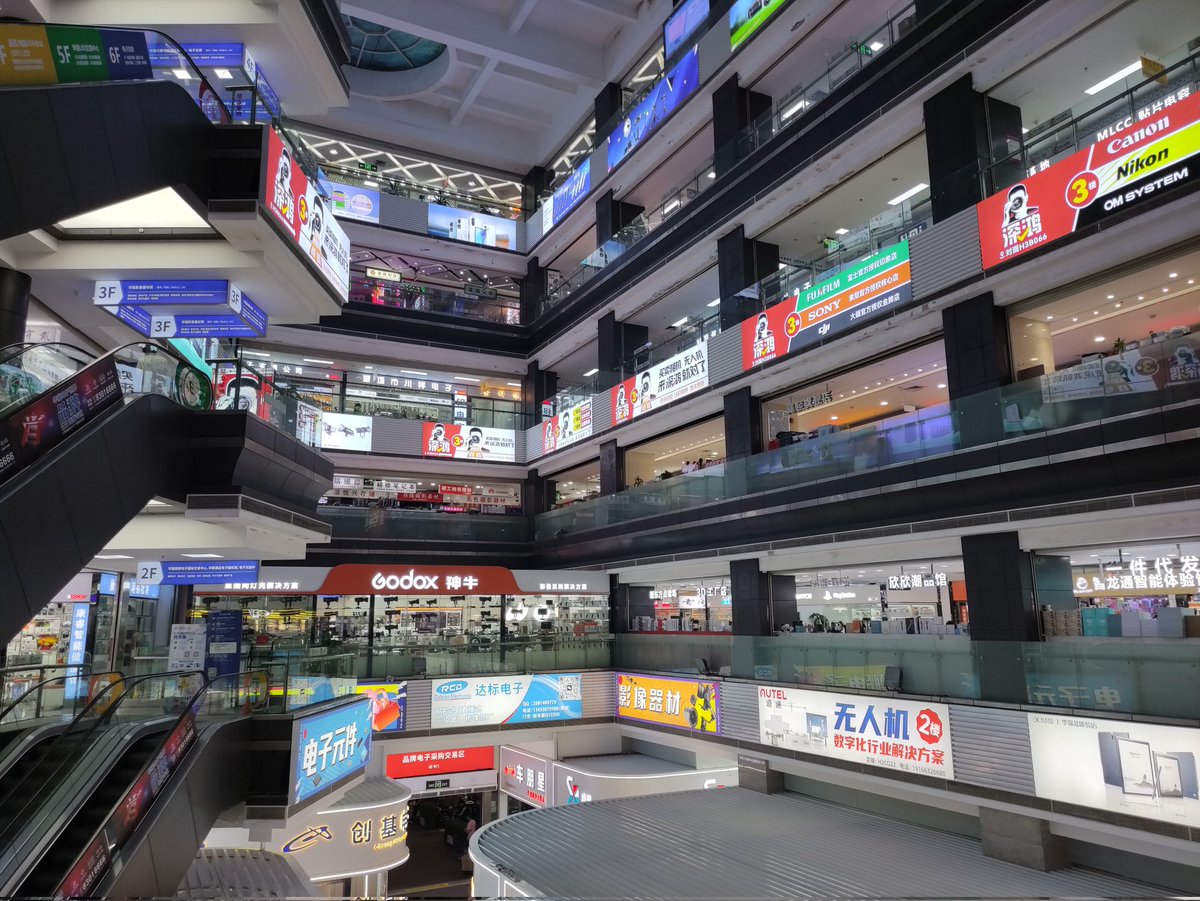
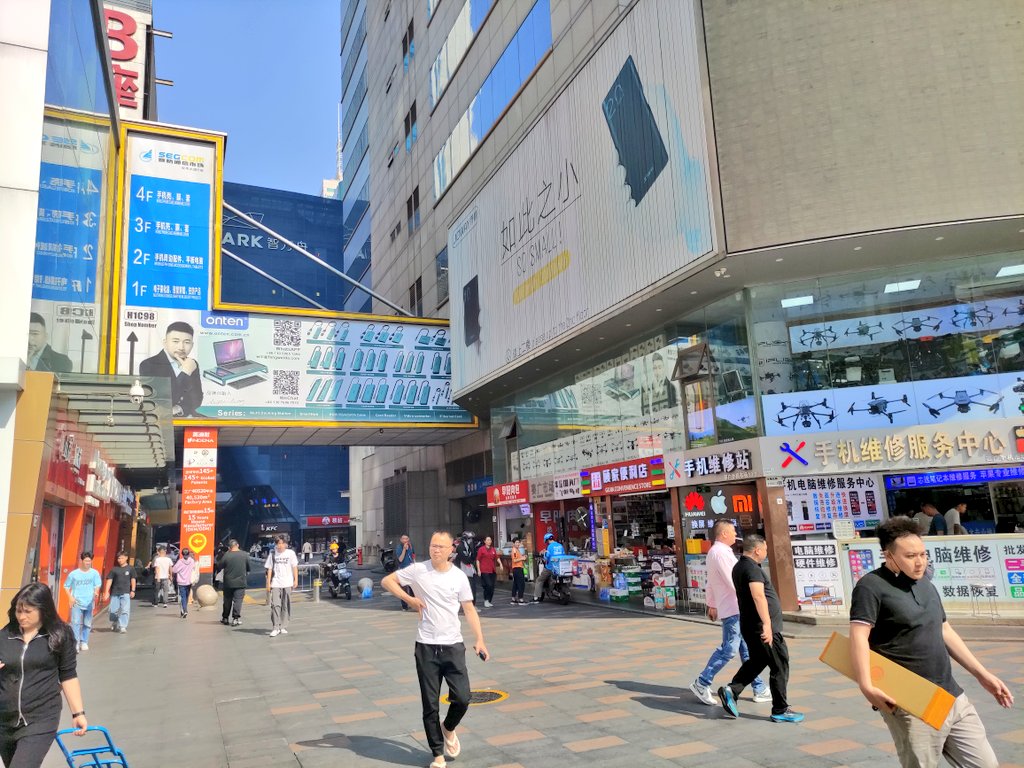
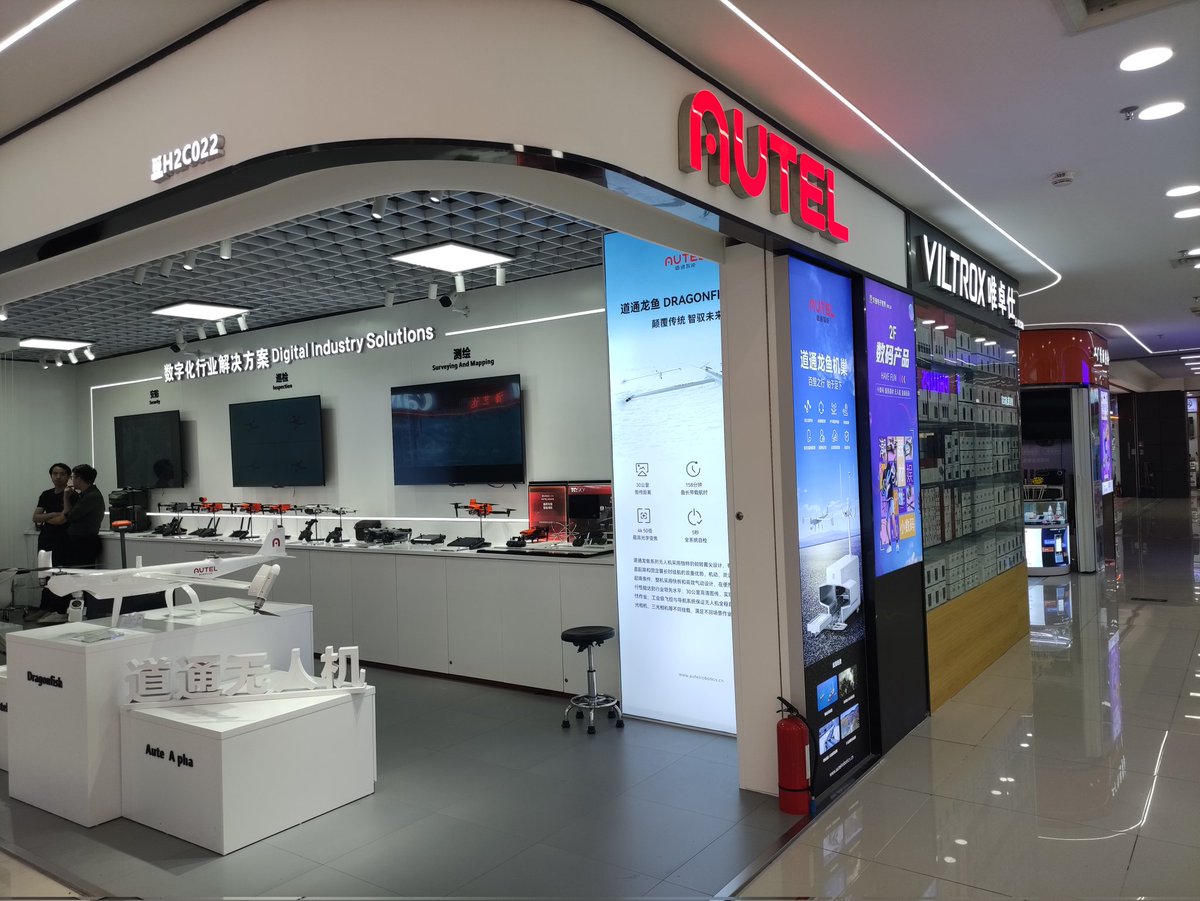
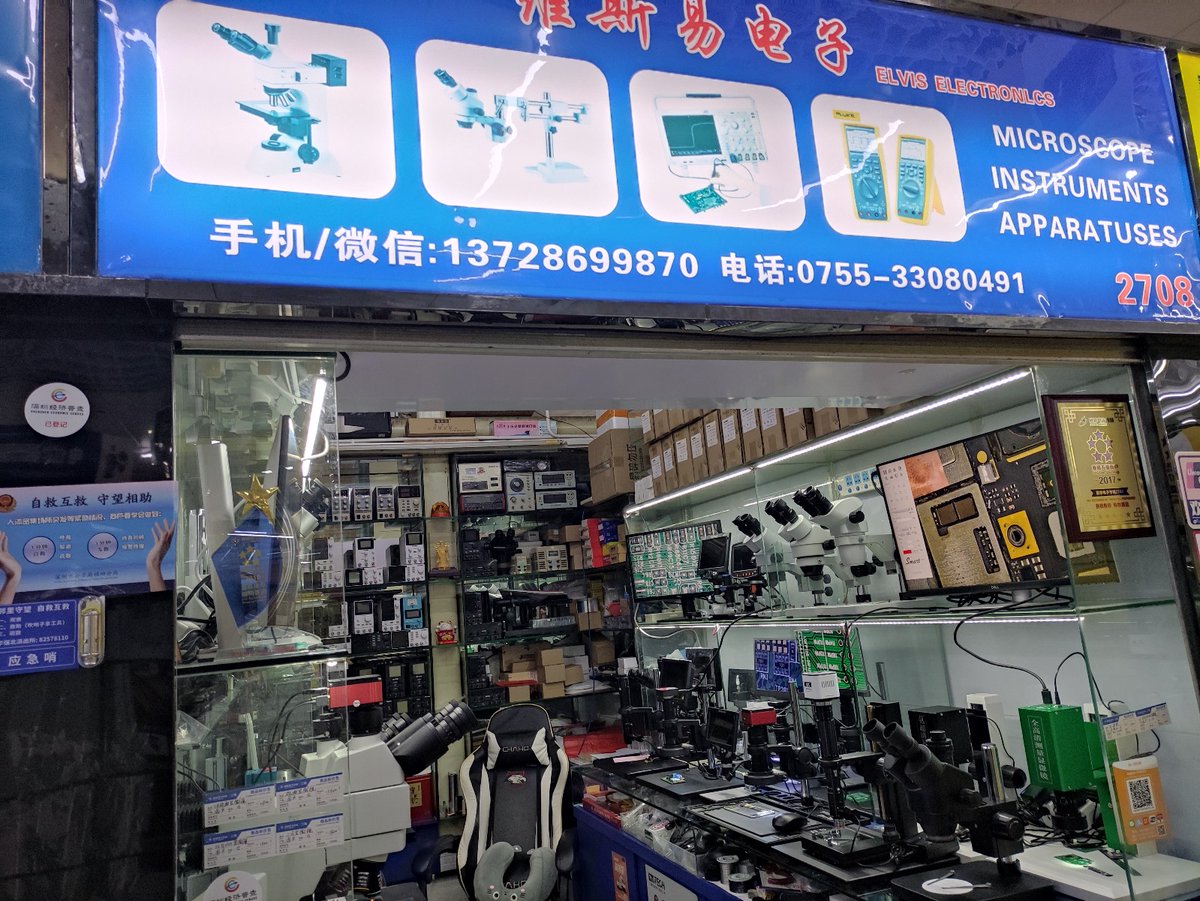
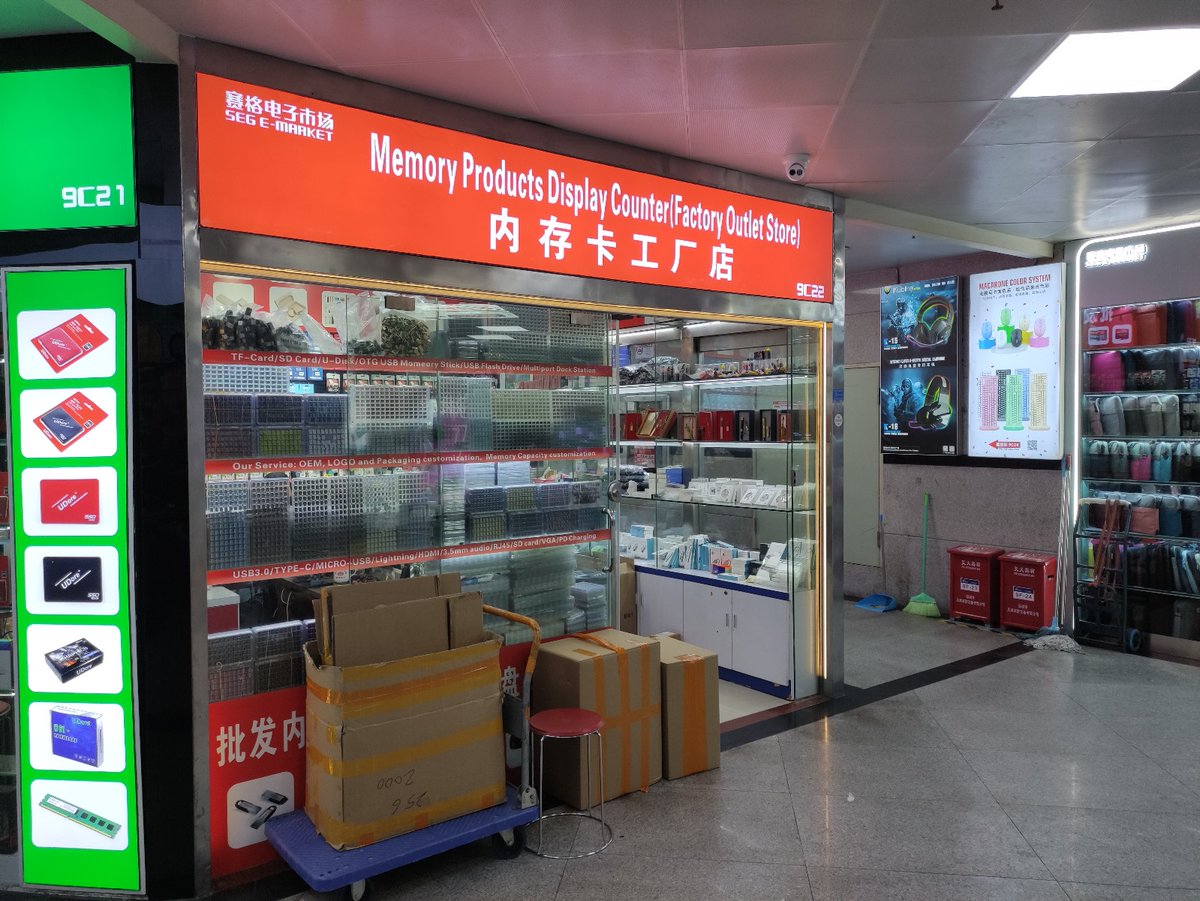
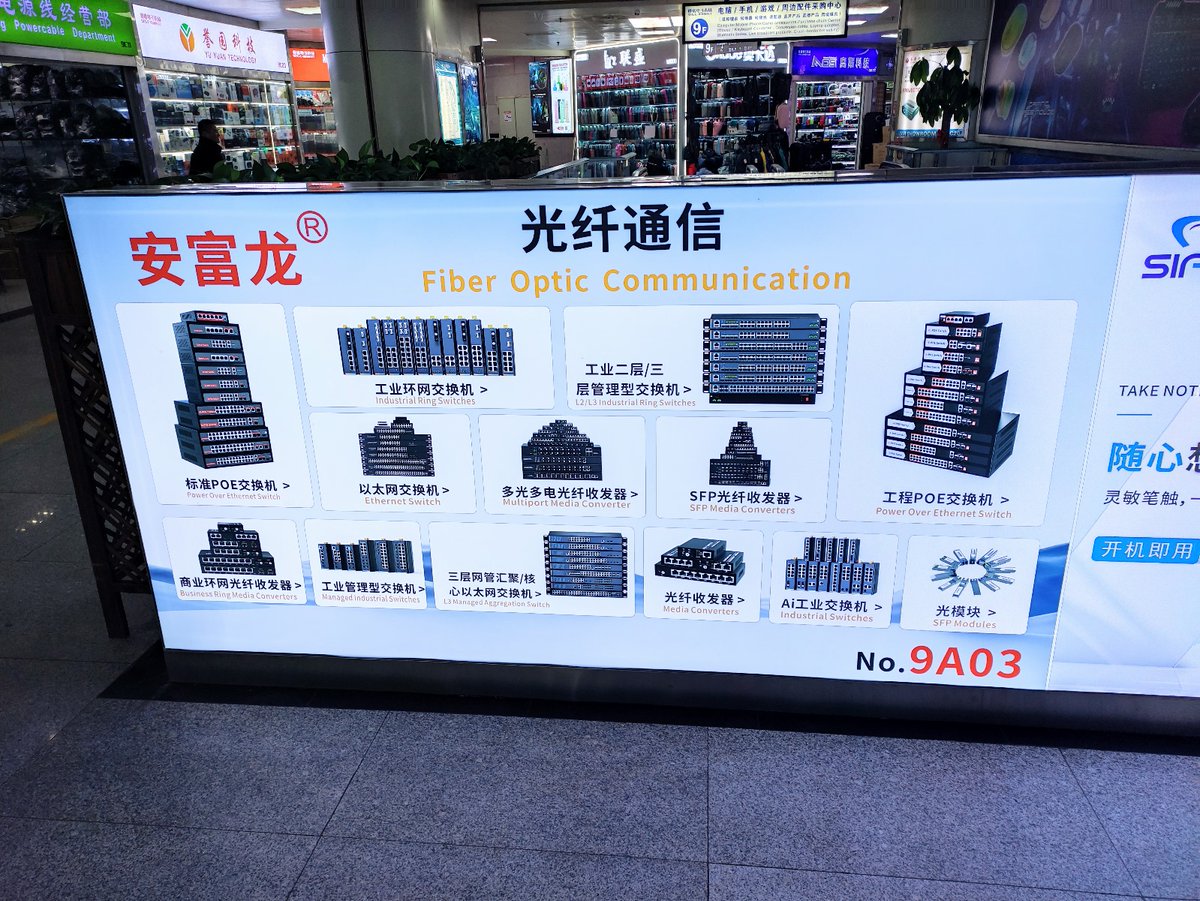
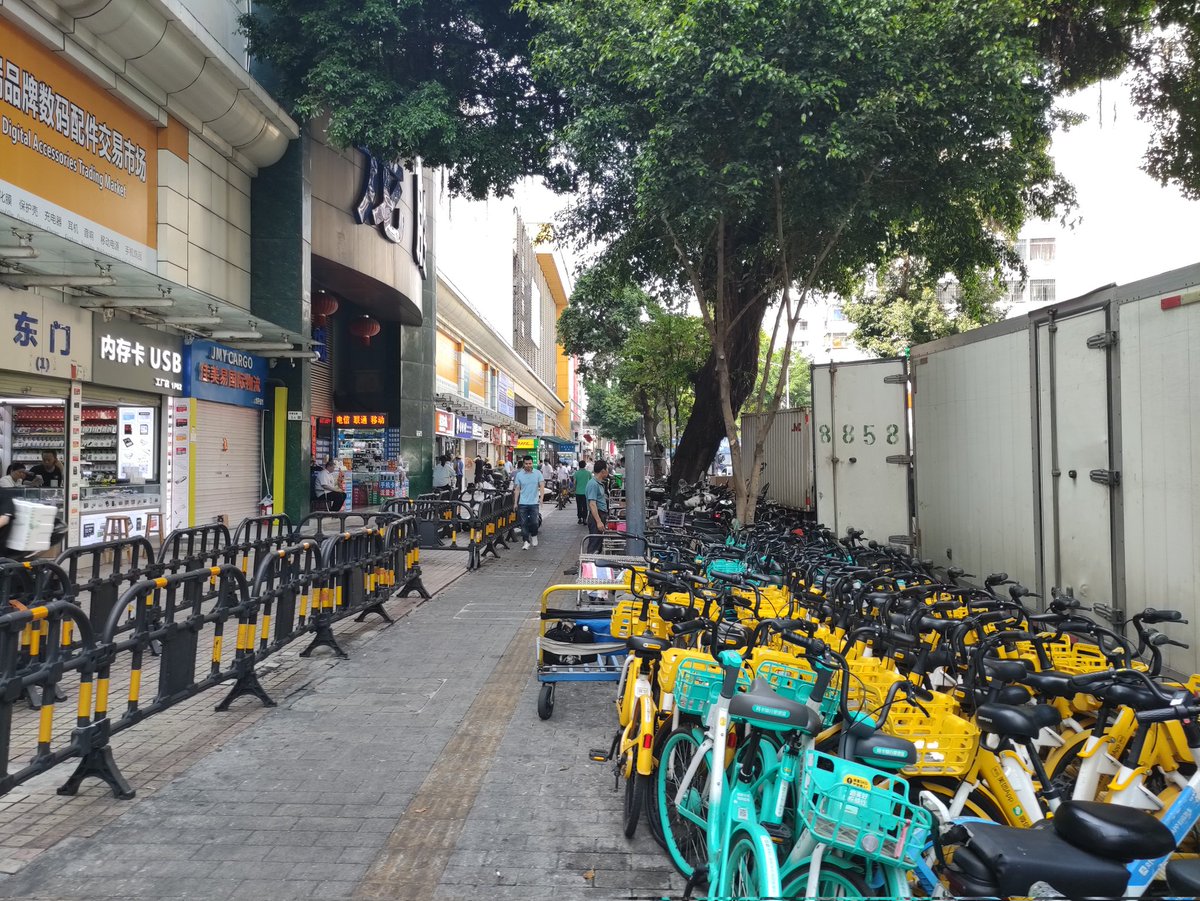
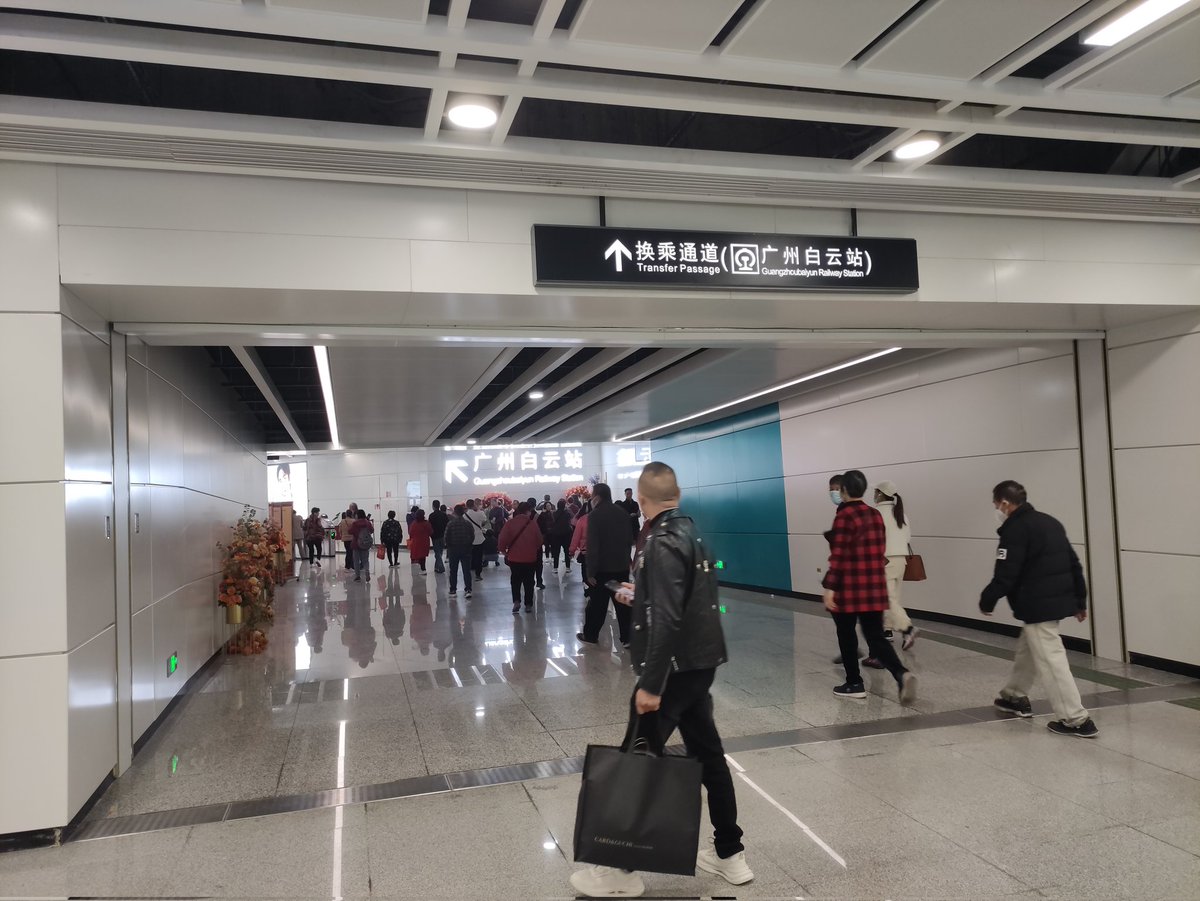
Family member broke their phone in Nepal so when we arrived back in Hong Kong in the morning we took the metro to the world's largest electronics market, Huaqiangbei in Shenzhen, in hope of getting it fixed. Because if it's electronics, Huaqiangbei will have it. 🧵of my trip.
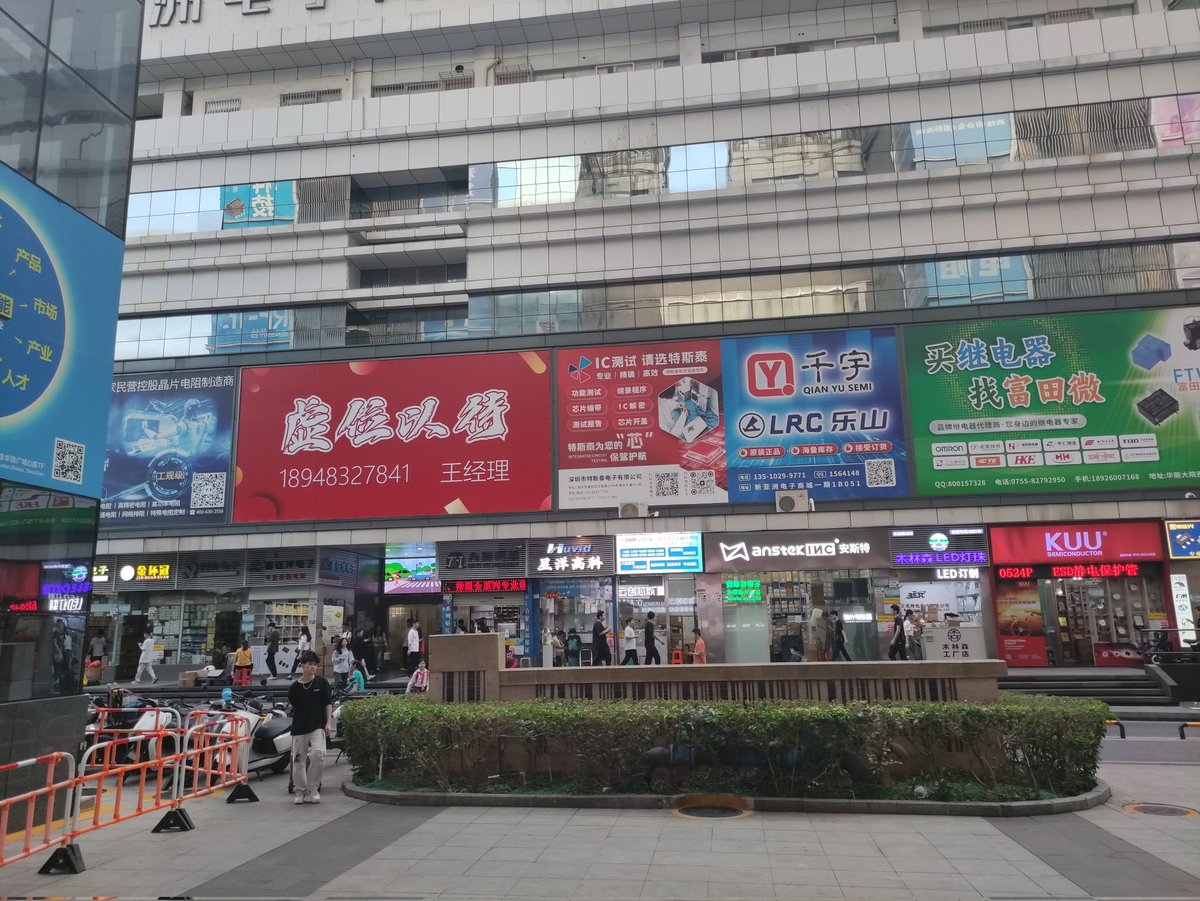
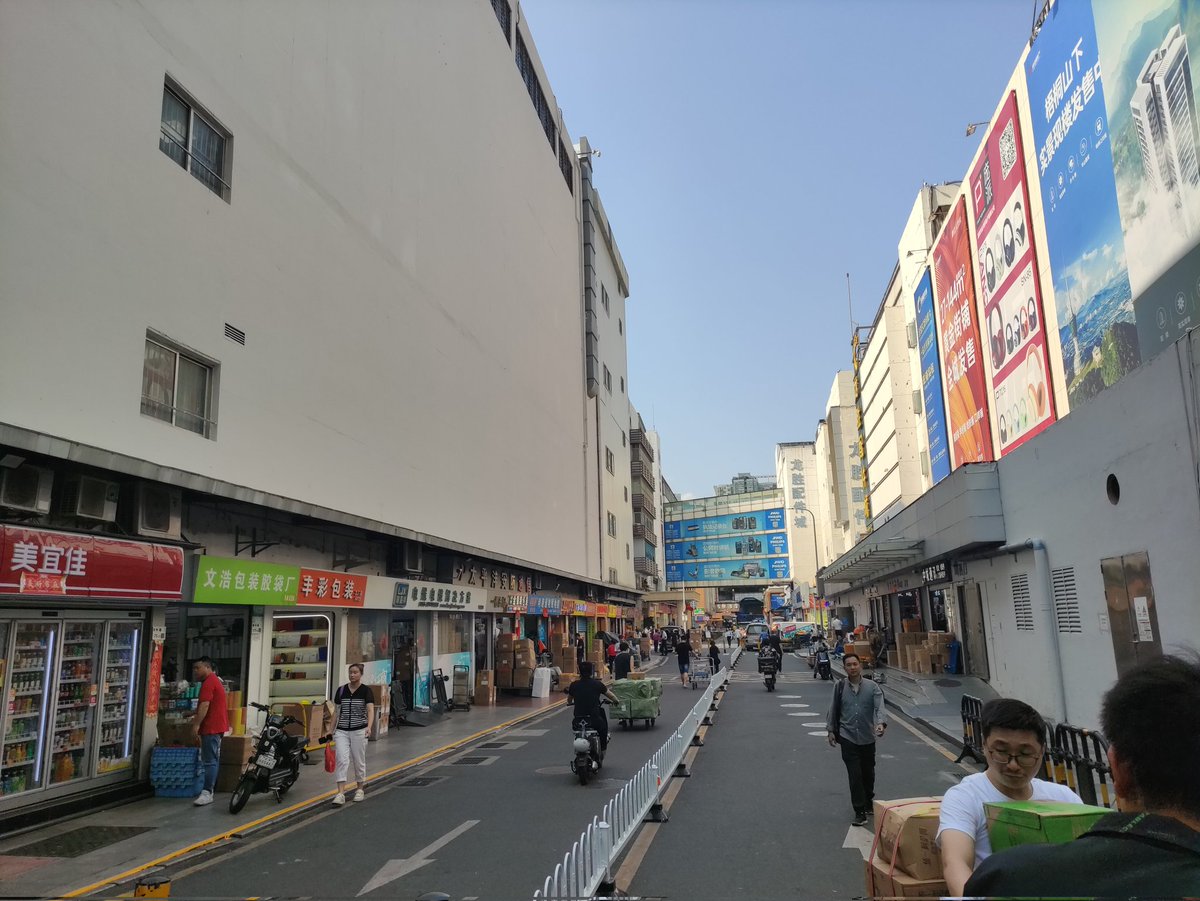
The market is a cluster of several muiltfloor commercial buildings all connected by a network of underground malls and metros. You can buy anything here computer parts, phones drones etc. The area is also a global hub for electronics parts wholesaling and import/export logistics.
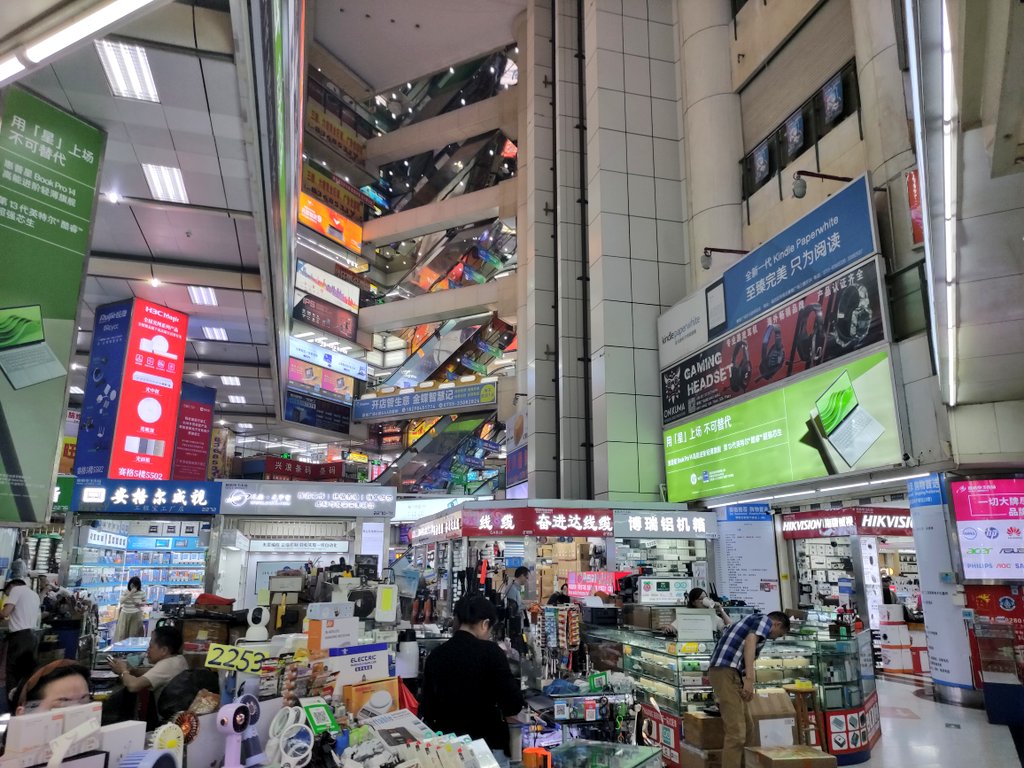
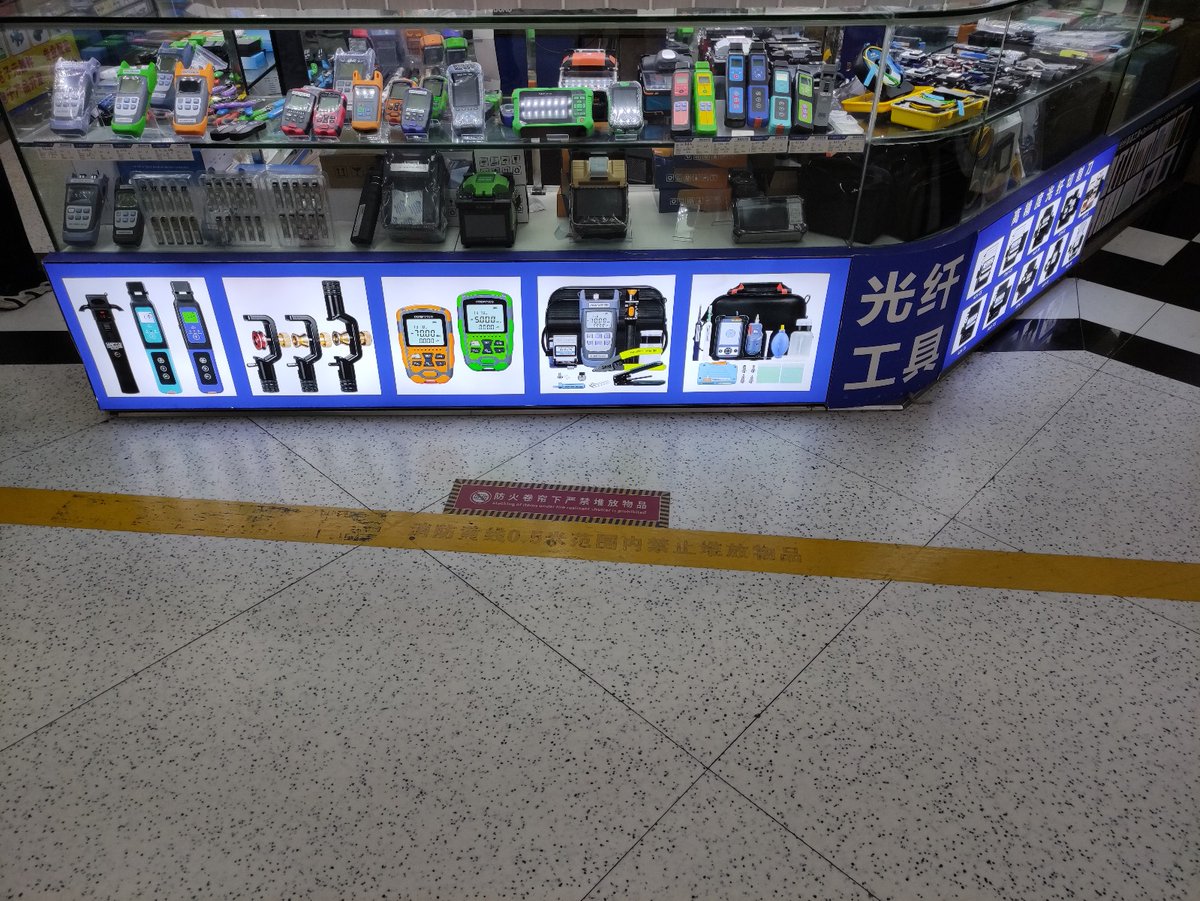
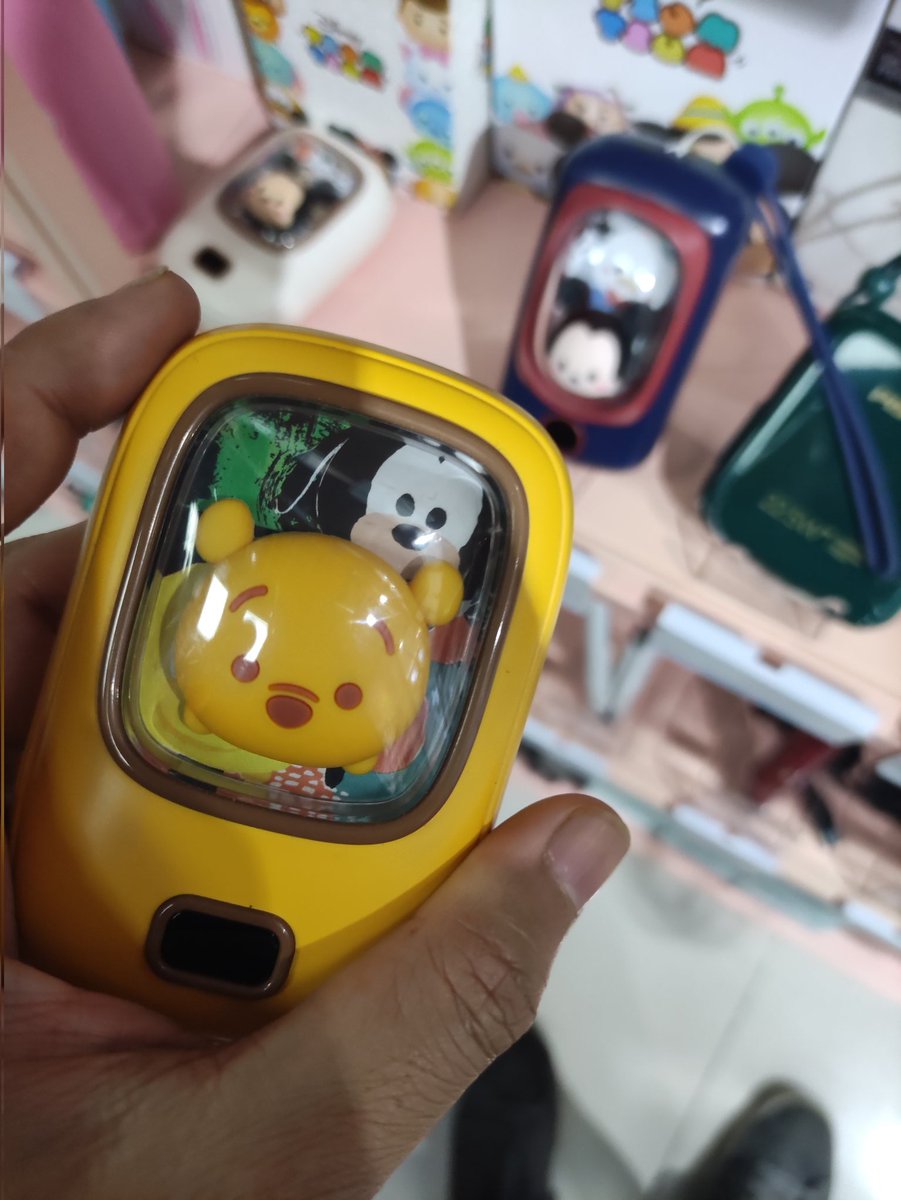
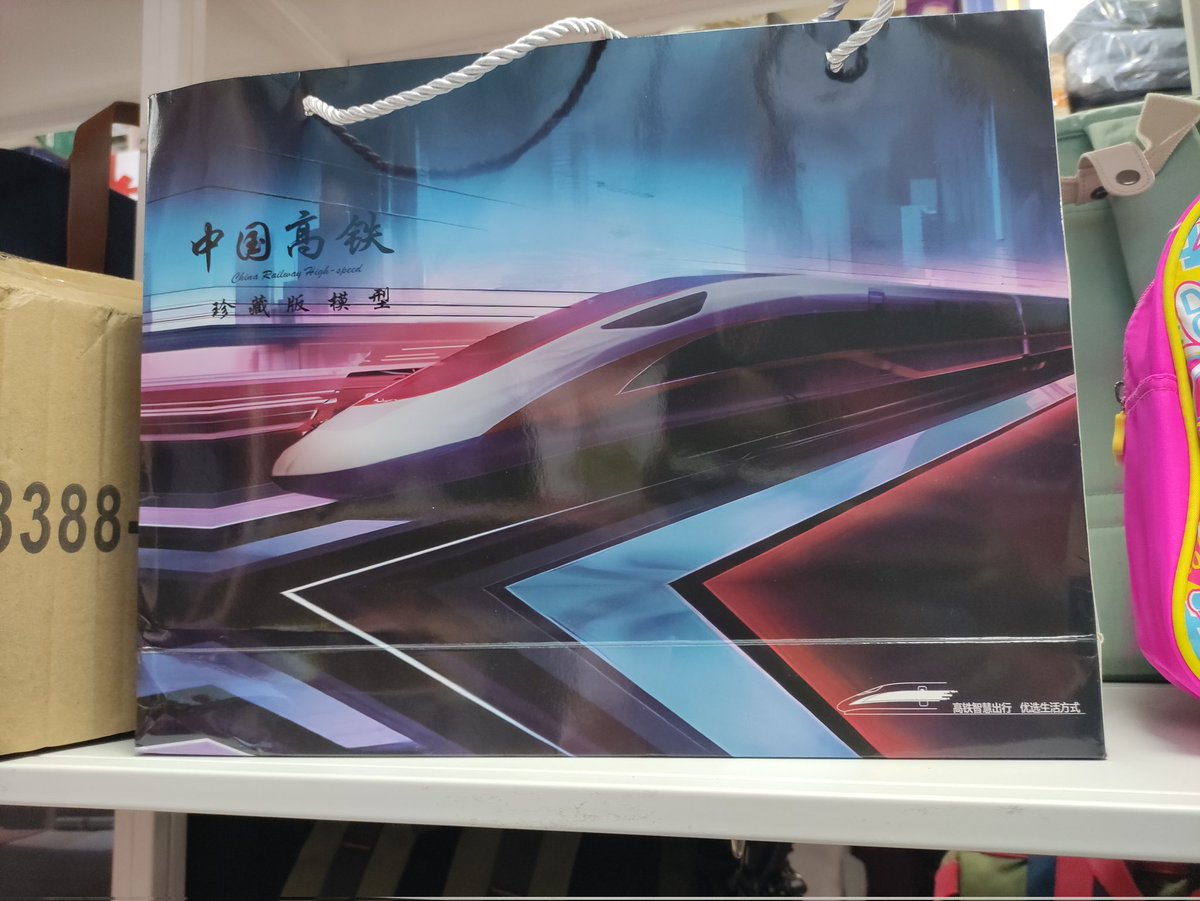
Anything electronic can be found here,from consumer and industrial products to obscure electronics parts.
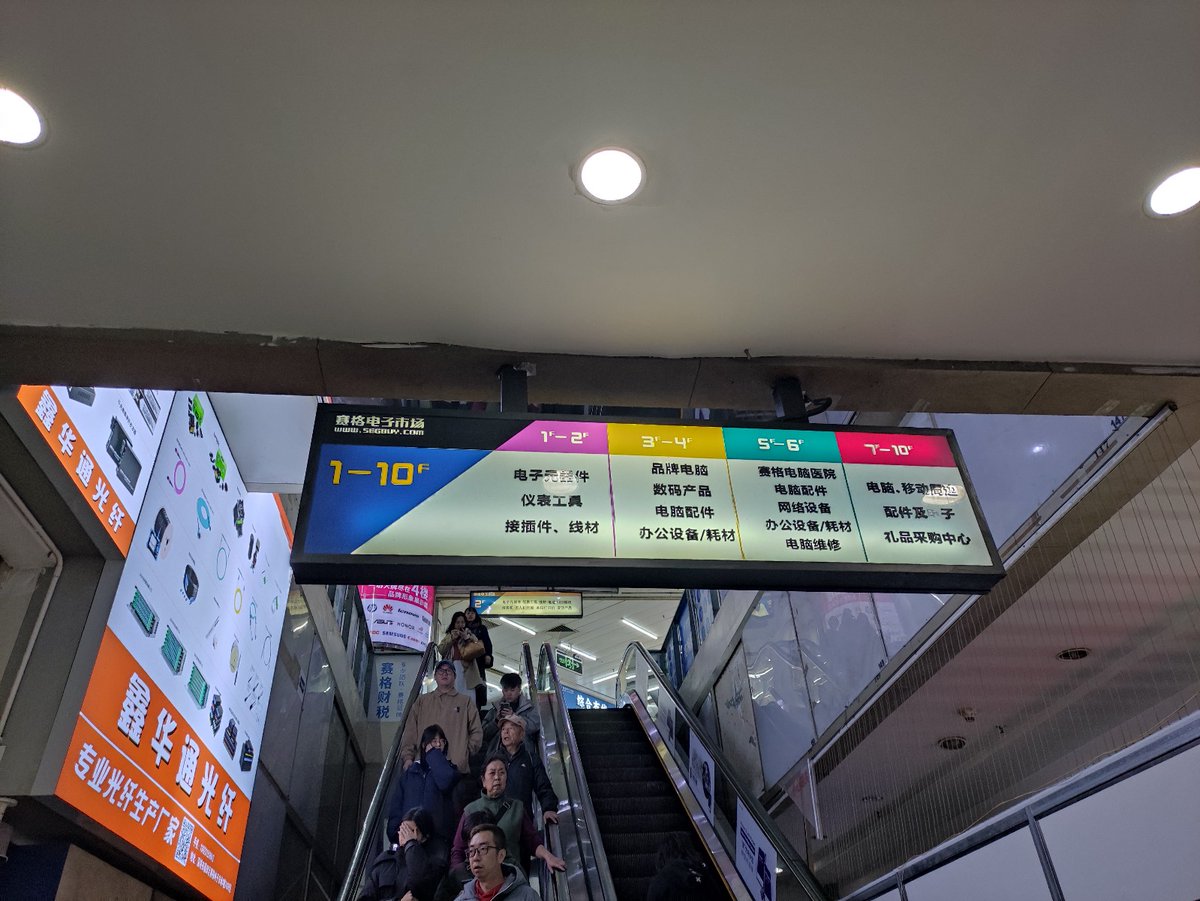
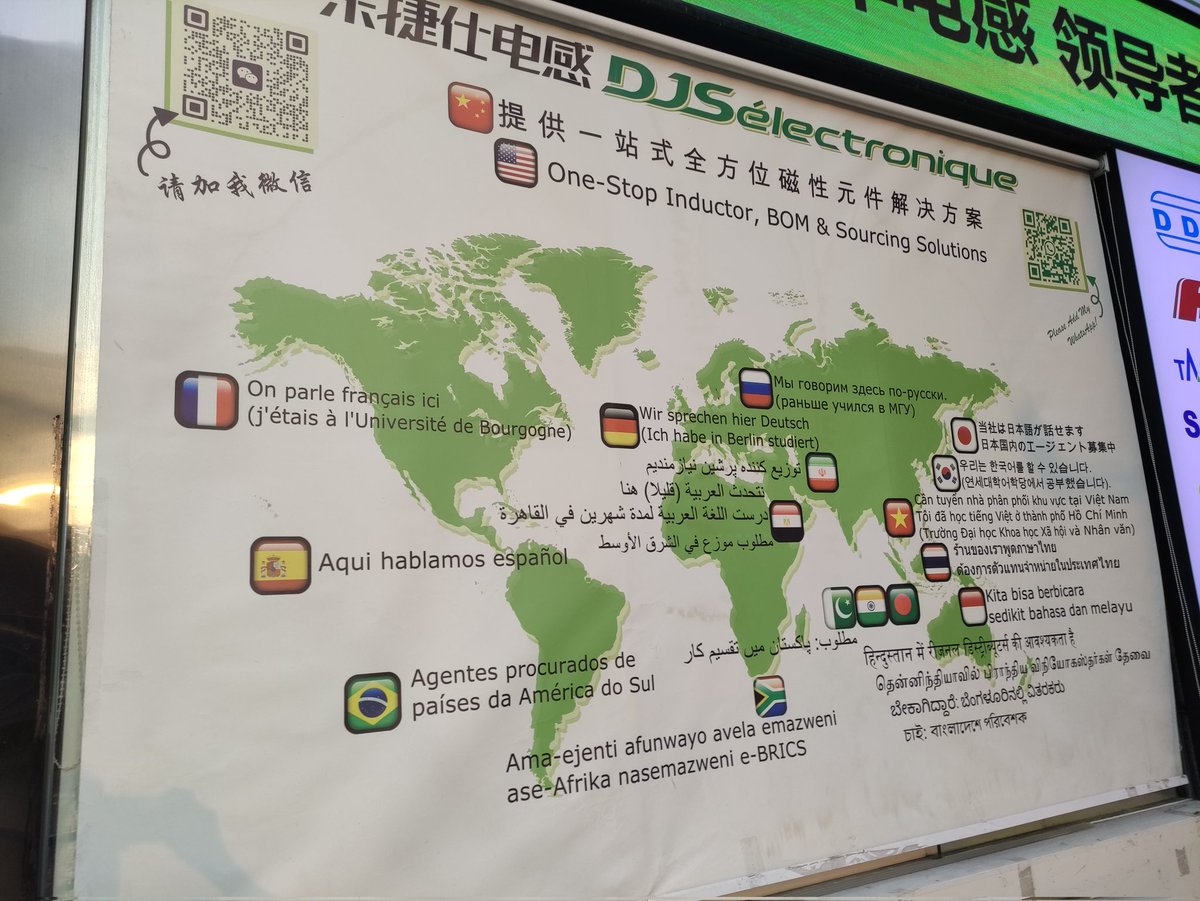
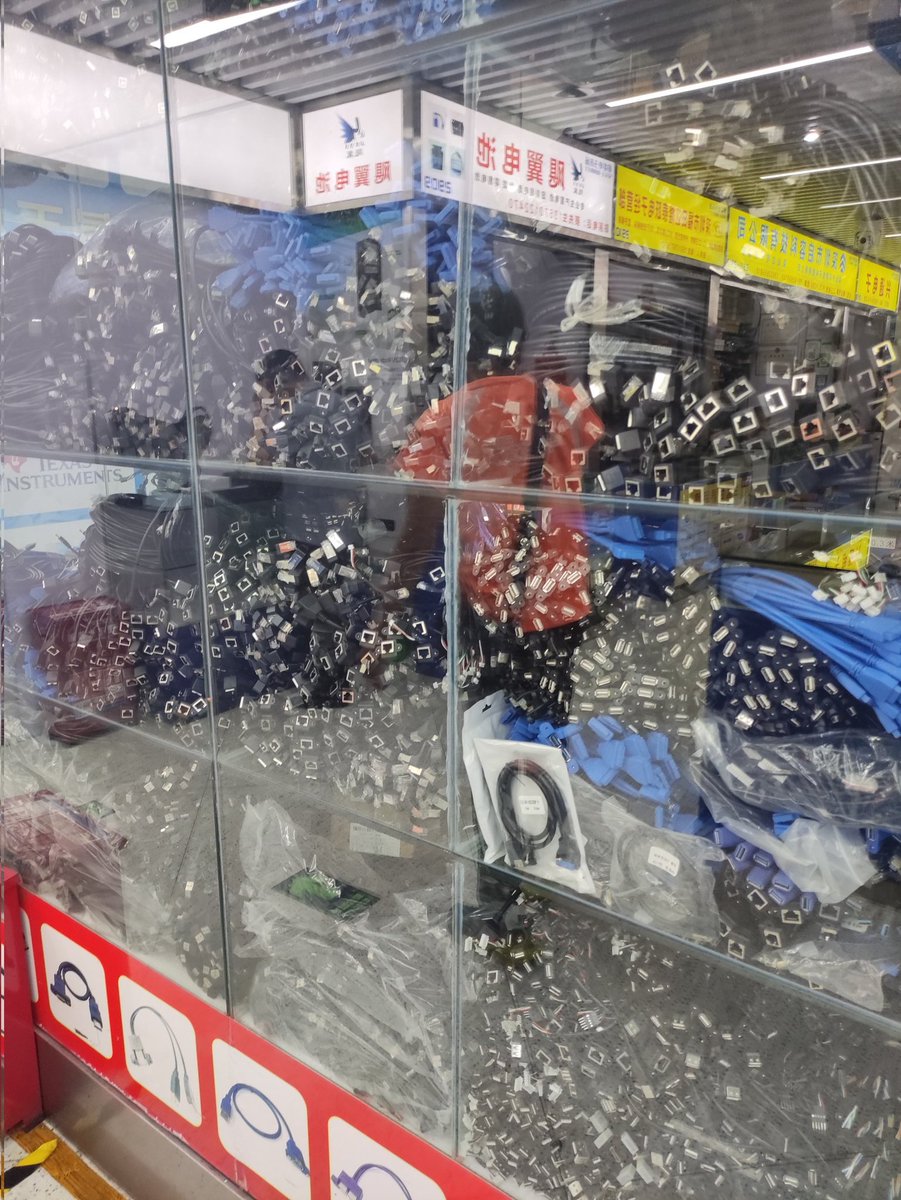
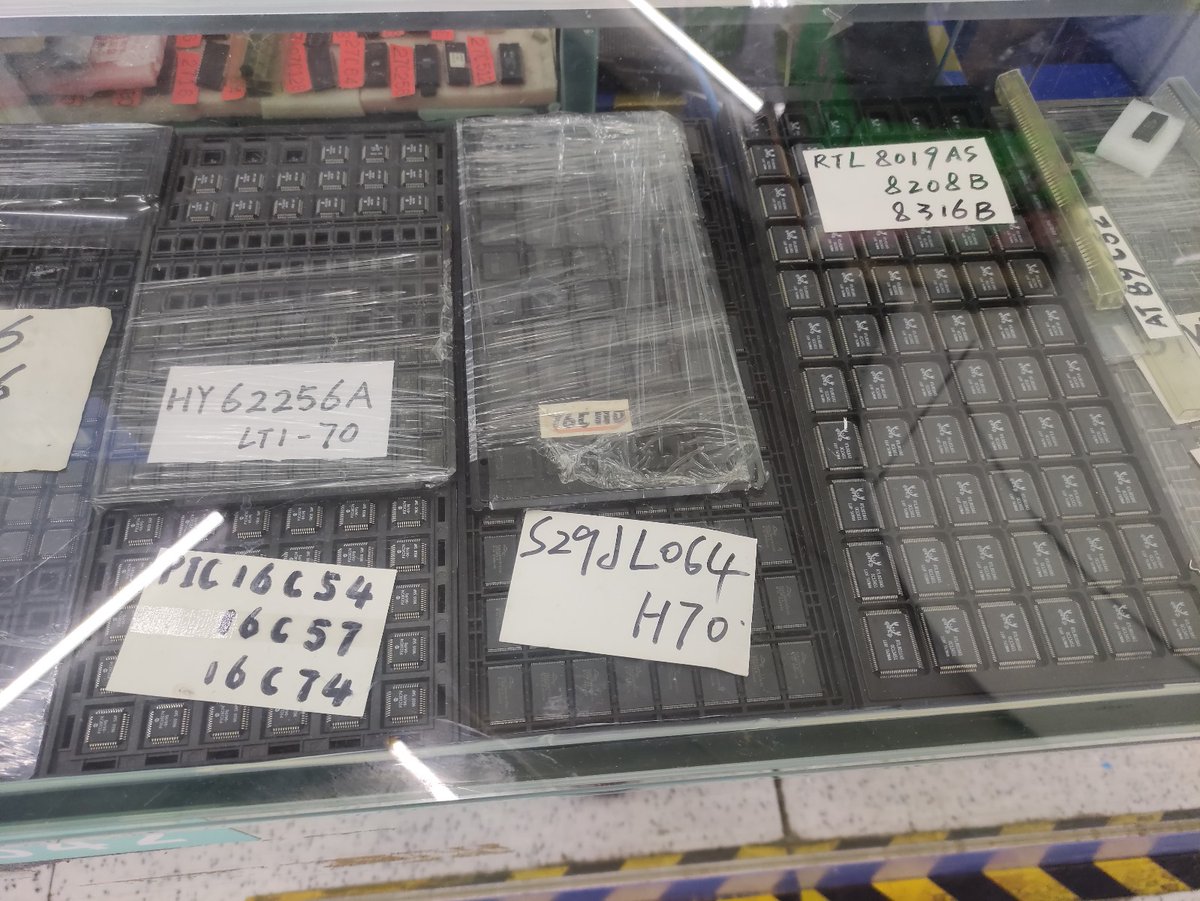
The most fun I have is looking at the stores that are fronts for factories where you can sit down look at specialized type of IC, transistors, server fan, capacitor, ethernet cable etc and place an order of 1,000 of them.
There are stores that are fronts for factories that just specialize in selling those ubiquitous "holographic authenticity" "Made in China", "QC Pass" stickers you see on all consumer electronics.
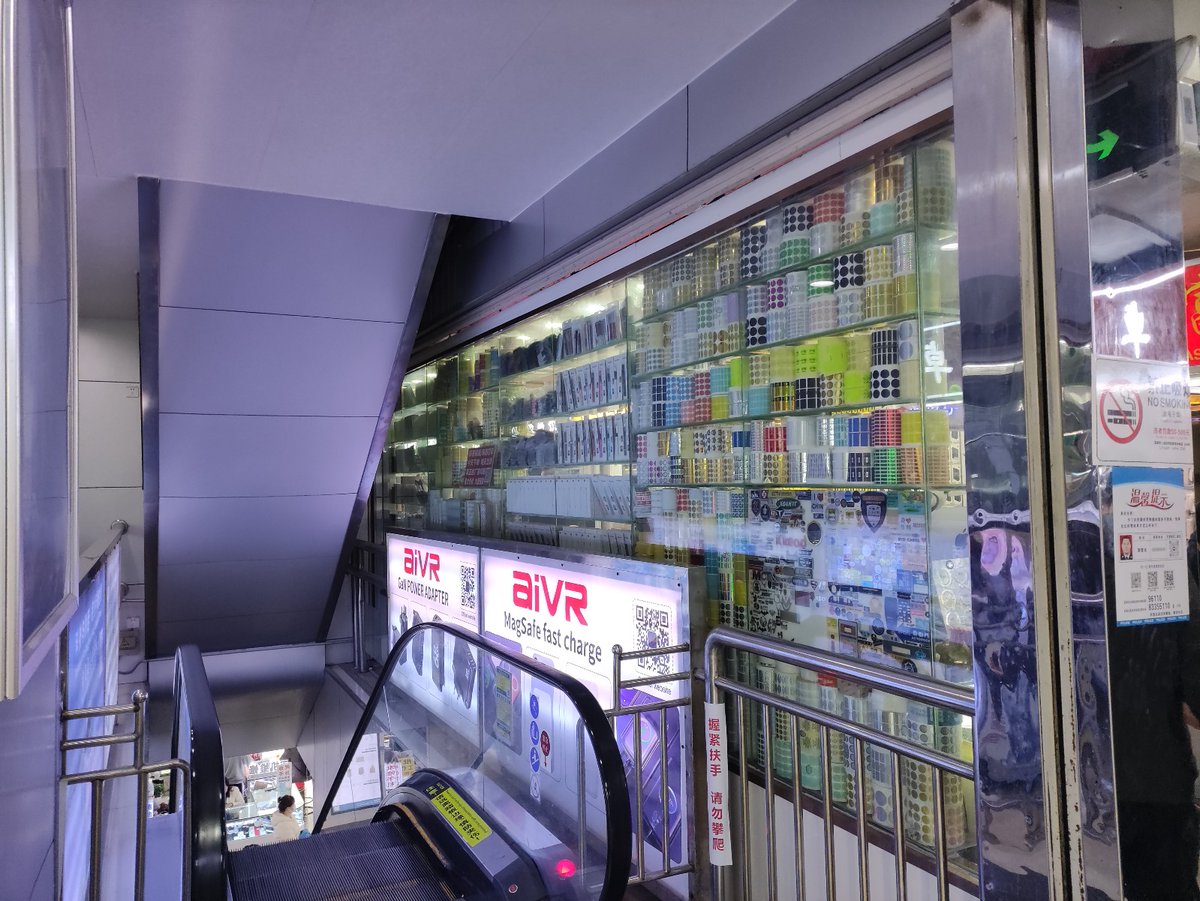
Freight forwarding companies are common here too, as if you ordered some consumer electronics or Arduino board off AliExpress it most likely came from here.
So for the phone situation we found a building that is housing hundreds of phone repair stalls with 師傅s working way replacing batteries,volume rockers and charging ports.
My family member's broken phone is an obscure export variant of a Chinese brand. However after some discussion and online research with the phone repair 師傅 he determined that a LCD panel from a local phone model is compatible.
He called his friend who runs a store that specializes in phone screen parts on the other side of the market to check and pick up the part. He confirms it will work and says he can replace phone display unit in 2 hrs. I go and eat 炸醬面, browse the market's plethora of wares.
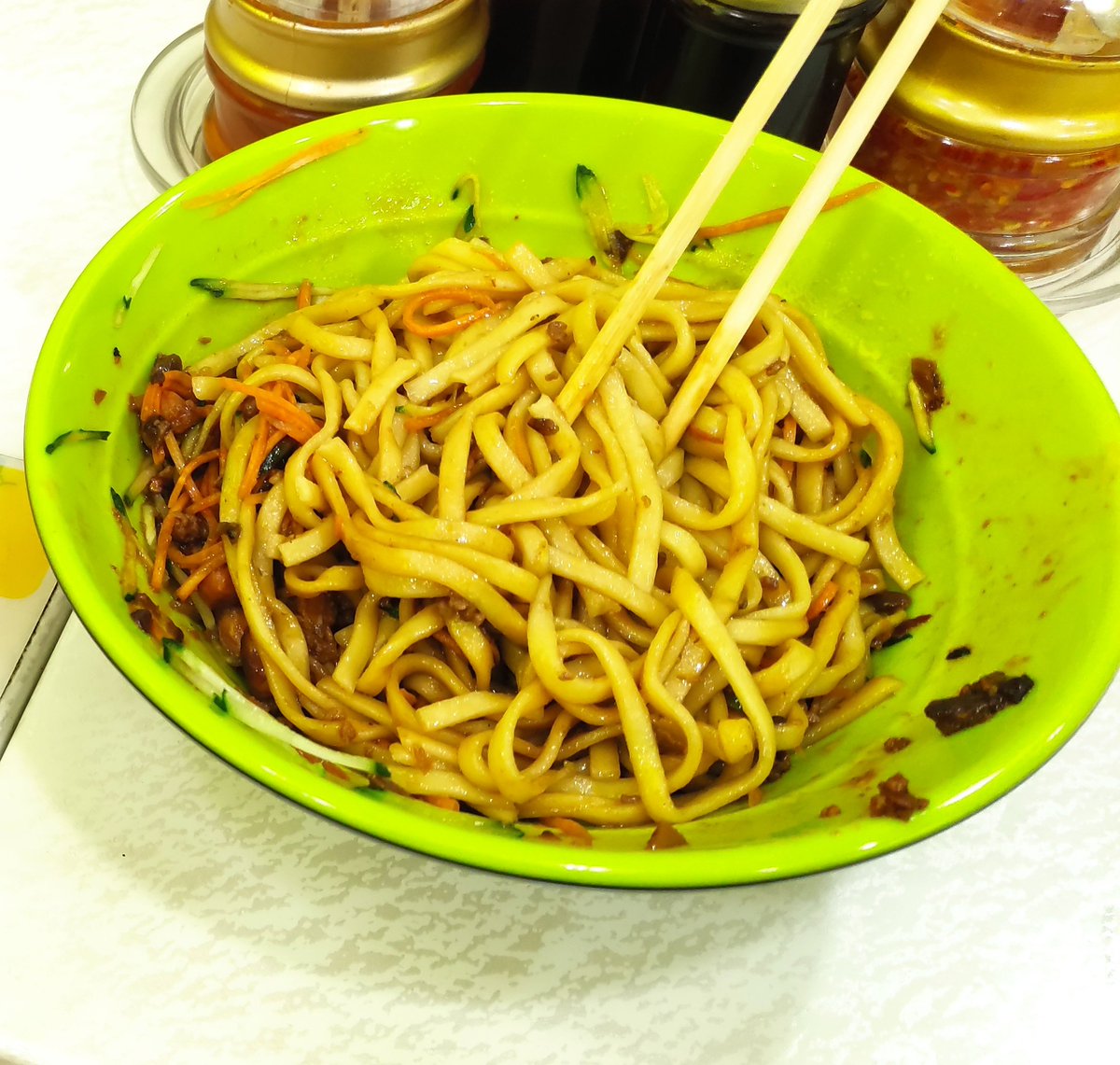
The fast turnaround of phone repair is achieved because of the centralization of electronics sellers, knowledge and connections. There are 100s of models of phones but also 100s of stalls specializing on every part/component imaginable here.
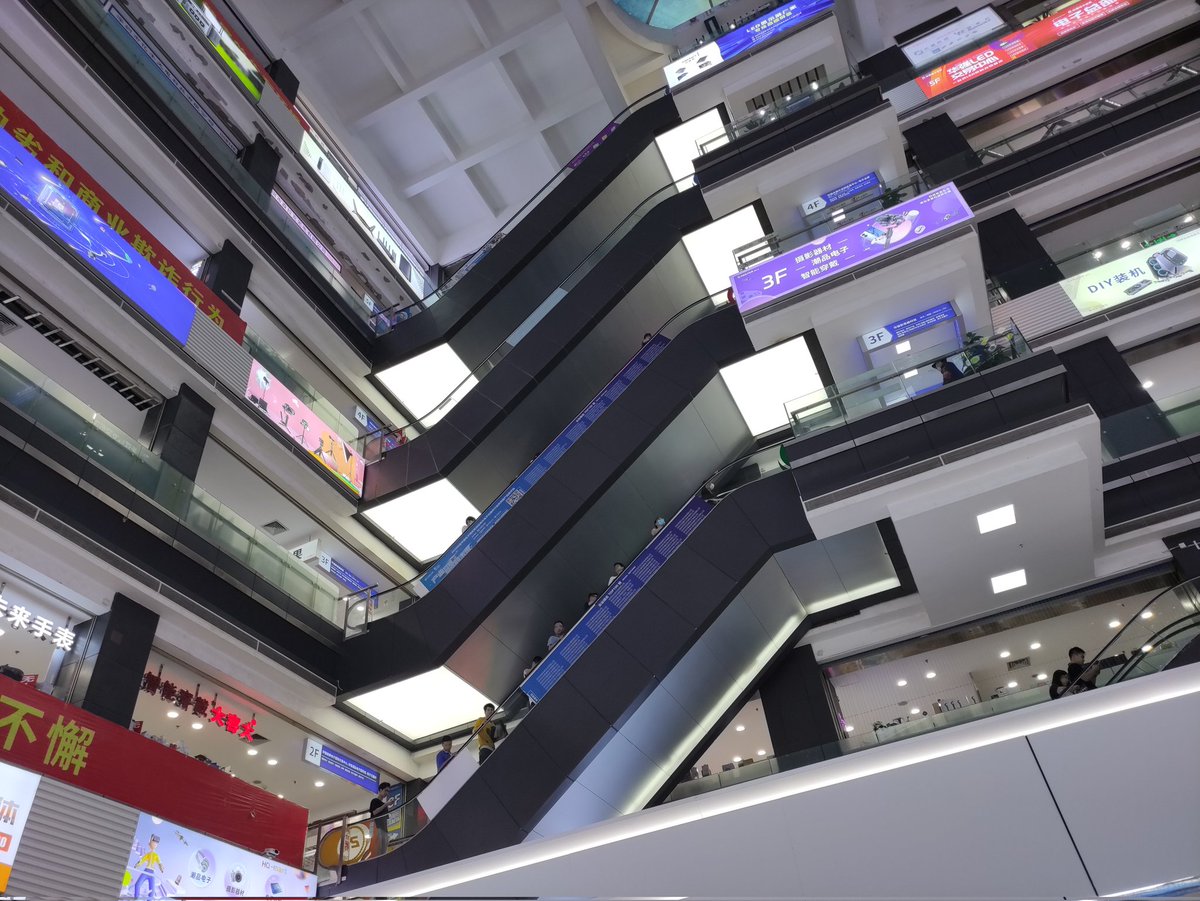
The 師傅 WeChated me to come back to pick up the fixed phone. He even took us to a neighbouring stall who he knows is better with phone speaker and mic replacements to double check if the phone was put back together properly.
He was talking to us like a vet discharging a patient ending with " leave the rubber bands [keeping the phone together] on for at least 2 hours, don't be too rough with it today."
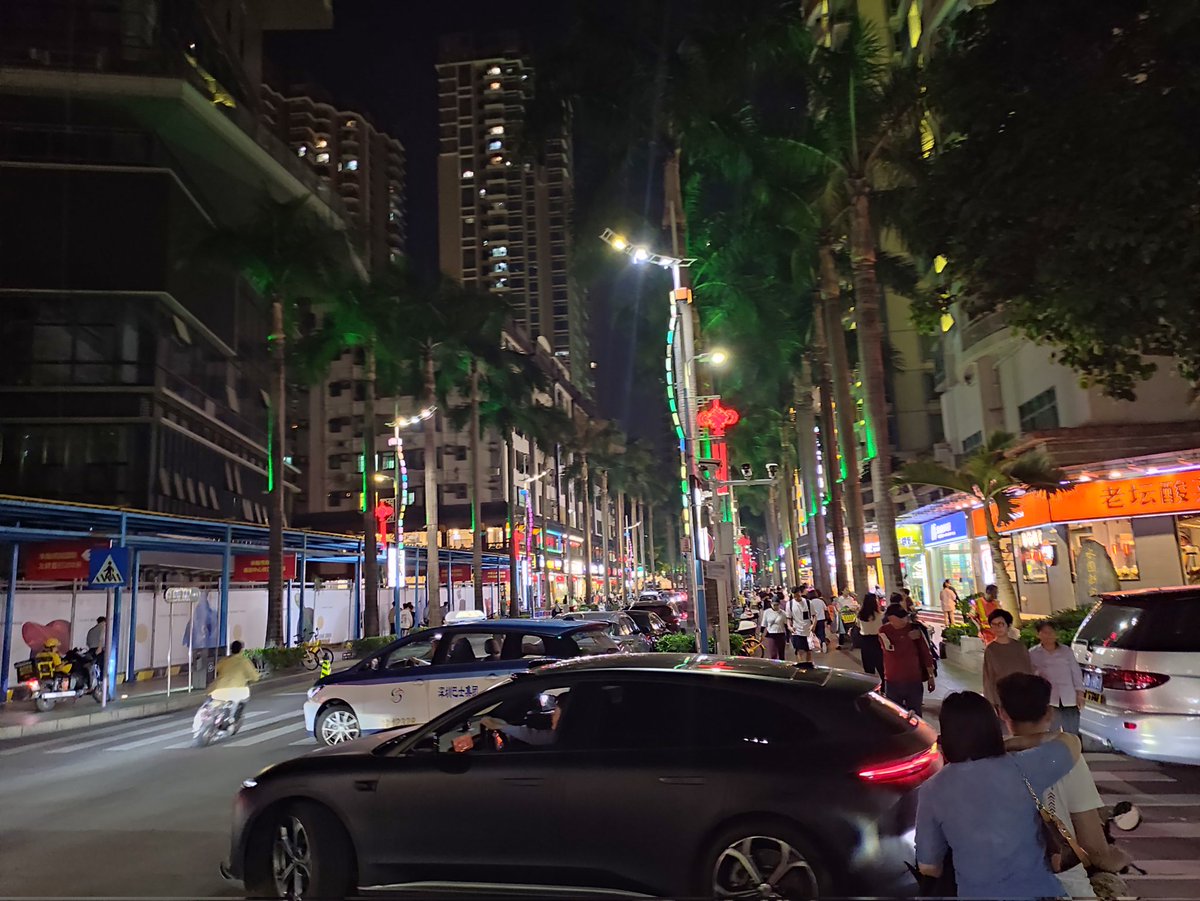
I thank him and we have coffee to celebrate (and not be rough with the phone), then take metro to a Chaoshan Hot Pot place for dinner and head back to HK.
So thanks for reading this thread that I typed on my family member's now functional phone. For more electronic urbanism like, share and subscribe. Insert the IC on that PCB to ensure you get future notifications from me.
• • •
Missing some Tweet in this thread? You can try to
force a refresh

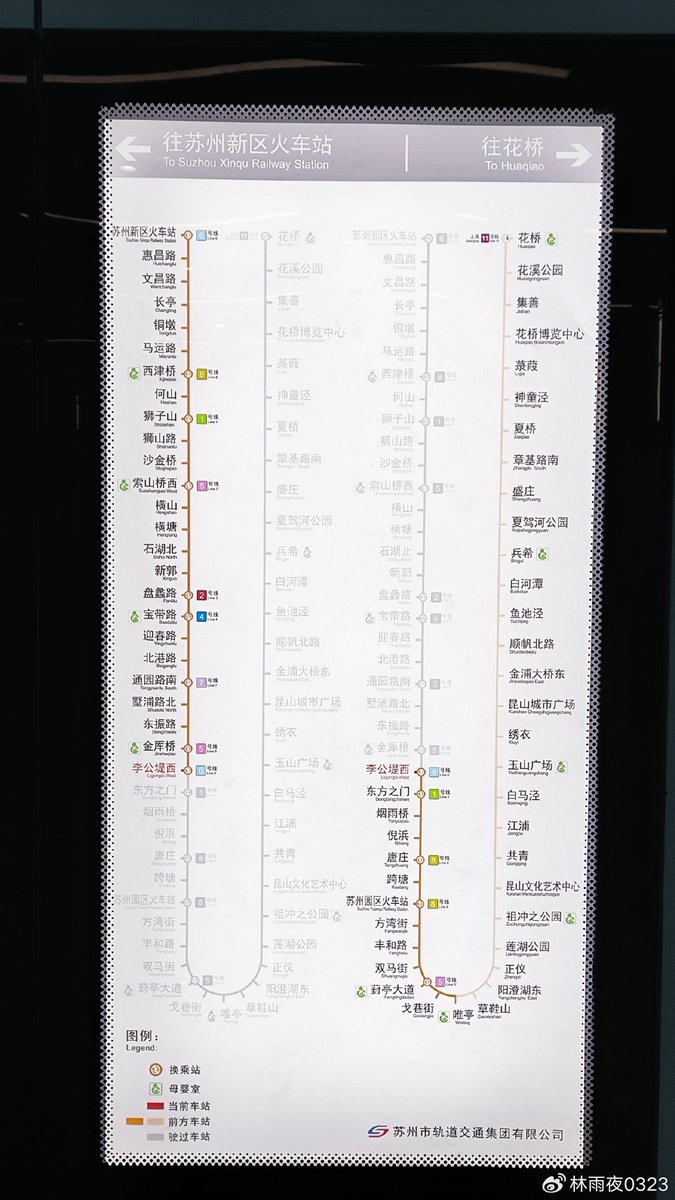
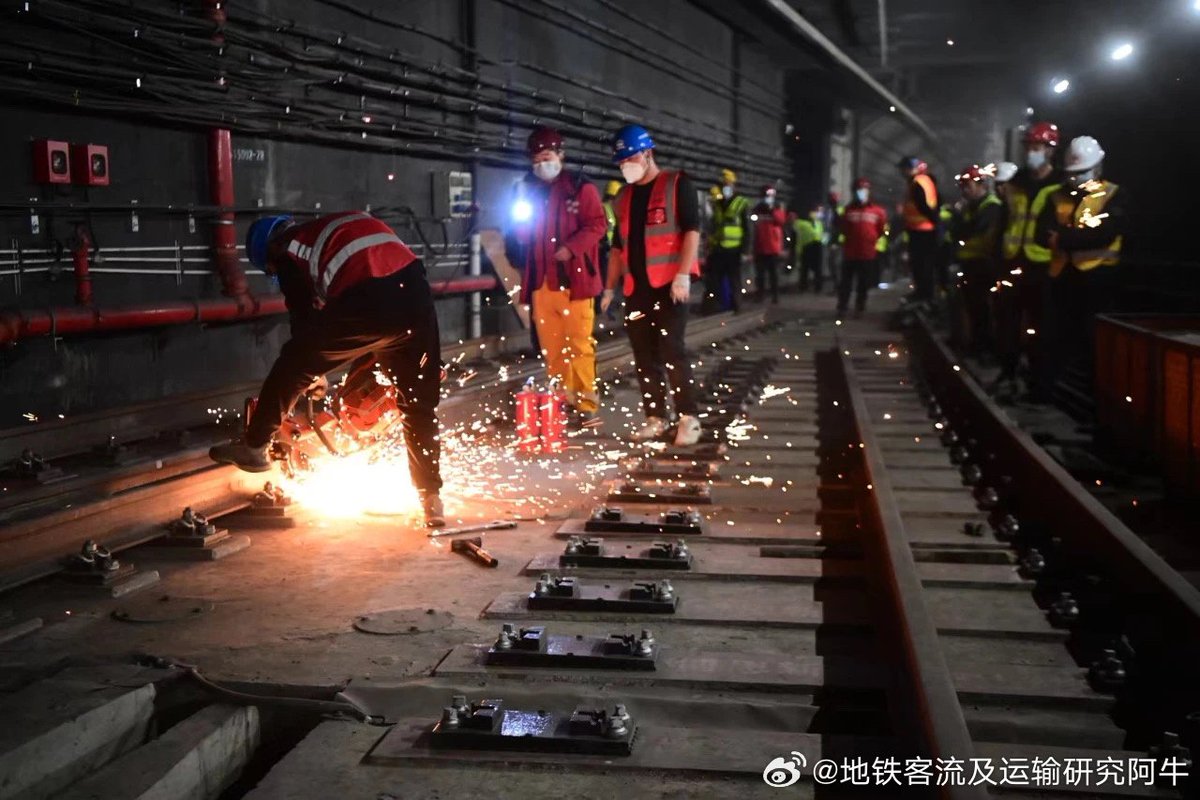
Not an extension but last month, Suzhou completed an interconnection project between Lines 3 and Line 11, allowing automated local and express Line 11 trains to thru operate into Line 3 and Kunshan/Shanghai to access Suzhou city center. A thread on this out of the blue project.
Line 3 is a typical Chinese metro line: fully underground, 80kph, Type B 6 car trains, ATO, costs 165 million INT$/km to build. In typical Chinese fashion the 45km long 37 station L3 opened in one shot at the end of 2019 (Chinese metro opening season). Pic by YuDiao1118 on Wiki.
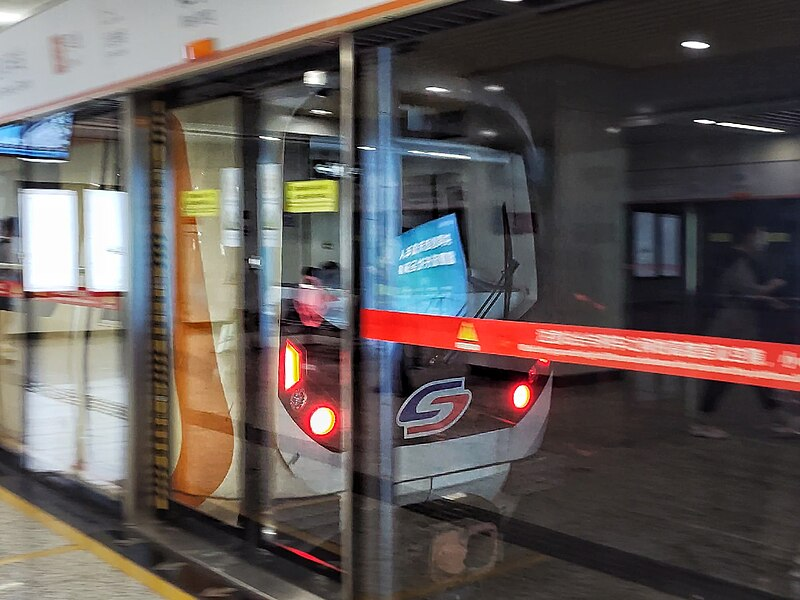
Line 11, formerly known as Line S1, has a bit more flair: higher 100kph operations, fully automated and a bit of an interurban metro connecting Suzhou, Kunshan and Shanghai creating a 1,000km mega metro network. Opened in June 2023.
A short thread on the strange planning and coordination of Guangzhou Metro expansion for Line 11 and 21. Showing with a metro development masterplan that cities actually follow and widespread standardization you can do a achieve alot of things.
Line 21 is a suburban metro line that radiates over 60km away from Guangzhou. A very cool line with elevated and underground running and express services using passing loops. Built for 135 million INT$/km.
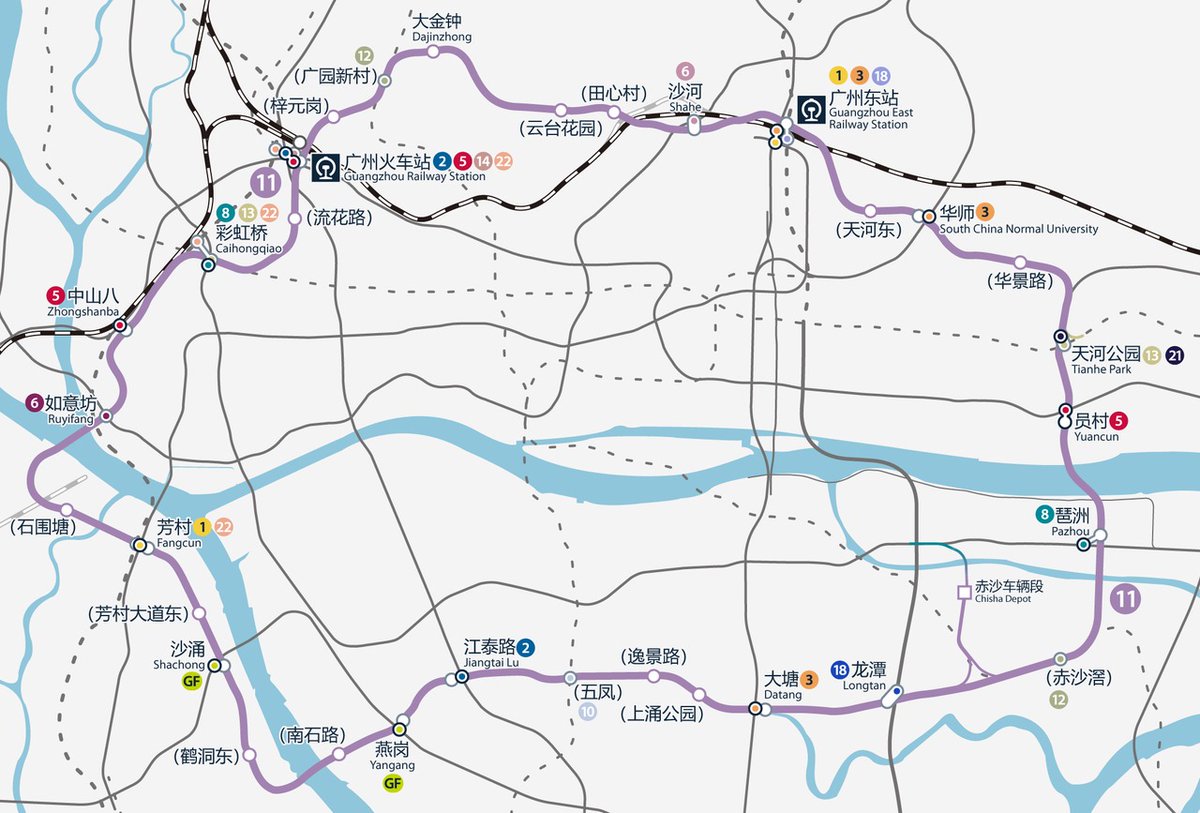
Line 11 is a monster fully underground 44km urban center loop line with a projected ridership of well over 1 million passengers a day. As such it will use massive high capacity 8 car drum cross section Type A trains. Costs 245 million INT$/km to build.
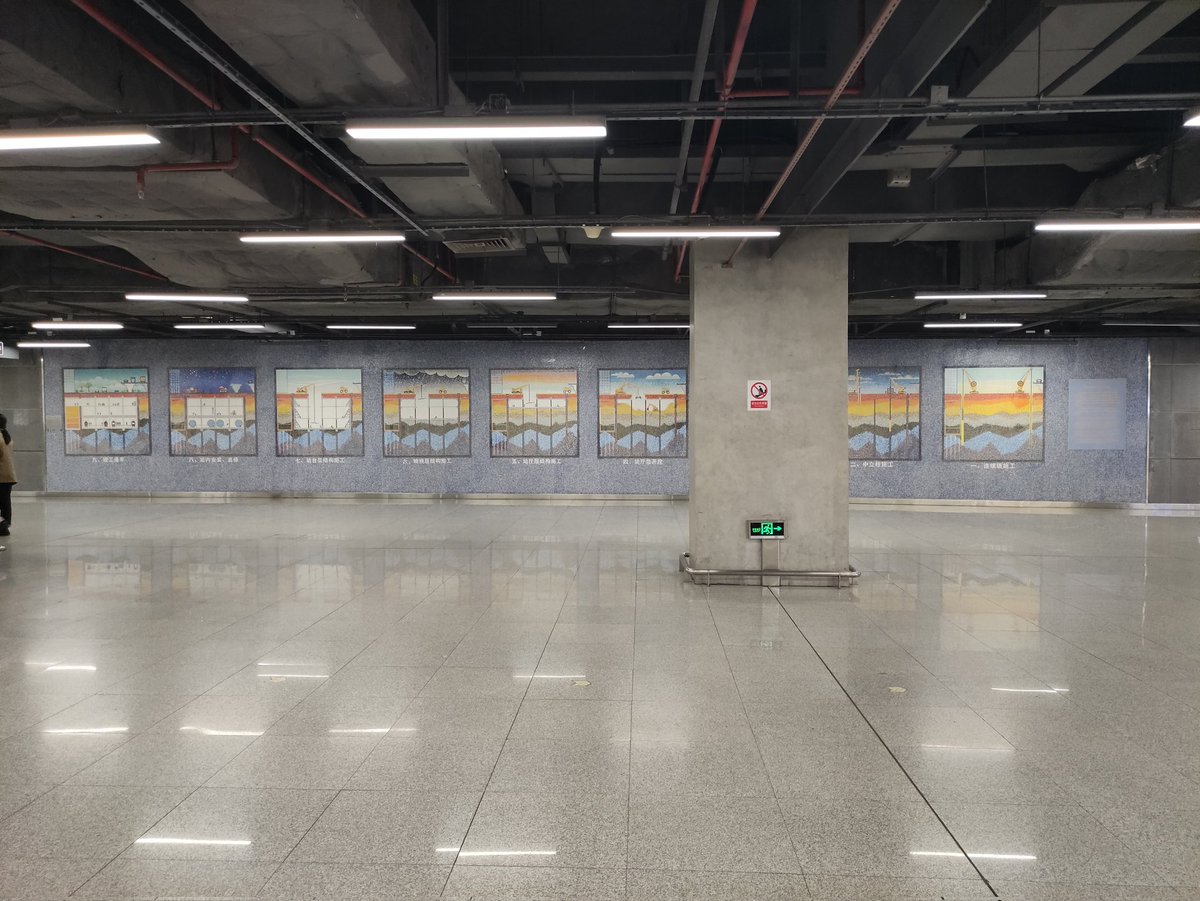
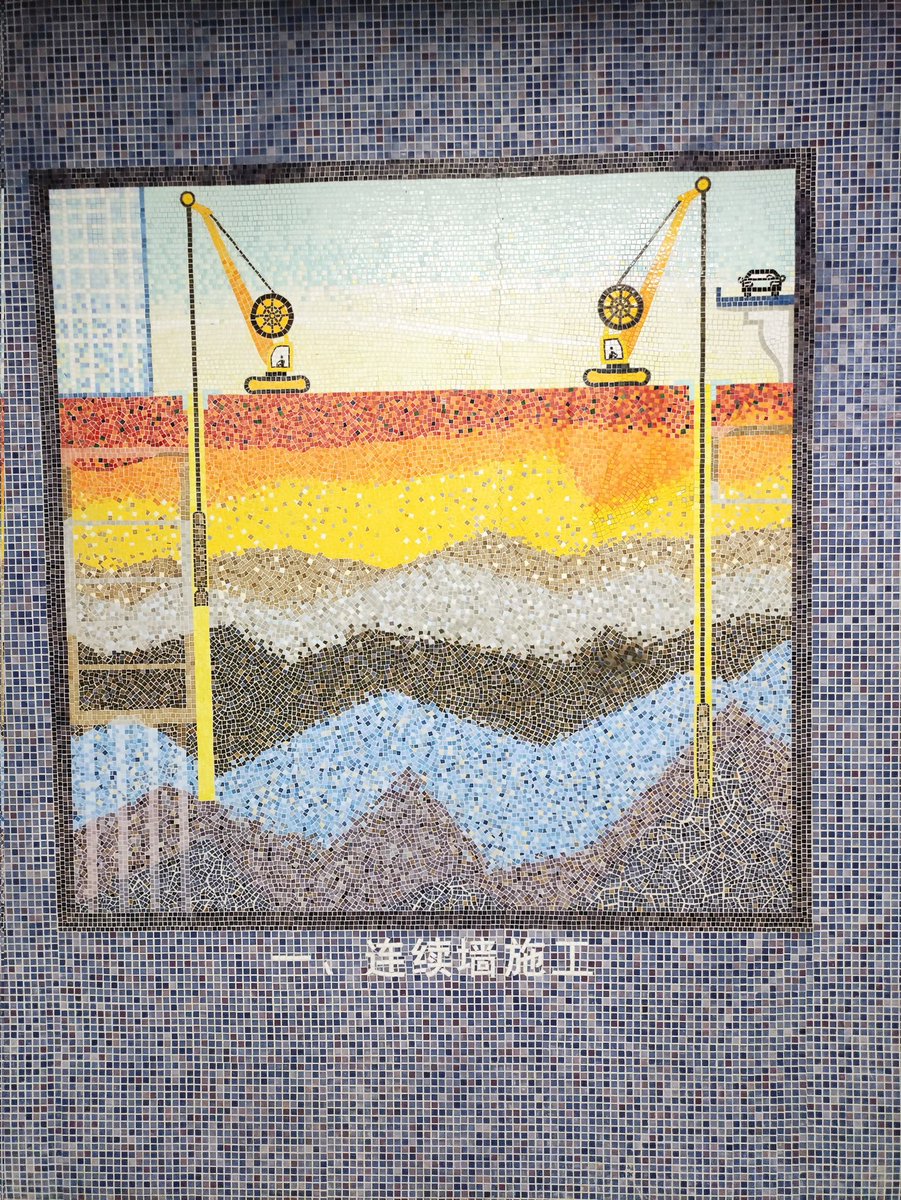
Chegongmiao Station in the Shenzhen Metro is extremely cool, being a 4 line interchange with cross platform interchange. However, a dope thing I discovered is there's a mosaic in the station explaining to the public the process of building a metro station. Little🧵.
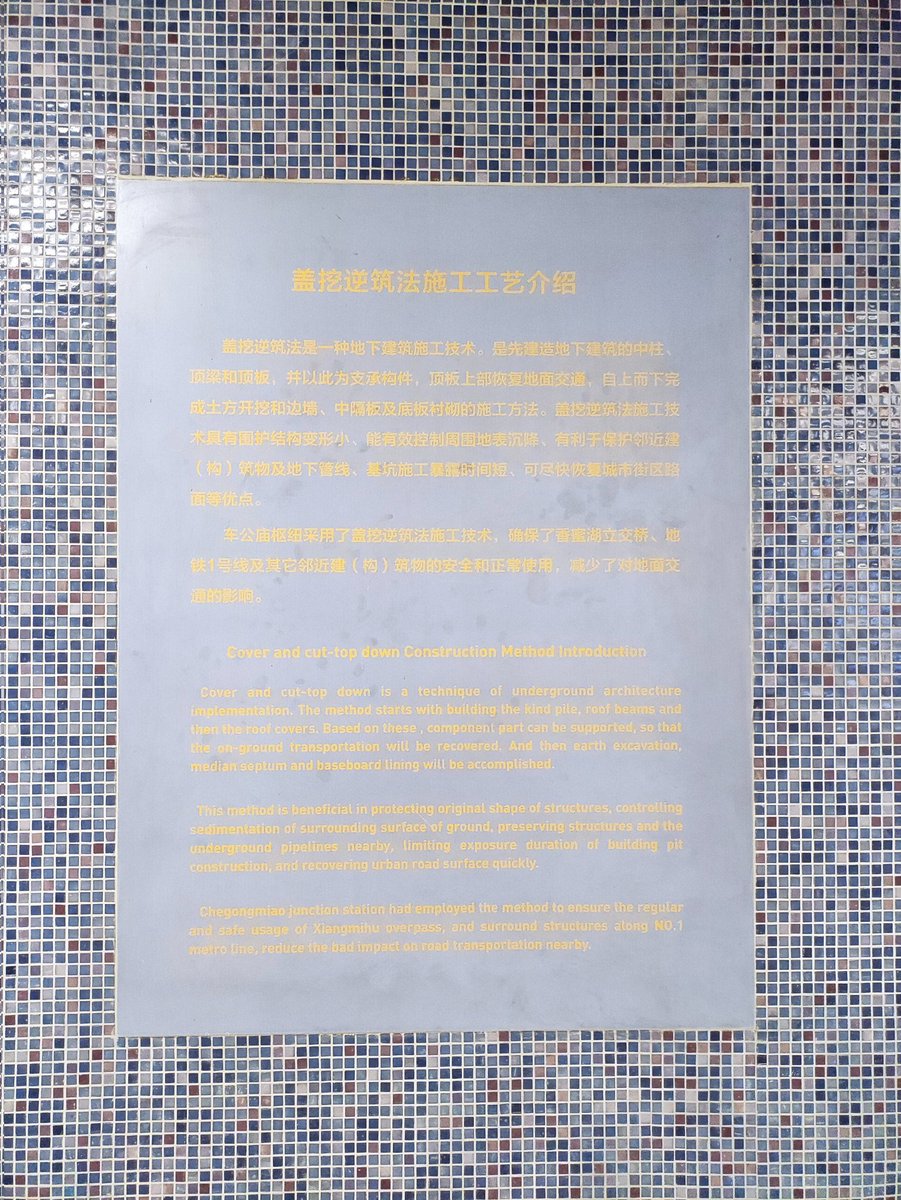
Explainer with a touch of Engrish. Specifically this mosaic explains the rough process of building the expansion Chegongmiao for Line 7 and 9. The expansion uses the top down method a common station construction method in China.
The first step is to construct the station box by digging a trench in the desired shape of the station. Rebar is lowered in and concrete is poured in after. After the concrete is set, the basic shoring supporting the station box is complete.
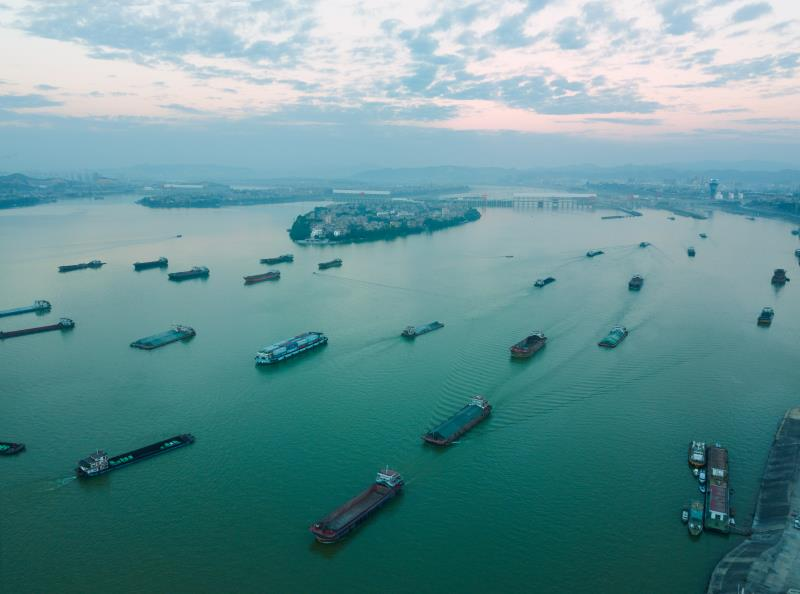
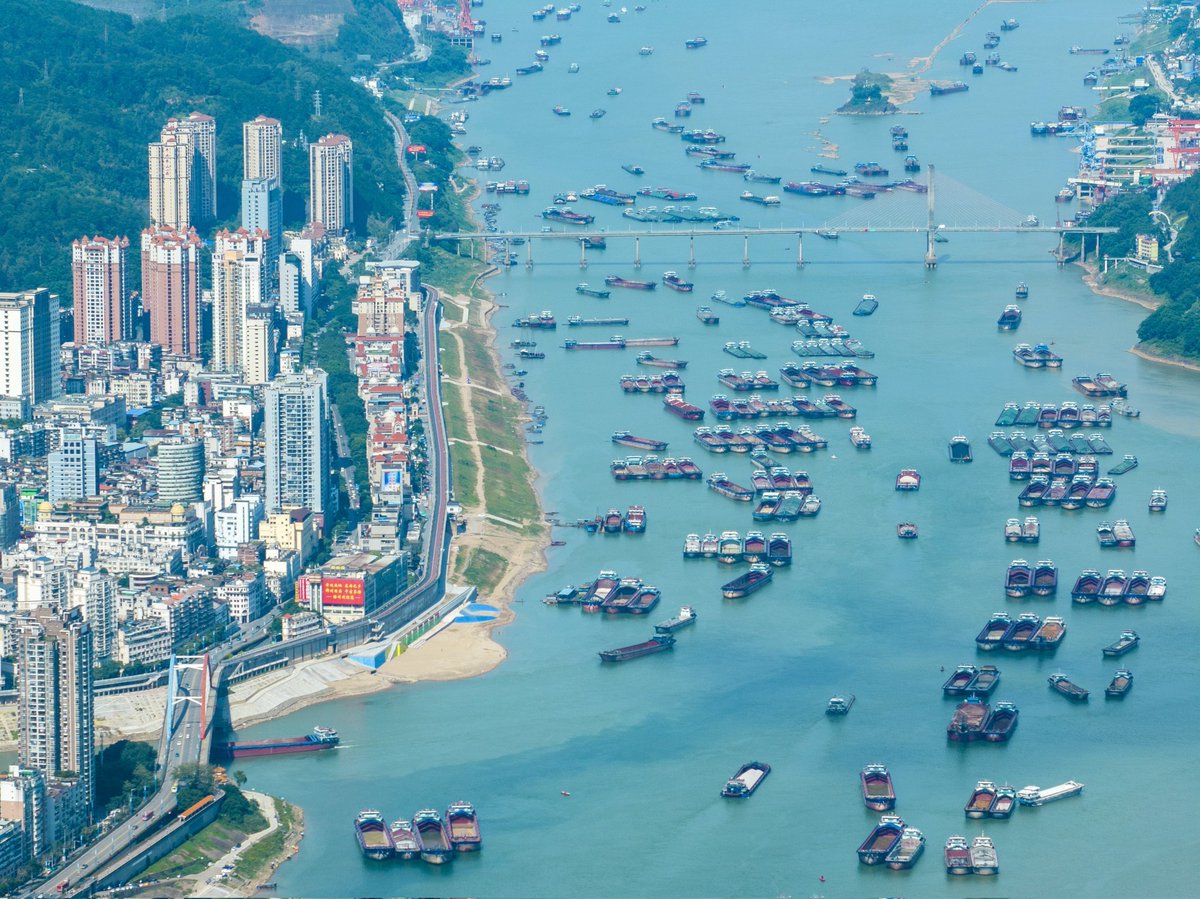
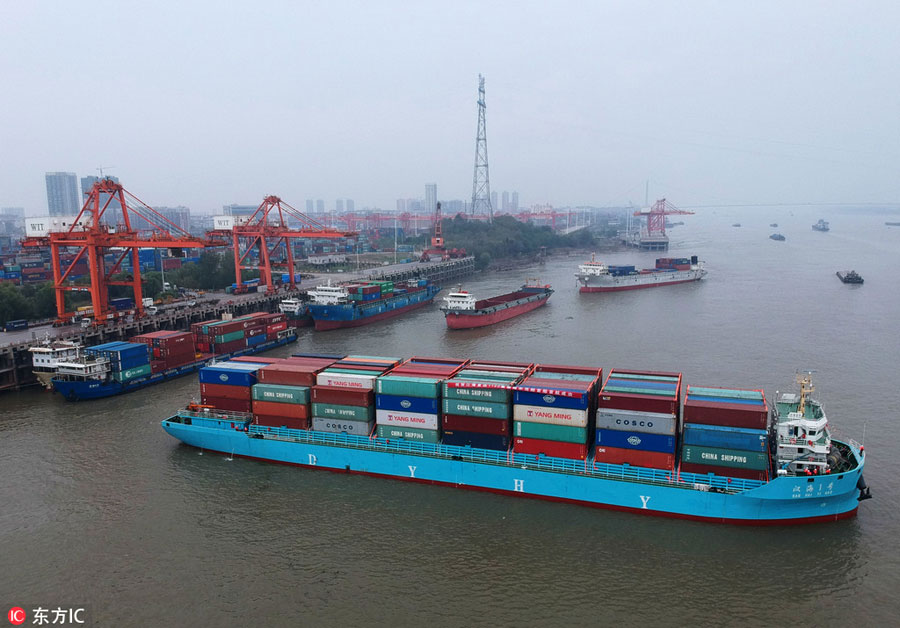
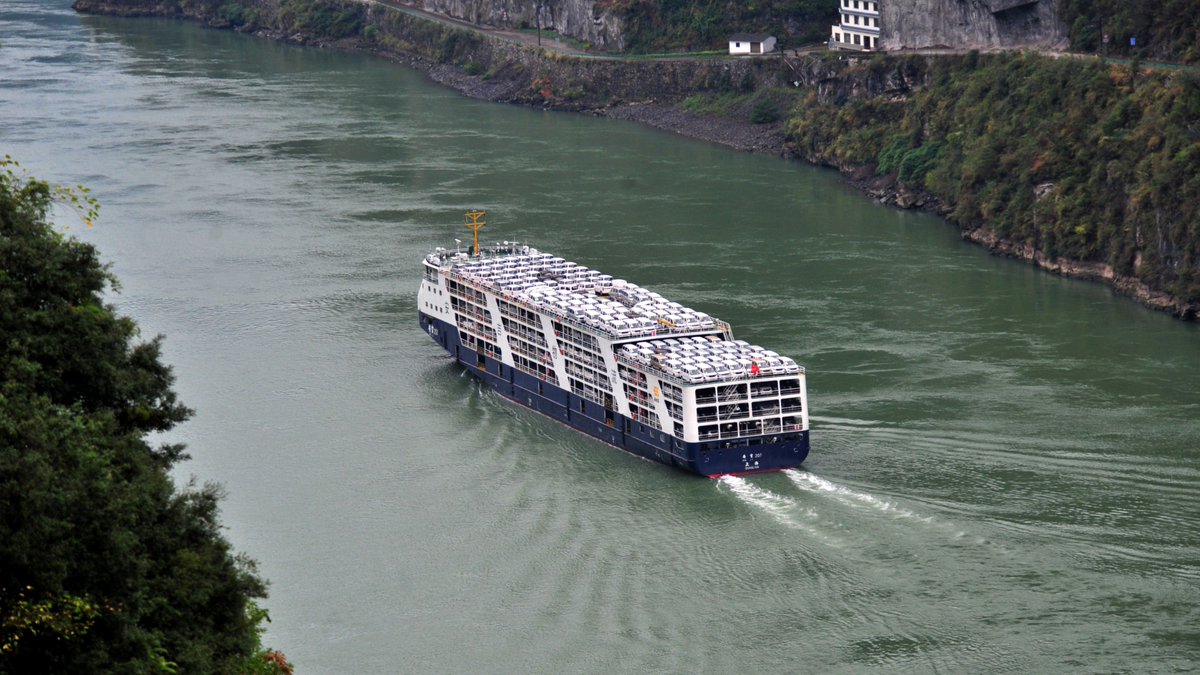
A thread on inland shipping. Freight transport is something that is not talked about alot in transport twitter, inland waterway freight even less. However twitter is ignoring one of the most sustainable forms of transport. Pics not mine unless otherwise stated (below is China).
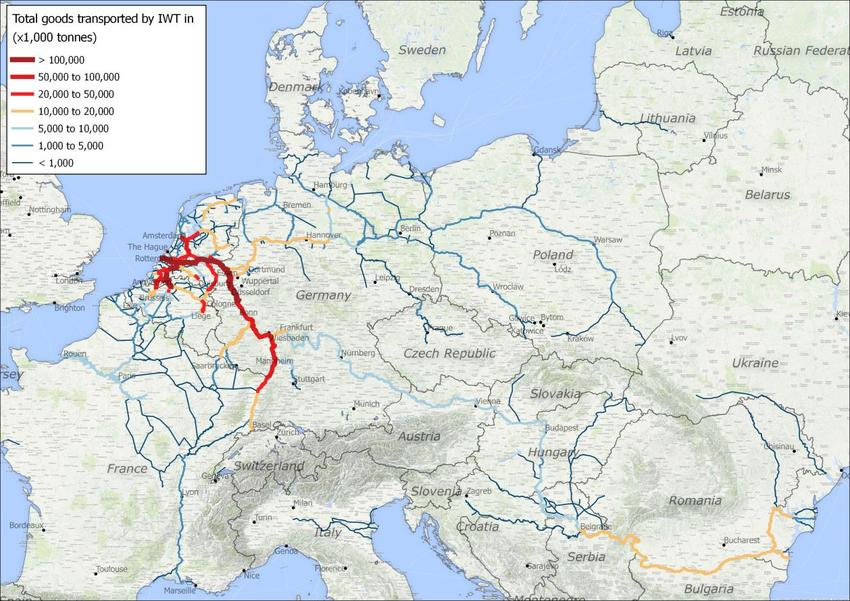
Arguably one of the factors of success for Germany's continuing dominance in European manufacturing is its developed and well used inland waterway transport (IWT) system centered on the Rhine. Note how the inland population/industry centers in my retweet line up with IWT system.
This has even got the attention of neighbouring France which has been working to upgrade the River Seine and even trying to build an IWT system from Paris to the the low countries to connect with the "North South Axis" IWT system.
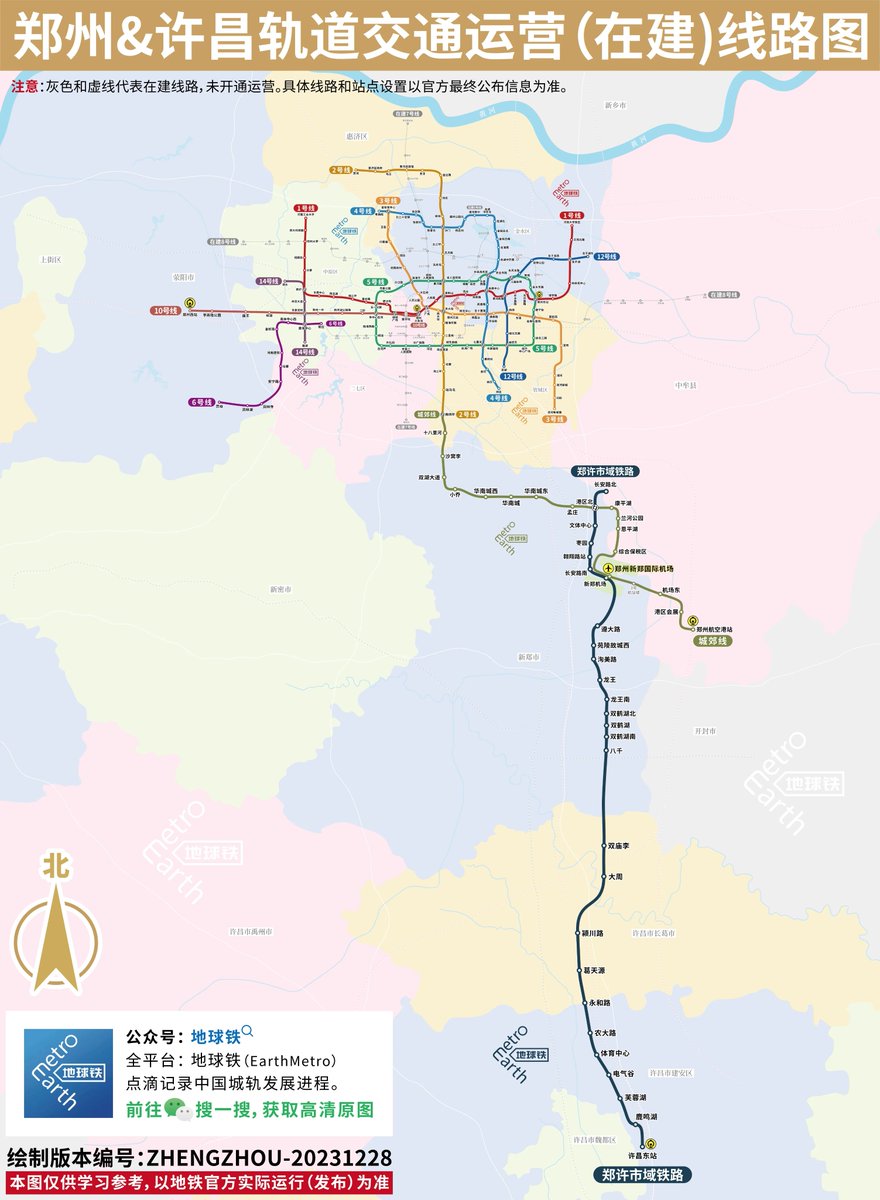
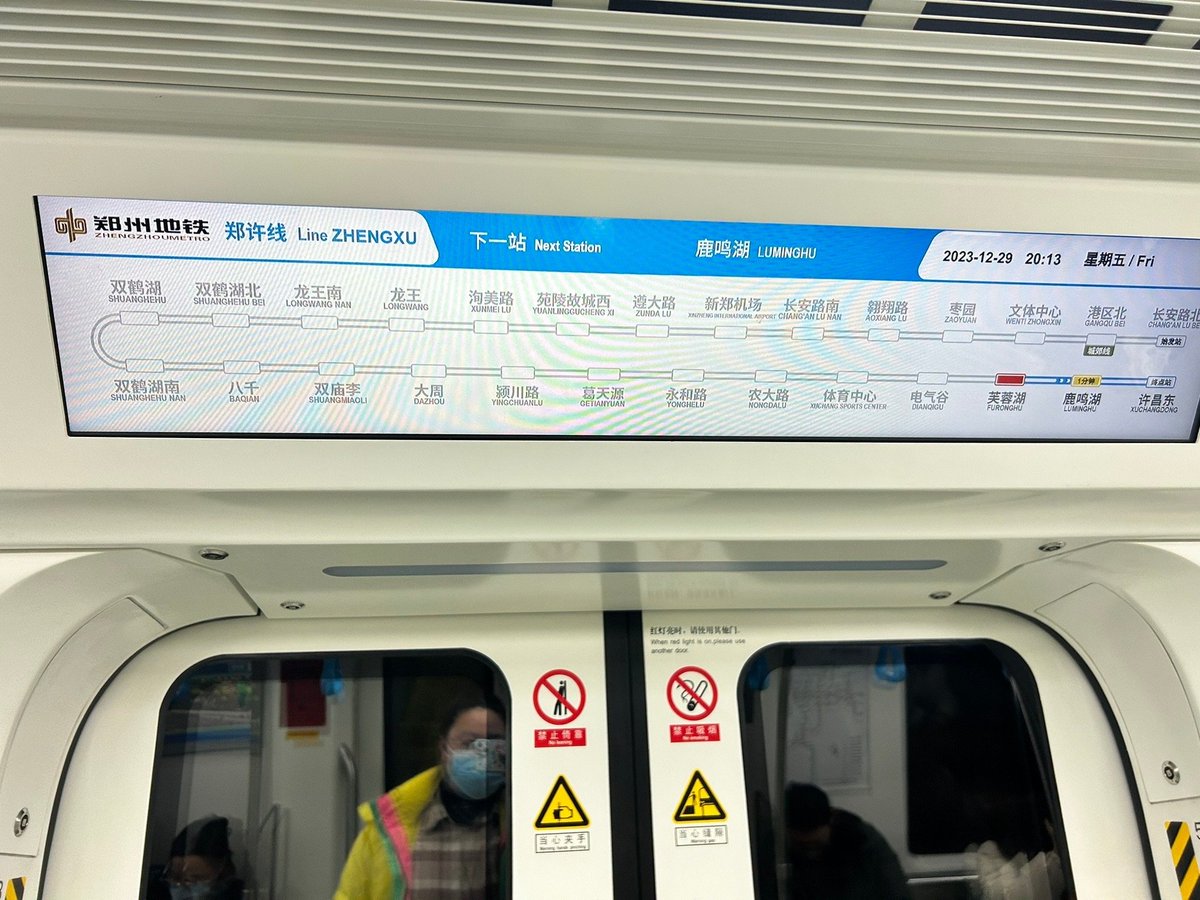
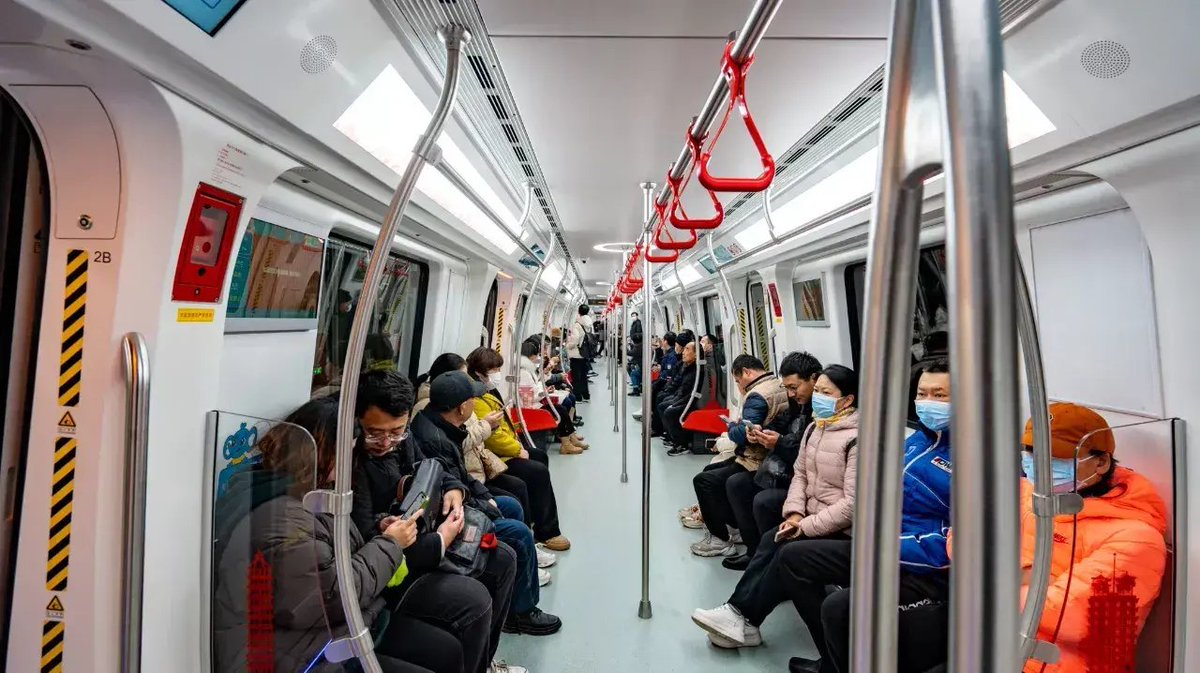
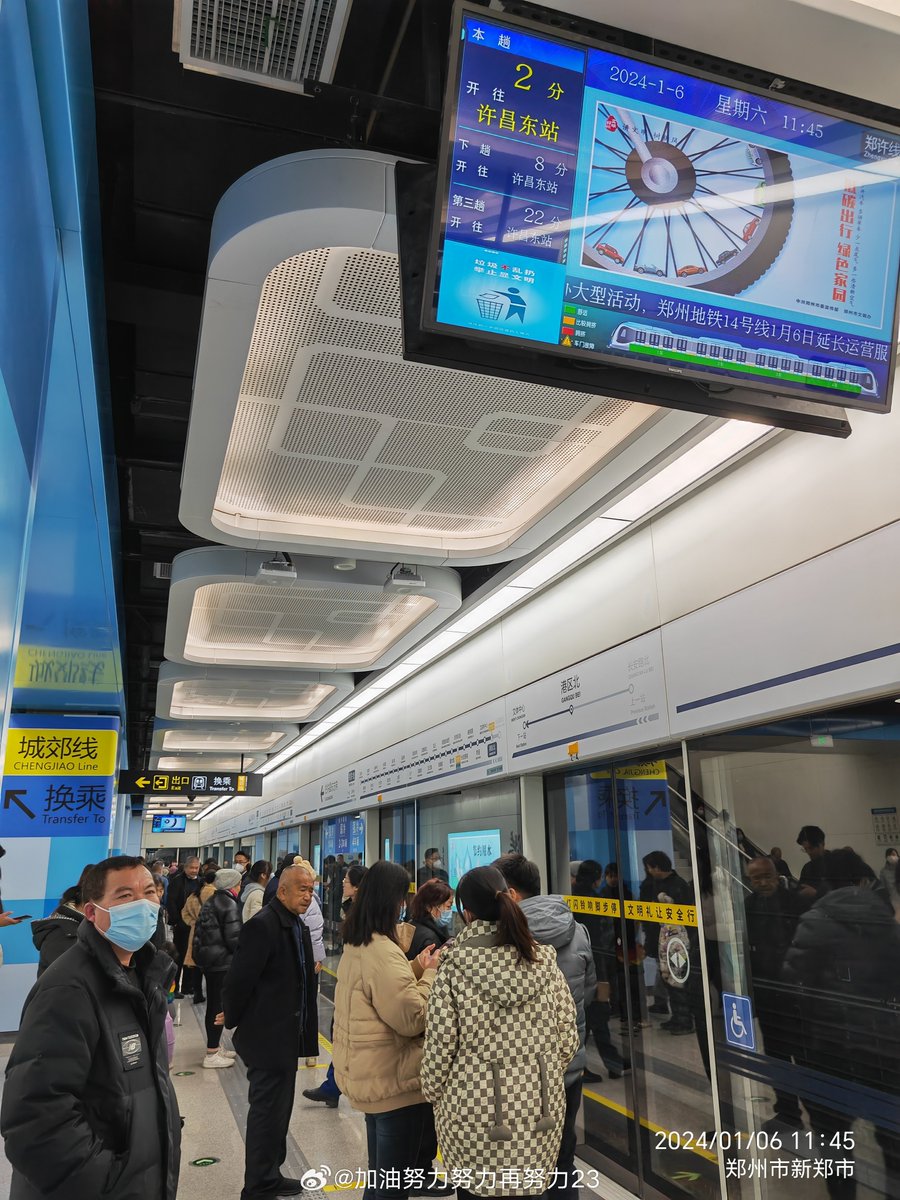
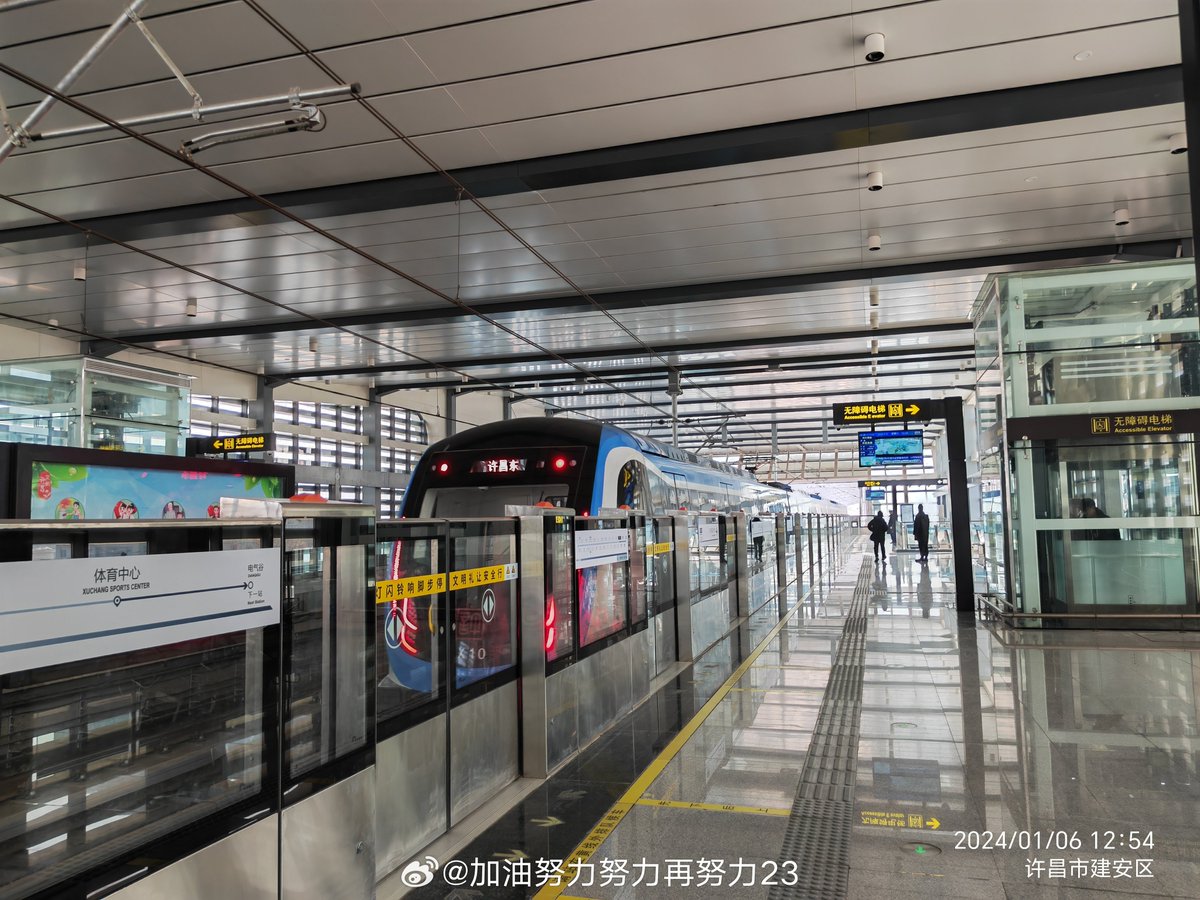
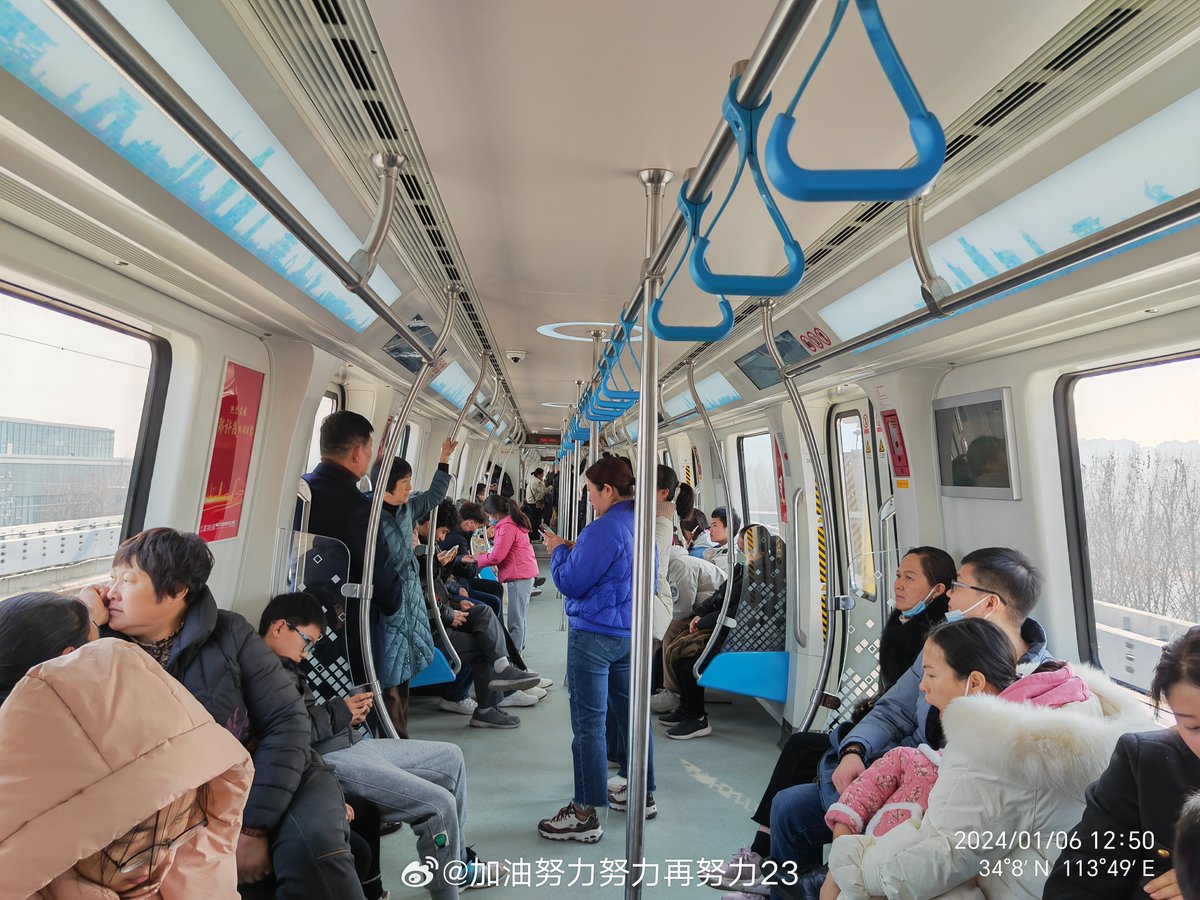
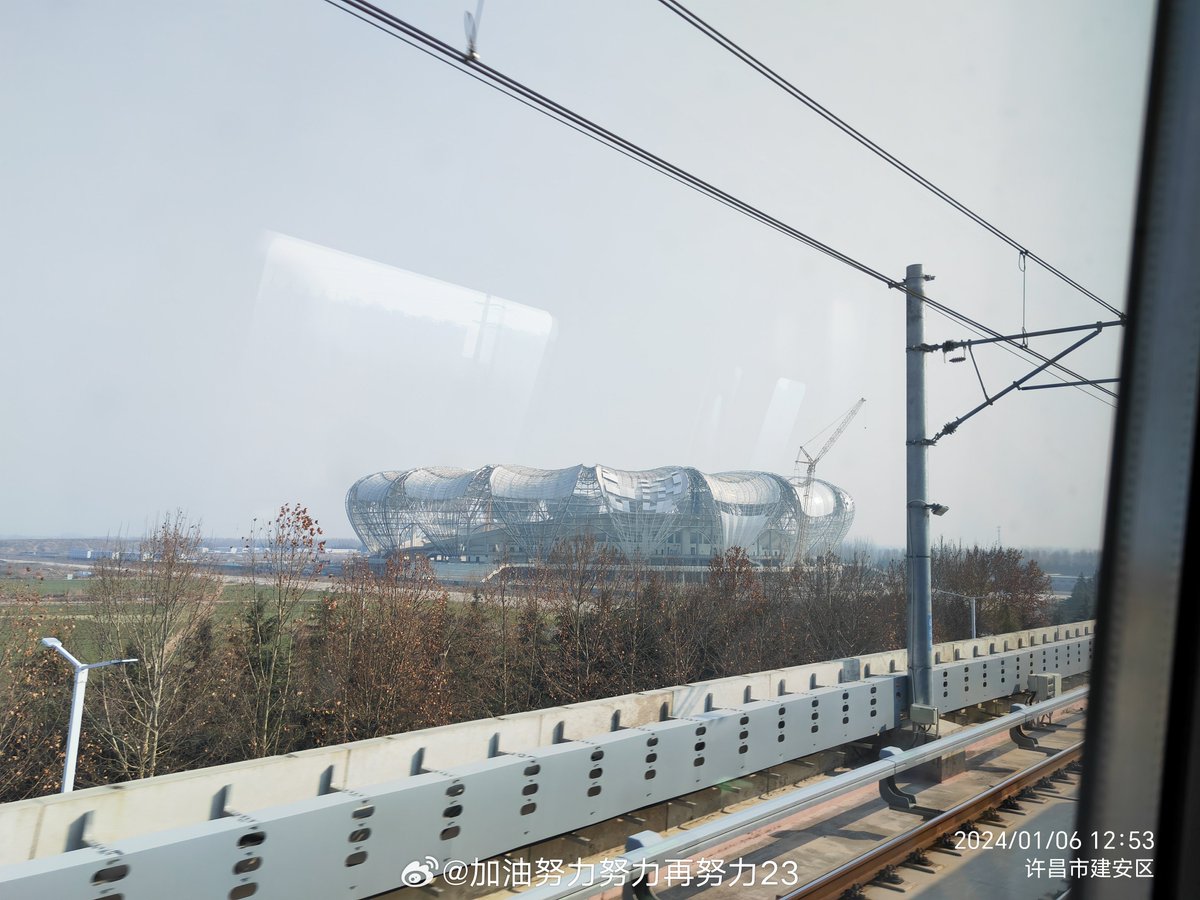
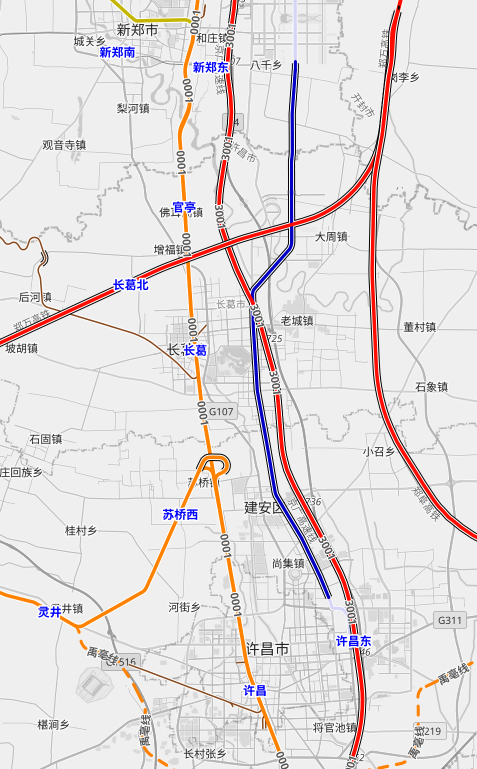
Last month, Zhengzhou Metro opened the "Zhengxu Line" a 67km long "metro line" that connects Zhengzhou and Xuchang, a city over 80km away from Zhengzhou. (long navy blue line heading south) A little🧵on this bizarre line. Map by 地球铁EarthMetro.
The mostly elevated line costs 70 million INT$/km to build and designed for 6 car type B trains (but 4 car trains are used for now) running up to 120 kph. Passing loops for express services are provided a select stations.
I always found the Zhengxu Line (Blue) stupid being that you could in theory better serve the the Zhengzhou-Xuchang corridor with local trains on the Jingguang Railway (orange). Alas I could imagine the Jingguang Line to be too congested with intercity and freight traffic
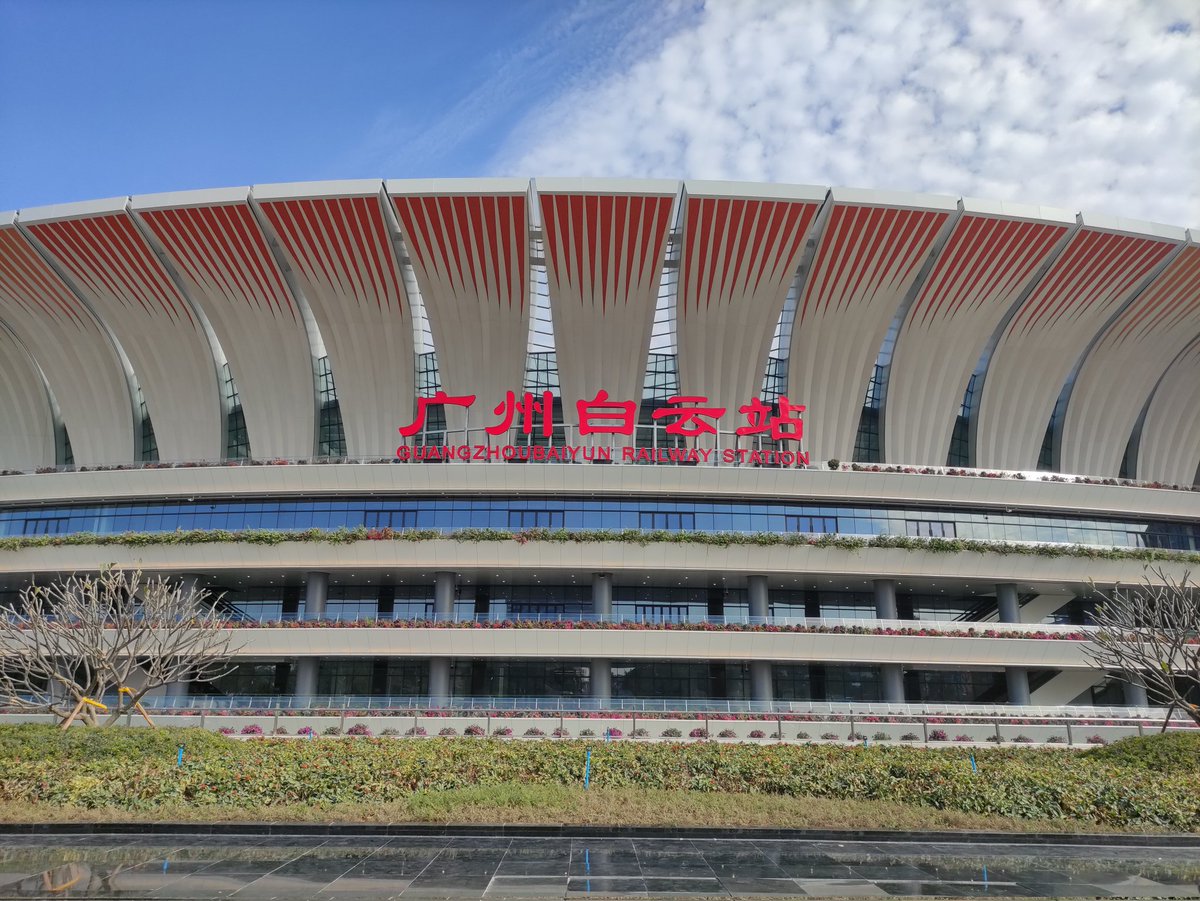
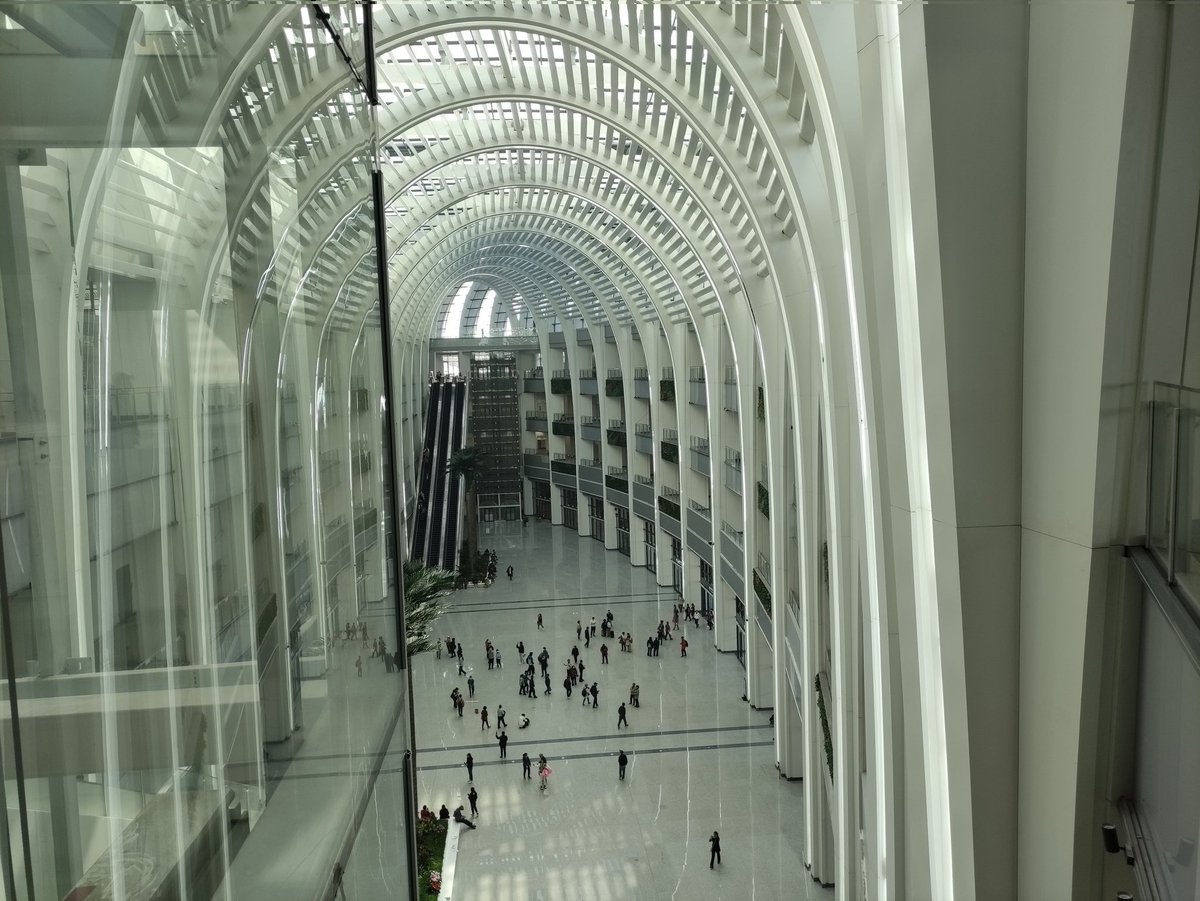
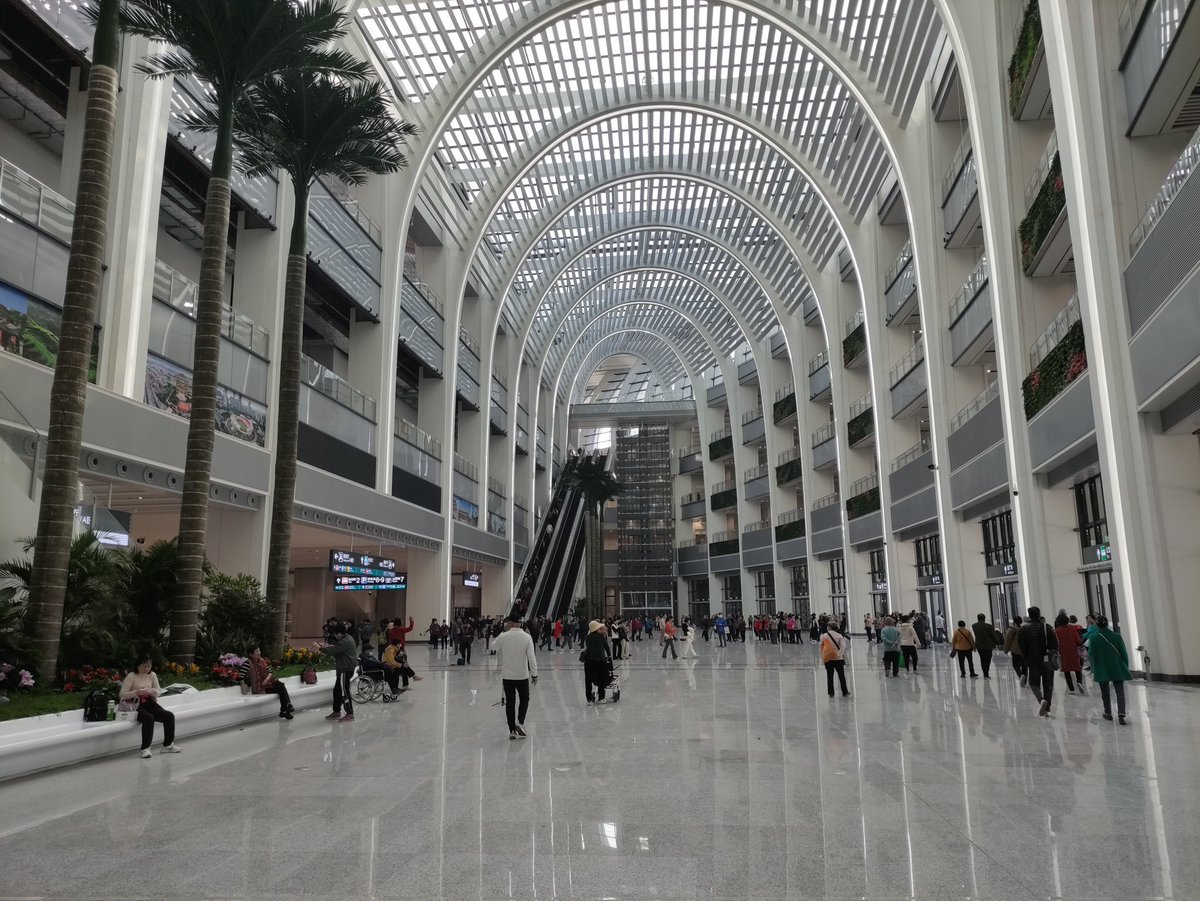
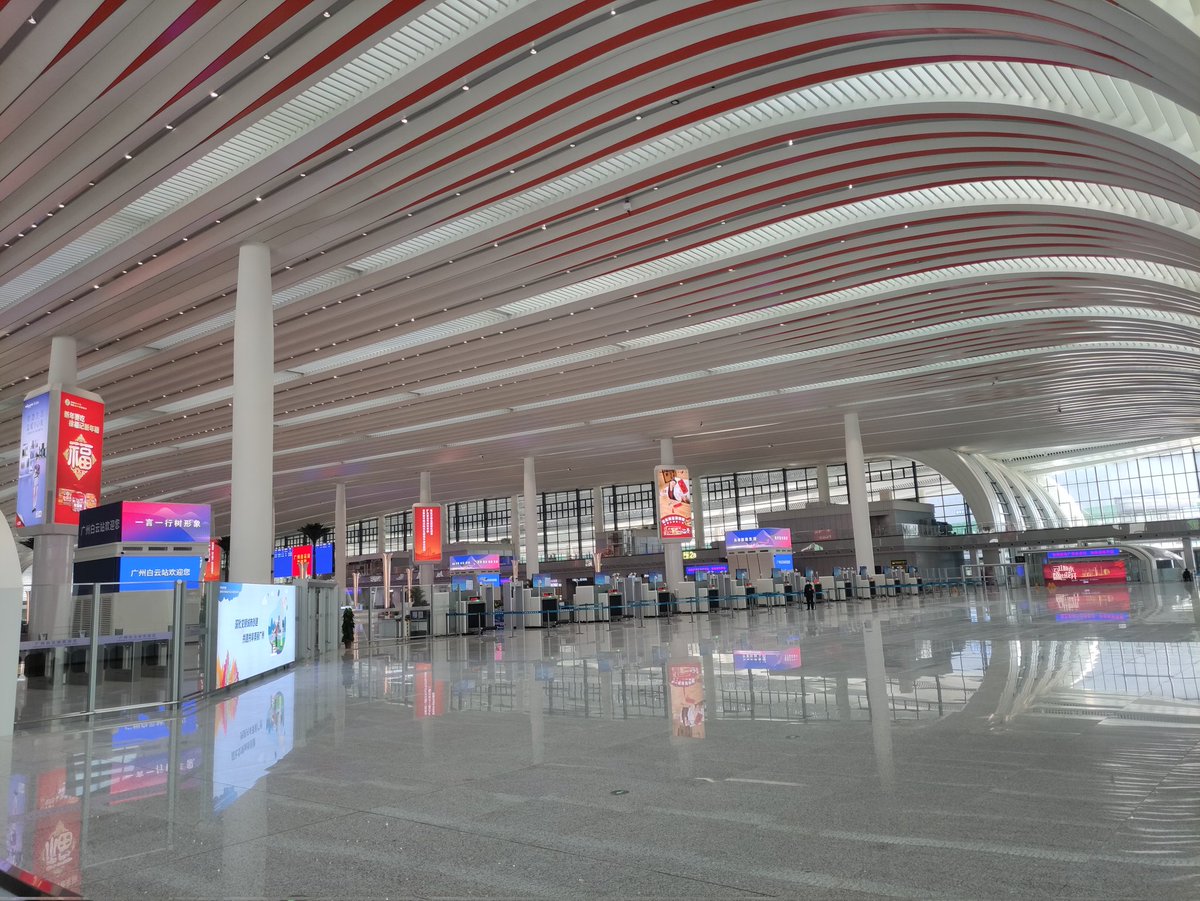
Today I went to Guangzhou's newest major railway station Guangzhou Baiyun. An absolute UNIT of a station, a cathedral to train travel. The station opened yesterday but I had family commitments that day. A 🧵 on my experiences going 24 hours after opening.
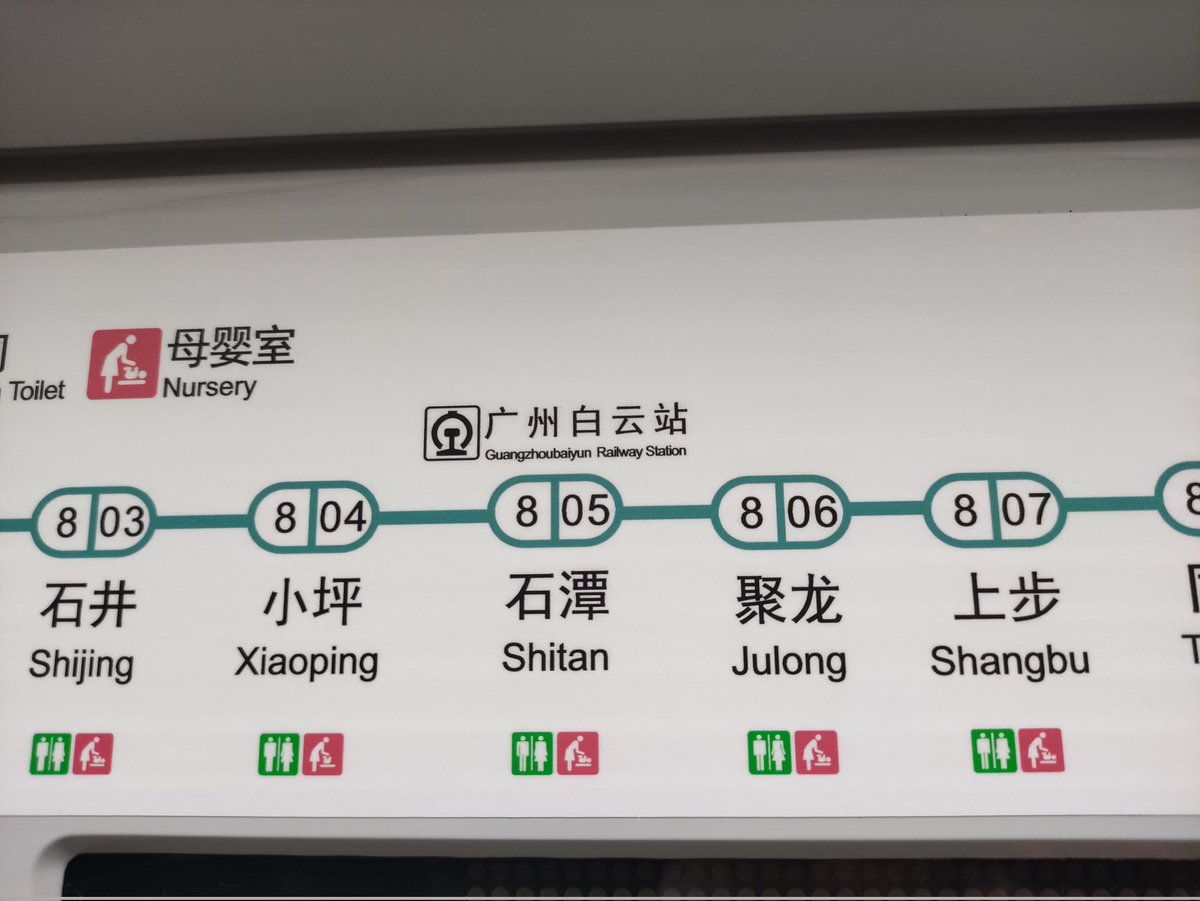
Starting off is the metro journey there so far only Line 8 (kinda) connects to the station. But Lines 12 and 24 as well as Express Metro 22 are under construction and will directly connect to the station.
When you arrive at Shitan station, there are some pretty clear signs pointing you to GZ Baiyun Station. Looking at the lack of luggage it seems a lot of people are still coming to look at the station, not take trains out of province.