
Sorry for not making you my centerfold.
(...and even more sorry for the devastation I'm about to unleash).
Join me in a deep-dive of Coney Island, an intricate exploration of the end of love that spans the euphoria, grief, and regret of a crumbling long-term relationship.
A 🧵:
(...and even more sorry for the devastation I'm about to unleash).
Join me in a deep-dive of Coney Island, an intricate exploration of the end of love that spans the euphoria, grief, and regret of a crumbling long-term relationship.
A 🧵:

1) Let's start with a history lesson on the title. Coney Island is a neighborhood in Brooklyn which is particularly famous for its beaches and sea-side amusement parks. Such is its strong grip on American culture that it was colloquially known as "The Playground of the World."

2) Coney Island has a rich history, from its establishment as a set of seaside resorts in the 1870s to the opening of some of the world's most famous amusement parks in the 1890s. These parks continued to evolve rapidly in the 1900s, adopting new attractions at a whirlwind pace.
3) Because of its massive popularity and constant change, Coney Island was widely considered to be the epitome of nostalgia. Nowhere else could quite capture the careless freedom, innocence, and excitement of childhood--but nothing was ever quite the same as what you remembered.
4) But Coney Island has also had massive ups and downs in popularity. Over the years, it has been ravaged by fires, economic recessions, and total disrepair. But somehow, Coney Island always rises from the ashes, taking its place once again as THE icon of American entertainment.
5) In many ways, the history of Coney Island mirrors the ups and downs of an actual amusement park ride--a dizzying back-and-forth between the highest of highs and lowest of lows, between excitement and fear. So why did Taylor choose this location--how could this apply to love?
6) By figuratively setting the song in Coney Island, Taylor is conveying the core instability of the relationship. Their love WAS a rollercoaster, oscillating wildly between intense love and intense conflict, falling into decay and rising again, fueled by nostalgia and passion.
7) Haven't we all experienced a love that felt like a rollercoaster? Isn't there something that excites us about a relationship that leaves us a little dizzy, gripping the handlebars for dear life and never quite steady on our feet? A love built on a cycle of loss and rebirth?
8) Don't we all have someone who reaches the core of our being this way, activating the silliness and freedom of our childhood selves while also knowing just how to push the buttons of our deepest, oldest triggers? Someone who becomes a touchstone of our personality and memory?
9) Importantly, a love like this does not have to be romantic. This kind of cyclic unpredictability can be applied just as easily to any other relationship that becomes integral to our human experience--a long-term friend, a sibling, or a lover.
With this in mind, let's begin.
With this in mind, let's begin.
10) (Side Note: I am going to use "he/him" pronouns for simplicity to describe the muse of this song, motivated by the duet format--but as discussed previously it could easily apply to any sort of relationship)!
11) "Break my soul in two looking for you, but you're right here. If I can't relate to you anymore then who am I related to?" Here, she sets up the deep intimacy of the relationship. This person is so interwoven into her life that he is part of her soul--maybe even her soulmate.
12) But their connection has been disrupted somehow. He stands "right here" in front of her, but something just isn't the same anymore. She "breaks her soul in two" looking for an answer, looking for the person that once understood her perfectly--but that version of him is gone.
13) Just like the childhoods we can never get back, or the thrill of a rollercoaster ride we endlessly try to recreate, Taylor vividly recalls the euphoria of their good days--but she can't quite grasp them. A ghost of her soulmate stands before her, but he is just that--a ghost.
14) But if he is no longer her perfect "other half," then who ever could be? If she can't relate to him anymore, then who could she possibly relate to? Who else could ever "see" her the way he once did? And even more importantly--who is SHE without the cornerstone of her life?
15) As she contemplates this loss, Taylor grapples with shock and guilt. "If this is the long haul, how'd we get here so soon?" How could a love meant to last forever ("long haul") end so suddenly--and why did it become such a heavy burden, so fast? Was all of this her fault?
16) Did she love him too much too soon? Did she "close her fist round something delicate," shattering their love? Or worse still, did she shatter HIM? Did she ruin the version of him that fit her perfectly by holding on too tight? Did he, too, lose his sense of self in this love?
17) This lyric also calls back to "Delicate," a thematically linked song which also invokes the same fear of loss--the anxiety that putting pressure on a relationship can ruin what might have been a lifelong love ("Is it too soon to do this yet? Cause I know that it's delicate.")
18) Now she sits in the ashes of their relationship, yearning for the only person who could possibly comfort her--the version of him that no longer exists. "I'm sitting on a bench in Coney Island wondering, 'Where did my baby go?' The fast times, the bright lights, the merry-go."
19) She misses the euphoric "ups" of their relationship, the excitement of the "fast times," the almost dizzying exuberance of the good days they once had ("the bright lights, the merry-go"). The specific mention of the "merry-go" is an important lyrical and musical motif here.
20) Again, it invokes the idea of a "cyclic" relationship that revolved repetitively through the same themes of interpersonal connection and dysfunction. As you may have noticed, even the melodies of this song are cyclic, endlessly circling around the same few notes or phrases.
21) This musical motif begins in the verses ("looking for you but you're right here," "anymore then who am I related to") and returns in the chorus and bridge ("fast times, the bright lights, the merry-go," "were you standing in the hallway with a big cake, happy birthday", etc).
22) The relationship was doomed by its own circular return towards dysfunction, and her memories of it are similarly circular. The song literally *feels* like a cycle of rumination. Taylor is unable to tear her thoughts away from the same memories, replaying over and over again.
23) In this rumination, Taylor apologizes for not "making you my centerfold." A centerfold is the central spread of a magazine--figuratively, the "main feature" of someone's life. She blames herself for never making him that centerfold, for never choosing to revolve around him.
24) Even as they circled endlessly through the ups and downs of this relationship, the one thing they could never quite circle around was each other. Think about a how a merry-go-round works--both partners may have been along for the ride, but neither truly "centered" each other.
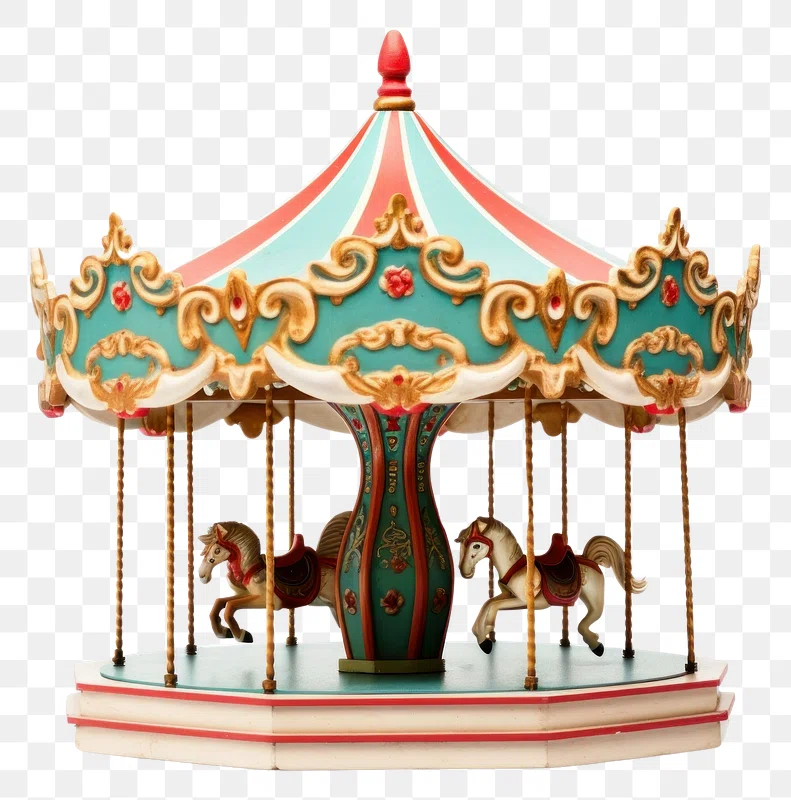
25) I do wonder if this "sorry" represented a true regret, or just an apology. Does she really wish that she had made him the center of her life? Does she really regret that she didn't abandon herself in service of this relationship? Or is she merely responding to his accusation?
26) As she ruminates, she doubles down on the cyclic dysfunction of this relationship: "Over and over, lost again with no surprises, disappointments close your eyes, and it gets colder and colder, when the sun goes down." They frequently "lost their way" in their time together.
27) Their periods of conflict--the times where they "lost" that interpersonal connection--were never surprises to her, because they were so familiar. They both learned to "close their eyes" to disappointment, allowing their memories of mutual love to bring them back together.
28) But each circle round the merry-go-round of their relationship--each iteration of conflict--brought them closer to nightfall: the end that she now faces. Just like every ride at the amusement park brings you closer to the very last, and the certainty that you have to go home.
29) She now sits in that nightfall, observing the abandoned Coney Island that once represented the pinnacle of excitement that she thought she could live in forever. Their connection grew colder the closer they got to the end of their relationship, and now, so do her memories.
30) The longer she sits and dwells on their relationship--the more time that passes since their downfall--the colder she feels about him. The warmth of her love has been cooled now that the immediacy of their connection is gone. The thrill of their rollercoaster ride is fading.
31) As Matt's vocals come in, we move to the alternate perspective of Taylor's muse, who is experiencing a different flavor of loss and regret: "The question pounds my head, what's a lifetime of achievement, if I pushed you to the edge, but you were too polite to leave me?"
32) This line implies that he, too, failed to make Taylor his centerfold--instead, prioritizing a "lifetime of achievement." But unlike Taylor, whose attitude is ambiguous, he seems more overtly regretful, even dismissing his own lifetime of achievement in the face of this loss.
33) He "pushed her to the edge" of leaving multiple times, but she refused to leave. Whenever I hear this line, I picture that same merry-go-round--of Taylor pushed to the edge of the spinning ride, clinging on desperately, refusing to let go of the love she still believed in.
34) "Pushed to the edge" may also figuratively mean that he sidelined their relationship, making her feel that she was only secondary to his own career. Perhaps, like in Tolerate It, he left her to "draw hearts in the bylines" of his life, far from his own personal centerfold.
35) Interestingly, he perceives that she was "too polite" to leave him, a contrast to the guilt and deeply emotional memories she shares in her verses. I wonder if he incited the definitive end to their relationship ("I broke my own heart cause you were too polite to do it").
36) Perhaps this was one of the core problems in their relationship--perhaps he didn't understand the depth of her feelings towards him, misinterpreting her reluctance to end the waning relationship as mere "politeness" or obligation instead of true regret and loss.
37) They then sing the next section of the verse together: "Do you miss the rogue who coaxed you into paradise and left you there? Will you forgive my soul when you're too wise to trust me and too old to care?" Here, they both contemplate how the other sees them in the aftermath.
38) Do they miss the magnetic version of each other ("the rogues") that drew them in to the chaotic turbulence of their relationship? Do they miss the "paradise" of the pinnacle moments of their love, even after they were followed by gut-wrenching drops into loss and abandonment?
39) I am intrigued by the word "rogue" (implying dishonesty or destruction), which is thematically similar to a "renegade." The song Renegade also deals in the whiplash of emotional inconsistency: with a rogue who squeezes your hand as you are about to leave, over and over again.
40) They also wonder how they will see each other once the dust has settled--to borrow from Happiness, "past the blood and bruise, past the curses and cries." Once the haze of love has cleared their vision and they are too far removed to be sucked into the turbulence of the past.
41) Will they still have a nostalgic remembrance for the depth of their connection? "Cause we were like the mall before the internet, it was the one place to be. The mischief, the gift-wrapped suburban dreams." The theme of excitement and amusement returns with the mall metaphor.
42) They were like the mall before the internet--the ultimate source of excitement, the home of every material luxury ("gift-wrapped suburban dreams") you once coveted as a teenager. As bad as the relationship may have become, the good times were wonderfully, luxuriously good.
43) Their love was also almost childishly intimate. It was as innocently fun as youthful "mischief," as jubilant as "making forts under covers." This kind of love is built on sacred trust, a willingness to shed your outer layers of protective adulthood to truly "see" each other.
44) But their naive enthusiasm wasn't enough to save the relationship--as they lament together, "sorry for not winning you an arcade ring." There is shared grief here--that life could not be as simple as winning a ring at an arcade, that time would taint the purity of their love.
45) I also wonder whether the "gift-wrapped suburban dreams" also represented their previous shared goal of marriage and children--the suburban dream of a family life that they once thought they could aspire together. They ultimately couldn't win each other that particular dream.
46) Their regrets begin to painfully intertwine in the bridge, centered around their mutual fear that they didn't show up for one another when they needed it most: "Were you waiting at our old spot in the tree line, by the gold clock? Did I leave you hanging every single day?"
47) The "gold clock" may have some very specific meaning to their relationship, but I think Taylor is intentionally referencing her recurring idea of true love as golden: from the "single thread of gold that tied me to you" to the "golden notebook" to the gold rays of Daylight.
48) Was he waiting by the gold clock? Was he hanging on to his memories of the time that they shared true love? Could she have met him there if she just believed in their love a little more--could they have reignited the old, beautiful, uncomplicated flame of their relationship?
49) He too, fears that he "left her hanging," that he missed an opportunity to reciprocate her affection, turning the blue skies of their love a dark, angry gray: "Were you standing in the hallway with a big cake? Happy birthday? Did I paint your bluest skies the darkest gray?"
50) And now they both stand on opposite ends of Coney Island, a "universe away" from those opportunities to make everything right again, but still secretly nursing a very deep connection to each other, no matter how fragmented. They both ruminate in their own guilt and regret.
51) And when I got into the accident, the sight that flashed before me was your face." This line invokes the theory of the most meaningful loves and times of your life "flashing before your eyes" in a near-death experience--they are still of huge importance in each other's lives.
52) But despite that importance, they were never able to show up for each other when it actually mattered--they never made each other that centerfold. "But when I walked up to the podium I think that I forgot to say your name." They didn't know what they had when they had it.
53) And as a result, their love flamed out. They missed that connection one too many times, and they spun off that merry-go-round forever. Now they both sit by the abandoned Coney Island of their love at nightfall, contemplating what might have been, as time inexorably ticks on.
54) And all they have left is their memories--that same cycle of rumination on the glory of what they had, the pain of what they lost, and the regrets about every way that they failed to save the relationship. They replay the track over and over again, but the ride always ends.
55) The last chorus reflects this rumination beautifully, cycling around different components of their rollercoaster love, from grief ("when the sun goes down") to longing ("the sight that flashed before me was your face") to regret ("I think that I forgot to say your name.")
56) Because isn't this how all long-term relationships end? Not in a flash of anger, but instead, in a slow circling of the drain of recurrent arguments and conflicts and ultimate incompatibility? In both partners circling each other, desperately clinging on to shared memories?
57) And after they finally both spin off the merry-go--after the ride has finally ended--don't they still continue to revolve around the merry-go of their own minds? Until they remember who they were before they found each other--until they are ready to find a new axis of orbit?
58) In this way, Coney Island fits perfectly into the larger theme of endings that Evermore explores. We often discuss that Evermore provides us with two possible choices when presented with loss: freezing (RWYLM) or letting go (It's Time To Go). But it's a lot more complicated.
59) Most loves do not end just once--they end a "million little times." And the aftermath of those loves is just as bumpy, a furious rollercoaster between many different conflicting emotions, from anger (Closure) to grief (Champagne Problems) to longing (TTDS/Dorothea).
60) Coney Island presents us with this much more messy truth of how endings really work, especially when it comes to relationships that have impacted you so powerfully that they have become part of the very fiber of your being. Endings are as tumultuous and ever-changing as love.
61) Real love will always be part of who we are, because of the indelible impact love has on our lives. Real love never has a firm ending--there will always be a ghostly shadow of Coney Island preserved in our memory. But how long we sit there after the sun goes down is up to us.
THANK YOU FOR READING, please see my megathread for more:
https://twitter.com/tweetsricochet/status/1638559366159769602?t=Mv4-wmezt_jEWoF1yjVcqQ&s=19
• • •
Missing some Tweet in this thread? You can try to
force a refresh






