Claims that the Cass Review discarded 101 out of 103 studies of pediatric gender-transition treatment are:
🚨FALSE🚨
Let's examine how Hilary Cass and her team *did* factor in the systematic literature reviews about puberty blockers and cross-sex hormones:
Check out the🧵⬇️
🚨FALSE🚨
Let's examine how Hilary Cass and her team *did* factor in the systematic literature reviews about puberty blockers and cross-sex hormones:
Check out the🧵⬇️

Many of you have seen the tweet threads I've posted since Friday night outlining how the investigators at the University of York conducted their two systematic literature reviews on pediatric gender-transition treatment. I link to those threads in the next two tweets.

One systematic literature review examined puberty-blockers for gender distressed kids. It examined 50 studies, and included in its synthesis one high-quality study and 25 moderate-quality studies.
It did not simply ignore the 24 low-quality studies.
It did not simply ignore the 24 low-quality studies.
https://x.com/benryanwriter/status/1779232332508971409
The other systematic lit review examined cross-sex hormone use for gender distress in minors. It examined 53 studies, and included in its synthesis one high-quality study and 33 moderate-quality studies. But it did no simply ignore the 19 low-quality ones.
https://x.com/benryanwriter/status/1779003988647494097
So what about the Cass Review? How did it make use of the 2 systematic lit reviews?
The claim that Cass simply discarded the 101 moderate/low-quality studies and only looked at the 2 high-quality studies is:
🚨FALSE🚨
She folded the analyses of the 103 studies into her report.
The claim that Cass simply discarded the 101 moderate/low-quality studies and only looked at the 2 high-quality studies is:
🚨FALSE🚨
She folded the analyses of the 103 studies into her report.
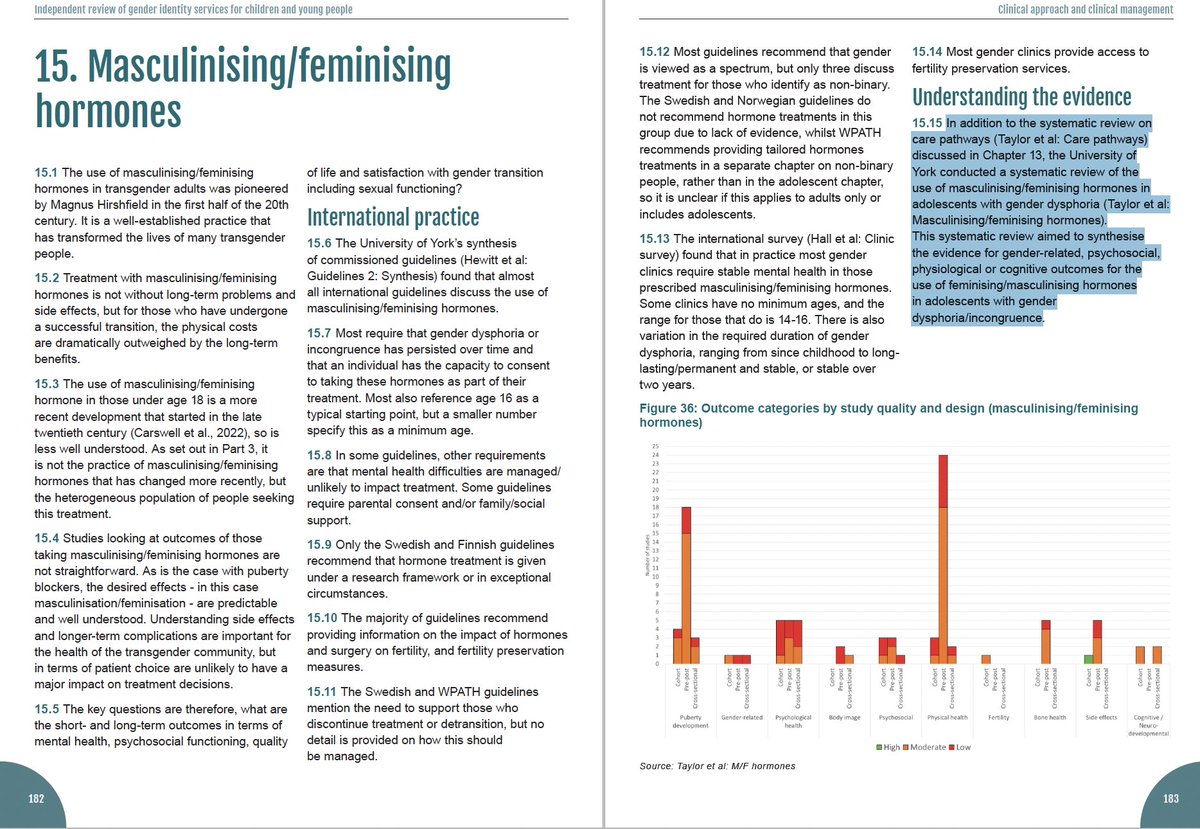
Let's zoom in to the 388-page Cass review. To see where she first folds in the findings of the systematic literature review of cross-sex hormones, go to page 183. Here is how she introduces that paper: cass.independent-review.uk/wp-content/upl…
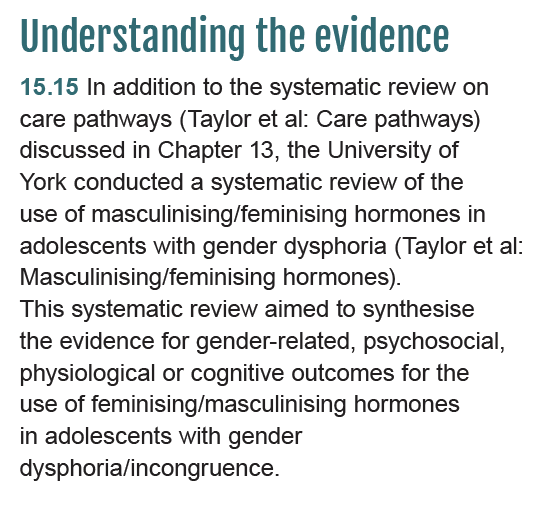
Cass includes in her report this chart from the lit-review paper on cross-sex hormones, which breaks down all the studies it analyzed and what outcomes they addressed. Cass is pointing out key areas where more research is needed, in particular about fertility outcomes.

On p. 184 of the Cass Review, she goes into considerable detail about the findings of the systematic literature review about cross-sex hormones.
She does not soley focus on the one high-quality study, although she does certainly highlight it.
She refers to all 53 studies.
She does not soley focus on the one high-quality study, although she does certainly highlight it.
She refers to all 53 studies.
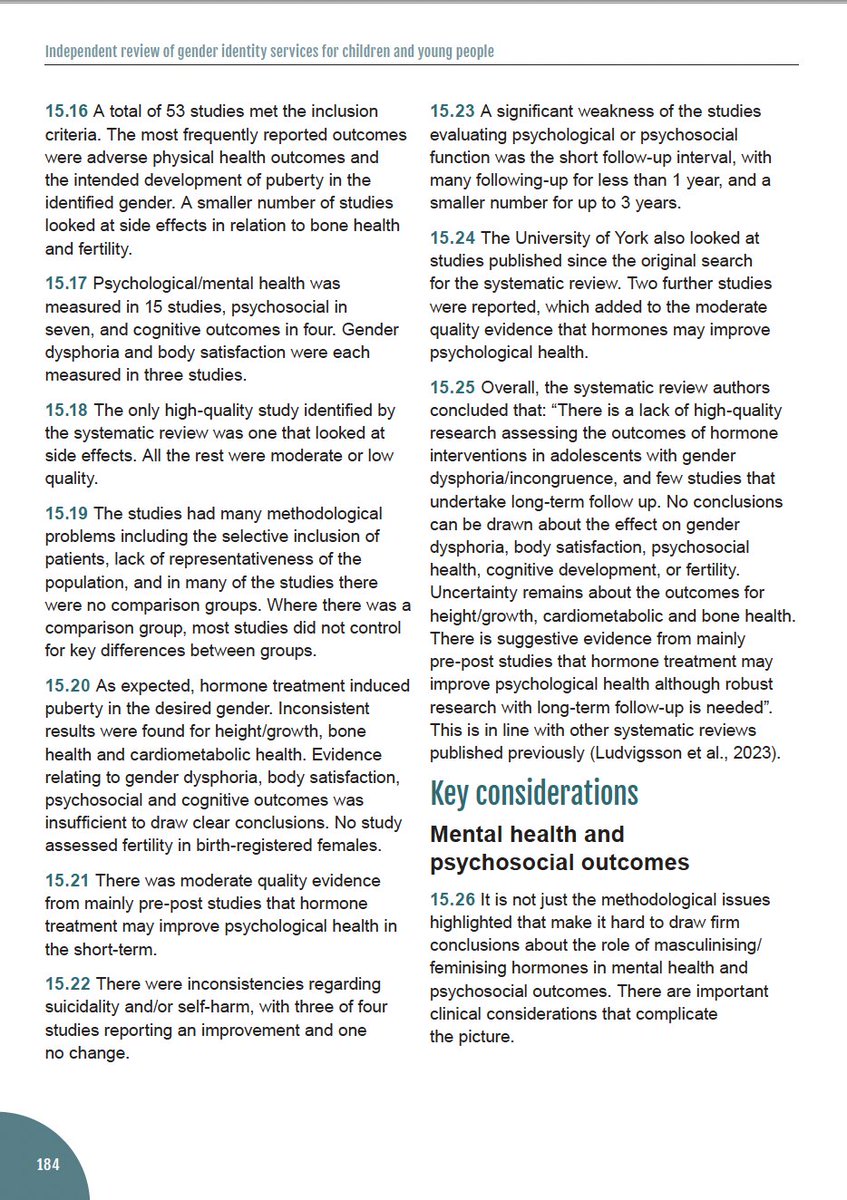
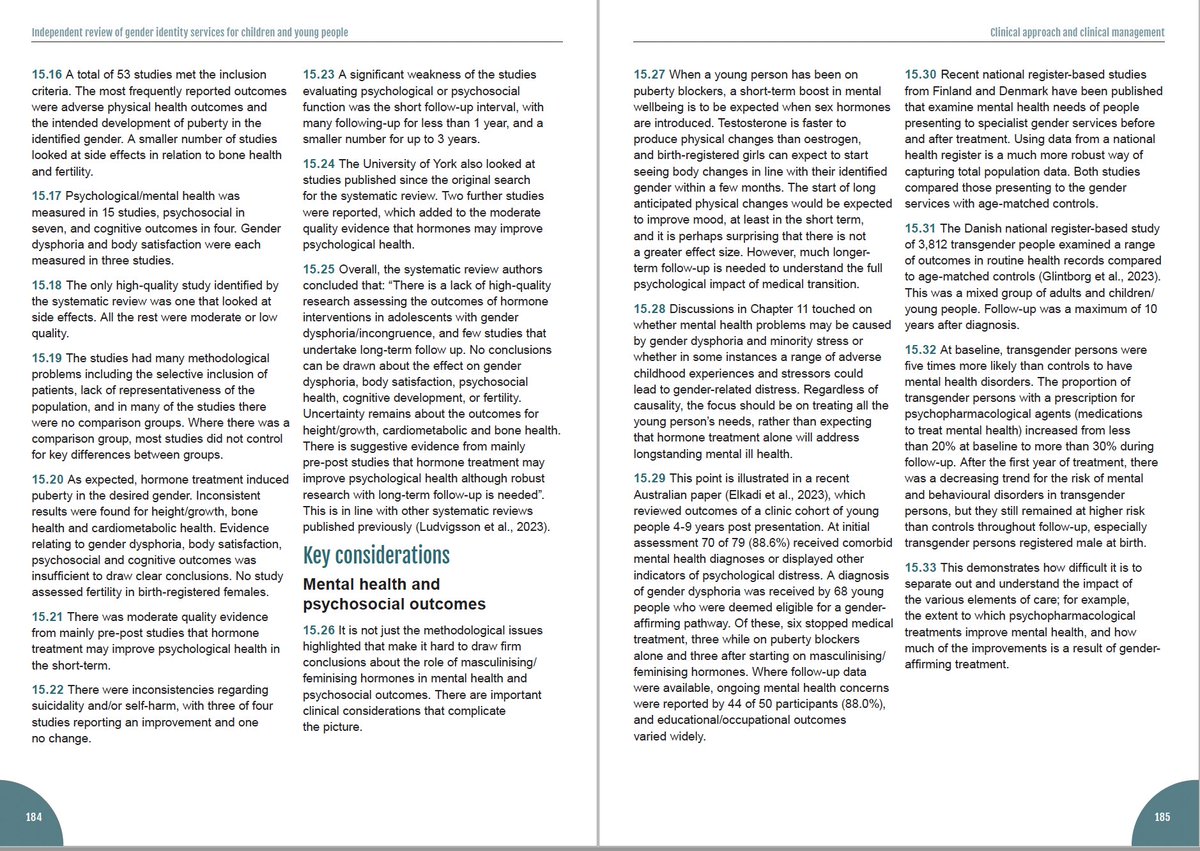
The Cass review discusses the findings of the systematic literature review on cross-sex hormones for minors amid discussions of lots of other individual papers about pediatric gender-transition treatment.
See these pages:
cass.independent-review.uk/wp-content/upl…
See these pages:
cass.independent-review.uk/wp-content/upl…
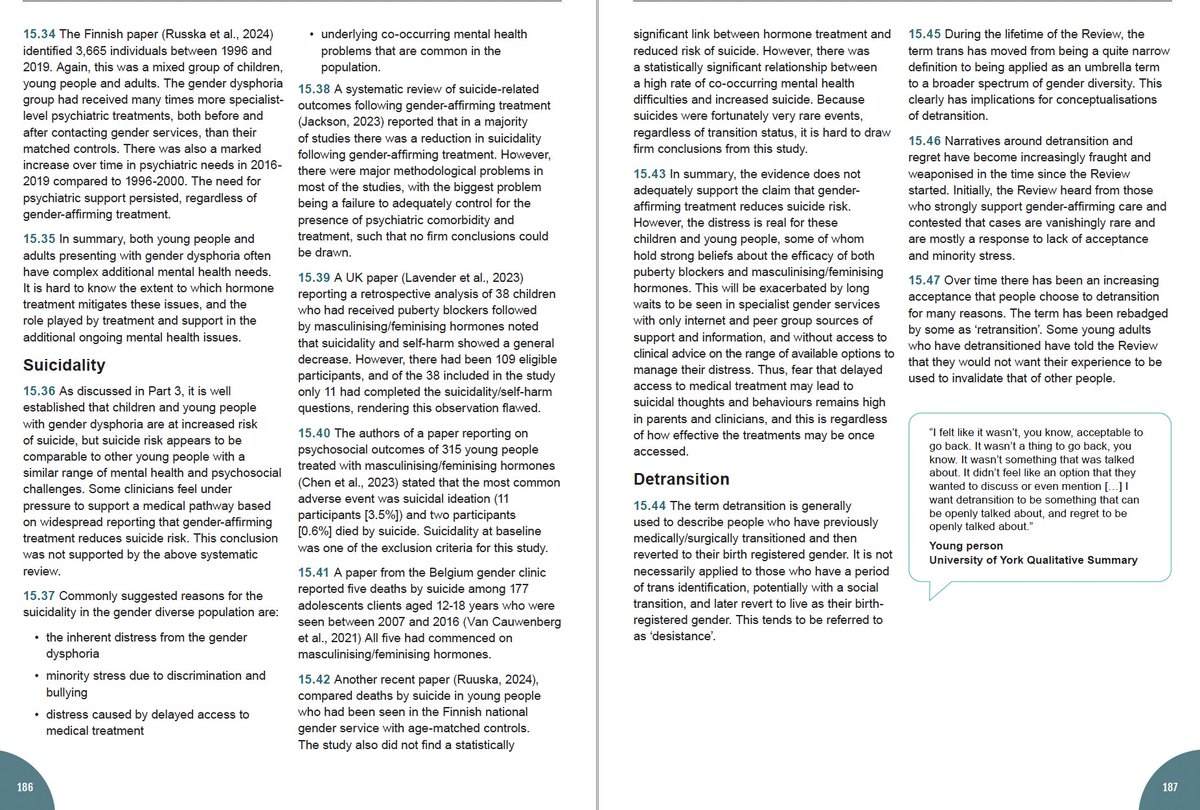
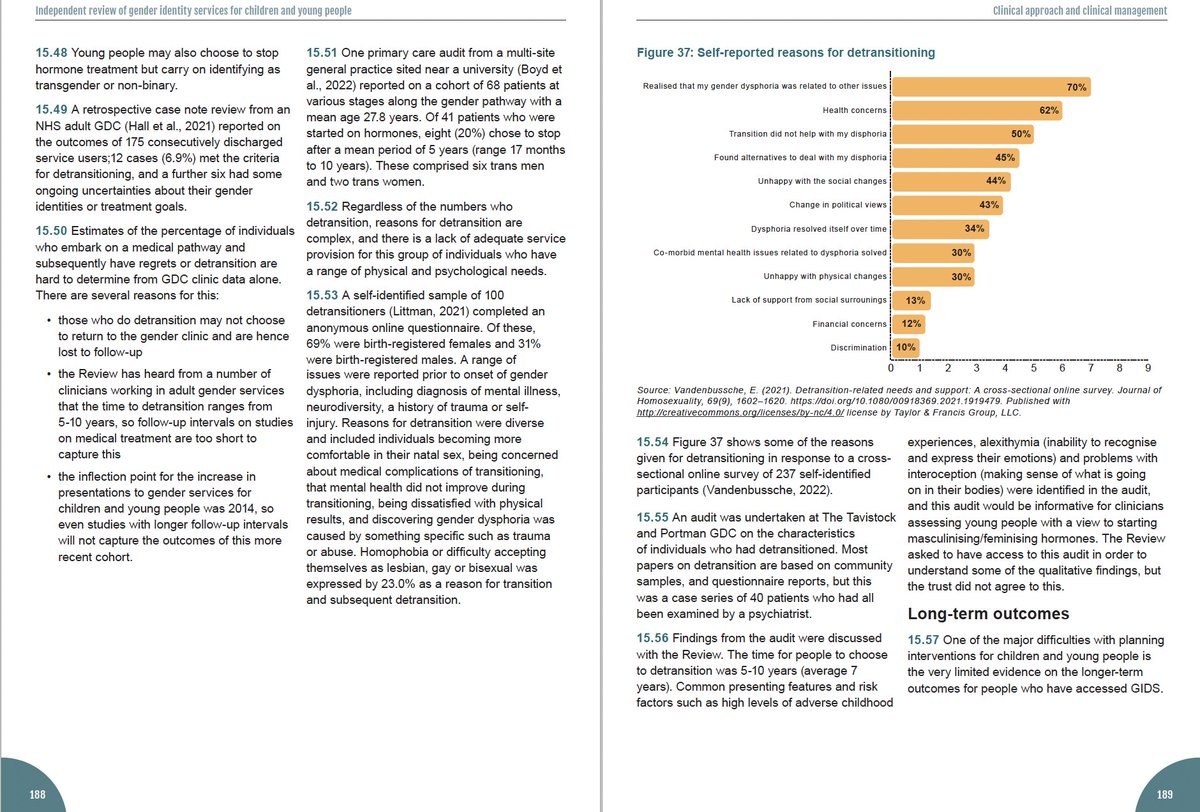
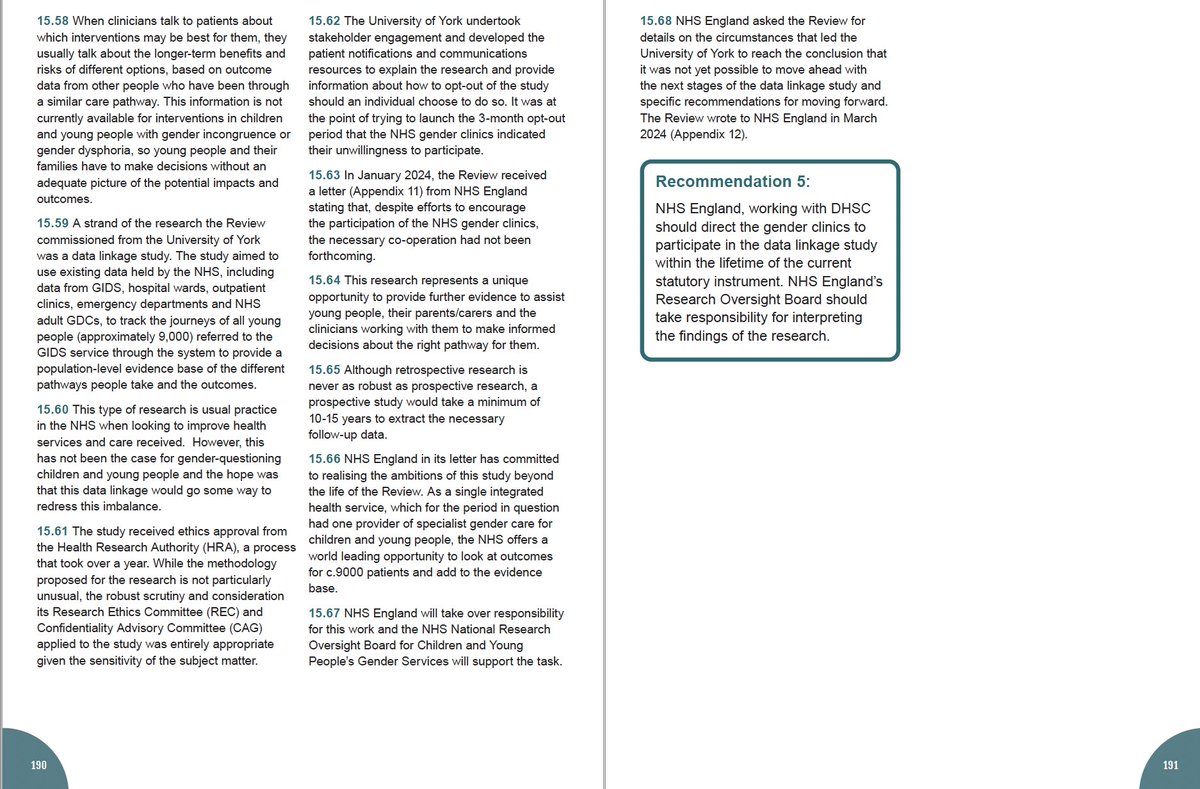
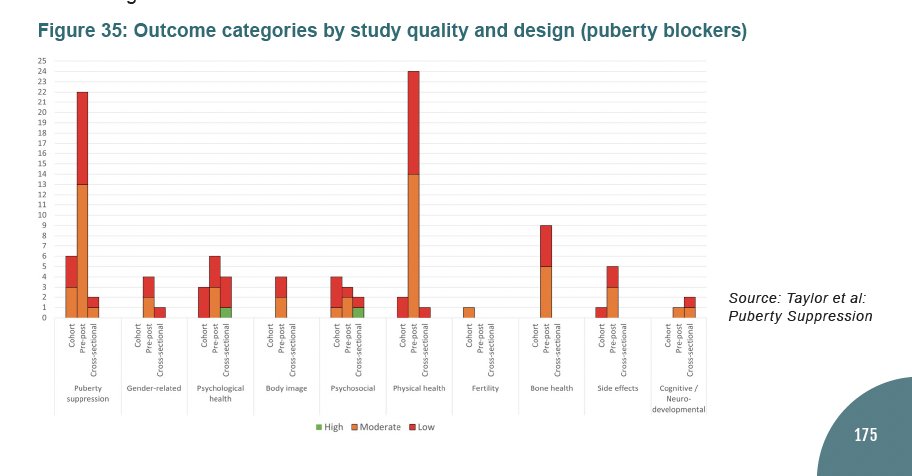
The Cass Review also folds in the findings from the systematic literature review about puberty blockers for gender distressed minors (p 175). This review examined 50 studies, including one high-quality and 25 moderate-quality studies.
cass.independent-review.uk/wp-content/upl…
cass.independent-review.uk/wp-content/upl…
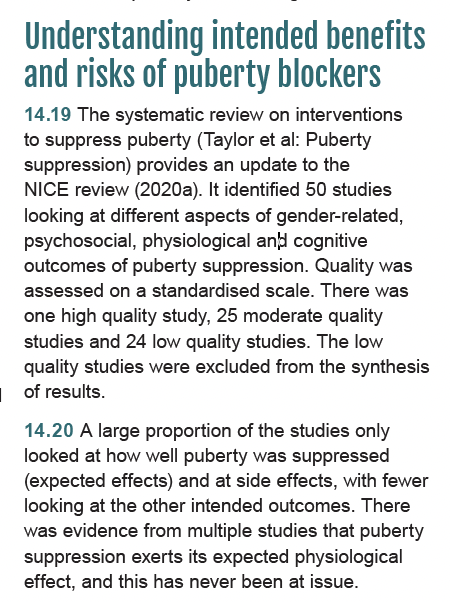
Cass includes this chart from the review paper on puberty blockers for gender-distressed kids that breaks down the outcomes examined by the 50 studies. It points to areas where much more research is needed, especially about fertility (p 175). cass.independent-review.uk/wp-content/upl…
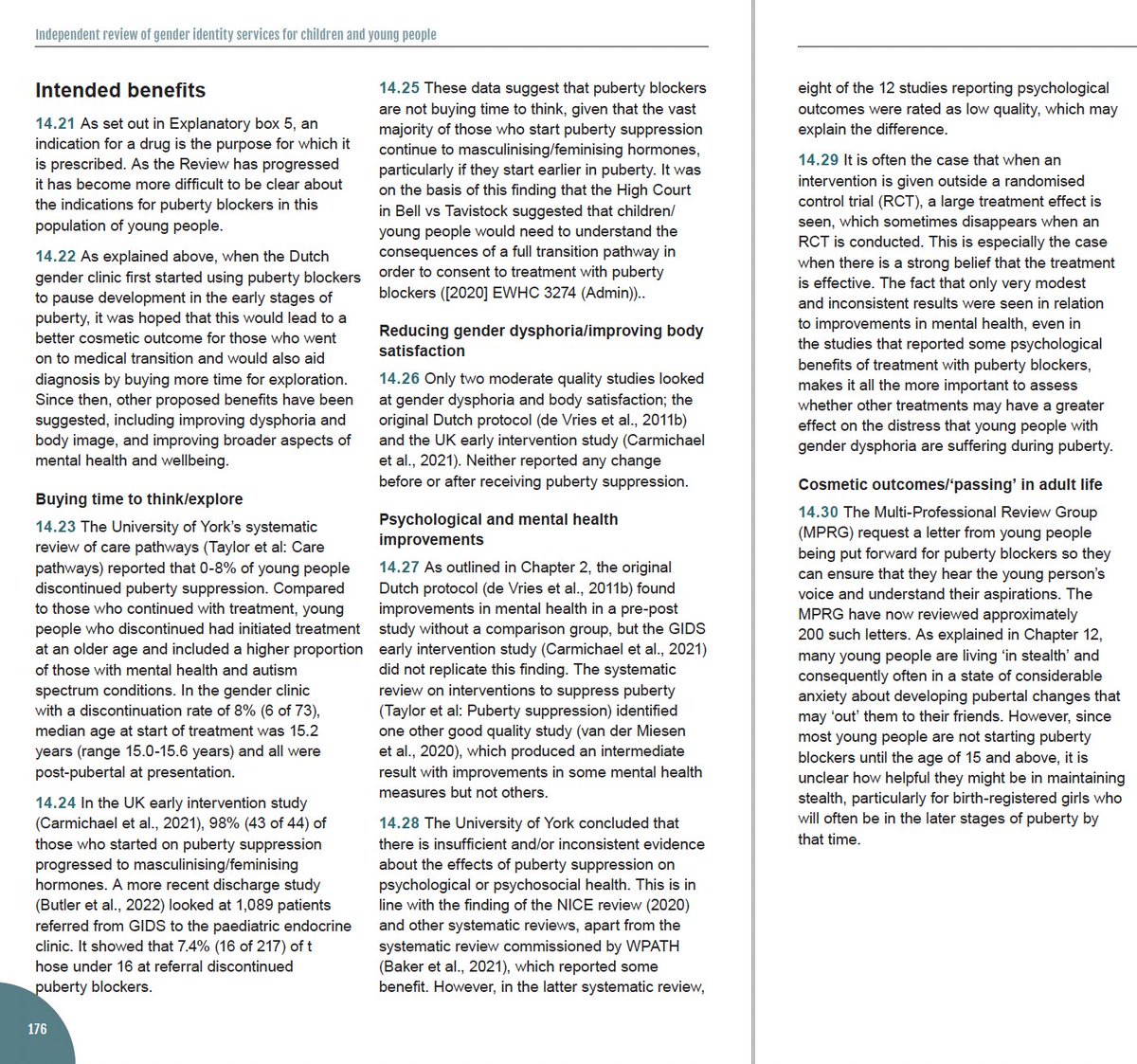
From page 176 to 177, Cass has lots to say about the specifics of the puberty blocker systematic literature review.
She does not restrict her discussion to the one high-quality study included in the review.
She does not restrict her discussion to the one high-quality study included in the review.
The Cass Review, which runs for 388 pages, includes 15 pages of footnotes of studies, guidelines, and other sources on which the report is based.
The report is not solely based on two studies.
Start at p 249: cass.independent-review.uk/wp-content/upl…
The report is not solely based on two studies.
Start at p 249: cass.independent-review.uk/wp-content/upl…

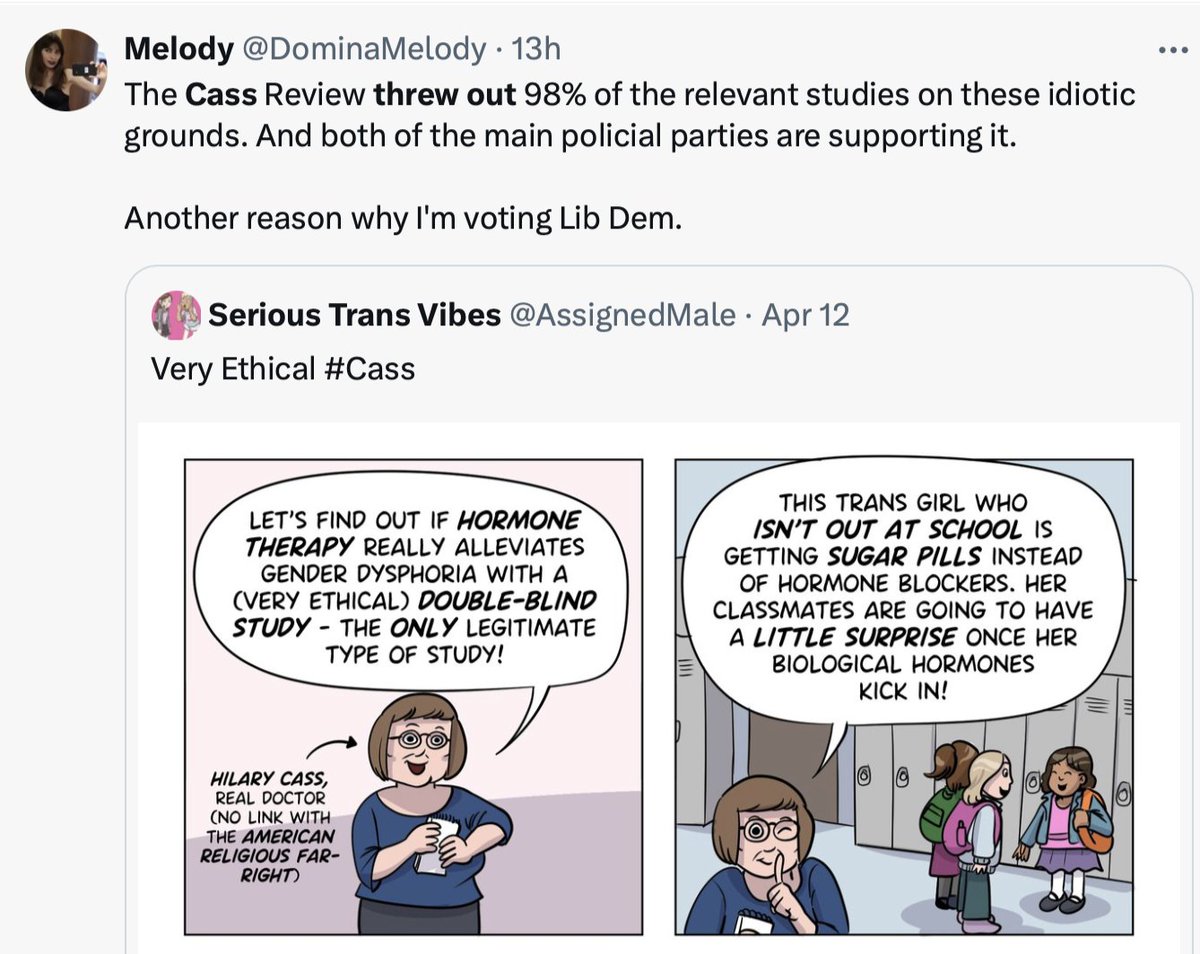
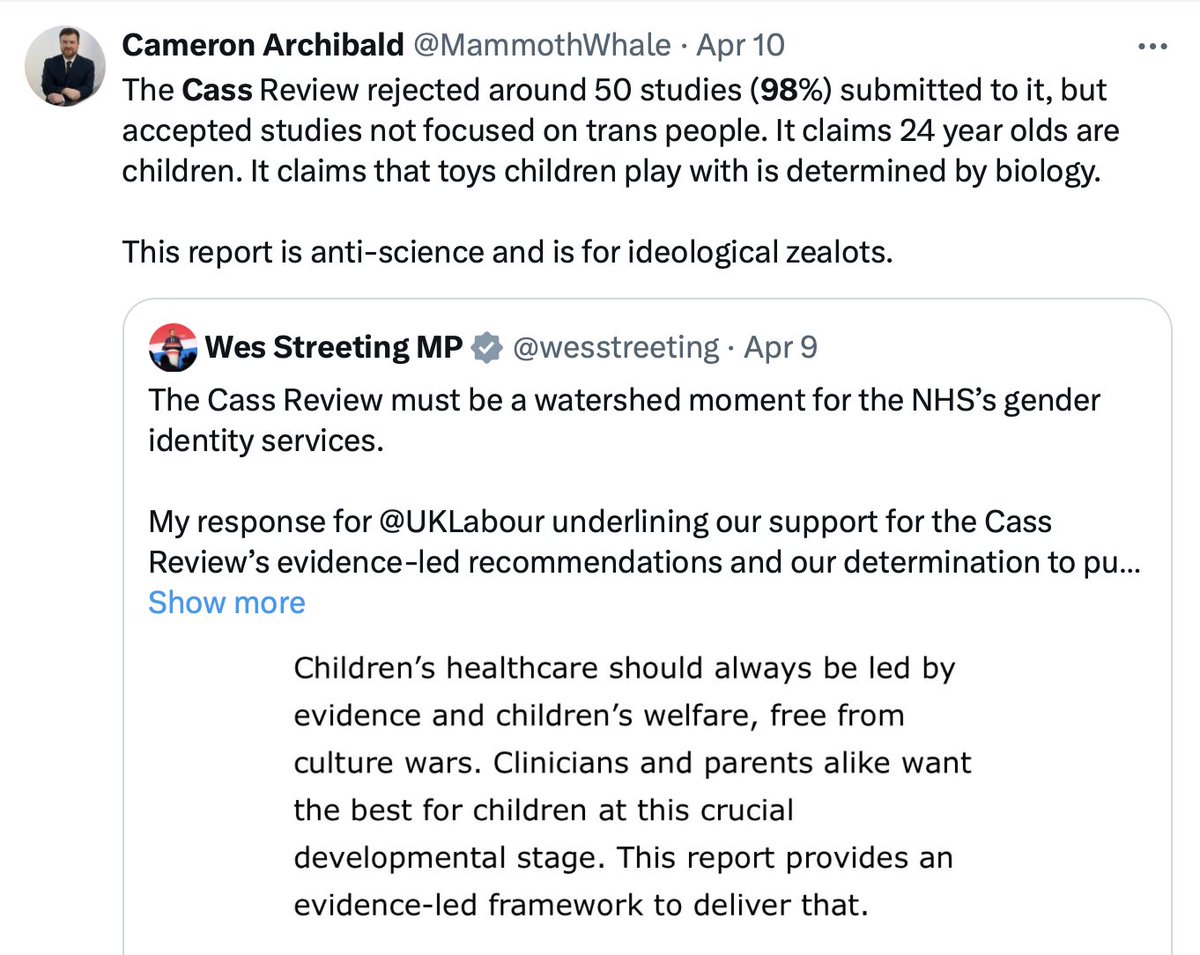
Among the X accounts to falsely claim that the Cass Review and 2 of the systematic lit reviews on which it was based simply discarded 101 of 103 studies on pediatric gender-transition treatment:
@DominaMelody, @Marcus_Rasaan, @MammothWhale, @OwenJHurcum.
(There are more...)
@DominaMelody, @Marcus_Rasaan, @MammothWhale, @OwenJHurcum.
(There are more...)

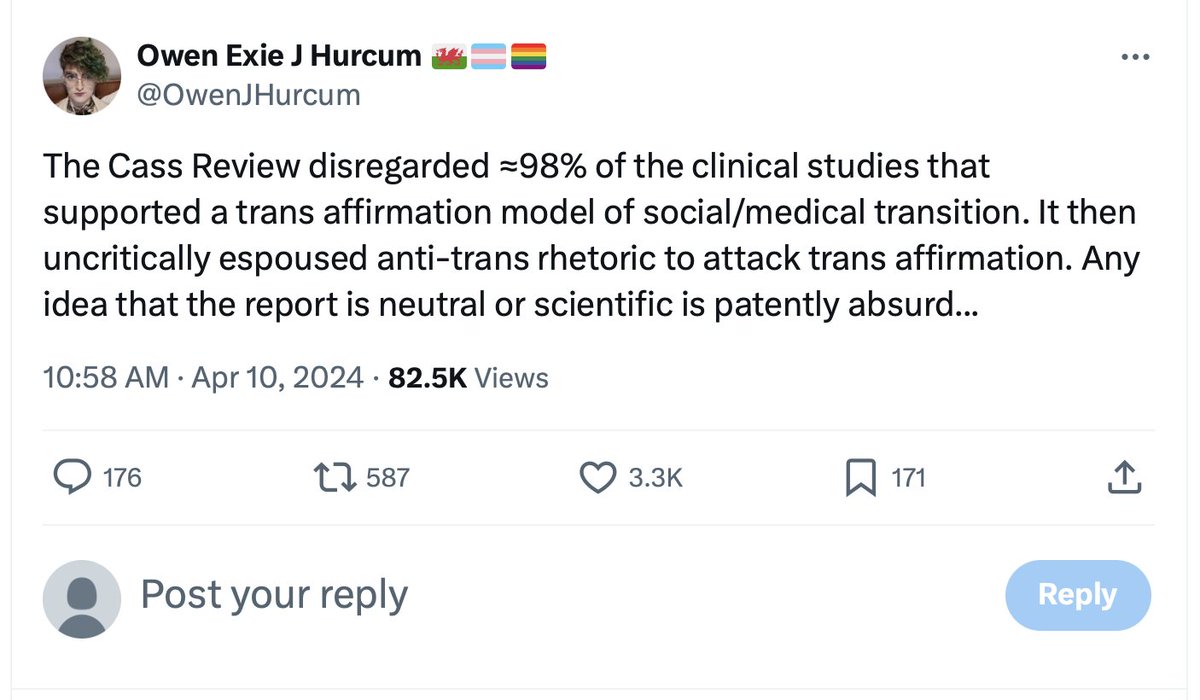
Among the X accounts to falsely claim that the Cass Review and 2 of the systematic lit reviews on which it was based simply discarded 101 of 103 studies on pediatric gender-transition treatment:
@JuliaSerano, @Chican3ry, @ErinInTheMorn and @Esqueer_
@JuliaSerano, @Chican3ry, @ErinInTheMorn and @Esqueer_
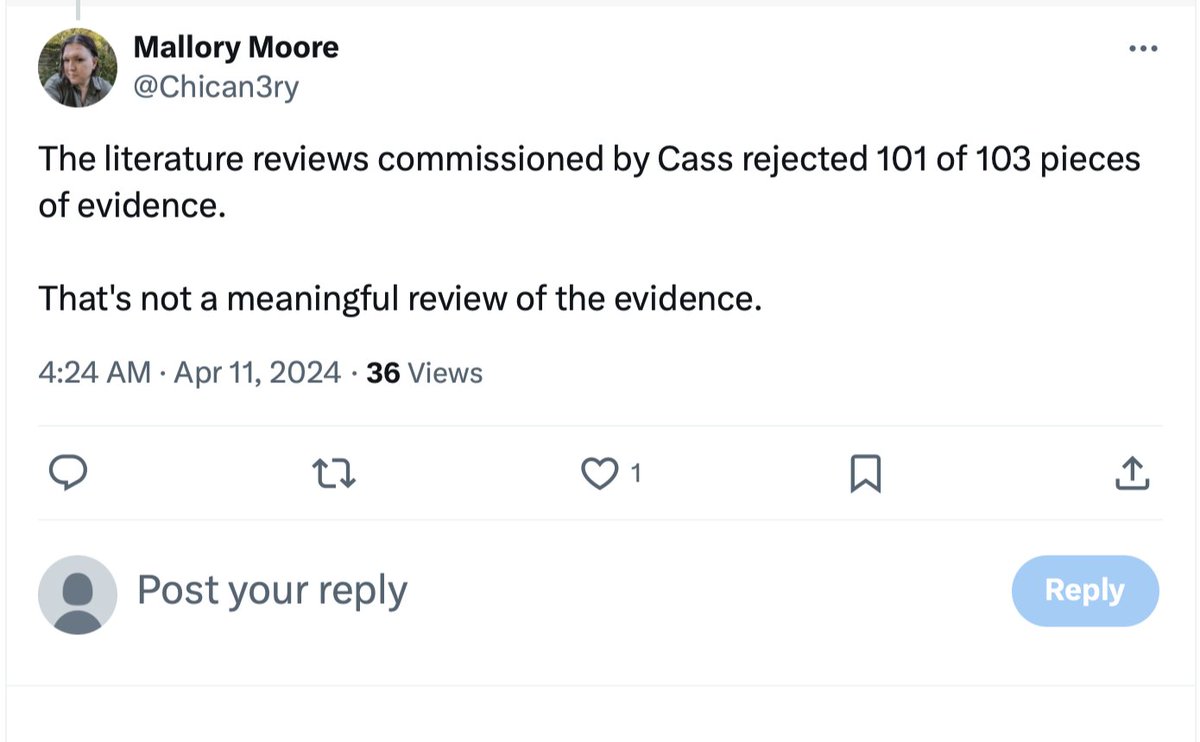
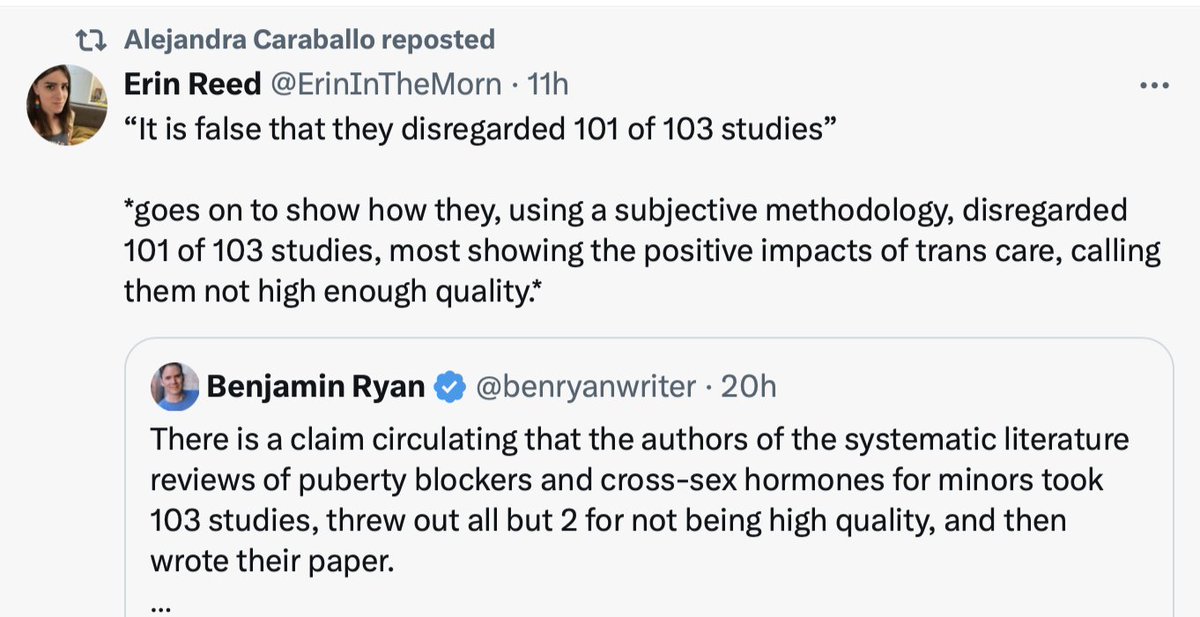

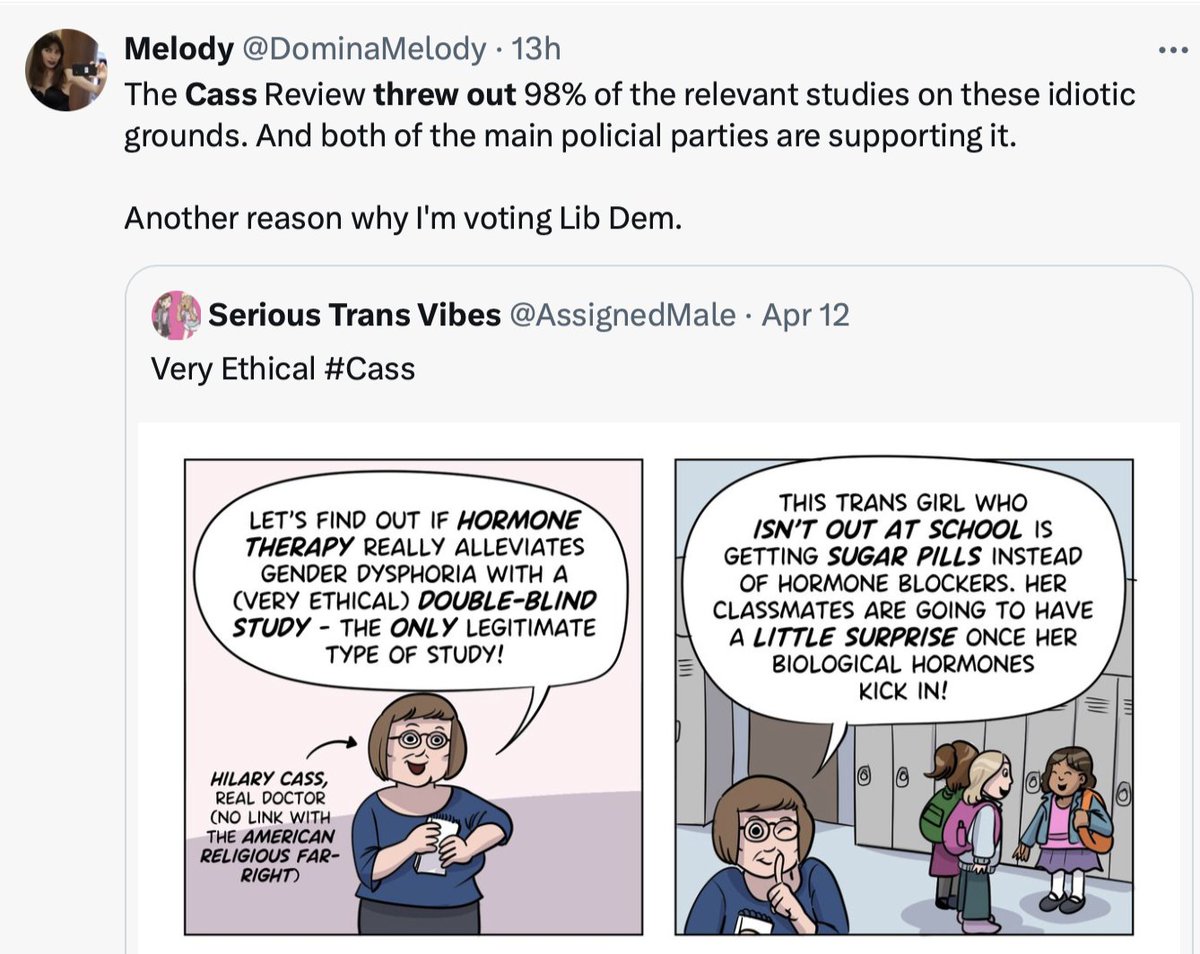
Debunking podcaster Michael Hobbes also joins in on amplifying the incorrect claim that the Cass Review tossed 101 out of 103 studies on pediatric gender transition treatment. @RottenInDenmark @MammothWhale
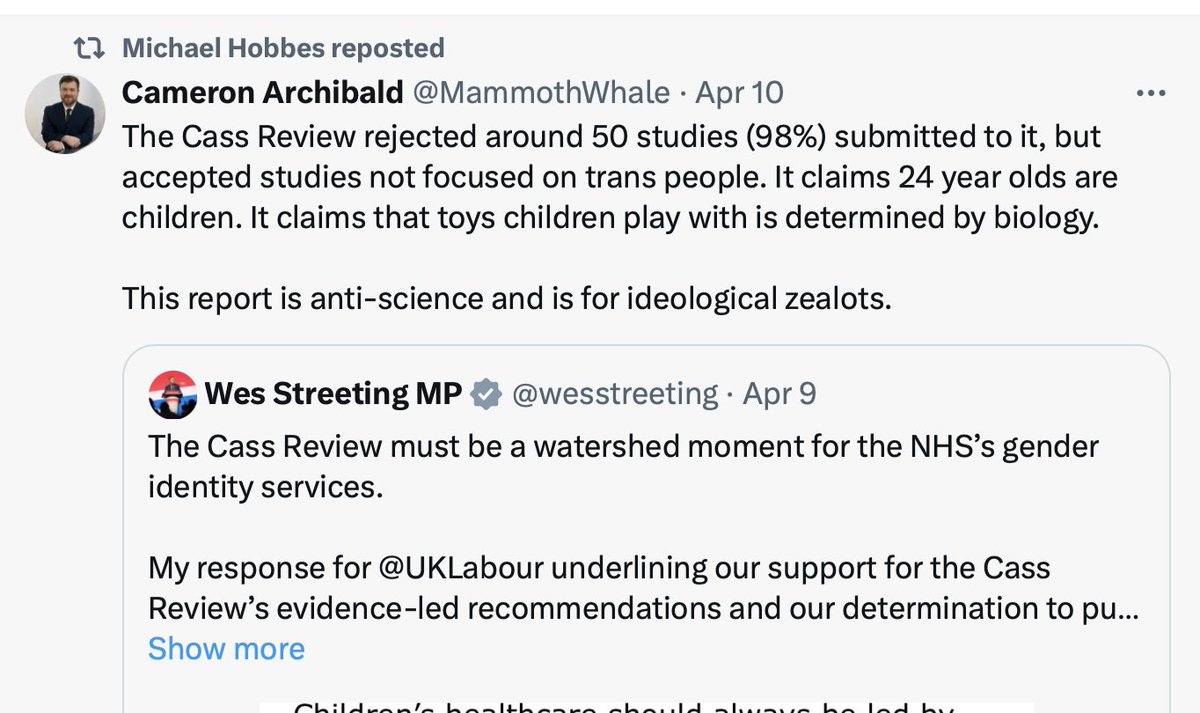
Those who say Cass and the lit reviewers simply discarded 101 studies are incorrect. However, because the quality of the study findings was overwhelmingly too weak, they indeed were very limited in which studies they could rely on in assessing safety and efficacy in particular.
English singer @BillyBragg is also among those repeating the incorrect claim that the Cass Review simply discarded over 100 studies on gender-transition treatment for children and only inclined two such studies in the final report.
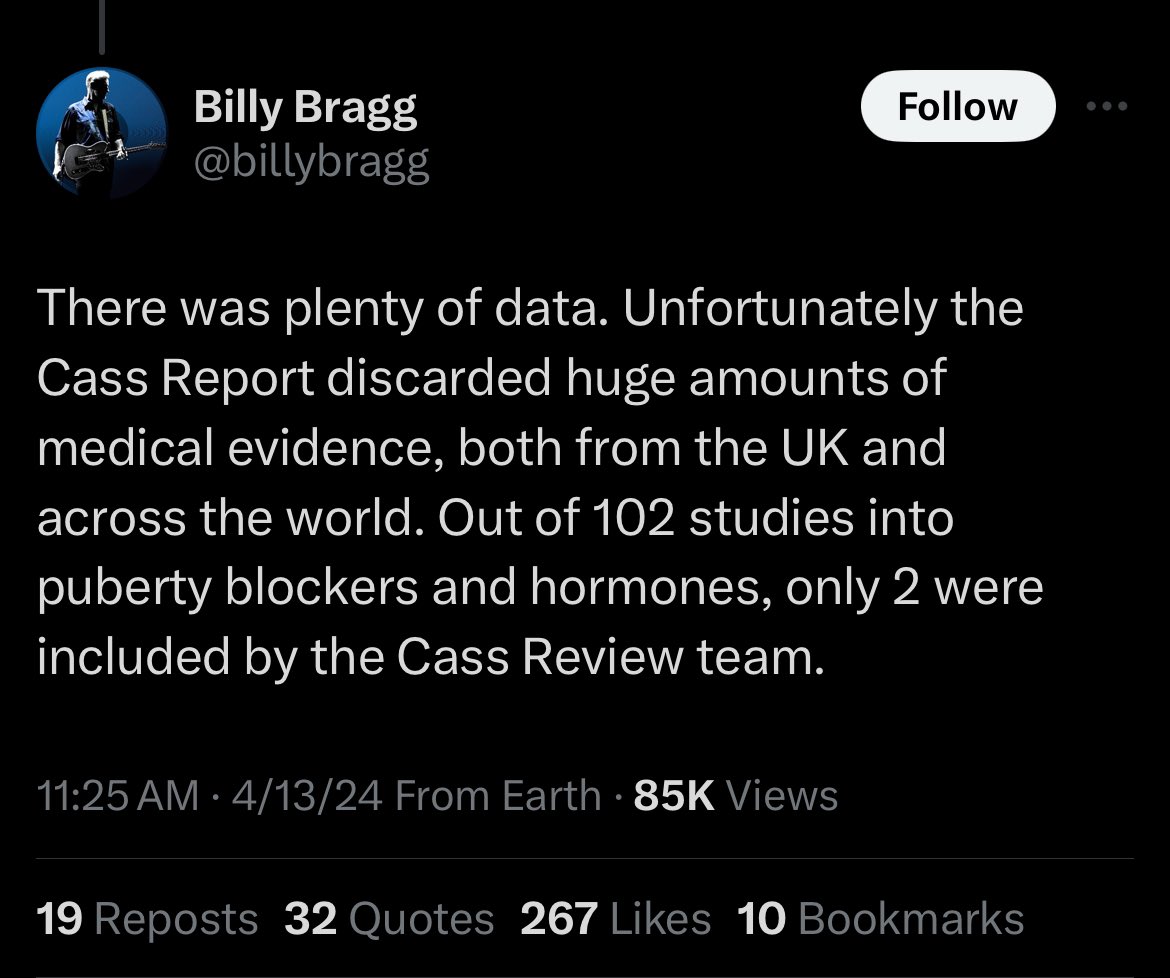
@billybragg Here is @JuliaSerano’s incorrect tweet, in which she falsely claims that the Cass Review discarded nearly all relevant studies on pediatric gender-transition treatment before crafting its report.
https://x.com/juliaserano/status/1777756223766749349?s=46
@billybragg @JuliaSerano In this video, British political activist and pundit Owen Jones repeatedly makes the false assertion that the Cass Review excluded any peer-reviewed study about pediatric gender-transition treatment that wasn’t a randomized controlled trial.
Jones also falsely claims that no GIDS patients were sped through the assessment process. In her book, Time to Think, Hannah Barnes documented how many kids were referred for puberty blockers after 3 sessions. Barnes also documented a culture of homophobia some staffers, one that Jones says he cannot imagine could ever happen. But that is what Barnes reported.
@billybragg @JuliaSerano Jones also repeatedly says that the detransition rate is about 1%, saying that long-term studies show this. This despite the fact that Cass said in her report that because of a lack of long-term follow-up, the detransition rate is unknown.
• • •
Missing some Tweet in this thread? You can try to
force a refresh